

Studio City, CA · March 2026 · LADWP / LADBS
A hundred square feet of roof, and the array had to come off first.
The permit is the smallest re-roof there is: one square. Everything expensive about the job is the working solar system sitting on top of it, and the order in which it comes apart.
A roof under a working array cannot be repaired from the outside. The modules over the affected area come off, the racking and every attachment come out, the covering is stripped and replaced, every attachment is re-flashed on the new covering, and then the array goes back and gets brought online again. The roofing is the cheap part. The sequence around it is the job, and it is why replacing a tired covering before an array goes on is worth so much.
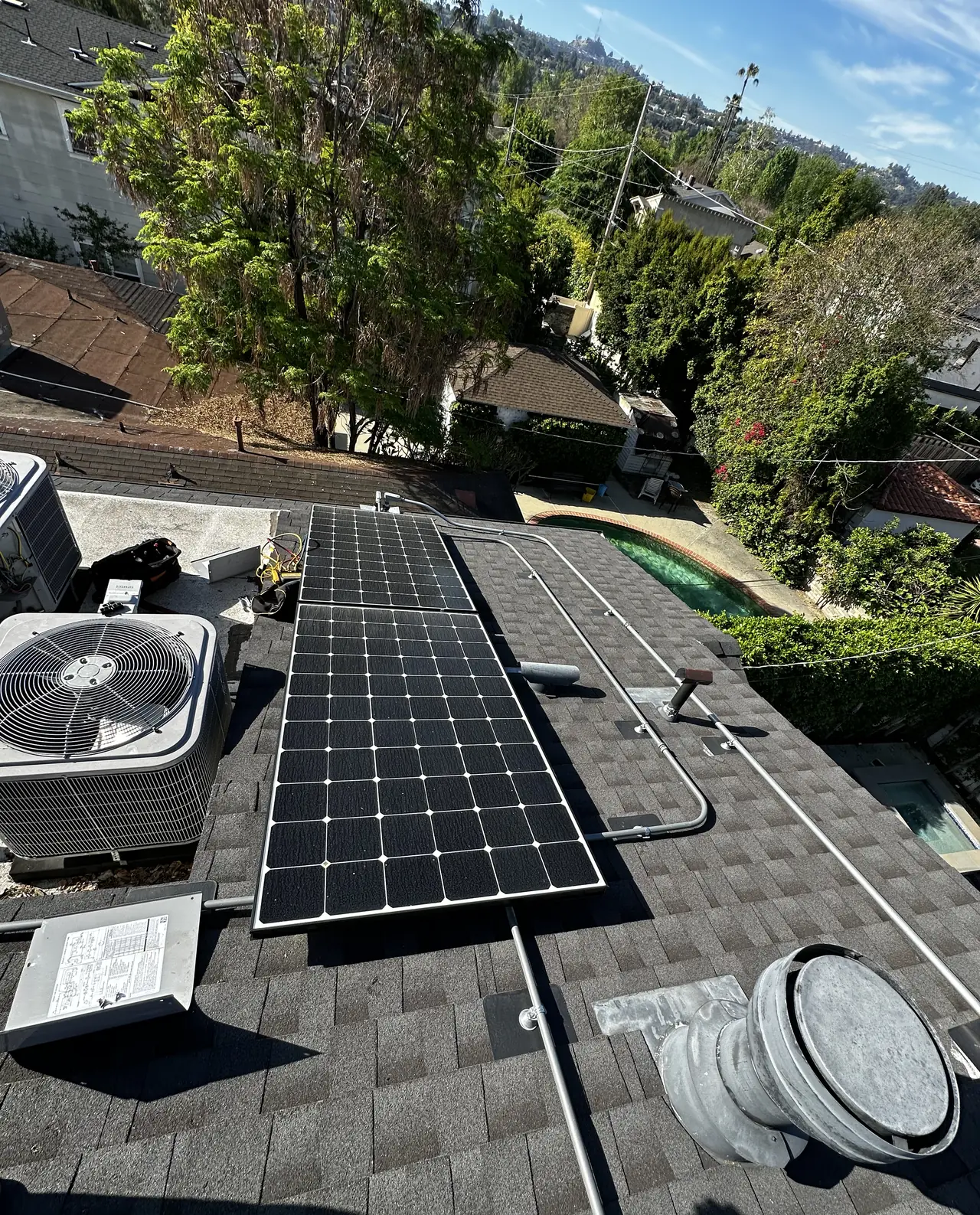
At a glance
- Scope
- Re-roof, one square — about 100 sq ft
- Covering
- Class A or B over existing solid sheathing
- Existing system
- Solar array with battery storage and a backed-up loads panel
- Roof
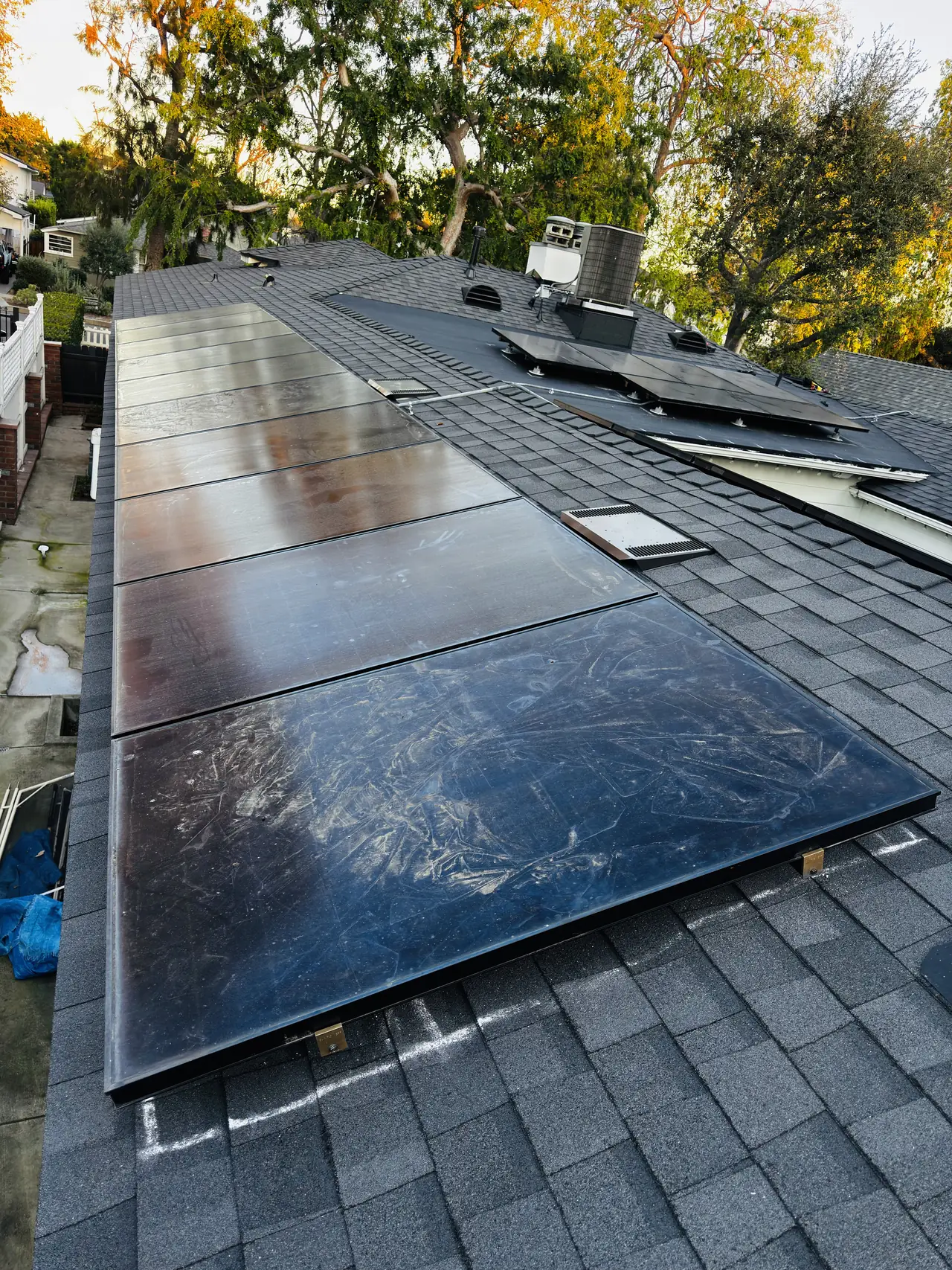
- Asphalt shingle, with rooftop air-conditioning condensers
- Array
- Lifted off over the affected area and reset
- Attachments
- Removed and re-flashed on the new covering
- Permit filed
- 25 March 2026
- AHJ
- LADBS
The story
The permit for this job is about as small as a roofing permit gets: one square. A square is a hundred square feet, roughly a ten-by-ten patch, Class A or B material over the existing solid sheathing. On a bare roof that is half a day and a short invoice.
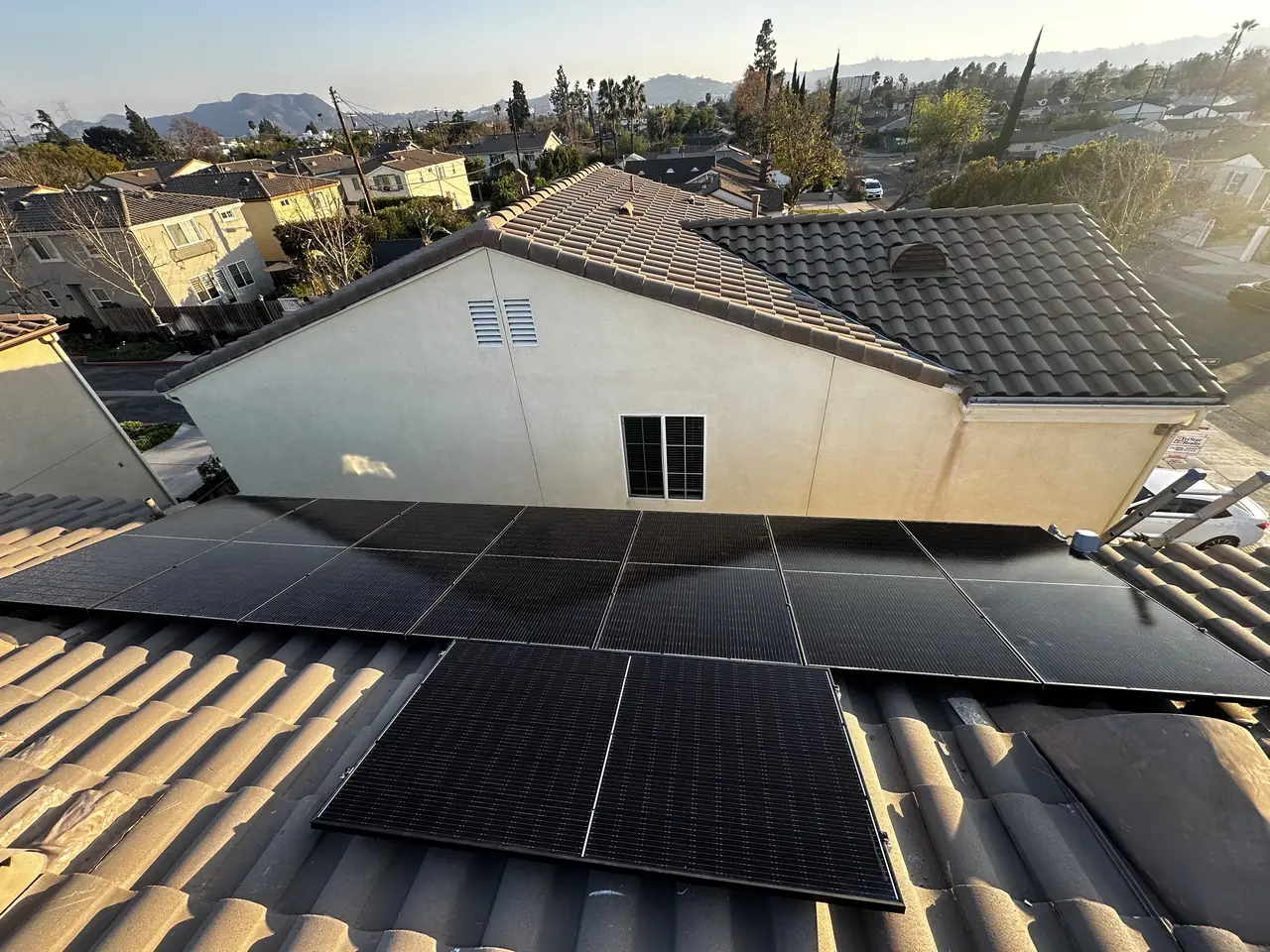
This roof was not bare. It carries a working solar array with battery storage behind it and a backed-up loads panel in the run, and the hundred square feet that needed replacing were underneath part of it.
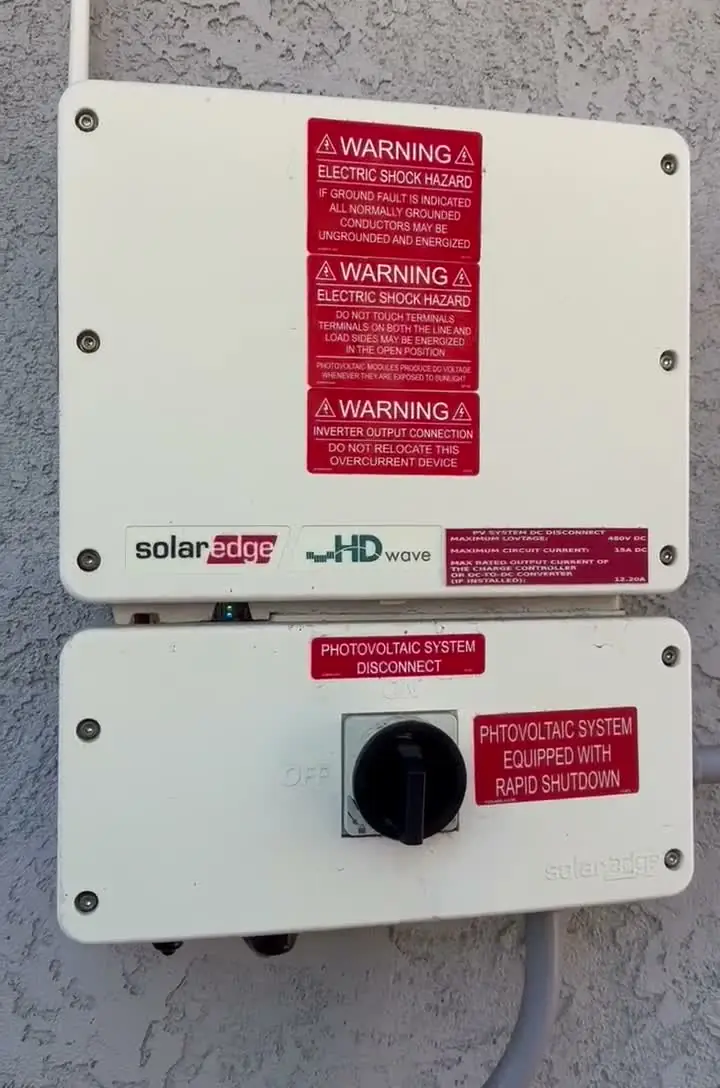
So the order of operations becomes the job. The system is shut down properly — which on a house with storage means more than switching the array off, because there is an inverter for the batteries and a generation panel with its own rules about what stays energised. Then the modules over the affected area are unbolted, lifted clear and set down somewhere they will not be stood on.
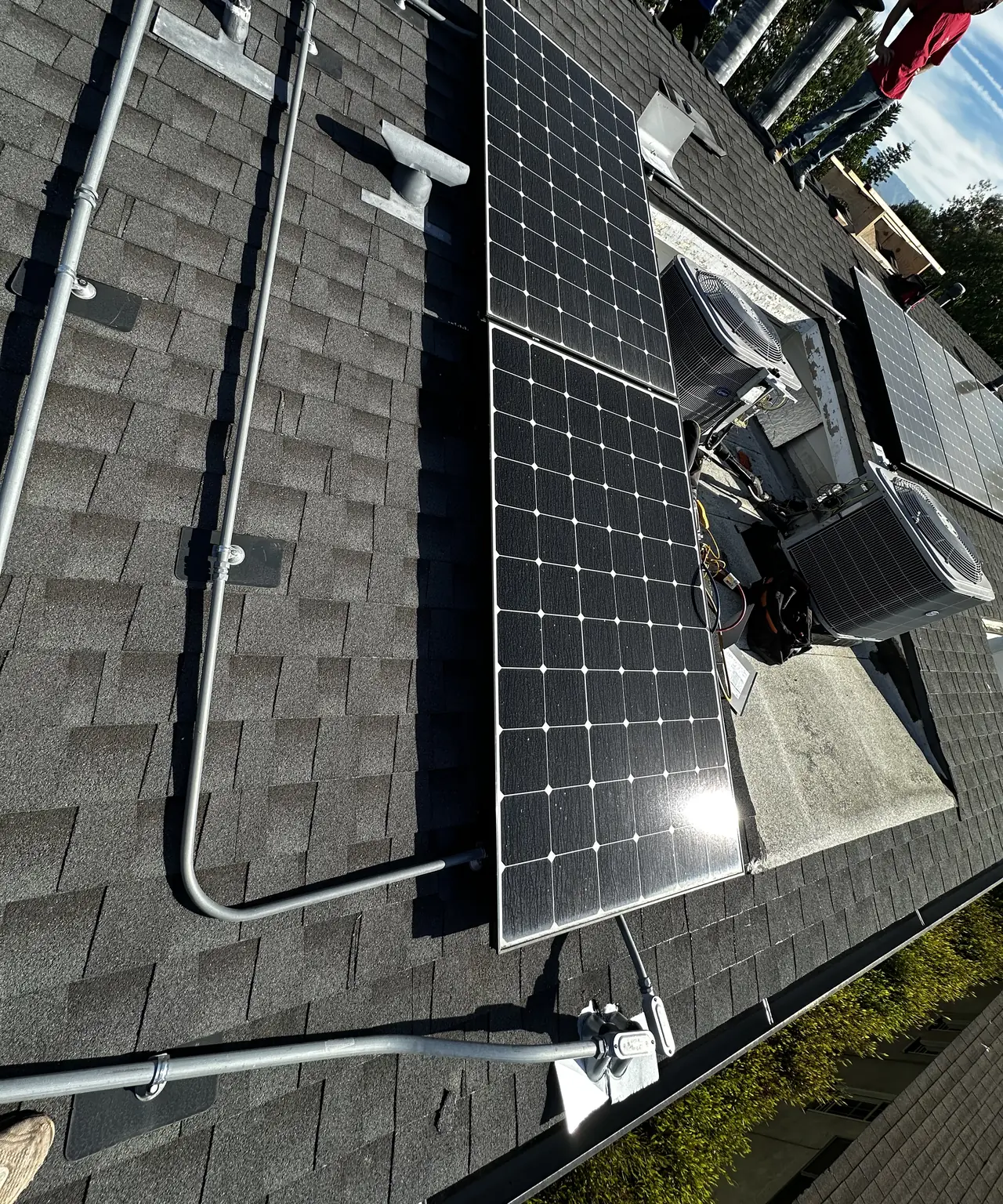
Then the racking. Rails come off, and every attachment under them comes out of the roof. That is the part people do not picture: an array is held down by feet lagged into rafters, each one sitting under a flashing, and you cannot replace the covering around them. They have to come out, and every hole they leave is a hole in a roof.
Only now does the roofing start. The old covering comes off down to the sheathing, the sheathing gets checked, new underlayment and new shingles go down.
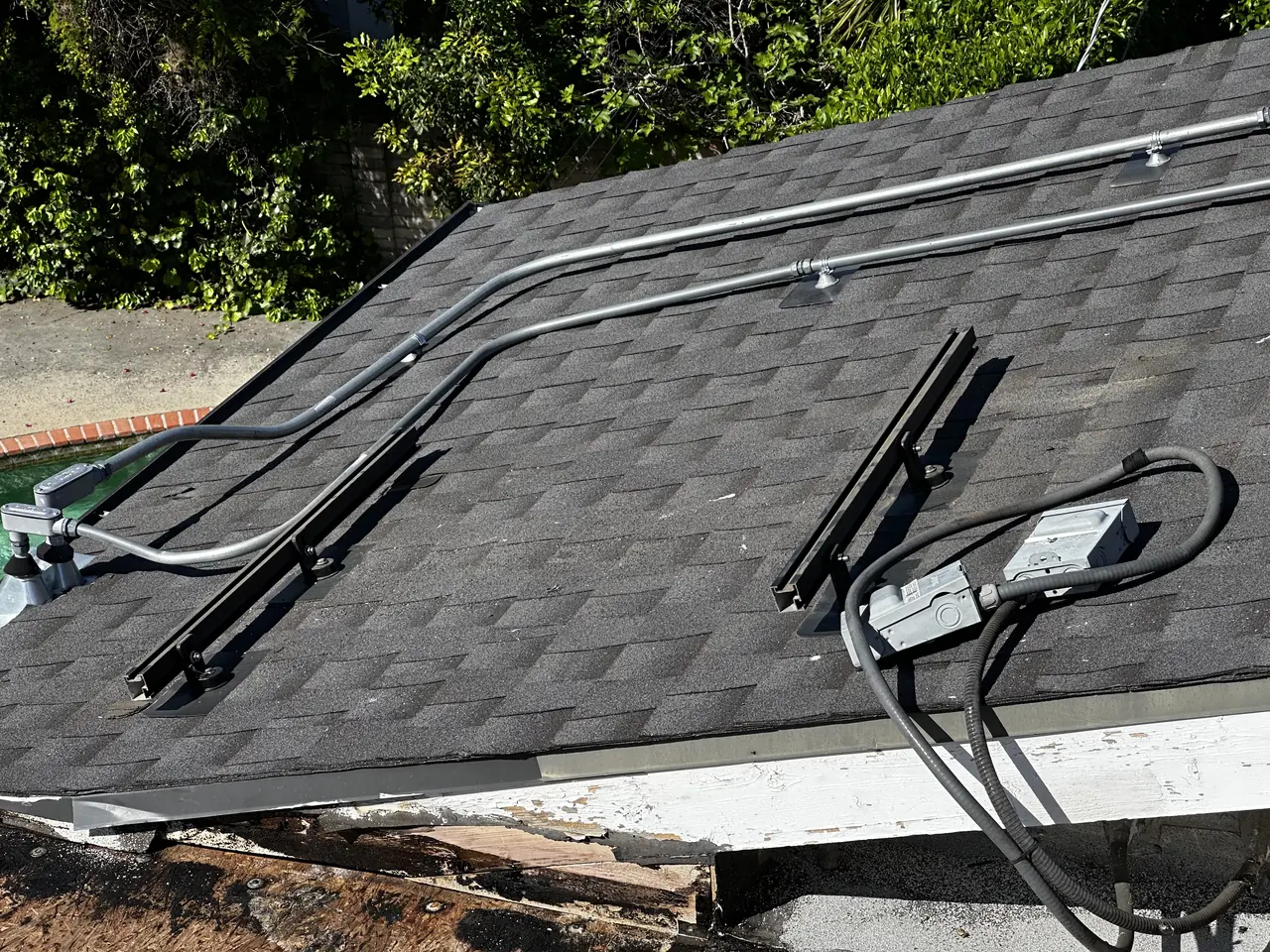
Then everything runs backwards. New flashings for every attachment, seated into the new courses the way they should be rather than patched on afterwards. Rails back on and leveled. Modules re-hung, clamps re-torqued, connectors re-seated. Then the system goes back into service — and the last step, on any job of this kind, is to read the monitoring rather than assume it, because a connector that did not seat properly looks exactly like one that did.
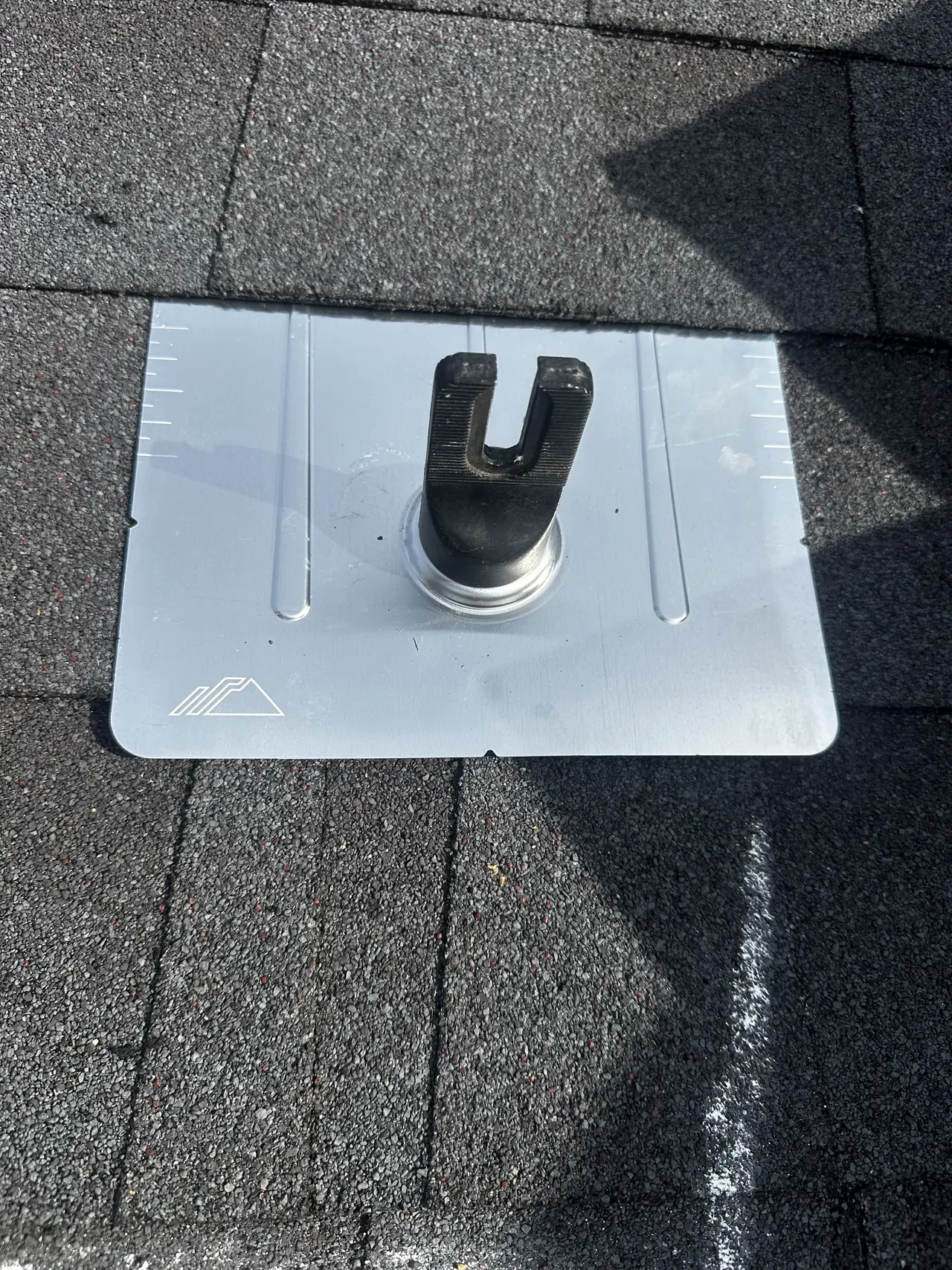
Add it up and the hundred square feet of shingle is the smallest line on the job. Everything else is labor that exists only because there is a system on the roof: the shutdown, the removal, the storage, the re-flashing, the reinstatement, the commissioning check. On a bigger area the same list applies, just multiplied.
Which is the argument for doing roofs first, put in money rather than in principle. If a covering has a few years left in it and an array is going on for twenty-five, the array is not the thing that has to be planned around — the roof is. Replace it while the roof is empty and it costs the roofing. Replace it afterwards and it costs the roofing plus a day of electrical work either side.
The other thing worth saying: a targeted repair beats a full replacement when the rest of the covering is sound. A hundred square feet done properly, with the attachments re-flashed rather than re-sealed, keeps the remaining roof in service and does not disturb the parts of the array that were never a problem. The temptation, once the modules are already off, is to do more than is needed. It is worth resisting when the roof does not need it.
How it ran
| 25 March 2026 | Re-roof permit filed — one square, Class A or B material over existing solid sheathing |
|---|---|
| 30 March 2026 | Work on site: system isolated, modules and racking lifted over the affected area, covering stripped and replaced, attachments re-flashed, array reset |
Five days from permit to work on the roof. The roofing itself is the short part; the order around it is the job.
What we did
- Shut the system down properly, storage side included, before anything was touched.
- Lifted the modules over the affected area and stored them clear of the work.
- Removed the racking and every attachment rather than roofing around them.
- Replaced the covering and seated a new flashing under every attachment.
- Reset the rails, re-hung the modules, re-torqued the clamps and returned the system to service.
System specifications
| Scope | Re-roof, one square — about 100 sq ft, over existing solid sheathing |
|---|---|
| Covering | Class A or B material weighing under 6 lb per sq ft |
| Roof | Asphalt shingle, with rooftop air-conditioning condensers on stands |
| Existing system | Solar array with battery storage and a backed-up loads panel |
| Array work | Modules and racking lifted over the affected area and reset |
| Attachments | Removed and re-flashed into the new courses |
| Finish | Array reset and the system returned to service |
| AHJ | LADBS |
Is your project like this one?
- You have solar on a roof that is starting to need attention.
- You have been told the whole array has to come off for a small repair and want to know whether that is true.
- You are weighing a re-roof now against a re-roof after the solar goes on.
- You have battery storage and want to know what shutting the system down involves.
- You want the roofing and the solar handled by one contractor rather than two who blame each other.
Cali Energy in Studio City
Studio City is inside City of Los Angeles boundaries: permits run through LADBS, interconnection through LADWP.
Studio City has a long tail of houses that took solar early, and those roofs are now reaching the age where the covering needs attention while the array on top of it is still perfectly good.
This installation is on the Studio City projects page alongside the others, and what the work covers is set out on the Studio City service area page.
- License and classifications: CSLB #1032379
- Official reference for this process: LADBS — plan review and permitting
- Official reference for this process: CSLB — check a contractor's license
Frequently asked questions
Can a roof be repaired without removing the solar panels?
Only if the damaged area is genuinely clear of the array. If it is under the modules, they come off — along with the rails and the attachments, because the covering cannot be replaced around feet that are lagged through it. Anyone offering to seal around them instead is buying you a year, not fixing the roof.
How much of the array has to come off for a small repair?
The modules over the affected area plus enough margin to work, and the racking that crosses it. Not necessarily the whole array. On this job the repair was one square — about a hundred square feet — and the removal was scoped to it.
What happens to the old attachment holes?
They come out with the feet and are covered by the new roofing, and the attachments that go back get new flashings seated into the new courses. New holes in new material, flashed properly — not old holes re-sealed.
Is it cheaper to re-roof before installing solar?
Considerably, when the covering is anywhere near the end of its life. Doing it first costs the roofing. Doing it afterwards costs the roofing plus the shutdown, the removal, the storage, the re-flashing, the reinstatement and the commissioning check at the end.
Does having a battery change the work?
It changes the shutdown and the restart. A system with storage has an inverter for the batteries and usually a panel of backed-up circuits, so isolating it safely is more than switching the array off, and bringing it back has to be verified rather than assumed.
Does Cali Energy do roofing as well as solar?
Yes, on one contract, which is the reason a job like this does not turn into two trades pointing at each other. Cali Energy holds B, C-10 and C-39 classifications under CSLB #1032379 — B for general building, C-39 for roofing and C-10 for the electrical.
What this would look like on your roof
Planning solar in Studio City? Tell us your utility, your roof and what your bill looks like now, and we will model what a system like this would do on your house before you commit to anything.
Or call +1 (323) 844-7777 · Cali Energy, Northridge · CSLB #1032379 (B, C-10, C-39) — design, permits, install and electrical under one licensed contractor.
Related
This timeline reflects this property and this permitting path. Updated September 2026.