

Sylmar, CA · June – October 2021 · LADWP / LADBS
The system was already there. We added to it.
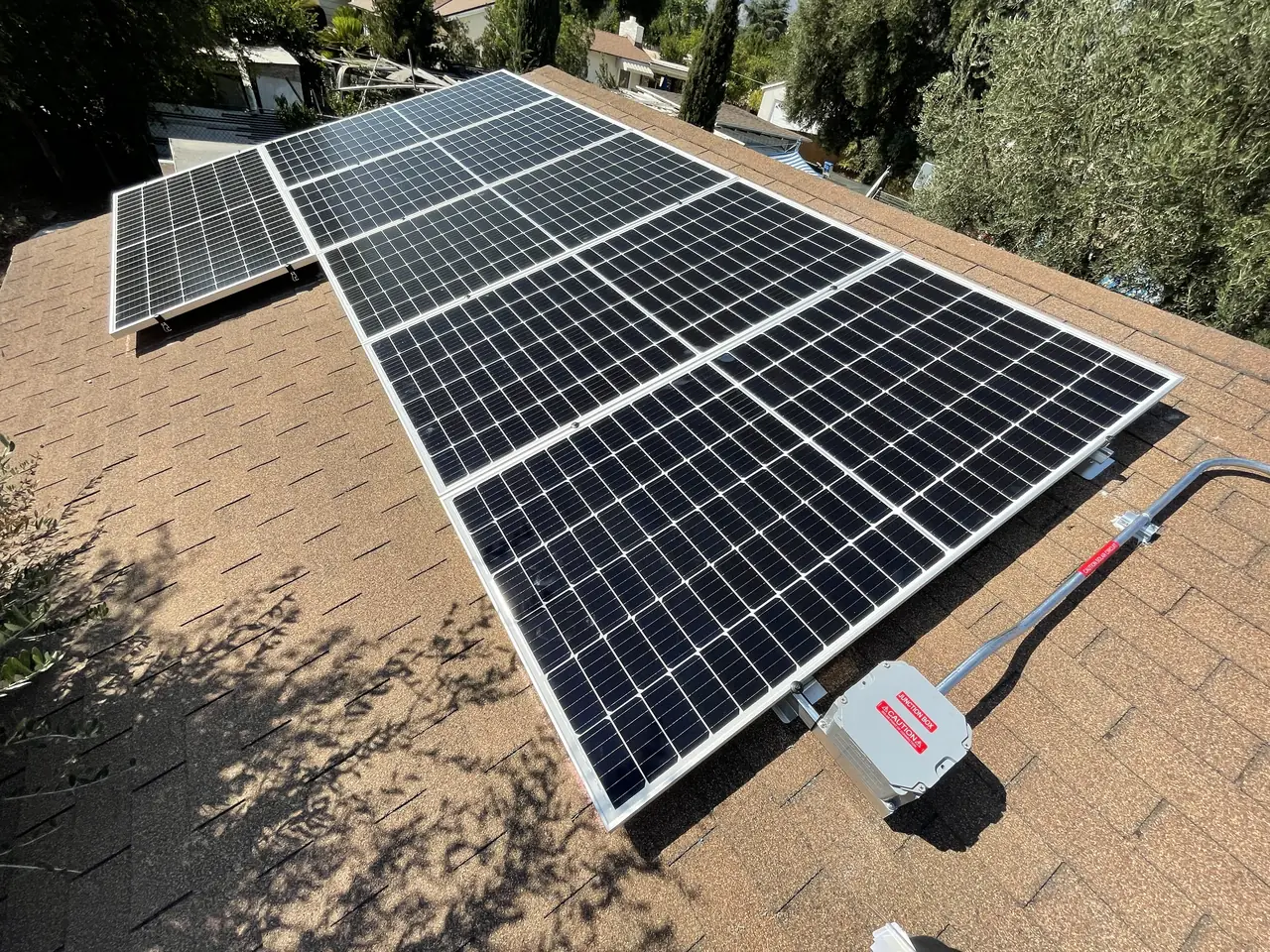
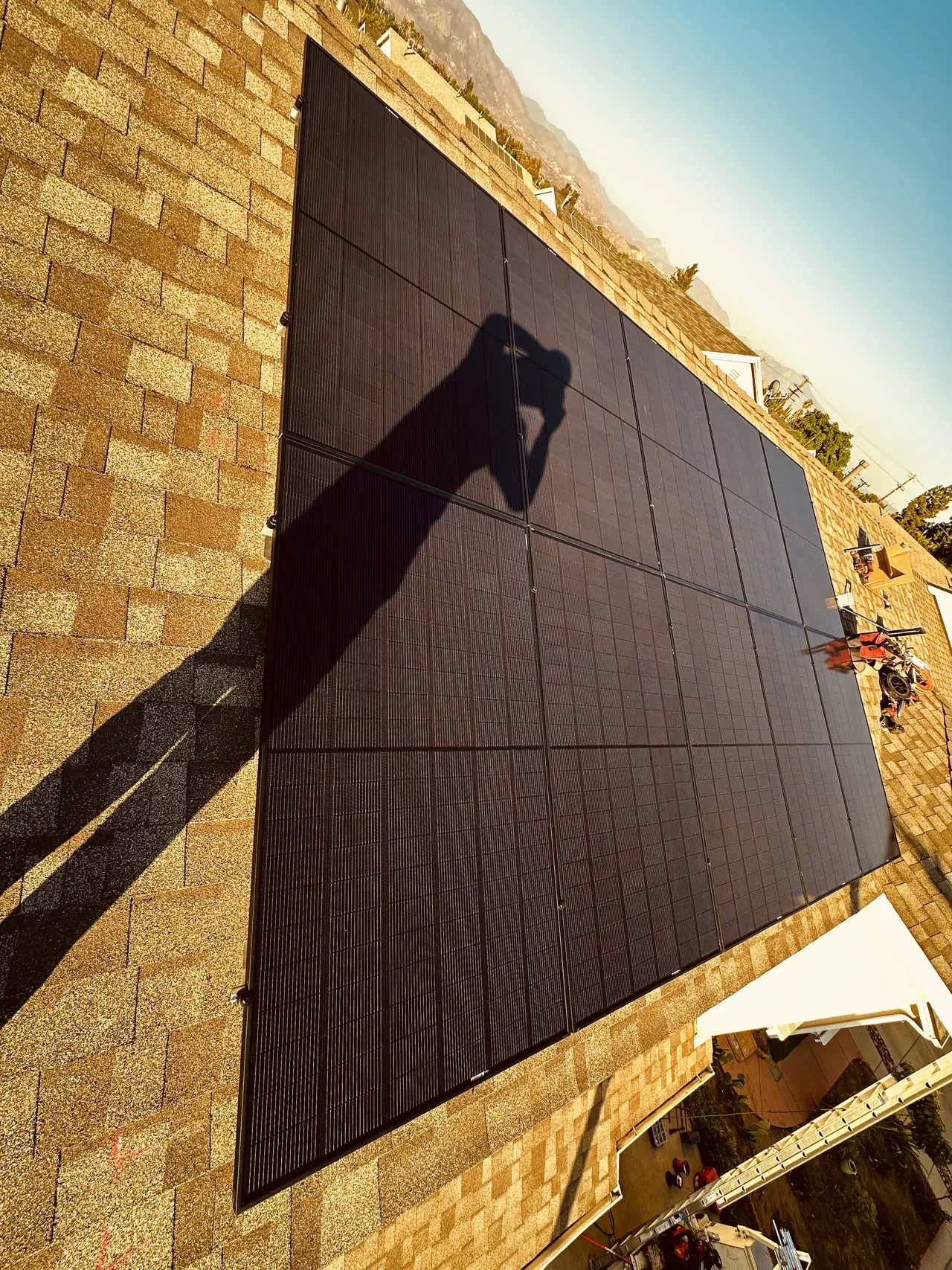
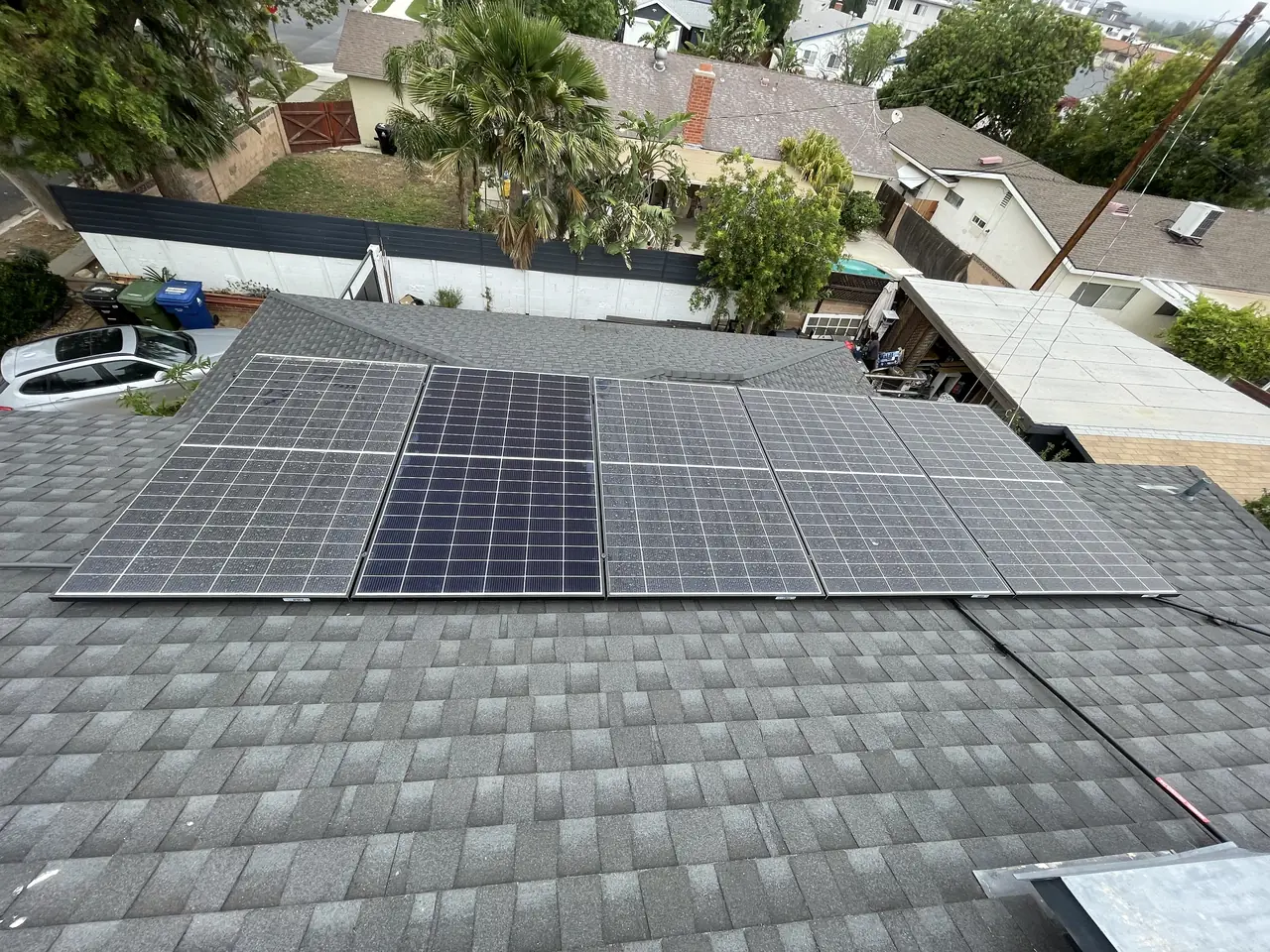
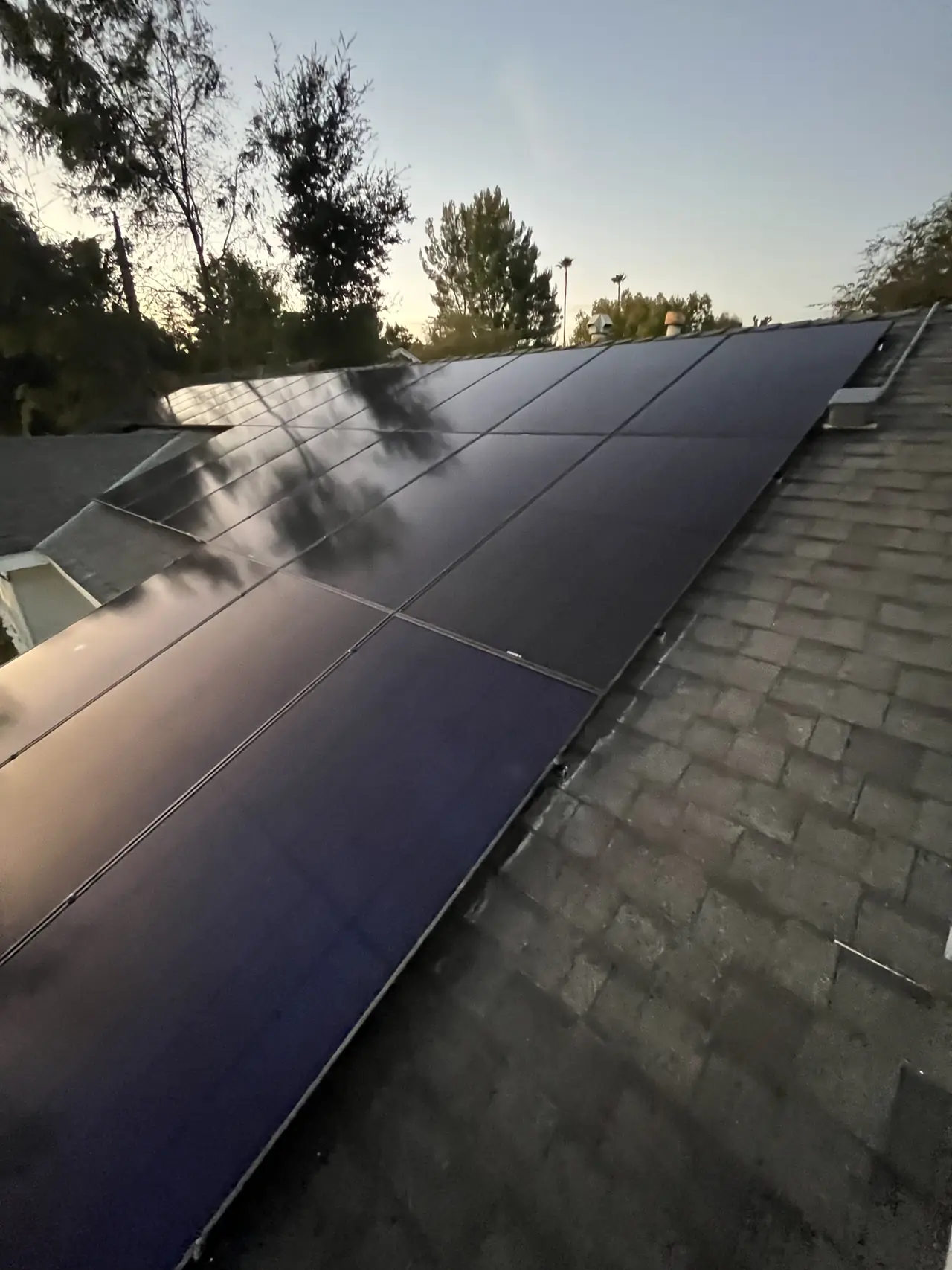
A Sylmar roof that already carried an array. Six more modules went on, the existing inverter came off the wall for a new one, and the addition went through its own electrical plan check.
Adding to a system that already exists is not the same job as installing a new one. The new modules have to be electrically compatible with the inverter and the existing array, and the approved plans must show the complete post-modification system — the existing equipment and the proposed addition together.
At a glance
- Added
- 2.4 kW DC
- Modules added
- 6 × Q CELLS 400 W
- Inverter
- Replaced with Fronius
- Monitoring
- Cellular link
- Roof
- Composition shingle, two planes
- Scope
- Addition to an existing system
- Final inspection
- Passed August 2021
- Utility / AHJ
- LADWP / LADBS
The story
There was already an array on this roof. The job was to make it bigger: six Q CELLS Q.PEAK DUO modules at 400 watts each, 2.4 kilowatts of new capacity, sitting alongside panels that had been up there for years.
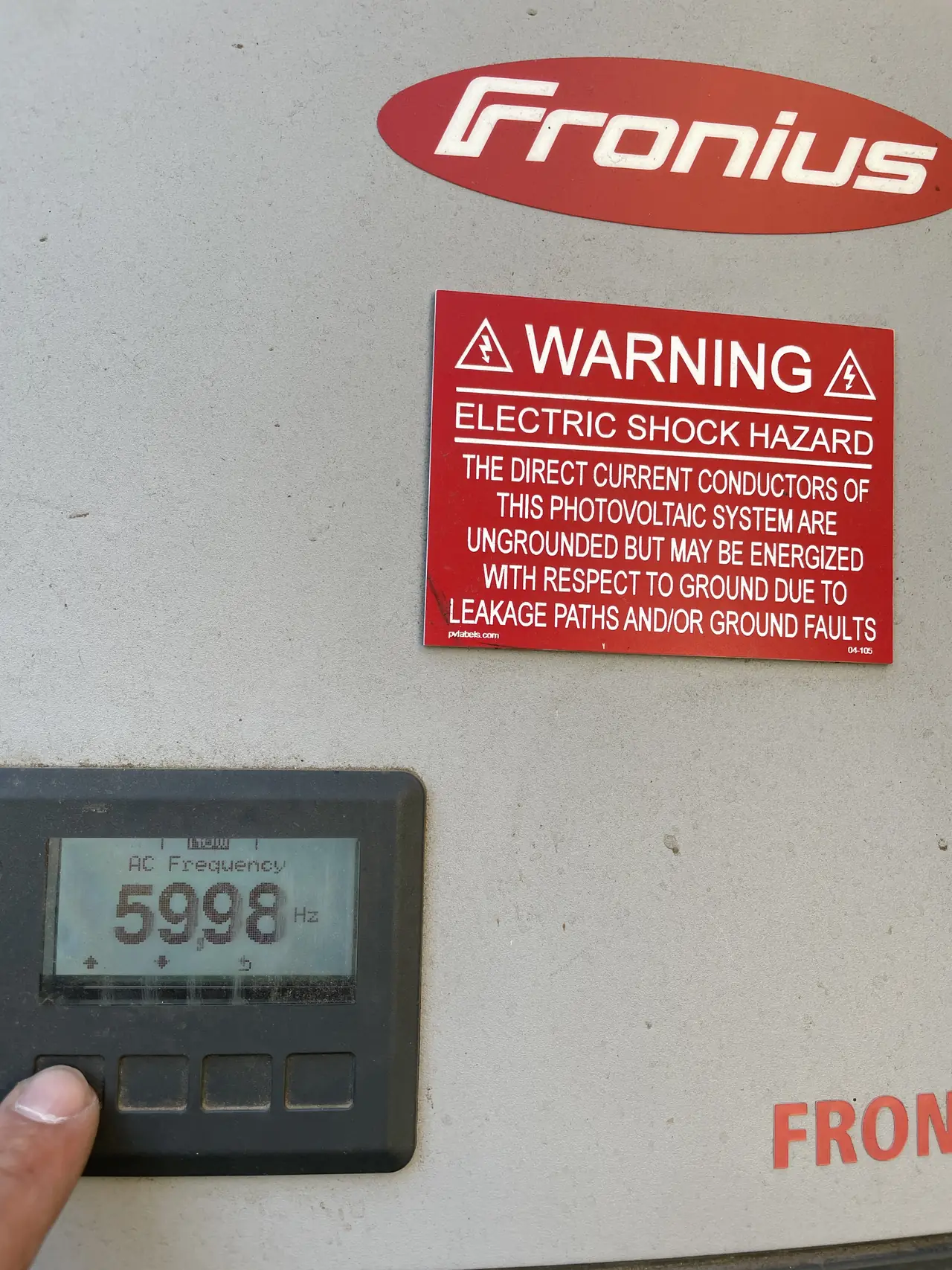
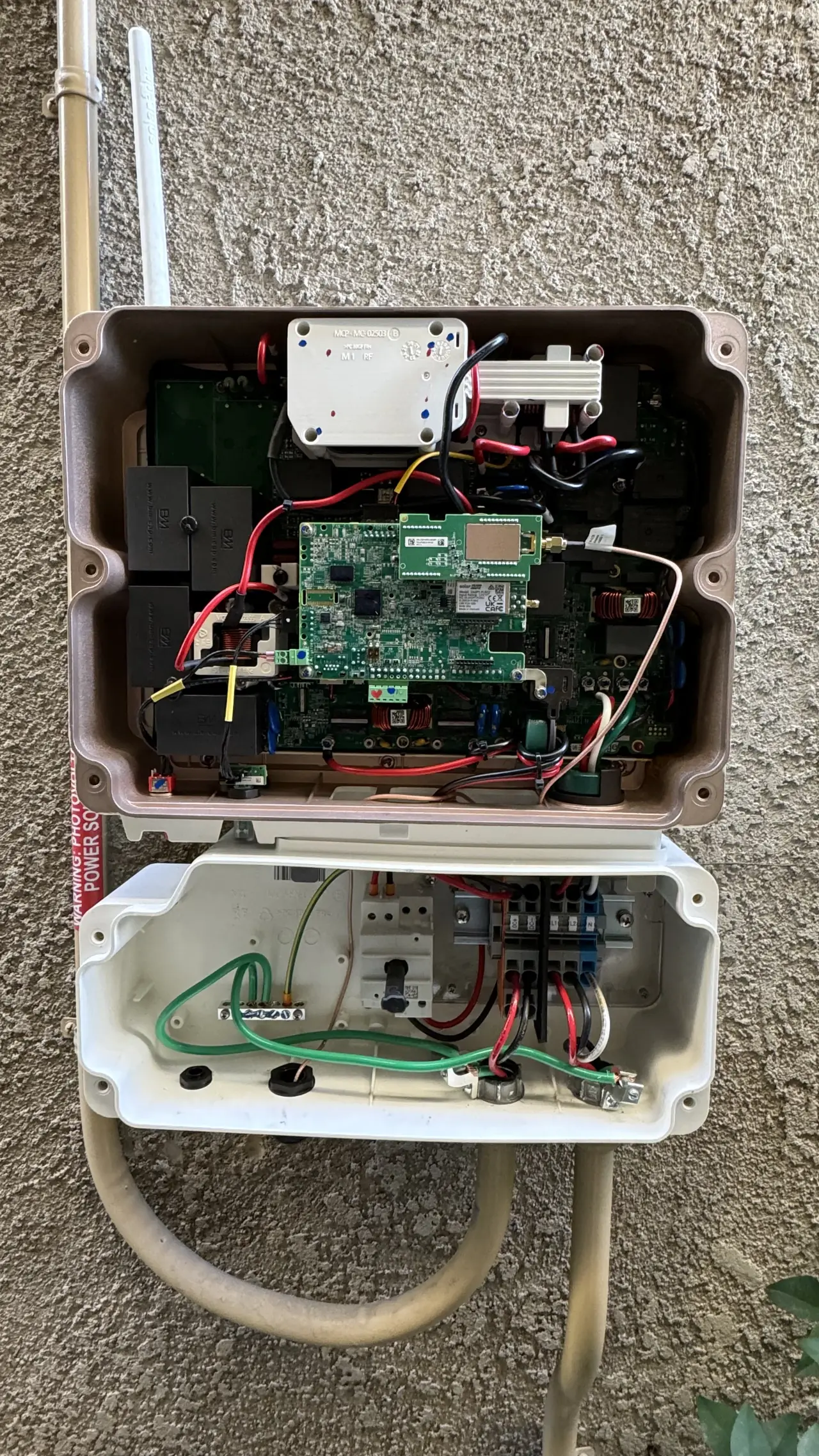
The inverter came off the wall at the same time. The existing unit was replaced with a Fronius, which is the part of an addition people underestimate — new modules feed into whatever is already installed, and if that equipment cannot take them, the module count is not the decision that matters.
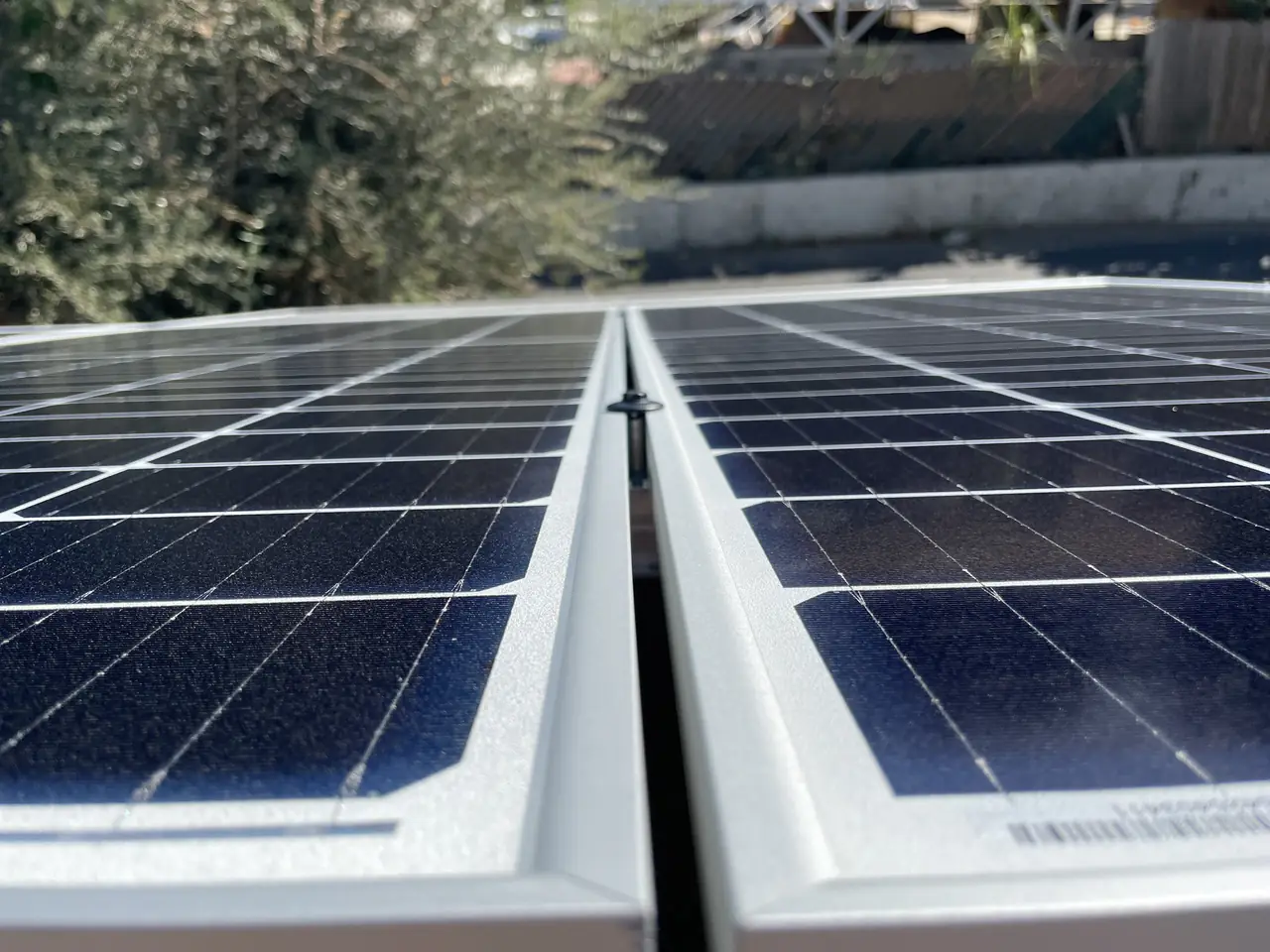
Then the inspector arrived and issued a correction list. The reason was specific and worth knowing: because this was an addition to an existing system rather than a new installation, it was supposed to clear an electrical plan check before the field inspection — and the plans have to show the complete post-modification system, the existing equipment and the addition together, not the new modules on their own. Corrections were drawn up, submitted and cleared, the final was rescheduled and the system passed at the end of August.
One more thing turned out to matter more than it should have: the monitoring gateway could not reach the house's wireless network. The equipment sits where the electrical service is, the router sits where people live, and on this property those two places were too far apart. Rather than extending the network across the house, the gateway was put on a cellular link of its own.
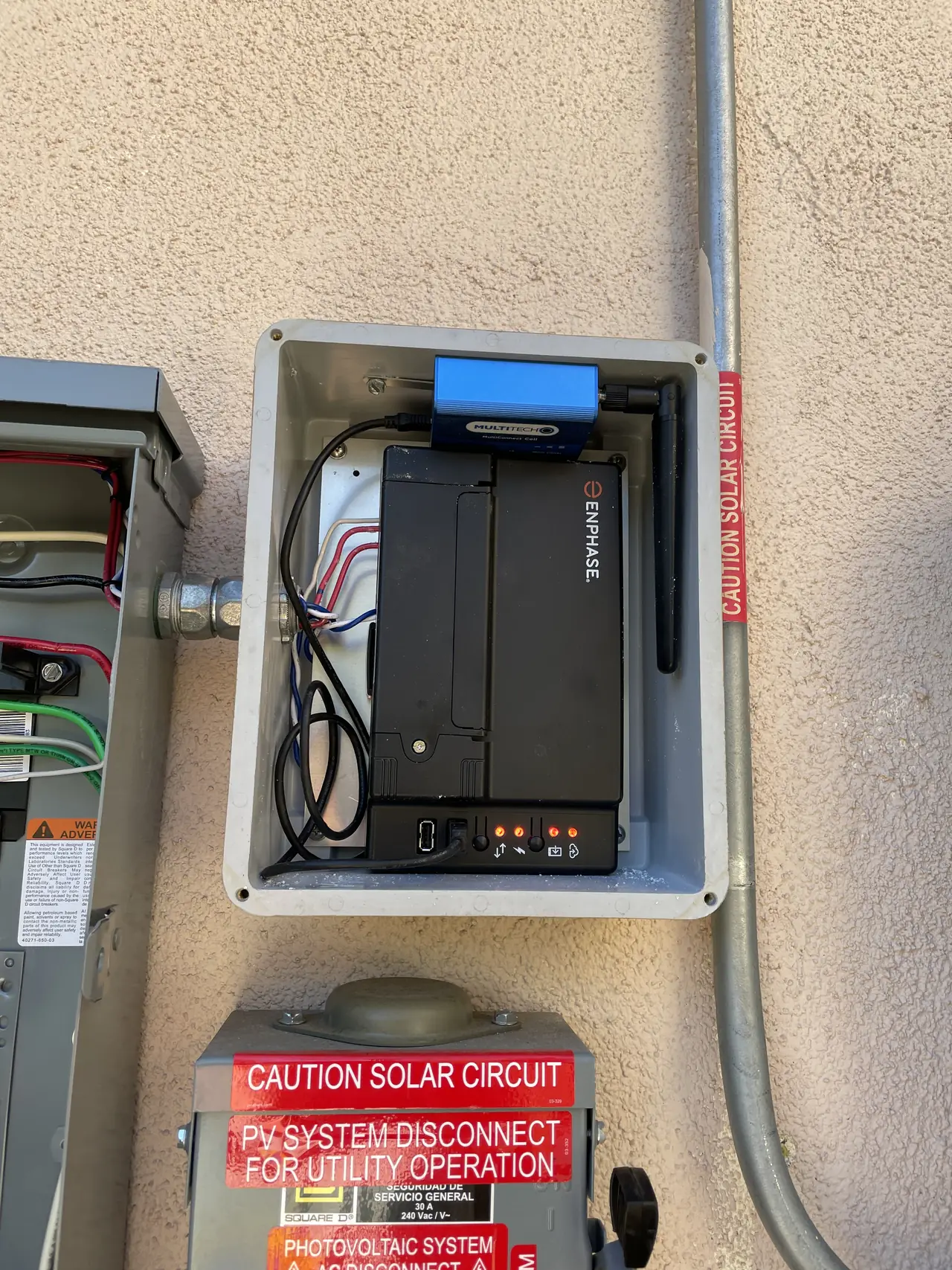
A system nobody can see is a system nobody checks. Getting the gateway online is not a nice-to-have on an addition — it is the only way to tell whether the new modules and the old ones are both doing their job.
How it ran
| June 2021 | Permit approved; site photographs and existing equipment reviewed |
|---|---|
| July 2021 | Six modules installed and the existing inverter replaced |
| July 2021 | Inspector issued a correction list: an addition requires an electrical plan check |
| 23 August 2021 | Corrected plans submitted |
| 25 August 2021 | Final inspection |
| 26 August 2021 | Final inspection passed |
| October 2021 | Monitoring gateway put on a cellular link after the house network proved out of reach |
The calendar runs from permit approval through the correction cycle to the passed final and the monitoring handover.
What we did
- Added six modules to an array that was already on the roof.
- Replaced the existing inverter with a Fronius unit sized for the system as a whole.
- Took the inspector's correction list, had corrected plans drawn and submitted, and cleared the electrical plan check.
- Rescheduled and passed the final inspection.
- Put the monitoring gateway on a cellular link when the house network could not reach it.
- Handed over monitoring that covers the original modules and the new ones together.
System specifications
| Capacity added | 2.4 kW DC |
|---|---|
| Modules added | 6 × Q CELLS Q.PEAK DUO L-G5.2, 400 W |
| Inverter | Existing unit replaced with a Fronius |
| Monitoring | Gateway on a cellular link |
| Roof | Composition shingle, array across two planes |
| Scope | Addition to an existing photovoltaic system |
| Plan check | Electrical plan check required because the work was an addition |
| Battery | None |
| Utility / AHJ | LADWP / LADBS |
Is your project like this one?
- You already have solar and your bill has grown since it went in.
- You have been quoted for extra panels without anyone mentioning the inverter.
- You were told an addition is a small job and it turned into a plan check.
- Your monitoring has never worked because the equipment cannot reach your Wi-Fi.
- Your Sylmar property is served by LADWP, while permits are handled by LADBS.
Cali Energy in Sylmar
Sylmar is inside City of Los Angeles boundaries: permits run through LADBS, interconnection through LADWP.
Plenty of houses here went solar years ago and have since added a room, a pool pump or a car, which is what brings the array back into the conversation.
This installation is on the Sylmar projects page alongside the others, and what the work covers is set out on the Sylmar service area page.
- License and classifications: CSLB #1032379
- Official reference for this process: LADWP interconnection requirements
Frequently asked questions
Can I add panels to a solar system I already have?
Yes. On this project the existing equipment, not the roof, was the limiting factor: six modules were added and the existing inverter was replaced with a Fronius so it could carry the system as a whole. Any addition should start with what is already installed, not with the panel count. An addition today also has to be checked against the utility's current interconnection rules, and it may require a new interconnection application rather than an amendment to the old one.
Does adding panels need a new permit?
It needs its own permit, and on this project it also needed an electrical plan check. The inspector's correction list said so directly: because the work was an addition to an existing system rather than a new installation, the plan check had to happen before the field inspection could pass, and the approved plans had to show the complete post-modification system rather than the added modules alone.
Will new panels match the ones already on my roof?
They rarely match visually and they do not have to be the same model. What they do have to be is electrically compatible: voltage, current and the string or MPPT input they are assigned to all have to work with the inverter and with the existing array. On this roof the new modules are a different generation from the originals, which is part of why the inverter was replaced.
My solar monitoring has never connected. Why?
On this property it was distance: the gateway sits with the electrical equipment, the router sat inside the house, and the two were too far apart for a reliable link. The gateway was put on a cellular connection instead of extending the home network. Other causes exist — a changed network password, a failed communications board — so the diagnosis comes before the fix.
Does Cali Energy work on systems other companies installed in Sylmar?
Yes — additions, inverter replacements and monitoring on existing arrays. Sylmar is inside City of Los Angeles boundaries, so permits run through LADBS and interconnection through LADWP.
What this would look like on your roof
Planning solar in Sylmar? Tell us your utility, your roof and what your bill looks like now, and we will model what a system like this would do on your house before you commit to anything.
Or call +1 (323) 844-7777 · Cali Energy, Northridge · CSLB #1032379 (B, C-10, C-39) — design, permits, install and electrical under one licensed contractor.
Related
This timeline reflects this property and this permitting path. Updated September 2026.