

Tarzana, CA · March – August 2022 · LADWP / LADBS
The old array came off with the roof. What went back was twice the system.
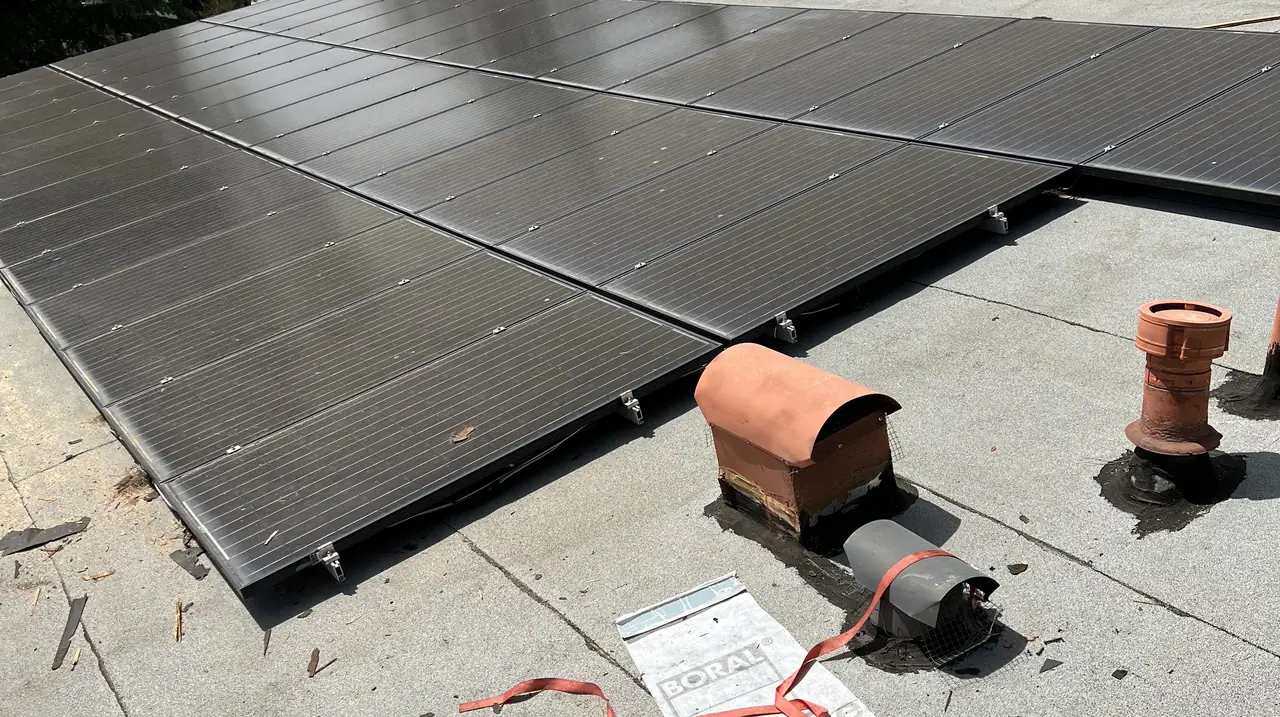
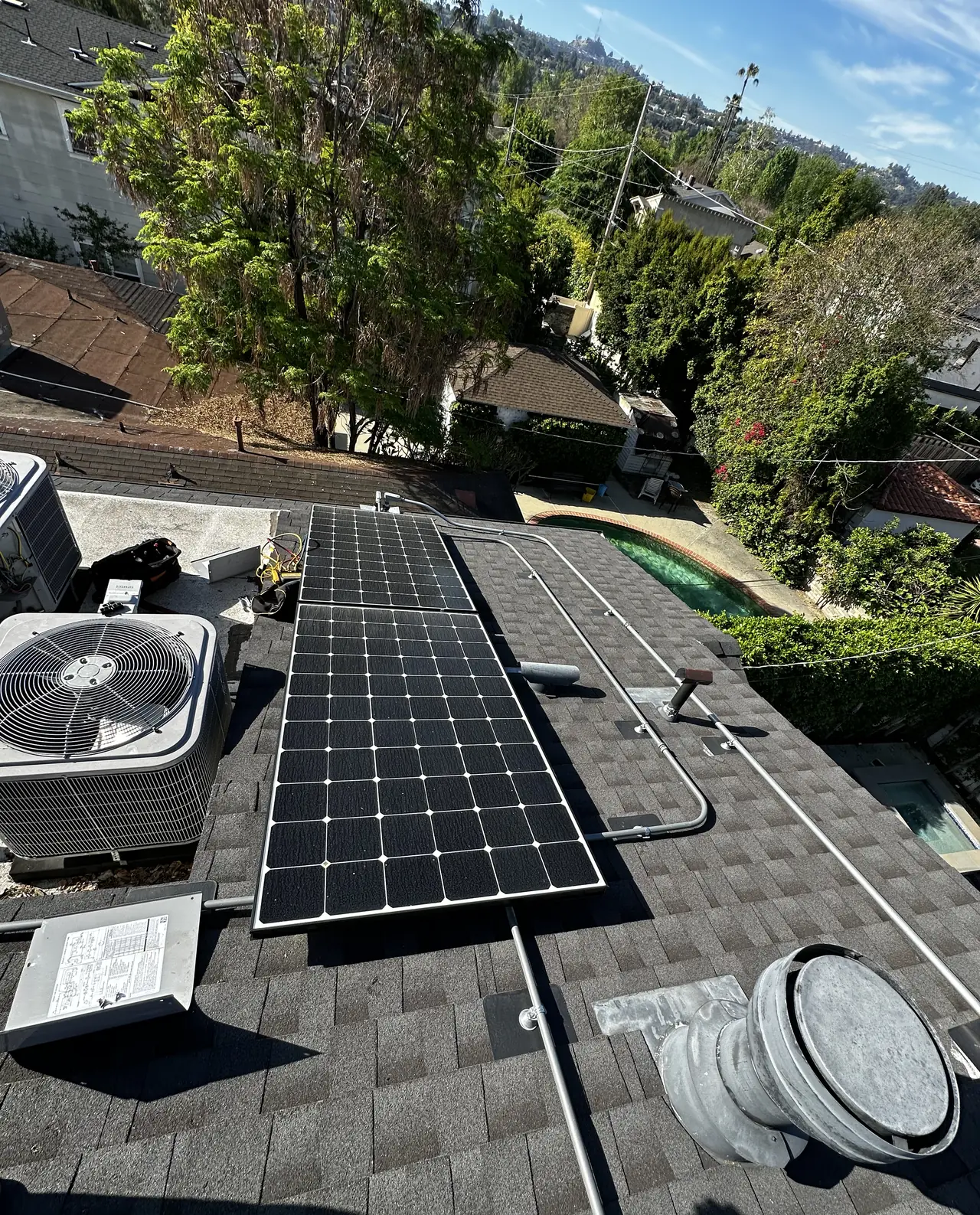
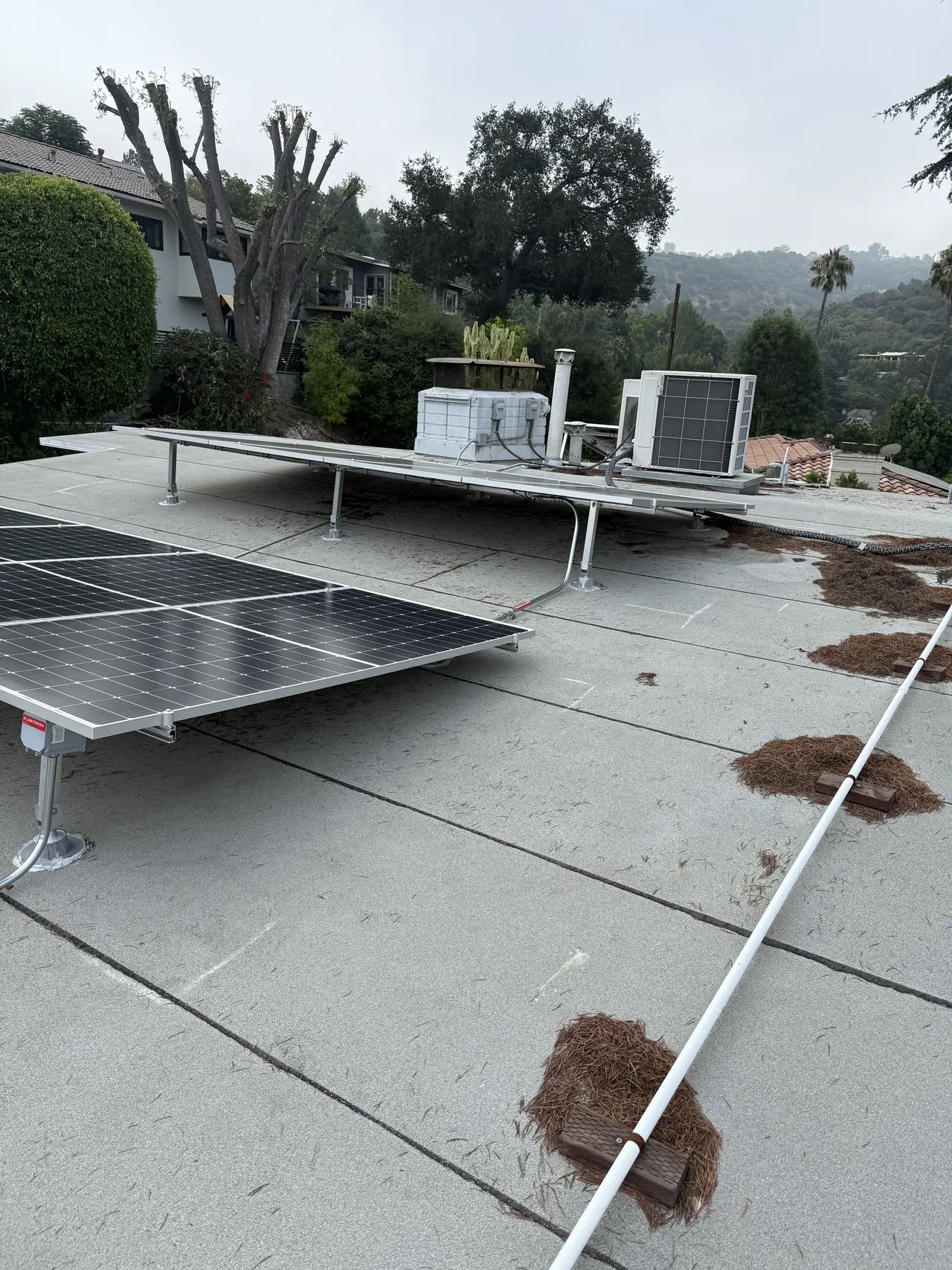
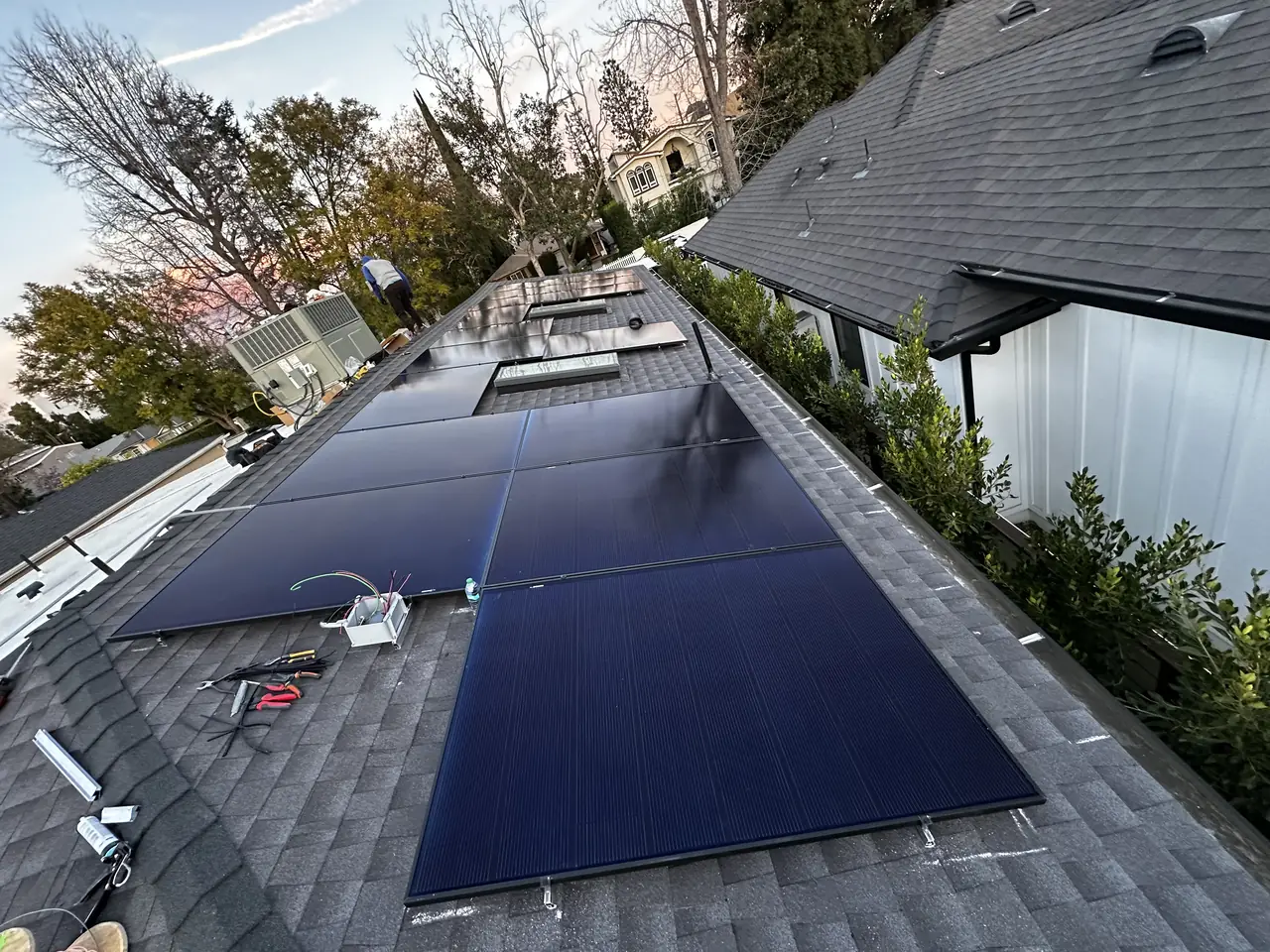
A Tarzana house with an earlier solar system on a worn low-slope roof. The roof was replaced down to new sheathing, the old array and its two string inverters were removed for good, and 57 modules with a new 200-amp service panel went up in their place: 23.085 kilowatts DC on LADWP.
When a roof under an existing array has to be replaced, the array has to come off anyway. That is the moment to decide whether it goes back at all. Here it did not: the older modules and string inverters were retired, the roof was rebuilt on new solid sheathing, and Cali Energy designed and installed a new system of 57 modules with a microinverter under each one for the roof as it is now, together with a new 200-amp service panel to carry it.
At a glance
- System
- 23.085 kW DC
- Recorded by the utility
- 23.0 kW AC-CEC
- Modules
- 57 × REC 405 W, all black
- Inverters
- Enphase IQ8+, one per module
- Service panel
- New 200 A main panel, solar-ready
- Roof
- Low-slope built-up roof replaced on new sheathing; concrete S-tile section
- Earlier system
- Removed in full, including two string inverters
- Application to PTO
- 79 days
The story
The house already had solar. An earlier array lay flat on the low-slope roof, wired back to two string inverters on the side wall, and the roof under it had reached the end of its life. Built-up roofing does not get replaced around a solar array. Every module comes off, the covering comes off, and the deck underneath is exposed for the first time in decades.
Once that is the plan, the question changes. It stops being how to put the old array back and becomes whether it is worth putting back at all. On this house it was not. The modules were a generation old, the string inverters were the kind that take a whole row down when one module is shaded, and the household was using far more electricity than the old system had been sized for.
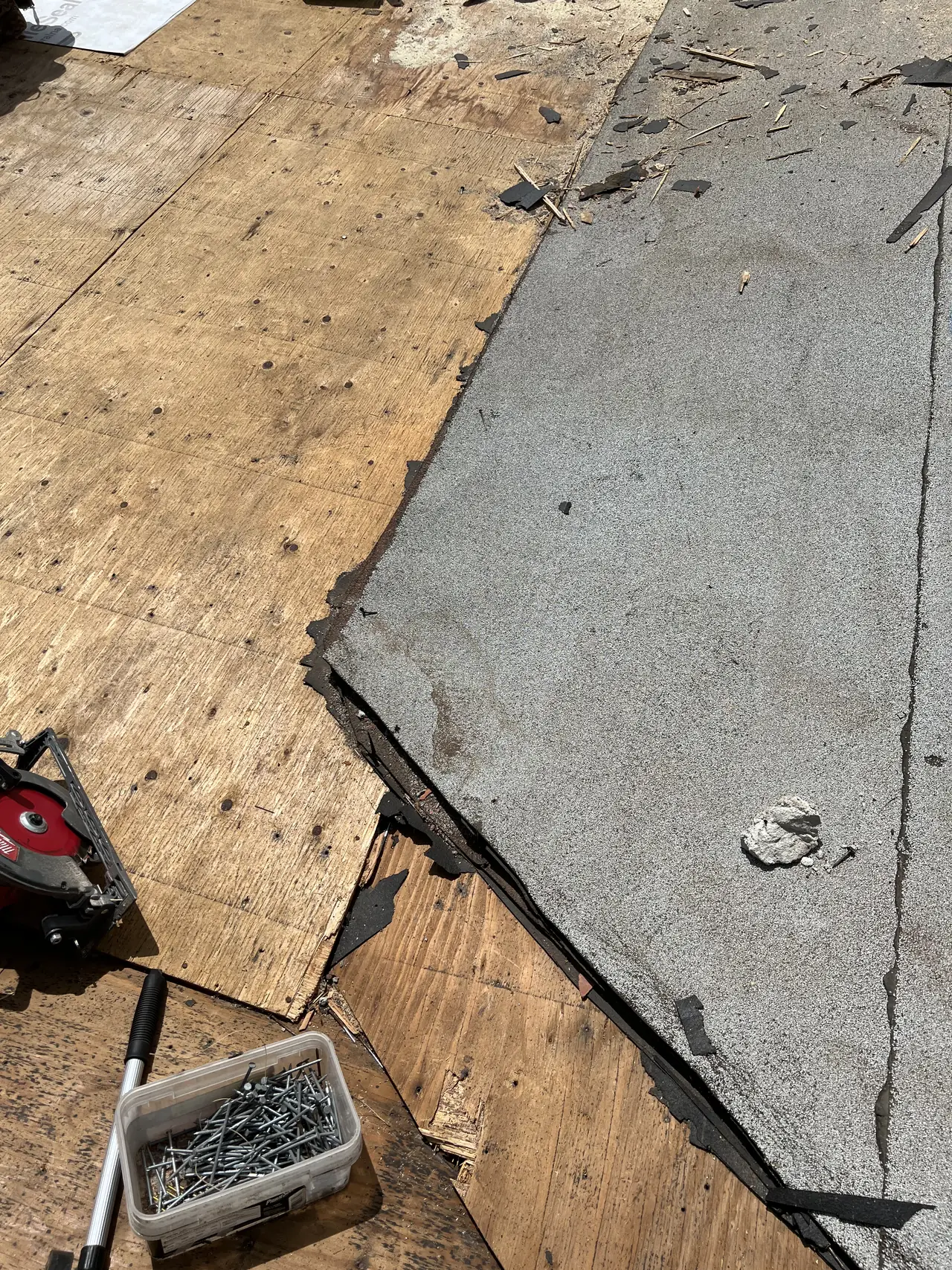
So the roof went first. The old covering was torn off and the low-slope planes were rebuilt on new solid sheathing with a built-up membrane, with the earlier array removed in full rather than lifted and reset. That order matters. An array installed on a roof that has just been replaced is an array whose attachments and flashings were made into a new membrane, not cut into a tired one.
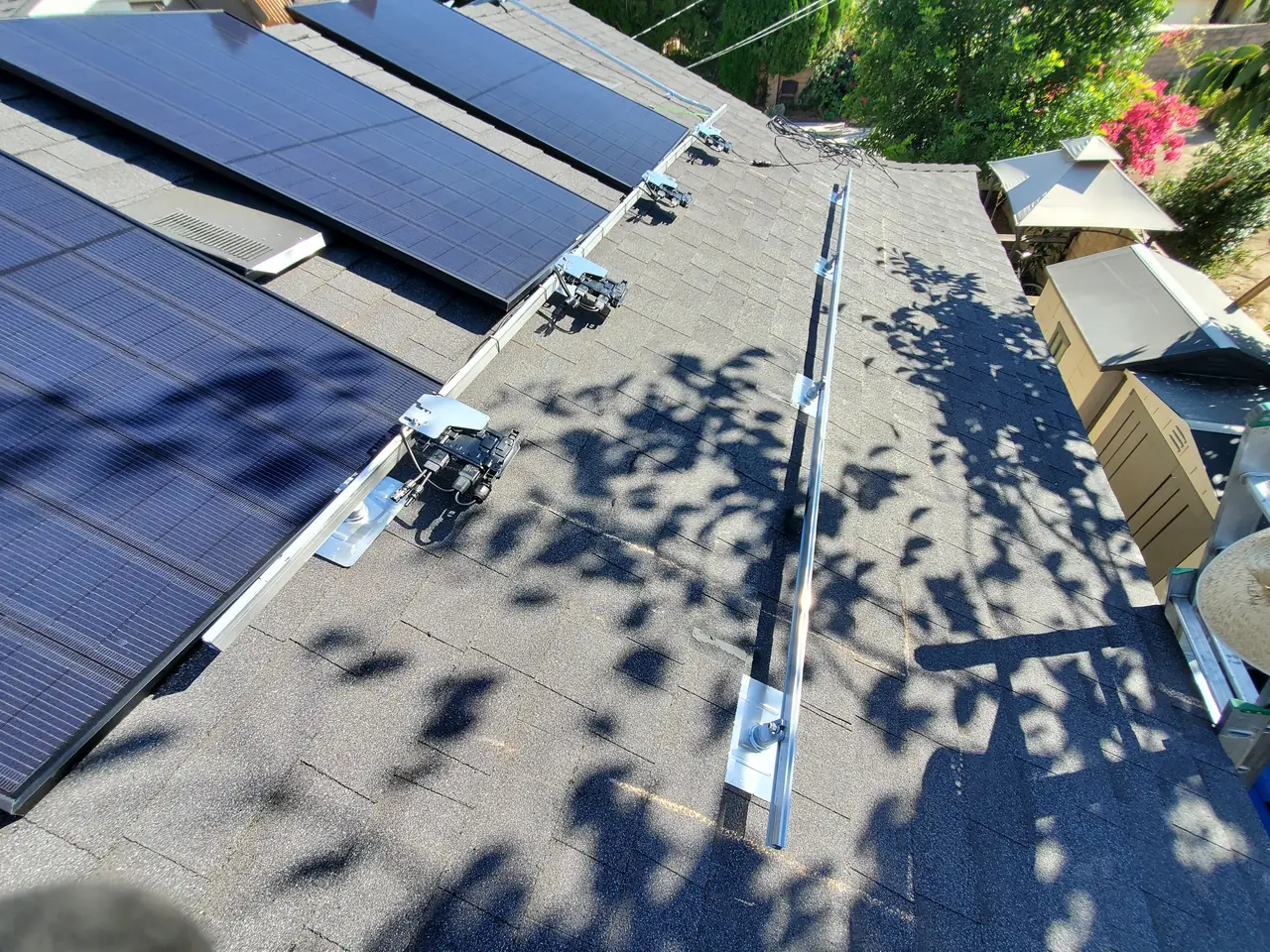
The new system was drawn for the roof as it is now: 46 modules on the low-slope planes and 11 on the concrete S-tile section over the front of the house, with a microinverter under each module so that the tile rows and the flat rows run as independent units. The plan set was revised before it went to the city: an 18-inch fire access path was drawn along the top of the array, and the specification sheet for the new service panel was added to the drawings.
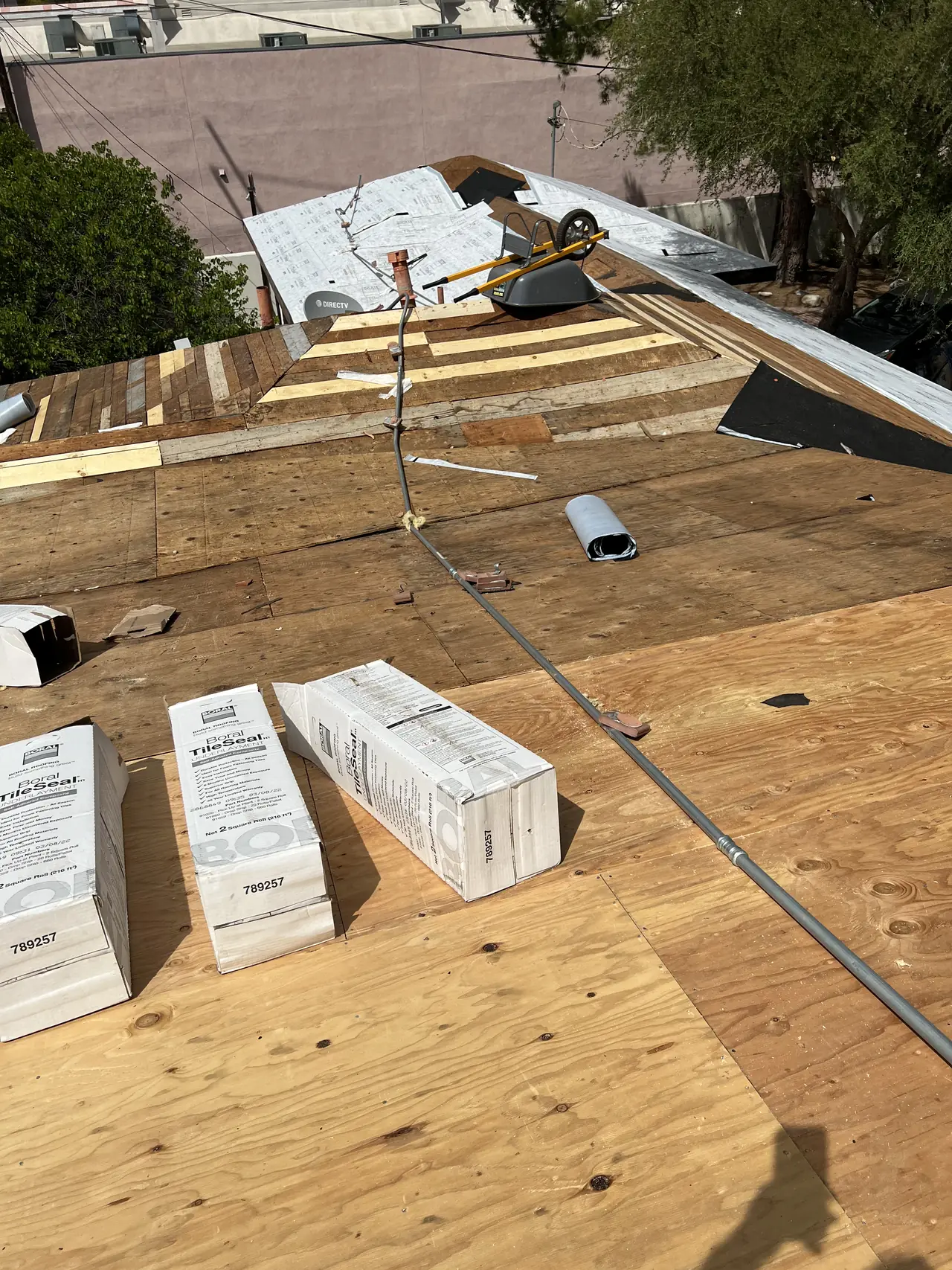
The module count was settled in one exchange. The first proposal was 58 modules at 400 watts, about 23.2 kilowatts. The final one was 57 modules at 405 watts, 23.085 kilowatts. The two modules are the same physical size; the 405-watt version is slightly more efficient, 21.9 percent against 21.6. Going up in wattage meant one fewer module on the tile roof, one fewer microinverter, and one fewer set of attachments cut into tile, for a difference in output of a little over a hundred watts.
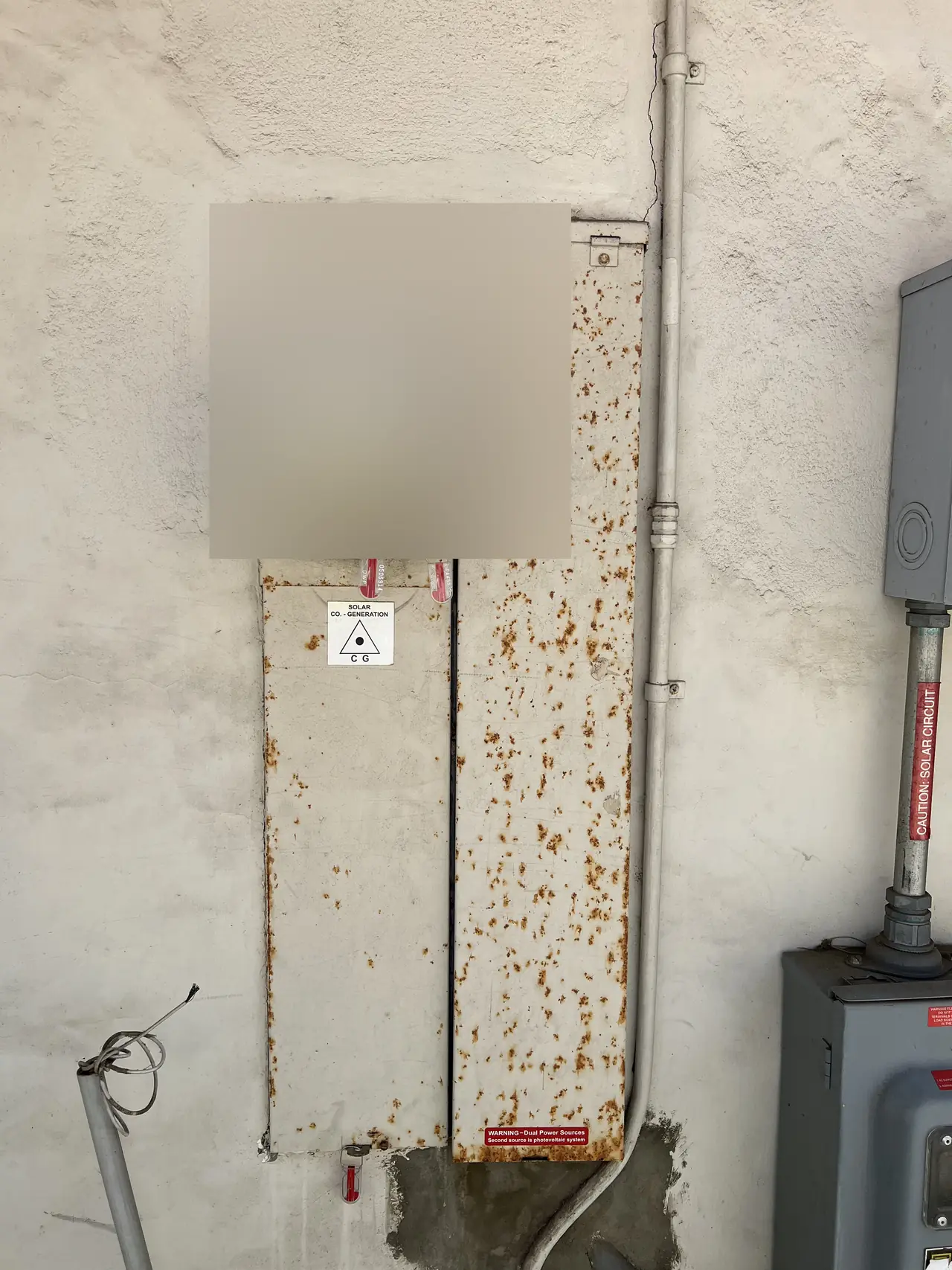
The old service panel was not going to carry any of this. It was a rusted meter panel of the original vintage, and a 23-kilowatt array backfeeds far more current than a panel of that size is allowed to accept. It was replaced with a new 200-amp main panel built solar-ready, with a dedicated 100-amp section for the array. The utility sent a representative to look at the outside electrical equipment on the first of June, before any of it was changed, and issued the meter spot the same day.
The paperwork ran in parallel. The interconnection application and the plan check were both filed on the twenty-sixth of May 2022. The utility confirmed the application at 23.0 kilowatts AC-CEC and approved the interconnection agreement on the seventh of June. The city approved the plans on the thirtieth of June and issued the electrical permit the next day. The array and the panel went in over two days in the middle of July, the final inspection was requested on the twentieth, and the building department's release reached the utility on the twenty-fifth.
Permission to operate came on the thirteenth of August 2022, seventy-nine days after the application. The cost of doing it this way is real: a full tear-off, a new roof, a new panel and 57 new modules is a much larger project than resetting the old array on a patched roof would have been. What it buys is a roof and a system that are the same age, and a service panel that will take a battery later without being opened up again.
How it ran
| March 2022 | Re-roofing permit issued: built-up roofing over new solid sheathing |
|---|---|
| Spring 2022 | Earlier array removed; roof torn off and rebuilt |
| 26 May 2022 | Interconnection application filed at 23.0 kW AC-CEC; plan check submitted to LADBS |
| 1 June 2022 | Utility representative reviewed the outside electrical equipment on site; meter spot issued |
| 7 June 2022 | Interconnection agreement approved |
| 30 June 2022 | Plans approved by LADBS; electrical permit issued 1 July |
| Mid-July 2022 | Array and new 200 A service panel installed over two days |
| 20 July 2022 | Final inspection requested |
| 25 July 2022 | LADBS release transmitted; utility interconnection review completed |
| 13 August 2022 | Permission to operate |
This timeline reflects this property and this permitting path: a full re-roof ahead of the array, and a service panel replacement that the utility inspected in person.
What we did
- Took the earlier array and its two string inverters off the roof and retired them rather than resetting them.
- Replaced the low-slope built-up roof on new solid sheathing before any new attachment was made (C-39).
- Designed a 57-module array for the rebuilt roof, split between the low-slope planes and the tile section, with an Enphase IQ8+ microinverter under each module.
- Revised the plan set before submission: 18-inch fire access path at the top of the array, new panel specification added.
- Replaced the original meter panel with a new 200-amp solar-ready main service panel at the same location (C-10).
- Filed the interconnection application and the plan check on the same day and carried both through to permission to operate in 79 days.
System specifications
| System | 23.085 kW DC |
|---|---|
| Recorded by the utility | 23.0 kW AC-CEC |
| Modules | 57 × REC 405 W, all black |
| Inverters | Enphase IQ8+ microinverters, one per module |
| Layout | 46 modules on the low-slope planes, 11 on the concrete S-tile section |
| Fire access | 18-inch path along the top edge of the array |
| Service panel | New 200 A main panel, solar-ready, with a 100 A section for the array |
| Roof | Low-slope built-up roof replaced on new solid sheathing; S-tile section retained |
| Earlier system | Removed in full, including two string inverters |
| Battery | None |
| Utility / AHJ | LADWP / LADBS |
Is your project like this one?
- You already have solar and your roofer has told you the roof under it needs replacing.
- Your existing system is ten or more years old and runs on string inverters.
- You use far more electricity now than when the first array was sized.
- Your meter panel is the original one and shows rust or heat damage.
- Your Tarzana property is served by LADWP, while permits are handled by LADBS.
Cali Energy in Tarzana
Tarzana is inside City of Los Angeles boundaries: permits run through LADBS, interconnection through LADWP.
Tarzana is a neighborhood in the southwestern San Fernando Valley, inside the City of Los Angeles. Its housing is mostly single-family, on flat streets north of the boulevard and hillside streets south of it.
This installation is on the Tarzana projects page alongside the others, and what the work covers is set out on the Tarzana service area page.
- License and classifications: CSLB #1032379
- Official reference for this process: LAFD Fire Development Services — plan review requirements, including solar photovoltaic systems
- Official reference for this process: LADWP interconnection requirements
Frequently asked questions
Does an existing solar array have to come off for a re-roof?
On a built-up or shingle roof, yes. The roofing runs underneath the array's attachments, so every module and rail comes off before the covering can be stripped. That is a removal-and-reinstall job at minimum. On this house the removal was made permanent: the old modules and inverters were retired and a new system was designed for the rebuilt roof instead.
Why not put the old panels back after the new roof?
Because the old system no longer matched the house. The modules were a generation older and lower in output, the string inverters meant one shaded module pulled down a whole row, and the household's consumption had grown well past what the array was sized for. Reinstalling would have meant paying for labor to put back a system that was already too small.
Why 57 modules and not 58?
The first proposal was 58 modules at 400 watts. Moving to a 405-watt module of the same physical size gave 57 modules at 23.085 kilowatts, within about a hundred watts of the 58-module figure. The module that dropped out was one of the tile-roof modules, which also removed one microinverter and one set of tile attachments.
Did the service panel have to be replaced?
Yes. The existing meter panel was the house's original, visibly rusted, and rated far below what a 23-kilowatt array backfeeds into it. A new 200-amp main panel was installed at the same location, built solar-ready with a dedicated 100-amp section for the array. The utility inspected the outside equipment in person before the change and issued the meter spot the same day.
How long did the whole thing take?
Seventy-nine days from the interconnection application to permission to operate. The application and the plan check went in on the twenty-sixth of May 2022, the city approved the plans on the thirtieth of June, the array went in over two days in mid-July, and LADWP granted permission to operate on the thirteenth of August. The re-roof was done before the application was filed.
Does Cali Energy replace older solar systems in Tarzana?
Yes. Cali Energy holds B, C-10 and C-39 classifications under CSLB #1032379, covering the roof, the electrical and the array, which is what a replacement of this kind involves. Tarzana is inside City of Los Angeles boundaries, so permits run through LADBS and interconnection through LADWP.
What this would look like on your roof
Planning solar in Tarzana? Tell us your utility, your roof and what your bill looks like now, and we will model what a system like this would do on your house before you commit to anything.
Or call +1 (323) 844-7777 · Cali Energy, Northridge · CSLB #1032379 (B, C-10, C-39) — design, permits, install and electrical under one licensed contractor.
Related
This timeline reflects this property and this permitting path. Updated September 2026.