

Atwater Village, CA · February – March 2023 · LADWP / LADBS
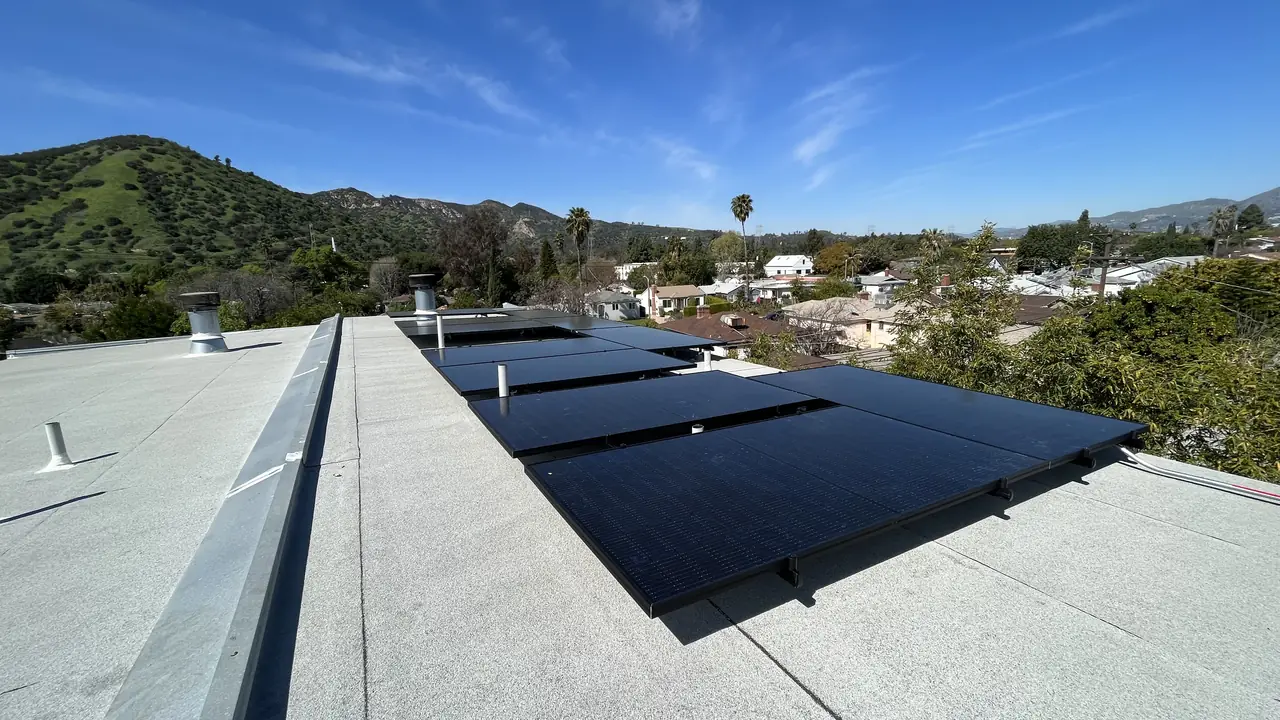
Atwater Village: eighteen modules on the drawing, eighteen on the roof.
Eighteen positions on the drawing, eighteen modules on the roof, and both permits finaled on one Saturday.
A solar module is glass, and one can turn up damaged on installation day — from transport, from handling or from a flaw in the glass. When it does, the array cannot simply be finished one short: the module count, the positions and the circuits all appear on the approved drawings the inspector checks against. The options are to wait for a replacement or to complete the array with a module already on hand. On this 7.02 kW Atwater Village project Cali Energy completed the array eight days later and took both permits, solar and car charger, to final inspection on the same Saturday.
At a glance
- System
- 7.02 kW
- Array
- 18 Canadian Solar modules, 390 W each
- Inverters
- One Enphase IQ8+ microinverter per module
- Also in scope
- A level 2 EV charger, permitted separately
- Utility / AHJ
- LADWP / LADBS
The story
Eighteen Canadian Solar modules at three hundred and ninety watts, an Enphase IQ8+ microinverter behind each, a level 2 car charger, and a flat roof. The crew went out on the Tuesday.
Two things on installation day shaped the rest of the project.
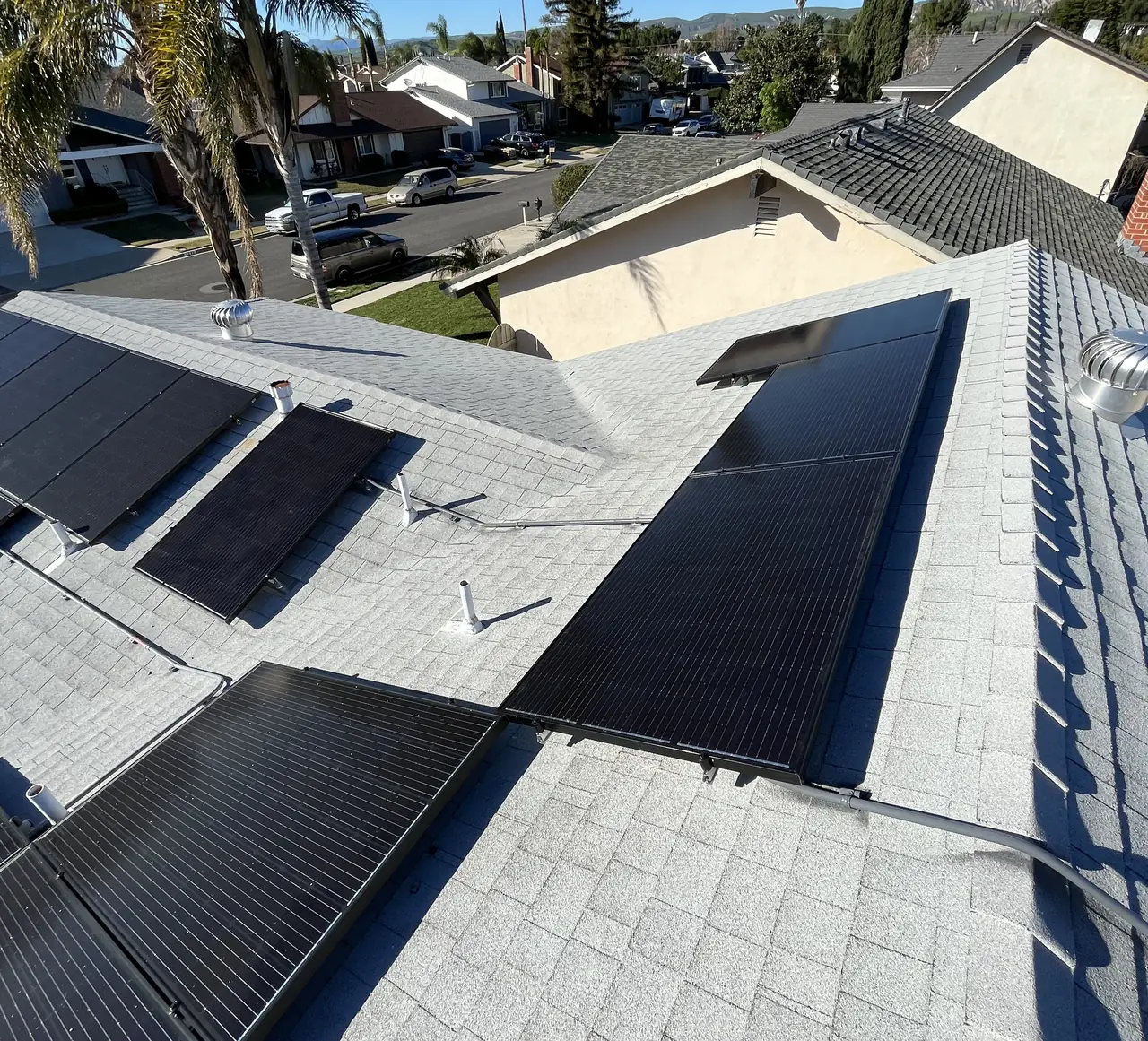
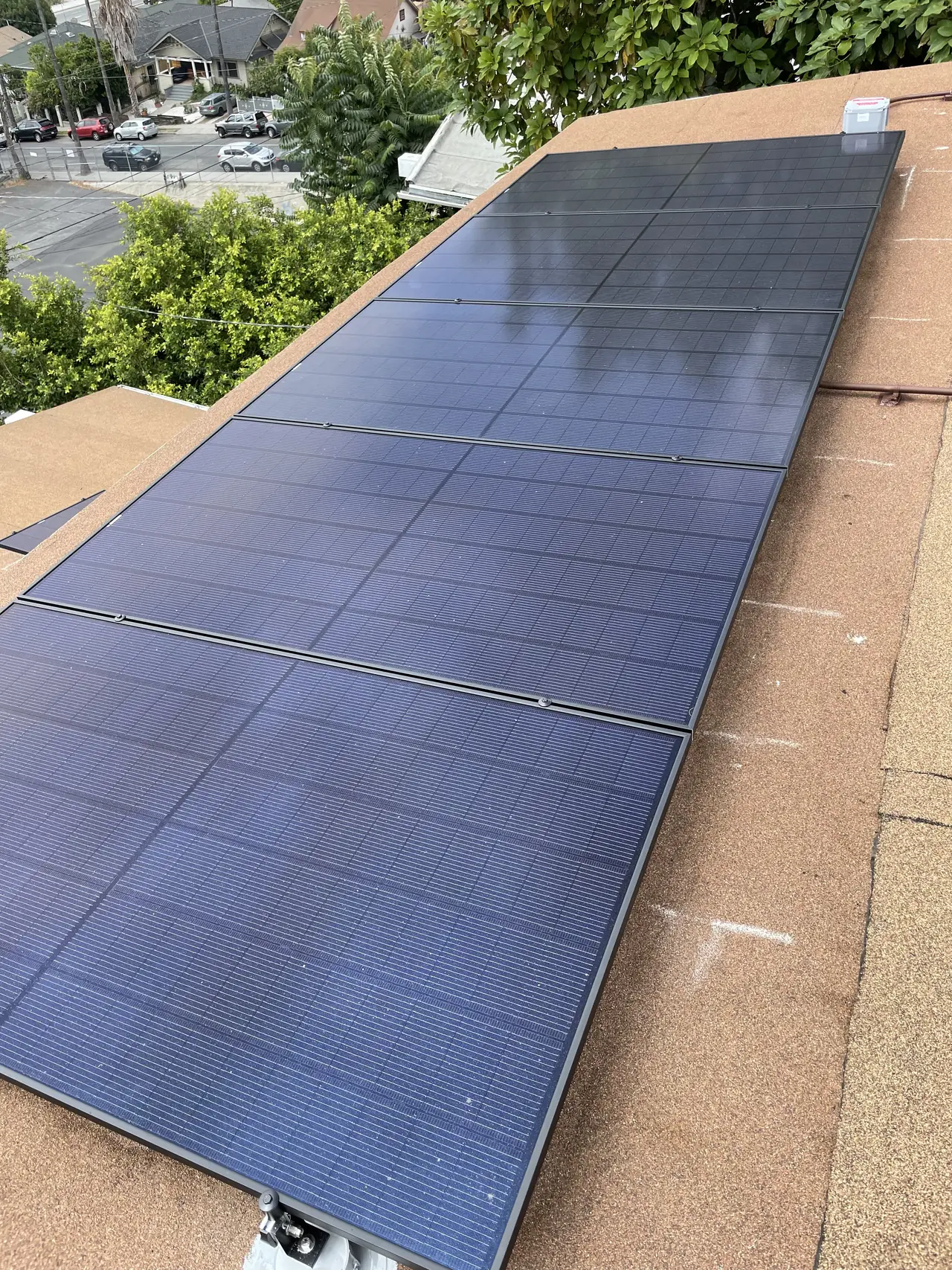
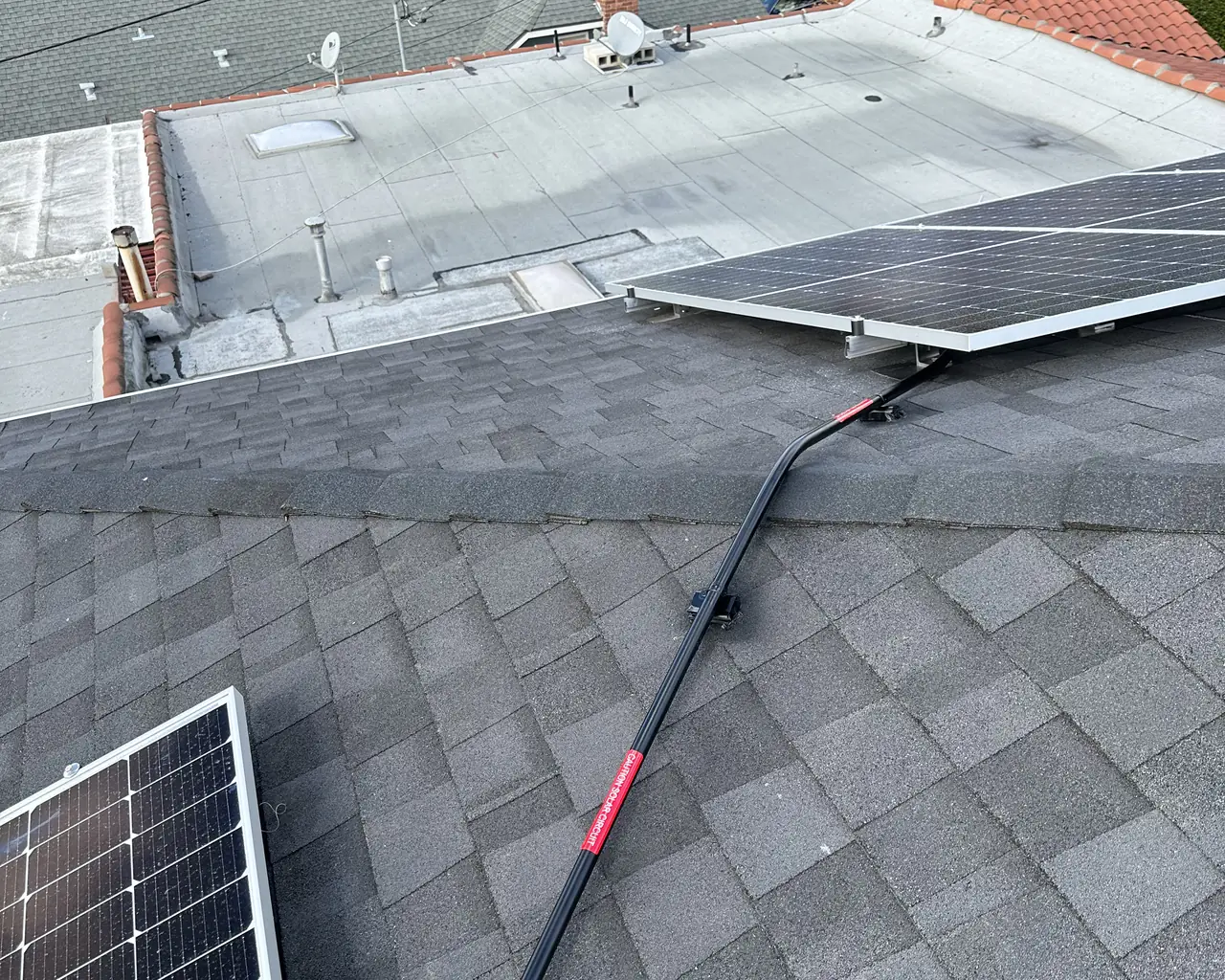
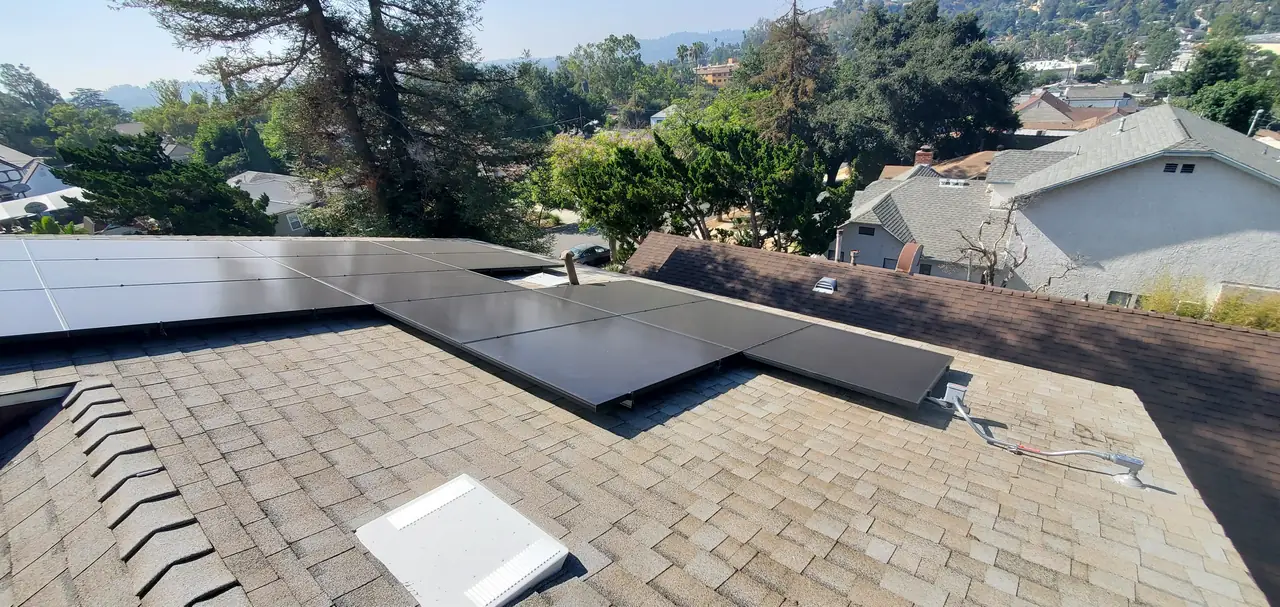
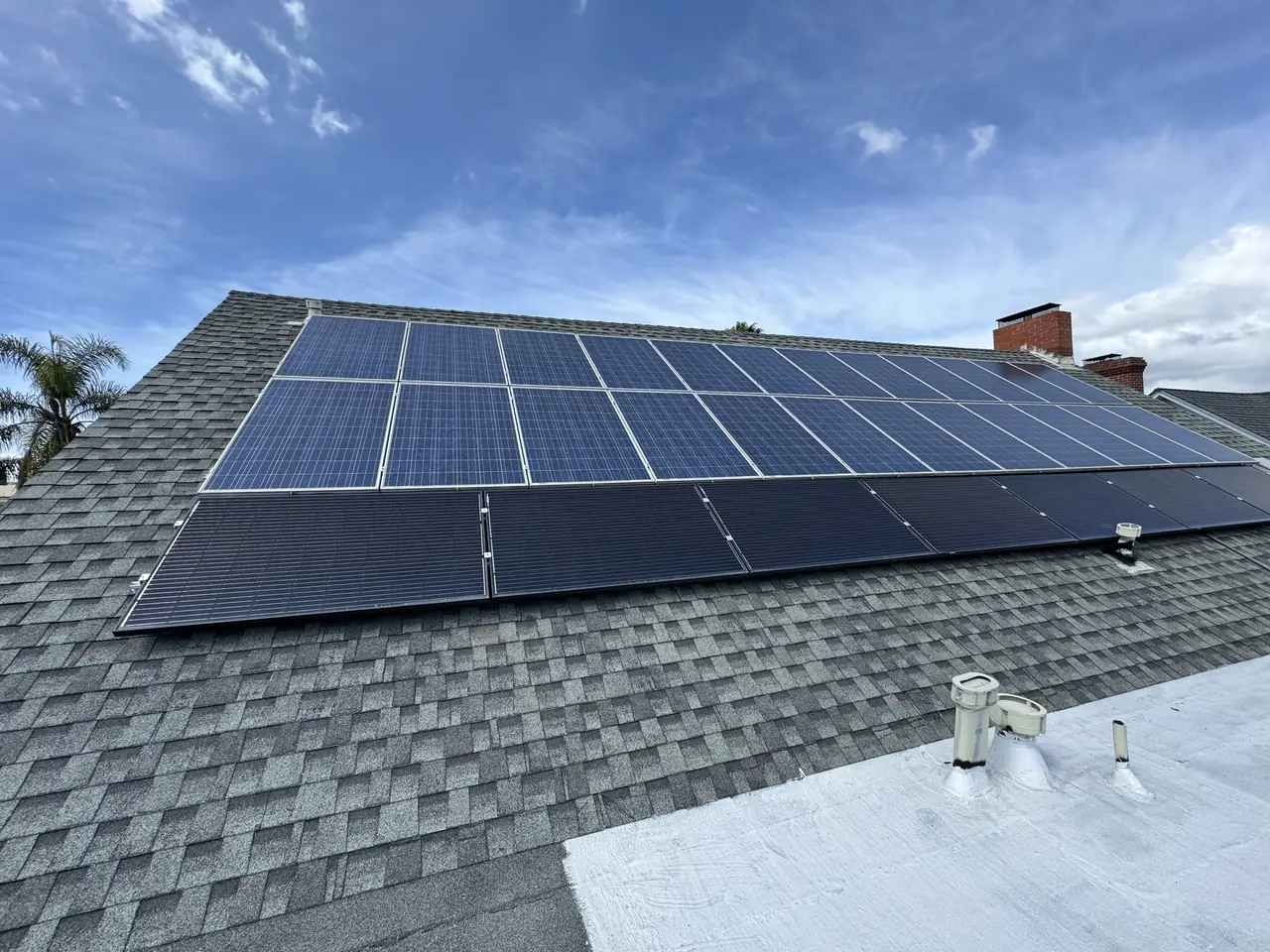
The first was the layout. The design had the modules tilted; on the roof it changed to flush, laid flat on the surface, and the revision was issued and approved the same morning. Decisions like that get made on the roof because the roof is where the information is, and the thing that makes them safe is issuing the revised drawing immediately rather than at the end of the week.
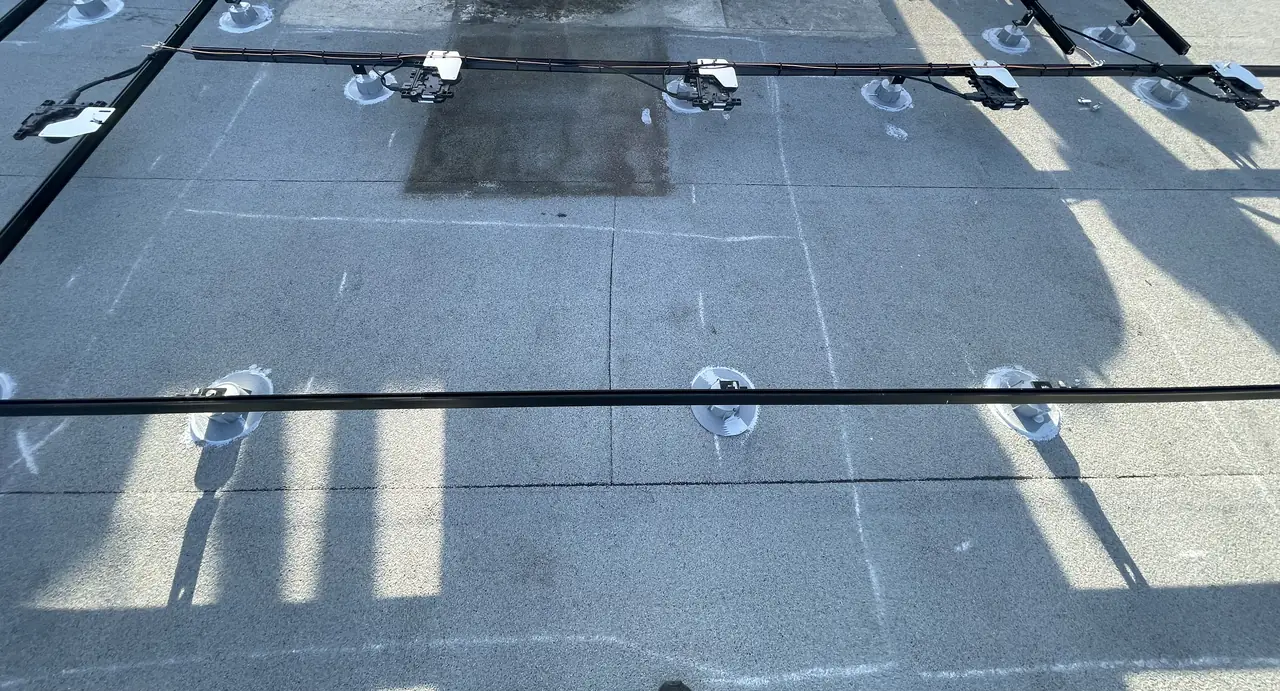
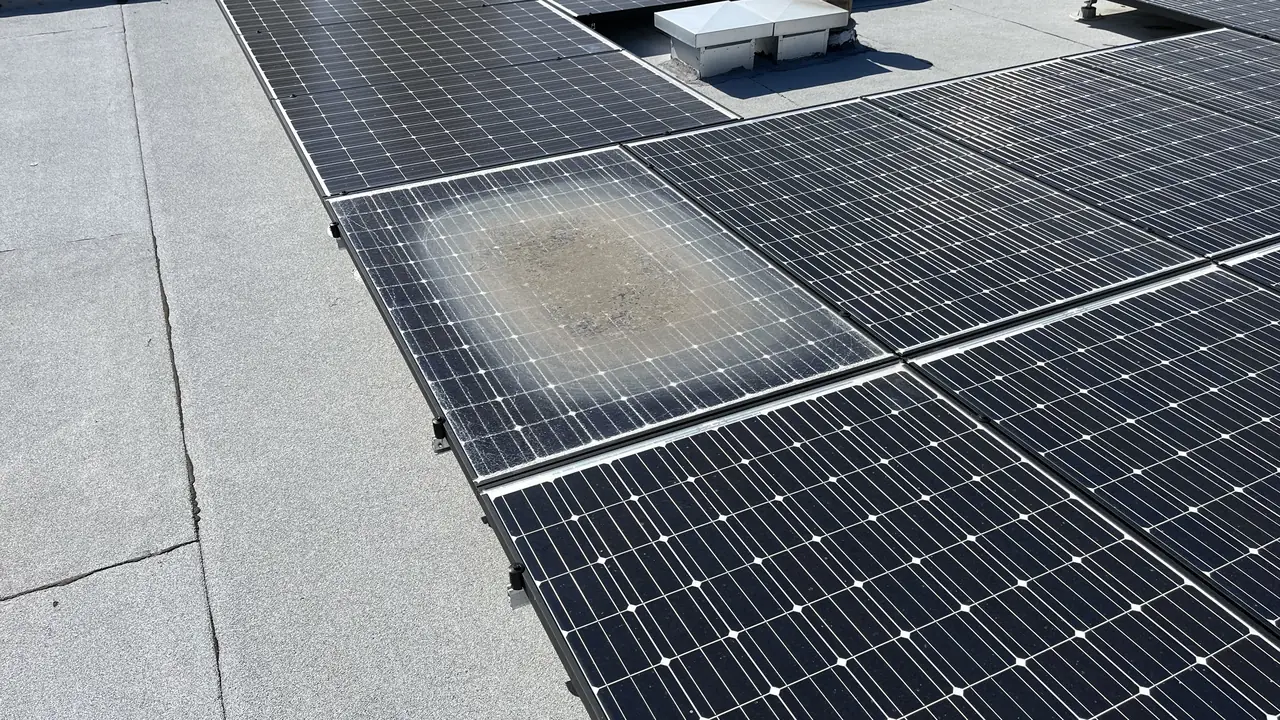
The second was a module found damaged on the day, which left the array one short of its approved count.
A module is glass in an aluminum frame, and a crack can come from transport, from handling or from a flaw in the glass. It is not always visible until the module is on the roof.
What is not obvious is why the array cannot simply be finished with seventeen.
The approved drawings state a module count, show where each one sits, and describe the circuits. The inspector checks the installation against that set. An array one module short does not match it, and a microinverter position with nothing on it is a circuit that does not match the single-line diagram either. So the choice is not between finishing and not finishing — it is between two ways of getting to eighteen.
The first is to order a replacement and come back when it lands. That is clean, and it costs whatever the supply chain costs — in a bad month, weeks of an array standing finished and not final.
The second is to complete the array with a module already on hand and let the replacement follow behind it. That is faster, and what it turns on is whether the panel on hand is one the approved design accepts: same make, same model, same rating, same listing. Where it is not, the substitution stops being a panel swap and becomes a drawing revision, with the layout, the clearances and the structural load all back in play.
Here a spare was available, the crew came back eight days later and completed the array with it, and the replacement panel was already on its way.
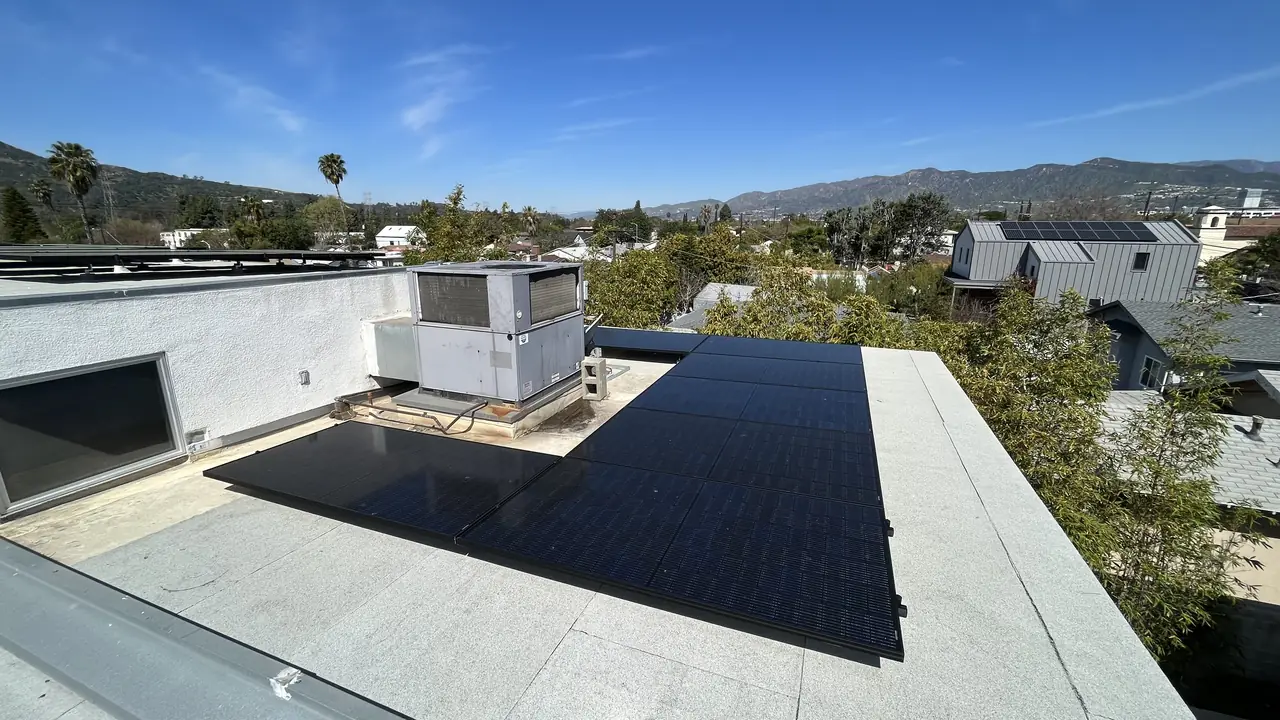
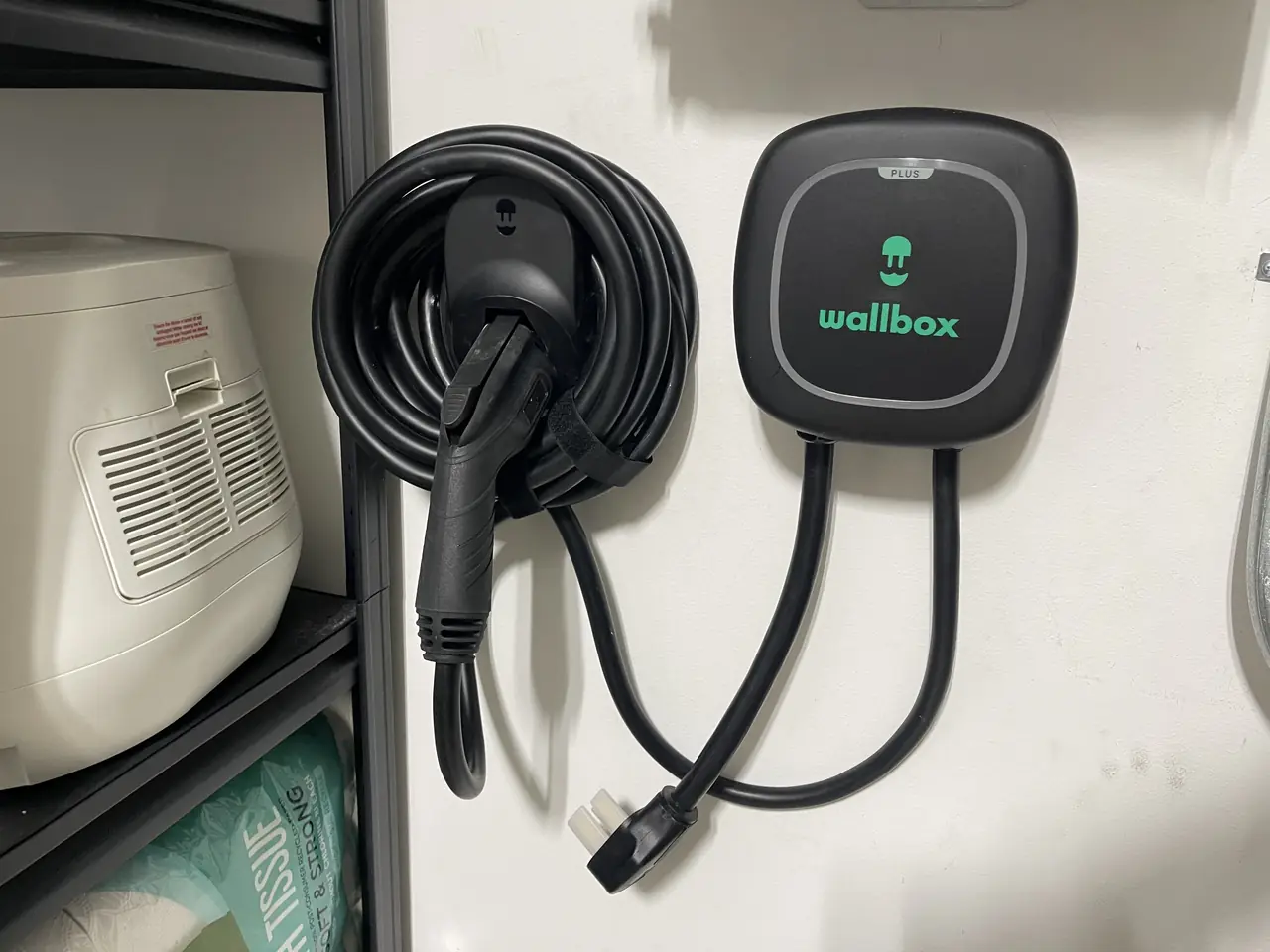
Both permits reached their final inspections on the same Saturday: the solar and the car charger, which is its own scope and its own permit.
Cali Energy installed, completed and finaled this 7.02 kW array in Atwater Village, Los Angeles, and the house has run on it, car charger included, since it was switched on.
How it ran
| 27 February 2023 | Project scheduled — 18 Canadian Solar 390 W modules, an Enphase IQ8+ behind each, plus a level 2 EV charger |
|---|---|
| 28 February 2023 | Separate permit pulled for the charger scope |
| 7 March 2023 | Installation day; layout revised from tilted to flush and approved the same morning |
| 7 March 2023 | One module set aside as damaged |
| 9 March 2023 | Array to be completed with a spare on hand, replacement panel on order; return visit set for the 15th |
| 14 March 2023 | Return visit confirmed |
| 15 March 2023 | Array completed |
| 18 March 2023 | Final inspections on both permits |
Eight days from installation to an array complete to its approved count.
What we did
- Issued the revised layout the same morning it changed on the roof.
- Completed the array to its approved module count rather than leaving a position empty.
- Returned eight days later, with the replacement panel already on order.
- Carried both permits to final inspection on the same day.
System specifications
| System | 7.02 kW |
|---|---|
| Modules | 18 × Canadian Solar 390 W |
| Inverters | One Enphase IQ8+ microinverter per module |
| Roof | Flat |
| Layout | Revised on site from tilted to flush, approved the same day |
| EV charger | Separate permit scope |
| Utility / AHJ | LADWP / LADBS |
Is your project like this one?
- Your array is finished except for one position.
- Somebody has offered to substitute a different module.
- Your project includes a car charger and you are unsure about permits.
Cali Energy in Atwater Village
Atwater Village is City of Los Angeles across the river from Griffith Park, permitted through LADBS and interconnected through LADWP. Flat and low-slope roofs are common here, which changes both the layout and what it takes to work on one.
This installation is on the Los Angeles projects page alongside the others, and what the work covers is set out on the Los Angeles service area page.
- License and classifications: CSLB #1032379
- Official reference for this process: California Energy Commission — solar equipment lists
- Official reference for this process: LADBS — inspection
Frequently asked questions
What happens if a module is damaged before an array is finished?
The array cannot be completed one short. The approved drawings state the module count, the positions and the circuits, and the inspector checks the installation against them. The choice is between ordering a replacement and returning, or completing the array with a module already on hand.
Can a different panel be substituted for a broken one?
Only within what the approved design accepts — same make, model, rating and listing. A module that looks the same but carries a different model number puts the installation outside the design it was permitted against and the equipment listing behind it, which turns a one-panel problem into a drawing revision.
Does a car charger need its own permit?
It is its own scope, and on this Atwater Village project it was permitted separately from the solar. Both permits then have their own final inspection — here they happened to fall on the same day, which is convenient rather than automatic.
Does Cali Energy install solar in Atwater Village, Los Angeles?
Yes. Atwater Village projects are permitted through LADBS and interconnected through LADWP, and flat and low-slope roofs are common here — which makes the layout decision, tilted or flush, a real one rather than a formality.
What this would look like on your roof
Planning solar in Atwater Village? Tell us your utility, your roof and what your bill looks like now, and we will model what a system like this would do on your house before you commit to anything.
Or call +1 (323) 844-7777 · Cali Energy, Northridge · CSLB #1032379 (B, C-10, C-39) — design, permits, install and electrical under one licensed contractor.
Related
This timeline reflects this property and this permitting path. Updated September 2026.