

El Sereno, CA · May – July 2022 · LADWP / LADBS
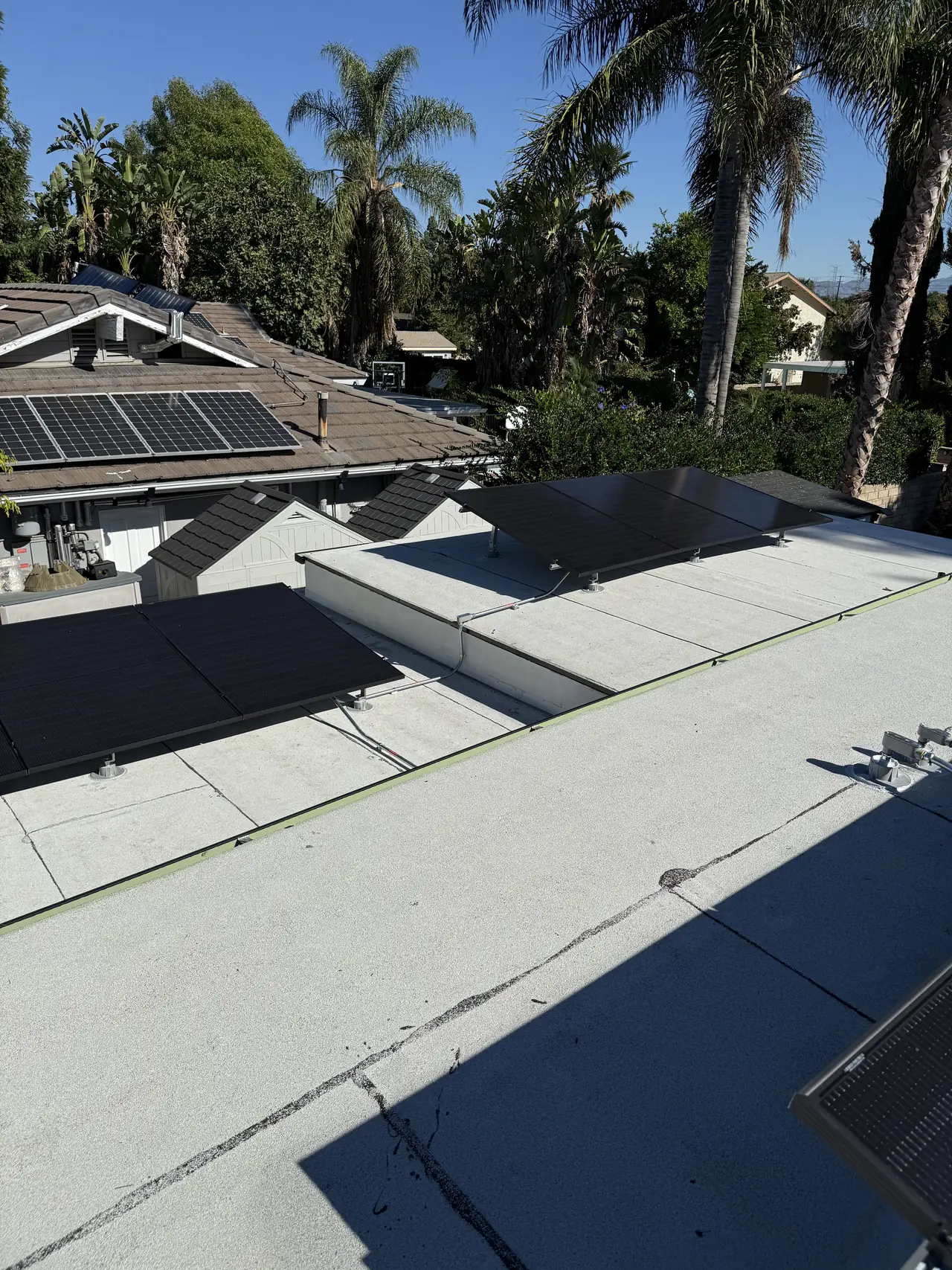
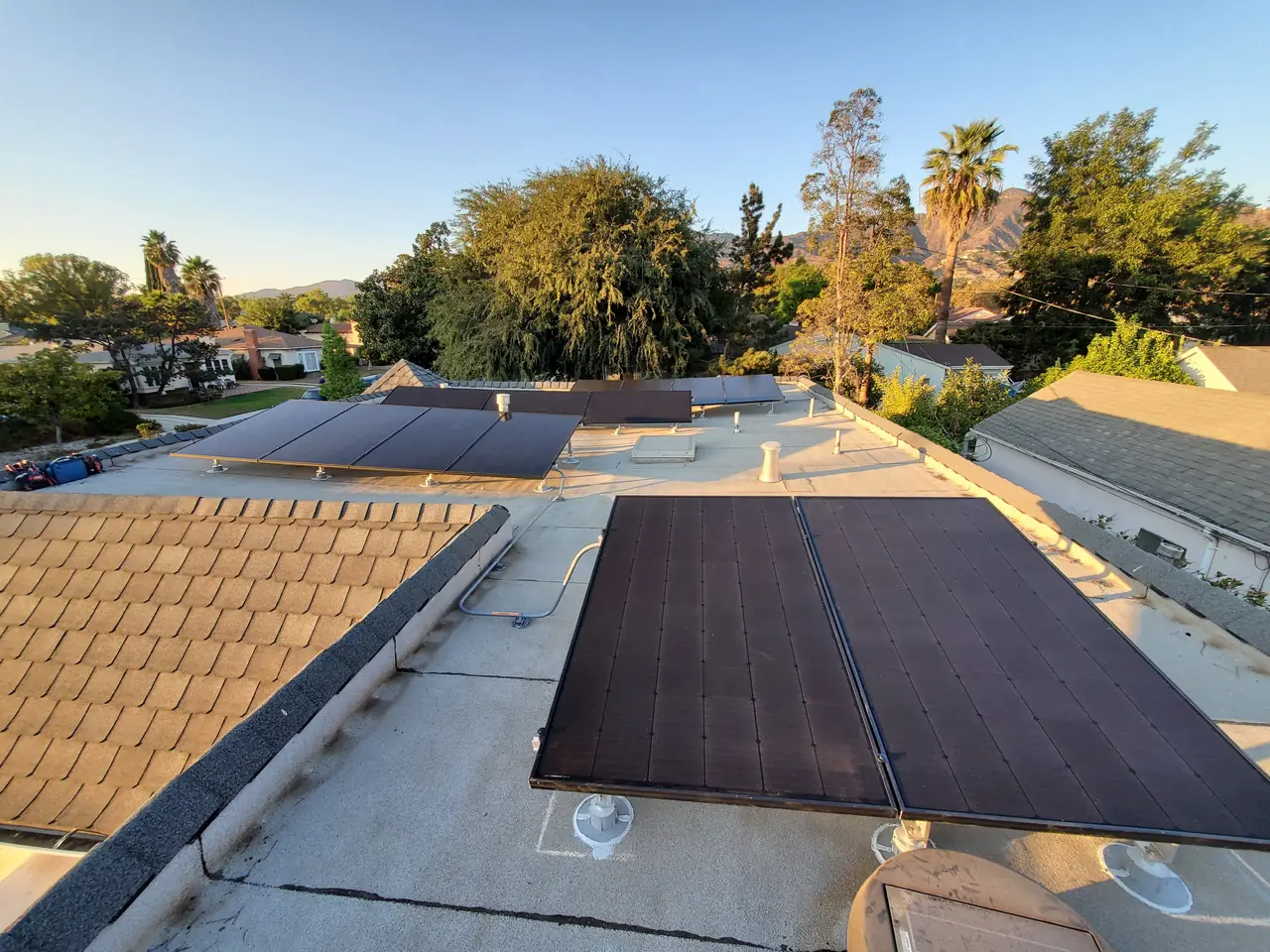
El Sereno: seven of thirteen panels went on tilt frames.
The design brief said it in one line: these seven are tilted, the rest are not. That line is the whole design.
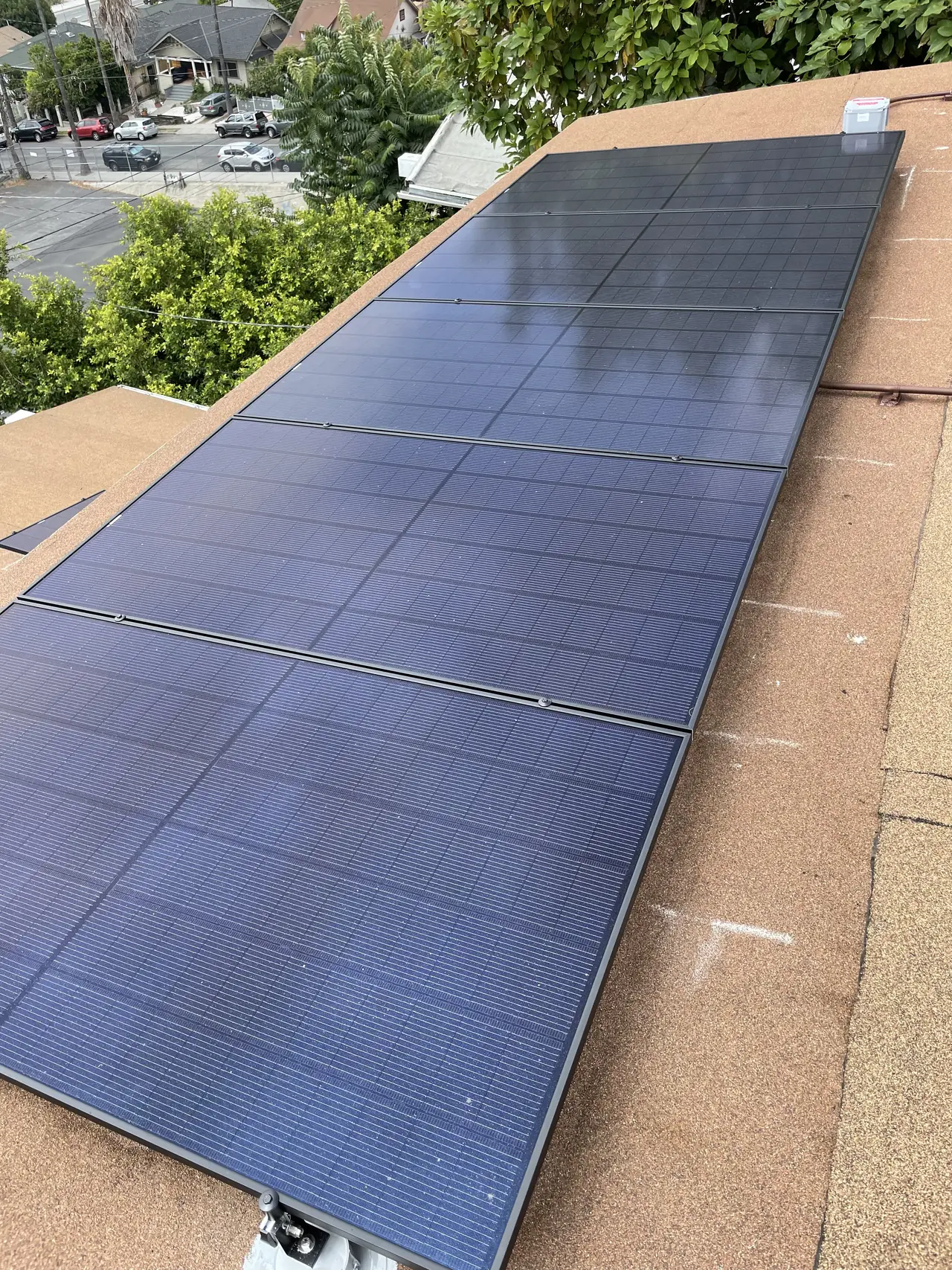
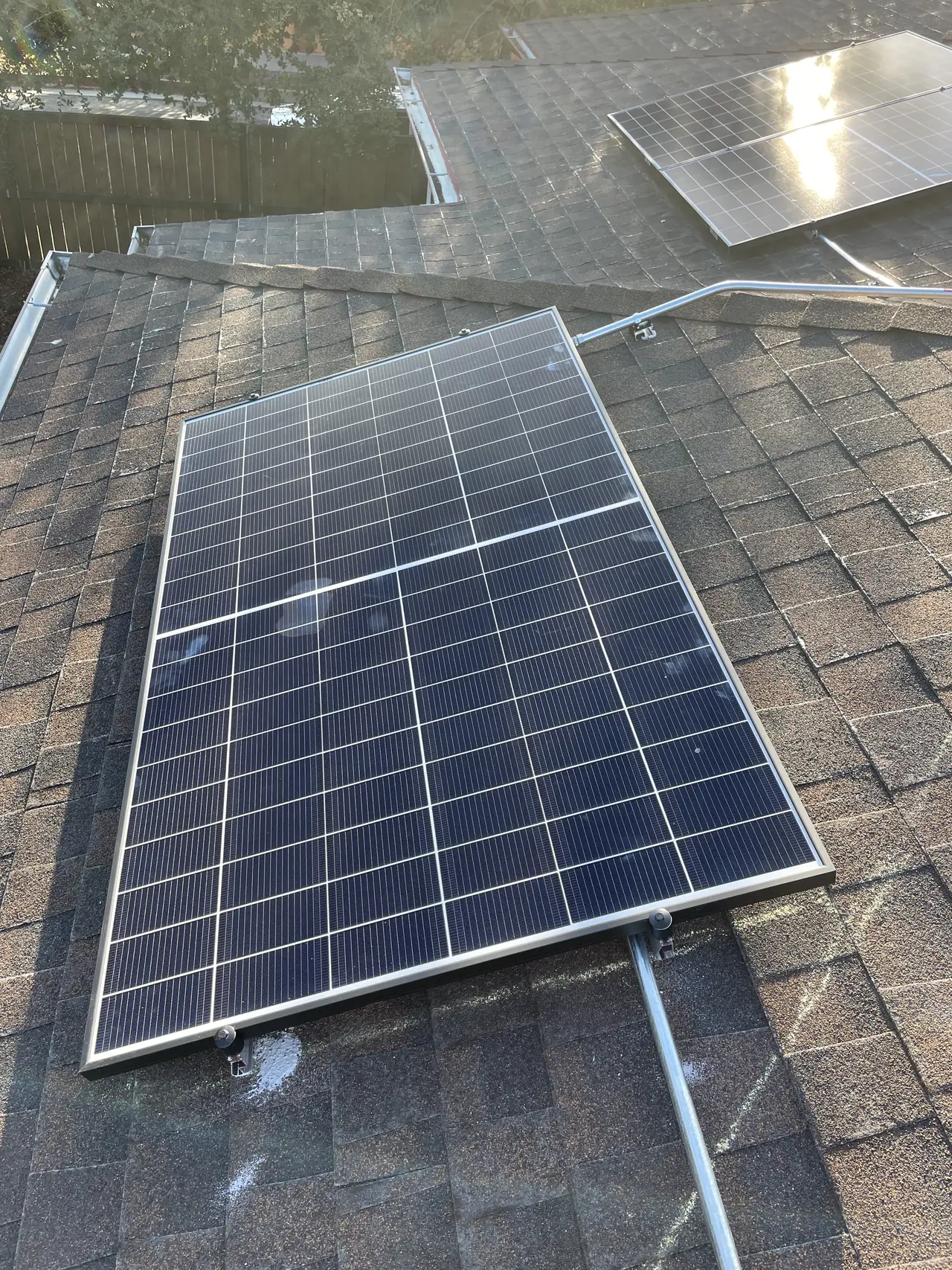
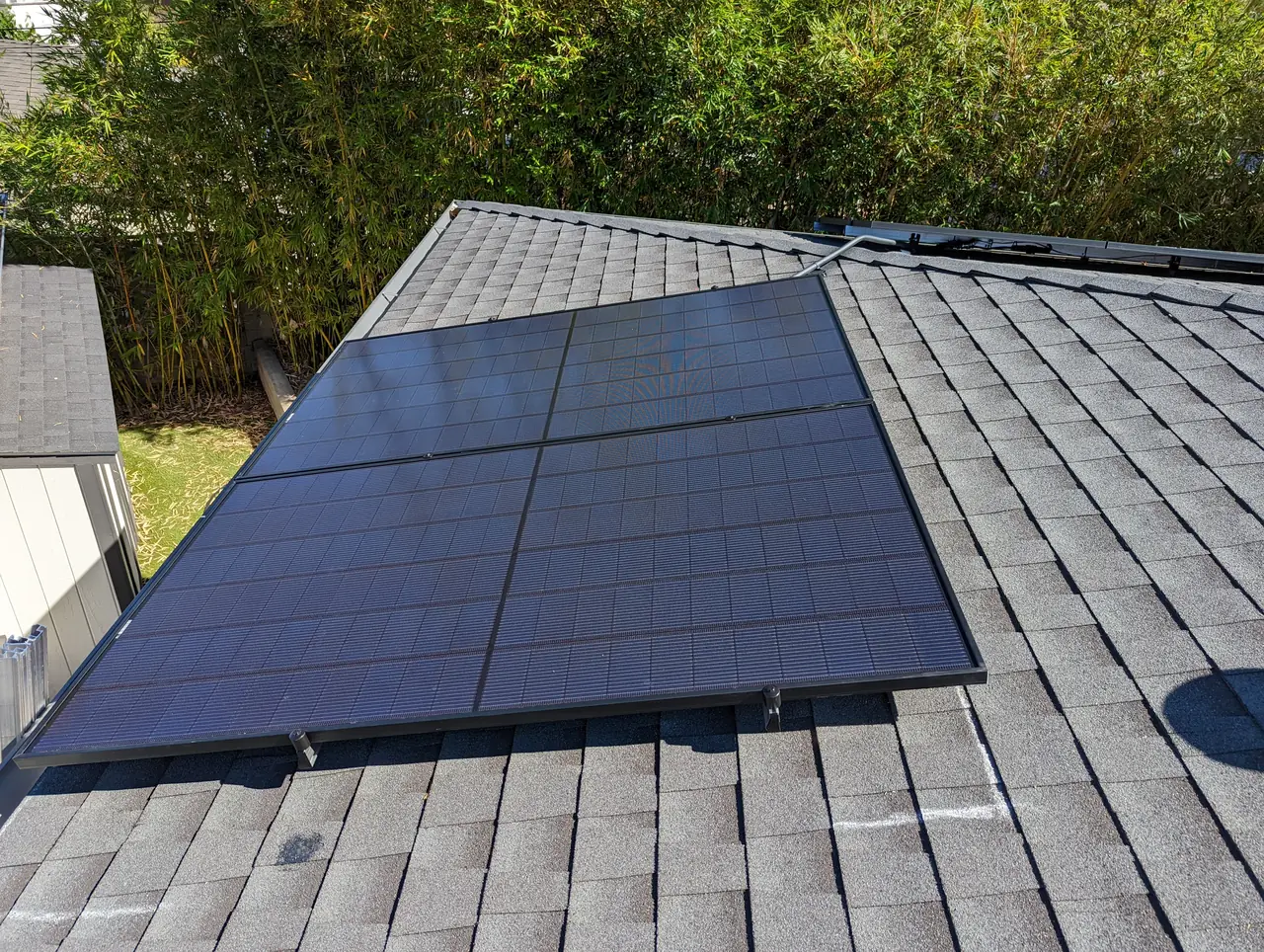
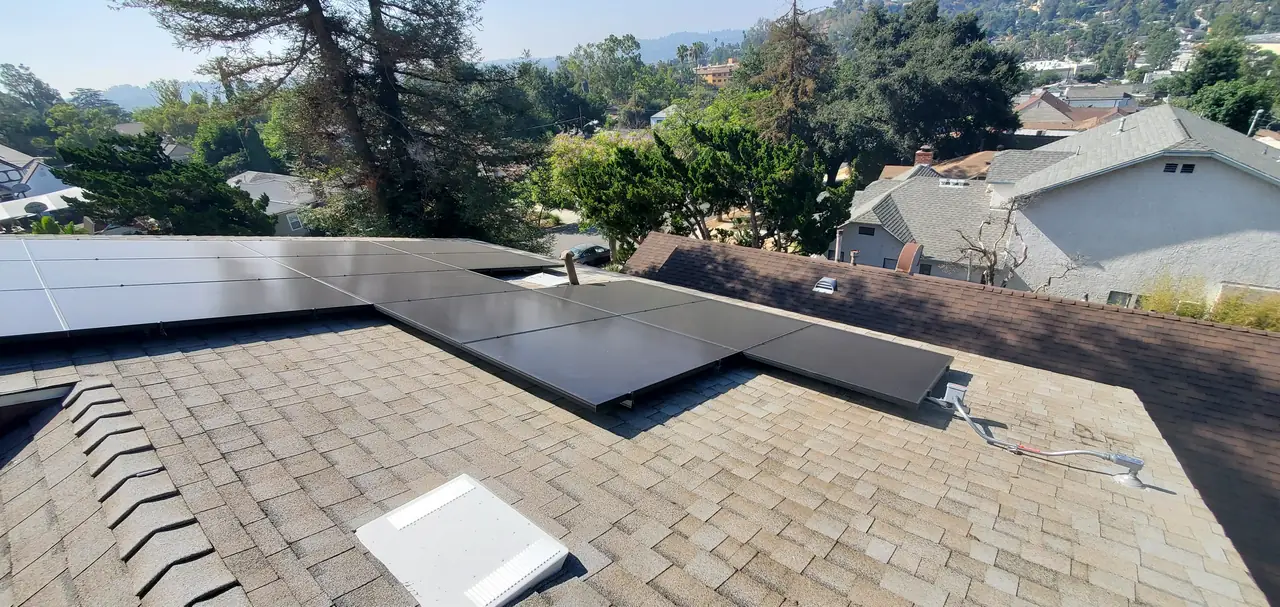
Modules mounted flush follow whatever pitch and direction the roof already has. Tilt frames lift them off a low-slope or badly oriented section and set the angle independently, at the cost of wind loading, extra structure and wider spacing between rows. A roof made of more than one kind of surface therefore gets more than one answer. On this 5.3 kW AC-CEC El Sereno project Cali Energy tilted seven of the thirteen modules, laid the remaining six flush, and upgraded the service to 200 amps.
At a glance
- System
- 5.3 kW AC-CEC
- Array
- 13 modules, 405 W each
- Inverters
- One microinverter per module
- Mounting
- Seven on tilt frames, six flush
- Service
- Upgraded to 200 A
- Permission to operate
- 18 July 2022
- Utility / AHJ
- LADWP / LADBS
The story
The design brief for this project contained a sentence most people would read past: the seven panels marked on the drawing should be tilted. The other six were not. One array, one roof, two ways of mounting it.
That is worth unpacking, because the choice comes up on a great many Los Angeles roofs and almost nobody explains it.
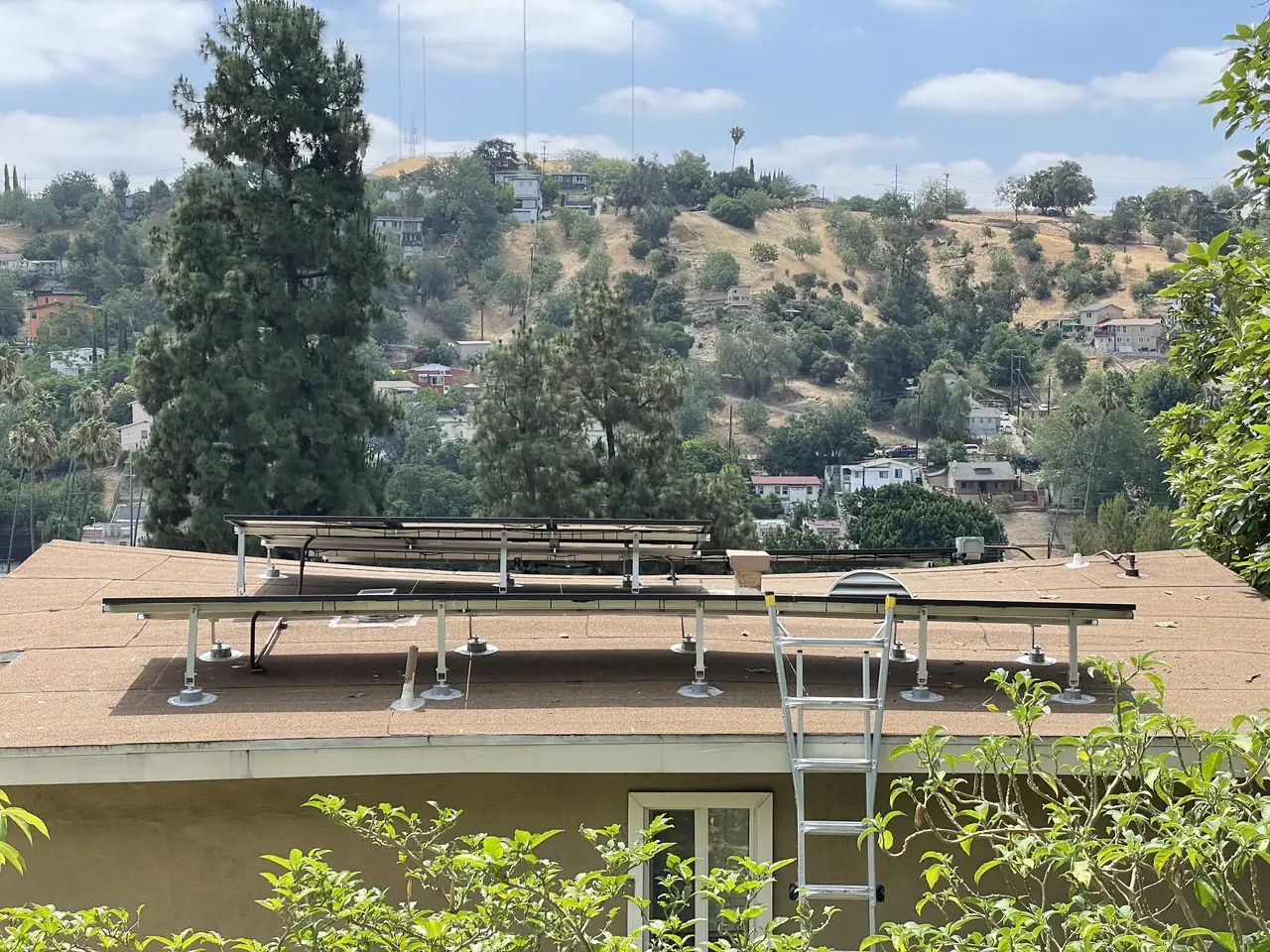
A module mounted flush sits a few inches above the roof and takes whatever pitch and direction that surface already has. It is the cheaper, simpler, lower-profile answer, and on a face that already points somewhere useful at a sensible angle it is the right one. Nothing is gained by lifting a panel off a roof that is already doing the job.
A tilt frame lifts the module clear and sets its angle independently of the surface underneath. On a flat or very low-slope section that is the only way to give the panels an angle at all, and on a section facing the wrong way it is how the array gets turned back toward the sun.
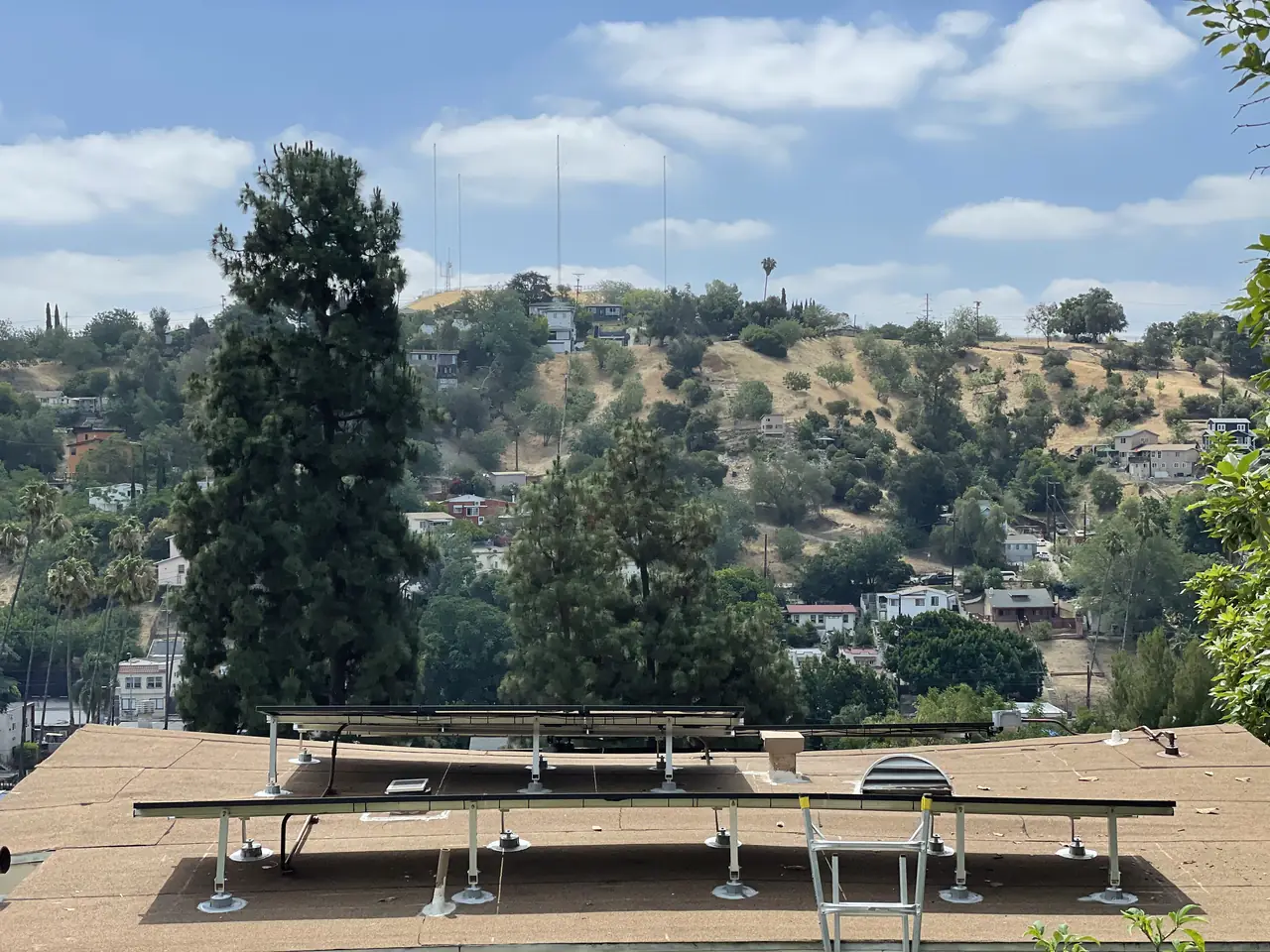
Tilting is not free, and the costs are the reason it is used selectively rather than everywhere.
A tilted panel catches wind the way a flush one does not, so the structure holding it down is heavier and the attachment into the roof is engineered for uplift. That shows up in the drawings and it shows up in plan check.
Tilted rows also shade one another. A flush array can be laid almost edge to edge; a tilted one needs space between rows so the front row does not throw a shadow across the back of the next one through the winter. The same area of roof therefore carries fewer modules when they are tilted, which is the trade at the heart of the decision — better angle on each panel, fewer panels in total.
And a tilted array stands proud of the roof, which on some streets is a design question and on others is the reason a homeowner says no.
So the rule is: tilt where the surface gives you nothing and lie flush where it already does. A roof with both kinds of surface gets both answers, and a proposal that applies one of them everywhere has skipped the question.
The second half of this project was the service. Thirteen modules with a microinverter behind each is not a large system, but the existing service was not sized to take it, so the house went to two hundred amps as part of the work. That is a common pairing on older northeast Los Angeles housing and it is better decided at design than discovered at plan check.
The rest ran cleanly. The design brief went out on the twenty-fifth of May and the drawings came back the next day. The utility charge cleared on the third of June. On the sixth the meter spot sheet was issued and the first four progress notices all landed together. Permission to operate came on the eighteenth of July.
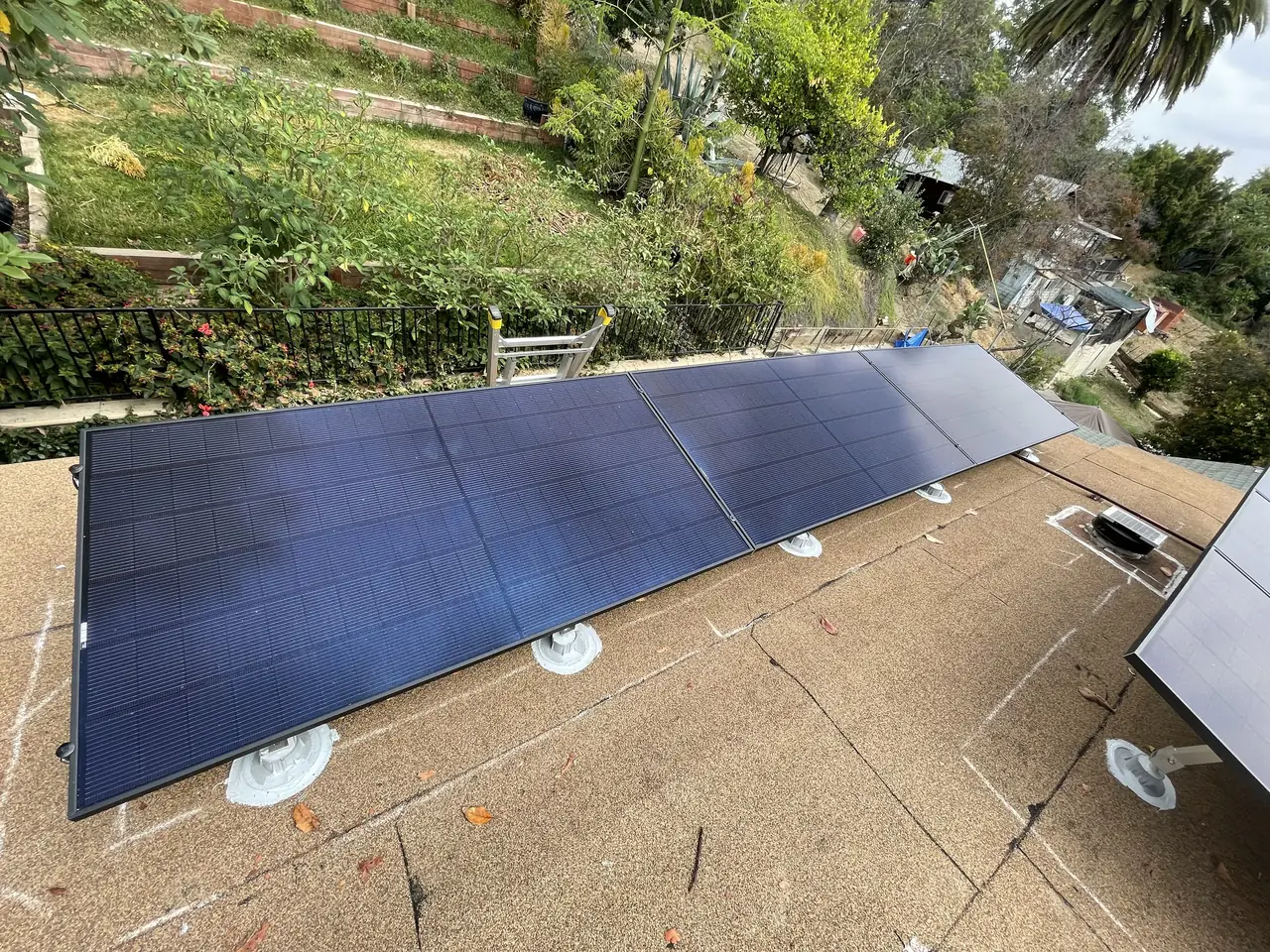
Cali Energy designed, permitted and interconnected this 5.3 kW array in El Sereno, Los Angeles, and carried out the service upgrade with it.
How it ran
| 25 May 2022 | Design brief issued — 13 modules, seven of them tilted, service to 200 A |
|---|---|
| 26 May 2022 | Drawings returned |
| 3 June 2022 | Interconnection request confirmed; utility charge cleared |
| 6 June 2022 | Meter spot sheet issued; first four progress notices recorded together |
| 8–9 June 2022 | Array installed |
| 15 June 2022 | Document set issued |
| 18 July 2022 | Meter set and permission to operate |
Eight weeks from the design brief to a running system, with the mounting decided before anything was drawn.
What we did
- Settled the mounting method per roof section before the drawings were made.
- Tilted only the modules whose surface gave them nothing.
- Sized the service upgrade into the design rather than leaving it to plan check.
- Closed the first four interconnection steps in a single day.
- Carried the project through to permission to operate in July.
System specifications
| System | 5.3 kW AC-CEC |
|---|---|
| Modules | 13 × 405 W |
| Inverters | One microinverter per module |
| Tilted | Seven modules on frames |
| Flush | Six modules following the roof |
| Service | Upgraded to 200 A |
| Utility / AHJ | LADWP / LADBS |
Is your project like this one?
- Part of your roof is flat and part of it is pitched.
- A proposal shows every panel mounted the same way on a mixed roof.
- You have been told tilt frames fit more panels — or fewer.
- Your system needs a service upgrade and nobody has said so yet.
Cali Energy in El Sereno
El Sereno is City of Los Angeles on the northeast side, permitted through LADBS and interconnected through LADWP. The houses are small and the roofs are rarely one clean plane, which is how a single array ends up mounted two different ways.
This installation is on the Los Angeles projects page alongside the others, and what the work covers is set out on the Los Angeles service area page.
- License and classifications: CSLB #1032379
- Official reference for this process: California Energy Commission — solar equipment lists
- Official reference for this process: LADWP — Electric Service Requirements Manual
Frequently asked questions
When should solar panels be tilted rather than laid flush?
Tilt where the surface gives the panels nothing — a flat or very low-slope section, or a face pointing the wrong way. Lie flush where the roof already has a usable pitch and direction, because nothing is gained by lifting a panel off a surface that is already doing the job. A roof with both kinds of surface gets both answers.
Why not tilt the whole array?
Because tilting costs. A tilted panel catches wind, so the structure and the roof attachments are heavier and engineered for uplift. Tilted rows also shade one another, so they need space between them and the same roof area carries fewer modules. Better angle on each panel, fewer panels overall — that is the trade.
Does tilting fit more panels on a roof?
No — fewer. A flush array can be laid nearly edge to edge; a tilted one needs row spacing so the front row does not shade the back of the next one through the winter. What tilting buys is a better angle on the panels that are there, not more of them.
Why did a small system need a service upgrade?
Because what matters is the existing service rather than the array on its own. The busbar has to carry the main breaker plus the solar backfeed within the limit the code sets, so an older, smaller service can run out of room for a system that would fit easily on a modern one. On this El Sereno project thirteen modules came with an upgrade to two hundred amps.
Does Cali Energy install solar in El Sereno, Los Angeles?
Yes. El Sereno is inside city limits, permitted through LADBS and interconnected through LADWP. The housing here is small and older, the roofs are rarely one clean plane, and the service equipment often needs work alongside the array — all of which is settled at design rather than on the day.
What this would look like on your roof
Planning solar in El Sereno? Tell us your utility, your roof and what your bill looks like now, and we will model what a system like this would do on your house before you commit to anything.
Or call +1 (323) 844-7777 · Cali Energy, Northridge · CSLB #1032379 (B, C-10, C-39) — design, permits, install and electrical under one licensed contractor.
Related
This timeline reflects this property and this permitting path. Updated September 2026.