

North Hollywood, CA · November 2019 – April 2023 · LADWP / LADBS
Two modules went patchy under the glass. Then the claim began.
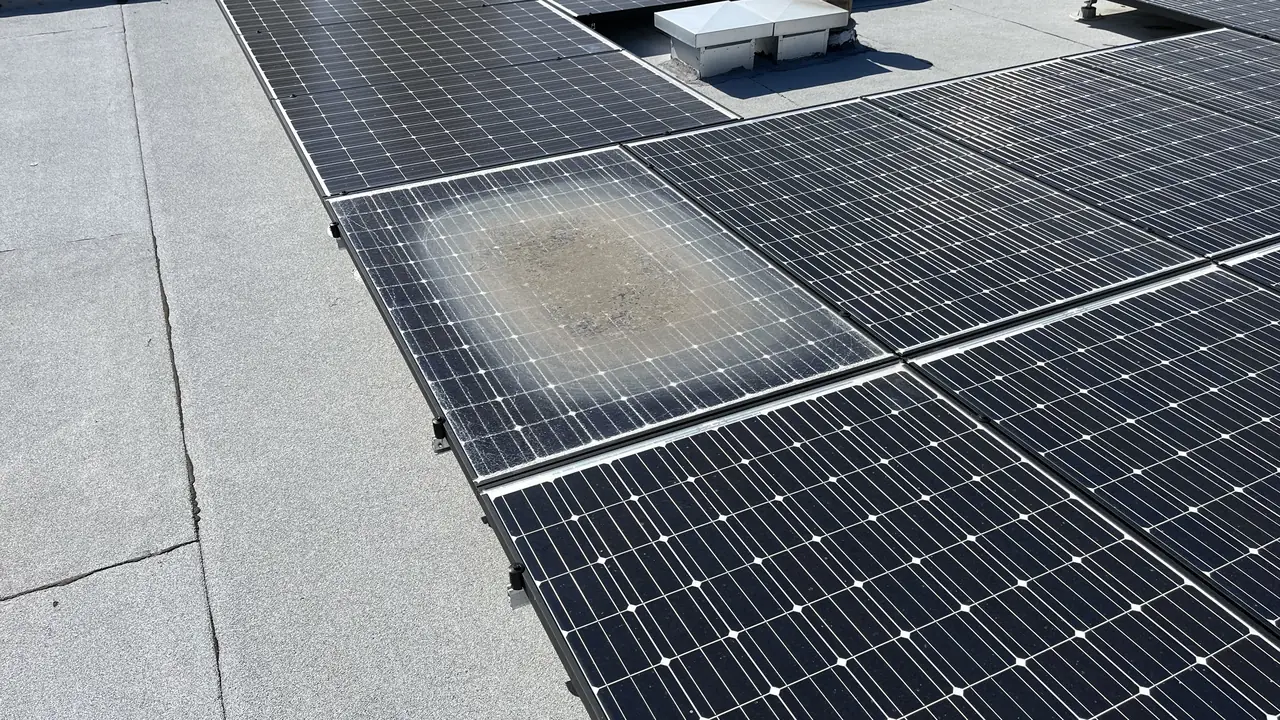
A 14.8 kilowatt array switched on in January 2020. Three years later two modules had large discoloured patches spreading under intact glass — and the warranty process turned out to be mostly photography.
A module warranty claim is not a phone call. The manufacturer's quality team decides it from evidence, and the evidence is photographic: the failure itself in high resolution, the serial number of each affected module, and a claim form that separates physical damage from low output because they are judged differently.
At a glance
- System
- 14.8 kW
- Modules
- Panasonic VBHN330SA17
- Installed
- 2019
- Switched on
- January 2020
- Failure reported
- April 2023
- Modules affected
- Two — large discoloured patches, glass intact
- Claim decided by
- Manufacturer's quality team
- Utility / AHJ
- LADWP / LADBS
The story
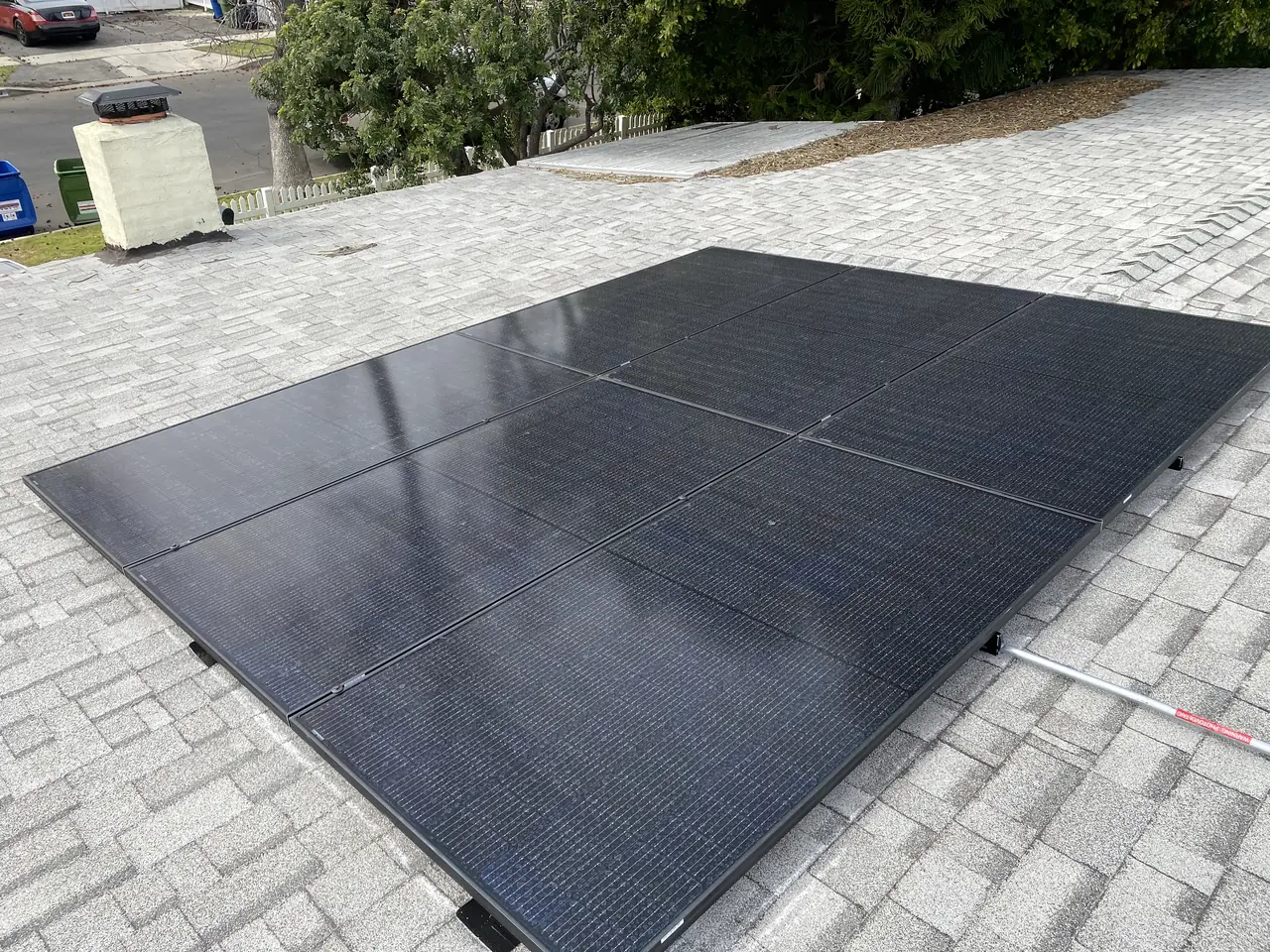
The installation was unremarkable and quick. The interconnection request went in at the start of November 2019; five progress notices arrived together on the nineteenth; the meter spot sheet followed three days later; the installation was released on the tenth of January 2020 and permission to operate came four days after that. Fourteen point eight kilowatts of Panasonic VBHN330SA17 modules on a flat roof.
Three years later the owner called. Two modules had developed large discoloured patches under the glass — brown and grey mottling across a good part of the cell area, visible from the far side of the roof. The glass on both was intact.
What that does to output is a separate question from what it looks like, and the two are worth keeping apart. A module with that much of its area affected will produce less than its neighbours. How much less is a measurement — per-module data, or a clamp on the string — not something anybody reads off a photograph.
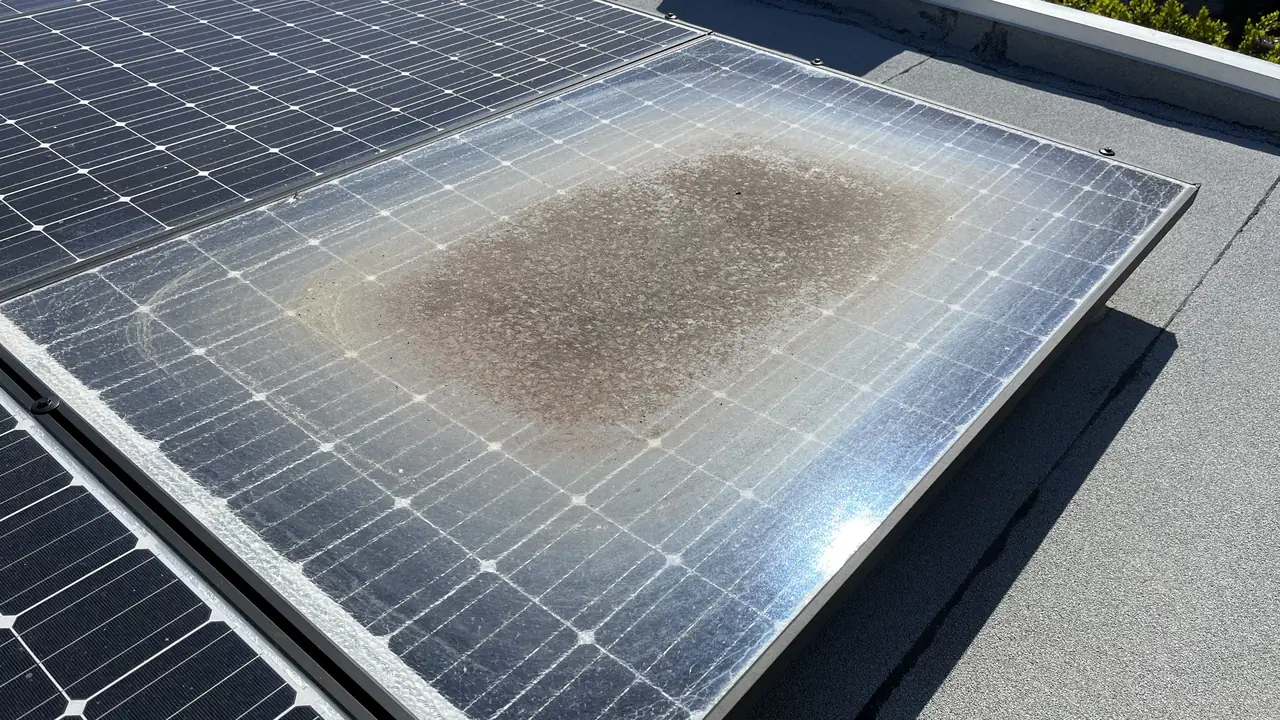
Here is what surprised us the first time we did this, and what is worth knowing before you need it. The manufacturer does not send someone to look. The claim is decided by a quality team from photographs, and the photographs have to be good enough for them to analyse what actually happened.
The claim form itself is split. One set of pages is for physical damage — a module with broken glass. A different set is for low output. They are separate because they are judged by different criteria: a module that has stopped producing because the glass failed is a different argument from one that is simply producing less than it should after a decade.
What the quality team asks for is resolution. They want to see the pattern itself — its shape, where it begins, how it spreads — because that is what separates a manufacturing fault from something done to the module after it left the factory, and that distinction decides whether the warranty covers it. Which of the two categories a discoloured module belongs in is itself a judgement, and it is worth settling before the form is filed rather than after.
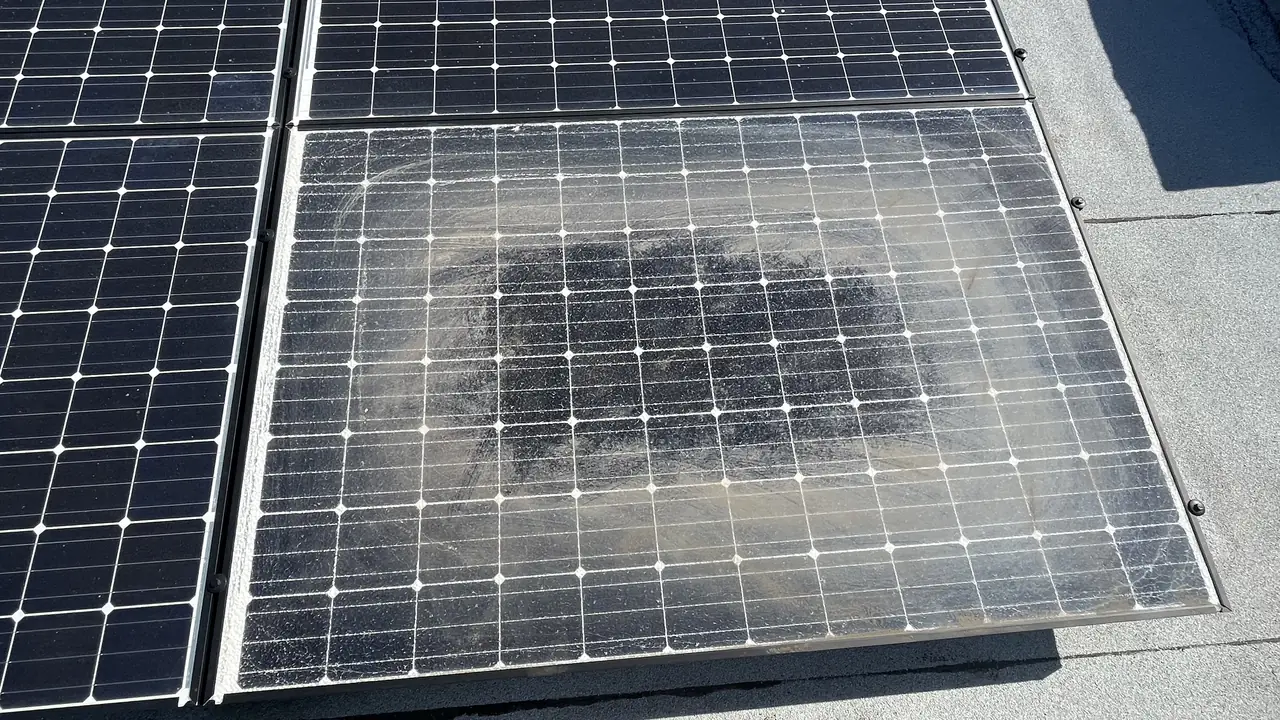
So most of the work on a claim like this is on the roof with a camera. Every affected module photographed from several angles at full resolution, plus the serial number label on the back of each one, because the claim is against specific modules rather than against a system. The set goes to the manufacturer's file share because it is far too large to email.
Then you wait. The quality team's judgement takes one to two weeks as a rule, and there is nothing to do in the meantime except keep the owner informed that nothing has gone quiet — the file is simply with the people who decide.
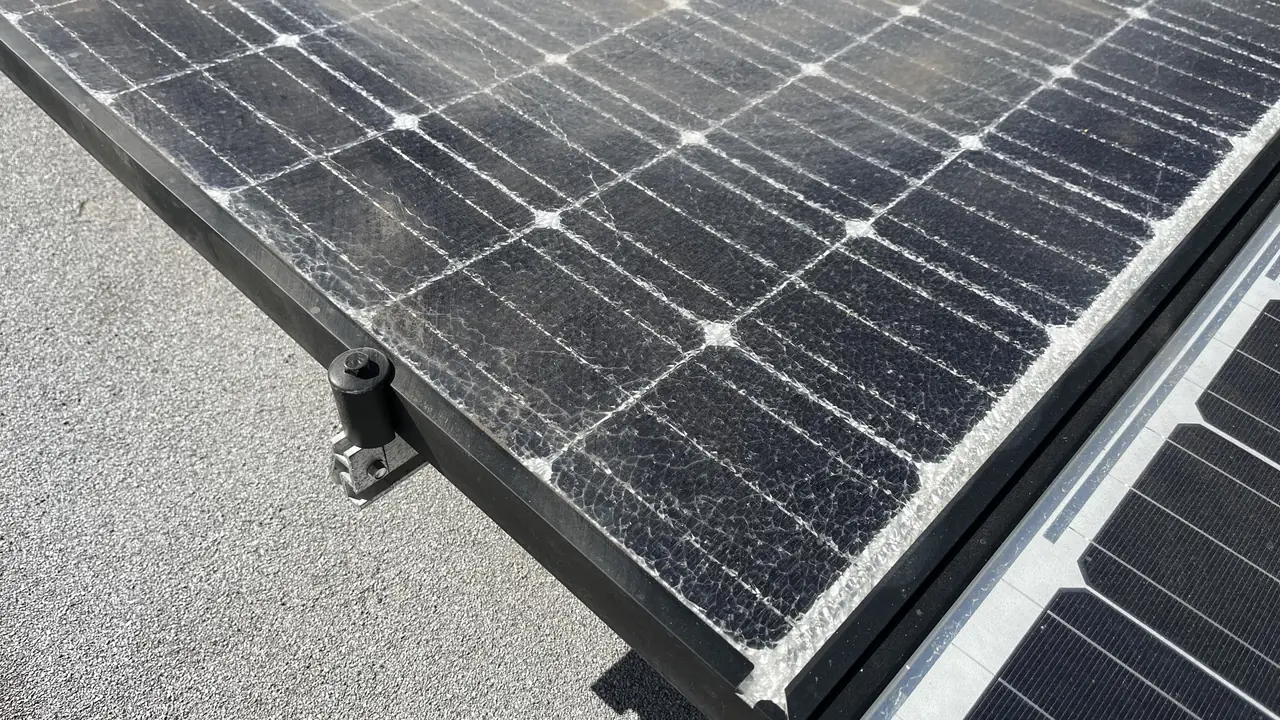
Two practical things to take away. First, keep the paperwork from your installation — the module model and the install date are the first two things a claim needs, and hunting for them years later wastes days. Second, when a module fails, photograph it properly before anybody touches it. A module that has been moved, cleaned or replaced before it was documented is a much weaker claim.
How it ran
| 7 November 2019 | Interconnection request filed |
|---|---|
| 19 November 2019 | Five progress notices, all in one day |
| 22 November 2019 | Meter spot sheet issued |
| 10 January 2020 | Installation released |
| 14 January 2020 | Permission to operate |
| 10 April 2023 | Owner reports two modules with large discoloured patches |
| 12 April 2023 | Warranty claim opened with the manufacturer |
| 14 April 2023 | Claim form and full photographic set submitted |
| April 2023 | Claim with the manufacturer's quality team for judgement |
Three years and three months between switch-on and the first failure.
What we did
- Attended the service call and established which modules the owner was reporting.
- Photographed each failed module at full resolution, from several angles, before anything was moved.
- Recorded the serial number of every affected module.
- Opened the claim with the manufacturer and completed the claim form.
- Uploaded the photographic set to the manufacturer's file share and tracked the claim.
System specifications
| System | 14.8 kW |
|---|---|
| Modules | Panasonic VBHN330SA17 |
| Roof | Flat, membrane |
| Installed | 2019; permission to operate January 2020 |
| Failure | Two modules discoloured under intact glass |
| Claim evidence | High-resolution photographs of each failure plus serial number labels |
| Claim form | Separate pages for physical damage and for low output |
| Typical judgement time | One to two weeks after submission |
| Utility / AHJ | LADWP / LADBS |
Is your project like this one?
- A panel on your roof has stopped producing and you do not know what to do.
- Your system is out of the installer's workmanship period but inside the equipment warranty.
- You have been told to file a warranty claim and want to know what that means.
- Your installer has gone and you need somebody to handle the manufacturer.
- You want to know what records to keep from your installation.
Cali Energy in North Hollywood
North Hollywood is inside City of Los Angeles boundaries: permits run through LADBS, interconnection through LADWP.
A lot of the flat-roof housing on this side of North Hollywood went solar around 2019 and 2020, which means those systems are now old enough for the first equipment failures to show up.
This installation is on the North Hollywood projects page alongside the others, and what the work covers is set out on the North Hollywood service area page.
- License and classifications: CSLB #1032379
- Official reference for this process: CSLB — check a contractor's license
- Official reference for this process: California Energy Commission — solar equipment lists
Frequently asked questions
How does a solar panel warranty claim work?
The manufacturer's quality team decides it from evidence rather than a site visit. That means a claim form, high-resolution photographs of the failure, and the serial number of each affected module. Judgement typically takes one to two weeks after the set is submitted.
Why does the manufacturer want such detailed photographs?
Because the pattern of the failure is the evidence. Its shape and how it spreads is what separates a manufacturing fault from damage done to the module afterwards, and that distinction decides whether the warranty covers it. Photograph it before anything is moved or cleaned.
A patch on my panel — does that mean it produces nothing?
Not by itself. Discolouration under the glass will cost you output, but how much is a measurement rather than something you can judge by eye. Per-module monitoring or a clamp reading on the string will tell you; a photograph will not.
Is a broken panel the same claim as one that produces too little?
No. The claim form has separate pages for physical damage and for low output, because they are judged against different criteria.
What records should I keep from my installation?
At minimum the module make and model and the date the system was switched on. Those are the first things a claim asks for, and finding them years afterwards is the part that wastes time.
Can you handle a warranty claim on a system you did not install?
Yes. What the manufacturer needs is evidence about the modules, not about who fitted them. Cali Energy holds B, C-10 and C-39 classifications under CSLB #1032379.
How long do solar panels last before something fails?
There is no single answer, and this is one project rather than a rule: this array ran three years and three months before two modules out of a fourteen point eight kilowatt system failed. The rest of the array was unaffected.
What this would look like on your roof
Planning solar in North Hollywood? Tell us your utility, your roof and what your bill looks like now, and we will model what a system like this would do on your house before you commit to anything.
Or call +1 (323) 844-7777 · Cali Energy, Northridge · CSLB #1032379 (B, C-10, C-39) — design, permits, install and electrical under one licensed contractor.
Related
This timeline reflects this property and this permitting path. Updated September 2026.