

Woodland Hills, CA · January – March 2022 · LADWP / LADBS
Woodland Hills: the crew waited for the right bolts and a stamped drawing.
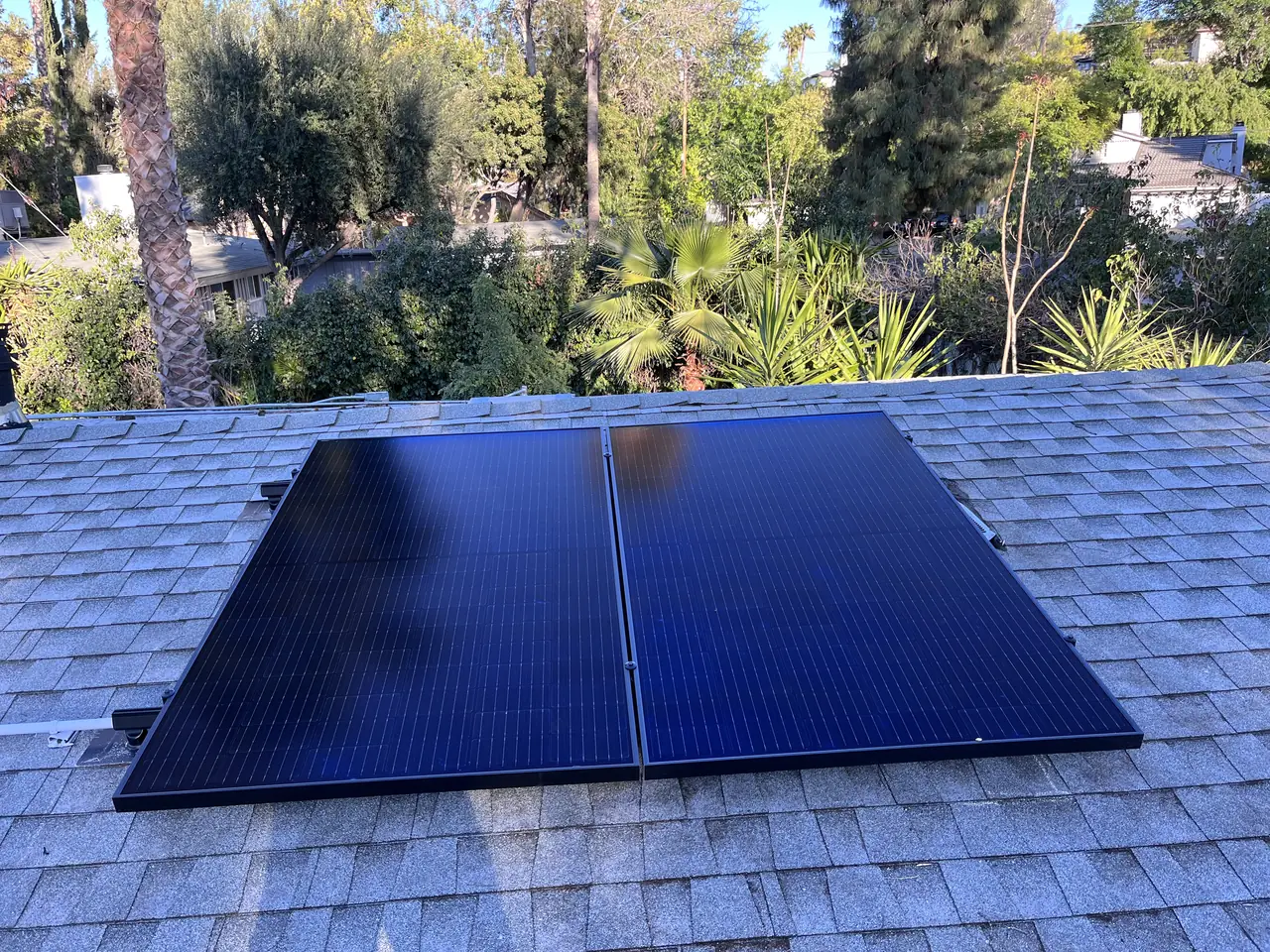
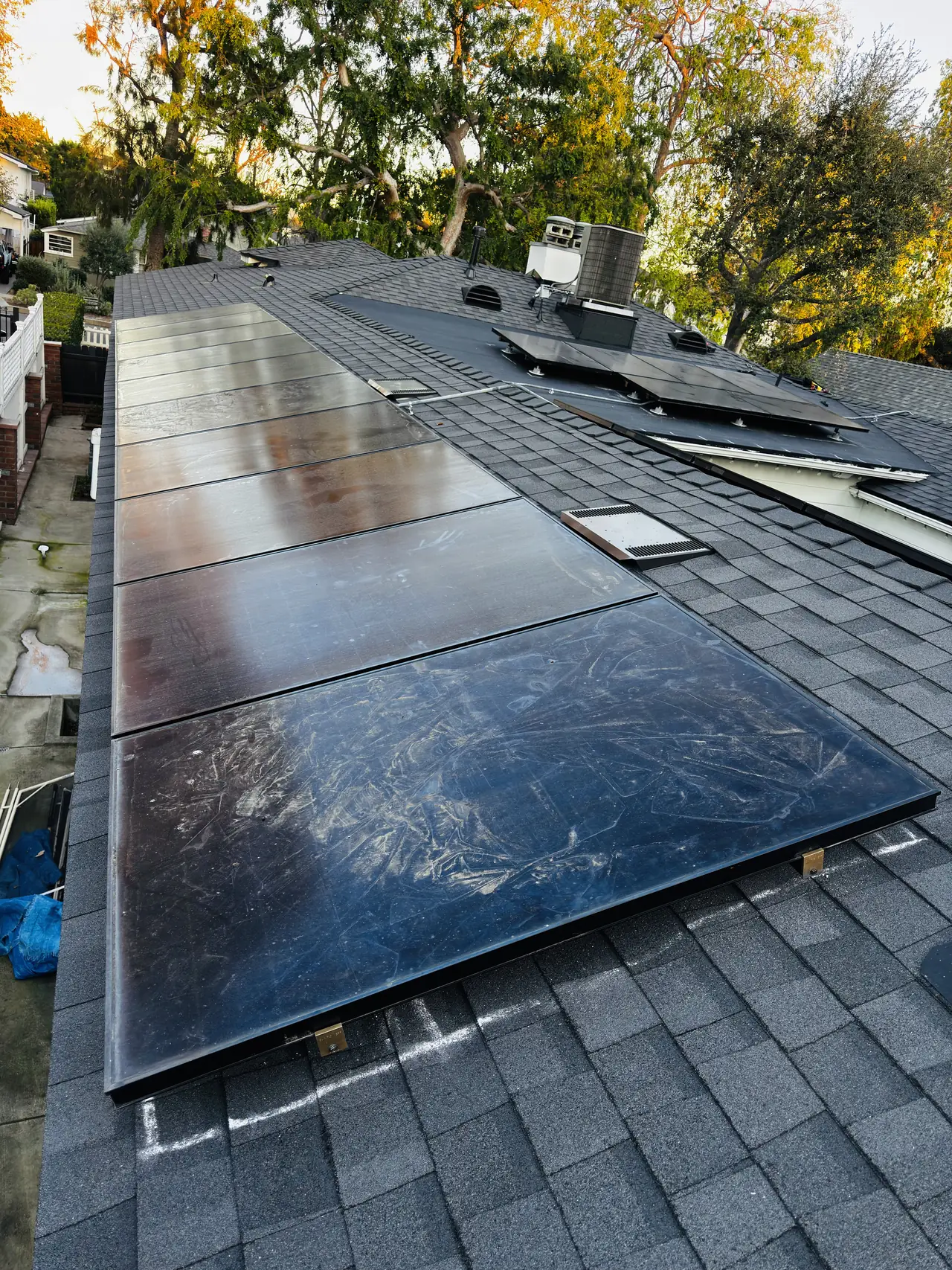
Fourteen modules, under five kilowatts, on a Woodland Hills roof: two days of work, done to a stamped drawing with the fasteners the framing required.
When several companies share a job, the crew on the roof is the last line of defense, and the only thing it controls is whether to proceed. Fasteners that do not reach the framing are not a detail to improvise around: an array is a structural attachment carrying wind uplift for twenty years, and a short bolt is a failure waiting for weather. On this Woodland Hills roof Cali Energy stopped work on the installation day, named the exact fastener and quantity within hours, declined to substitute something available, and waited again later for a stamped revision rather than working to an unapproved drawing.
At a glance
- System size
- 4.76 kW DC
- Modules
- 14 × Q CELLS Q.PEAK DUO BLK-G6 340 W
- Inverters
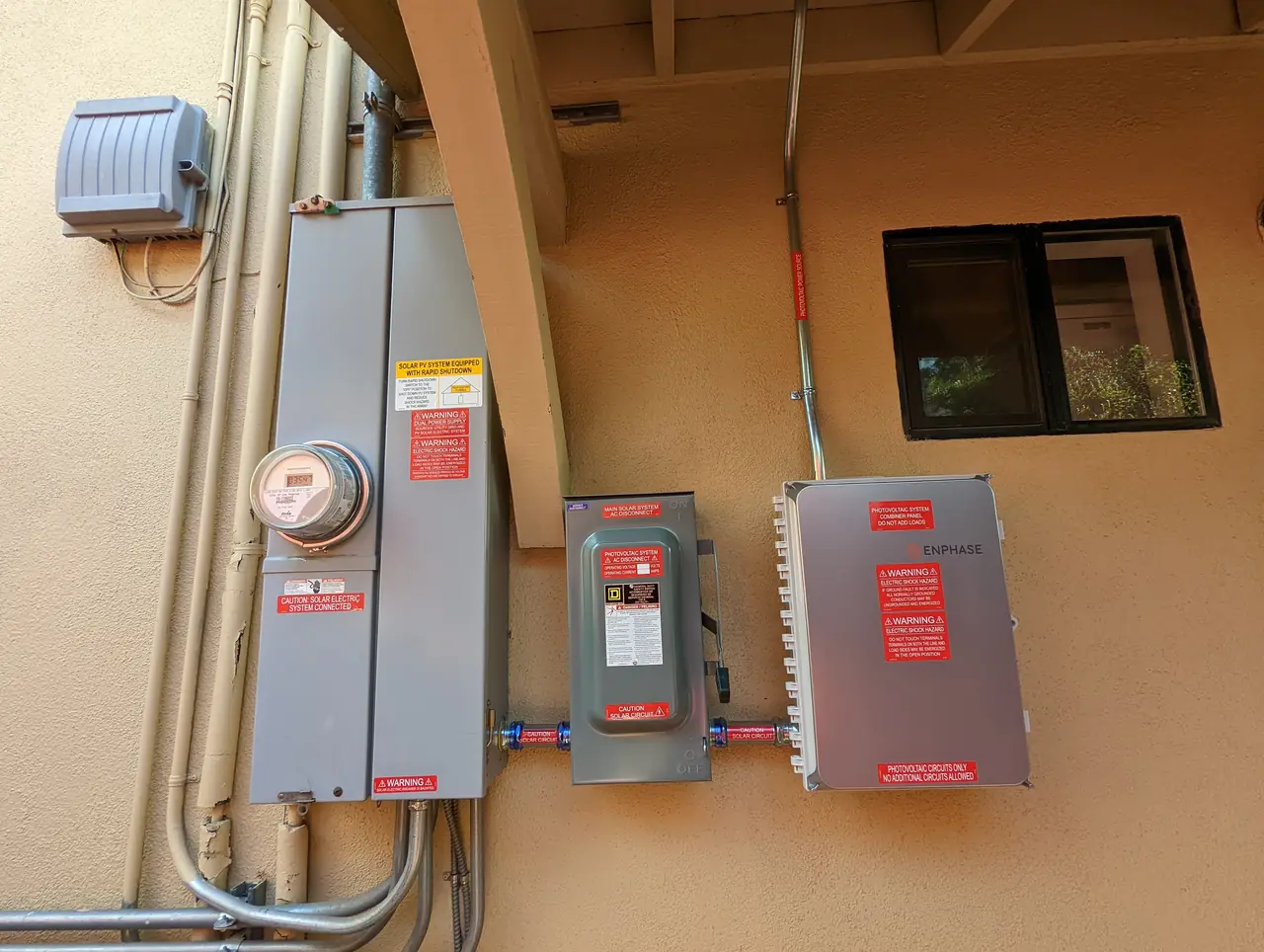
- 14 × Enphase IQ7+ microinverters
- Framing spacing
- About seven feet between members
- Fastener required
- Thirty bolts, 5/16 by 10 inches
- Final inspection
- Passed, on the first visit
- Utility / AHJ
- LADWP / LADBS
The story
This is a small system. Fourteen modules, a microinverter under each, under five kilowatts. On an ordinary roof it is a day's work. We were the installing contractor for another company, which held the customer, the permit, the drawings and the materials.
The crew arrived on the installation day in the middle of February and stopped within the hour.
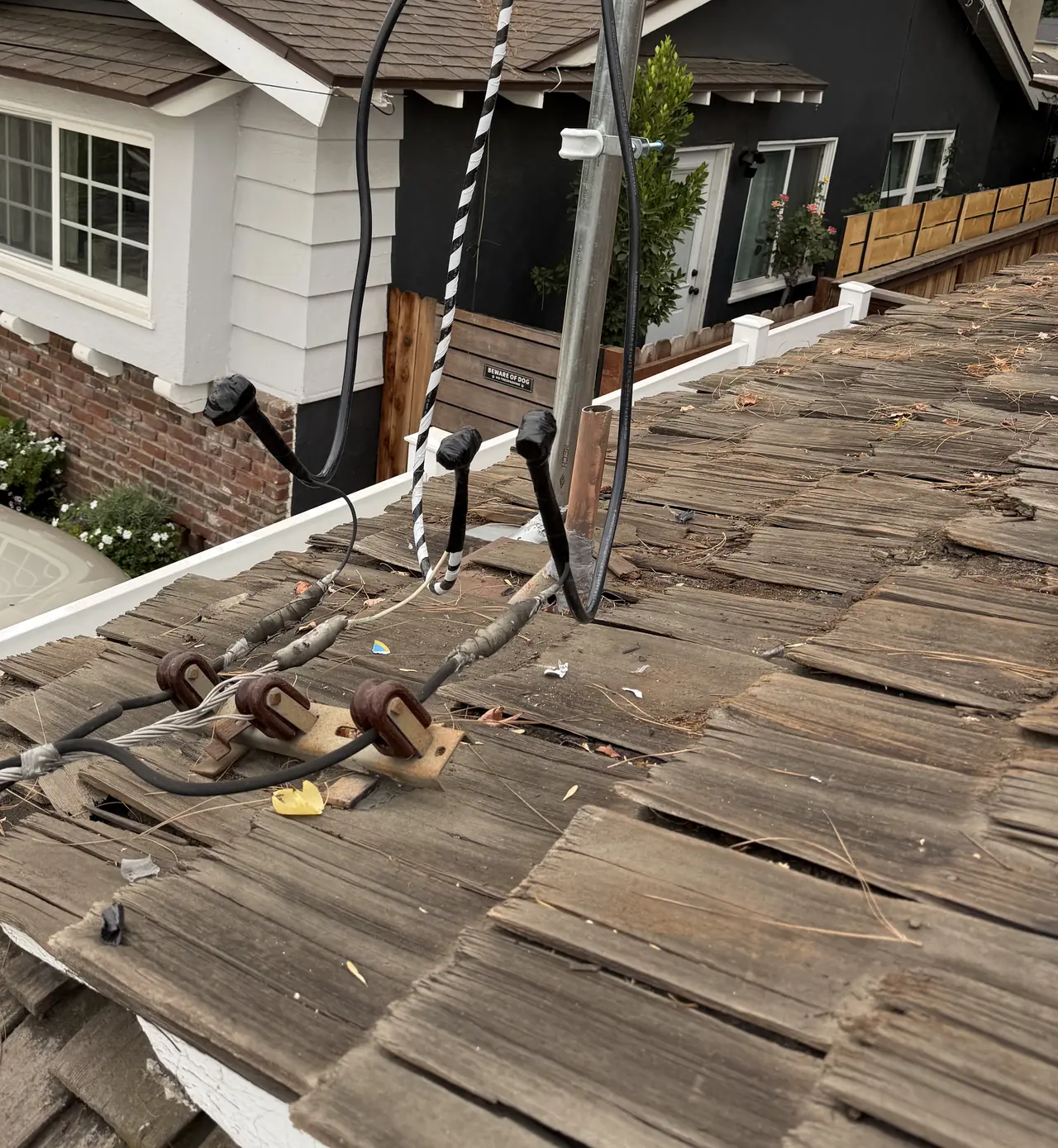
Two things were wrong. The framing members on this roof sit about seven feet apart rather than the closer spacing an ordinary attachment assumes, and the hardware that had been supplied was nowhere near long enough to reach them. The correct fastener was a bolt five sixteenths of an inch across and ten inches long, and the job needed thirty of them.
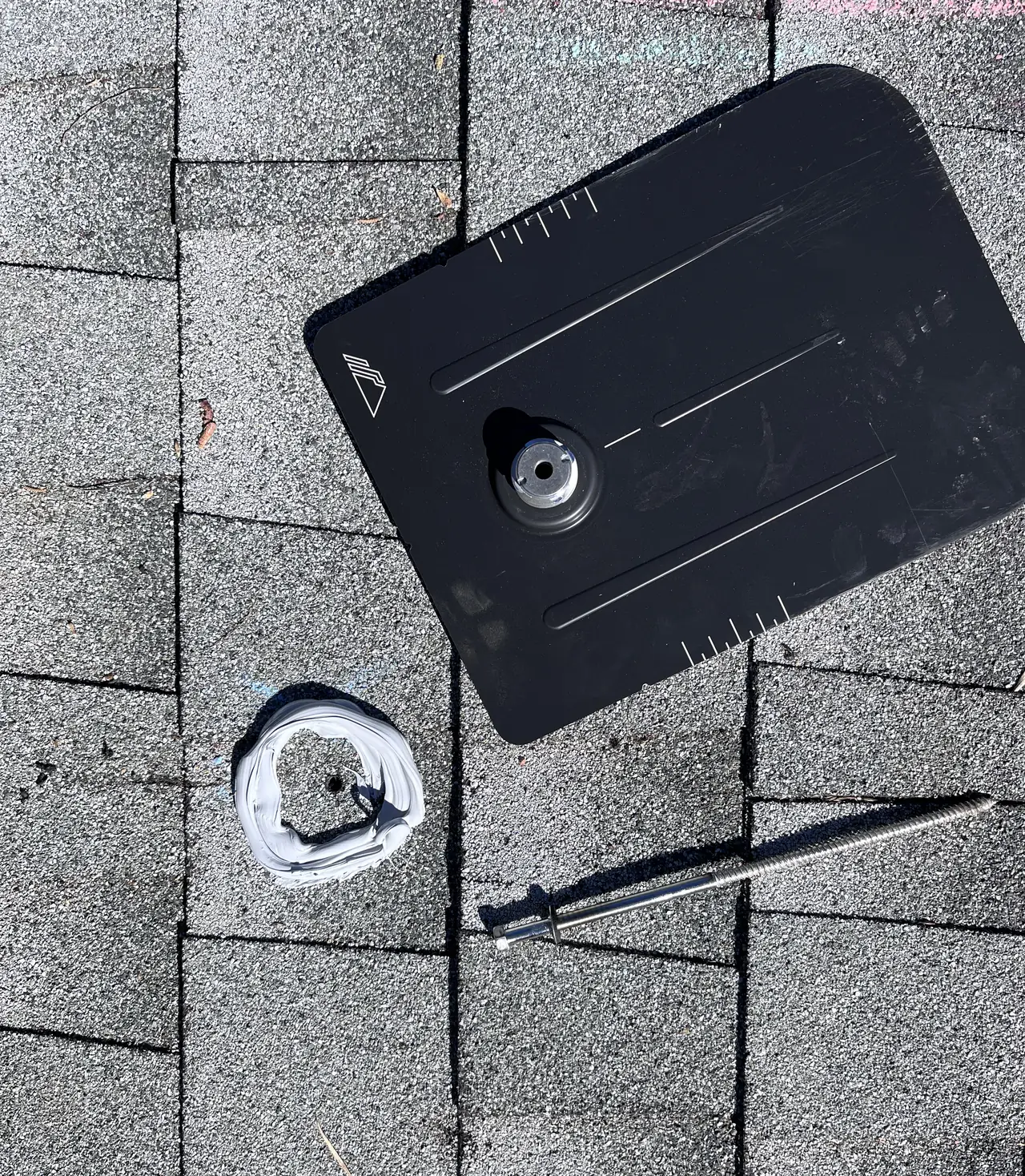
Here is why that stops a crew. An array is a structural attachment. For the next twenty years it carries wind uplift into the frame of the house, and every one of those loads goes through the fasteners. A bolt that does not reach the framing is not a compromise, it is a defect that nobody will see until the weather finds it. There is no version of this job where you use what is in the van and write it up afterwards.
So the crew reported it the same morning, with the exact part and quantity.
A part like that is not stocked by every electrical distributor, so within a few hours Cali Energy sent a specific source for the exact part in the exact quantity, and that is where the thirty bolts came from.
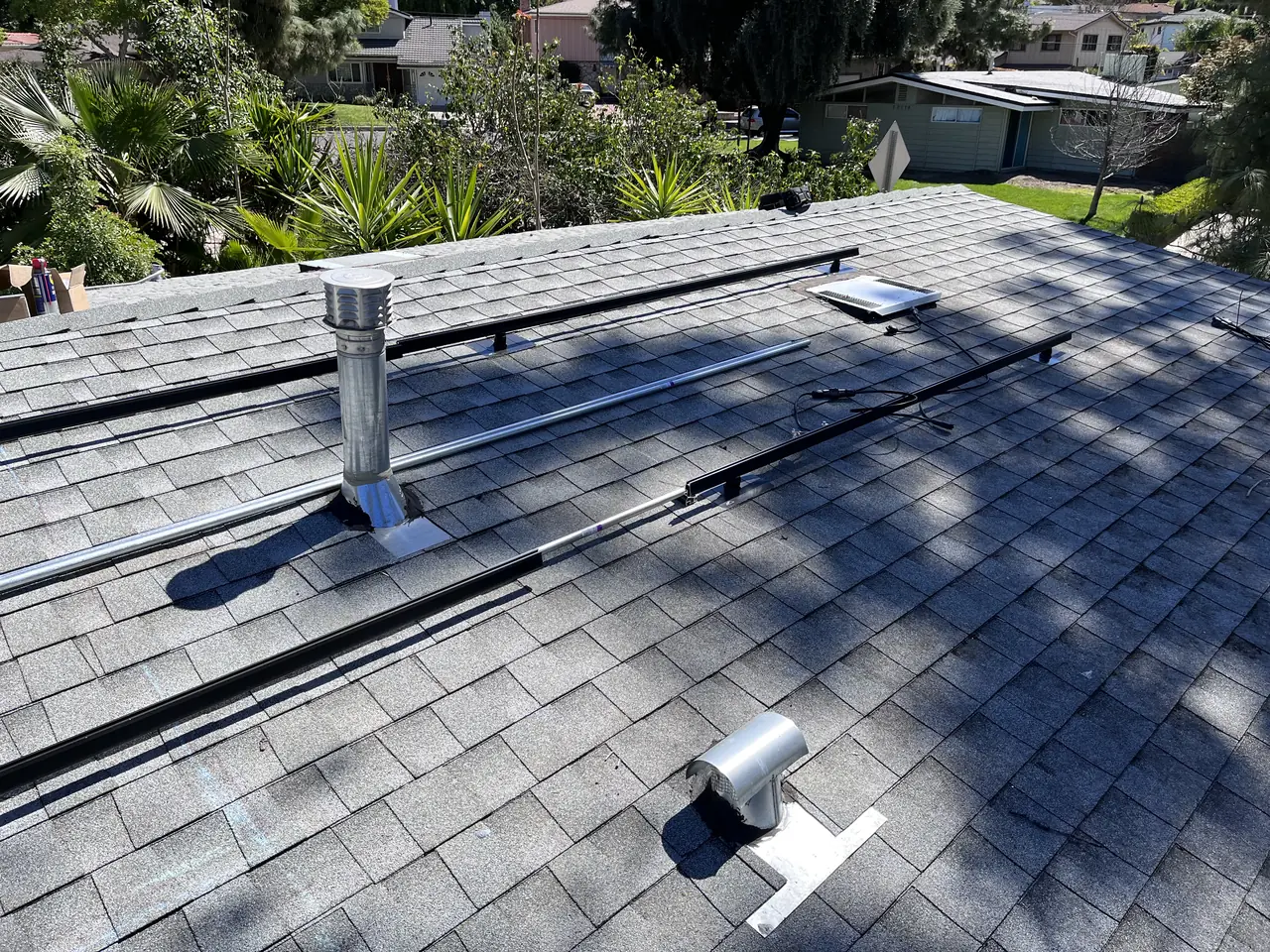
The bolts landed on the seventh of March and the crew was booked for the eighth.
On that same day a revised plan set with a changed layout was issued.
Work waited for the revised set to be stamped by Building and Safety. A stamped drawing is what the inspector measures the installation against, and a crew that works ahead of one is building something that may have to come apart.
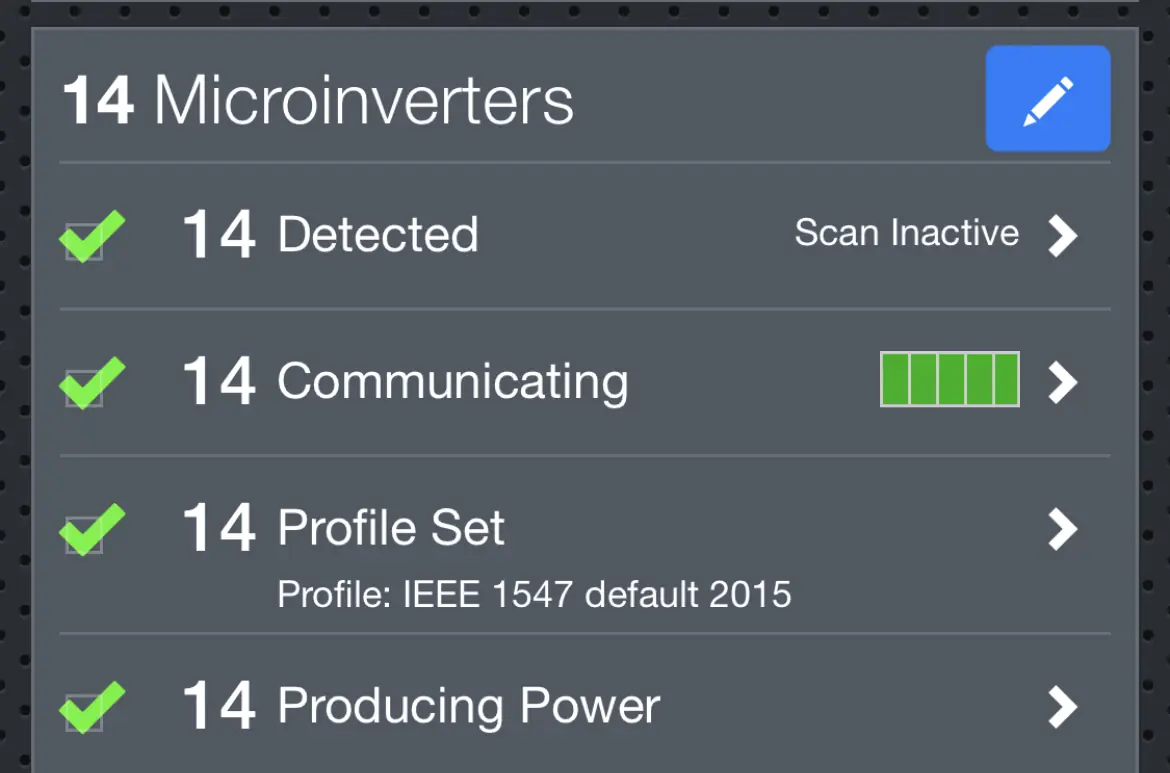
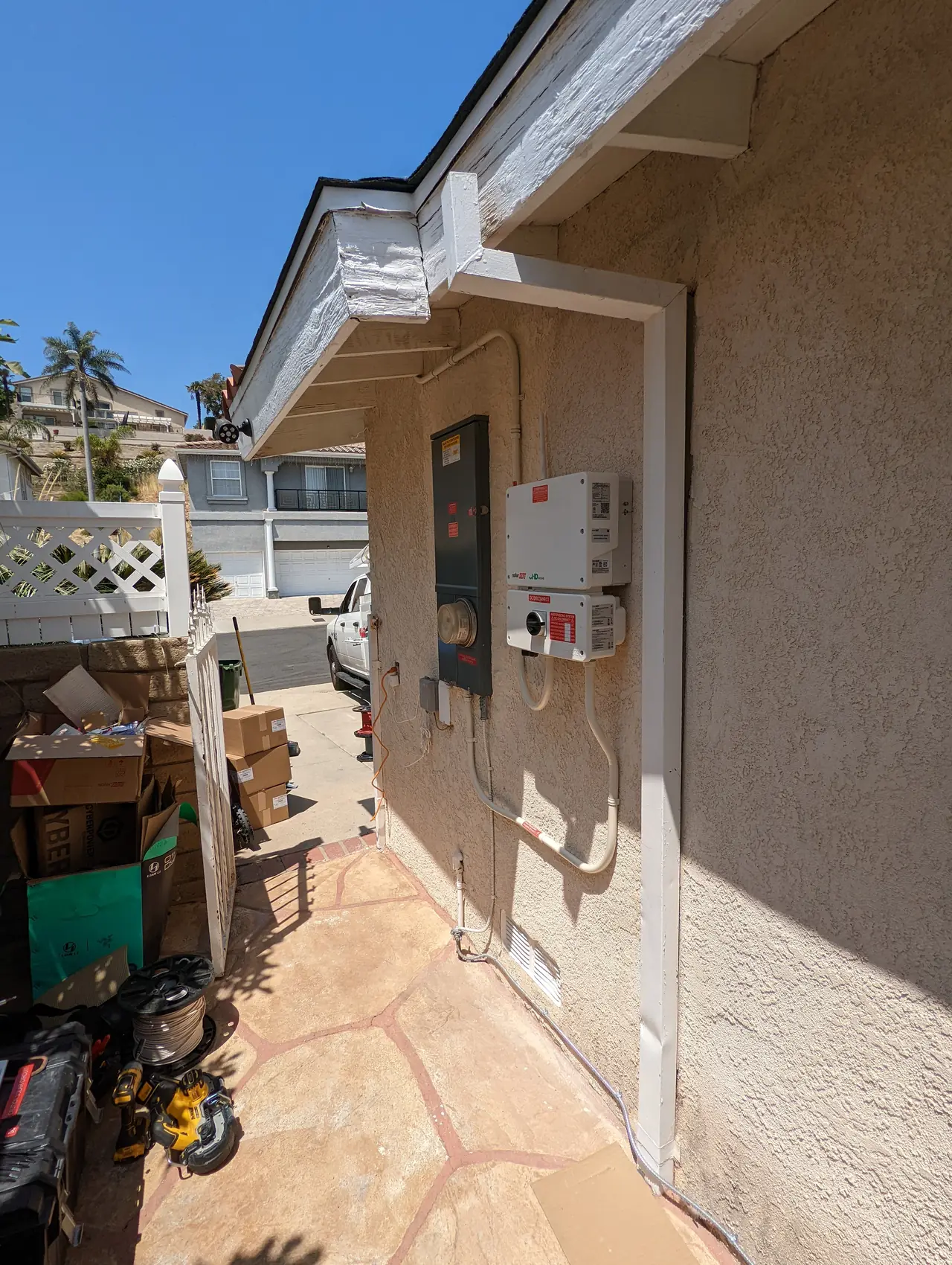
Work resumed on the eleventh, the final inspection passed on the sixteenth, and the completion photographs were handed over two days later.
There is something here a homeowner cannot see from the ground. On a job that several companies share, almost everything is decided before the crew arrives: who specified the hardware, who sourced it, who drew the layout, who stamped it. What the crew on the roof controls is a single decision, taken twice on this project, and it is whether to carry on anyway. Ask about that decision before you sign anything. On this roof it was taken the right way twice, and the final passed on the first inspection with fourteen of fourteen modules reporting.
How it ran
| 19 January 2022 | Job handed over with plans, permit approval and the full specification; installation date requested |
|---|---|
| 20 January 2022 | Installation put on hold; materials not ready |
| 27 January 2022 | Request reopened; date agreed for mid-February with a week's notice for materials |
| 14 February 2022 | Installation day. Work stopped: framing about seven feet apart and the supplied hardware far too short |
| 14 February 2022 | Exact fastener and quantity specified the same day; a specific source sent within hours |
| 7 March 2022 | Bolts delivered from the source Cali Energy specified |
| 8 March 2022 | Revised plans issued with a changed layout |
| 9 March 2022 | Work held for the revised set to be stamped |
| 11 March 2022 | Installation resumes |
| 16 March 2022 | Final inspection passed |
| 18 March 2022 | Completion photographs handed over and the job closed |
The physical work on this project was two days. Everything else was waiting for a part and for an approved drawing.
What we did
- Stopped work on the installation day rather than fastening an array with hardware that could not reach the framing (C-10).
- Identified the exact fastener, diameter, length and quantity within the same morning.
- Sent a specific source for the part within hours.
- Declined to substitute an available fastener for the one the attachment required.
- Agreed to wait for a re-stamped drawing rather than resuming work on a revised layout that had not been approved.
- Completed the installation in two days once the correct hardware and approved drawings were in place, and passed the final inspection.
System specifications
| System size | 4.76 kW DC |
|---|---|
| Modules | 14 × Q CELLS Q.PEAK DUO BLK-G6, 340 W, all black |
| Inverters | 14 × Enphase IQ7+ microinverters, one per module |
| Roof | Composition shingle |
| Framing spacing | About seven feet between members |
| Fasteners | Thirty bolts, 5/16 inch by 10 inches |
| Permit | Held by the company running the project; revised plans re-stamped before work resumed |
| Battery | None |
Is your project like this one?
- Your project has stalled and nobody can tell you which company is waiting on what.
- Your roof framing is spaced unusually and standard hardware may not reach.
- Your installer wants to proceed on drawings that have been revised but not re-stamped.
- Your installation date keeps moving and nobody will tell you what it is waiting on.
- Your Woodland Hills property is served by LADWP, while permits are handled by LADBS.
Cali Energy in Woodland Hills
Woodland Hills is inside City of Los Angeles boundaries: permits run through LADBS, interconnection through LADWP.
Woodland Hills is inside the City of Los Angeles, so the drawings are stamped by LADBS and the installation is inspected against them. A stamp is not a formality on a roof like this one, where the attachment depends on reaching framing that is further apart than usual.
This installation is on the Woodland Hills projects page alongside the others, and what the work covers is set out on the Woodland Hills service area page.
- License and classifications: CSLB #1032379
- Official reference for this process: LADBS — plan review and permitting
- Official reference for this process: CSLB — check a contractor's license
Frequently asked questions
Why does fastener length matter so much on a solar installation?
Because the array is a structural attachment. For twenty years it transfers wind uplift from the modules into the frame of the house, and every one of those loads passes through the fasteners. A bolt that stops short of the framing holds in the deck alone, which is not what the calculation assumed. Nothing about it looks wrong from the ground until the weather finds it.
What should a crew do if the supplied materials are wrong?
Stop, and say exactly what is needed. The useful version of stopping is specific: the part, the dimension, the quantity, sent the same day, with a source if one can be found. What is not acceptable is substituting whatever is in the van and writing it up afterwards. On this project the crew stopped within an hour and the correct part was named the same morning.
Can work continue on revised plans that have not been re-stamped?
No. The stamped drawing is what the inspector measures the installation against. Building to a revision that has not been approved risks a failed final and work that has to come apart. Waiting for the stamp is slower and it is the only answer that ends with a passed inspection.
What changes when the installer is a subcontractor?
Most of the decisions move away from the roof. Another company specifies the hardware, orders the materials, holds the permit and talks to you. The installing crew controls one thing, which is whether to proceed with what it has been given. If you are buying through a company that subcontracts, ask who the installer is and what happens when they find a problem.
Does Cali Energy install in Woodland Hills?
Yes, across both Woodland Hills ZIP codes. On this Woodland Hills roof Cali Energy installed fourteen modules and fourteen microinverters, stopped the work when the supplied fasteners could not reach the framing, specified the exact part, and waited for a re-stamped drawing before resuming. The final passed on the first inspection. California contractor license number 1032379.
What this would look like on your roof
Planning solar in Woodland Hills? Tell us your utility, your roof and what your bill looks like now, and we will model what a system like this would do on your house before you commit to anything.
Or call +1 (323) 844-7777 · Cali Energy, Northridge · CSLB #1032379 (B, C-10, C-39) — design, permits, install and electrical under one licensed contractor.
Related
This timeline reflects this property and this permitting path. Updated September 2026.