

Granada Hills, CA · May – June 2022 · LADWP / LADBS
The roofer came twice, and the second time mattered.
Roofing and solar on one house is not two jobs booked back to back. It is one job interleaved, and the person who explained that best was the roofer.
When a roof is being replaced under an array, the covering cannot be finished before the array goes on, because the last course has to be worked around the mounts. The sequence is: roofer lays the field, solar goes on, roofer returns to close the covering around what is now fixed to it. Two trades, three visits, and a schedule that has to be agreed before either one starts.
At a glance
- Work
- Roof replaced and array installed on the same house
- Array footprint
- About 425 sq ft
- Optimizers
- 19, one per module
- Inverter
- SolarEdge, 7.6 kW limit
- Sequence
- Roofer, then solar, then roofer again
- Monitoring
- Cellular — no household network used
- Year
- 2022
- Utility / AHJ
- LADWP / LADBS
The story
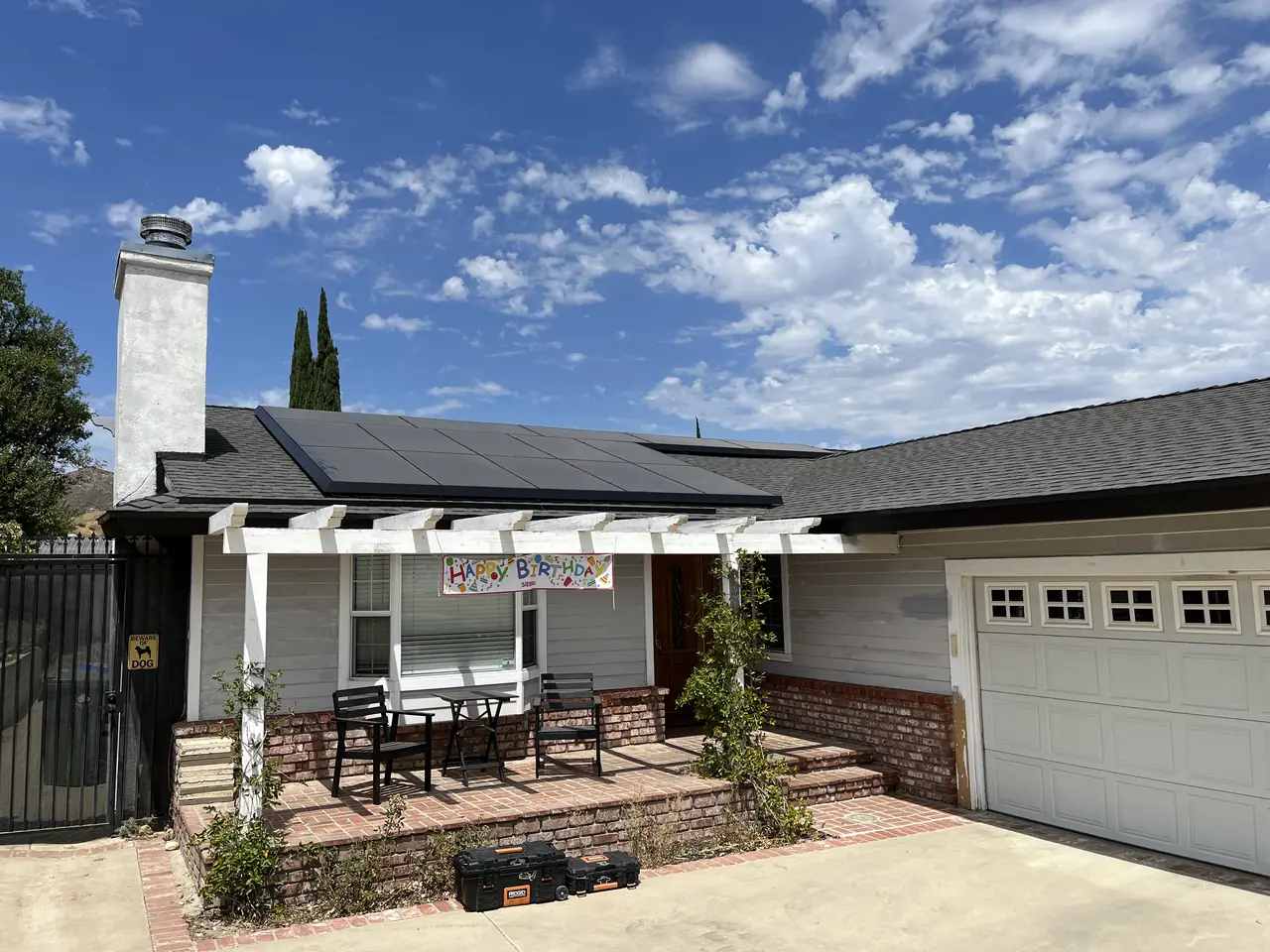
The clearest description of how roofing and solar fit together on one house came from the roofer, in one sentence, before either trade had started. One day for the shingles. Then wait for the solar people to do the system. Then one more day to finish the tile around the panels.
That is the whole scheduling problem, and most people get it wrong by assuming the roof is a job that finishes.
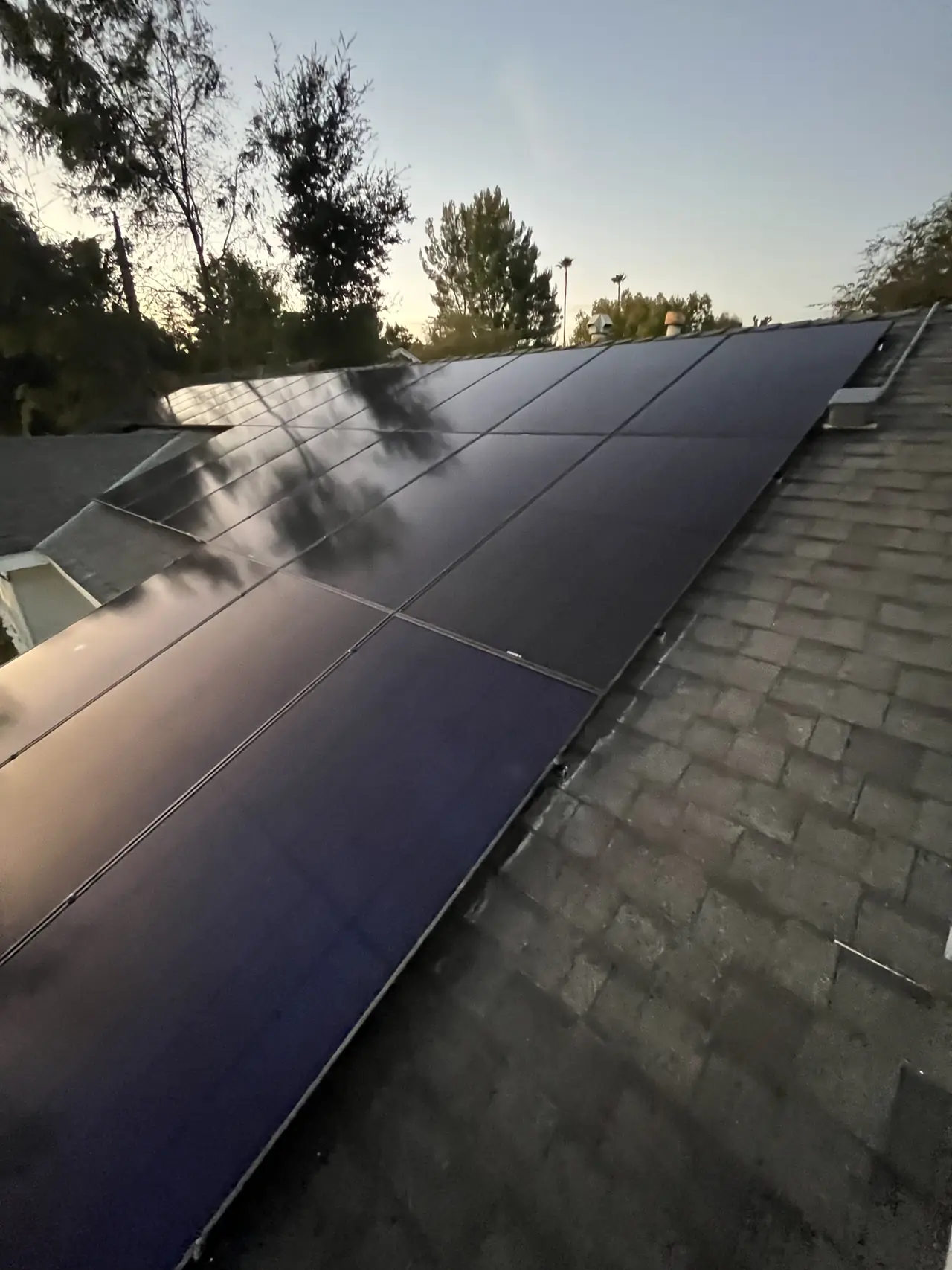
It does not, when an array is going on it. The field of the covering goes down first, because the mounts have to land on a finished surface and be flashed into it. Then the array is set, and every attachment becomes a fixed object the covering now has to be closed around. The roofer comes back and finishes the work he could not do before the mounts existed.
Get that order wrong and you pay for it twice. Finish the covering completely, then mount an array on it, and every attachment is a penetration through new material that somebody has to open and re-flash. Mount the array before the covering is down, and the roofer is working around obstacles with no way to seat the courses properly.
The practical consequence is a question to ask before anybody is booked: how many square feet is the array, and where. The roofer on this job asked exactly that — he needed the number to plan his second visit, and the answer was about four hundred and twenty-five square feet.
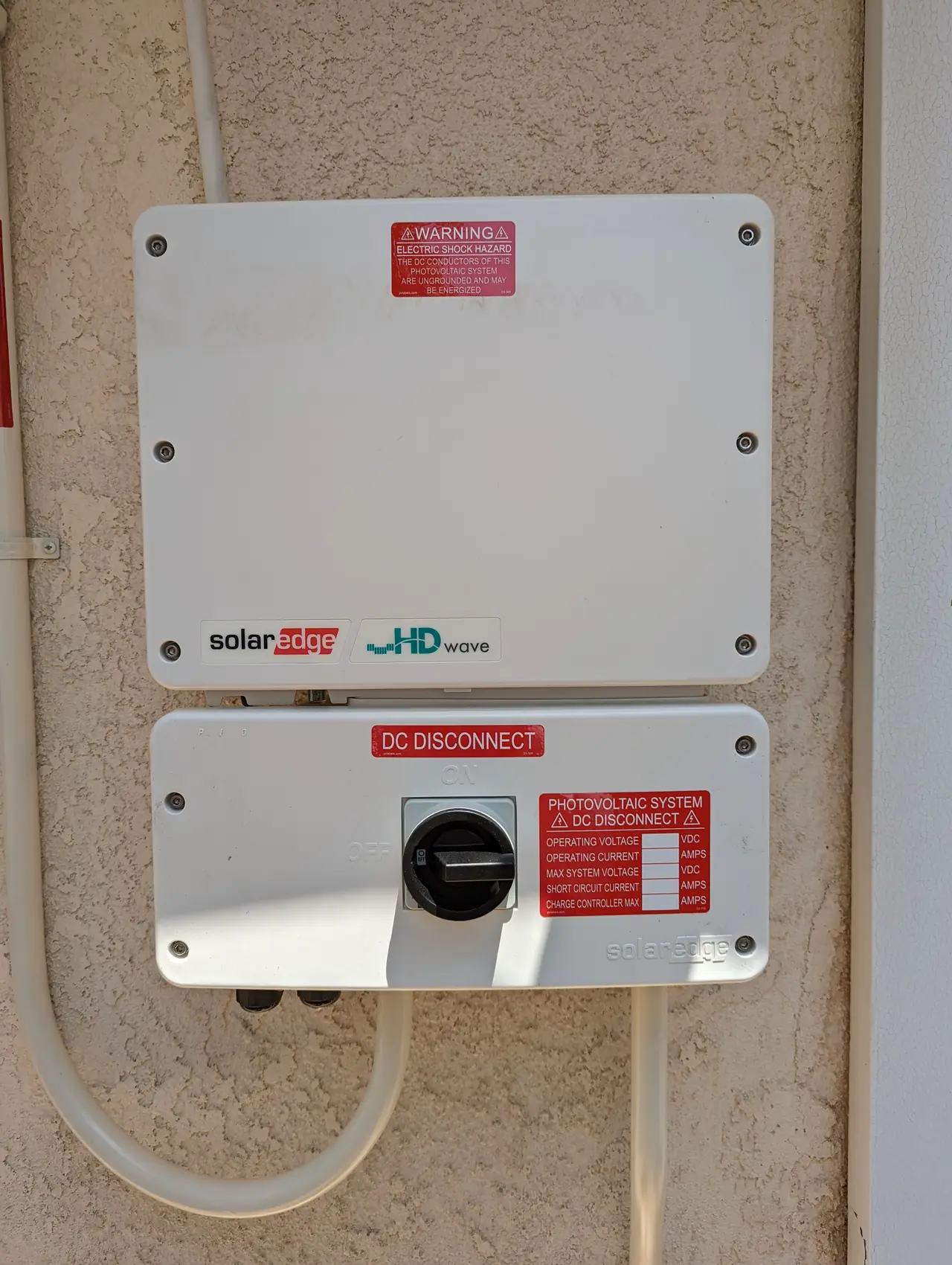
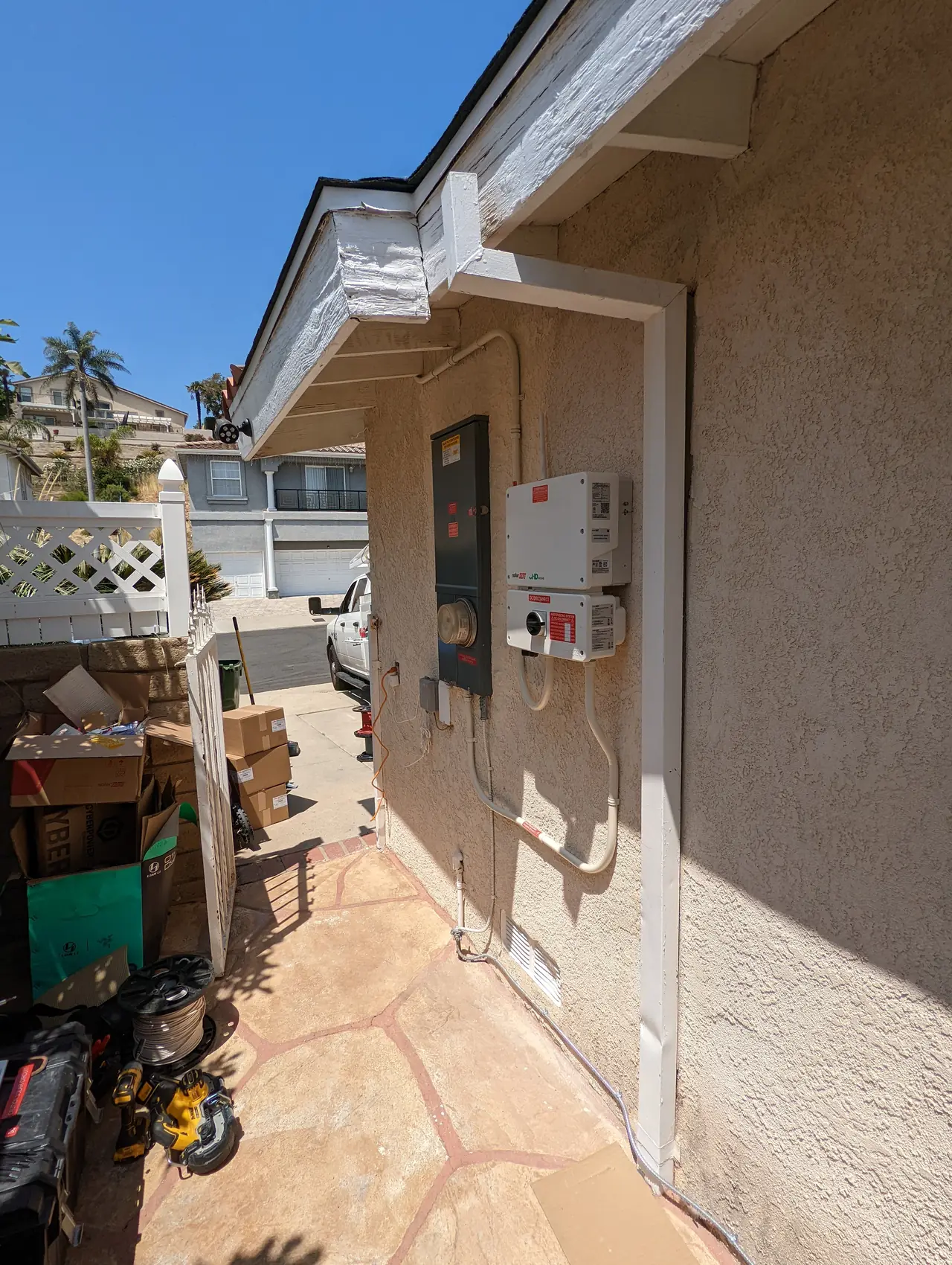
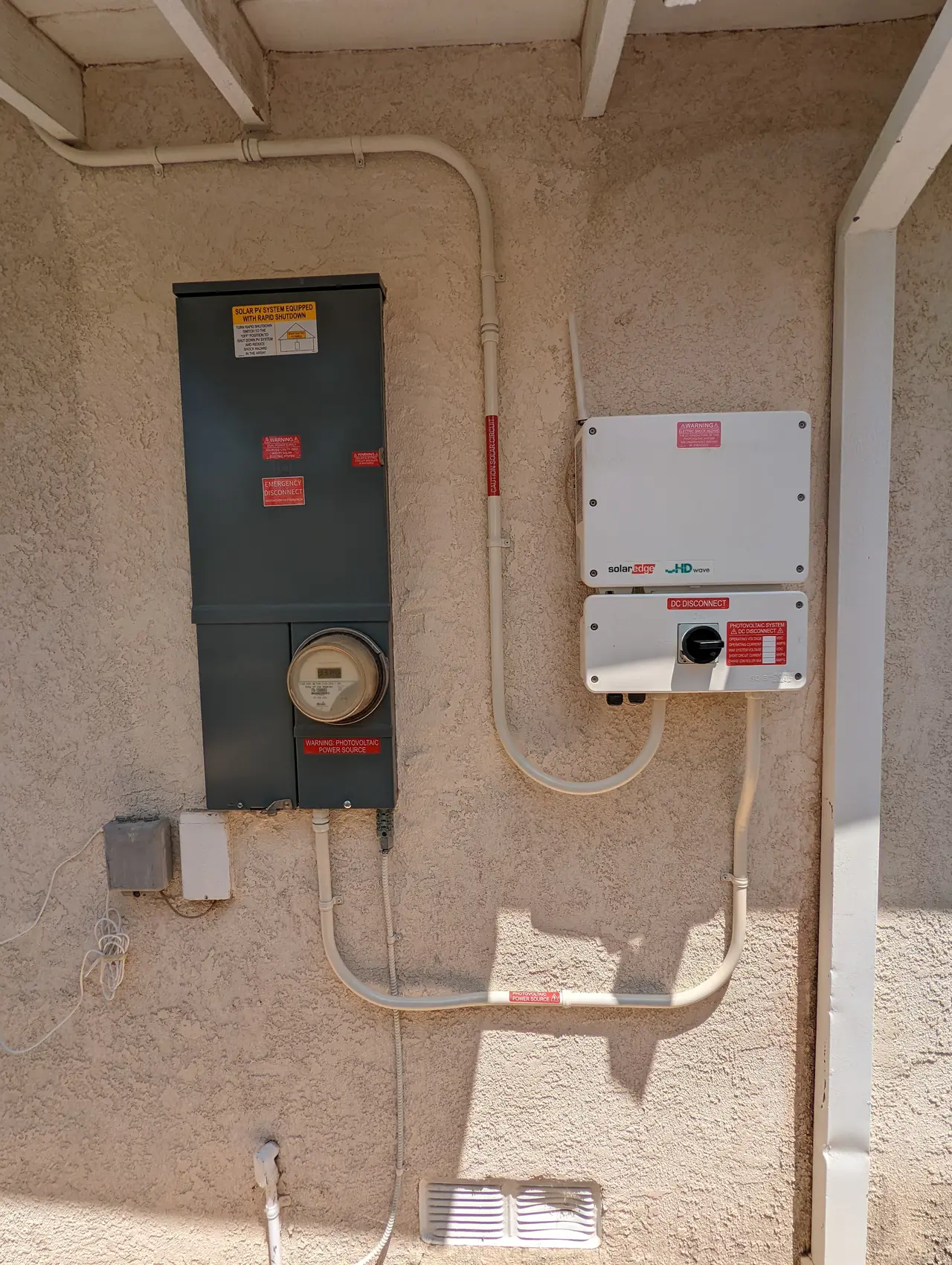
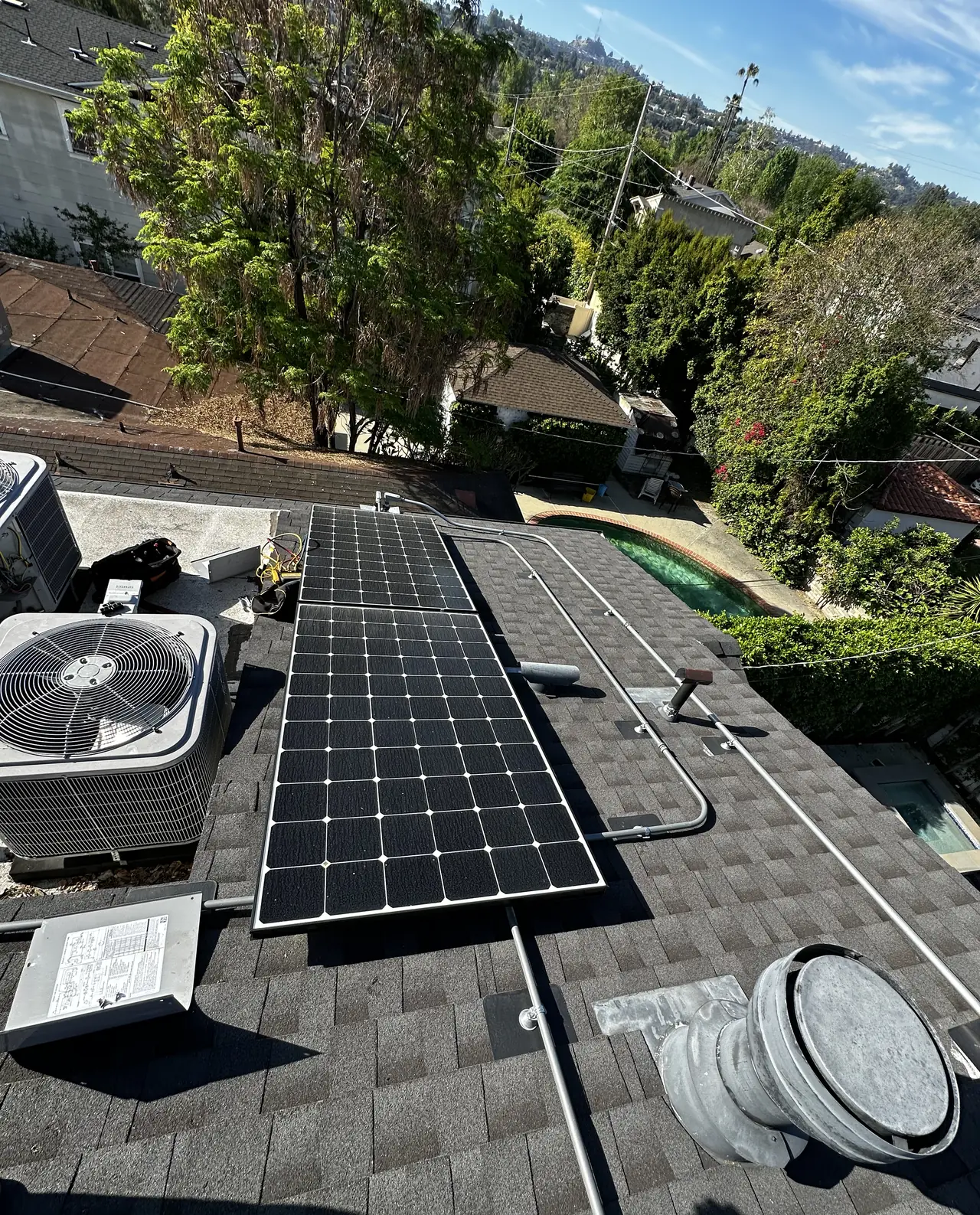
The system itself is nineteen modules with a power optimizer under each, into a single inverter rated to 7.6 kilowatts. Ordinary for the period and for the house.
One detail worth a paragraph because it comes up more than people expect: the monitoring runs over a cellular connection rather than the household network. That is a normal arrangement and sometimes the only one — a detached equipment wall, a wifi signal that does not reach, an owner who would rather not put the inverter on their home network at all. Worth asking about before installation, because retrofitting the connection afterwards means another visit.
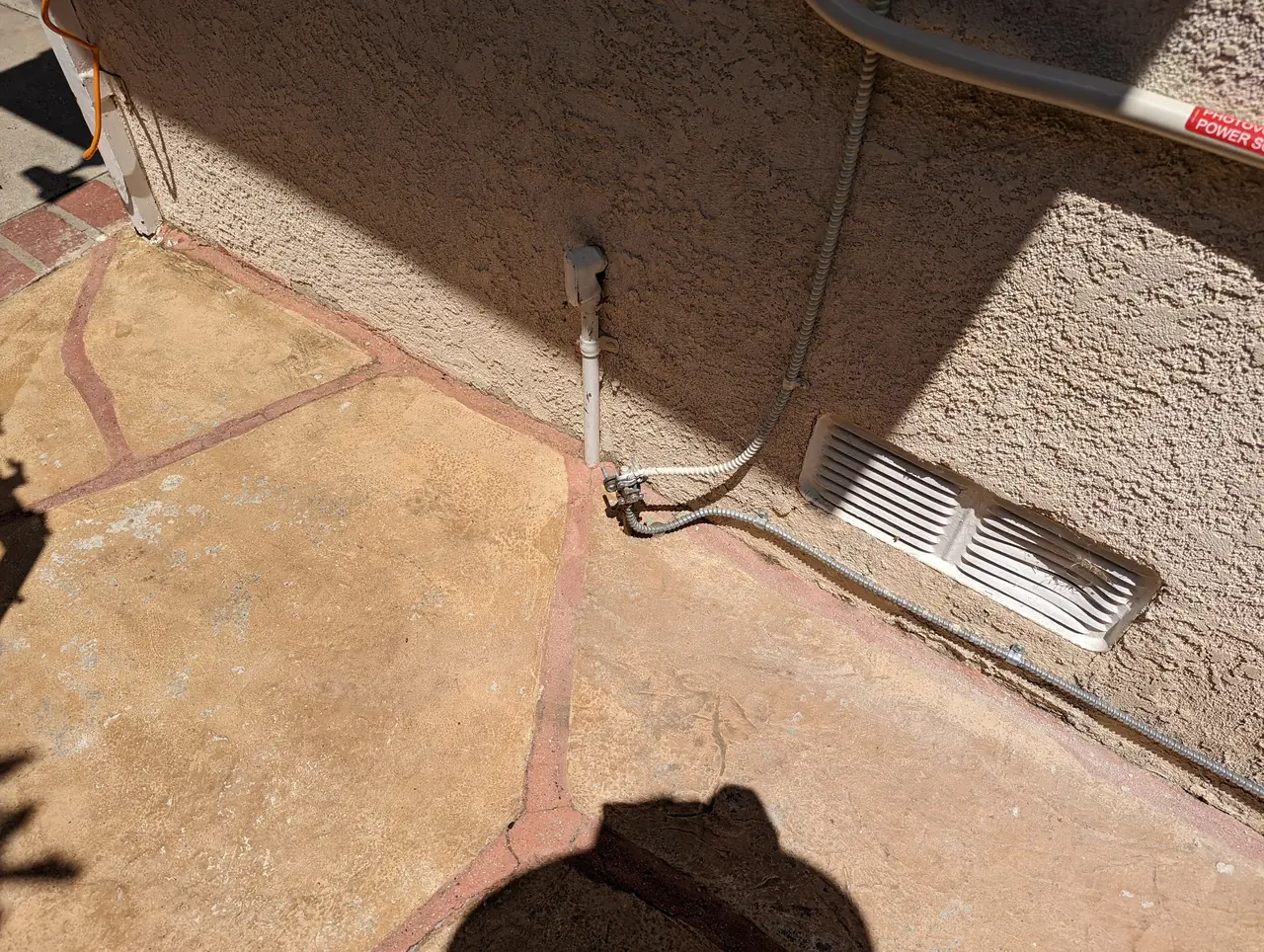
The end of this project was not the roof or the array. In the middle of June the final inspection had been done but the release had not reached the utility, and somebody had to go and get the signed page. It is the reason the last stage of a job deserves as much attention as the first.
If you are having both trades on one house: agree the three visits in advance, give the roofer the array footprint in square feet, and make sure both crews know which one closes the covering. The answer should be the roofer, on his second visit, and it should be written down before either of them arrives.
The release was chased, permission to operate followed and the house has been running on the array since. Cali Energy sequenced both trades on that Granada Hills roof and carried the interconnection to the end.
How it ran
| Early May 2022 | Roofing and solar scheduled as one interleaved sequence |
|---|---|
| May 2022 | Roofer lays the field of the covering — one day |
| May 2022 | Array installed, about 425 sq ft of module |
| May 2022 | Roofer returns to close the covering around the mounts — one day |
| June 2022 | Final inspection done; the signed release still had to be chased to the utility |
Two trades, three visits, one covering. The order is the whole job.
What we did
- Agreed the interleaved sequence with the roofer before either trade started.
- Gave the roofer the array footprint in square feet so he could plan the second visit.
- Set nineteen modules with an optimizer under each, onto a covering laid for them.
- Put the monitoring on a cellular connection rather than the household network.
System specifications
| Array footprint | About 425 sq ft |
|---|---|
| Optimizers | 19, one per module |
| Inverter | SolarEdge, 7.6 kW limit |
| Roof | Replaced under and around the array |
| Sequence | Covering field, array, covering closed around the mounts |
| Monitoring | Cellular, independent of the household network |
| Year | 2022 |
| Utility / AHJ | LADWP / LADBS |
Is your project like this one?
- You are replacing a roof and adding solar on the same house.
- Two contractors are quoting you and neither has mentioned the other.
- You have been told the roof will be finished before the panels arrive.
- Your equipment wall has no wifi signal.
- You want to know what the schedule actually looks like when trades overlap.
Cali Energy in Granada Hills
Granada Hills sits inside City of Los Angeles boundaries, so every project here is permitted through LADBS and interconnected through LADWP. Our work in Granada Hills runs from single-row arrays on accessory dwelling units to systems on underground services, on composition shingle and on concrete tile.
Where the roof is being replaced and an array is going on the same house, the two trades cannot simply be booked one after the other. The roof has to be finished around what the solar leaves behind.
This installation is on the Granada Hills projects page alongside the others, and what the work covers is set out on the Granada Hills service area page.
- License and classifications: CSLB #1032379
- Official reference for this process: CSLB — check a contractor's license
Frequently asked questions
Should the roof be finished before the solar goes on?
Not completely. The field of the covering goes down first so the mounts land on a finished surface and are flashed into it, but the last work has to wait. Once the array is set, the roofer comes back and closes the covering around the attachments he could not work around before they existed.
How many visits does that take?
Three in the normal case: the roofer lays the field, the solar crew installs, the roofer returns. Each of the roofing visits is usually a day on a house this size. The point of agreeing it in advance is that nobody is waiting on anybody, which is what turns three visits into three weeks.
What does the roofer need to know from the solar contractor?
The footprint of the array in square feet and where it sits on the roof. He needs it to price and plan the second visit, and he needs it before he starts rather than after. On this job the number was about four hundred and twenty-five square feet.
Can solar monitoring work without home wifi?
Yes. A cellular connection is a normal option and sometimes the only practical one — a detached equipment wall, a weak signal, or an owner who would rather keep the inverter off their home network. Decide before installation, because adding the connection later means another visit.
Does Cali Energy coordinate roofing and solar on the same Granada Hills house?
Yes, and the sequence is the whole job: the roofer opens and prepares the area, the solar crew sets the mounts, and the roofer returns to close the covering around them. Three visits, agreed before either trade arrives. Cali Energy sets that order out in writing on Granada Hills projects so that it is clear which trade is responsible for closing the roof.
What this would look like on your roof
Planning solar in Granada Hills? Tell us your utility, your roof and what your bill looks like now, and we will model what a system like this would do on your house before you commit to anything.
Or call +1 (323) 844-7777 · Cali Energy, Northridge · CSLB #1032379 (B, C-10, C-39) — design, permits, install and electrical under one licensed contractor.
Related
This timeline reflects this property and this permitting path. Updated September 2026.