

Studio City, CA · 2020 – 2026 · LADWP / LADBS
The roof was measured before anything was quoted.
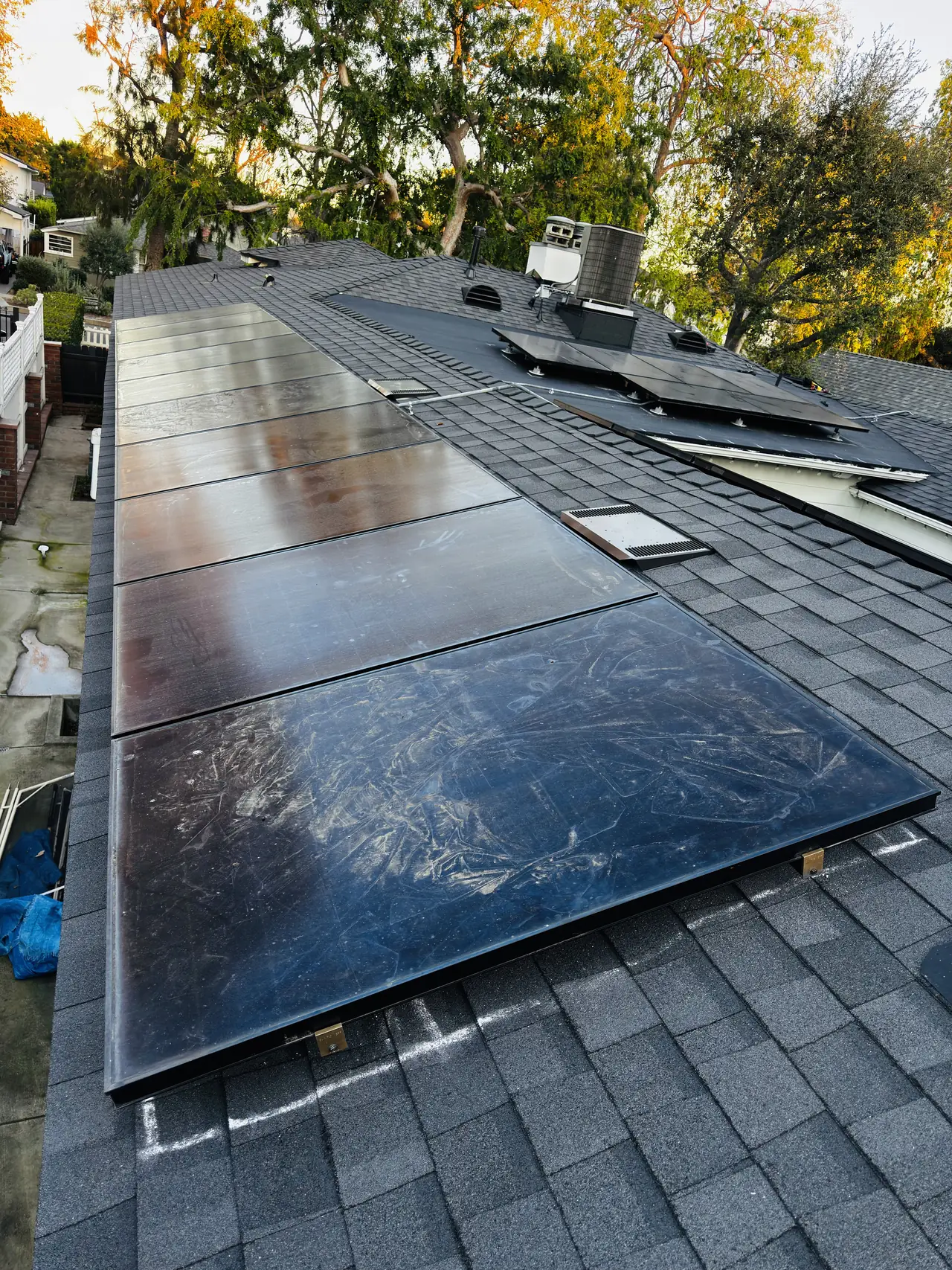
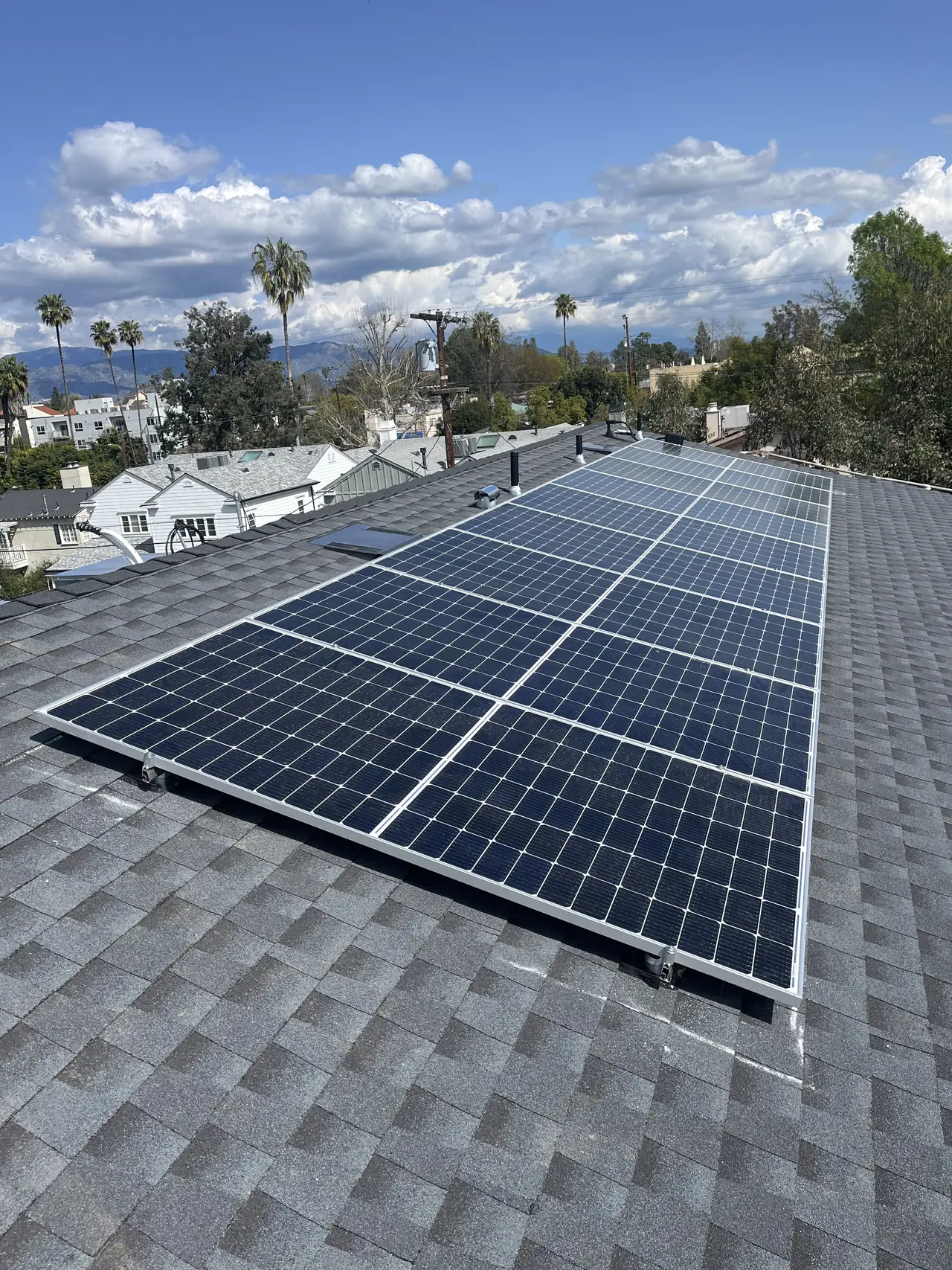
Nearly thirteen kilowatts across several planes of a rambling single-story roof — and before any of it, a tape measure over every face, every valley and every old patch, so the covering could be replaced first.
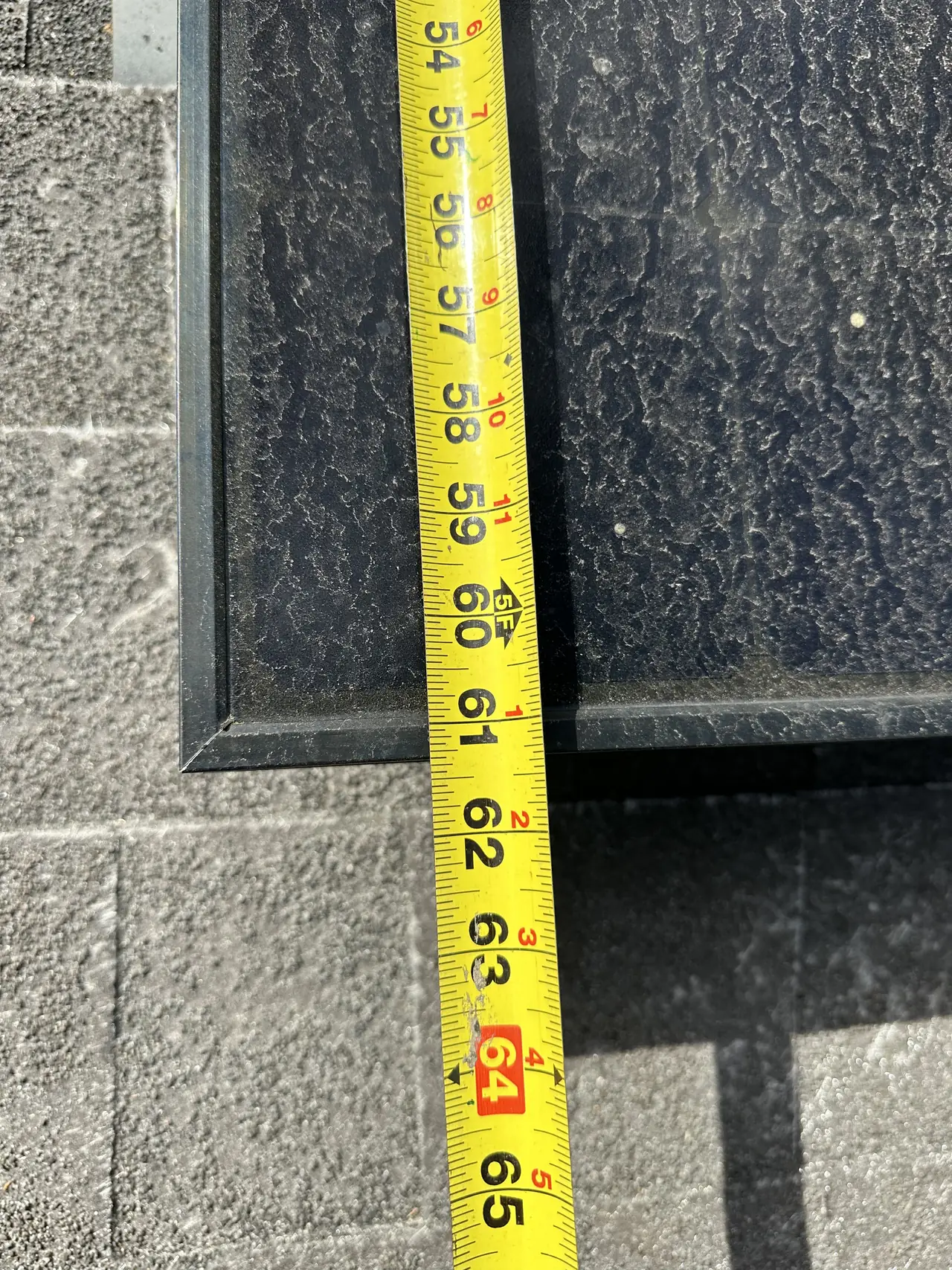
On a complicated roof the survey is the quote. Remote measurement gives you area and pitch; it does not give you condition, and condition is what decides whether a covering can carry an array for twenty-five years. On a roof with several planes, a flat section and a history of patches, somebody goes up with a tape and a camera first. Then you decide what the covering needs, then where the array goes.
At a glance
- System
- 12.95 kW
- Roof
- Re-covered first — 27 squares
- Roof planes
- Several, plus a flat section
- Survey
- Measured plane by plane before quoting
- House
- Single story, long and rambling
- Monitoring
- Reporting over the household network
- Utility / AHJ
- LADWP / LADBS
The story
Nearly thirteen kilowatts went onto this roof, and the most interesting part of the job happened before anybody talked about modules. The roof was measured. Not paced, not traced off an aerial photograph — measured, with a tape, across every plane and every valley, and photographed as it went.
Remote measurement from imagery is a normal way to start a quote and it is genuinely accurate for area and pitch on a simple roof. What it cannot show is the state of the covering. On a house like this one — long, single story, four or five planes meeting at different angles with a flat section and a run of skylights — the state of the covering is the entire question.
What the survey turned up is the ordinary history of a roof that has been looked after in patches. Old penetrations sealed with mastic rather than flashed. Debris collected in the valleys. Worn sections on the flat where water had been standing. A covering that would have carried on for a while longer with nothing on it, and would not have carried an array bolted through it for the next twenty-five years.
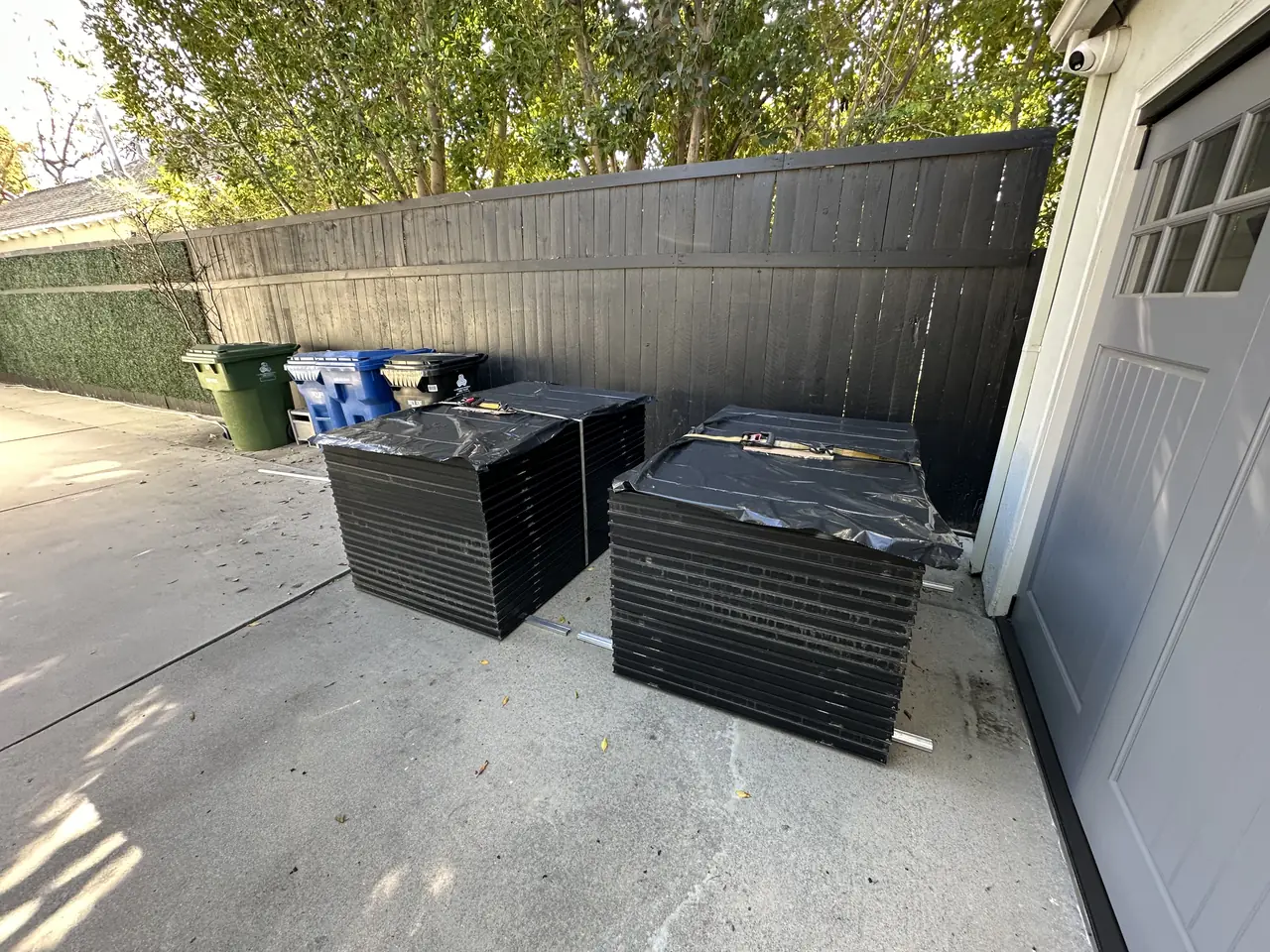
So the covering went first: twenty-seven squares, Class A or B material over the existing solid sheathing, filed and closed out with the building department. That is the whole argument for doing it in this order. Removing an array to re-roof underneath it costs the removal, the storage, the re-installation and a second set of penetrations, and it buys nothing.
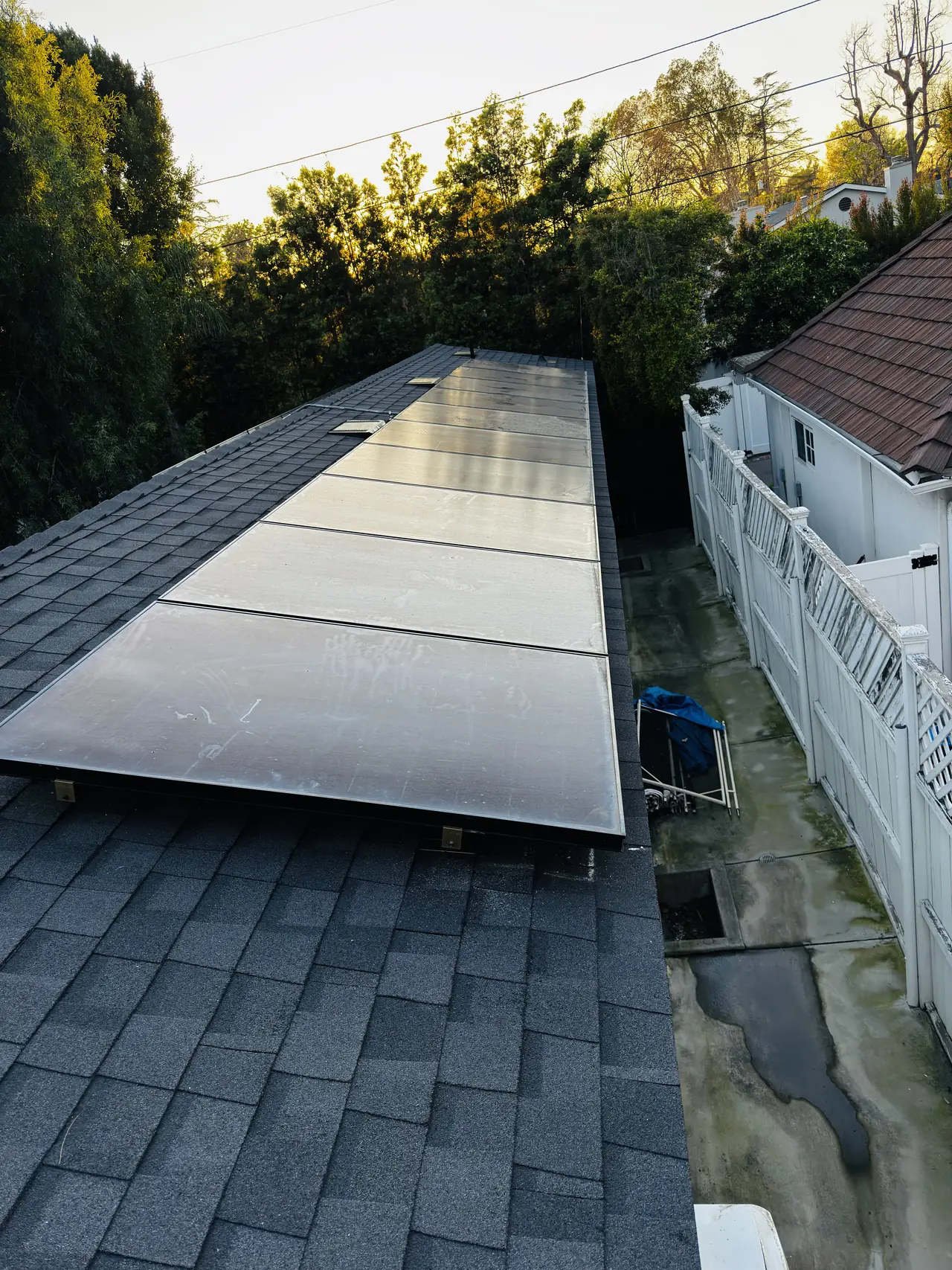
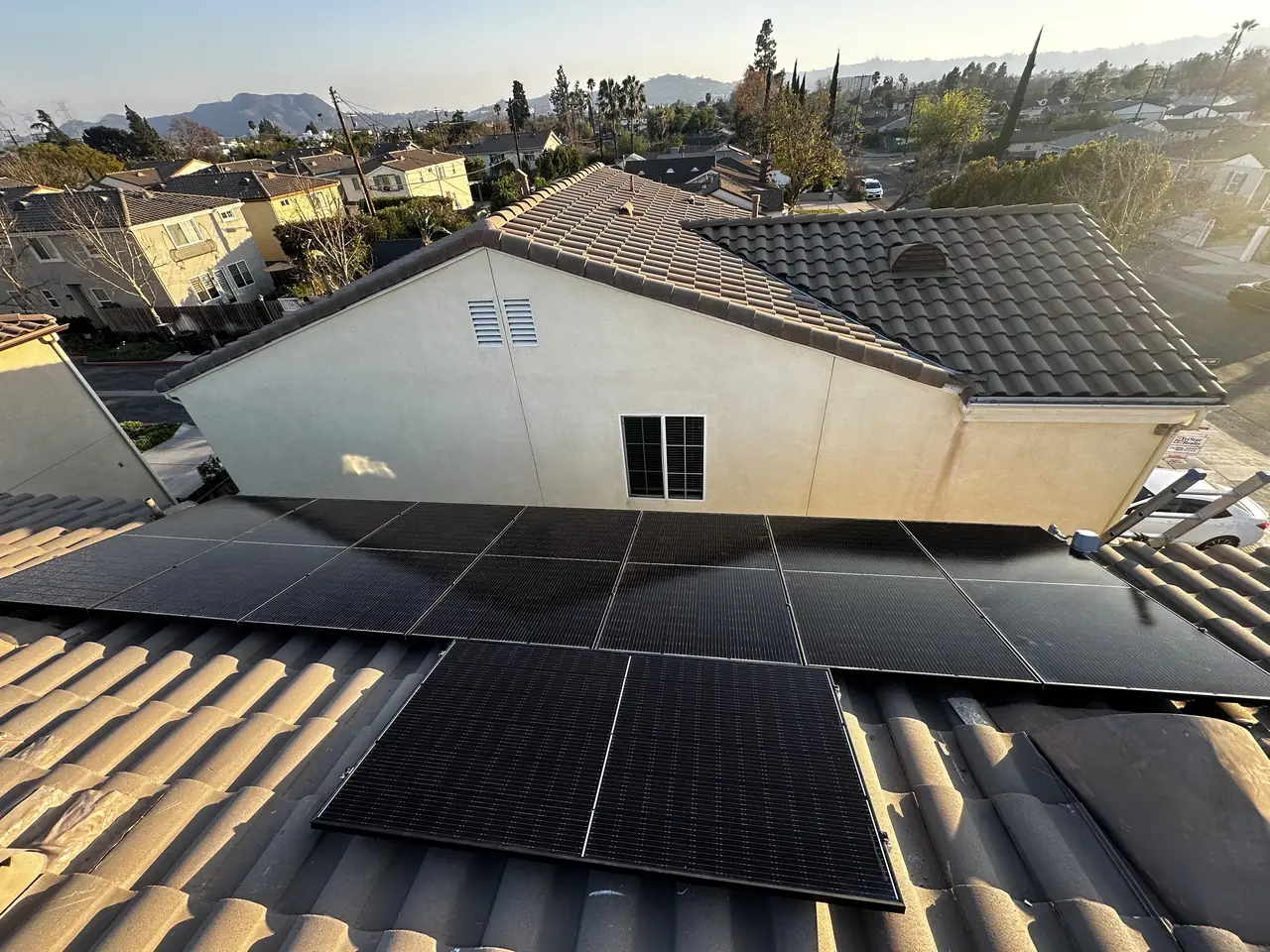
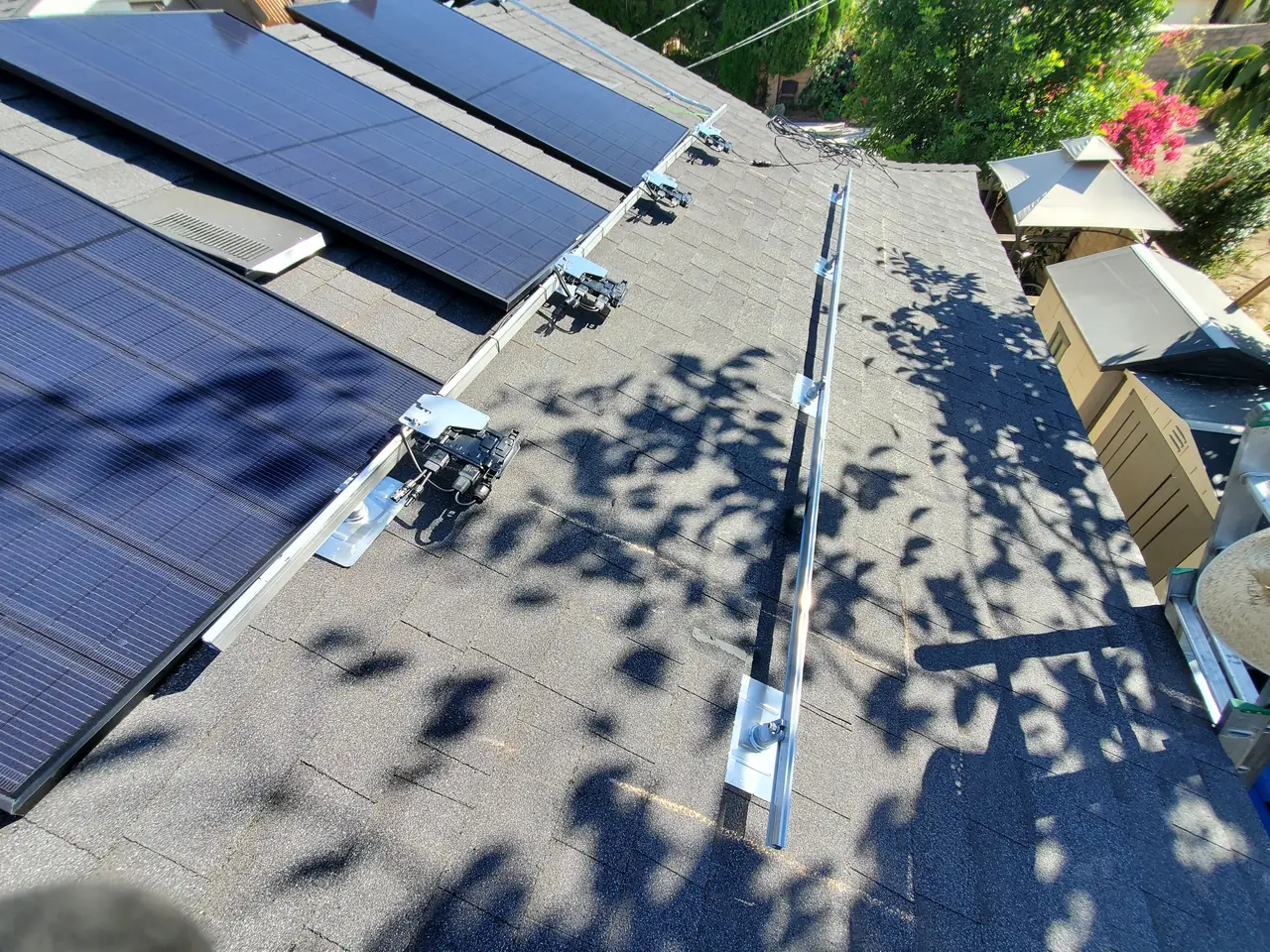
The array is nearly thirteen kilowatts, which on a Studio City lot is a lot of module. It is spread across the planes the survey identified rather than crowded onto the best one, which is the payoff for measuring: you know which faces are worth using and which are worth leaving, in square feet rather than in impressions.
The sequence on this property is worth a line: the house had been worked on steadily for several years before any of this, and the roof and the array came at the end of that run rather than the start. That is the right order. A covering replaced while other trades are still coming and going is a covering that gets walked on.
The question is worth more here than the answer. Ask whoever is quoting you whether anybody has been on the roof, and what they found. A measurement taken from imagery is fine as far as it goes; ask what happens to the price if the covering turns out to need work. If somebody did go up with a tape, ask to see the photographs.
And ask what they found. A survey that reports nothing is a survey nobody did. On this roof it reported mastic where flashing should have been, and that is exactly the kind of thing you want found before the modules go on rather than after.
How it ran
| 2020–2023 | Several rounds of work on the house; the roof left until last |
|---|---|
| Before the array | Roof surveyed plane by plane and photographed |
| January 2026 | Re-roof closed out — 27 squares over the existing sheathing |
| 2026 | Array installed across several roof planes; monitoring online |
The roof and the array came last, which is the right order.
What we did
- Measured the roof plane by plane with a tape rather than from imagery.
- Photographed the condition of every penetration, valley and flat section.
- Replaced the covering before any module went on it — 27 squares, permit closed out.
- Spread the array across the planes the survey identified rather than crowding one face.
- Left the system reporting to monitoring at handover.
System specifications
| System | 12.95 kW |
|---|---|
| Roof covering | 27 squares, Class A or B over existing solid sheathing |
| Roof | Single-story, several planes plus a flat section and skylights |
| Survey | Tape-measured plane by plane, photographed throughout |
| Found in the survey | Mastic-sealed penetrations, debris in the valleys, wear on the flat |
| Sequence | Survey, then re-roof, then array |
| Monitoring | Reporting over the household network |
| Utility / AHJ | LADWP / LADBS |
Is your project like this one?
- Your roof has several planes and nobody has been up to measure it.
- You were quoted from a satellite image and the number felt approximate.
- Your covering is near the end of its life and solar is on the table.
- You have old patches and mastic repairs you are not sure about.
- You want the roofing and the solar on one contract rather than two.
Cali Energy in Studio City
Studio City is inside City of Los Angeles boundaries: permits run through LADBS, interconnection through LADWP.
The older streets in Studio City have long, low houses with roofs that wander: three or four planes, a flat section, skylights, and thirty years of patches. Those roofs have to be measured rather than estimated.
This installation is on the Studio City projects page alongside the others, and what the work covers is set out on the Studio City service area page.
- License and classifications: CSLB #1032379
- Official reference for this process: LADBS — plan review and permitting
- Official reference for this process: CSLB — check a contractor's license
Frequently asked questions
Should the roof be replaced before solar?
If the covering is near the end of its life, yes. Taking an array off to re-roof underneath it costs the removal, the storage, the refit and a second set of penetrations. Here the covering was replaced first — twenty-seven squares — and the array went onto a roof the same age as itself.
Can a roof be measured from satellite imagery?
Area and pitch, yes, and on a simple roof that is enough to quote from. What imagery cannot show is condition — old penetrations, failed sealant, standing water on a flat section. This roof was measured with a tape, plane by plane, and photographed as it went, and the photographs are what changed the job.
What does a roof survey actually look for?
Condition rather than dimensions alone. On this roof it found penetrations sealed with mastic instead of flashed, debris standing in the valleys, and wear on the flat section. Those are the things that decide whether a covering can carry an array for twenty-five years.
Why does the survey change where the array goes?
Because it tells you the usable area of each face in square feet instead of in impressions. On this house the array is spread across several planes rather than crowded onto the best one, which is a decision you can only make with real numbers.
Is thirteen kilowatts large for a house?
It is at the large end for a single-family roof in this part of the valley. What makes it possible is a long single-story plan with several usable faces, not an unusually steep or high roof.
Does Cali Energy do the roofing as well as the solar?
Yes, on one contract. Cali Energy holds B, C-10 and C-39 classifications under CSLB #1032379, which is why the re-roof and the array here sat under one program rather than two.
What this would look like on your roof
Planning solar in Studio City? Tell us your utility, your roof and what your bill looks like now, and we will model what a system like this would do on your house before you commit to anything.
Or call +1 (323) 844-7777 · Cali Energy, Northridge · CSLB #1032379 (B, C-10, C-39) — design, permits, install and electrical under one licensed contractor.
Related
This timeline reflects this property and this permitting path. Updated September 2026.