

Woodland Hills, CA · April – June 2022 · LADWP / LADBS
Forty-four modules, and one more permit before anyone could inspect.
Nearly fifteen kilowatts on one Woodland Hills house: a derate that needed its own permit before the final, and a switch-on that happens at the house, not at the utility.
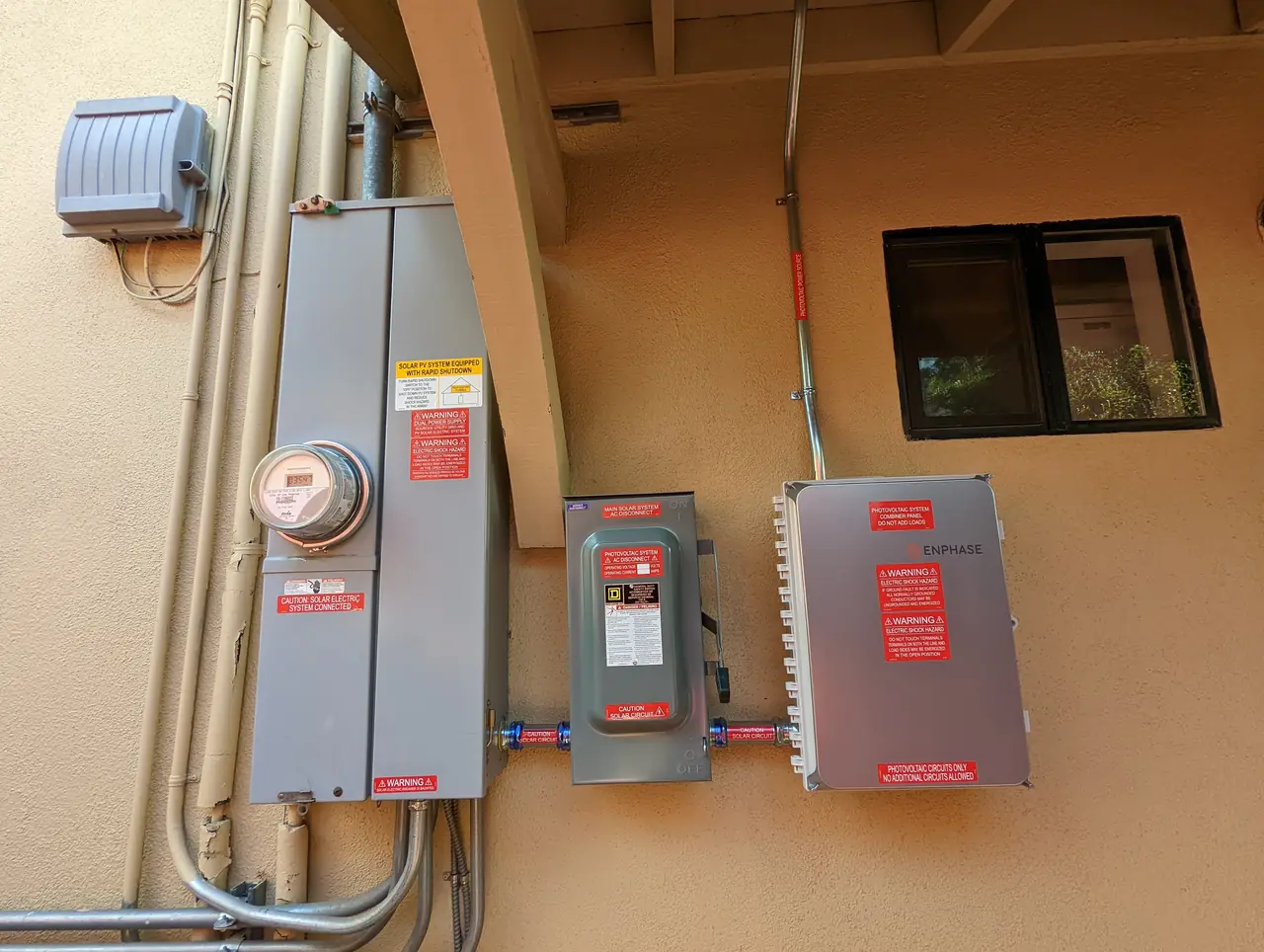
On a large residential array the main service panel usually has to be derated, meaning the main breaker is replaced with a smaller one so the code limit on backfeed is satisfied without replacing the panel. That is electrical work and it needs its own permit, which has to exist before the final inspection rather than after it. Missing it does not delay the array; it delays the inspection that releases everything downstream. On this Woodland Hills array Cali Energy caught it two days before the final and had an express permit opened in time.
At a glance
- System size
- 14.96 kW DC
- Modules
- 44 × Q CELLS Q.PEAK DUO BLK-G6 340 W
- Inverters
- 44 × Enphase IQ7Plus microinverters
- Material check
- Confirmed two days before the crew arrived
- Service work
- Main panel derate, on its own express permit
- Battery
- None
- Final inspection
- Passed on the first visit
- Utility / AHJ
- LADWP / LADBS
The story
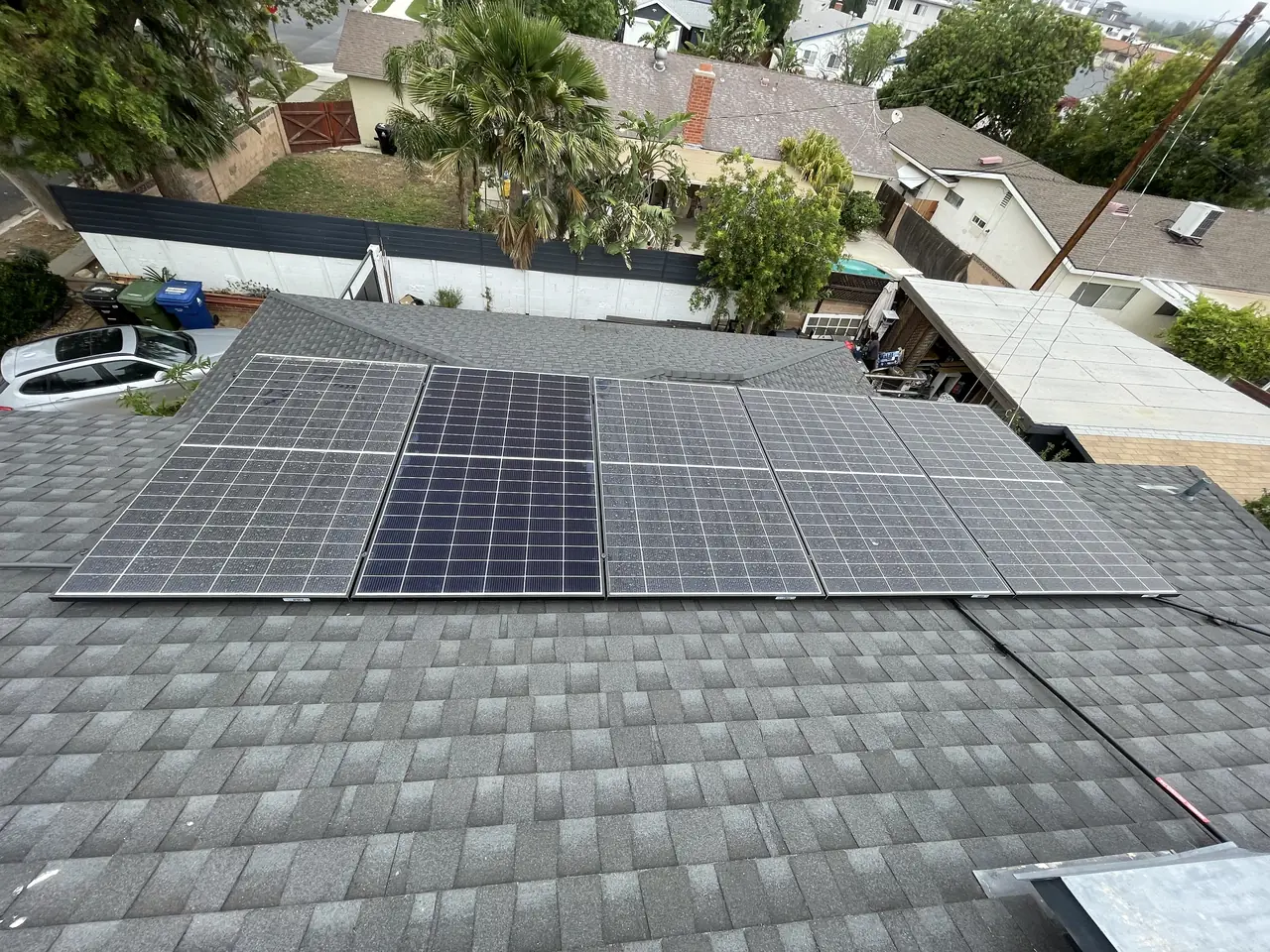
Forty-four modules and forty-four microinverters, just under fifteen kilowatts, on a house whose roof had been replaced three months earlier. We were the installing contractor; another company held the customer, the design and the materials.
The first friction was mundane, and it happens on a large share of shared work. Two days before the installation date, the only thing on site was the panels. No racking, no microinverters, no balance of system. Asking early is the difference between a crew that starts on time and a crew that stands in a driveway, and the answer came back the same day with the rest of the delivery arriving the following morning.
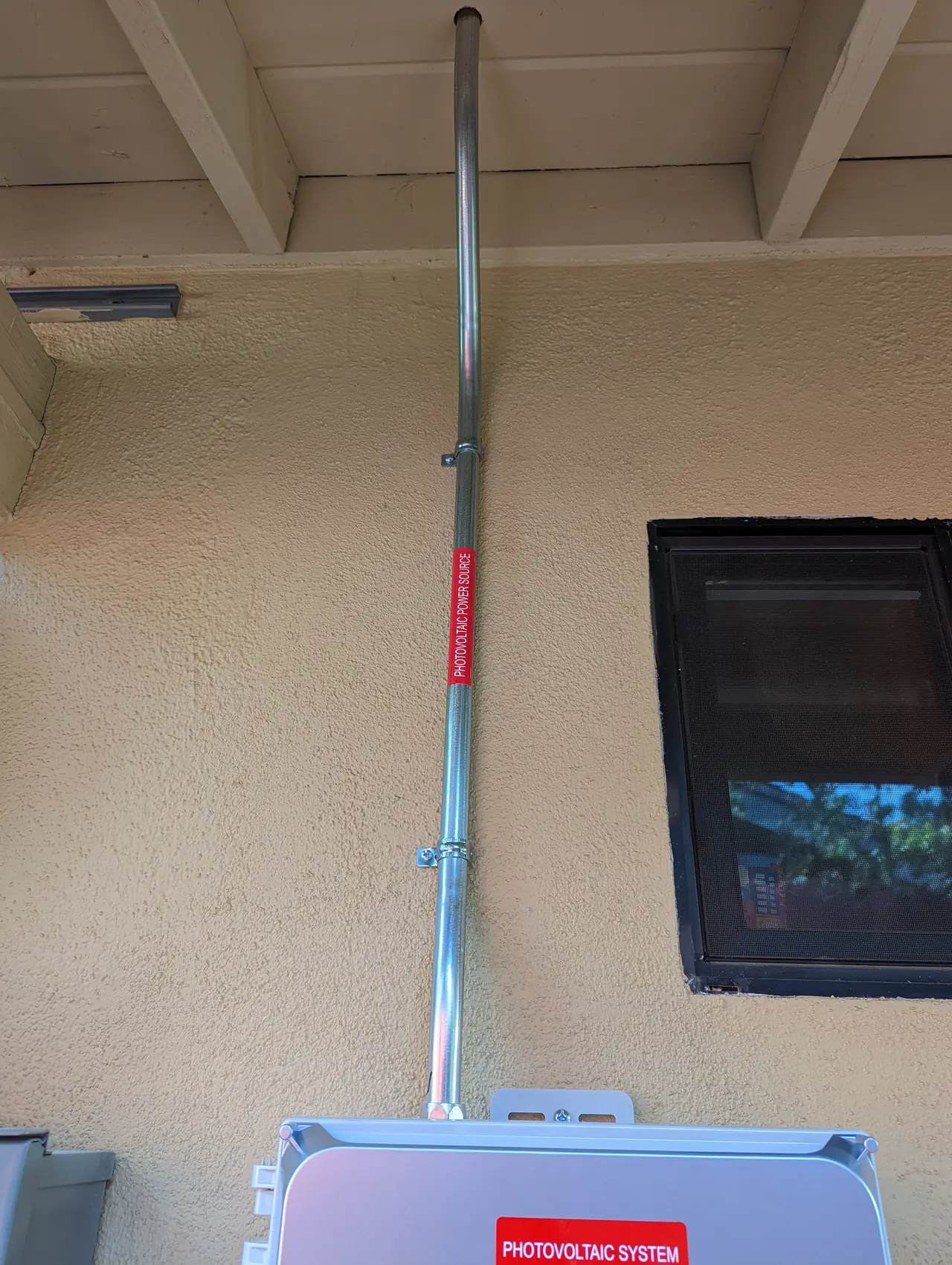
The second friction is the expensive one.
An array this size pushes a large current into the main service panel, and the code limits how much can be fed into a busbar from both ends at once. There are two legitimate answers. Replace the panel, which is expensive and slow. Or derate it, meaning fit a smaller main breaker so the arithmetic works with the panel already there. This project took the second route, which is usually the right one.
What it also needs is a permit. A derate changes the service equipment, and changing service equipment is permitted work with an inspection attached. Two days before the final we flagged that a derate permit had to be opened, that the express route existed, and that without it the inspection could not be booked. It was opened, the inspection went ahead, and the final passed on the first visit.
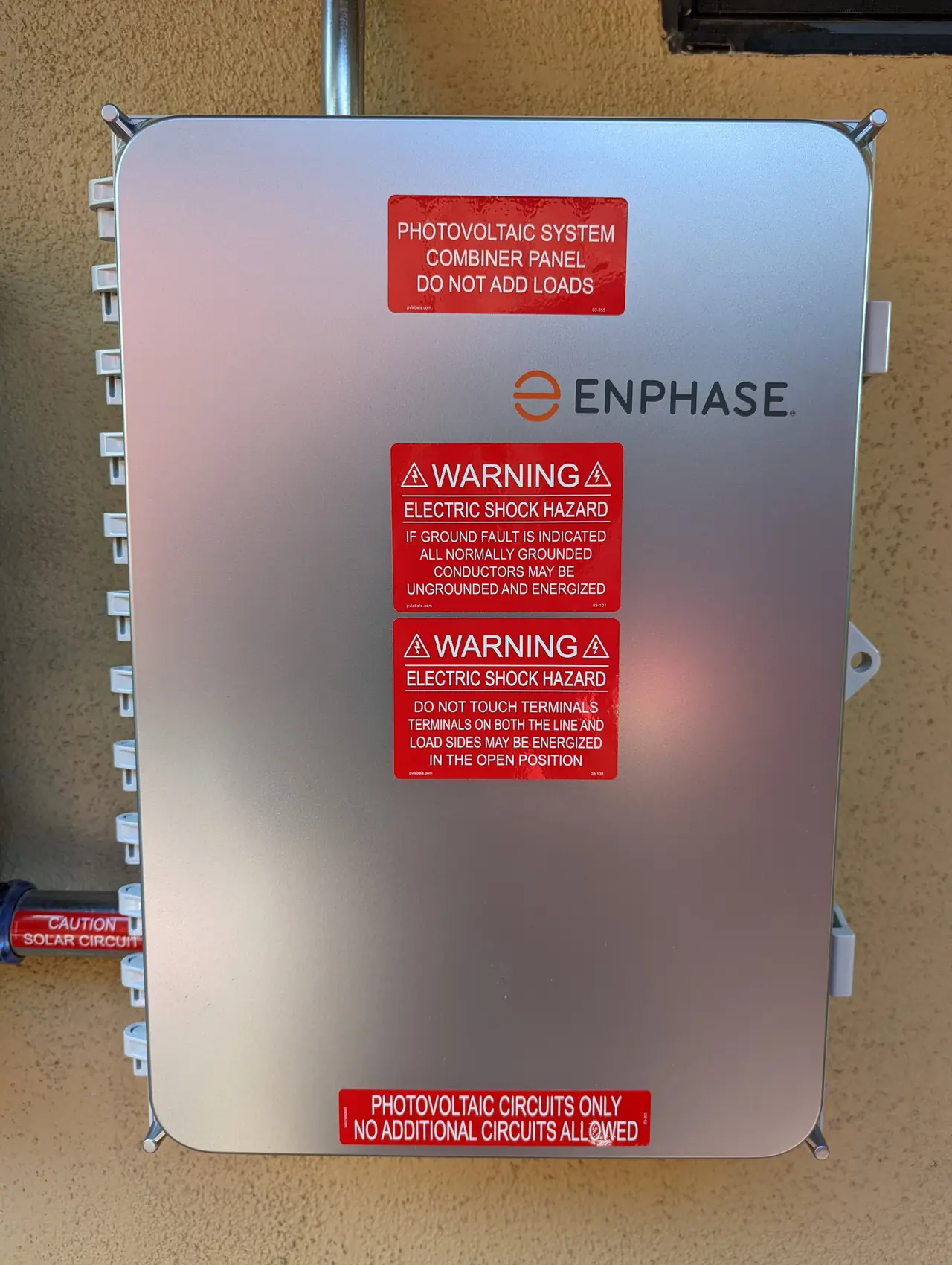
Then the third thing, which is the most useful of the three because it costs nothing and confuses everyone.
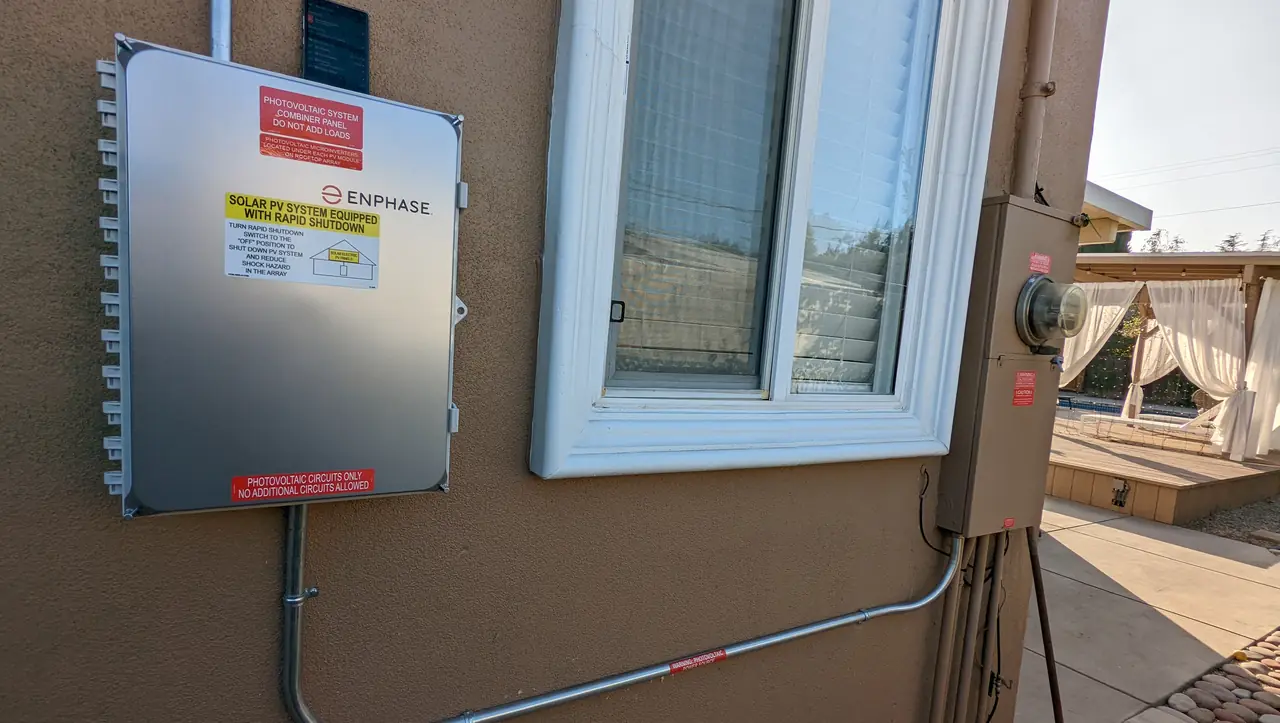
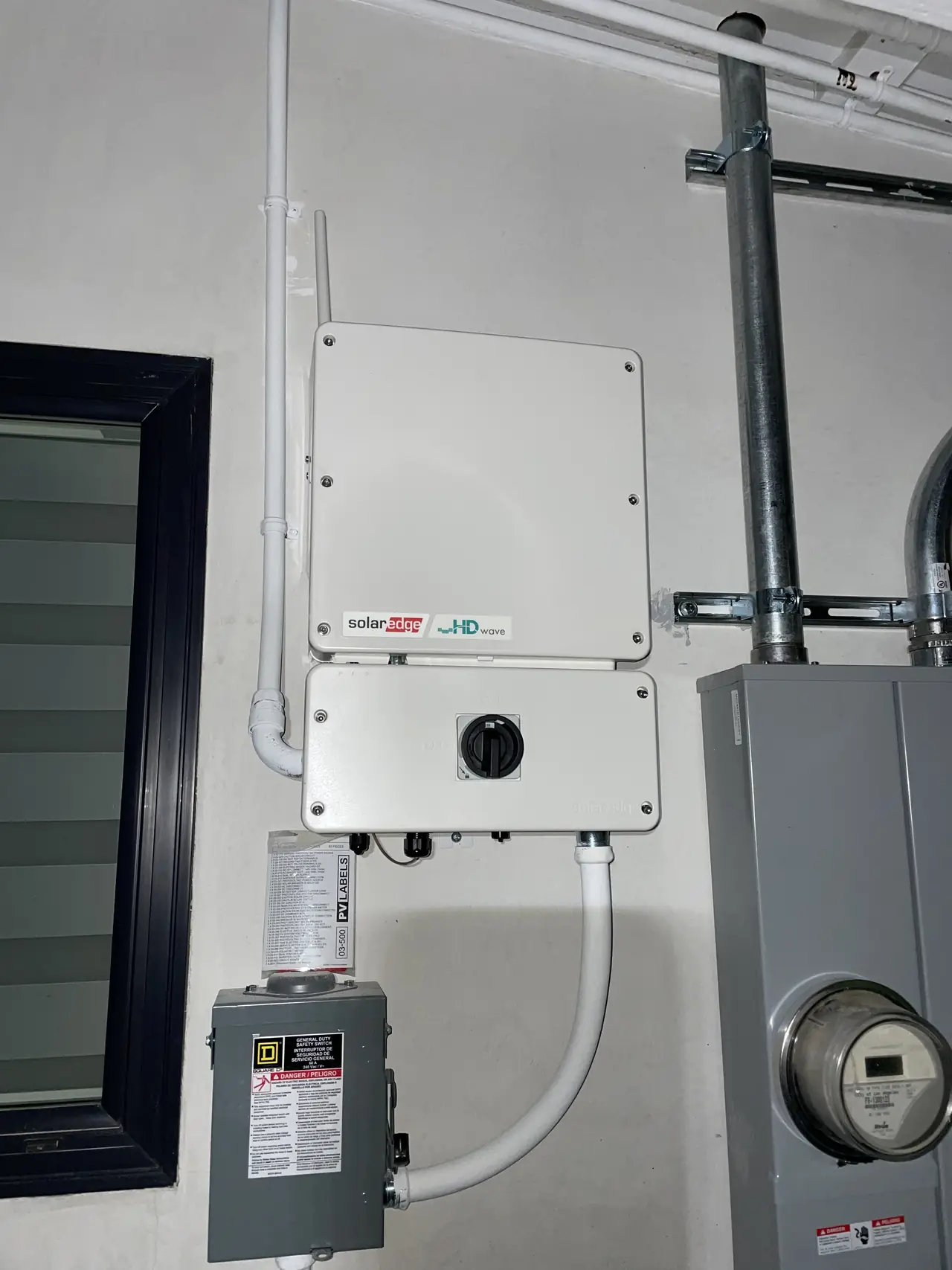
In early June, after permission to operate had been granted, a monitoring account was set up and the gateway was reported as not reporting. That reads like a fault. It was not one. Permission to operate means the utility has authorized the system; it does not mean anybody has switched it on. The disconnects at the house are still where the installer left them, which is off, until someone closes them. The answer was one line: the permission came through a couple of days ago, so the customer needs to turn the system on.
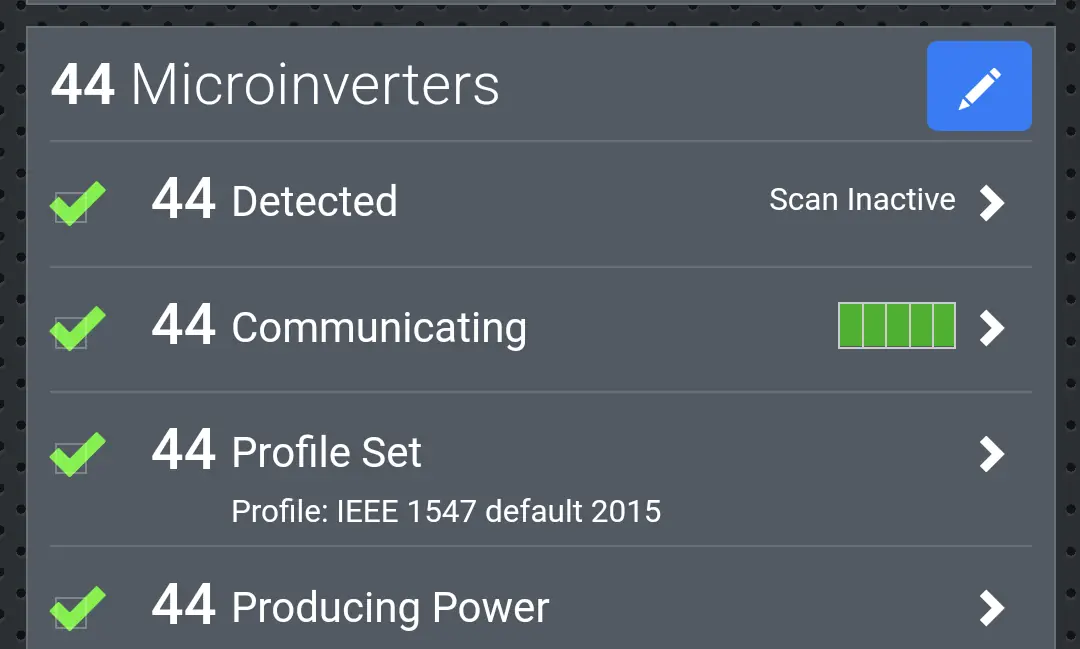
Three practical things to carry away. On any array approaching the size of the service, ask whether the design derates the panel or replaces it, and if it derates, ask when the permit for that will be opened. Confirm materials on site two days before the crew arrives rather than on the morning. And after permission to operate, someone has to physically close the disconnects, because a portal showing nothing is not evidence of a problem until that has been done.
How it ran
| 13 April 2022 | Installation date requested and agreed for the twentieth |
|---|---|
| 18 April 2022 | Only the modules are on site; the rest of the materials confirmed for the next morning |
| 19 April 2022 | Derate permit identified as missing; express permit requested so the final can be booked |
| 19 April 2022 | City accepts the inspection request; final set for the twenty-first |
| 20 April 2022 | Installation |
| 22 April 2022 | Final inspection passed; completion photographs handed over |
| Early June 2022 | Permission to operate granted |
| 8 June 2022 | Monitoring reported as silent; the cause is that the system has not been switched on at the house |
The derate permit was the only item on this project's critical path. Nothing else on the job had to wait for anything.
What we did
- Installed forty-four modules and forty-four microinverters in a single day (C-10).
- Checked the material delivery two days out and flagged that only the modules had arrived, in time for the rest to be delivered before the crew.
- Identified that the main panel derate needed its own permit before the final inspection could be booked, and specified the express route.
- Passed the city's final inspection on the first visit and handed over the completion photographs.
- Diagnosed the silent monitoring after permission to operate as a system that had never been switched on, rather than dispatching anyone.
System specifications
| System size | 14.96 kW DC |
|---|---|
| Modules | 44 × Q CELLS Q.PEAK DUO BLK-G6, 340 W, all black |
| Inverters | 44 × Enphase IQ7Plus microinverters, one per module |
| Service work | Main service panel derated rather than replaced |
| Permits | Solar permit plus a separate express derate permit |
| Roof | Replaced three months before the installation |
| Battery | None |
| Utility / AHJ | LADWP / LADBS |
Is your project like this one?
- Your array is large relative to your existing service panel.
- You have been told your main breaker will be derated rather than the panel replaced.
- Your final inspection is booked and you are not sure every permit is open.
- Your monitoring shows nothing after permission to operate arrived.
- Your Woodland Hills property is served by LADWP, while permits are handled by LADBS.
Cali Energy in Woodland Hills
Woodland Hills is inside City of Los Angeles boundaries: permits run through LADBS, interconnection through LADWP.
On a large residential array in this part of Los Angeles the constraint is almost never the roof. It is the service panel the array has to feed into, and what the code allows to be pushed into it. LADBS inspects that; LADWP interconnects it.
This installation is on the Woodland Hills projects page alongside the others, and what the work covers is set out on the Woodland Hills service area page.
- License and classifications: CSLB #1032379
- Official reference for this process: NFPA 70, National Electrical Code — Article 705, interconnected power sources
- Official reference for this process: LADBS — inspections
Frequently asked questions
What is a main panel derate and why would I need one?
It means replacing the main breaker with a smaller one so that the combined supply into the busbar stays within what the code allows. It is the alternative to replacing the whole service panel, and on a large array it is usually the cheaper and faster answer. It suits a house whose real demand sits comfortably below the original breaker rating, which is most houses.
Does a derate need its own permit?
Yes. It changes the service equipment, so it is electrical work with an inspection attached, and the permit has to be open before the final inspection is booked rather than afterwards. An express permit is the quick route and can be turned around in a day or two. Missing it does not delay the array; it delays the inspection that releases everything after it.
My system has permission to operate but the monitoring shows nothing. What is wrong?
In most cases nothing. Permission to operate is the utility authorizing the system, not anybody switching it on. The disconnects at the house are left open until somebody closes them, and until then the array generates nothing and the gateway has nothing to report. Check the disconnects before you report a fault, because this is the single most common false alarm after a new installation.
How early should materials be confirmed before an installation?
Two days, at least, and item by item rather than as a single yes. On this project the modules were on site and nothing else was, which was caught with time to fix it. A crew that arrives to a partial delivery loses the day.
Does Cali Energy install large residential arrays in Woodland Hills?
Yes, including this forty-four module system at just under fifteen kilowatts. On arrays of that size the work that decides the schedule is the service side: whether the panel is derated or replaced, and whether the permit for it exists before the inspection is booked. Cali Energy holds California contractor license number 1032379.
What this would look like on your roof
Planning solar in Woodland Hills? Tell us your utility, your roof and what your bill looks like now, and we will model what a system like this would do on your house before you commit to anything.
Or call +1 (323) 844-7777 · Cali Energy, Northridge · CSLB #1032379 (B, C-10, C-39) — design, permits, install and electrical under one licensed contractor.
Related
This timeline reflects this property and this permitting path. Updated September 2026.