

Van Nuys, Los Angeles, CA · December 2021 – February 2022 · LADWP / LADBS
The cheap fix needed two empty slots. There were none.
A large modern house with a low-slope tile roof and an array big enough to need a serious breaker. The usual answer is to derate the main breaker and keep the existing panel. Here the panel was full, and full is a different problem from small.
A main panel may be backfed as long as the main breaker and the solar breaker together come to no more than 120 percent of the busbar rating, which is why lowering the main breaker so often avoids a service upgrade. That solution still needs somewhere to land the solar breaker. In this Van Nuys house every position in the main panel was occupied, so the derate was not available at any breaker size, and Cali Energy redesigned the interconnection around new service equipment instead.
At a glance
- Size recorded by the utility
- 11.9 kW AC-CEC
- Roof
- Low-slope concrete tile, several planes
- First design
- Derate the main breaker, keep the panel
- Why it failed
- No spare breaker positions in the panel
- Designed instead
- New service equipment sized for the backfeed
- Interconnection agreement
- Approved two weeks after filing
- Net meter
- Set in early March 2022
- Utility / AHJ
- LADWP / LADBS
The story
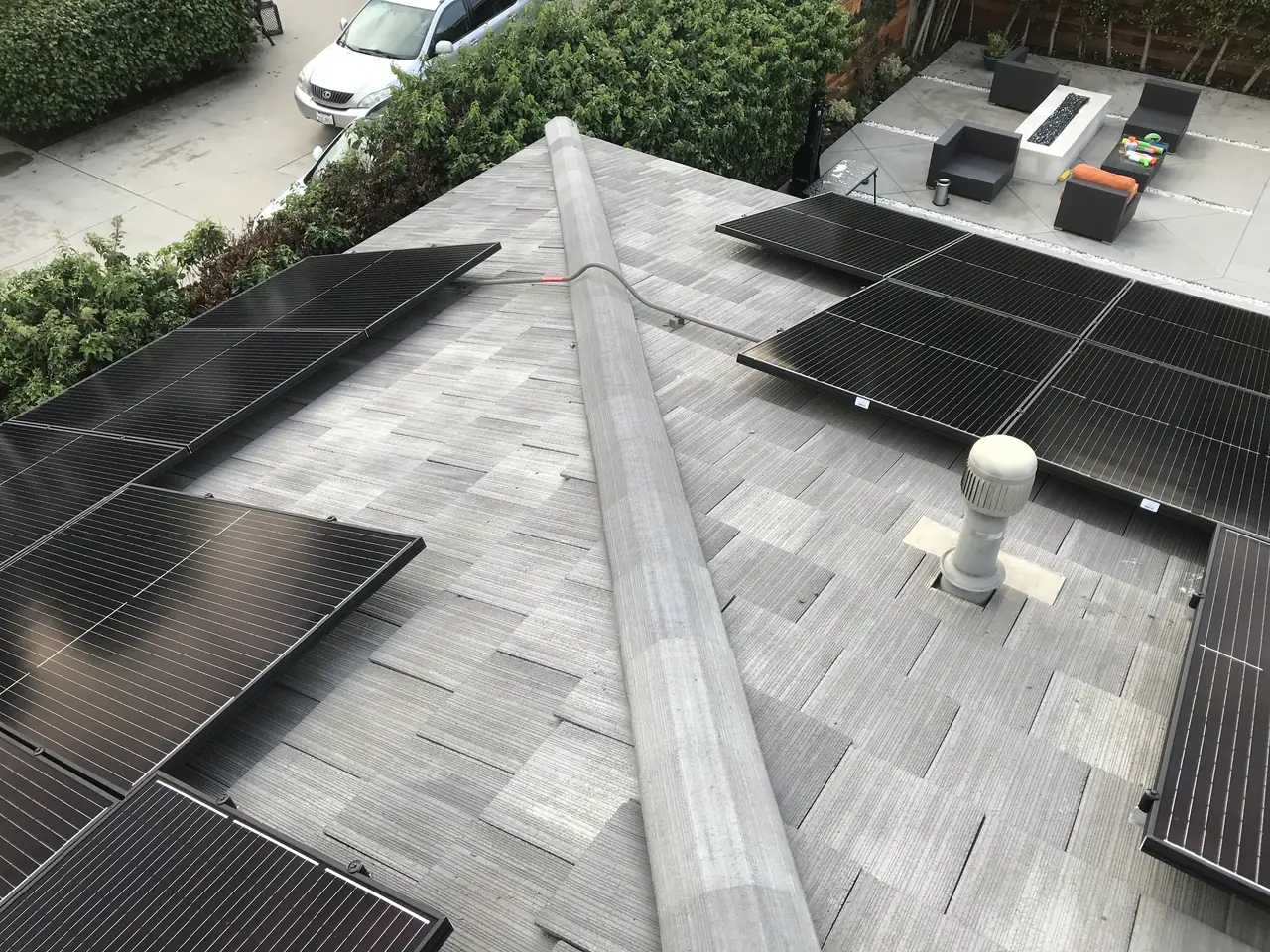
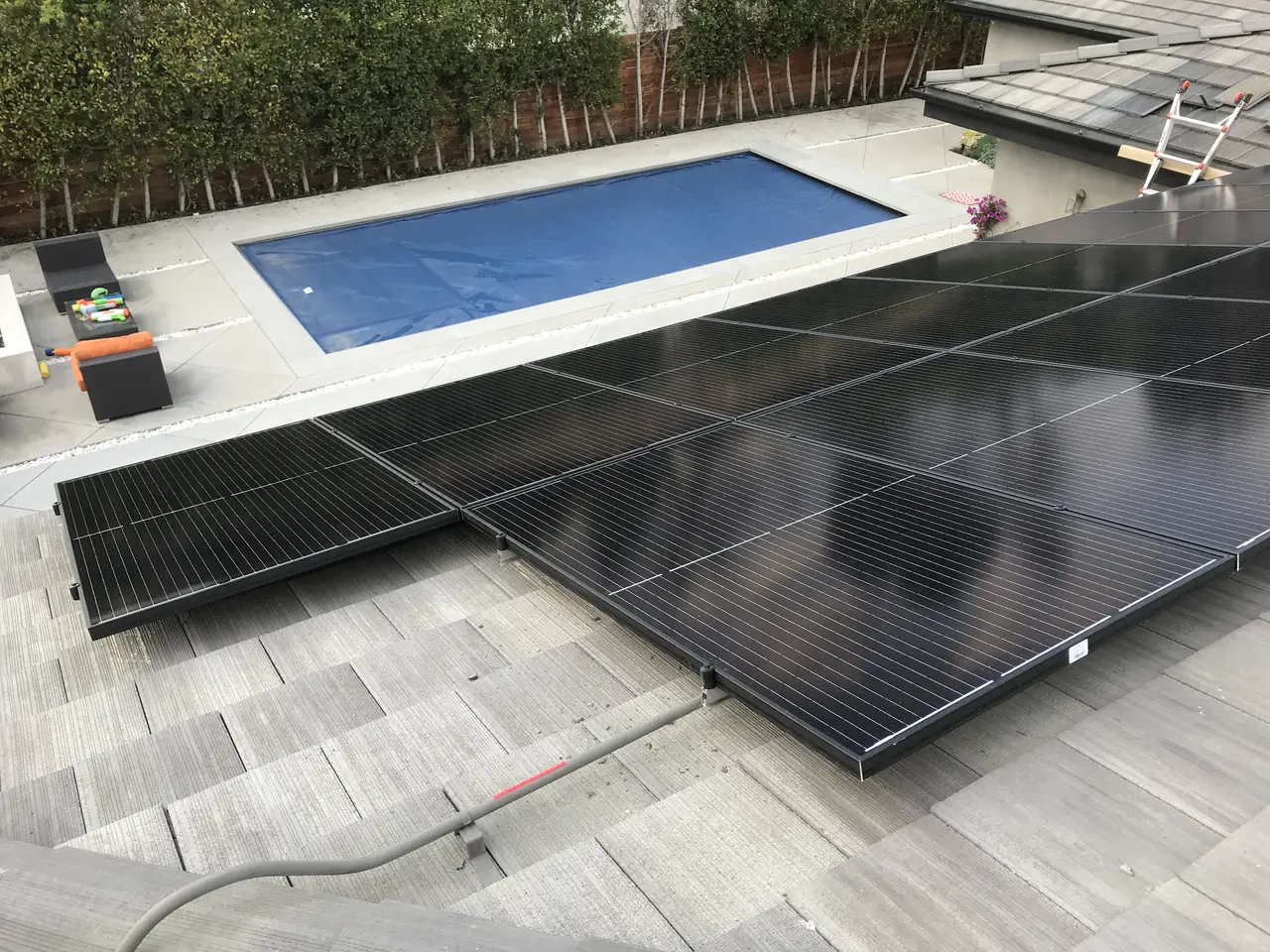
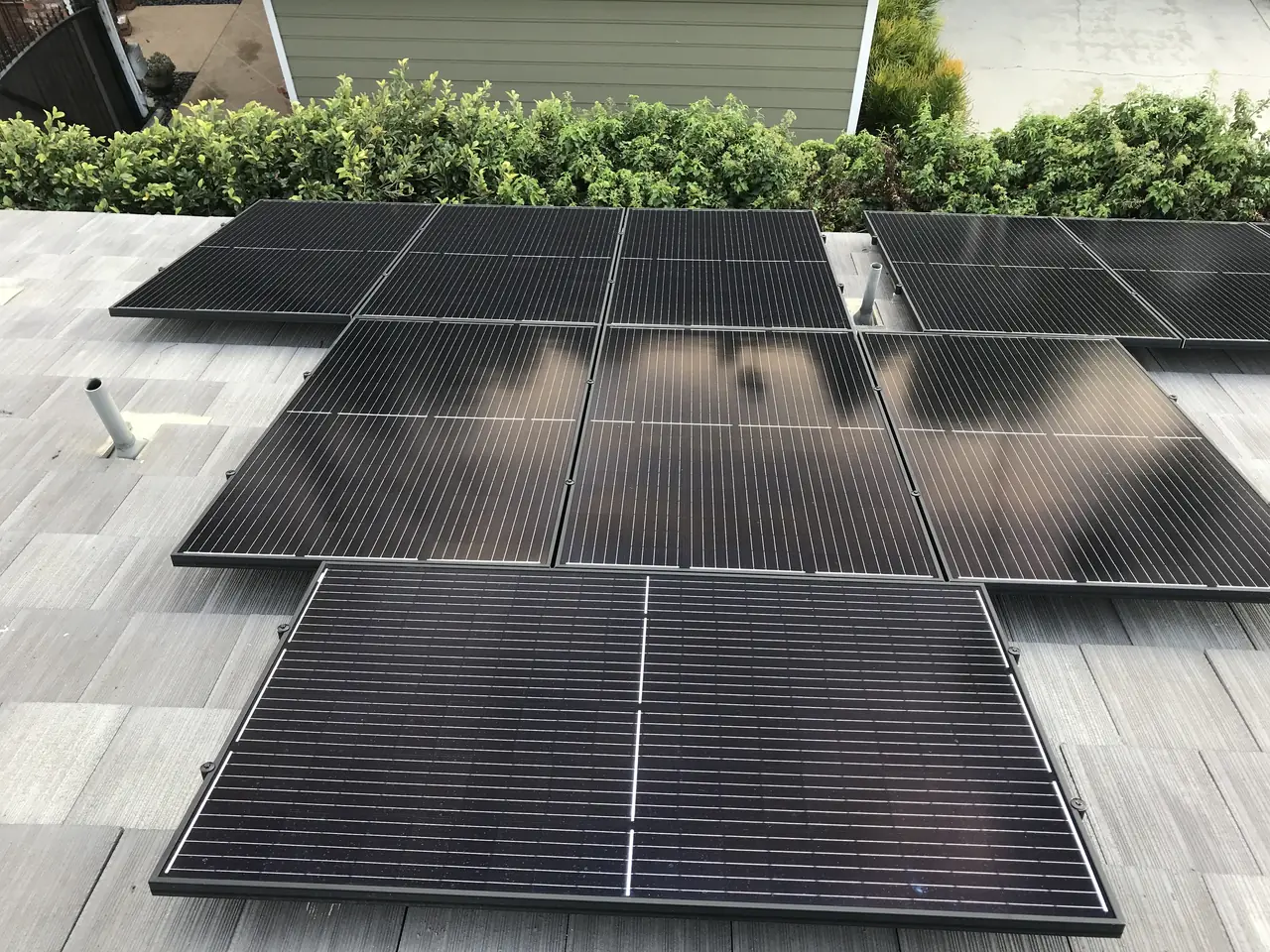
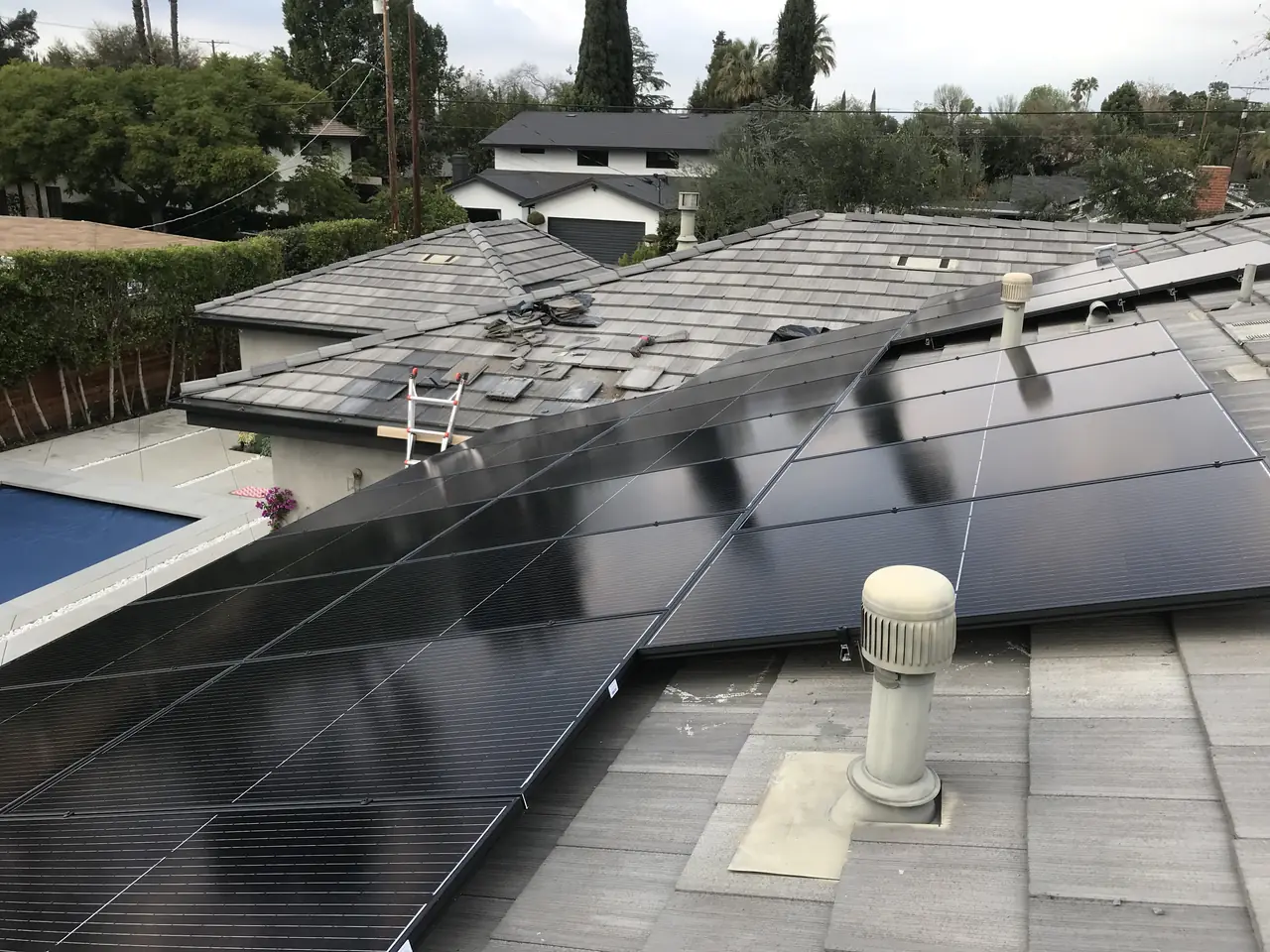
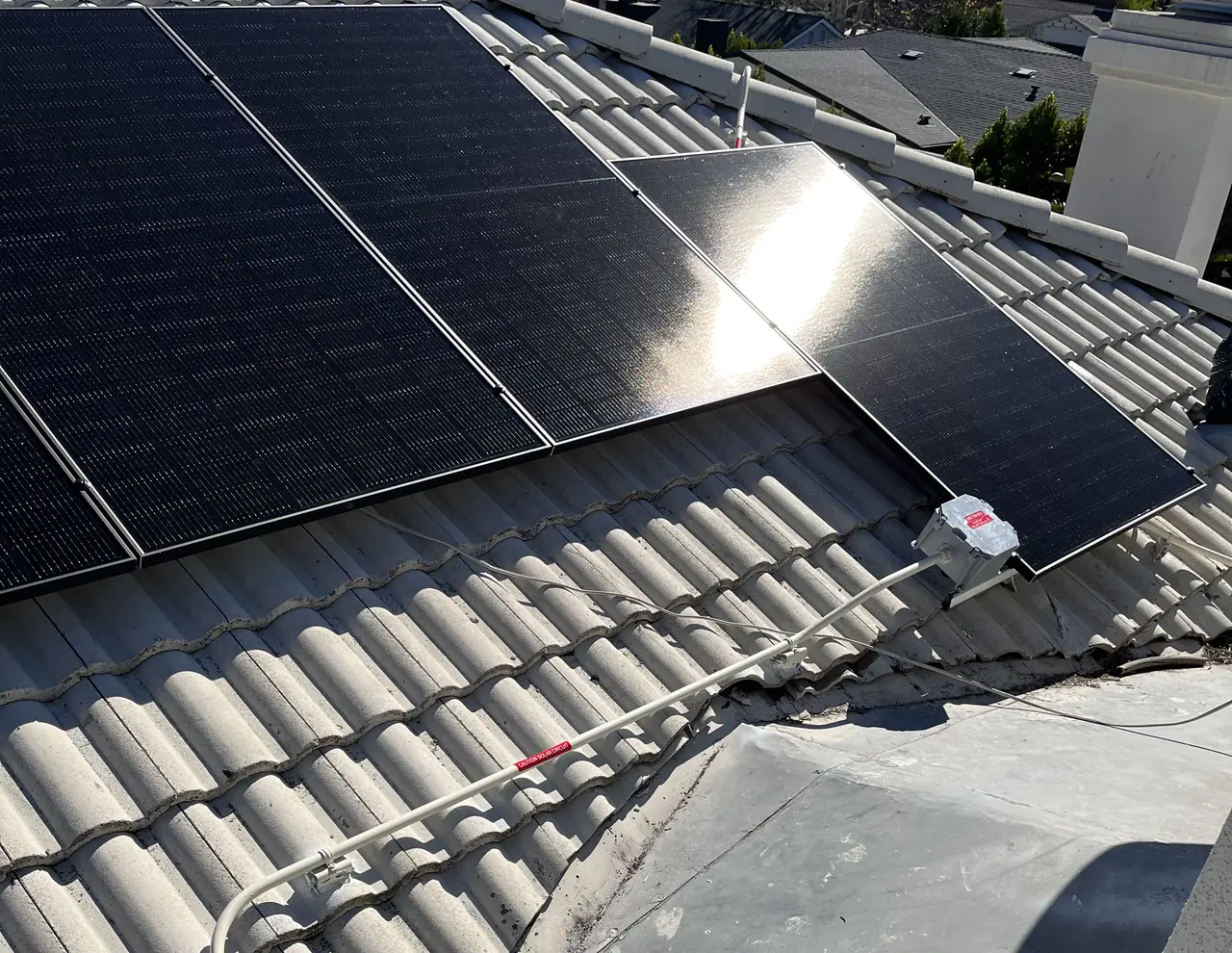
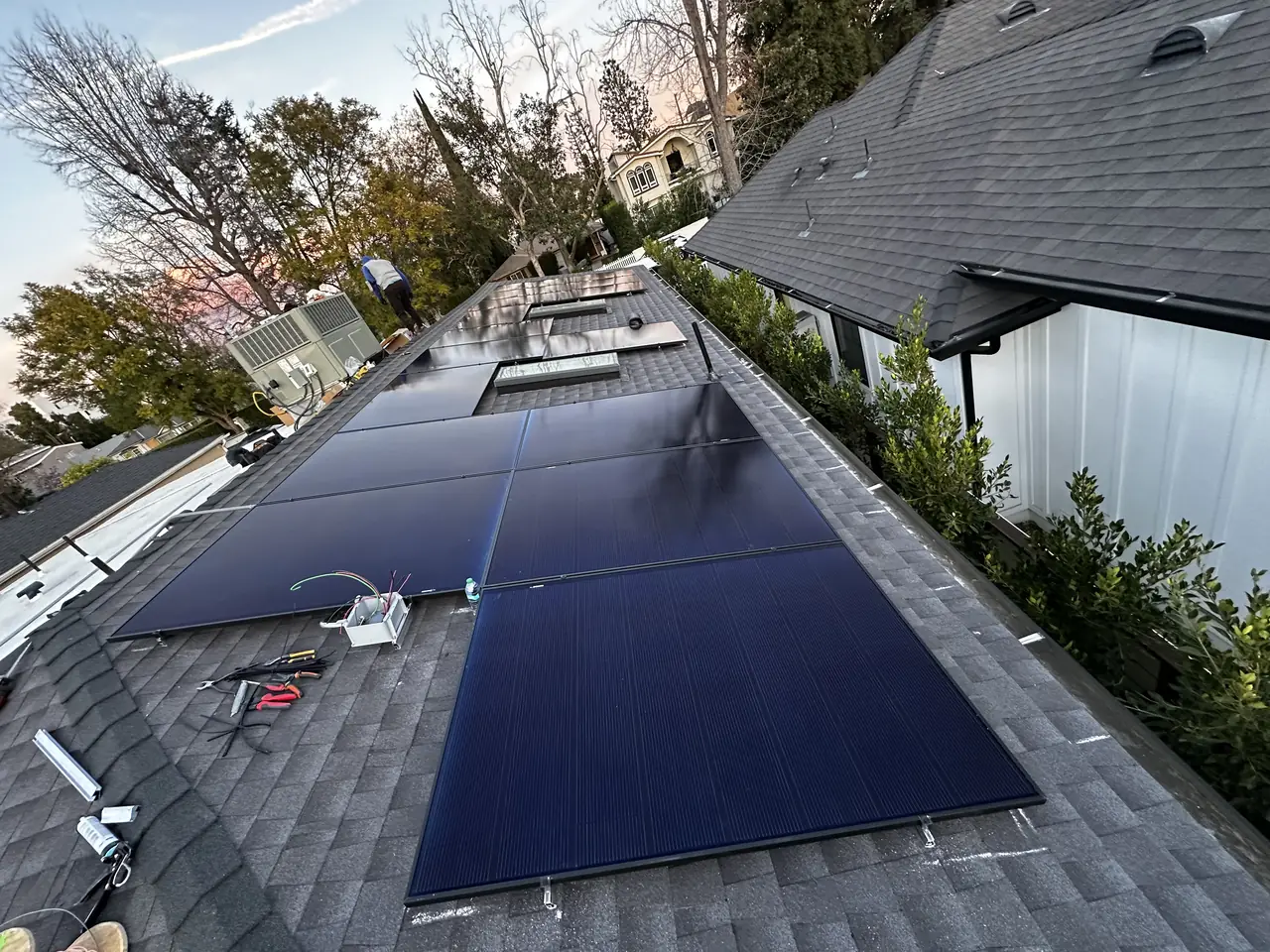
The roof was the easy part. A large single-story house with a modern low-slope concrete tile roof, several planes facing different directions, and plenty of room. The array went on in groups rather than one block, following the planes the sun actually reaches, and the utility recorded the finished system at 11.9 kilowatts AC-CEC.
The hard part was two hundred feet away, on the side wall.
An array this size needs a substantial breaker to push its output into the house. The question every design has to answer is where that breaker goes and whether the panel can take it. The rule is about the busbar — the copper spine every breaker clamps onto. The main breaker and the solar breaker together may come to 120 percent of what that spine is rated to carry, so a 200-amp busbar allows 240 amps of supply. With a 200-amp main that leaves 40 amps, which is rarely enough for a full-size array.
The standard way out is to leave the panel alone and lower the main breaker. Drop a 200-amp main to 175 and the allowance rises to 65 amps, which carries most residential arrays: the panel is untouched, no utility crew is needed, and the cost is a breaker and an afternoon. It is the first thing a good designer tries.
The design team came back with a single sentence that closed that door. The existing panel was full. Every position was taken, and a derate does not create space — it only changes a number. There was nowhere to put the solar breaker at 175 amps, at 150 amps, or at any other size.
The usual ways of making room had already run out. Tandem breakers, which fit two circuits into one position, are only allowed in the positions a panel is listed for, and those were taken by circuits that could not share. A subpanel would have needed a feeder breaker in the main panel, which is the same missing position by another name.
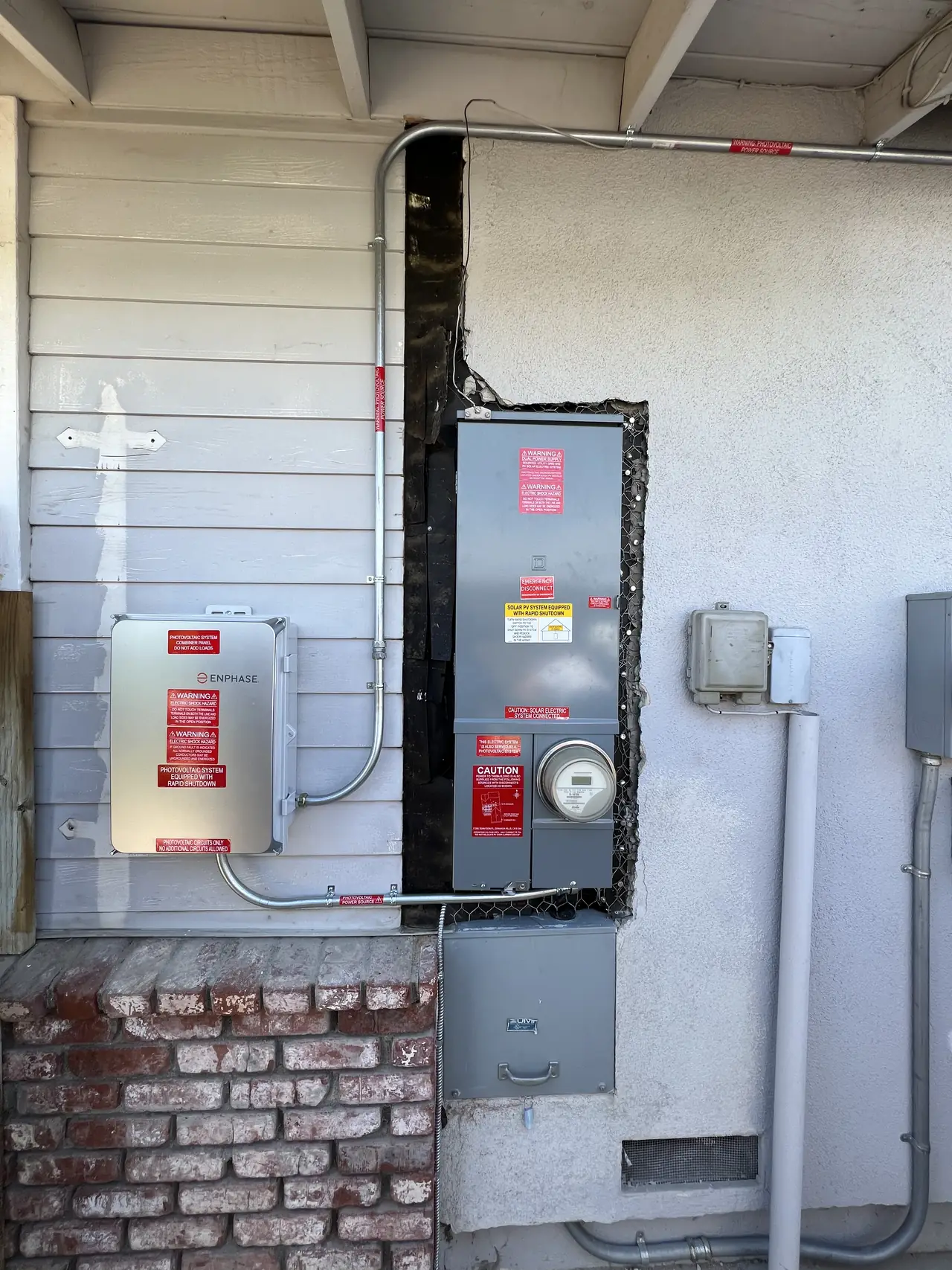
So the interconnection type changed. Instead of backfeeding an existing panel, the project moved to new service equipment: a panel with the capacity and the positions for both the house and the array, and a point of connection the utility would accept. That is a bigger job. It touches the utility's side of the meter, it needs its own inspection, and it changes the schedule.
It also changed who had to do what. Partway through the review, the utility's service representative wrote to the homeowner directly asking for photographs of the existing equipment. The homeowner forwarded the request and asked whether he should take the photographs himself or whether we already had them. We had them, and they went in the same week — but the moment is worth remembering. A utility will contact the customer, and a customer who does not know whether to act can lose a week being polite.
With the equipment settled, the rest moved quickly. The application went in at the end of January, the site assessment cleared in the first week of February, and the interconnection agreement was approved two weeks after filing. The utility completed its interconnection review the same day it approved the agreement, and the net meter went on at the start of March.
What a homeowner should take from this: when an installer quotes a derate, ask to see a photograph of the inside of the panel door. The question is not only what the main breaker says. It is whether there are two empty positions next to it. A quote built on a derate that the panel cannot physically accept is a quote that will change after the contract is signed.
How it ran
| Early December 2021 | First plan set issued: derate the main breaker |
|---|---|
| Mid-December 2021 | Design revised — panel full, interconnection changed to new service equipment |
| Late December 2021 | Final plan set released |
| Late January 2022 | Interconnection application filed |
| Early February 2022 | Utility requests site photographs |
| Early February 2022 | Site assessment completed, application confirmed |
| Mid-February 2022 | Interconnection agreement approved |
| Mid-February 2022 | Interconnection review complete; meter request issued |
| Early March 2022 | Net meter set — permission to operate |
Two weeks from application to an approved agreement and about six to the meter, once the interconnection type matched what the house could actually take.
What we did
- Laid out an array in groups across the planes of a low-slope tile roof.
- Tested the derate option against the existing panel and established that it could not be used.
- Redesigned the interconnection around new service equipment sized for the backfeed.
- Filed the interconnection application and supplied the site photographs the utility asked for.
- Carried the project through site assessment and interconnection agreement approval.
System specifications
| Size recorded by the utility | 11.9 kW AC-CEC |
|---|---|
| Roof | Low-slope concrete tile |
| Array layout | Groups across several planes |
| Interconnection | New service equipment, not a backfed existing panel |
| Reason | No spare breaker positions in the existing panel |
| Utility / AHJ | LADWP / LADBS |
Is your project like this one?
- Your installer has quoted a main breaker derate and you want to know if it works.
- Your main panel has no empty breaker positions left.
- You are planning an array large enough to need a serious backfeed breaker.
- You have a tile roof with several planes and want the array split sensibly.
- You are on LADWP and want the service equipment settled before the schedule is set.
Cali Energy in Van Nuys
Van Nuys sits inside City of Los Angeles boundaries: permits run through LADBS, interconnection through LADWP.
Most solar projects avoid a service upgrade by lowering the main breaker instead of replacing the panel. It is cheaper, faster and needs no utility crew. It also has a precondition that has nothing to do with amps, and this house did not meet it.
This installation is on the Van Nuys projects page alongside the others, and what the work covers is set out on the Van Nuys service area page.
- License and classifications: CSLB #1032379
- Official reference for this process: LADWP Electric Service Requirements
- Official reference for this process: LADWP interconnection requirements
Frequently asked questions
What does it mean to derate a main breaker for solar?
It means replacing the main breaker with a smaller one so the solar breaker can be added without exceeding what the panel's busbar is rated to carry. A 200-amp main dropped to 175 frees enough headroom for most residential arrays. The house loses some theoretical capacity it was almost certainly never using, and the panel, the meter and the utility service all stay exactly as they are.
When does a derate not work?
When the panel has no free positions for the solar breaker. A derate changes the rating of the main breaker, not the physical size of the panel, so a full panel stays full. It also does not help where the busbar rating is already too low for the house's real load, or where the panel is old enough that no current breaker fits it. In those cases the service equipment has to be replaced.
Is replacing the service equipment much slower than a derate?
It is a different kind of job rather than simply a longer one. New service equipment needs its own plan review, its own electrical inspection and a point of connection the utility signs off on. On this project the change was made at the design stage, and the interconnection agreement was still approved two weeks after the application. Discovering it after the crew arrives is what costs time.
Why did the utility email the homeowner instead of the installer?
Because the account is in the homeowner's name, and a service representative chasing site information often writes to the account holder first. It is not a sign that something is wrong. The right response is to forward it to whoever is running the project rather than to act on it alone, because the utility usually wants the photographs in a specific form and the installer already has them.
Does Cali Energy replace service equipment in Van Nuys?
Yes. Where a panel cannot take a backfeed, the work is designing and building new service equipment the utility will connect to, and taking it through plan review, electrical inspection and the interconnection. Cali Energy does that as part of the solar project rather than handing it to the homeowner, and our Van Nuys work runs through LADBS for permits and LADWP for the connection. License CSLB #1032379.
What this would look like on your roof
Planning solar in Van Nuys? Tell us your utility, your roof and what your bill looks like now, and we will model what a system like this would do on your house before you commit to anything.
Or call +1 (323) 844-7777 · Cali Energy, Northridge · CSLB #1032379 (B, C-10, C-39) — design, permits, install and electrical under one licensed contractor.
Related
This timeline reflects this property and this permitting path. Updated September 2026.