

Granada Hills, CA · April – August 2022 · LADWP / LADBS
The panel came out. What went back has a bigger busbar.
Fifteen modules is not a large array, and the existing service still could not take it. This is the other answer to the back-feed limit, and the more expensive one.
When an array cannot connect to an existing panel, the limit is almost always the busbar: the main breaker and the solar breaker together are capped at 120 percent of its rating. You can make the main smaller, or you can make the busbar bigger. Here the panel was replaced with one carrying a 225-amp busbar under a 200-amp main, which puts the ceiling at 270 amps and leaves about 70 amps for the array and for anything added later.
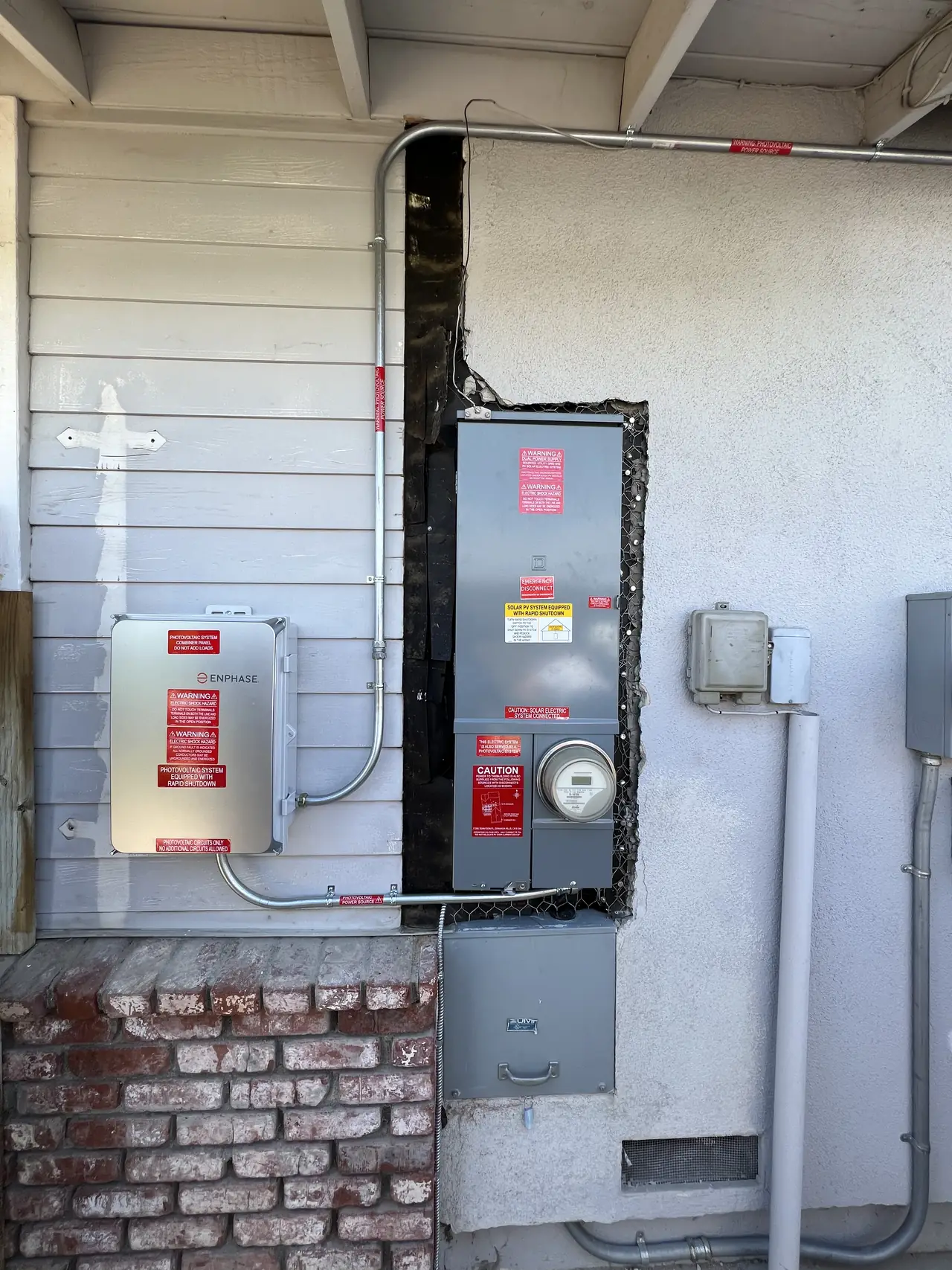
At a glance
- System
- 6.00 kW DC / 5.55 kW AC
- Modules
- 15 × REC400AA Pure Black, 400 W
- Microinverters
- 15 × Enphase IQ7PLUS
- New main panel
- 225 A busbar, 200 A breaker, 120/240 V
- Headroom left
- 70 A under the back-feed ceiling
- Roof
- Composition shingle
- Permission to operate
- 11 August 2022
- Utility / AHJ
- LADWP / LADBS
The story
Six kilowatts. Fifteen modules on a single-story roof. By any measure a modest array, and the existing service panel still could not take it.
The limit is the busbar, and it is worth stating plainly because it catches people who assume a small array cannot be a problem. Current reaches the busbar from two directions once there is solar — from the utility through the main breaker, from the array through its own. The code caps the sum of those two breakers at 120 percent of what the busbar is rated for. The size of the array barely enters into it; what matters is the number stamped inside the panel door.
From there you either make the main breaker smaller or you make the busbar bigger. This project took the second route: the panel was replaced with one carrying a 225-amp busbar under a 200-amp main. Run the arithmetic and that is a ceiling of 270 amps, with 200 taken by the main and 70 left over. The array needs a fraction of it.
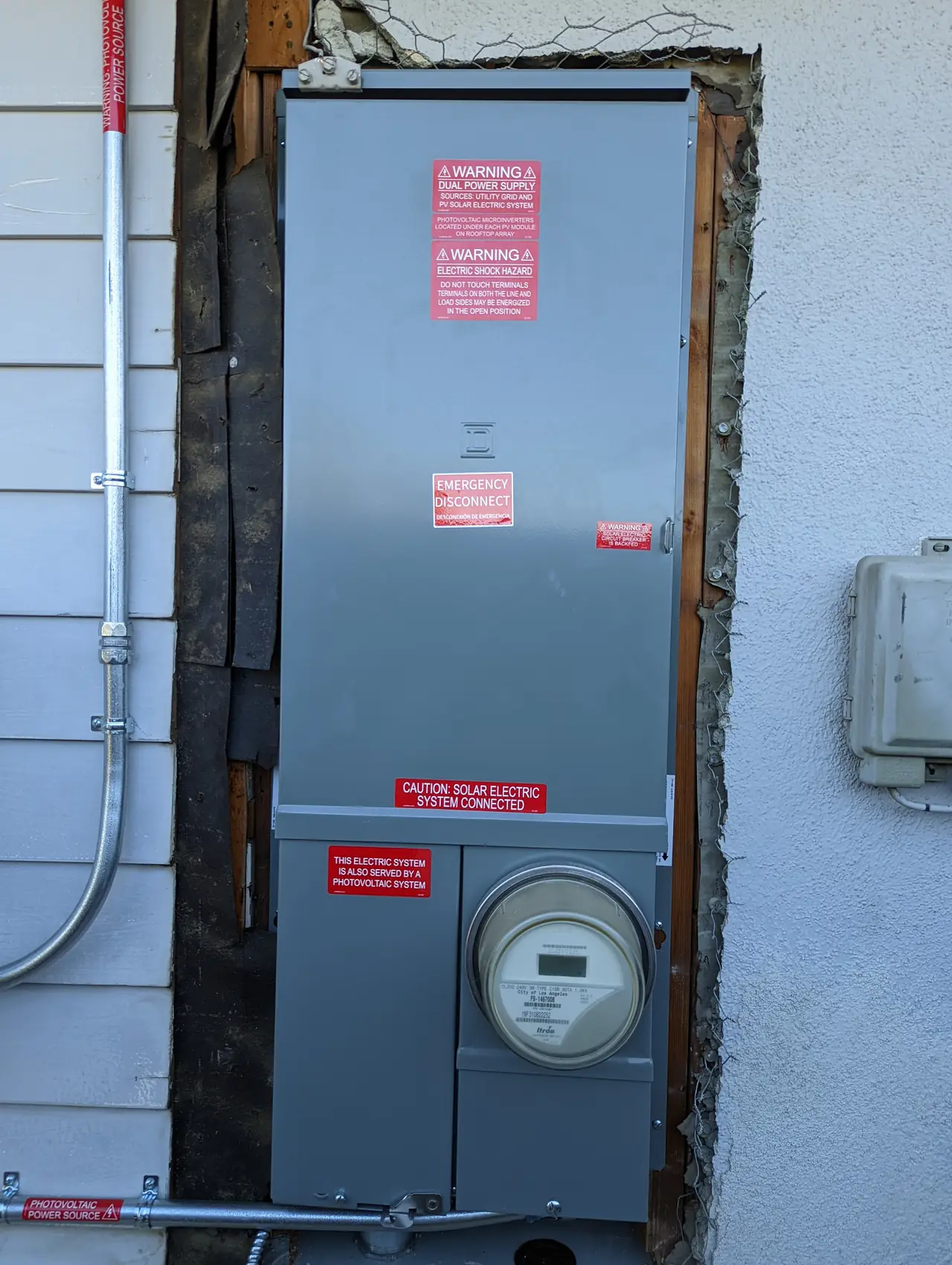
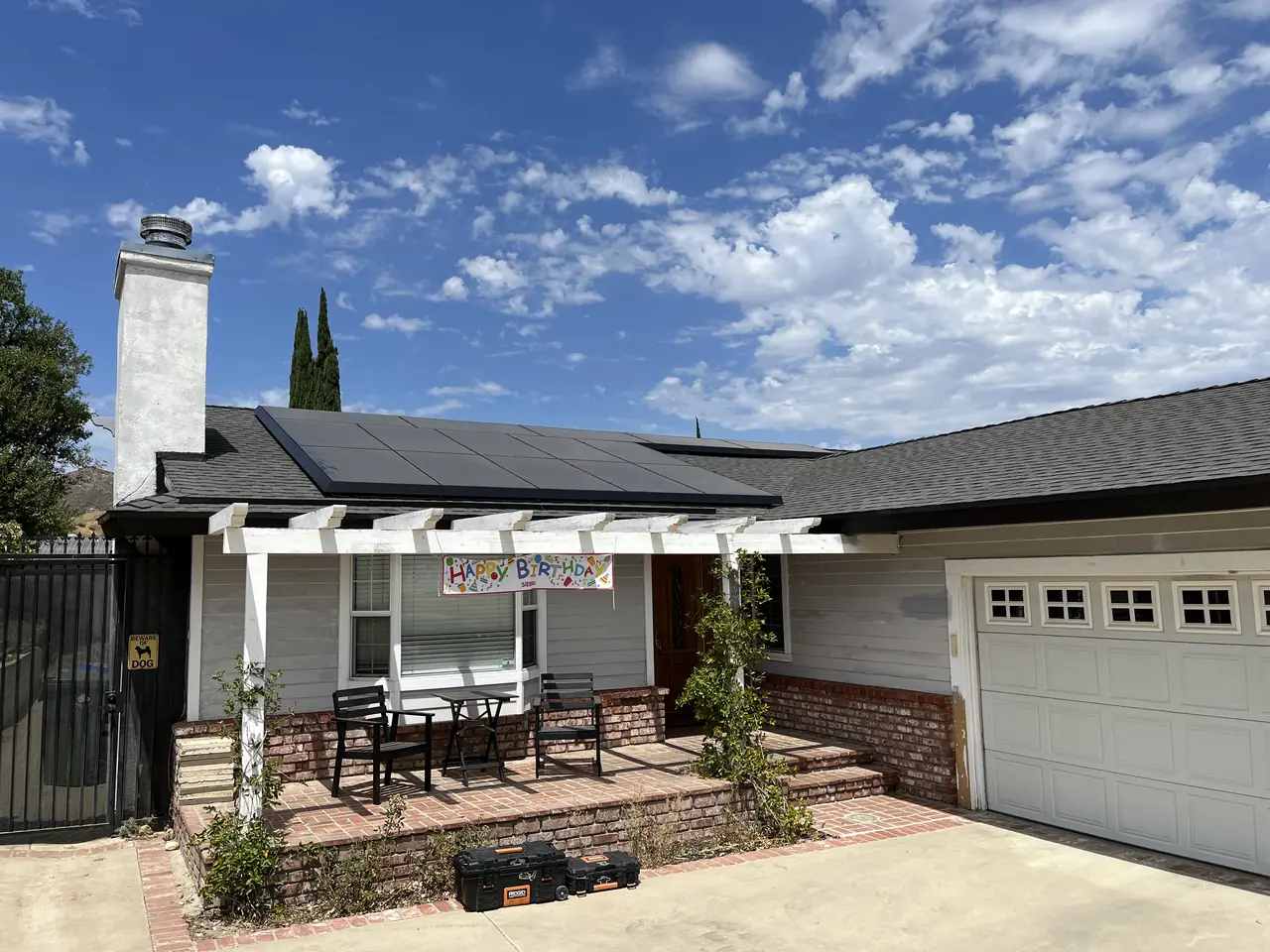
Which brings up the part that never appears in a quote line called panel upgrade. The old enclosure comes out of the wall, and the opening it leaves almost never matches the new one. Siding gets cut. Stucco gets cut. Framing gets exposed. Then somebody has to close all of it back up and make it look like nothing happened. On this house that meant working across two finishes — lap siding on one plane and stucco on the return.
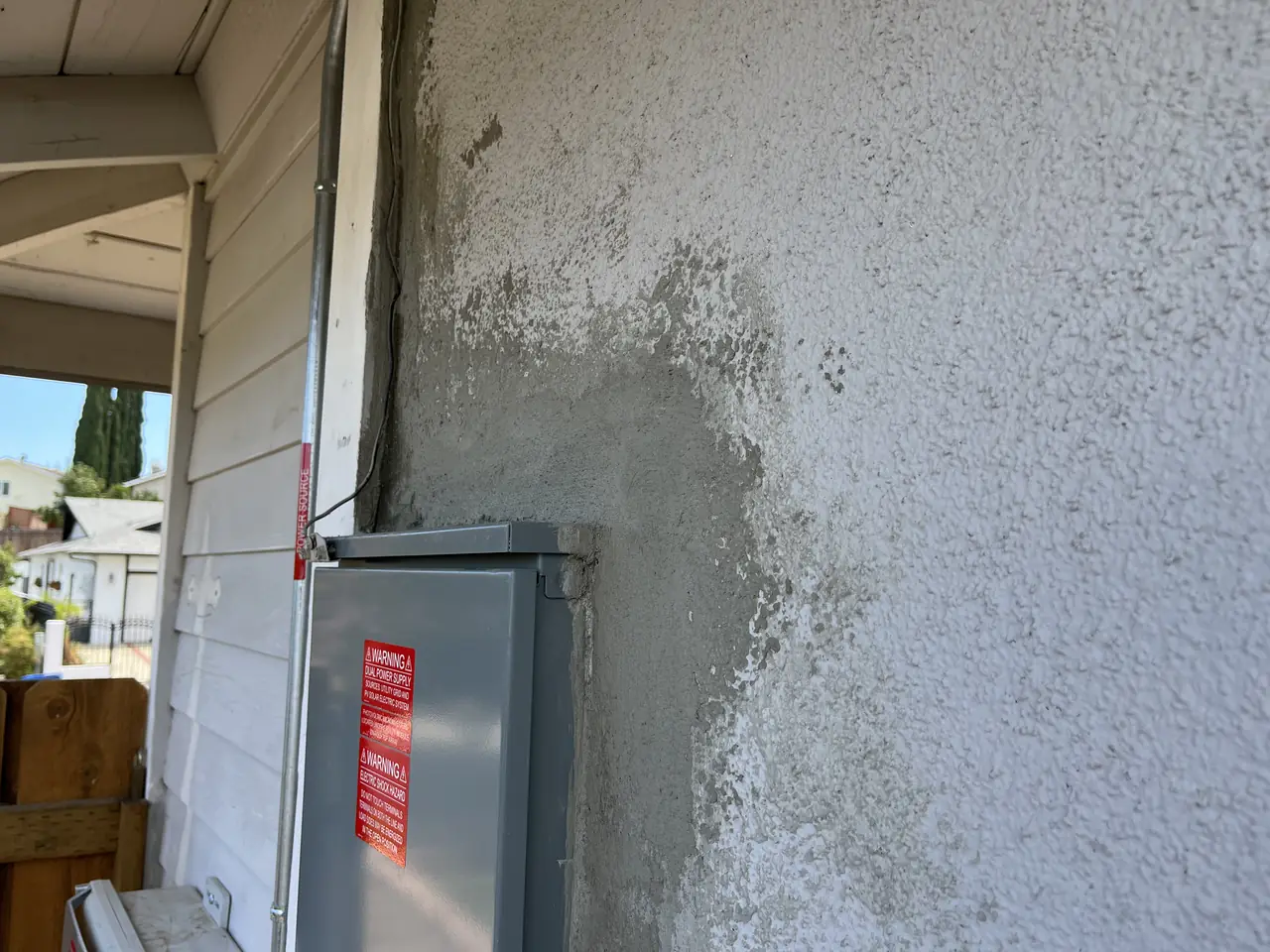
So why pay for it, when making the main breaker smaller is cheaper and legal? Because they buy different things. A de-rate solves the array in front of you and leaves the house with less service than it had. A bigger busbar solves the array and leaves roughly 70 amps of headroom sitting there for a battery, an electric vehicle charger, a heat pump — whatever the house asks for in the next fifteen years.
The counterweight: it is the most expensive of the routes, it is its own permit, and the utility is involved because the meter comes off and goes back. If nothing else is coming, a de-rate is the rational answer and it is not a compromise.
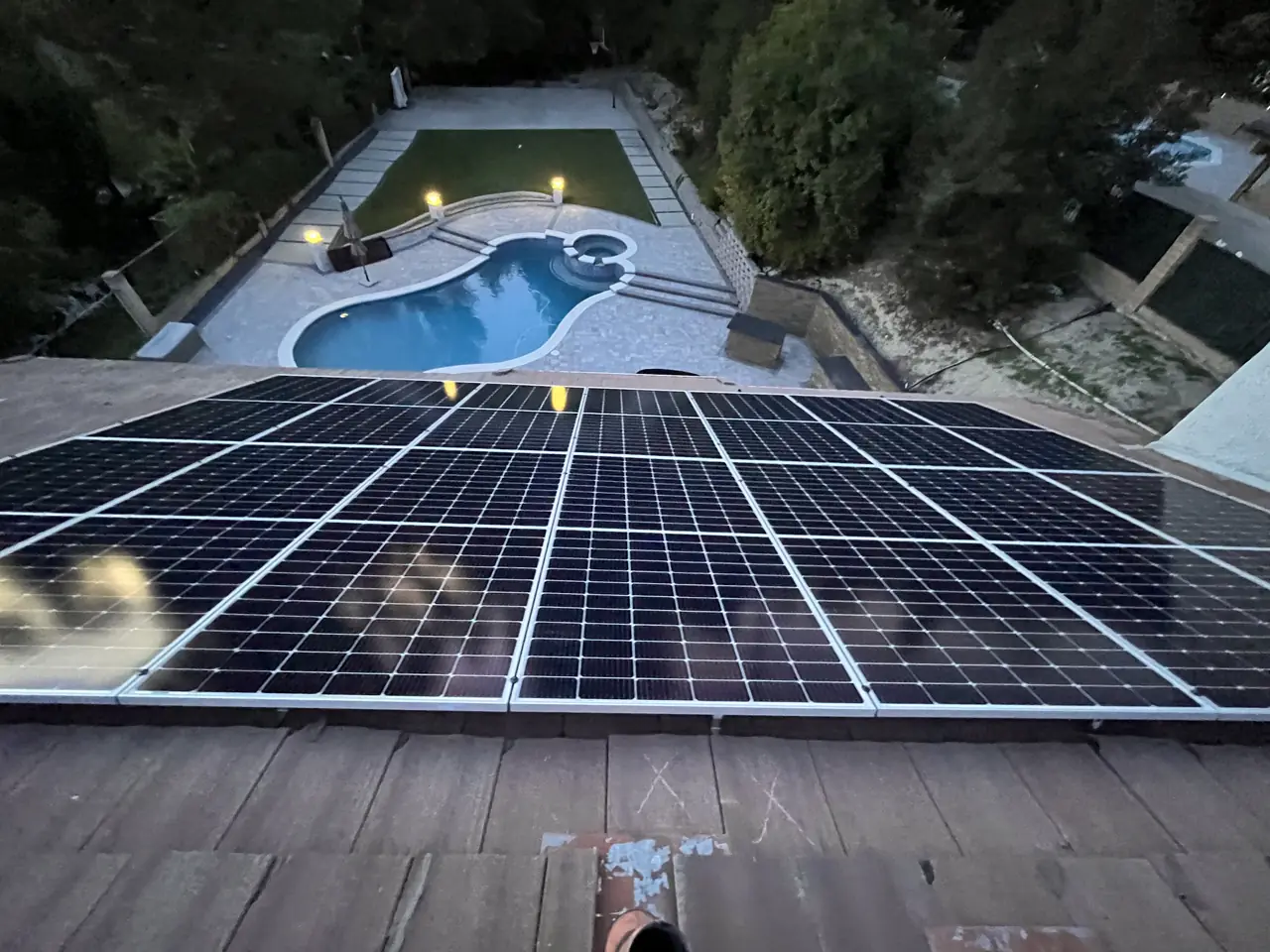
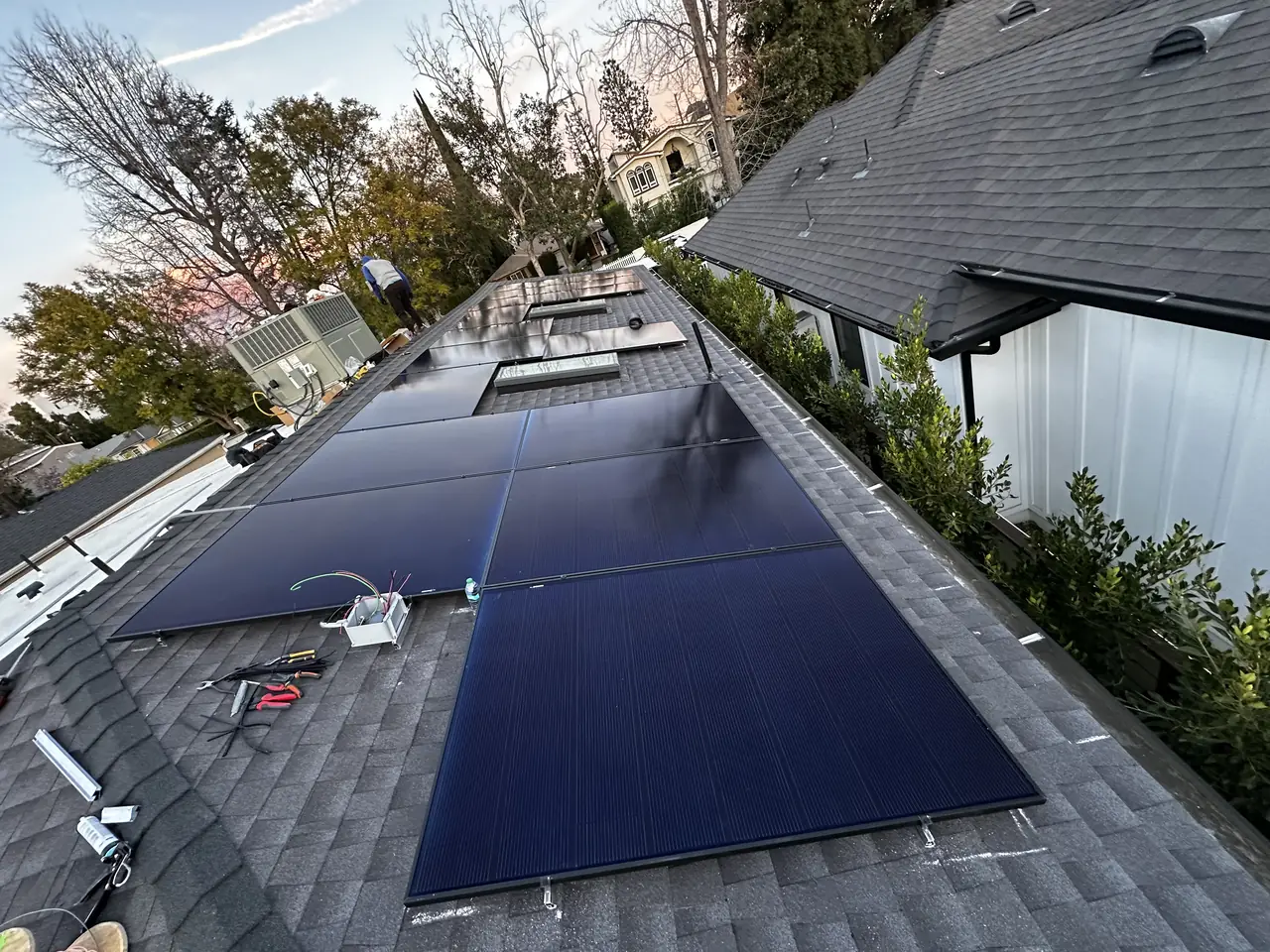
The array itself is straightforward. Fifteen REC 400-watt modules on fifteen Enphase microinverters, split into runs of eight and seven, on composition shingle at 18 degrees facing just west of due south. Three hundred and fifteen square feet of module on a roof of two thousand six hundred — twelve percent of the surface — with the access setbacks the fire requirement asks for.
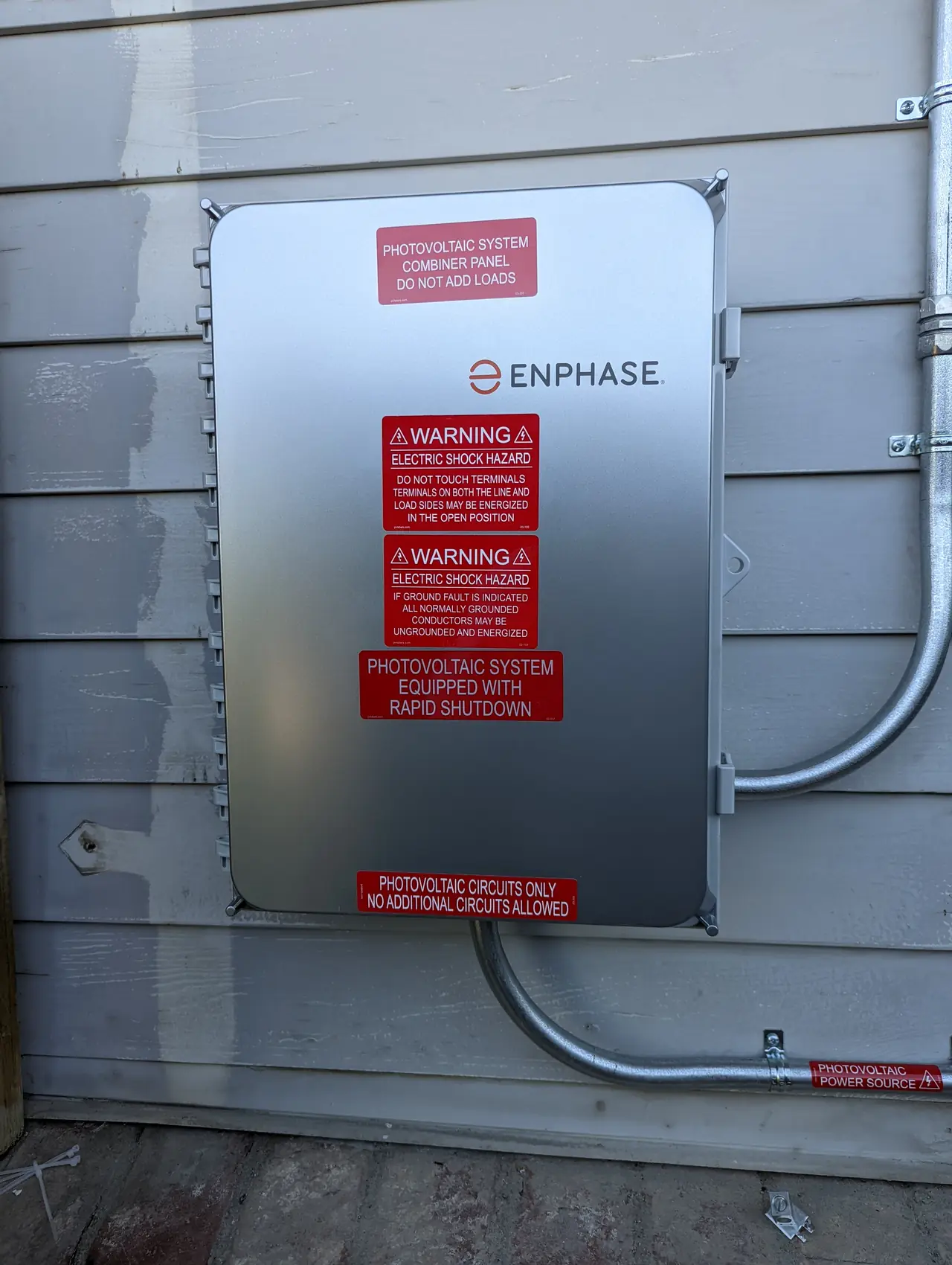
Permission to operate came on the eleventh of August 2022. A year later the owner came back and asked what a battery would cost. That is what the eighty-one amps were there for, and it is the reason to ask the question before the panel is chosen rather than after.
Cali Energy replaced the panel, set the array and carried the interconnection on this Granada Hills house. The roof it sits on is a story of its own — the sheathing under it had to be dealt with first, and that is on rotten wood under the array.
How it ran
| 18 April 2022 | Work begins on the project |
|---|---|
| 1 June 2022 | Plan set issued |
| 9 June 2022 | Contract signed |
| 16 June 2022 | Second revision of the plan set issued |
| 28 June 2022 | Meter spot visit scheduled |
| 11 August 2022 | Permission to operate |
| August 2023 | Owner returns to price a battery |
Just under four months from first visit to permission to operate, with a service panel replaced inside it.
What we did
- Read the busbar rating before designing the connection rather than after.
- Replaced the service panel with a 225 A busbar under a 200 A main.
- Cut, fitted and closed the wall back across two different exterior finishes.
- Set fifteen modules on fifteen microinverters in runs of eight and seven.
- Left about 70 amps of back-feed headroom for whatever the house adds next.
System specifications
| System | 6.00 kW DC / 5.55 kW AC |
|---|---|
| Modules | 15 × REC400AA Pure Black, 400 W |
| Microinverters | 15 × Enphase IQ7PLUS-72-2-US, runs of 8 and 7 |
| New main panel | 225 A busbar, 200 A main breaker, 120/240 V single phase |
| Racking | IronRidge on 2×4 rafters at 24 in centers |
| Tilt / azimuth | 18° / 175° |
| Array / roof area | 315 of 2,615 sq ft — 12 percent |
| Utility / AHJ | LADWP / LADBS |
Is your project like this one?
- You have been told your panel cannot take even a small array.
- You are deciding between a de-rate and a panel replacement.
- A battery or an EV charger is somewhere on your list, not necessarily this year.
- You want to know what a panel upgrade does to the outside of your house.
- Your quote says panel upgrade and gives no detail about what that means.
Cali Energy in Granada Hills
Granada Hills sits inside City of Los Angeles boundaries, so every project here is permitted through LADBS and interconnected through LADWP. Our work in Granada Hills runs from single-row arrays on accessory dwelling units to systems on underground services, on composition shingle and on concrete tile.
A lot of the single-story housing here still runs on the panel it was built with. When an array goes on, that panel is the first thing that has to be read rather than assumed.
This installation is on the Granada Hills projects page alongside the others, and what the work covers is set out on the Granada Hills service area page.
- License and classifications: CSLB #1032379
- Official reference for this process: LADBS — plan review and permitting
Frequently asked questions
Why replace a panel instead of de-rating the main breaker?
Because they buy different things. A de-rate makes the existing panel legal for the array and leaves the house with less service. A replacement with a larger busbar makes it legal and leaves headroom — here about 70 amps — for a battery, a charger or a heat pump later. If nothing else is coming, the de-rate is the rational choice.
What does a 225-amp busbar with a 200-amp main give you?
A ceiling of 270 amps, since the limit is 120 percent of the busbar rating. The main takes 200 of it and 70 amps are left for back-feed. A six-kilowatt array uses a small fraction of that, which is the point — the capacity is being bought for later, not for the solar.
Does replacing a panel damage the wall?
It opens it. The old enclosure comes out and the new one rarely matches the hole, so siding or stucco is cut and framing is exposed. Closing it back up properly is part of the job and worth asking about explicitly, because it is the part that is visible from the driveway for the next twenty years.
Does a panel swap involve the utility?
Yes. The meter comes off and goes back, which means coordinating a shutdown and a meter spot rather than simply booking an electrician. It also means the work has its own permit and its own inspection alongside the solar.
Is a small array ever too big for a panel?
Regularly. The limit is not the size of the array, it is the busbar rating against the sum of the two breakers. A six-kilowatt system on a panel with a small busbar and a full-size main can fail the check where a much larger system on a modern service passes it easily.
Does Cali Energy replace electrical panels in Granada Hills?
Yes, where the interconnection needs it. Much of the housing here was built with a service that suited the house and does not suit an array plus whatever gets added afterwards. On this Granada Hills project Cali Energy fitted a panel with a 225-amp busbar under a 200-amp main, which made the connection legal and left about 70 amps of back-feed headroom for a battery or a charger later.
What this would look like on your roof
Planning solar in Granada Hills? Tell us your utility, your roof and what your bill looks like now, and we will model what a system like this would do on your house before you commit to anything.
Or call +1 (323) 844-7777 · Cali Energy, Northridge · CSLB #1032379 (B, C-10, C-39) — design, permits, install and electrical under one licensed contractor.
Related
This timeline reflects this property and this permitting path. Updated September 2026.