

Studio City, CA · March 2023 – March 2025 · LADWP / LADBS
The main panel had no room for the solar breaker.
A house that had just been remodeled and extended, sixteen modules onto a straightforward shingle roof, and a service panel with every position already spoken for. Four poles in the space of two solved it.
On an existing house the panel often decides the job, not the roof. A grid-tied array needs its own breaker and a physical position to put it in, and a house that has been remodeled has generally spent its spare positions on the remodel. On this panel the fix was a quad breaker, which puts four poles where two used to sit and frees a position. That only works where a quad is listed for the panel and the busbar rating still has room for what the array pushes back; where it is not, the answer is a new panel. Have somebody open yours and count before anyone quotes you.
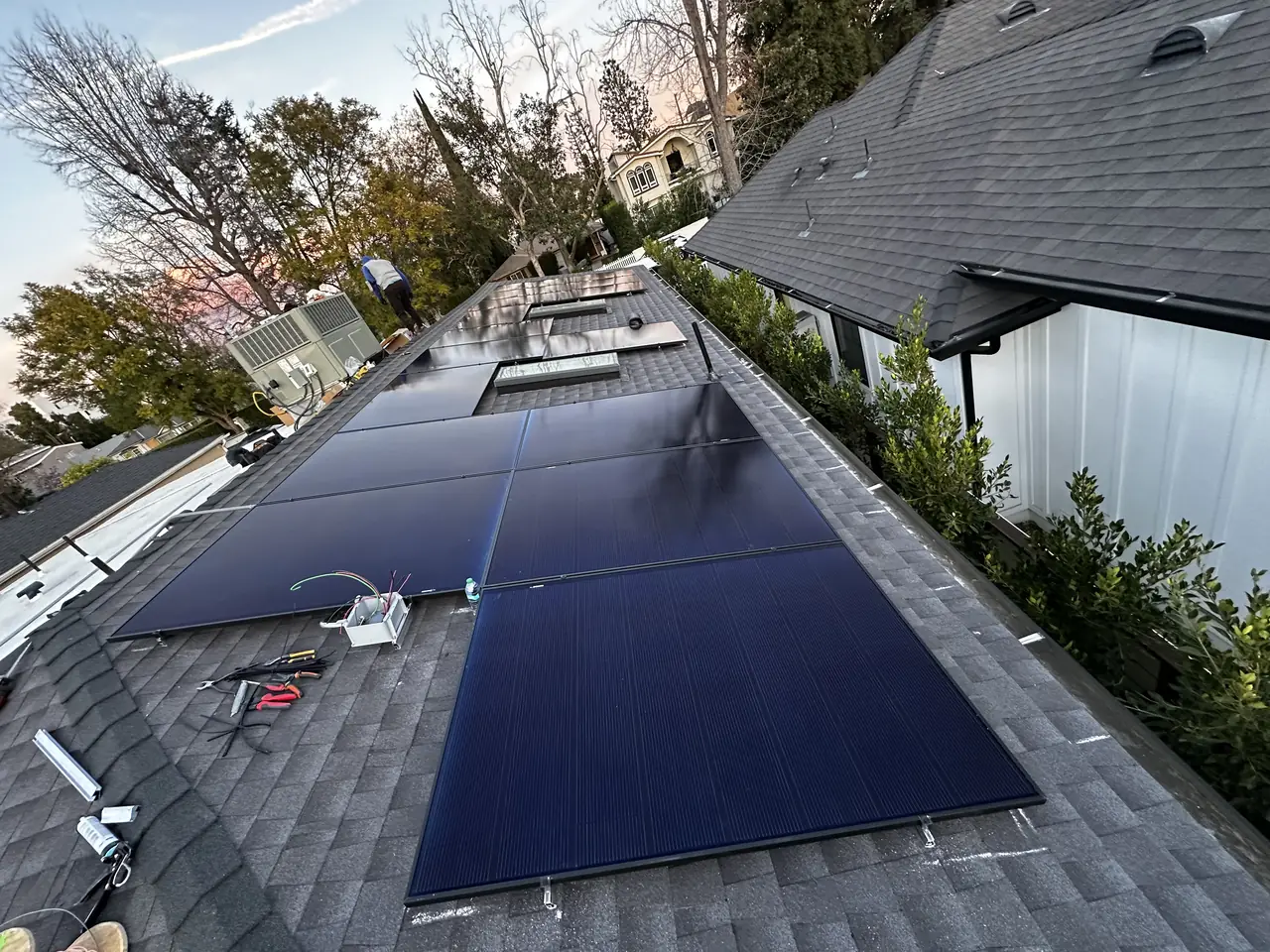
At a glance
- House
- Existing single-family, remodeled and extended
- Modules
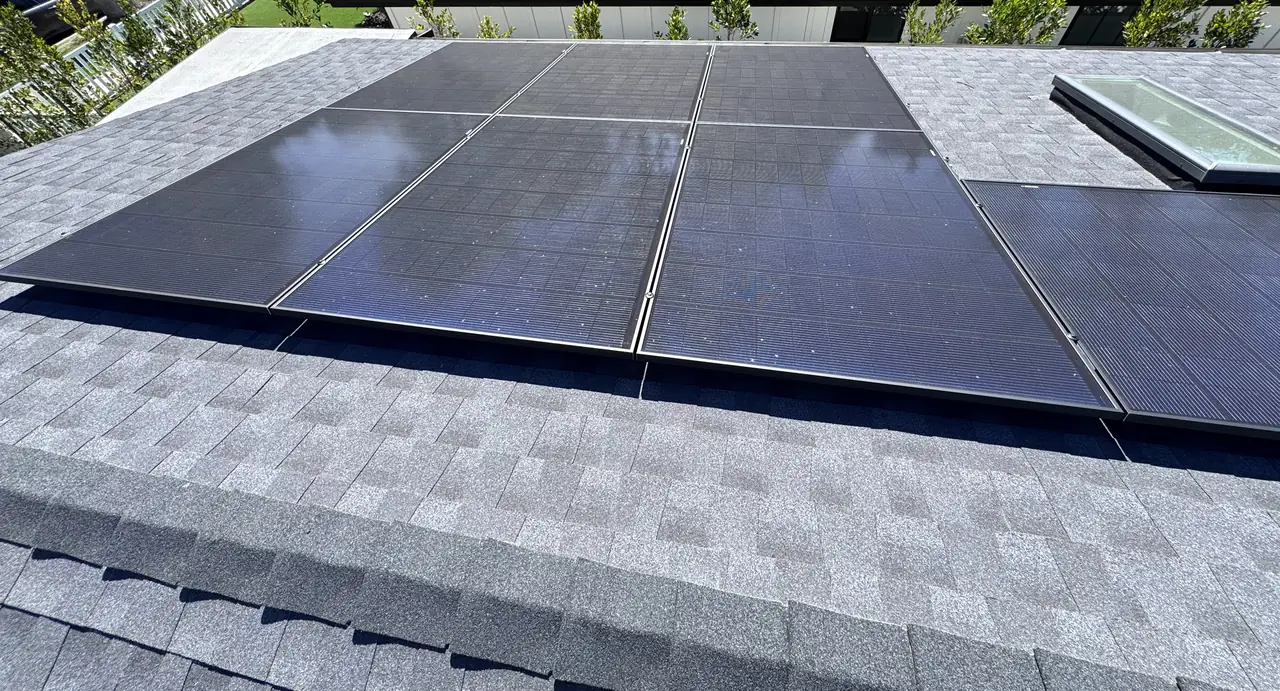
- 16 × REC Alpha Pure-RX, 460 W
- Microinverters
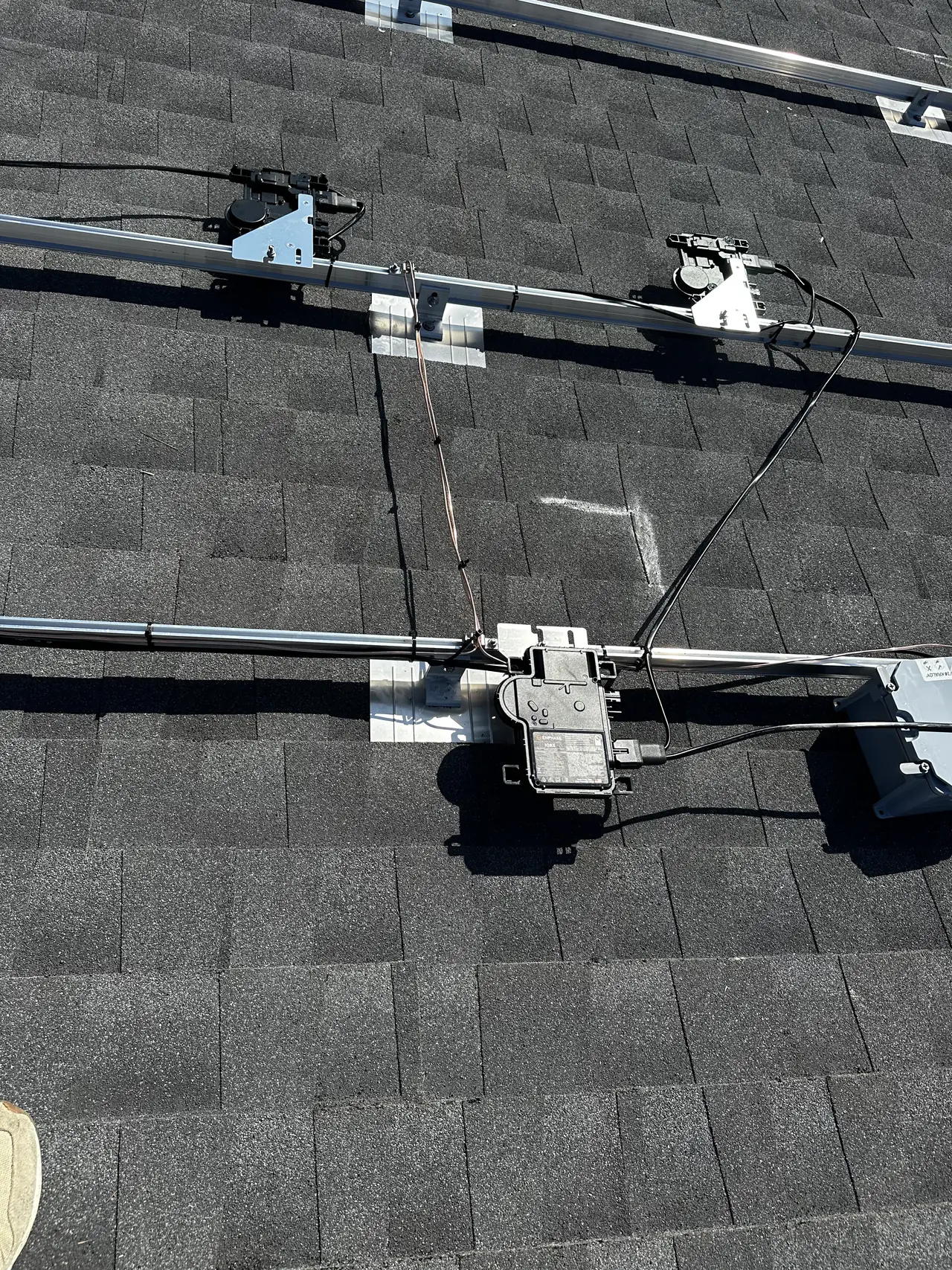
- Enphase IQ8X, one per module
- Recorded by the utility
- 7.2 kW
- Panel work
- Quad breaker fitted to free a position; surge protective device
- Meter
- Existing meter exchanged for a net meter
- Filing to permission to install
- One day
- Filing to permission to operate
- 36 days
The story
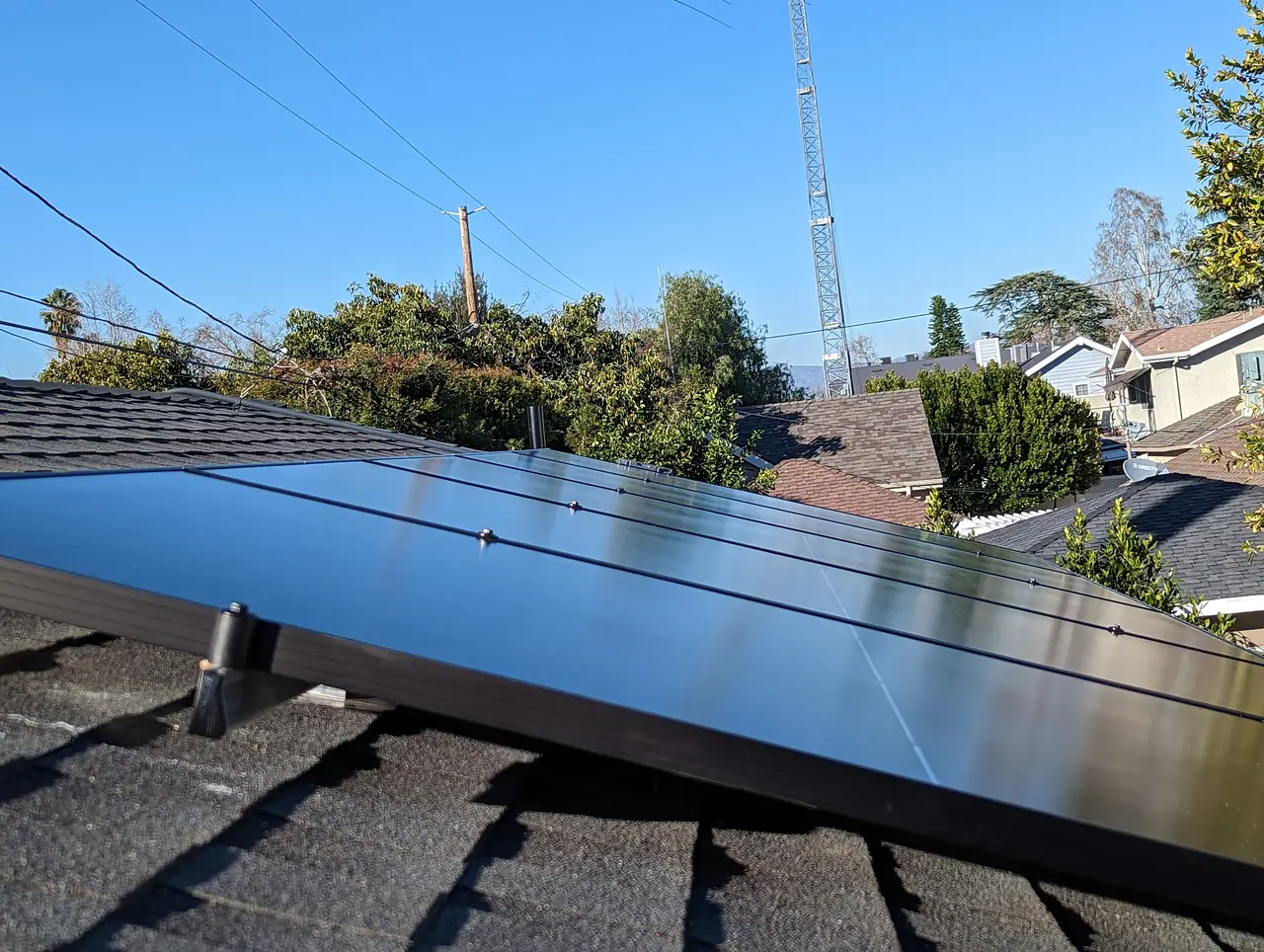
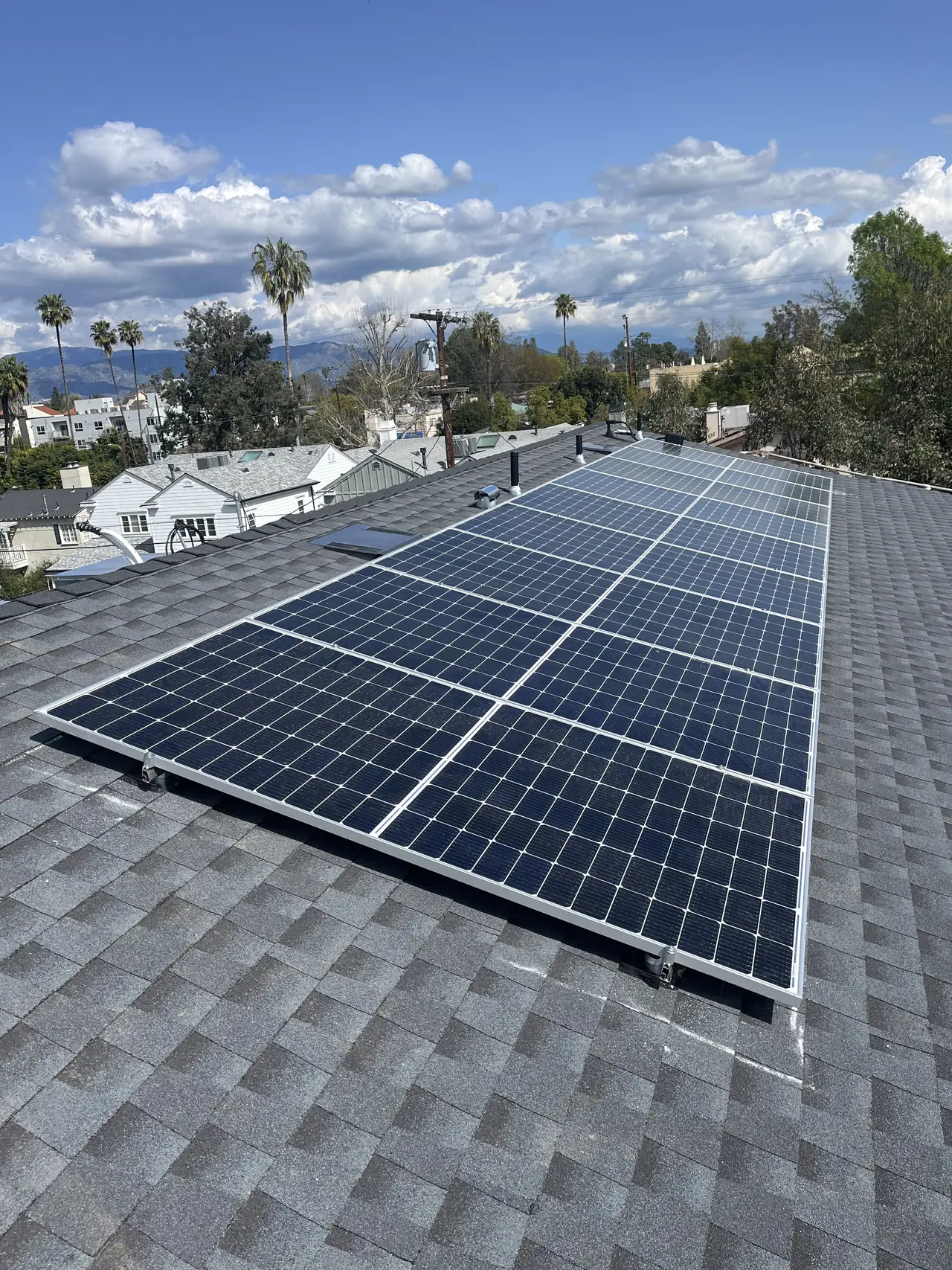
The roof was the straightforward half. Sixteen modules on an ordinary asphalt shingle covering, flashed feet, a microinverter under each module — a day of work that goes the way it is supposed to. What decided the schedule was a service panel on the side of the house with no free position in it.
The house explains why. In the spring of 2023 it went through a building permit for an interior remodel, an addition of roughly thirteen by twenty-two feet, and an attached patio cover of about fourteen and a half by nine — all engineered, and carried through to a certificate of occupancy. Elsewhere in this city the pattern is demolition and a new house. Here the house stayed and grew.
That difference is the whole story. A new house gets a panel sized at the drawing board for everything it will ever be asked to carry. An existing house gets the panel it already had, minus whatever the remodel put into it — new kitchen circuits, circuits for the addition, circuits for the air conditioning. The panel here was not short of amps. It was out of places to put things.
A grid-tied array needs a breaker of its own in the panel, and a breaker needs a physical slot. A panel has a fixed number of them, printed on the label inside the door. Count them on a house that has been added to and the number that is actually free is often zero.
The fix here was a quad breaker: a single device that fits four poles into the footprint two normally take. Two existing two-pole circuits move into it, and the pair of positions they used to occupy becomes one free pair — which is where the solar breaker went. This one was a 40/20 amp Siemens quad, matched to the make of the panel it was going into, because a breaker has to be listed for the enclosure it sits in. That listing is also the limit on the trick: not every panel accepts a quad in every position, and some do not accept one at all.
A surge protective device went in at the same time. Sixteen microinverters means sixteen small pieces of electronics on a roof, all tied back to one service, and the panel is the single place where you can put something in front of all of them at once. It is a small line on a solar job and it is the one that protects everything else.
Then the meter. The utility recorded this job as a change rather than a new installation, because there was already a meter on the wall with its own prefix and number, and it came off. A net meter went on in its place on the thirteenth of March. That is the quiet advantage of an existing house: on a new build the wait is for a meter to exist at all, and on this one it was a swap. From the building department's final release reaching the utility to the new meter being set was a little over two weeks.
The front end was faster still. The interconnection request was filed on a Wednesday, the fifth of February. By Thursday it had been reviewed, the details confirmed, and the site evaluation closed out — permission to install, one day after filing. The utility allows itself five to fifteen business days to look at the photographs uploaded with an application and decide whether a representative needs to come out. When the photographs answer the questions, the visit is skipped. That is the return on spending twenty minutes on the application photographs instead of five.
The equipment is sixteen REC Alpha Pure-RX modules of 460 watts, each with an Enphase IQ8X microinverter. At commissioning every one of the sixteen scanned, provisioned, communicated and produced — sixteen of sixteen, with the gateway reporting. That matters more on a microinverter system than on a string one, because a single unit that never joins is easy to miss and costs one module's output for as long as nobody looks.
A word on the two numbers you will see on paperwork for a system like this. Sixteen modules at 460 watts is 7.36 kilowatts of module nameplate, measured under laboratory test conditions. The figure the utility recorded is 7.2 kilowatts, and it comes off a different scale used for interconnection paperwork. They are not a discrepancy and they are not two opinions about the same quantity; they are two different measures, and neither of them is what the system will make on a given afternoon.
The last item on the punch list was stucco. Running conduit through an exterior wall makes a hole, and the hole has to be closed and finished back to match. It reads as trivial next to sixteen modules and it is not: it is what keeps water out of the wall cavity, and it is the part of the job the owner walks past every day.
If your house has been added to, ask the question before you sign anything: has anybody opened the panel and counted the free positions. There are three answers and they cost very different money. There is room. There is no room, but a quad breaker frees a pair. Or the panel itself has to be replaced — which is its own permit, its own inspection and its own wait, and on a system this size can cost more than the modules.
How it ran
| 31 March 2023 | Building permit filed — interior remodel, an addition of roughly 13 × 22 ft, and an attached patio cover |
|---|---|
| Before the solar | Remodel and addition completed; certificate of occupancy issued |
| 5 February 2025 | Interconnection request filed; the charge paid the same day |
| 6 February 2025 | Reviewed, confirmed and site evaluation closed out — permission to install, one day after filing |
| 10 February 2025 | Material ordered for delivery the next morning |
| 14 February 2025 | Inspection requested |
| 25 February 2025 | Building department's final release reached the utility; approved and a meter request sent |
| 13 March 2025 | Existing meter exchanged for a net meter; permission to operate |
Filed on a Wednesday, cleared to install on Thursday. The rest was the meter.
What we did
- Opened the existing panel and counted the free positions before the array was ordered.
- Fitted a 40/20 amp quad breaker, matched to the panel, to free a position for the solar breaker.
- Added a surge protective device at the panel.
- Set sixteen modules with a microinverter under each, and left all sixteen reporting and producing.
- Closed and finished the wall penetration back to the stucco.
System specifications
| House | Existing single-family: interior remodel, an addition of roughly 13 × 22 ft and an attached patio cover |
|---|---|
| Modules | 16 × REC Alpha Pure-RX, 460 W |
| Microinverters | Enphase IQ8X, one per module |
| Monitoring | Gateway plus 16 of 16 microinverters reporting and producing at commissioning |
| Recorded by the utility | 7.2 kW |
| Service panel | Existing; 40/20 A quad breaker fitted to free a position |
| Module nameplate | 7.36 kW (16 × 460 W, test conditions) |
| Surge protection | Surge protective device added at the panel |
| Service | Overhead |
| Meter | Existing meter removed, net meter set |
| Utility / AHJ | LADWP / LADBS |
Is your project like this one?
- Your house has been remodeled or added to and the panel is the one it came with.
- You have been told you need a service upgrade and want to know whether that is true.
- You want to know what happens to the meter that is already on your wall.
- Your array is small enough that a new panel would cost more than the modules.
- You want the electrical, the roof and the interconnection on one contract.
Cali Energy in Studio City
Studio City is inside City of Los Angeles boundaries: permits run through LADBS, interconnection through LADWP.
Most of the Studio City work of the last few years has been on lots where the old house came down and a new one went up. This one is the other kind: the house stayed, was remodeled and extended, and the electrical service it already had was what the array had to fit into.
This installation is on the Studio City projects page alongside the others, and what the work covers is set out on the Studio City service area page.
- License and classifications: CSLB #1032379
- Official reference for this process: LADWP Electric Service Requirements
- Official reference for this process: LADBS — plan review and permitting
Frequently asked questions
Can solar go on a house whose main panel is full?
Often yes, and often without replacing the panel. A grid-tied array needs a breaker and a position for it; if no position is free, one common fix is a quad breaker, which fits four poles where two used to sit and frees a pair. That is what was done here, with a 40/20 amp device matched to the existing panel. It is not universal: the quad has to be listed for that panel, and the busbar has to have room for the solar backfeed.
What is a quad breaker?
One device carrying four poles in the space a two-pole breaker normally occupies. Two existing two-pole circuits move into it, which releases the pair of positions they were using. It has to be listed for the panel it goes into, which is why the make matches.
Do I need a main panel upgrade for solar?
Not automatically. Two things get checked: whether the panel has a free position for the solar breaker, and whether its rating leaves room for what the array will push back into it. A full panel with an adequate rating is usually a breaker problem, not a panel problem. A panel that fails on the rating is a different job with its own permit and inspection.
Does the utility replace my meter when solar goes in?
On an existing house, yes. The old meter is removed and a net meter goes on in its place, and the utility records the work as a change rather than a new installation. Here the swap happened a little over two weeks after the building department's final release reached the utility.
Why did permission to install come one day after filing?
Because the photographs uploaded with the application were enough. The utility gives itself five to fifteen business days to review those photographs and decide whether a representative needs to visit the site; when they answer the questions, the visit is skipped and the approval follows immediately.
What this would look like on your roof
Planning solar in Studio City? Tell us your utility, your roof and what your bill looks like now, and we will model what a system like this would do on your house before you commit to anything.
Or call +1 (323) 844-7777 · Cali Energy, Northridge · CSLB #1032379 (B, C-10, C-39) — design, permits, install and electrical under one licensed contractor.
Related
This timeline reflects this property and this permitting path. Updated September 2026.