

Reseda, CA · August 2026 · LADWP / LADBS
Eighteen days from signature to the city's final release.
A straightforward 7.74 kilowatt array on a Reseda house, done end to end in under three weeks. Nothing clever happened. Two lines on the utility's work order removed the two slowest stages before they could start.
Two things decide whether a residential solar project in LADWP territory takes three weeks or three months. The first is how the work request gets classified: overhead service with meter work only and no battery skips the service-upgrade engineering queue entirely. The second is whether the photographs filed with the application are good enough that the utility's site assessment is bypassed instead of scheduled, which on this project saved a visit and roughly a month. Cali Energy filed this one on a Friday and had approval to build the following Monday.
At a glance
- Recorded by the utility
- 7.74 kW AC-CEC
- Inverters
- Enphase microinverters
- Battery
- None
- Utility work type
- Overhead service, meter work only
- Main panel upgrade
- None
- Signature to city final release
- 18 days
- Application to approval to build
- 3 days, no utility site visit
- Utility / AHJ
- LADWP / LADBS
The story
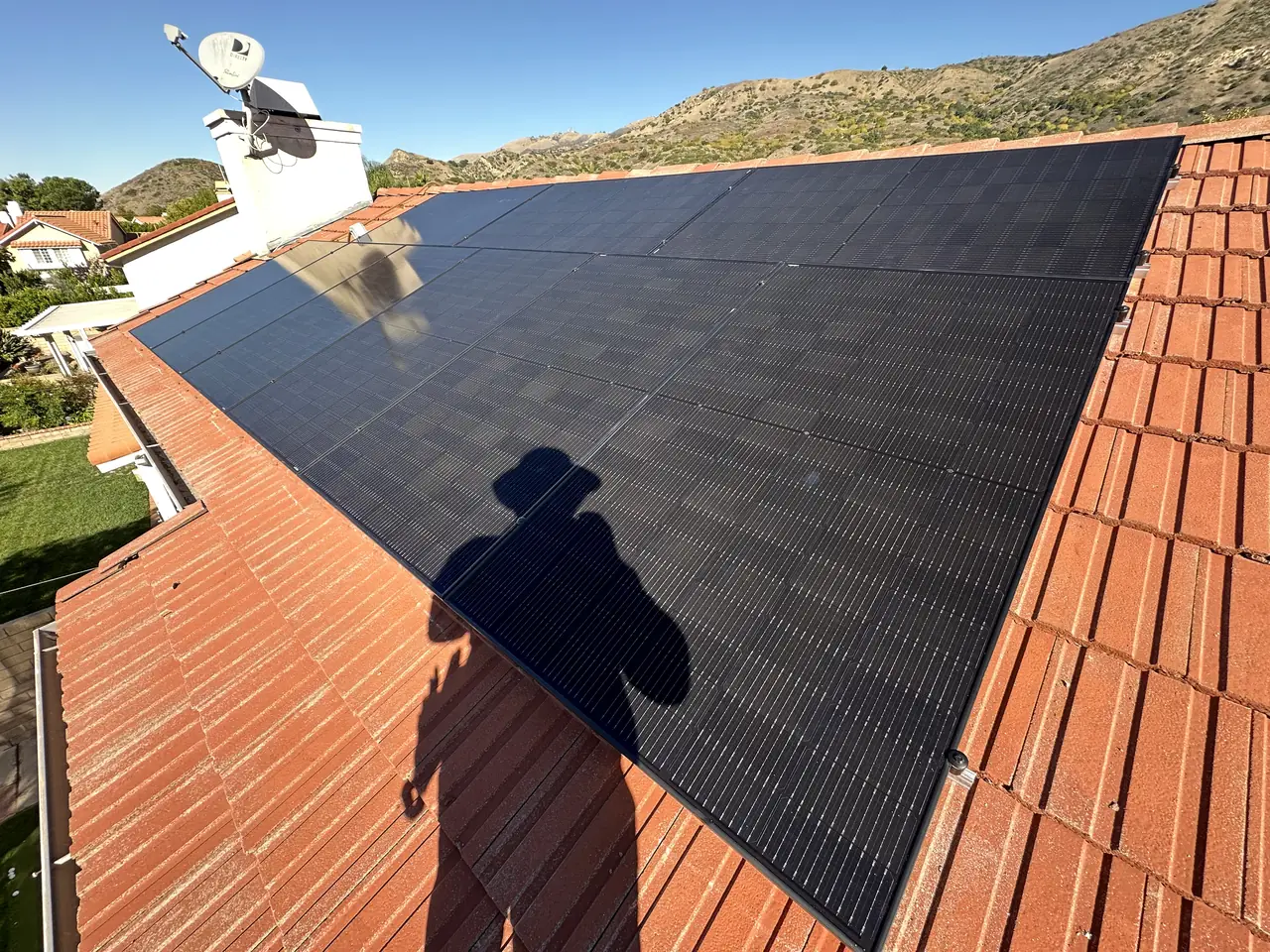
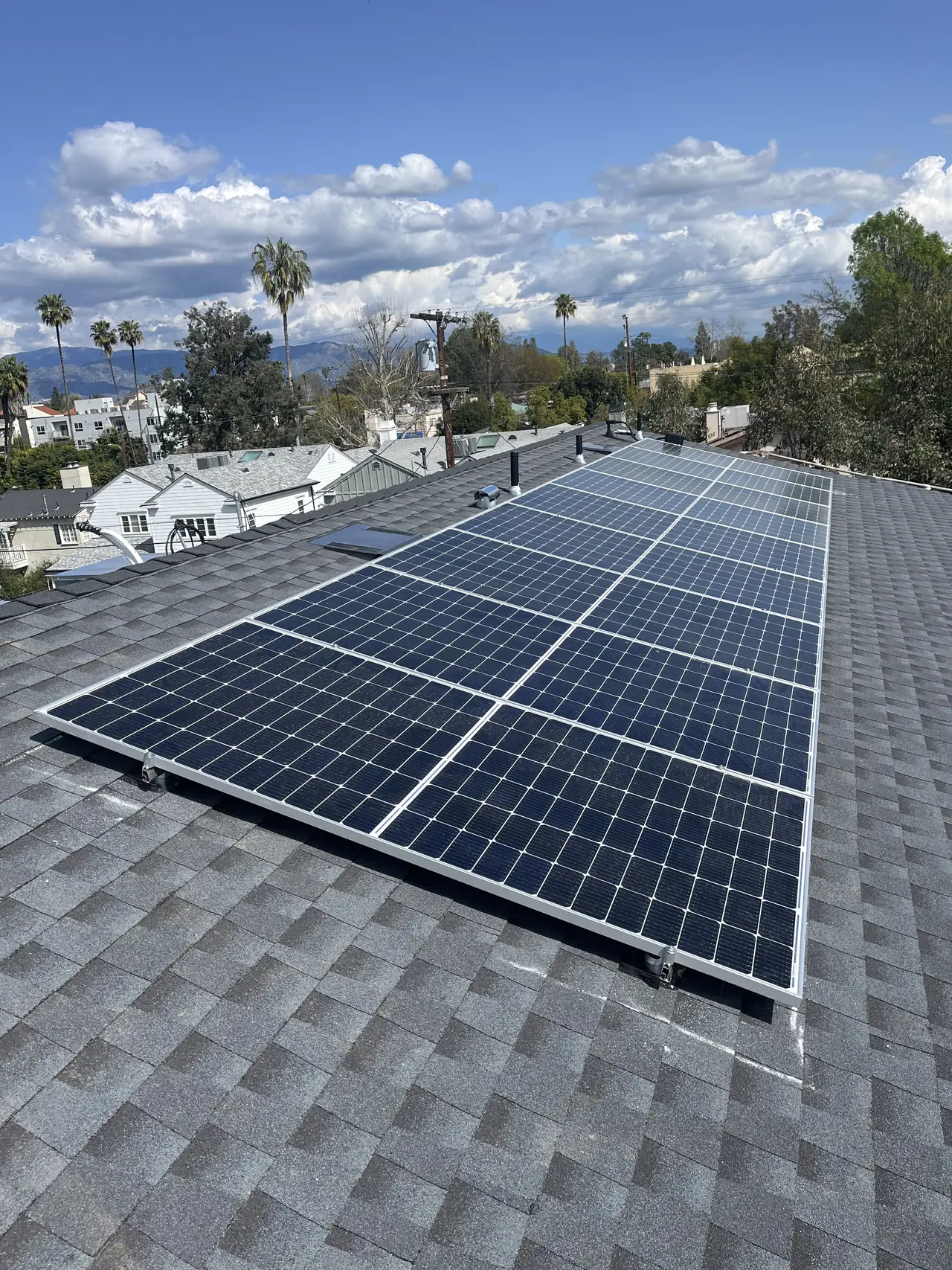
A conventional array on a conventional Reseda roof, 7.74 kilowatts as the utility recorded it, Enphase microinverters, no battery, no service upgrade. The paperwork was signed in the middle of August. The city's final release reached the utility eighteen days later. The speed came from decisions made before anyone got on the roof.
Start with the two lines on the utility's own work order. The service point is residential and the work type reads as overhead service with meter work only. That phrasing means the utility has nothing to build: no new service drop, no upgraded panel, no engineering to schedule. Every project that needs those things enters a different queue with a different cadence, and the difference is measured in months, not days. Battery size is recorded as zero, which keeps it out of a third queue again.
Then the photographs. Three days after the application went in, the utility recorded that its service representative's site assessment had been bypassed or completed, which is the notice that means approval to build. Nobody came to the house. The photographs uploaded with the application did the work a site visit would otherwise have done. That is entirely within a contractor's control and it is the single cheapest thing you can do to your own schedule: shoot the service equipment properly the first time, to the specification, before anyone asks.
The rest followed in a line. The plan set went out to drafting on a Tuesday and came back ready the next day. The notice to proceed landed on the Thursday. The interconnection request was logged on the Friday with the work request number and the system size on it. Approval to build on the Monday. The building department accepted the final inspection request that same week and inspected three days later. Monitoring was activated two days after that, and at the end of the month the utility recorded a valid final release from the building department and sent out the request to schedule the net meter. The owner could watch the array on the app before the paperwork had finished catching up.
Two things about this project are worth adding.
The first is that a financed project brings its own calendar. The lender accepts milestones in a fixed order, and the utility's permission letter has to fall after the completion milestone rather than before it. That is not a utility rule and it is not negotiable with the utility, so on a financed job the sequence of paperwork has to be planned as carefully as the sequence of work.
The second is that the utility's receipts do not always describe the project they belong to. One arrived worded as a fee for the underground portion of the work, on a job the utility had itself classified as overhead, where nothing underground was built. That is standard template wording rather than a new charge, and a homeowner reading their own copy has no way to know it. Check the invoice number before assuming you have been billed twice.
None of this required anything unusual. Eighteen days from signature to a signed-off system, with the utility's meter swap running behind it on the crew schedule it publishes. The schedule is mostly decided by facts about your service, not by how motivated your installer is. Ask what work type your project will be filed under, ask whether a service upgrade is in scope, and ask who is taking the photographs for the utility.
How it ran
| 13 August 2026 | Finance packet and installation agreement signed |
|---|---|
| 18 August 2026 | Plan set opened with the design partner and sent to drafting |
| 19 August 2026 | Plan set returned ready, about a day of drafting turnaround |
| 20 August 2026 | Notice to proceed with installation |
| 21 August 2026 | Interconnection request logged at 7.74 kW AC-CEC; work request number assigned |
| 24 August 2026 | Application under review, details confirmed as overhead service with meter work only, no battery; site assessment bypassed — approval to build |
| 25 August 2026 | Building department accepts the final inspection request |
| 28 August 2026 | Solar final inspection |
| 30 August 2026 | Monitoring activated; the owner can see the system |
| 31 August 2026 | Building department's final release recorded by the utility; interconnection review complete and the net meter ordered |
This timeline reflects an overhead, meter-only project with no battery and no service upgrade. Any one of those three changes puts the project into a slower queue, and the difference is usually months.
What we did
- Sized the system against the house's own utility bill rather than a rule of thumb.
- Turned the plan set around in about a day through the design partner and moved straight to the notice to proceed.
- Filed the interconnection with a complete photograph package, which is why the utility's site assessment was bypassed rather than scheduled.
- Installed the array and had the building department's final inspection booked within a week of approval to build (C-10).
- Activated monitoring for the owner before the utility paperwork had closed.
- Carried the project to the building department's final release and the net meter request.
System specifications
| Recorded by the utility | 7.74 kW AC-CEC |
|---|---|
| Inverters | Enphase microinverters |
| Battery | None; recorded by the utility as zero |
| Service point | Residential |
| Utility work type | Overhead service, meter work only |
| Main panel upgrade | None |
| Utility site assessment | Bypassed on the strength of the application photographs |
| Utility / AHJ | LADWP / LADBS |
Is your project like this one?
- You have overhead service and no need for a main panel upgrade.
- You are not adding a battery in this phase.
- You want to know what actually sets a solar project's schedule before you sign.
- You are financing the system and need the paperwork sequence planned around it.
- Your Reseda property is served by LADWP, while permits are handled by LADBS.
Cali Energy in Reseda
Reseda is inside City of Los Angeles boundaries: permits run through LADBS, interconnection through LADWP.
Reseda is inside the City of Los Angeles, so a solar permit here is pulled from LADBS and the interconnection runs through LADWP. Most of this neighborhood is fed by overhead service, which turns out to matter more to the schedule than anything on the roof.
This installation is on the Reseda projects page alongside the others, and what the work covers is set out on the Reseda service area page.
- License and classifications: CSLB #1032379
- Official reference for this process: LADWP interconnection requirements
- Official reference for this process: LADBS — inspections
Frequently asked questions
What makes one solar project take three weeks and another take months?
Mostly the classification of the work, not the effort behind it. A project filed as overhead service with meter work only and no battery has no utility construction to engineer, so it never enters the slow queue. Add a service upgrade, an underground service, a battery or a multi-meter building and the same house moves into a process with its own review stages. Ask which of those applies to you before you compare timelines between installers.
What does 'meter only' mean on a utility work order?
It means the only thing the utility has to do at your house is work at the meter, usually swapping it for a net meter. There is no new service drop, no upgraded service conductors and nothing for the utility to design or build. It is the lightest category of interconnection work and it is the main reason a project like this one can close in under three weeks.
Can the utility skip its site visit?
Yes, and it did here. The notice to look for records that the service representative's site assessment was bypassed or completed, which is also the approval to build. It happens when the photographs filed with the application show the service equipment clearly enough to inspect from a desk. Getting those photographs right the first time is the cheapest schedule improvement available to a contractor.
How fast can Cali Energy get a Reseda project to sign-off?
As fast as its classification allows. On this one Cali Energy took eighteen days from signature to the building department's final release, with approval to build three days after the application and no utility site visit at all. That pace needs overhead service, no main panel upgrade and no battery. Add any one of those and the same house sits in a queue with its own review stages. Ask which work type your project will be filed under before you compare timelines.
Does financing change the timeline?
It adds a second calendar. The lender accepts project milestones in a fixed order, and the utility's permission letter has to be dated after the completion milestone is accepted rather than before it. The utility will not adjust to that, so the paperwork sequence has to be planned around it from the start. On a cash project this constraint does not exist at all.
What this would look like on your roof
Planning solar in Reseda? Tell us your utility, your roof and what your bill looks like now, and we will model what a system like this would do on your house before you commit to anything.
Or call +1 (323) 844-7777 · Cali Energy, Northridge · CSLB #1032379 (B, C-10, C-39) — design, permits, install and electrical under one licensed contractor.
Related
This timeline reflects this property and this permitting path. Updated September 2026.