

North Hollywood, CA · November 2021 – January 2022 · LADWP / LADBS
Before anything was built, the utility said where the meter goes.
A 13.7 kilowatt system on a concrete tile roof. The drawing set went out three times before the application, and the first thing the utility issued afterwards was not an approval to build — it was a meter spot.
A meter spot is the utility's written decision on where the meter may go, issued on a form specific to how the property is fed — overhead or underground. It comes before the work because the meter position is the fixed point everything else is laid out from, and moving a meter afterwards costs far more than agreeing its position first.
At a glance
- System
- 13.7 kW
- Roof
- Concrete tile
- Drawing set
- Issued three times before filing
- First utility step
- Meter spot, the day after filing
- Service
- Overhead
- Filing to PTO
- Six weeks
- Utility / AHJ
- LADWP / LADBS
The story
The drawing set for this project went out three times in November 2021 — the tenth, the twelfth and the twenty-first — before the interconnection was even filed. That is the ordinary shape of getting a set right, and it is worth saying because it happens before the clock most people watch starts running.
The interconnection request went in at the end of the month. The first thing the utility sent back, the very next day, was not a confirmation or a fee demand. It was a meter spot.
A meter spot is the utility's written decision on where the meter is allowed to go. It arrives on a form particular to how the property is fed, and this property is fed overhead, so the form was the overhead one. The form fixes the meter position and records the service conditions that go with it.
What the form does not do is draw the rest of the job. It does not route your conduit or choose the wall your inverter hangs on. It sets the one point that everything else has to reach, and the layout is then worked backwards from it — which is why getting it early matters more than what it says.
The reason it comes first is arithmetic. A meter in the wrong place is not a label that can be peeled off. It is conduit through a wall, a service span landing at a particular height, working clearance in front of the equipment, and an inspector who will measure all of it. Agreeing the position on paper before anybody cuts anything is the cheapest hour on the whole project.
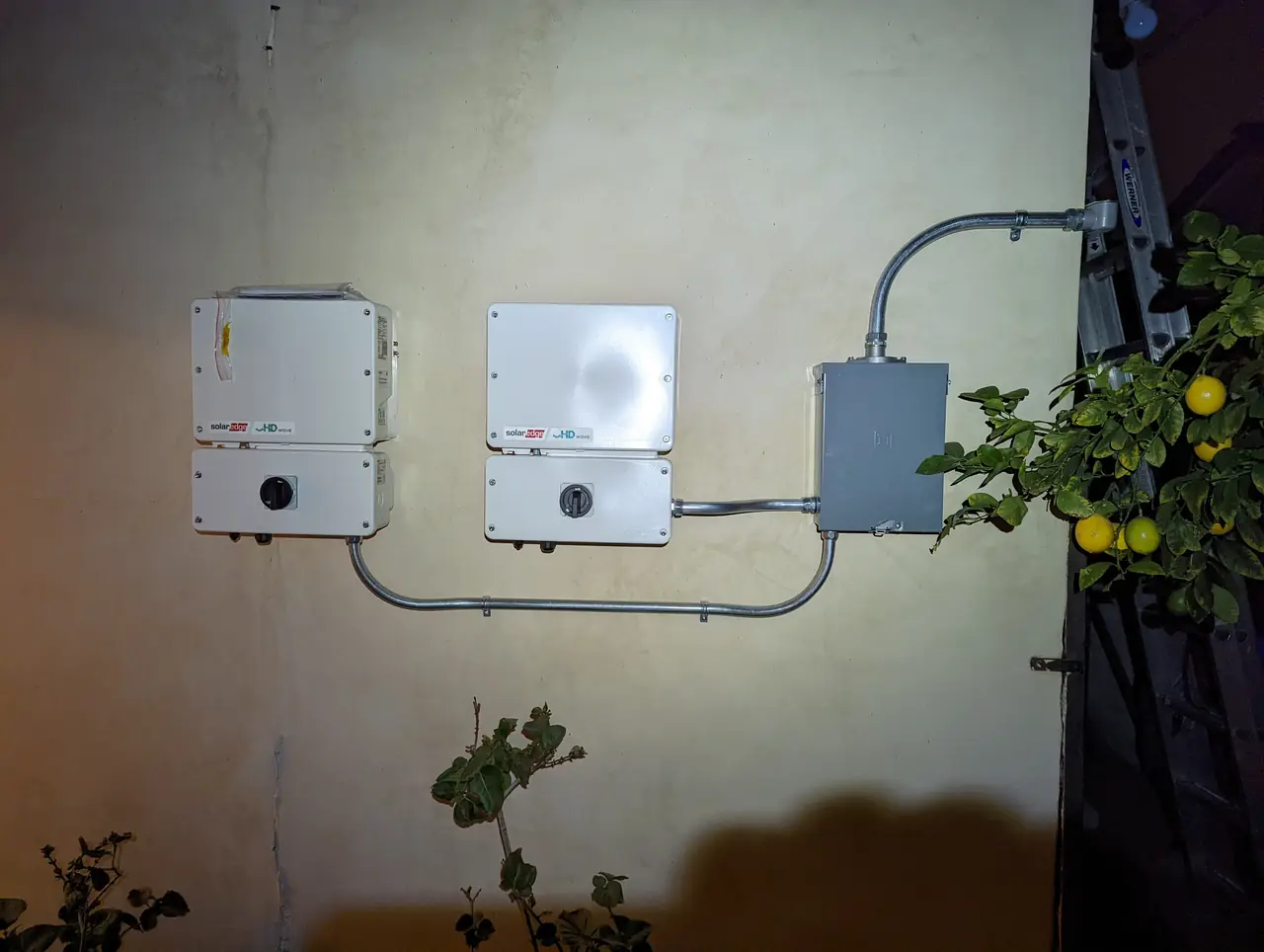
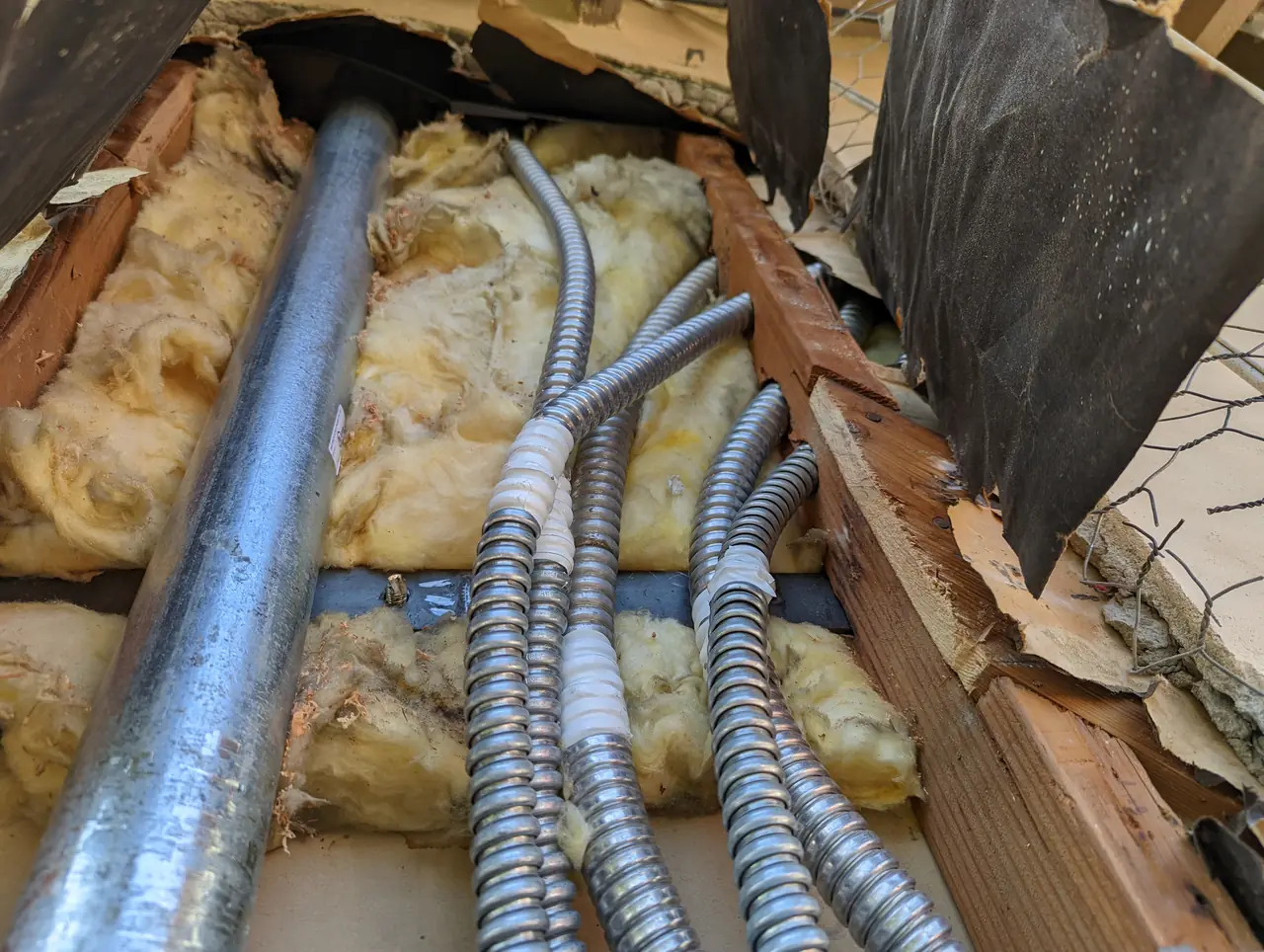
What follows from that decision is the wall work in these photographs: conduit threaded through insulation and framing to get from where the utility says the meter goes to where the solar equipment needs to be, then patched and closed.
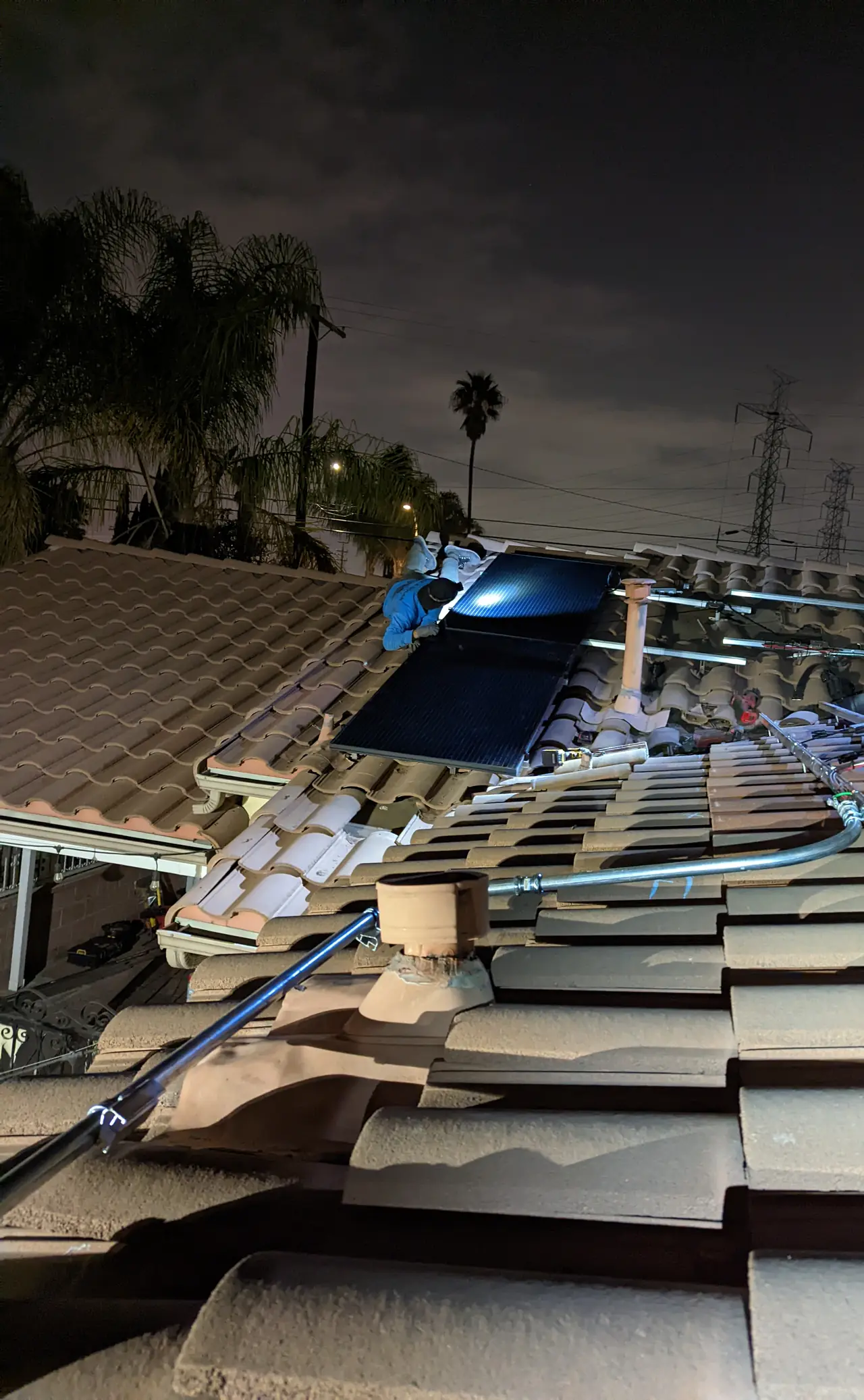
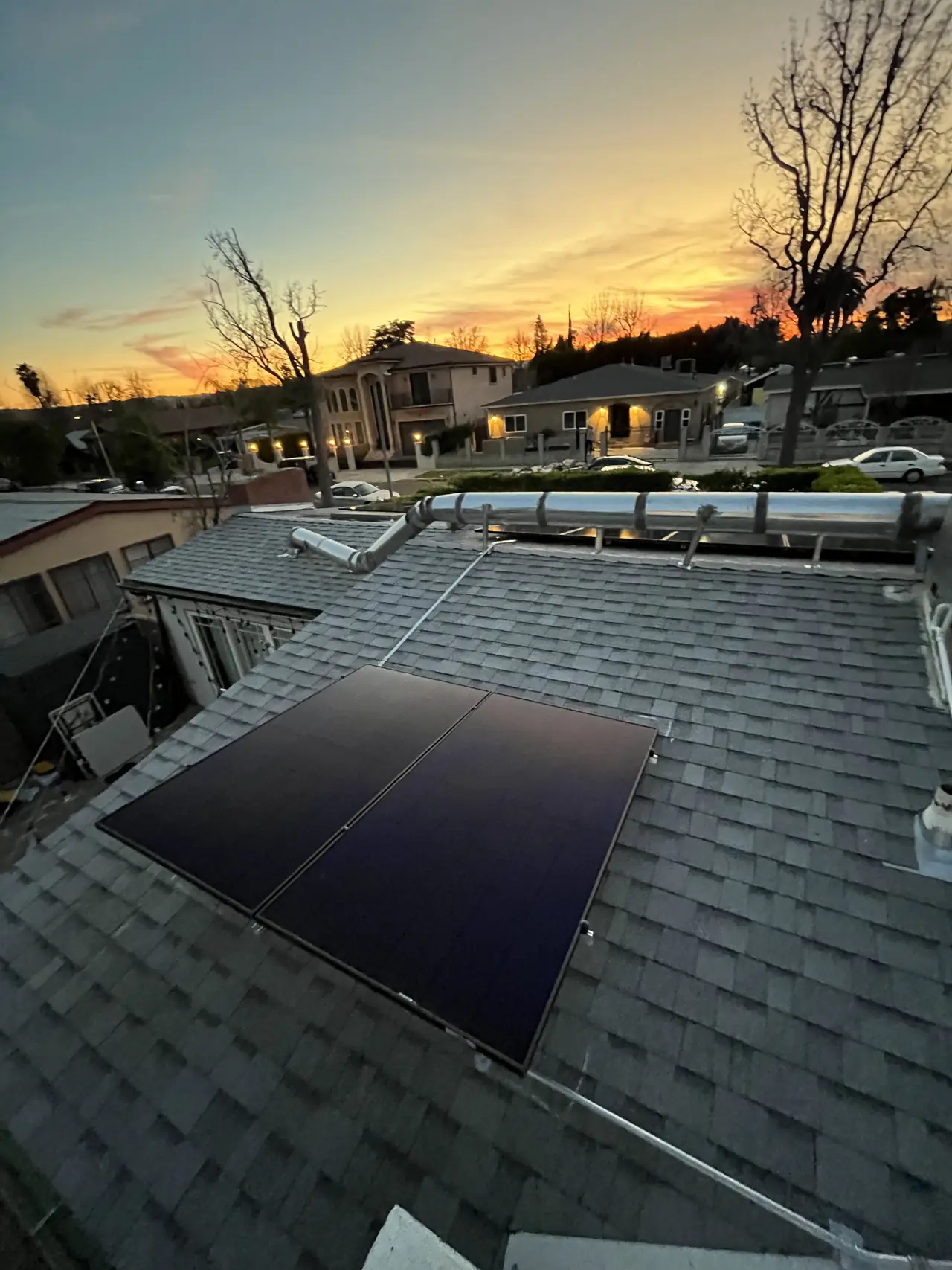
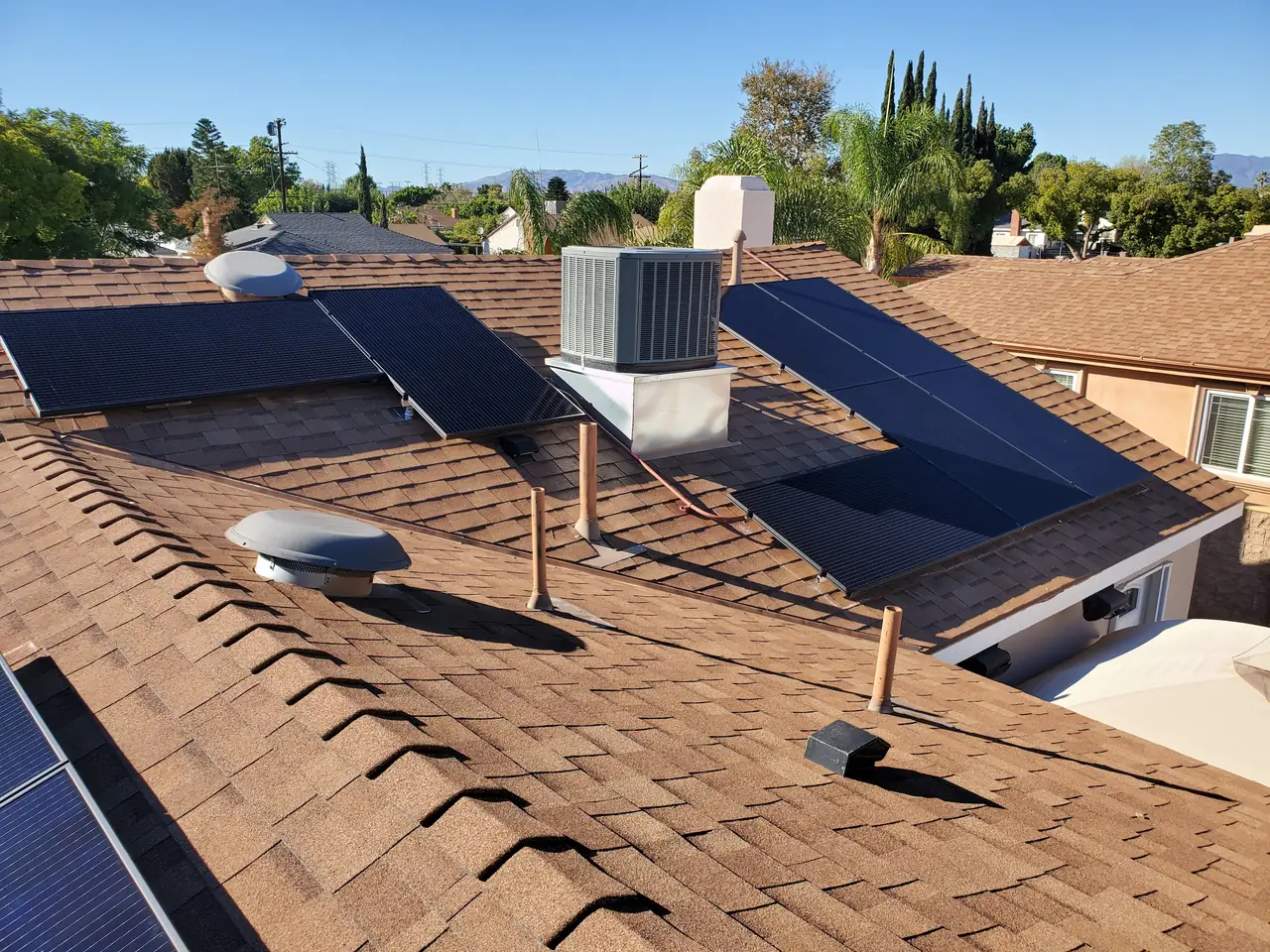
The roof itself is concrete tile, and this one was worked into the evening — tile lifted along the rail lines, attachments set, flashing in, tile replaced. Thirteen point seven kilowatts.
After the meter spot the rest ran to schedule: the fee paid at the start of December, the first three progress notices together on the seventh, the interconnection agreement approved on the fifteenth, the installation released on the sixteenth, and permission to operate on the thirteenth of January.
If you are being quoted for solar and nobody has mentioned a meter spot, ask about it — particularly if your service comes in overhead or your existing meter is somewhere awkward. It is the step that decides how much wall has to be opened.
How it ran
| 10, 12 and 21 November 2021 | Drawing set issued three times |
|---|---|
| 29 November 2021 | Interconnection request filed |
| 30 November 2021 | Meter spot issued — overhead service form |
| 2 December 2021 | Utility fee paid |
| 7 December 2021 | Three progress notices in one day |
| 15 December 2021 | Interconnection agreement approved |
| 16 December 2021 | Installation released |
| 13 January 2022 | Permission to operate |
The meter spot came before the fee, not after.
What we did
- Revised the drawing set until it was right, before filing anything.
- Obtained the meter spot on the overhead-service form before the wall was opened.
- Ran the conduit from the approved meter position through to the solar equipment.
- Lifted and reset concrete tile along the rail lines, working into the evening.
- Carried the interconnection from filing to permission to operate in six weeks.
System specifications
| System | 13.7 kW |
|---|---|
| Roof | Concrete tile |
| Service | Overhead |
| Meter spot | Issued on the overhead-service form, the day after filing |
| Wall work | Conduit run through insulation and framing, then closed |
| Drawing set | Three issues before the interconnection was filed |
| Filing to PTO | Six weeks |
| Utility / AHJ | LADWP / LADBS |
Is your project like this one?
- Your service comes in overhead from a pole.
- Your existing meter is somewhere awkward for new equipment.
- You want to know what happens before the visible work starts.
- Your roof is concrete tile and you want to know how the array attaches.
- You have been given a timeline and want to know what is in the first fortnight.
Cali Energy in North Hollywood
North Hollywood is inside City of Los Angeles boundaries: permits run through LADBS, interconnection through LADWP.
Most of this part of North Hollywood is fed overhead, which means the meter position has to work with a span coming in from a pole, not just with the wall it sits on.
This installation is on the North Hollywood projects page alongside the others, and what the work covers is set out on the North Hollywood service area page.
- License and classifications: CSLB #1032379
- Official reference for this process: LADWP Electric Service Requirements
- Official reference for this process: LADWP interconnection requirements
Frequently asked questions
What is a meter spot?
The utility's written decision on where the meter and service equipment are allowed to be placed. It is issued on a form specific to how the property is fed — overhead or underground — and on this project it arrived the day after the interconnection was filed, before the fee was even paid.
Why does the meter position matter so much?
Because everything else follows it: the conduit route through the wall, the height the service span lands at, the working clearance in front of the equipment. Moving a meter afterwards is expensive; agreeing its position first is not.
Does an overhead service change anything?
It changes the form and the constraints. A span coming in from a pole has to land somewhere sensible, which limits where the meter can reasonably go. This property is fed overhead and the meter spot came on the overhead form.
Why was the drawing set issued three times?
Because it was revised until it was right, before the application went in. That happens before the timeline most people are watching begins, and it is time well spent — a correction after filing costs more.
Can solar go on a concrete tile roof?
Yes. Tile is lifted along the rail lines, attachments are fixed to the structure, each penetration is flashed and the tile goes back over it.
What this would look like on your roof
Planning solar in North Hollywood? Tell us your utility, your roof and what your bill looks like now, and we will model what a system like this would do on your house before you commit to anything.
Or call +1 (323) 844-7777 · Cali Energy, Northridge · CSLB #1032379 (B, C-10, C-39) — design, permits, install and electrical under one licensed contractor.
Related
This timeline reflects this property and this permitting path. Updated September 2026.