

Tarzana, CA · October 2021 – January 2022 · LADWP / LADBS
The panel was full. The fix was a smaller main breaker.
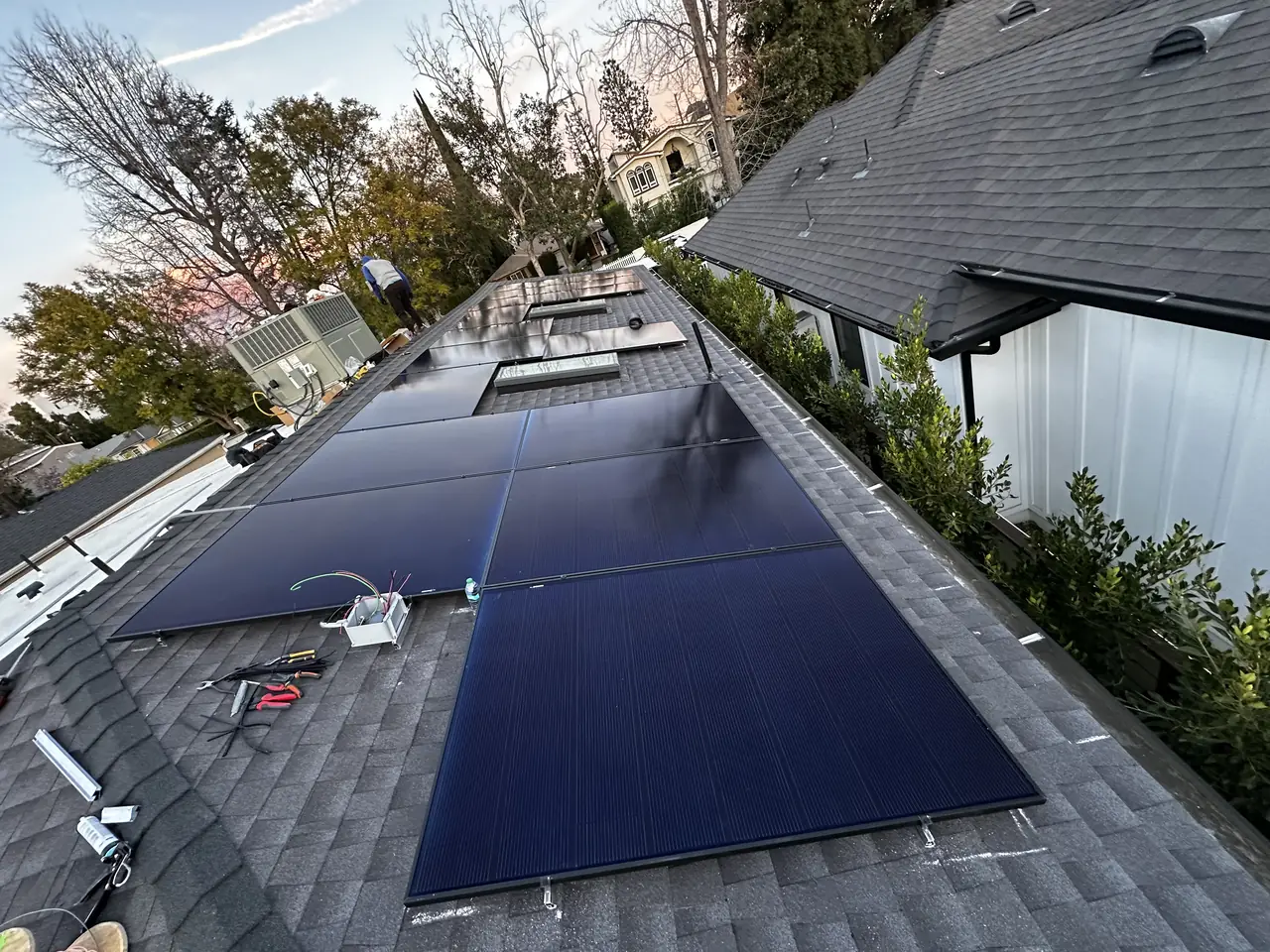
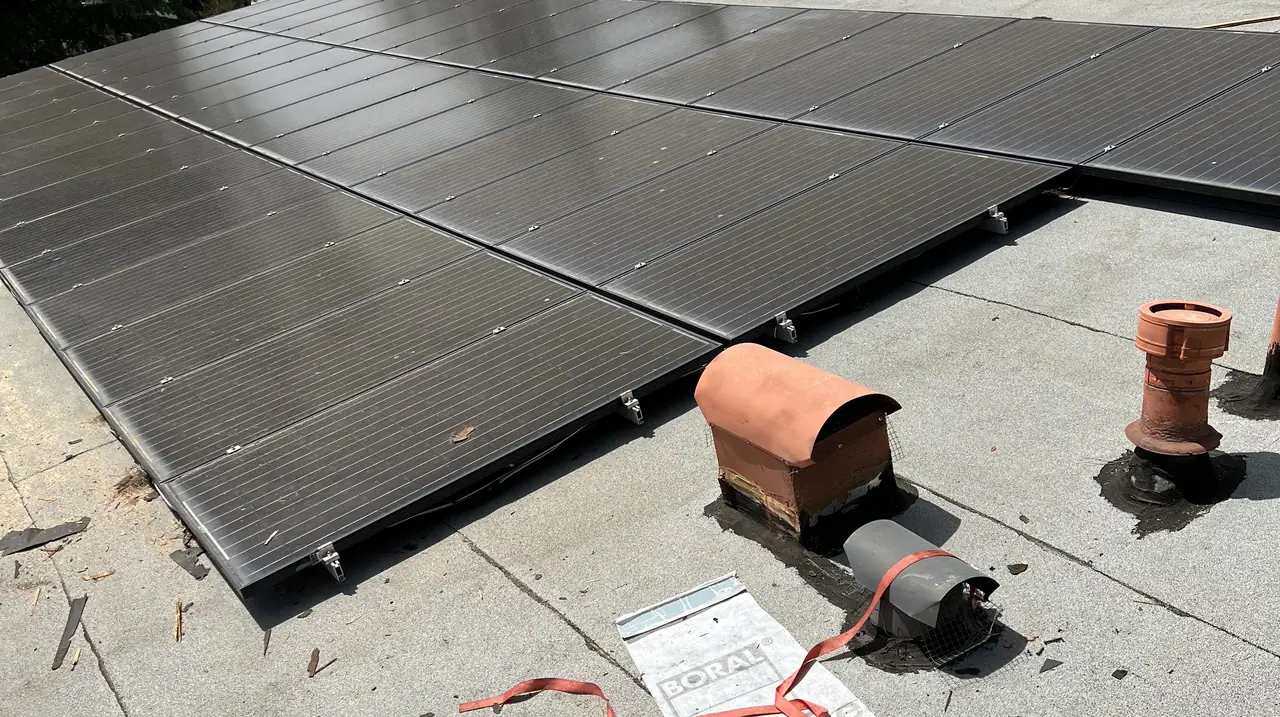
Thirty-nine modules, each with its own microinverter, on a two-story stucco house in Tarzana. LADWP recorded the interconnection at 13.3 kilowatts AC-CEC. The first design draft called for a new main service panel. The system was built without one: the main breaker was swapped for a 175-amp breaker and the panel stayed.
A solar breaker and the main breaker share the same busbar, and the electrical code caps their sum at 120 percent of the busbar's rating. When the array's breaker does not fit under that cap, there are two ways out: replace the panel with a bigger busbar, or reduce the main breaker so the sum fits. On this Tarzana house Cali Energy took the main breaker from its original rating down to 175 amps, a service load calculation showed the house did not need more, and the panel was left alone.
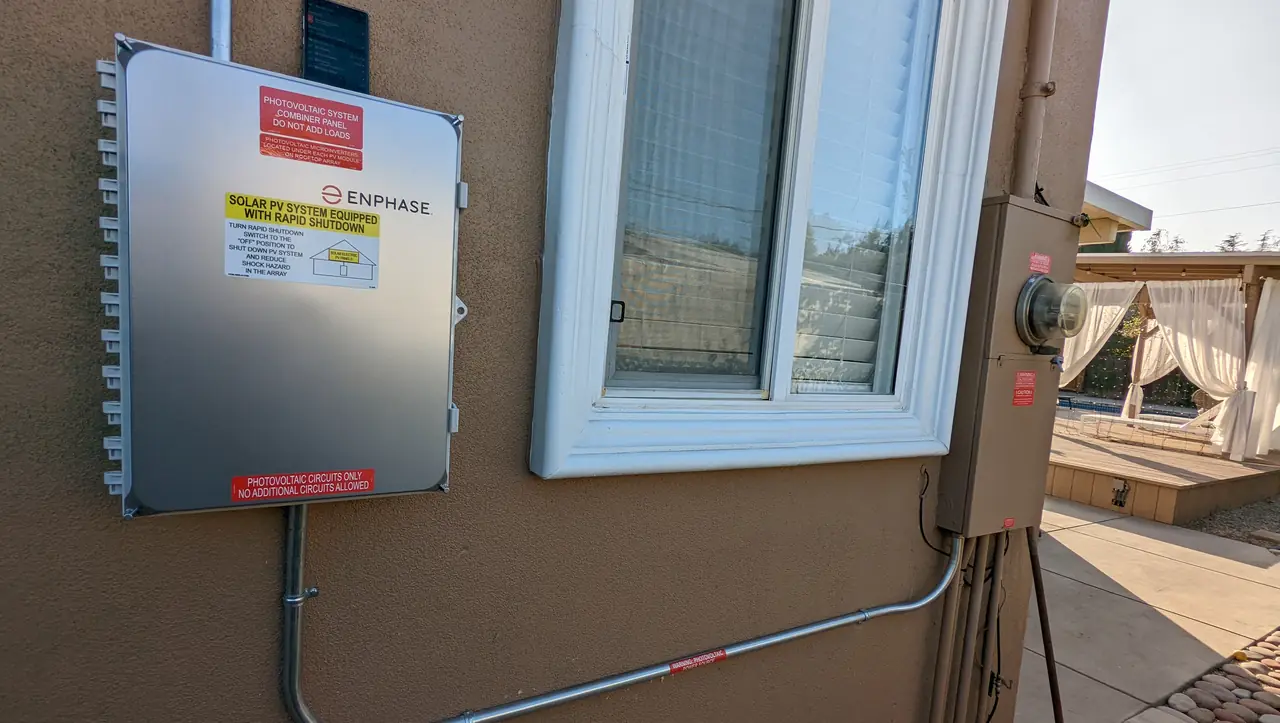
At a glance
- Recorded by the utility
- 13.3 kW AC-CEC
- Modules
- 39, one microinverter under each
- Inverters
- Enphase IQ series microinverters
- Combiner
- Enphase IQ Combiner 3
- Service panel
- Retained; main breaker derated to 175 A
- House
- Two-story stucco, 2000s
- Application to PTO
- 85 days
- Utility / AHJ
- LADWP / LADBS
The story
The first version of the design said the house needed a new main service panel. The reasoning was ordinary: the panel was full, and a 39-module array needs a backfeed breaker that the existing panel did not appear to have room for. A main panel upgrade is the standard answer to that, and it is also the expensive one. It means a new panel, a utility meter spot, a utility crew to cut power and reconnect, and an inspection of the new service before anything else can happen.
The design that went to the city instead kept the panel and changed one breaker. The main breaker was taken out and replaced with a 175-amp breaker of the same frame, the array's backfeed breaker went into the panel, and a label went on the cover recording that the main had been derated for the solar system and must be replaced only with the same rating.
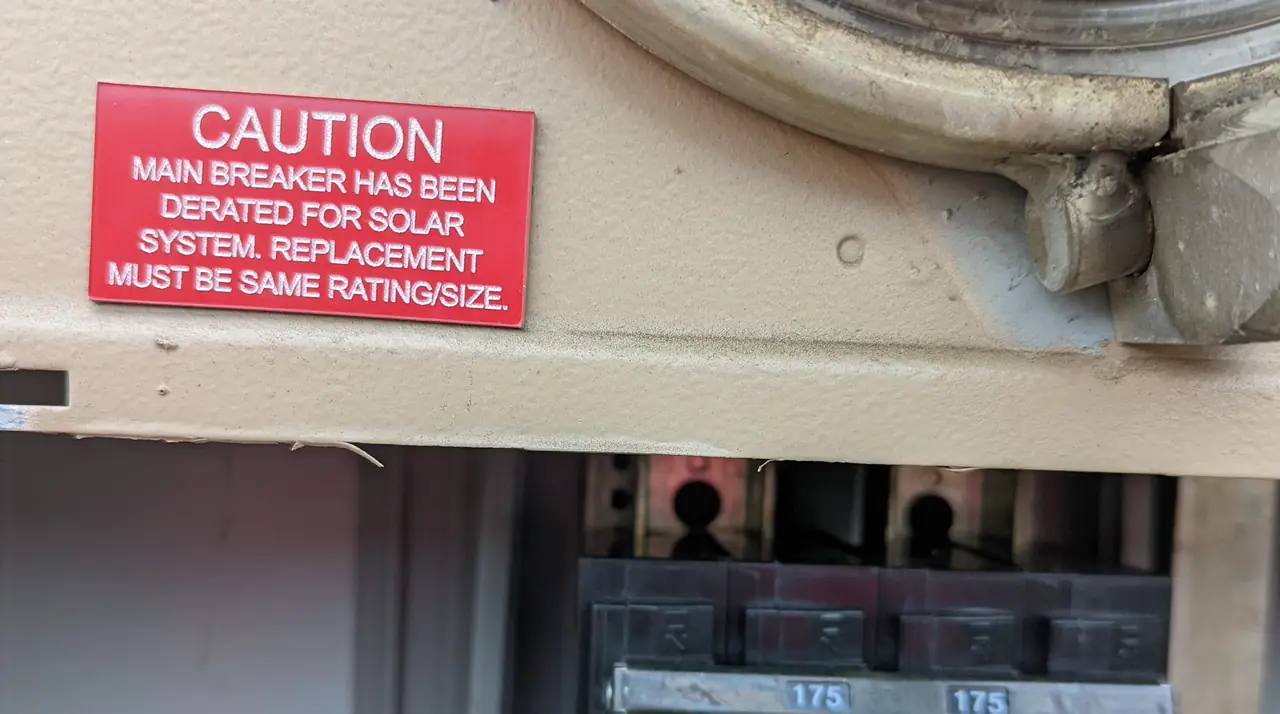
The rule behind this is the 120 percent allowance in Article 705 of the National Electrical Code. A panel's busbar has a rating. The main breaker feeding it and any solar breaker backfeeding it are added together, and that sum may not exceed 120 percent of the busbar rating. Lower the main breaker and the solar breaker gains exactly that much room. The busbar itself is untouched.
What makes this legitimate rather than a trick is the service load calculation. The city's plan check asked for one, along with confirmation that the lug terminations were rated for 75 degrees Celsius. The calculation adds up the house's loads by the code's method and shows that 175 amps is enough to serve them. If it were not, derating would not be an option and the panel would have to be replaced after all.
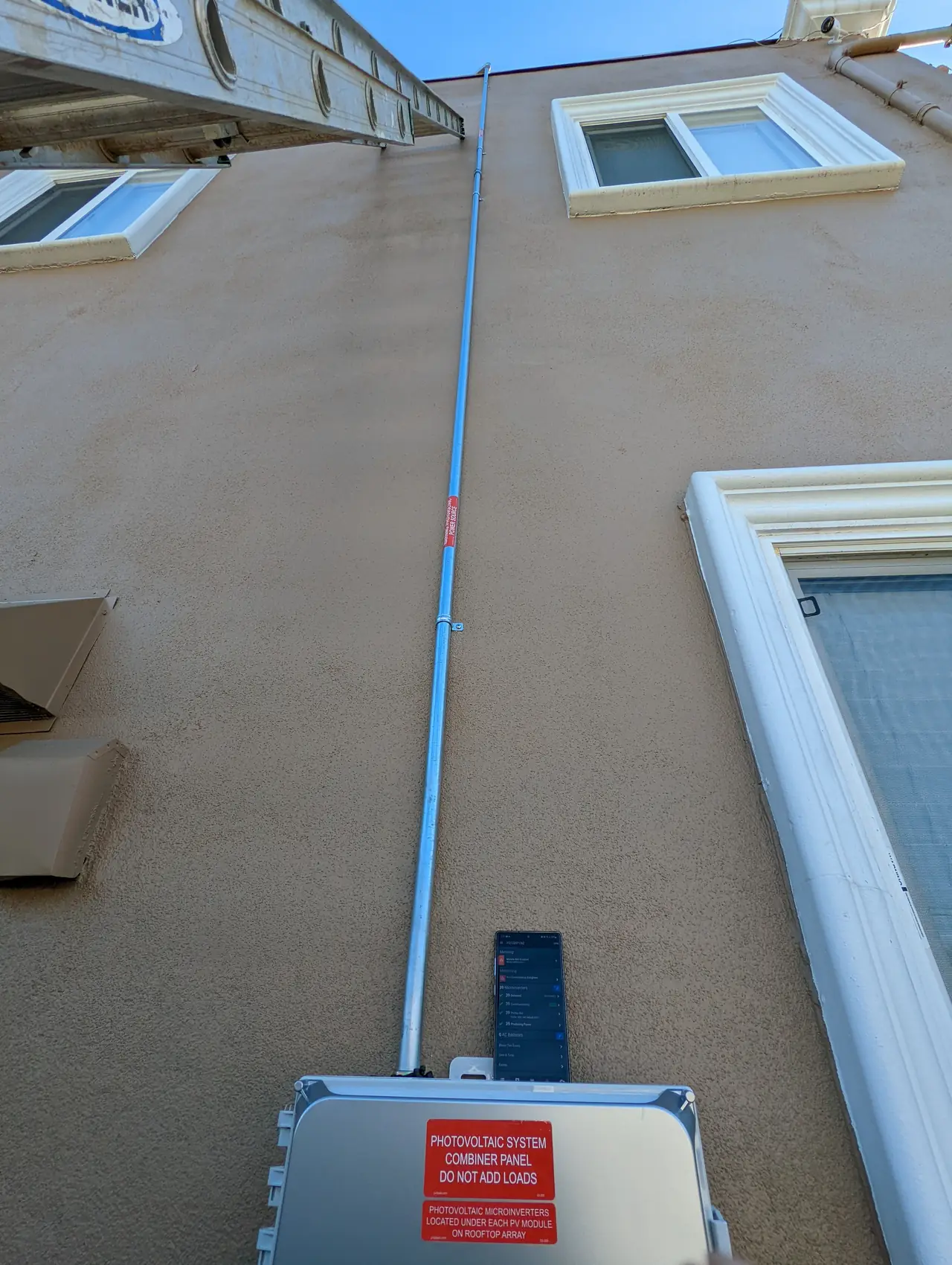
The design changed while the plan check was under way. The set the city stamped on the thirtieth of November 2021 still showed the panel upgrade from the first draft. The revised set, with the derated main on the single-line diagram, went to the plan checker with a note on the one difference between the two, and a newly stamped set came back the same day, the third of December.
The utility's side ran on the fast-track path, which exists precisely for projects that do not change the meter panel. The condition of fast track is photographs: the meter, and a clear three-foot-wide by three-foot-deep working space in front of the panel. On this house a fence stands close to the panel, so the standard shot had to be taken from the fence line. The utility accepted it on the fourth of November and reviewed, confirmed and cleared the application to build the same day.
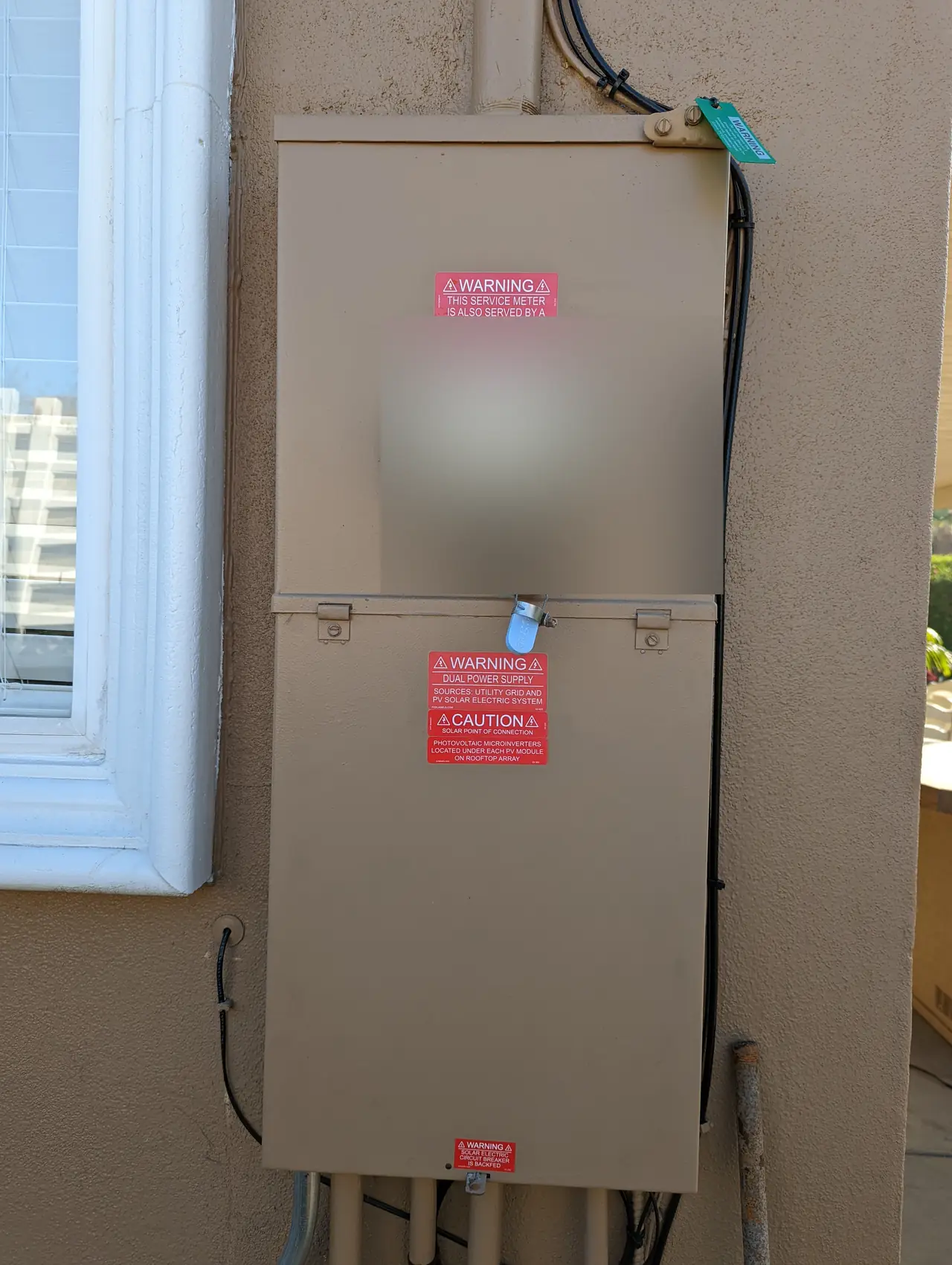
The interconnection agreement form came back once with corrections and was returned the same day; the utility approved it on the twenty-fourth of November. The array went up on the fourth of December, the final inspection was requested on the sixth, the building department's release went to the utility on the thirteenth, and permission to operate came on the fourteenth of January 2022, with a new net meter set that day.
The trade is real: the service is now 175 amps, below its original rating. For a household with the loads this one has, the calculation shows that is enough. For a household planning a second electric vehicle, an electric range and a heat pump, it may not be, and the panel upgrade the first draft called for becomes the right answer. Derating is the cheaper path only where the numbers support it.
How it ran
| 12 October 2021 | Proposal issued |
|---|---|
| 19 October 2021 | Plan set completed |
| 20 October 2021 | Plan check submitted to LADBS |
| 21 October 2021 | Interconnection application filed at 13.3 kW AC-CEC |
| 4 November 2021 | Meter panel photographs accepted; application reviewed, confirmed and cleared to build the same day |
| 24 November 2021 | Interconnection agreement approved |
| 30 November 2021 | Plans stamped by LADBS |
| 3 December 2021 | Revised set with the derated main re-stamped the same day |
| 4 December 2021 | Array installed |
| 6 December 2021 | Final inspection requested |
| 13 December 2021 | LADBS release transmitted; interconnection review completed the next day |
| 14 January 2022 | Permission to operate; net meter set |
This timeline reflects this property and this permitting path: no meter panel change, so the utility's fast-track photo review applied.
What we did
- Redesigned the connection so the existing service panel could stay, with the main breaker derated to 175 amps under the 120 percent rule (C-10).
- Prepared the service load calculation the city asked for, proving 175 amps serves the house.
- Revised the design after the plan check had begun and had the corrected set re-stamped the same day it was submitted.
- Photographed the meter panel and its working space to the utility's specification so the application stayed on the fast-track path.
- Installed 39 modules with a microinverter under each, landing in an IQ Combiner on the side wall.
- Carried the project from application to permission to operate in 85 days.
System specifications
| Recorded by the utility | 13.3 kW AC-CEC |
|---|---|
| Modules | 39, one microinverter under each |
| Inverters | Enphase IQ series microinverters |
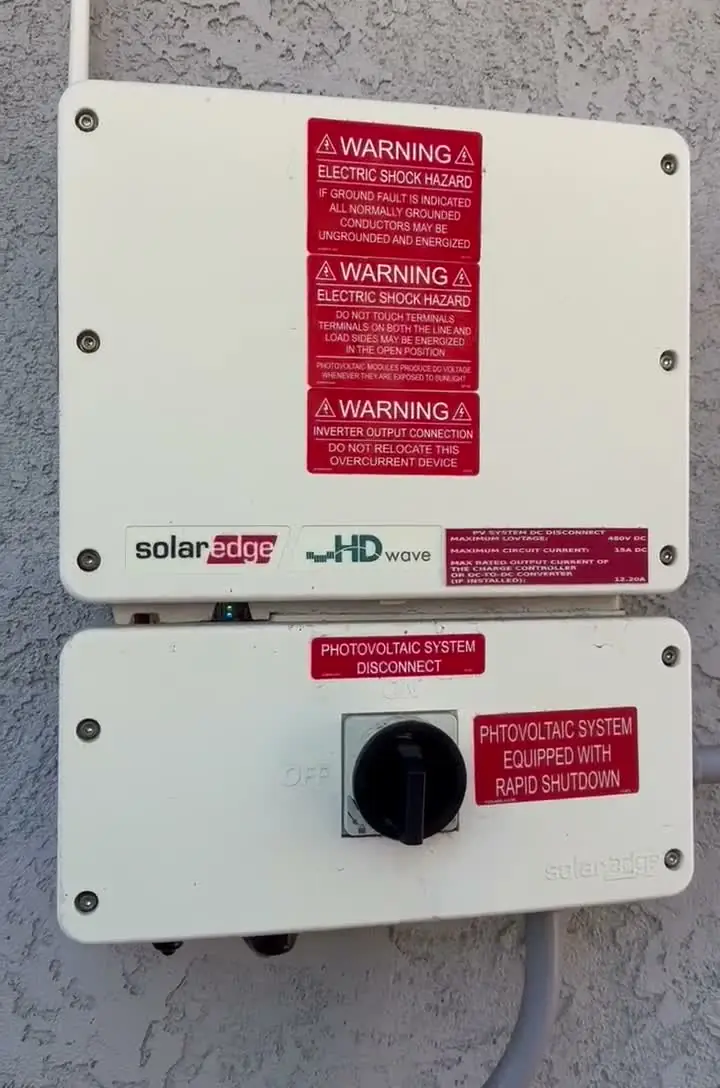
| Combiner | Enphase IQ Combiner 3, rapid shutdown |
| Service panel | Existing panel retained |
| Main breaker | Derated to 175 A; labeled on the cover |
| Plan check corrections | Service load calculation; 75 °C lug terminations |
| Utility path | Fast track, no meter panel change |
| Battery | None |
| Utility / AHJ | LADWP / LADBS |
Is your project like this one?
- You have been told your panel is full and you need a main panel upgrade before solar.
- Your house has a 200-amp service from the 2000s and a large array in mind.
- You want to know what a service load calculation is and why it decides this.
- You are not planning to add big electric loads in the next few years.
- Your Tarzana property is served by LADWP, while permits are handled by LADBS.
Cali Energy in Tarzana
Tarzana is inside City of Los Angeles boundaries: permits run through LADBS, interconnection through LADWP.
Tarzana is a neighborhood in the southwestern San Fernando Valley, inside the City of Los Angeles. Electric service is LADWP, and building and electrical permits are issued by LADBS.
This installation is on the Tarzana projects page alongside the others, and what the work covers is set out on the Tarzana service area page.
- License and classifications: CSLB #1032379
- Official reference for this process: NFPA 70, National Electrical Code — Article 705, interconnected power sources
- Official reference for this process: LADWP interconnection requirements
Frequently asked questions
What does derating the main breaker mean?
The main breaker is replaced with one of a lower rating, here 175 amps, while the panel and its busbar stay as they are. The 120 percent rule adds the main breaker and the solar backfeed breaker together and limits the sum to 120 percent of the busbar rating, so a smaller main breaker makes room for the solar breaker. A label on the cover records the change so that nobody puts the original breaker back.
Why not just upgrade the panel?
Because the house did not need it. A panel upgrade means a new panel, a utility meter spot, a power cut and reconnect by the utility crew, and its own inspection. The service load calculation showed that 175 amps serves this household's loads, so the derate achieved the same electrical result at a fraction of the work. Where the calculation does not support it, the upgrade is the right answer.
What did the city ask for?
Two corrections on the plan check: a service load calculation, which is the document that justifies the 175-amp main, and confirmation that the lug terminations are rated for 75 degrees Celsius. The set stamped first still showed the panel upgrade from the first draft; the revised set with the derate on the single-line diagram was re-stamped the same day it was submitted.
What is the LADWP fast-track path?
A review route for projects that do not change the meter panel. Instead of a site visit, the utility reviews photographs: the meter itself and a clear three-foot by three-foot working space in front of the panel. On this house a fence stands close to the panel, so the shot was taken from the fence line. Once the utility accepted it, the application was confirmed and cleared to build the same day.
Does derating limit what the house can do later?
Yes, and that is the real trade. The service is now 175 amps. If the household later adds a second electric vehicle charger, an electric range or a heat pump, the load calculation would have to be redone, and a panel upgrade may then be unavoidable. Derating is the right choice where the loads today and in the near future fit under the lower figure.
What this would look like on your roof
Planning solar in Tarzana? Tell us your utility, your roof and what your bill looks like now, and we will model what a system like this would do on your house before you commit to anything.
Or call +1 (323) 844-7777 · Cali Energy, Northridge · CSLB #1032379 (B, C-10, C-39) — design, permits, install and electrical under one licensed contractor.
Related
This timeline reflects this property and this permitting path. Updated September 2026.