

Tarzana, CA · February – March 2023 · LADWP / LADBS
Filed in February. Producing by the first week of March.
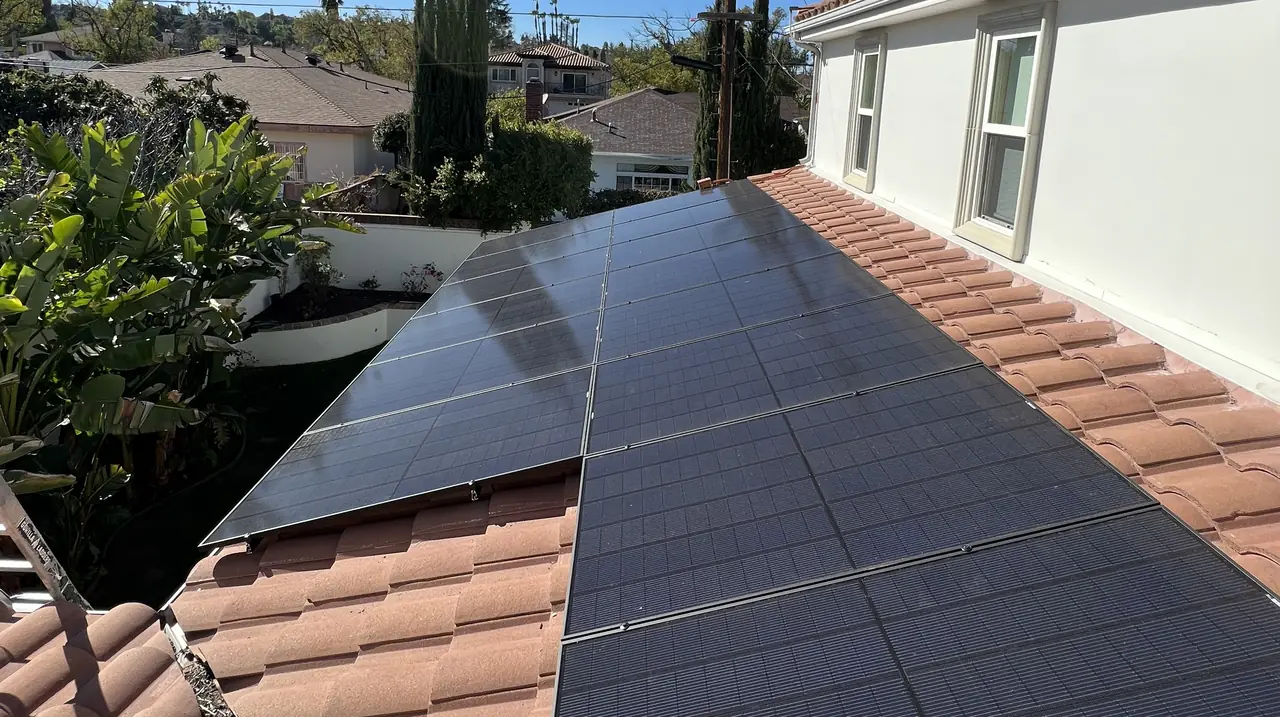
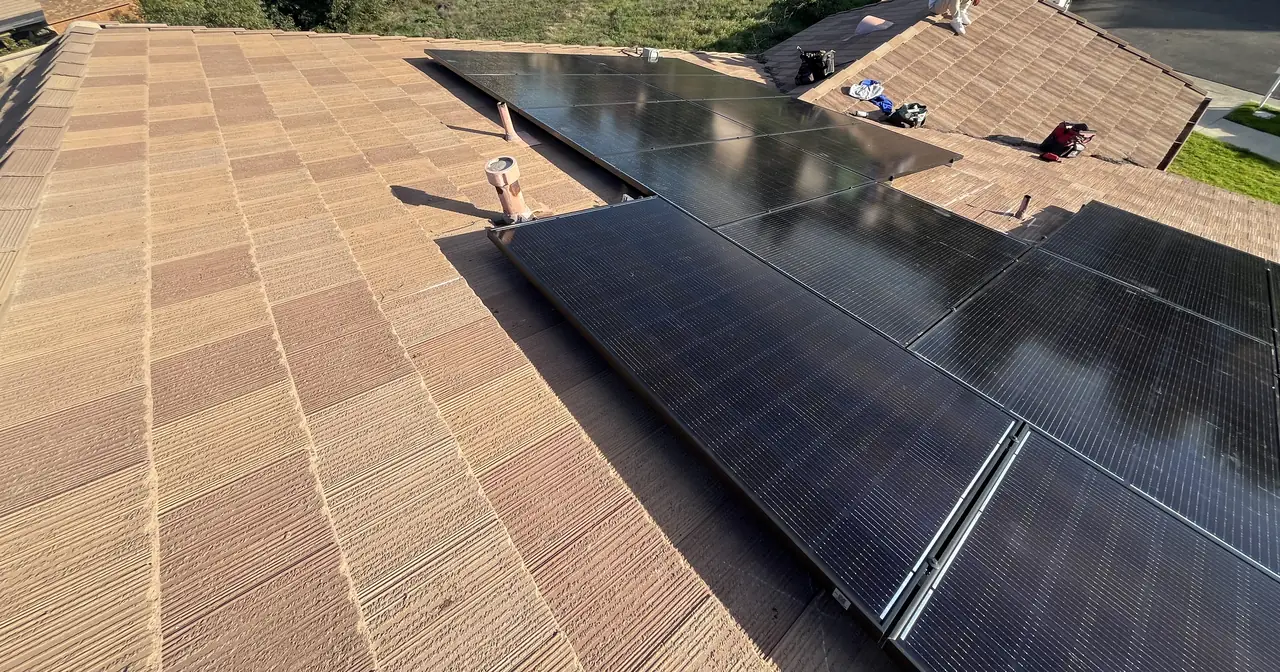
An 8.9-kilowatt AC-CEC array along the long plane of an S-profile tile roof in Tarzana, with an Enphase microinverter under each module. The interconnection application went in on the sixth of February 2023 and permission to operate came on the seventh of March.
Twenty-nine days from application to permission to operate is what a residential interconnection looks like when the array is on the roof before the paperwork starts and the city's inspection is requested the same day as the utility application. On this Tarzana tile roof Cali Energy installed first and filed second; the utility reviewed and cleared the site the next day, closed its review a week later, and set the meter a month after filing.
At a glance
- Recorded by the utility
- 8.9 kW AC-CEC
- Inverters
- Enphase IQ microinverters, one per module
- Roof
- S-profile tile
- Layout
- Single long plane
- Application to PTO
- 29 days
- Battery
- None
- Utility / AHJ
- LADWP / LADBS
The story
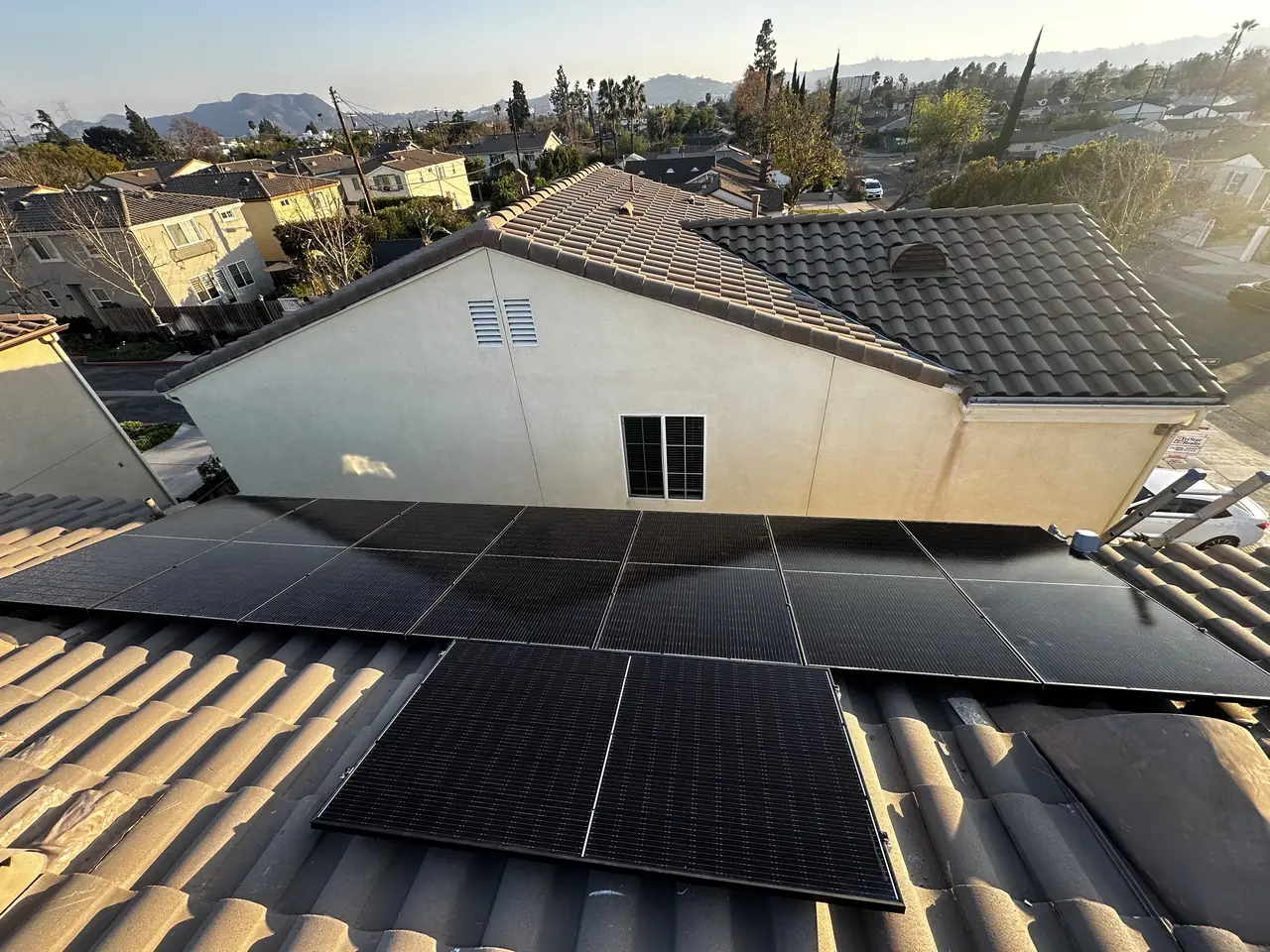
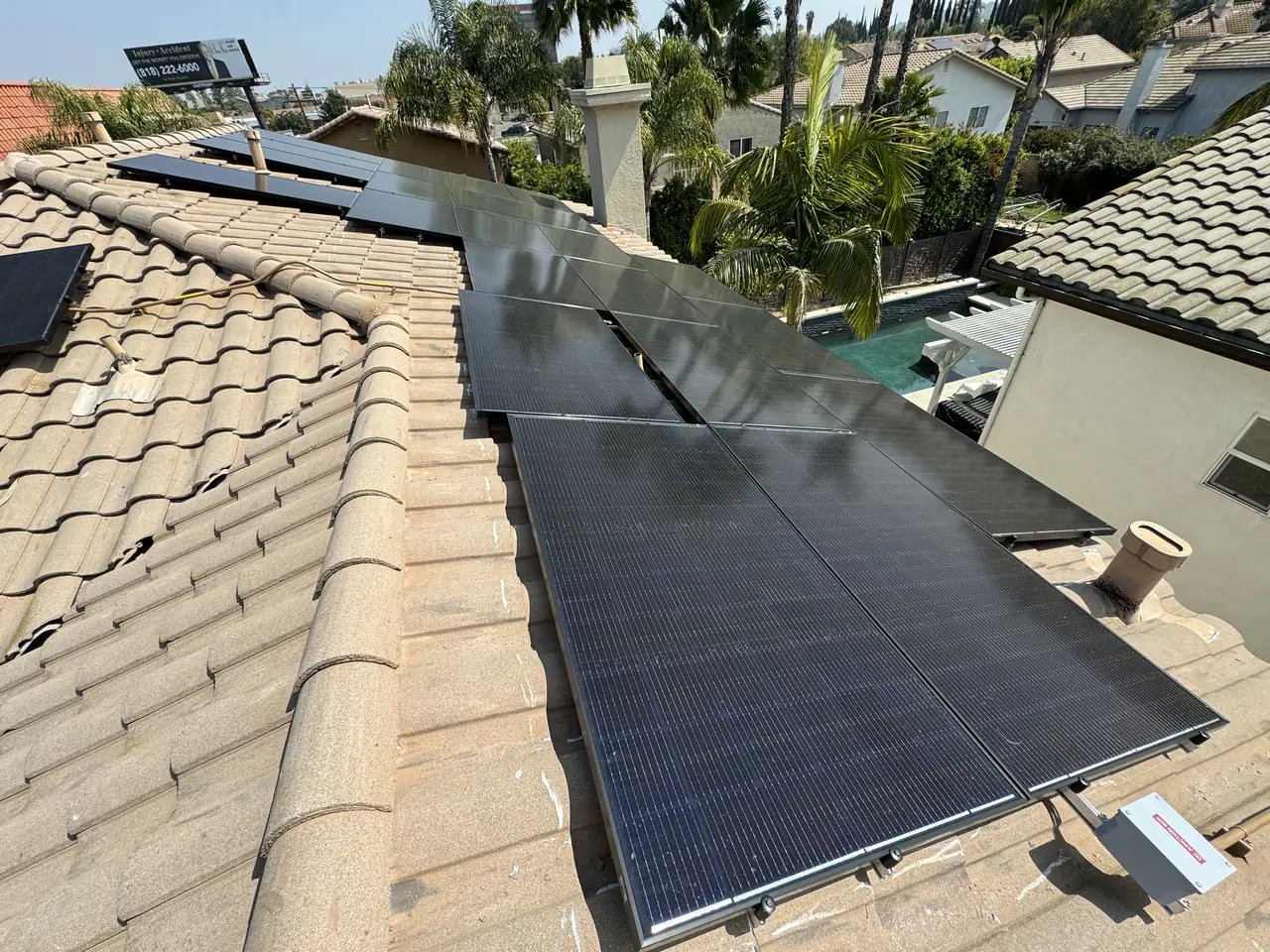
The roof decided the layout. One long plane of S-profile tile runs the length of the house, unbroken by dormers or equipment, and the array follows it: rows of modules set on rails above the tile, with a microinverter under each module and a single conduit run down to the side wall.
Tile sets the discipline for the attachment. Tiles come up at each mounting point, a hook is fastened through the underlayment to the rafter and sealed, and the tiles go back over it. The rails carry the modules above the tile so that the tile itself bears no load and keeps shedding water down the plane.
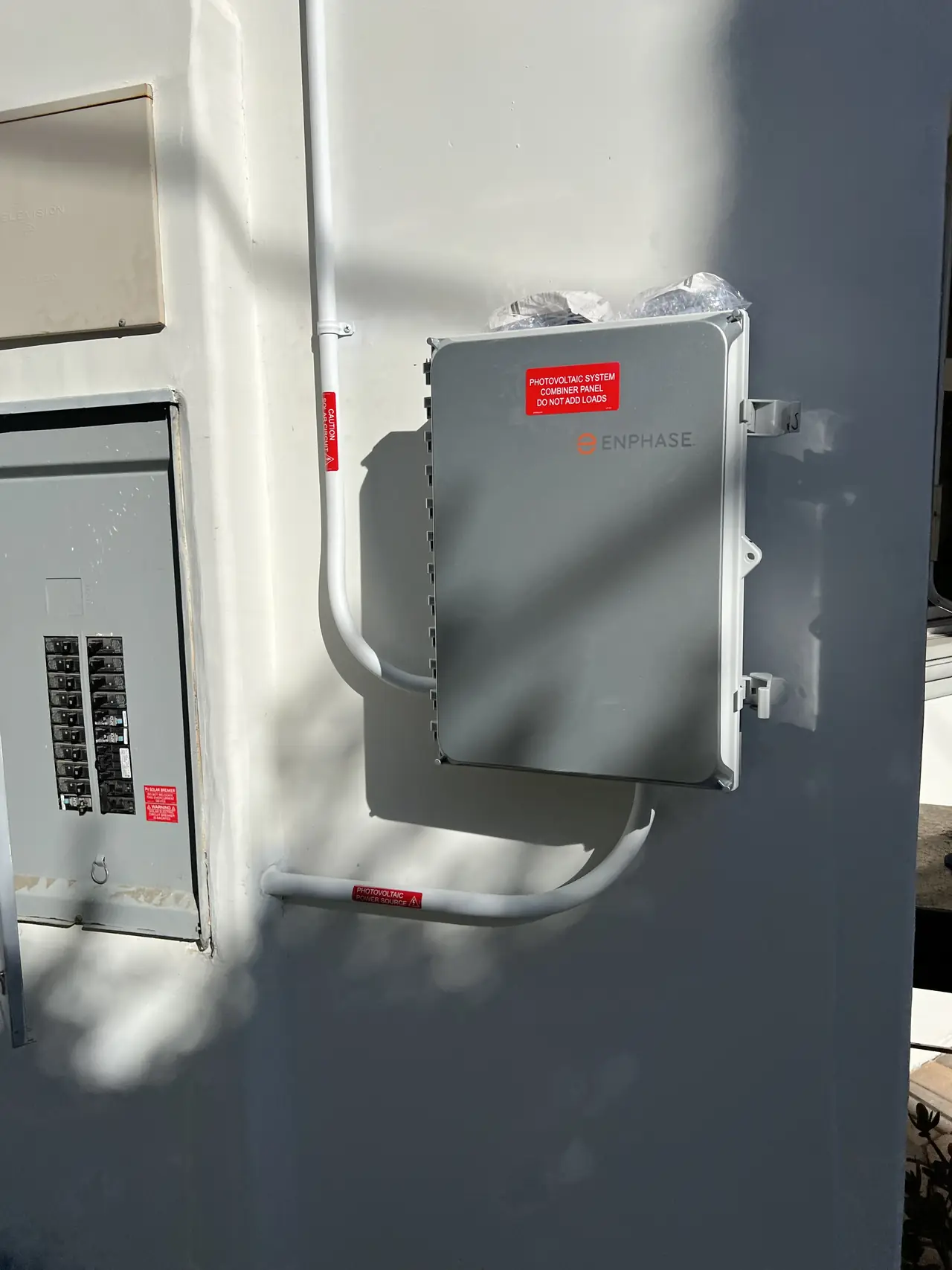
The paperwork ran in a tight sequence. The interconnection application went to LADWP on the sixth of February 2023 at 8.9 kilowatts AC-CEC, the utility fee was paid the same day, and the city's final inspection was requested the same day too, because the array was already up. On the seventh the utility reviewed the application, confirmed it and closed its site evaluation from the photographs submitted with the application.
The utility's interconnection review closed on the fourteenth of February with a request to schedule the meter. A field crew set a new net meter on the seventh of March, and permission to operate was granted the same day.
Twenty-nine days. Most of them were the utility's queue for a meter crew, which is the one part of the calendar the installer does not control. Everything the installer does control — the design, the roof work, the inspection request, the photographs — was done before the application went in, which is why the review took a day and not a month.
How it ran
| Early February 2023 | Array installed under an LADBS electrical permit |
|---|---|
| 6 February 2023 | Interconnection application filed at 8.9 kW AC-CEC; fee paid; LADBS final inspection requested |
| 7 February 2023 | Application reviewed and confirmed; utility site evaluation closed |
| 14 February 2023 | Utility interconnection review completed; meter requested |
| 7 March 2023 | New net meter set; permission to operate |
This timeline reflects this property and this permitting path: the array on the roof before the application, and no change to the service.
What we did
- Laid the array along the roof's single long plane on tile hooks through the underlayment, with every tile reset over its hook (C-39, C-10).
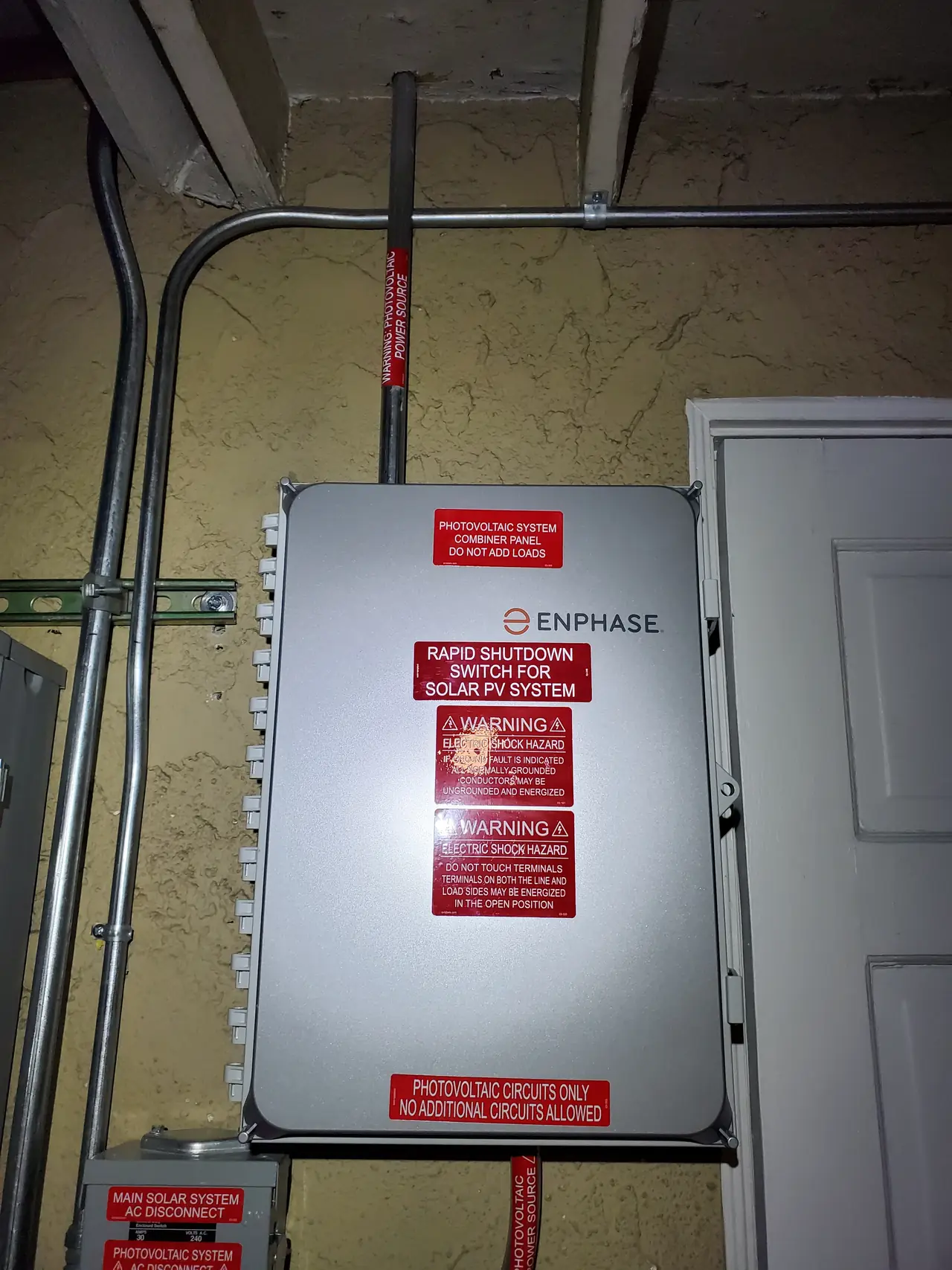
- Put an Enphase microinverter under each module, landing in a combiner beside the service panel.
- Completed the installation before the interconnection application was filed.
- Filed the utility application and requested the city's final inspection on the same day.
- Carried the project from application to permission to operate in twenty-nine days.
System specifications
| Recorded by the utility | 8.9 kW AC-CEC |
|---|---|
| Inverters | Enphase IQ microinverters, one per module |
| Combiner | Enphase IQ Combiner beside the service panel |
| Roof | S-profile tile, single long plane |
| Racking | Rail on tile hooks fixed to the rafters |
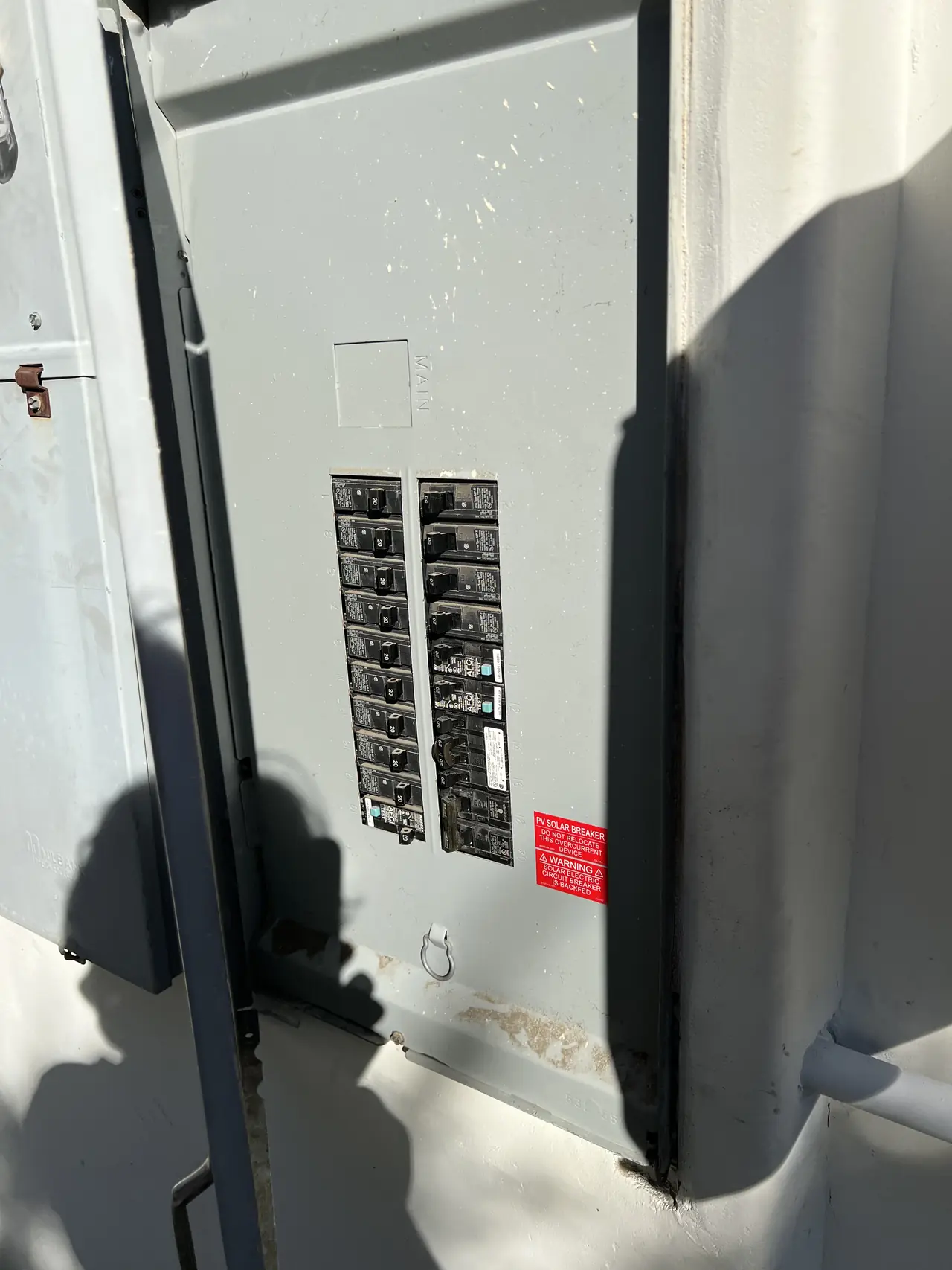
| Service | Existing panel retained |
| Battery | None |
| Application to PTO | 29 days |
| Utility / AHJ | LADWP / LADBS |
Is your project like this one?
- Your roof is tile and you want the array attached without breaking it.
- Your roof has one long unobstructed plane.
- You want to know which part of the interconnection calendar is in the installer's hands.
- You are comparing a fast quote with a slow one and want to know what the difference actually is.
- Your Tarzana property is served by LADWP, while permits are handled by LADBS.
Cali Energy in Tarzana
Tarzana is inside City of Los Angeles boundaries: permits run through LADBS, interconnection through LADWP.
Tarzana is a neighborhood in the southwestern San Fernando Valley, inside the City of Los Angeles. Its housing is mostly single-family, and tile roofs are common on the hillside streets south of the boulevard.
This installation is on the Tarzana projects page alongside the others, and what the work covers is set out on the Tarzana service area page.
- License and classifications: CSLB #1032379
- Official reference for this process: LADWP interconnection requirements
- Official reference for this process: LADBS — inspections
Frequently asked questions
Can solar be installed before the utility approves the application?
In LADWP territory an installer may build ahead of the utility's approval, at the installer's and owner's own risk; the utility says so in its notices. Doing it makes sense only when the design is settled and the service is not changing, which was the case here. It let the city's inspection be requested on the same day the utility application went in.
What took the twenty-nine days?
Mostly the wait for a meter crew. The utility reviewed and confirmed the application the day after filing, and closed its interconnection review on the fourteenth of February with a meter request. The net meter was set on the seventh of March, three weeks later, and permission to operate came with it.
How are the modules attached to a tile roof?
Through tile hooks. At each mounting point tiles are lifted, a hook is fastened through the underlayment into the rafter and sealed, and the tiles are set back over it. The rails ride on the hooks above the tile surface, so the tile carries no load and continues to shed water as it did before the array.
Why one long row rather than several groups?
Because the roof offered one long, clear plane. Where a roof has vents, a skylight or several orientations the array has to be drawn in pieces; here it did not. A single plane also means one conduit run to the wall and one combiner, which keeps the electrical side simple.
What this would look like on your roof
Planning solar in Tarzana? Tell us your utility, your roof and what your bill looks like now, and we will model what a system like this would do on your house before you commit to anything.
Or call +1 (323) 844-7777 · Cali Energy, Northridge · CSLB #1032379 (B, C-10, C-39) — design, permits, install and electrical under one licensed contractor.
Related
This timeline reflects this property and this permitting path. Updated September 2026.