

Tarzana, CA · December 2018 – May 2019; April 2025 · LADWP / LADBS
The inverter said nothing was wrong. The output disagreed.
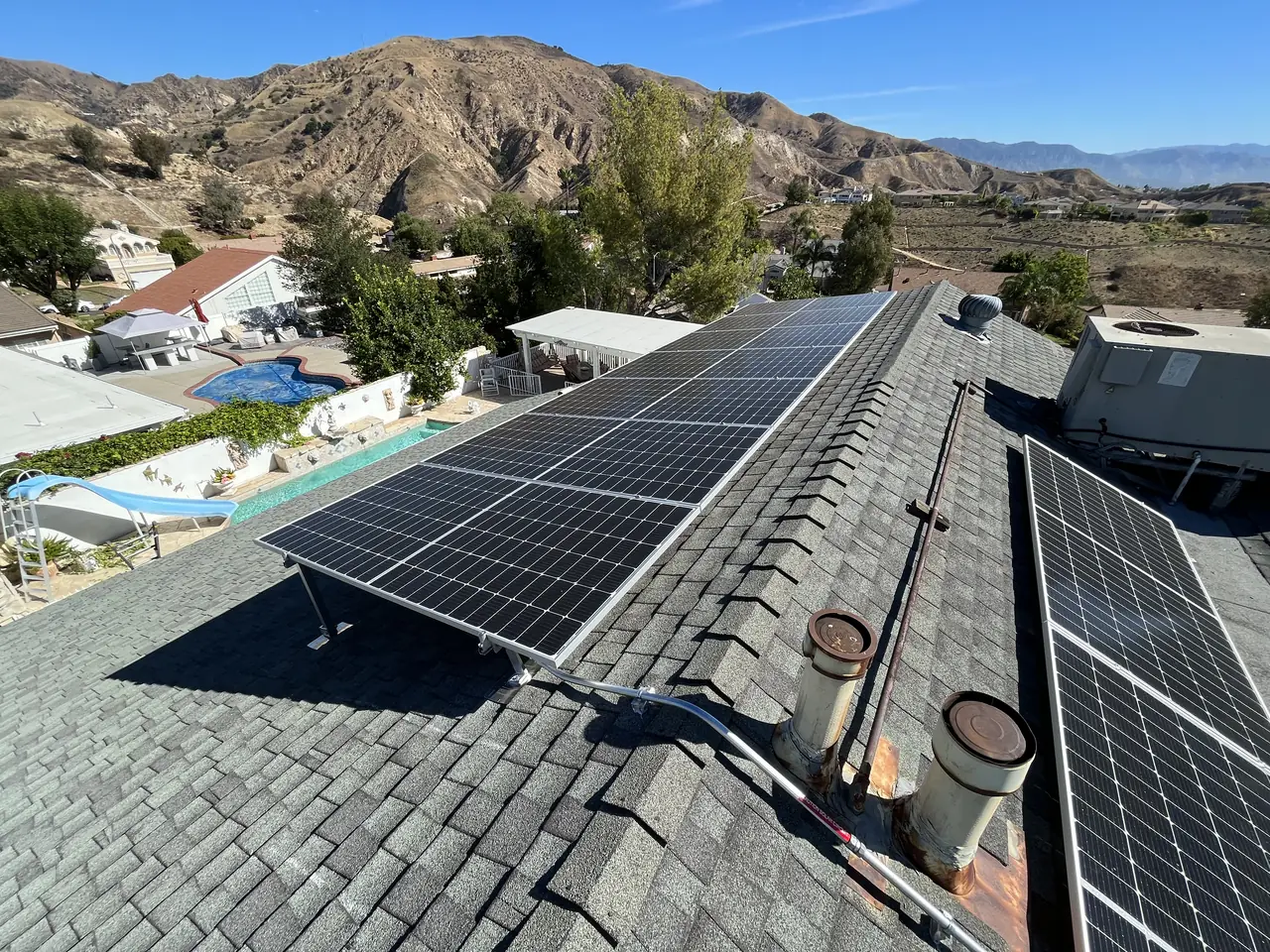
A 4.015-kilowatt CEC-AC SolarEdge system on a single-story Tarzana house, designed in December 2018, permitted in January 2019 and paid out under the LADWP Solar Incentive Program that May. Six years later it was producing well below capacity, the monitoring showed no fault, and the manufacturer would not replace anything without one.
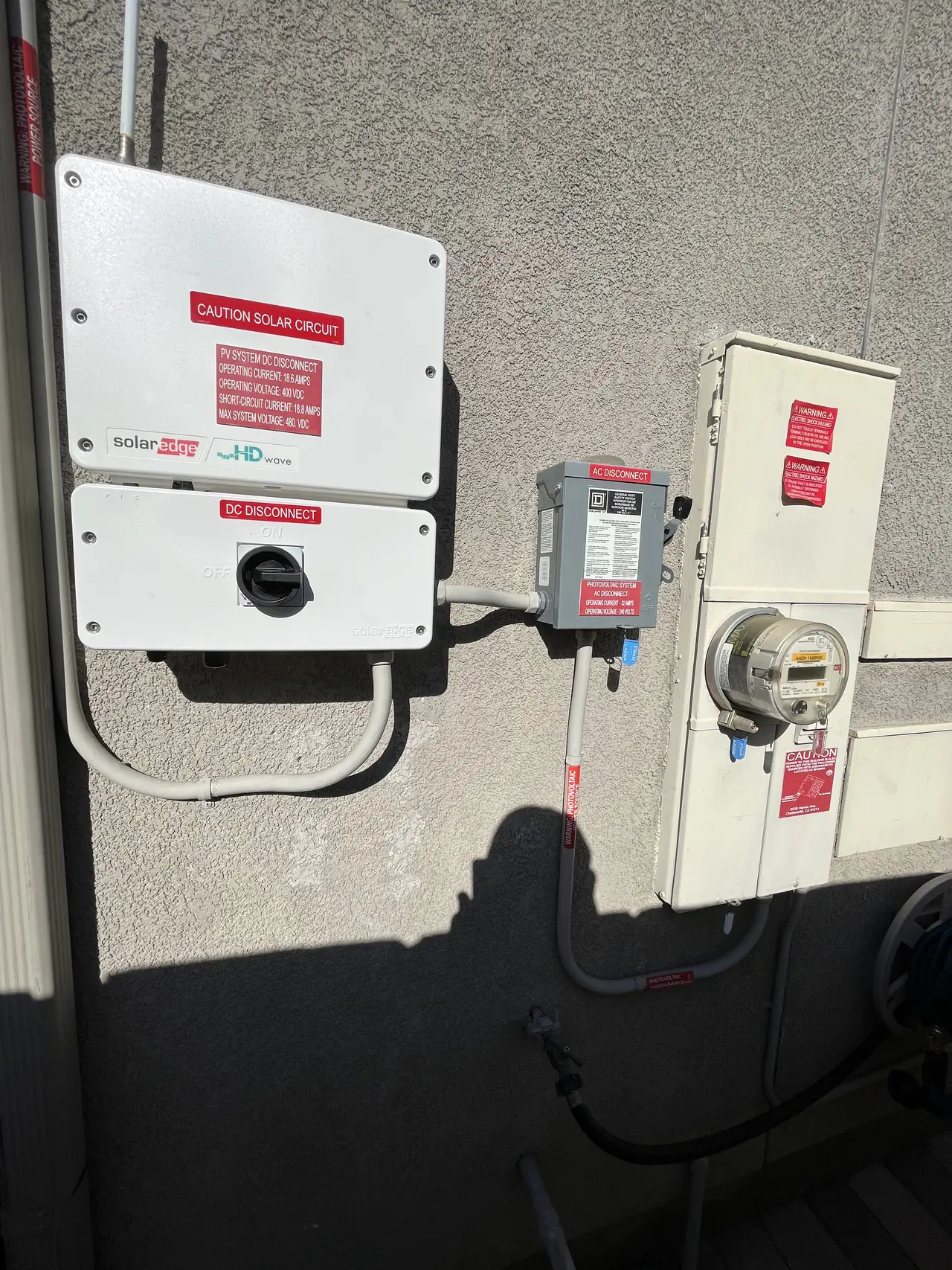
A manufacturer issues a replacement against an error code. When a system underproduces without one, the only way forward is measurement on site: DC voltage at the inverter, string by string, by a technician who can compare what the array should be giving with what it is. On this Tarzana system, which Cali Energy installed in 2019, a Cali Energy technician made those measurements, corrected the fault, and moved the monitoring gateway closer to the inverter so the platform would see the data it had been missing.
At a glance
- System
- 4.015 kW CEC-AC
- Inverter
- SolarEdge, with power optimizers
- Installed
- 2019
- Incentive
- LADWP Solar Incentive Program reservation, paid May 2019
- Service call
- April 2025, six years after installation
- Fault reported
- Underproduction, no error code
- Resolved
- On site; confirmed nine days later
- Utility / AHJ
- LADWP / LADBS
The story
The system went in at the tail end of the utility's incentive years. Plans were drawn in December 2018, the permit was issued in January 2019, the placards went on in February, and the LADWP Solar Incentive Program approved the incentive payment on the tenth of May 2019, which is the program's way of saying the system was inspected, metered and running. A SolarEdge inverter with an optimizer under each module, 4.015 kilowatts CEC-AC as the program recorded it.
Six years later the owner's household noticed the production was low. Not zero: the system was running, the inverter's display was normal, and a power cycle a month earlier had changed nothing. The manufacturer's support desk looked at the portal, found no error code and no fault event, and declined to issue a replacement: a warranty replacement is issued against a fault, and the system had not reported one.
That is the trap with an underproducing inverter. The monitoring reports what the electronics know about themselves. It does not know what the array should be producing on a given afternoon; it only knows what came through. A system producing at sixty percent and a system producing at a hundred look the same on the status page if nothing has tripped.
The way through is a measurement. The request came in on the tenth of April 2025 and a technician was on the roof and at the inverter on the eleventh, with the household home. The manufacturer's instruction was to measure DC voltage at the inverter, and that is where the visit started: what each string was delivering against what its optimizers should have been passing.
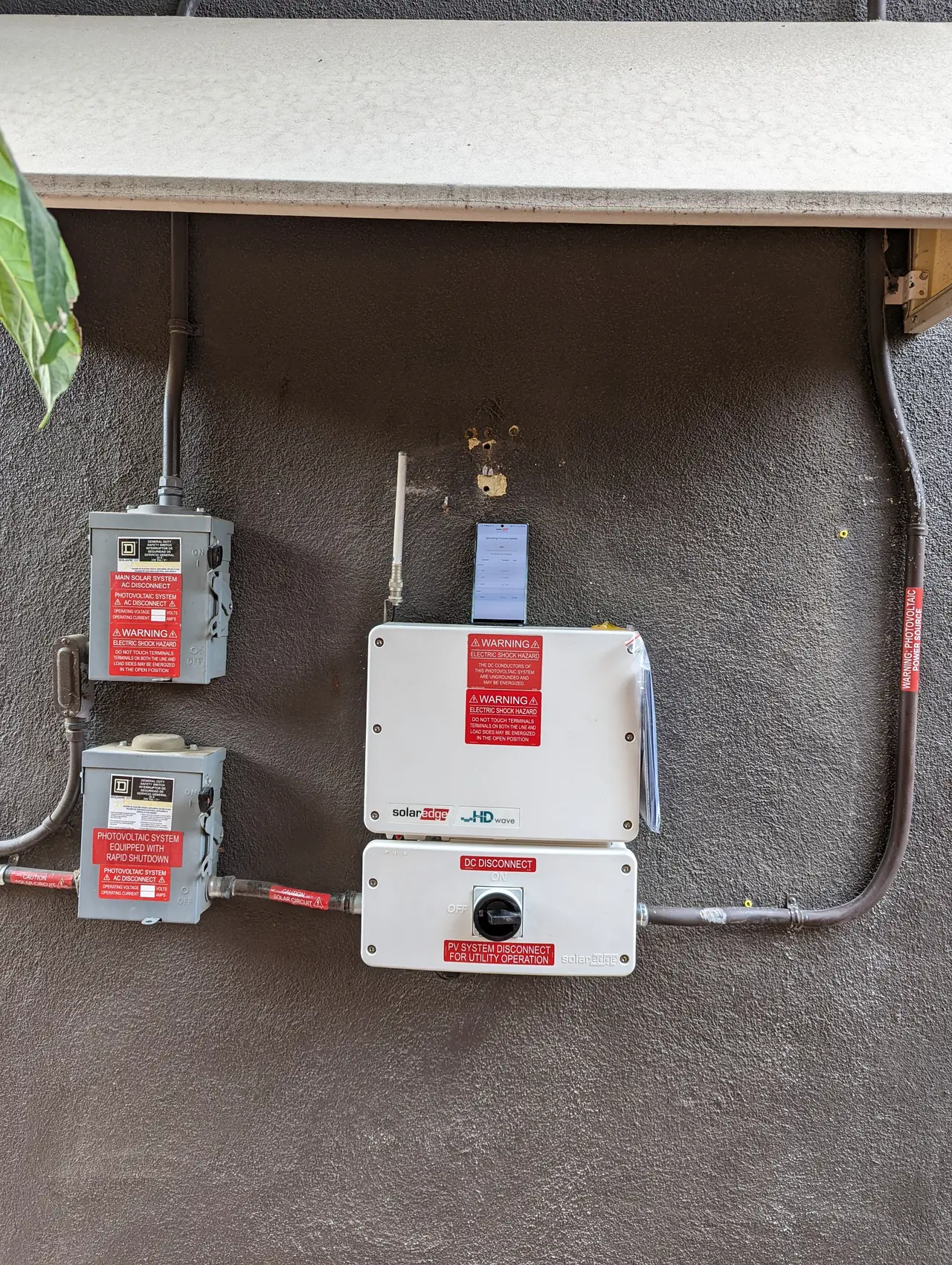
The measurements on the eleventh located the fault. The technician returned on the fifteenth and corrected it. In the same visit the Zigbee gateway that links the inverter to its monitoring was moved closer to the inverter, because the data reaching the manufacturer's platform had been incomplete, which is part of why the portal had nothing to say. Nine days later, on the twenty-fourth, production was checked again and was normal.
Two things to take from it. A system that underproduces without an error code is still a service call, and the person to call is an installer who will measure rather than a support desk that can only read. And a monitoring gateway that is too far from the inverter hides problems as effectively as no monitoring at all, because a portal showing stale data looks a great deal like a portal showing good news.
How it ran
| December 2018 | Plans issued |
|---|---|
| January 2019 | Solar permit issued |
| February 2019 | Placards and site map issued |
| 10 May 2019 | LADWP Solar Incentive Program payment approved |
| 10 April 2025 | Underproduction reported; manufacturer finds no error code |
| 11 April 2025 | Technician on site; DC measurements at the inverter locate the fault |
| 15 April 2025 | Second visit: fault corrected; monitoring gateway relocated closer to the inverter |
| 24 April 2025 | Production confirmed normal |
This timeline reflects this property and this equipment: a SolarEdge system with optimizers, where the fault was found by measurement on site rather than reported by the inverter.
What we did
- Designed, permitted and installed the system in 2018–19 and carried it through the LADWP Solar Incentive Program to payment.
- Took the 2025 service request and had a technician on site the next day.
- Measured DC voltage at the inverter to find what the monitoring could not report.
- Corrected the fault on site.
- Moved the Zigbee monitoring gateway closer to the inverter so the platform receives complete data.
- Rechecked production nine days later and confirmed it normal.
System specifications
| System | 4.015 kW CEC-AC |
|---|---|
| Inverter | SolarEdge string inverter with power optimizers |
| Monitoring | SolarEdge platform via Zigbee gateway |
| Installed | 2019 |
| Incentive | LADWP Solar Incentive Program |
| Service | April 2025: on-site DC measurement, fault corrected, gateway relocated |
| Battery | None |
| Utility / AHJ | LADWP / LADBS |
Is your project like this one?
- Your system is five or more years old and producing less than it used to.
- The manufacturer's portal shows no fault and support will not issue a replacement.
- You have a SolarEdge inverter and are not sure the monitoring is seeing everything.
- Your system went in under the LADWP incentive program and the original installer is the one you want back.
- Your Tarzana property is served by LADWP, while permits are handled by LADBS.
Cali Energy in Tarzana
Tarzana is inside City of Los Angeles boundaries: permits run through LADBS, interconnection through LADWP.
Tarzana is a neighborhood in the southwestern San Fernando Valley, inside the City of Los Angeles, served by LADWP. The utility's Solar Incentive Program paid rebates on residential systems here until its funding closed.
This installation is on the Tarzana projects page alongside the others, and what the work covers is set out on the Tarzana service area page.
- License and classifications: CSLB #1032379
- Official reference for this process: LADWP interconnection requirements
Frequently asked questions
Why would the manufacturer not replace the inverter?
Because there was nothing on their side to replace it against. Warranty replacements are issued for a reported fault, and this inverter had reported none: no error code, no event in the log, a normal display. Underproduction on its own is not a fault the electronics can see. That is why the manufacturer's own instruction was to have a technician measure DC voltage at the inverter.
What does the technician actually measure?
DC voltage at the inverter's inputs, which on an optimizer system tells you what each string is delivering, compared with what that string's modules should be giving in the conditions on the day. The gap between those two numbers, and where in the array it sits, is what the portal cannot show. The visit here found the fault that way and corrected it on site.
Why move the monitoring gateway?
The Zigbee gateway carries the inverter's data to the manufacturer's platform. When it sits too far from the inverter, data arrives in gaps, and a portal with gaps in it reports less than it knows and looks healthier than the system is. Moving the gateway closer to the inverter here restored a complete feed, which is what makes the monitoring worth having.
Does a six-year-old system still get serviced by the original installer?
Yes. This one was designed, permitted and installed in 2018–19 and the same company took the call in 2025, had a technician on site the next day and confirmed the fix nine days later. An installer still in business in the same area is the shortest path to a system's history and to the person who knows its layout.
What this would look like on your roof
Planning solar in Tarzana? Tell us your utility, your roof and what your bill looks like now, and we will model what a system like this would do on your house before you commit to anything.
Or call +1 (323) 844-7777 · Cali Energy, Northridge · CSLB #1032379 (B, C-10, C-39) — design, permits, install and electrical under one licensed contractor.
Related
This timeline reflects this property and this permitting path. Updated September 2026.