

North Hollywood, CA · December 2021 · LADWP / LADBS
Swapping the inverter is the quick part.
A replacement inverter fitted under a manufacturer authorisation, then the checks that prove it is genuinely working — and a cellular modem because the house had no wi-fi worth using.
Replacing an inverter is a morning's work. Proving it is right takes a defined set of readings: every optimiser communicating, an insulation test with no fault, the inverter reporting a production status with real output behind it, and the monitoring back online. Those are separate checks that answer separate questions — and skipping the last one leaves an owner with a working system they cannot see.
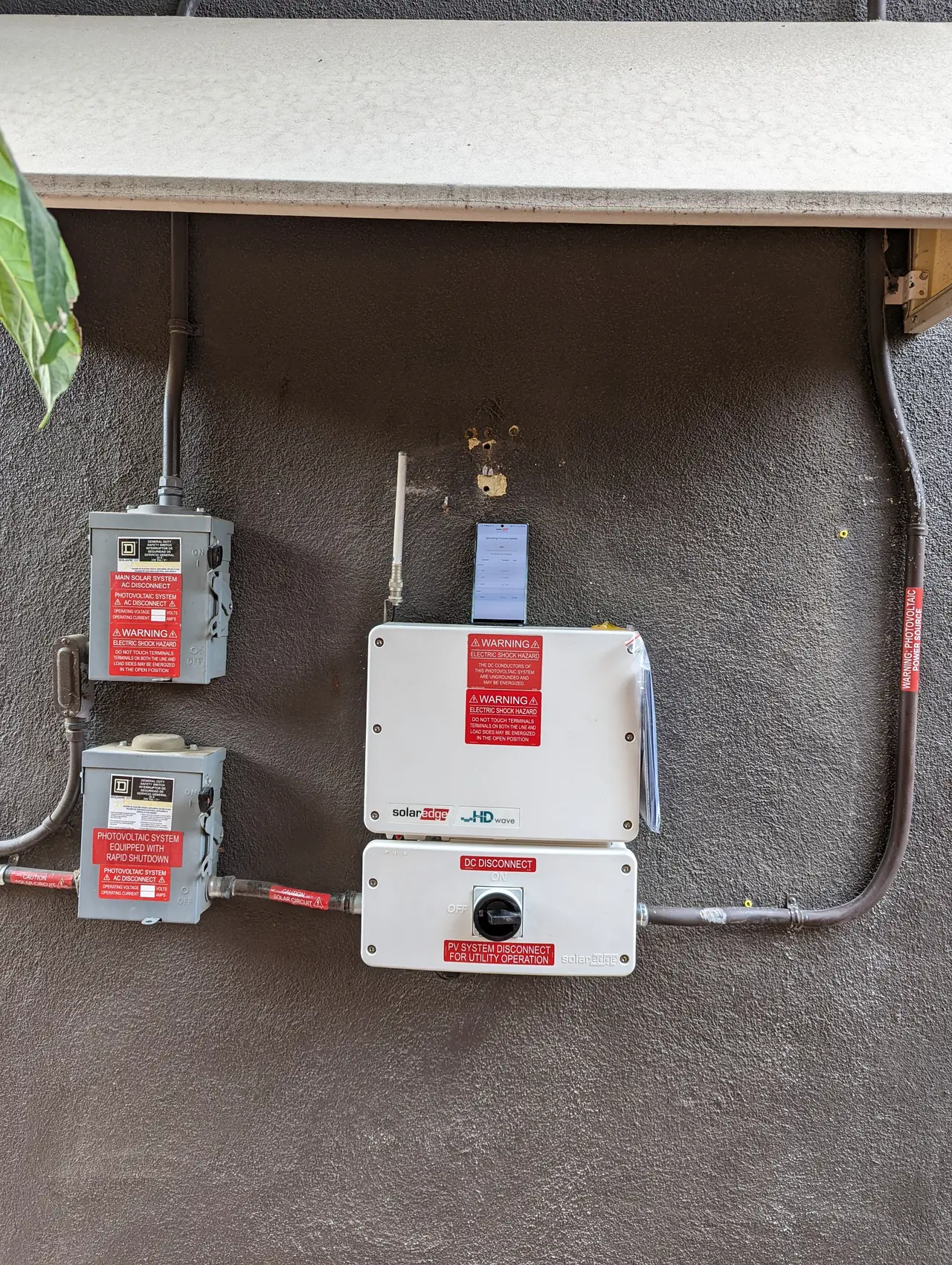
At a glance
- Work
- Inverter replacement
- Route
- Manufacturer authorisation
- Optimisers
- 17 of 17 communicating
- Insulation test
- 11,000 kOhm — no fault found
- Inverter status
- Production, 511 W at the moment of the check
- Grid
- 241 V, 60 Hz
- Monitoring
- Cellular link, not wi-fi
- Utility / AHJ
- LADWP / LADBS
The story
This was a service call rather than an installation: the inverter on an existing system had to be replaced, under an authorisation from the manufacturer. The authorisation number is also what the labour claim is paid against, so it has to exist before anybody is dispatched, not afterwards.
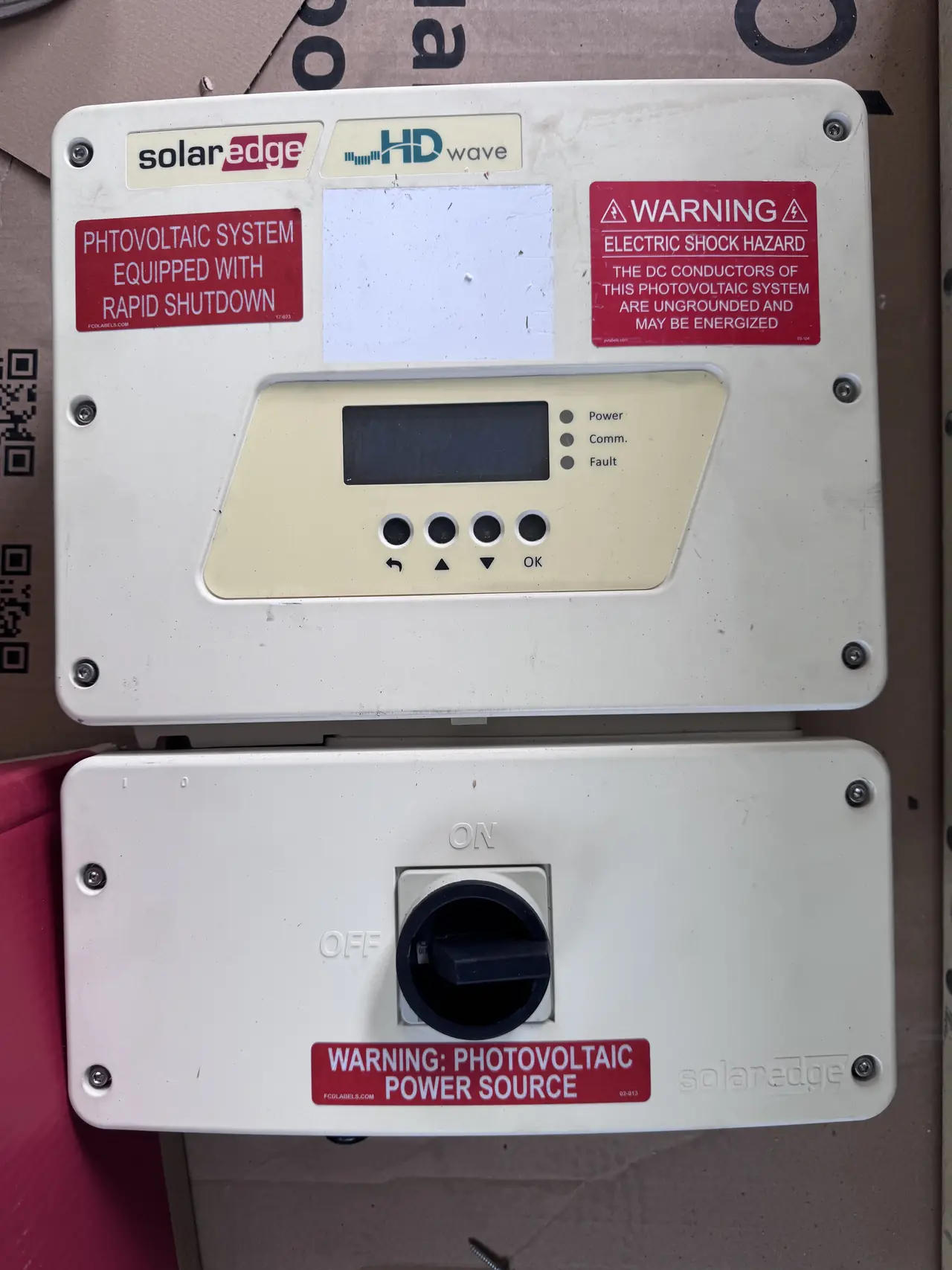
The physical swap is the quick part. What takes the rest of the visit is proving the system is genuinely back, and on a system with per-module electronics that is a specific list rather than a look at a screen.
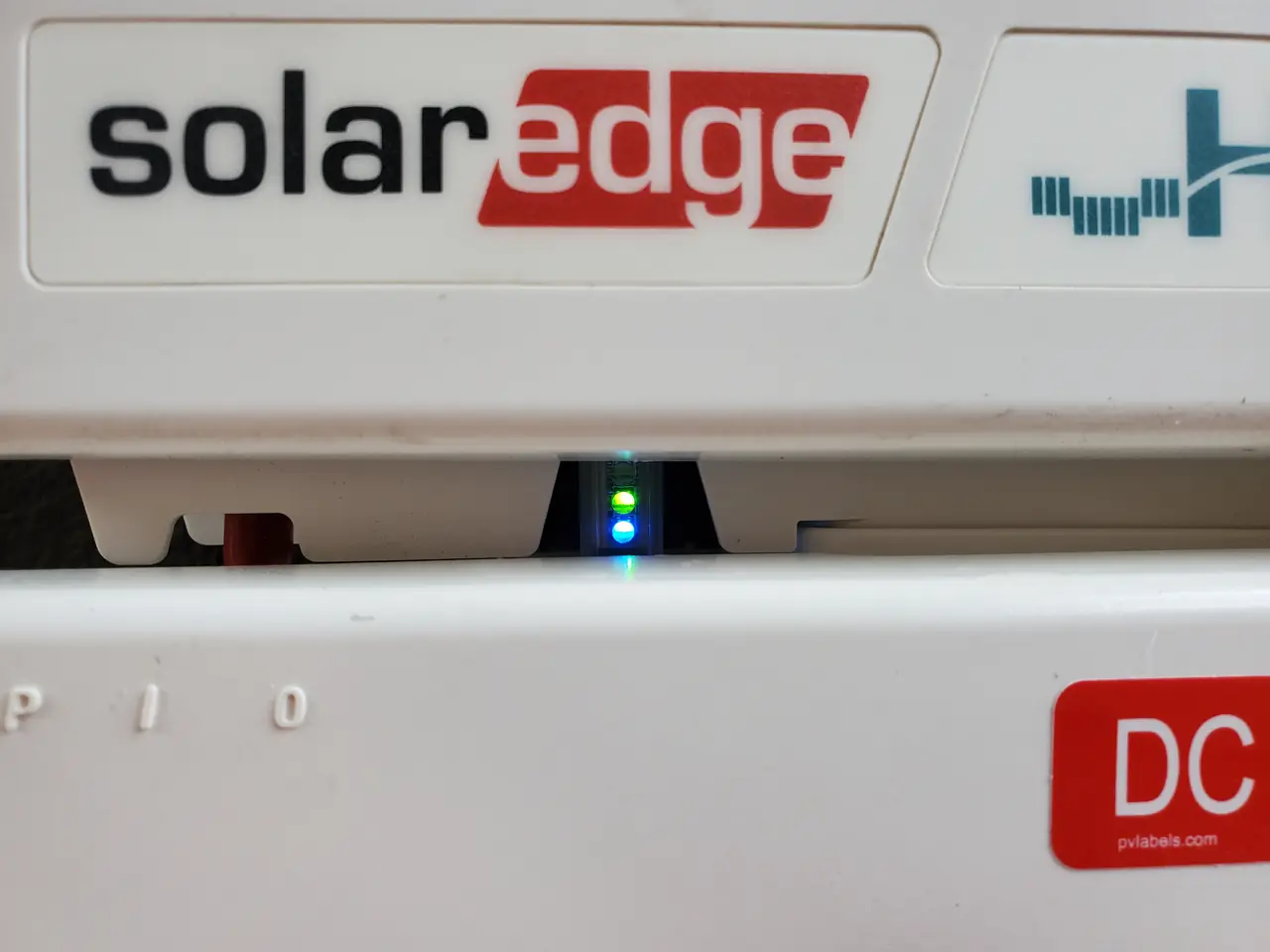
Every optimiser has to be found. On this roof that meant seventeen devices, and the commissioning tool reported seventeen of seventeen, none missing.
Read that count for exactly what it is, because it is easy to over-read and we have done so ourselves. The tool's own wording is optimisers communicating. It is a roll-call: every device answered when the inverter asked. It is not a measurement of what any of them are producing. An optimiser that has dropped off the roll-call may be a module making nothing, or it may be a module working perfectly behind a communications fault. The two need separating, and the manufacturer separates them deliberately.
The production question is answered elsewhere on the same screen. The inverter reported a status of production, 511 watts at that moment, 241 volts and 60 hertz on the alternating-current side. A mid-afternoon reading on a December day is not an annual yield, but it is the difference between a unit that is energised and a unit that is generating.
Then an insulation test across the array, which looks for current leaking where it should not — a damaged cable, water in a connector, a compromised module. This one read eleven thousand kilohms and returned no fault found. That is a number you can ask to see, and a number worth keeping.
Then pairing, device activation, and a firmware check on the controller and the meter. None of it is dramatic and all of it is the difference between a system that is on and a system that is right.
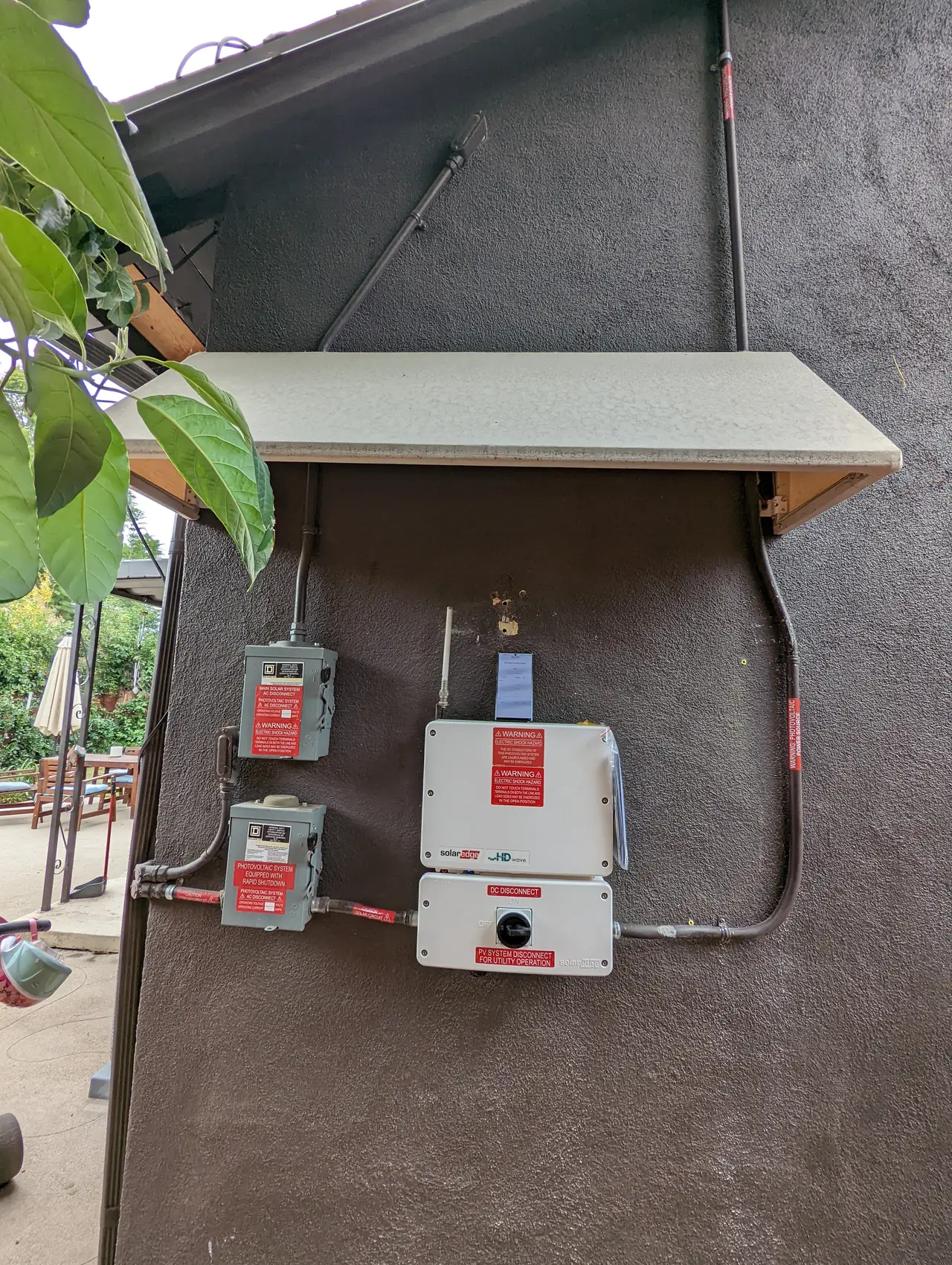
The last step is the one that fails most often, and it failed here in the ordinary way: the house did not have wi-fi the equipment could reliably use. Rather than leave the monitoring disconnected — which is what usually happens, and which the owner discovers months later — a cellular plug-in module with its own data plan was fitted to the inverter. The commissioning screen confirmed it afterwards: server communication in order, over cellular.
That is worth knowing about as an option. Monitoring over the household wi-fi is free and fragile: it drops when the router is replaced, when the password changes, when the equipment is too far from the house. A cellular link costs something and does not care about any of that. On a system where nobody is going to notice a quiet inverter for months, it is usually the better answer.
If you are having an inverter replaced, ask for the commissioning readings rather than a thumbs-up: how many optimisers answered against how many are installed, what the insulation test read, what the inverter's status and output were when the engineer left, and how the monitoring is connected now. Four questions, four numbers — and a competent visit produces all four without being asked twice.
How it ran
| December 2021 | Inverter replacement requested; manufacturer authorisation number obtained |
|---|---|
| Service visit | Inverter replaced |
| Same visit | 17 of 17 optimisers answering the roll-call |
| Same visit | Insulation test across the array — 11,000 kOhm, no fault |
| Same visit | Inverter reporting production at 511 W, 241 V, 60 Hz |
| Same visit | Pairing, device activation and firmware confirmed |
| Same visit | Cellular monitoring fitted; server communication confirmed |
The swap takes an hour. The proof takes the afternoon.
What we did
- Obtained the manufacturer authorisation before dispatching, so the labour claim had something to be paid against.
- Replaced the inverter and re-paired the system.
- Confirmed all seventeen optimisers answered the inverter.
- Checked production separately from communication, and recorded both.
- Ran an insulation test across the array and recorded the reading.
- Checked controller and meter firmware after activation.
- Fitted a cellular monitoring module because the site had no reliable wi-fi.
System specifications
| Work | Inverter replacement under manufacturer authorisation |
|---|---|
| System | String inverter with per-module power optimisers |
| Optimisers | 17, all communicating after the replacement |
| Insulation | 11,000 kOhm; no fault found |
| Inverter status | Production — 511 W, 241 V, 60 Hz at the check |
| Commissioning | Pairing, device activation, controller and meter firmware confirmed |
| Monitoring | Cellular plug-in module with its own data plan |
| Utility / AHJ | LADWP / LADBS |
Is your project like this one?
- Your inverter has been replaced and you want to know it was done properly.
- Your monitoring keeps dropping off your home wi-fi.
- Your equipment is too far from the house for a reliable signal.
- You have optimisers and one of them has stopped reporting.
- You want the commissioning numbers rather than a verbal all-clear.
Cali Energy in North Hollywood
North Hollywood is inside City of Los Angeles boundaries: permits run through LADBS, interconnection through LADWP.
Service calls on older systems here usually end the same way: the hardware is easy, and getting the thing back onto a network is the part that takes the afternoon.
This installation is on the North Hollywood projects page alongside the others, and what the work covers is set out on the North Hollywood service area page.
- License and classifications: CSLB #1032379
- Official reference for this process: CSLB — check a contractor's license
- Official reference for this process: California Energy Commission — solar equipment lists
Frequently asked questions
What should be checked after an inverter is replaced?
That every optimiser or microinverter answers, that an insulation test across the array shows no fault, that the inverter reports a production status with real output behind it, and that the monitoring is back online. On this system that was seventeen of seventeen devices, 11,000 kilohms with no fault, and 511 watts at 241 volts.
Does a non-reporting optimiser mean that panel is producing nothing?
Not necessarily, and this is the most common misreading of a monitoring screen. The count is of optimisers communicating — a roll-call, not a production measurement. A device can drop off the roll-call because of a communications fault while the module behind it keeps working. It needs investigating either way, but it is not by itself proof of lost output.
What is an insulation test looking for?
Current leaking where it should not — a damaged cable, moisture in a connector, a compromised module. A high reading means the array is electrically sound. It is worth asking for the number.
My monitoring keeps disconnecting. What are my options?
Household wi-fi is free and fragile: it drops when the router changes, the password changes, or the equipment is too far from the house. A cellular module with its own data plan plugs into the inverter and is independent of all that. It costs something and it is often worth it.
Does monitoring matter if the system is producing?
It is how anybody finds out when it stops. A system with no working monitoring can sit at partial output for months with nobody aware — and partial output is exactly the failure that never announces itself.
Why does the authorisation number matter before the visit?
Because it is what the labour claim is paid against. Obtaining it after the work is done is how a covered repair turns into an uncovered one.
Does Cali Energy service systems it did not install?
Yes, including inverter replacements and monitoring. Cali Energy holds B, C-10 and C-39 classifications under CSLB #1032379.
What this would look like on your roof
Planning solar in North Hollywood? Tell us your utility, your roof and what your bill looks like now, and we will model what a system like this would do on your house before you commit to anything.
Or call +1 (323) 844-7777 · Cali Energy, Northridge · CSLB #1032379 (B, C-10, C-39) — design, permits, install and electrical under one licensed contractor.
Related
This timeline reflects this property and this permitting path. Updated September 2026.