

Sherman Oaks, CA · August – September 2025 · LADWP / LADBS
He asked for six panels.
A Sherman Oaks homeowner came to us with the system size already decided: six panels, the same as on another property of his. His own electricity bills said something different, and the site visit changed the design again.
System size comes from measured annual consumption and from what the roof can actually do, not from what a system on another property happens to be.
At a glance
- DC System
- 5.34 kW
- Modules
- 12 × 445 W
- Inverters
- 12 × Enphase IQ7A
- Roof
- Low slope, tilt racking
- Azimuth
- 185° — south
- Est. first-year output
- 7,995 kWh
- Consumption offset
- 143%
- App → meter
- 29 calendar days
The story
The request was specific and came with its own answer attached: 2.67 kilowatts, six panels, the same as on another property he owned. The house is around 2,600 square feet, but, he said, most of it is not really used.
We asked for the bills instead. They showed 500 to 700 kilowatt-hours a month — roughly 5,600 kilowatt-hours a year. Seven panels would have covered about 67 percent of that. Six would have covered less.
What followed was a conversation about numbers rather than a sale. Ten panels, then the full recommended size, then the price. We were straightforward about the calendar too: permitting and installation are the quick part, and the wait is on the utility afterwards.
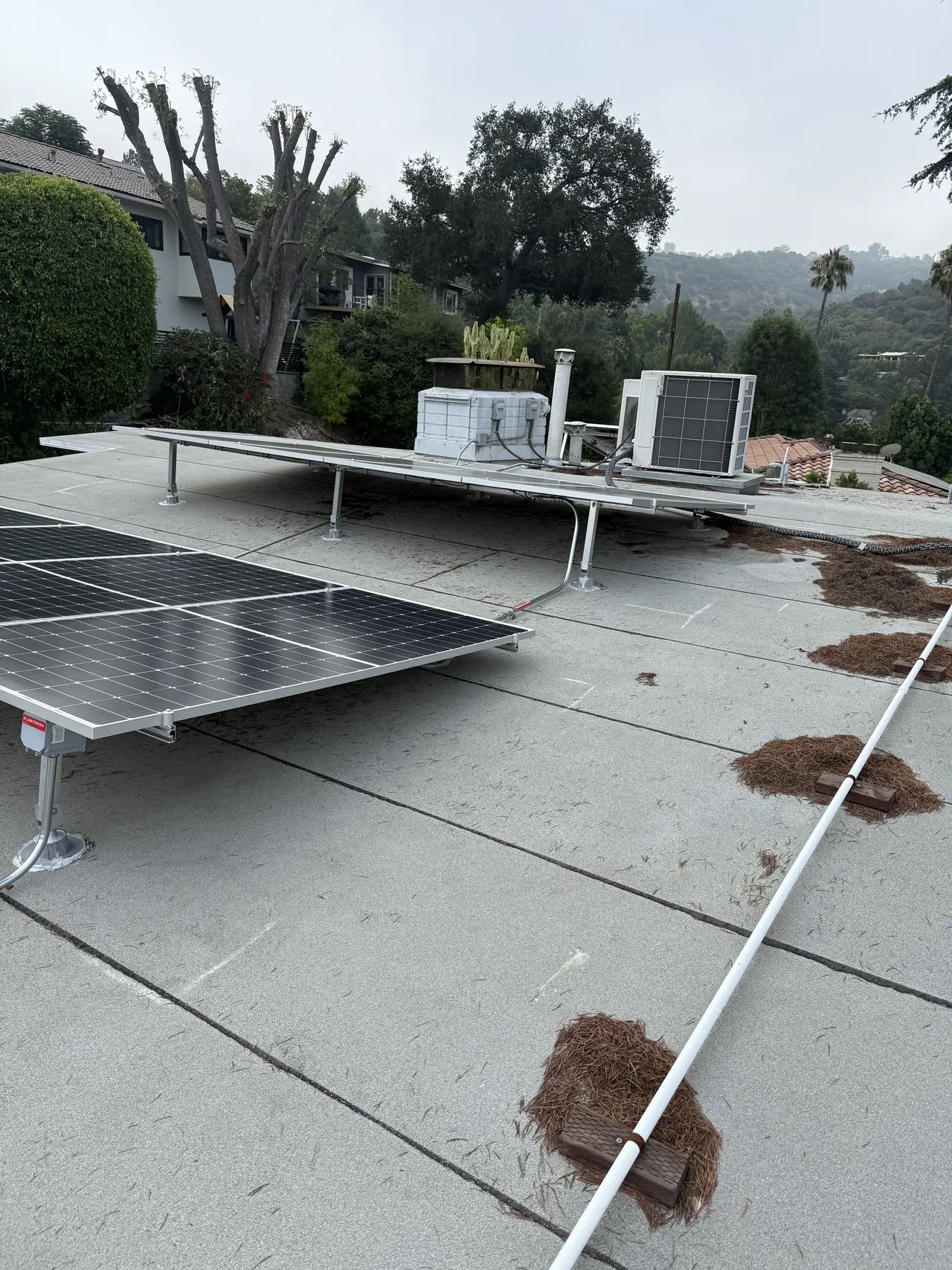
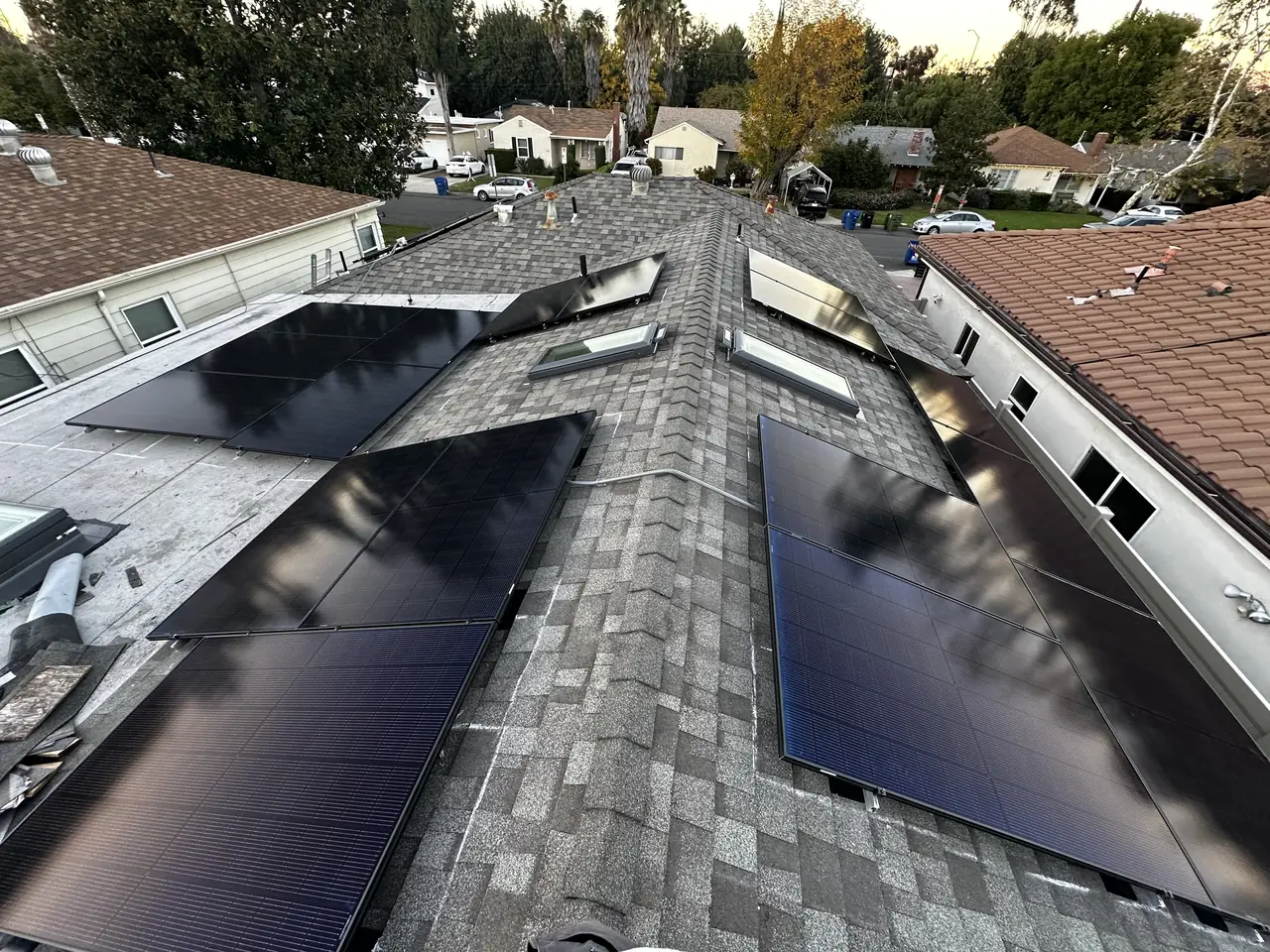
Then the site visit changed the design, and not in the direction anyone expects. The recommended system size came down, because the better place for the array turned out to be the opposite side of the roof, tilted up off a low slope to face south rather than left flat where it was first drawn.
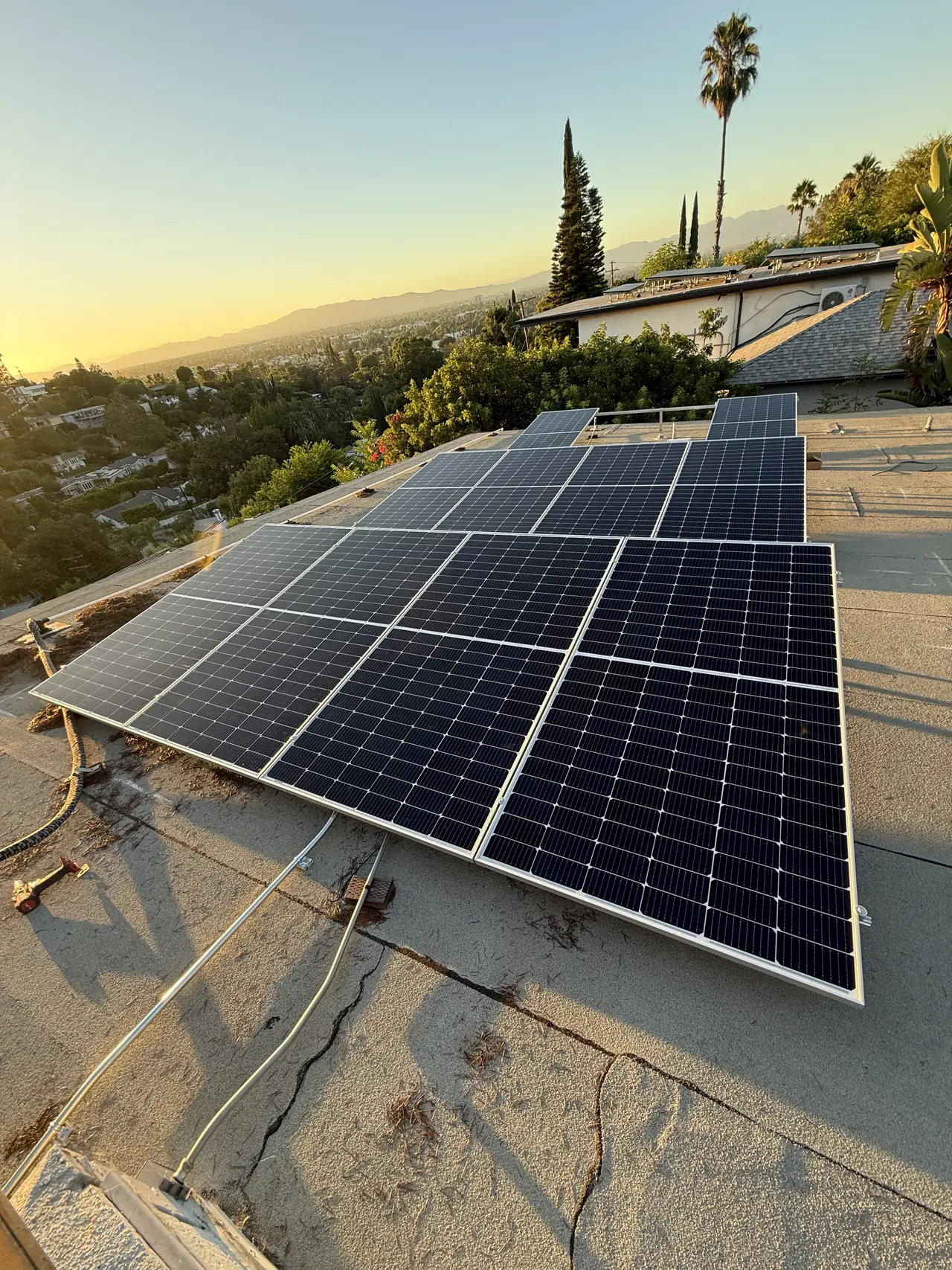
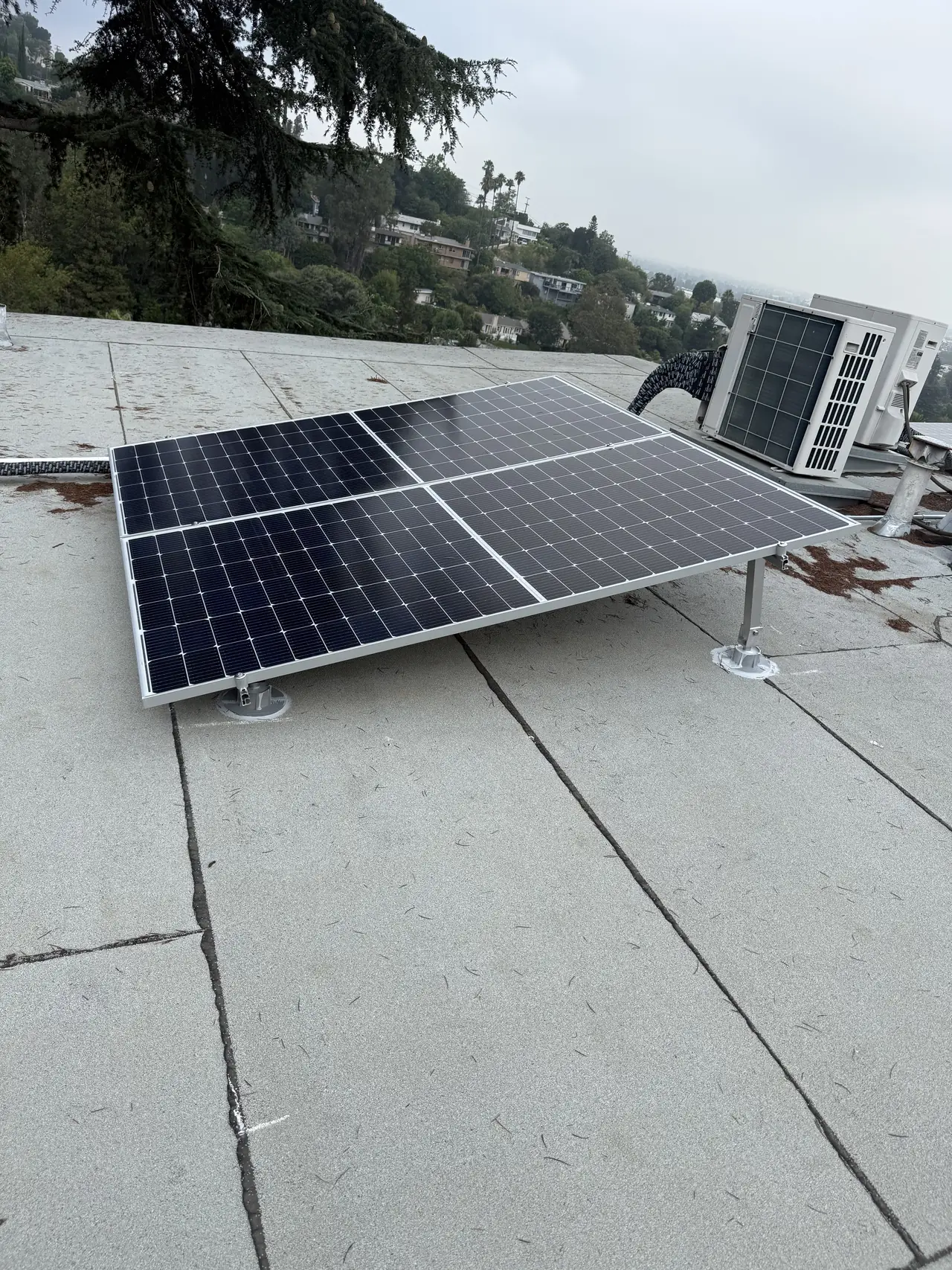
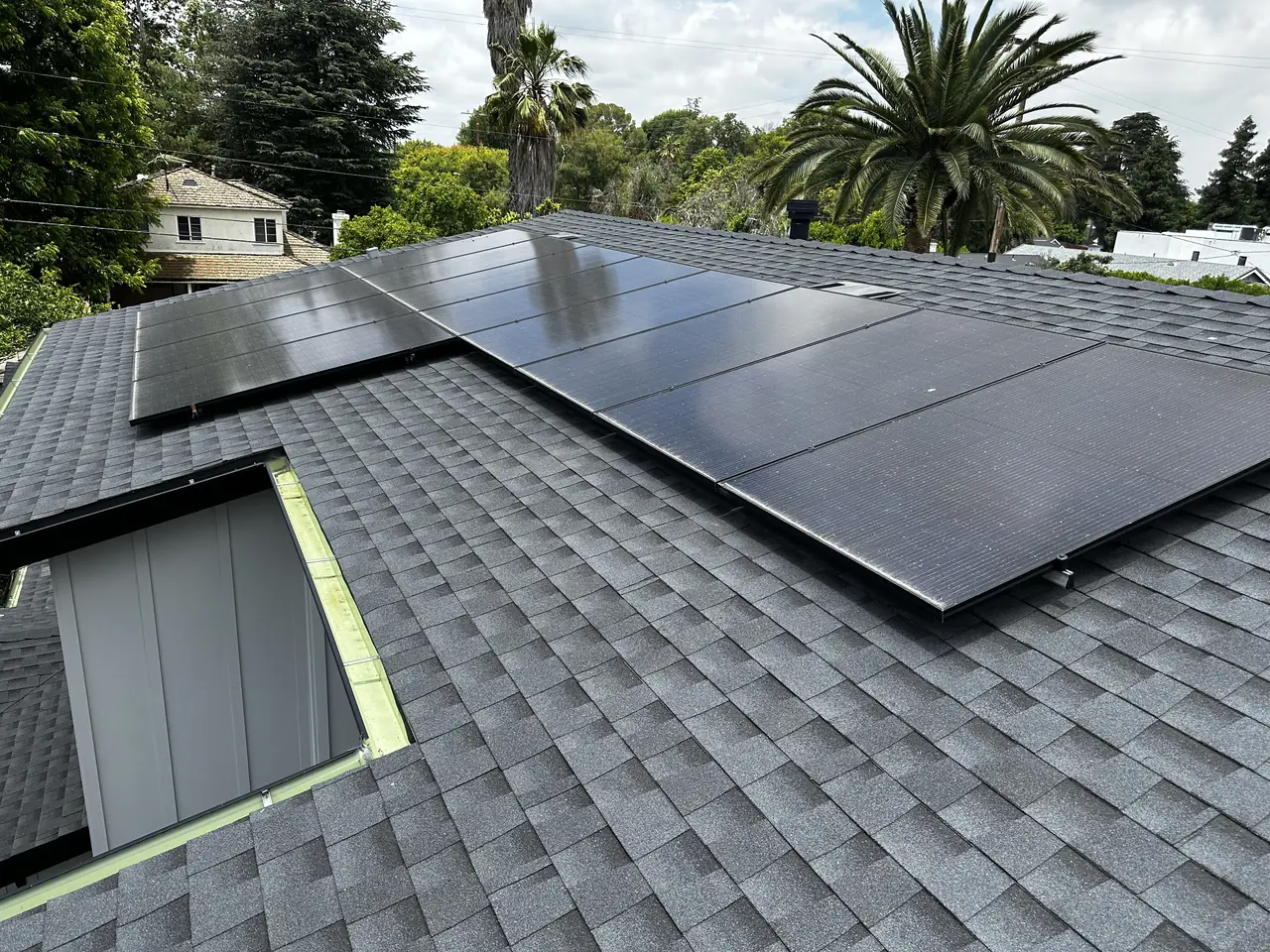
The system that got built is twelve Canadian Solar 445-watt modules on twelve Enphase IQ7A microinverters — 5.34 kilowatts DC in three sub-arrays of five, five and two, all at 185 degrees and tilted a couple of degrees up off the roof.
Its estimated first-year production is 7,995 kilowatt-hours against roughly 5,600 used — an offset of 143 percent. That is deliberately above current consumption, and it was the owner's call: he asked to keep the larger system rather than trim it back to what the bills alone would justify. What the bills did was establish the floor. Six or seven panels were below it; where above it to stop was a decision, not a calculation.
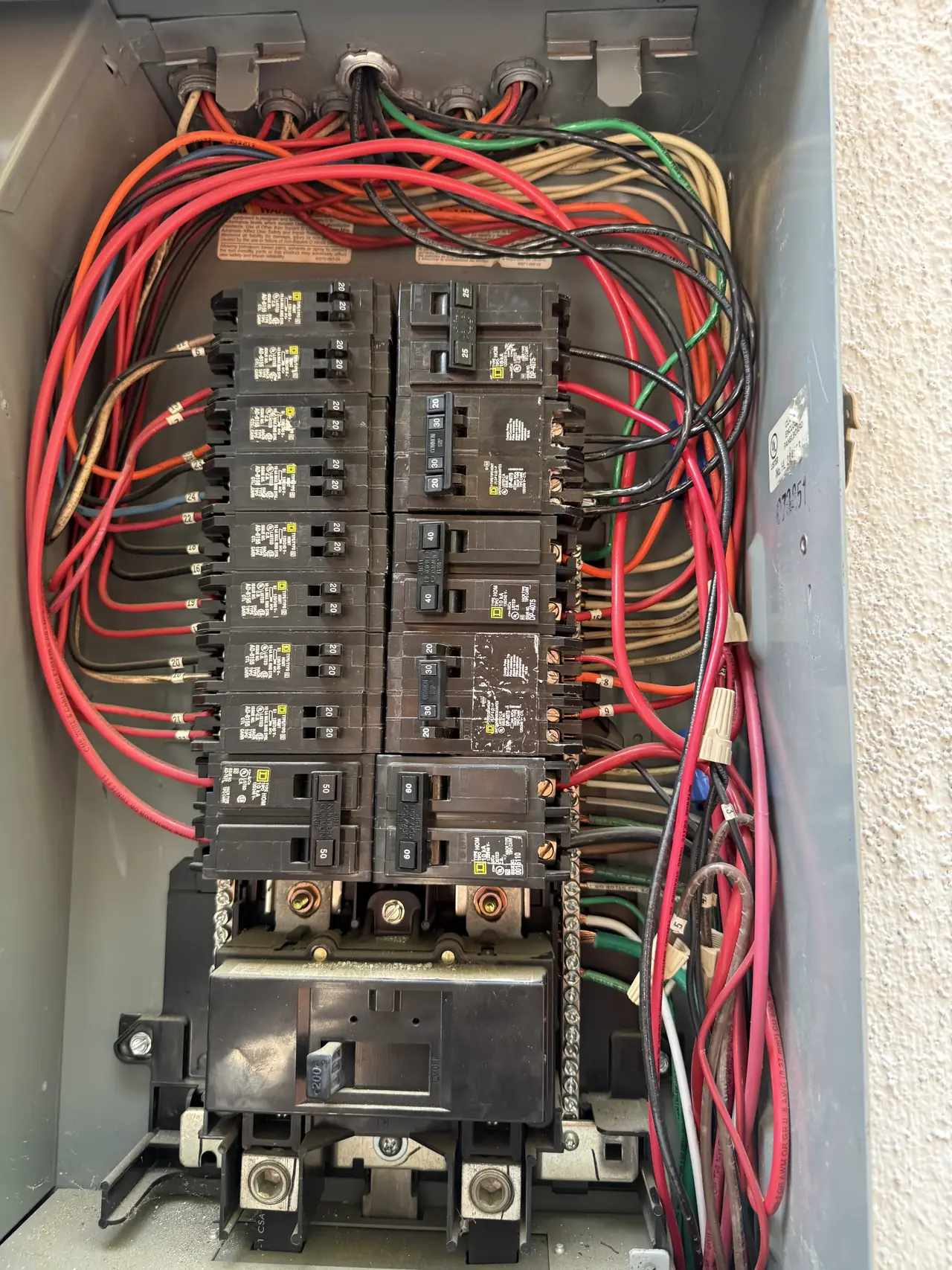
Contract in mid-August, interconnection application the following week, building department release at the end of the month, meter set in mid-September. Twenty-nine calendar days from application to meter. Monitoring was handed over before the system was switched on, so the production could be watched from the first day it ran.
How it ran
| 6 August 2025 | First enquiry; consumption history requested |
|---|---|
| 7 August 2025 | Estimate issued — seven panels would offset 67% |
| 12 August 2025 | Site visit; array moved to the opposite roof plane and tilted south |
| 12 August 2025 | Contract signed |
| 18 August 2025 | Interconnection application filed |
| 27 August 2025 | Monitoring account handed to the owner |
| 28 August 2025 | Building department final release |
| 16 September 2025 | Net meter set |
The 29 days run from the interconnection application to the net meter and cover permitting, installation, inspection and utility processing rather than time spent on the roof.
What we did
- Asked for twelve months of consumption before quoting a system size.
- Showed what the requested six- and seven-panel systems would actually offset.
- Moved the array to the opposite roof plane after the site visit and tilted it south.
- Installed twelve modules on tilt racking over a low-slope roof.
- Filed the interconnection application and carried it to the net meter in 29 days.
- Set up monitoring and handed the account over before the system was energised.
System specifications
| DC system | 5.34 kW |
|---|---|
| Modules | 12 × Canadian Solar CS3W-445MB-AG, 445 W |
| Inverters | 12 × Enphase IQ7A-72-2-US |
| Array layout | Three sub-arrays of 5, 5 and 2 modules |
| Orientation | 185° azimuth, tilted up off a low-slope roof |
| Estimated first-year production | 7,995 kWh |
| Measured annual consumption | About 5,600 kWh |
| Consumption offset | 143% |
| Monitoring | Enphase, handed to the owner before start-up |
| Battery | None |
| Utility / AHJ | LADWP / LADBS |
| Application → net meter | 29 calendar days |
Is your project like this one?
- You have already decided how many panels you want.
- Someone quoted you a system size without looking at your bills.
- Your roof is low slope and you have been told it is unsuitable.
- You want to know what share of your consumption a system will actually cover.
- Your Sherman Oaks property is served by LADWP, while permits are handled by LADBS.
Cali Energy in Sherman Oaks
Sherman Oaks is inside City of Los Angeles boundaries: permits run through LADBS, interconnection through LADWP.
Not every project here is a new build. Some are a house that has been standing a while and a bill that nobody has read closely.
This installation is on the Sherman Oaks projects page alongside the others, and what the work covers is set out on the Sherman Oaks service area page.
- License and classifications: CSLB #1032379
- Official reference for this process: LADWP interconnection process
Frequently asked questions
How is the right solar system size worked out?
From measured consumption and from what the roof can do. On this project the bills showed about 5,600 kilowatt-hours a year; the system that was built is estimated to produce 7,995, an offset of 143 percent. The six-panel system originally requested would not have come close. A size copied from another property has no relationship to the consumption at this one.
Can solar go on a flat or low-slope roof?
Yes. On this house the modules sit on tilt racking that lifts them off a low slope and turns them to face south at 185 degrees. The site visit is what established that this roof plane was better than the one first drawn — which is why the recommended size changed after we had been on the roof.
Does a bigger system always mean a better result?
Not automatically. What it is worth depends on the relationship between production and consumption and on the tariff the house is on. This system is estimated to produce about 143 percent of what the house currently uses — the owner asked to keep the larger design rather than trim it to the bills. That was his decision, and it is worth taking deliberately rather than by default.
Does Cali Energy design systems from consumption data in Sherman Oaks?
Yes. Sherman Oaks is inside City of Los Angeles boundaries, so permits run through LADBS and interconnection through LADWP. Asking for the bills before quoting a size is how every one of our residential designs starts here.
What this would look like on your roof
Planning solar in Sherman Oaks? Tell us your utility, your roof and what your bill looks like now, and we will model what a system like this would do on your house before you commit to anything.
Or call +1 (323) 844-7777 · Cali Energy, Northridge · CSLB #1032379 (B, C-10, C-39) — design, permits, install and electrical under one licensed contractor.
Related
This timeline reflects this property and this permitting path. Updated September 2026.