

Tarzana, CA · June 2025 – July 2026 · LADWP / LADBS
The ADU had its own address. The meter did not.
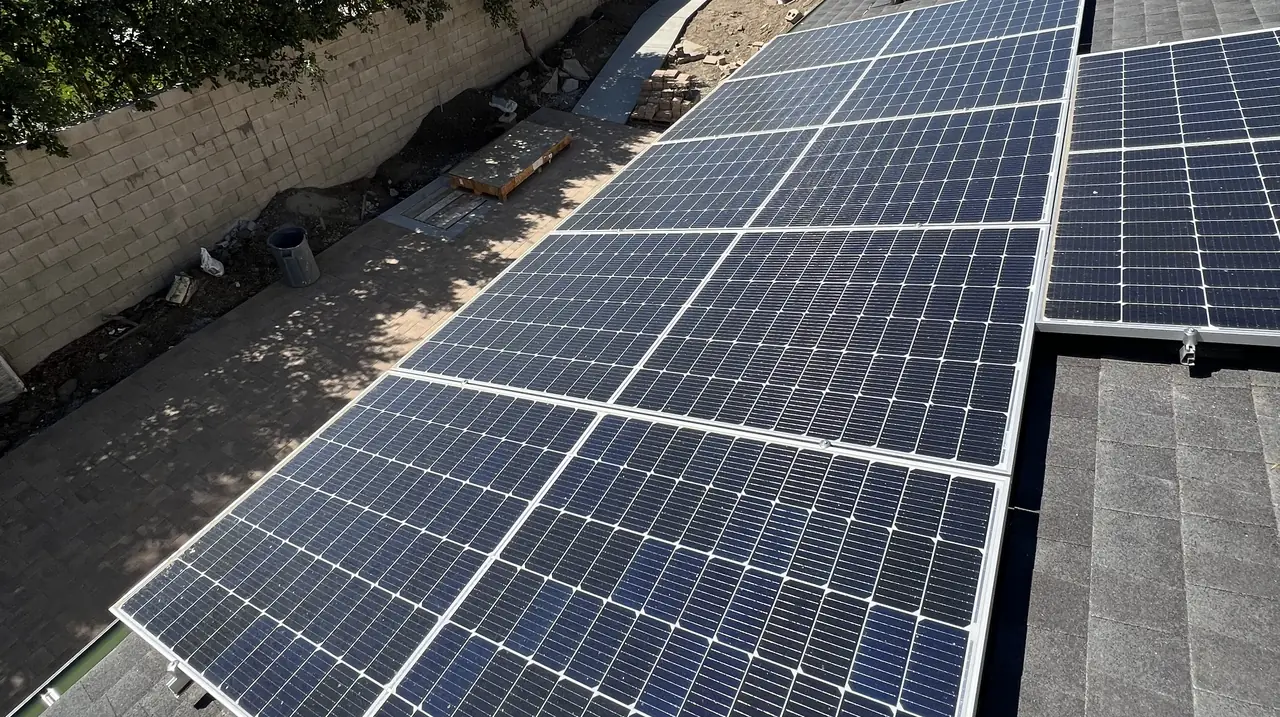
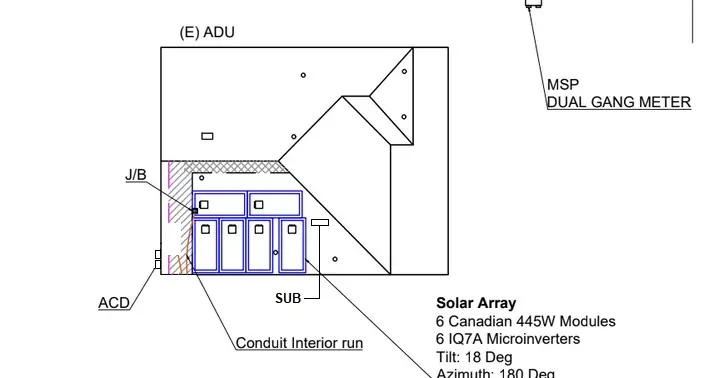
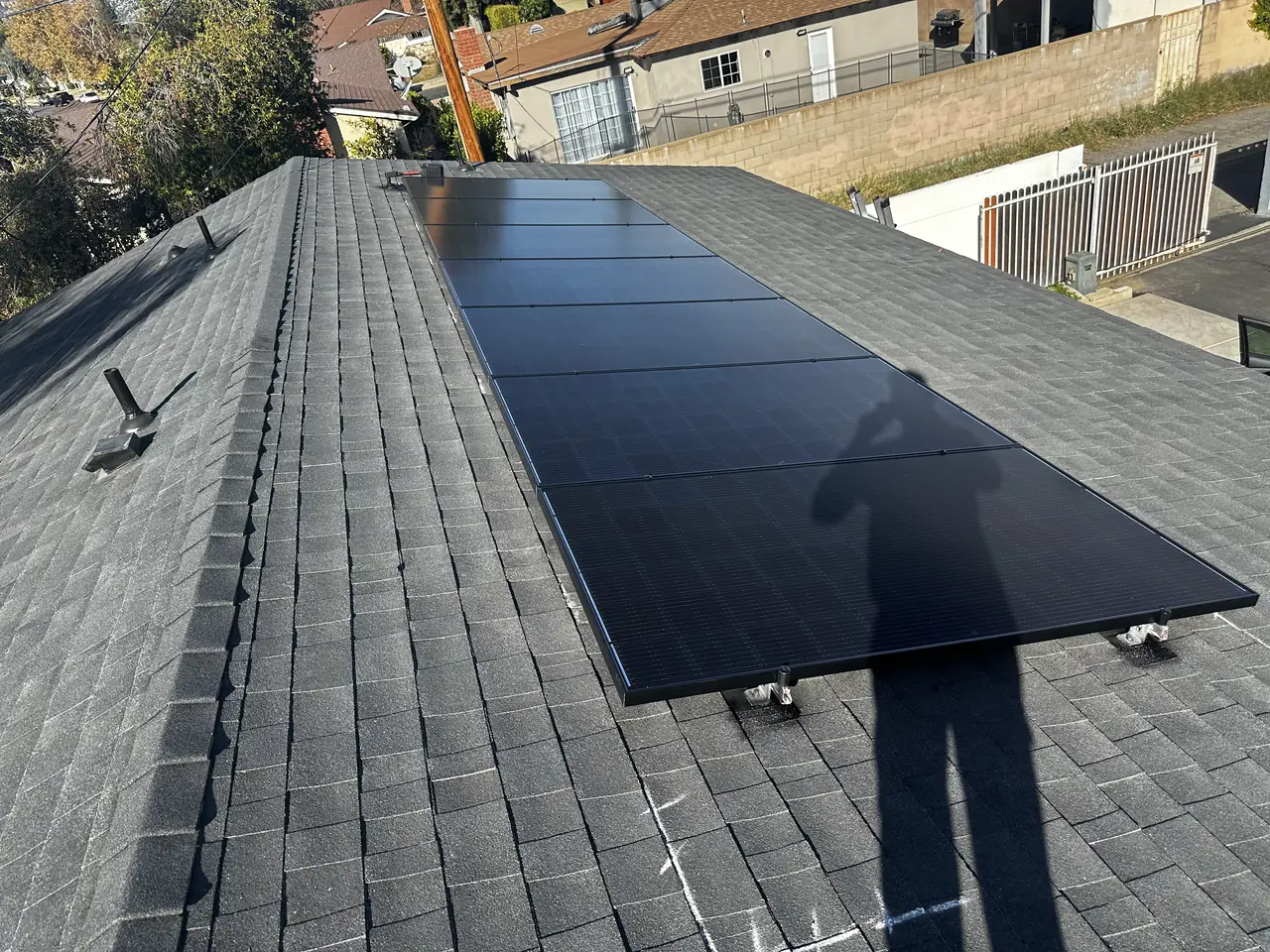
A new detached accessory dwelling unit in Tarzana, built under state ADU law and certified for occupancy, with a 2.59-kilowatt array on its composition shingle roof. The array feeds the main house's service panel, because the unit has no meter of its own. The building permit was written to the ADU's address; the utility work request to the house's.
When a detached ADU shares the main house's electrical service, its solar is interconnected under the house's address, because that is where the meter is. The building department, meanwhile, permits and inspects the array under the ADU's own address. The two records have to be matched by hand before the utility will set the meter. On this lot that match, plus a pending meter-panel request that had to be withdrawn, is what stood between a finished array and permission to operate, and Cali Energy carried both through.
At a glance
- Recorded by the utility
- 2.59 kW AC-CEC
- Modules
- 7, one microinverter under each
- Inverters
- Enphase IQ7A, one per module
- Building
- New detached ADU, certificate of occupancy issued
- Service
- Connected to the main house's panel; no separate meter
- Roof
- Composition shingle, new
- Utility / AHJ
- LADWP / LADBS
The story
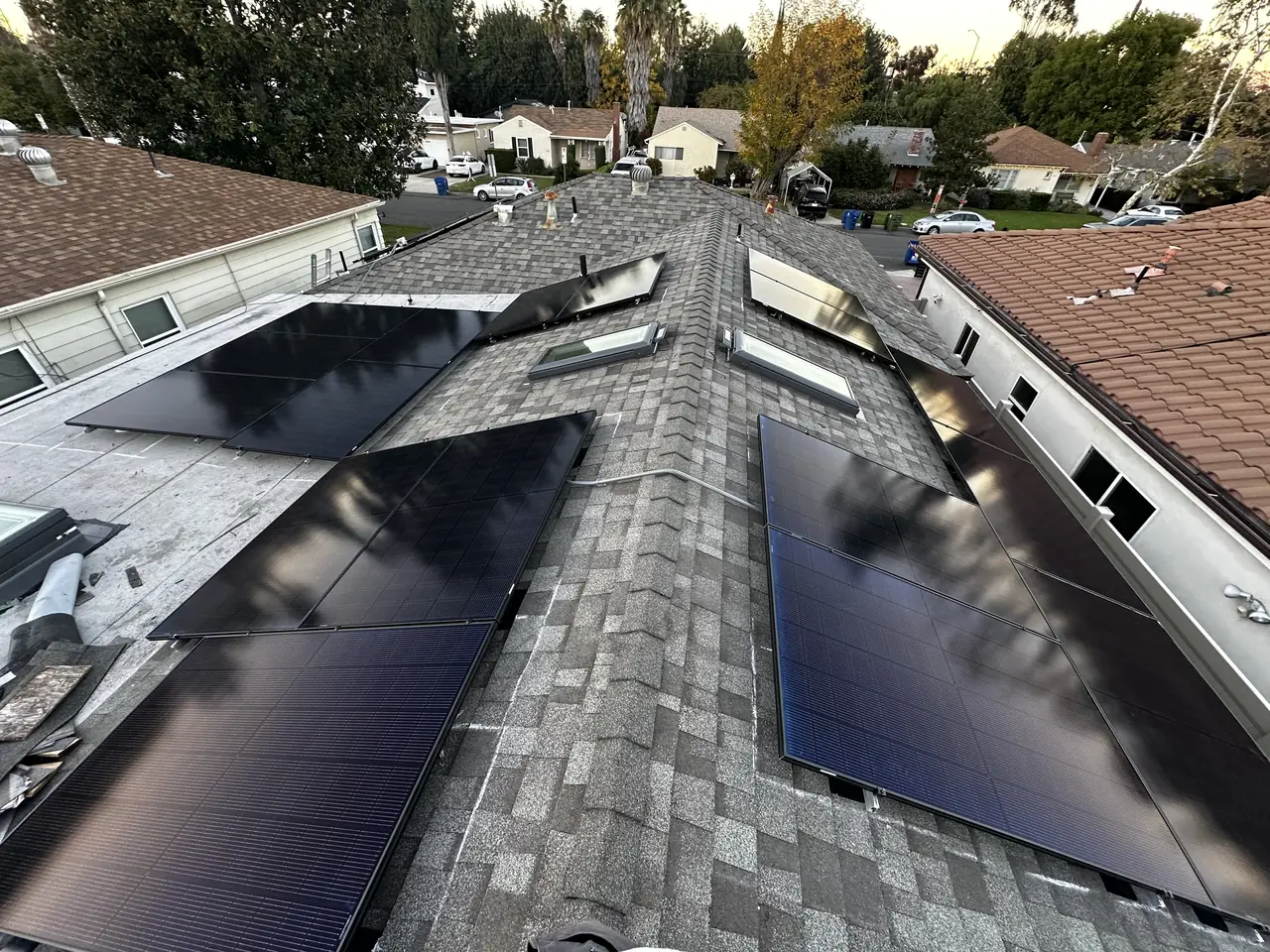
The building came first. A new detached accessory dwelling unit was permitted in August 2024 under the Los Angeles ADU ordinance, built behind the main house, and carried through to a certificate of occupancy. California's energy code requires solar on a newly built dwelling, and a detached ADU is a newly built dwelling. Seven modules on its roof satisfy that.
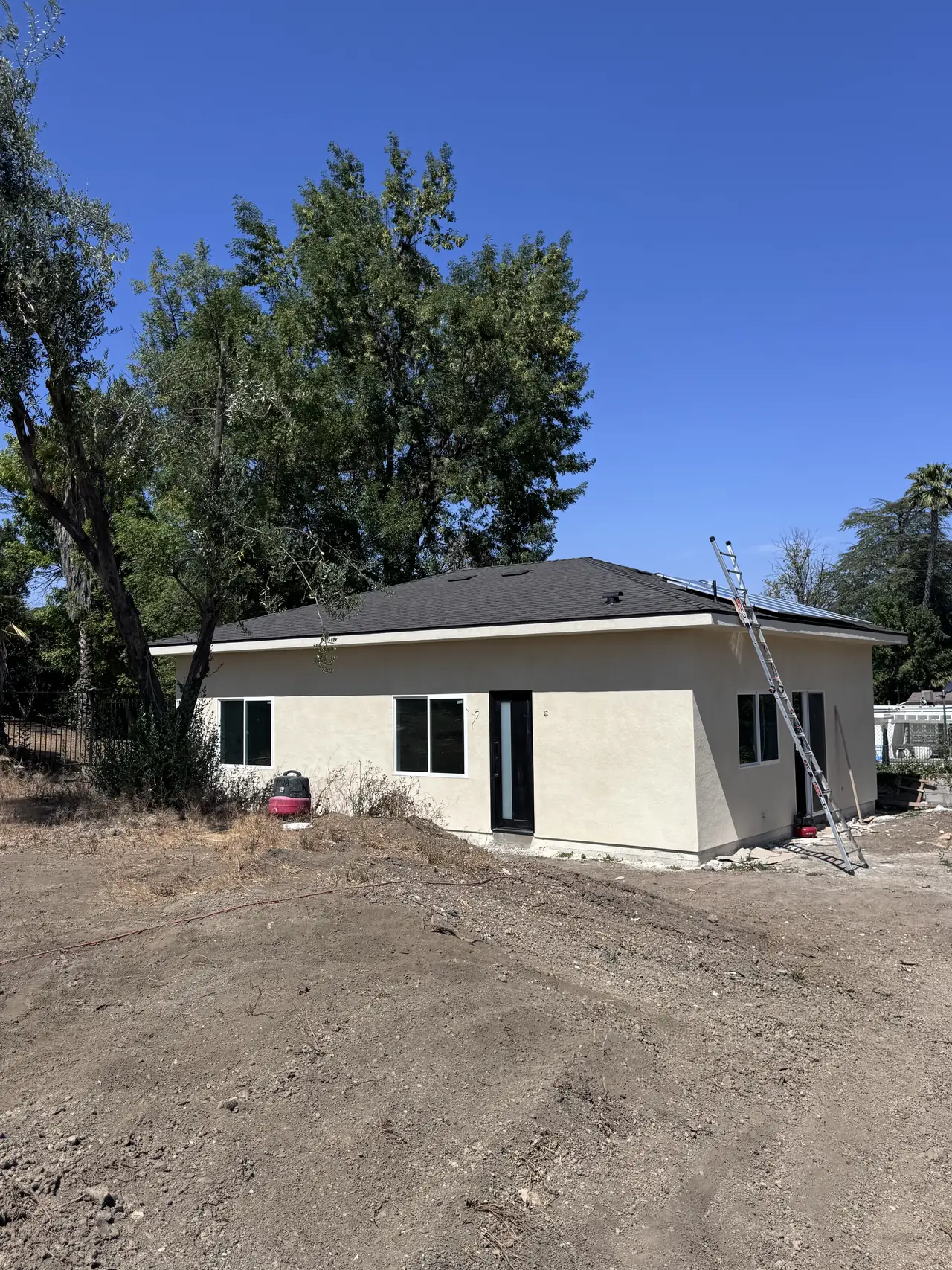
What the unit did not have was its own electrical service. Its loads run from a subpanel fed by the main house's panel, so there is one utility meter on the lot, and it belongs to the house. That single fact decides which address the solar is filed under with whom.
The building department permits work at the building where it happens. The electrical permit for the array was issued to the ADU's address in June 2025, the array went up in early October, the final inspection was requested on the second, and the permit was finaled in April 2026. The utility, on the other hand, interconnects at a meter. The interconnection application, filed on the thirteenth of June 2025 at 2.59 kilowatts AC-CEC, carries the main house's address, because the main house is where the net meter will go.
What held the utility's side was a second request on the same service. A meter panel upgrade had been requested for the property while the ADU was being built, and the utility does not process a solar interconnection while a panel change is pending, because the meter the solar would go into is about to move. The solar application sat behind that request until May 2026, when the panel upgrade was withdrawn: the ADU runs from the house's existing panel, and the panel was staying. Eight days later the utility reviewed the application and cleared it to build.
The second was the release. The utility's record showed no building department release for the solar at the house's address, and there was none, because the release had been issued to the ADU's address. Once the two were matched, the release was applied on the twenty-sixth of June 2026, the meter order went out the same day, and a new net meter was set on the first of July. Permission to operate came with it.
If you are adding solar to an ADU that shares the house's service, expect the paperwork to live at two addresses. The permit and the inspection belong to the unit. The work request, the meter and the permission to operate belong to the house. Nobody's computer joins them; a person does, and it is worth knowing which person before the array is on the roof.
How it ran
| August 2024 | Building permit issued for a new detached ADU |
|---|---|
| June 2025 | Electrical permit for the array issued to the ADU's address; interconnection application filed under the house's address at 2.59 kW AC-CEC |
| 2 October 2025 | Final inspection requested; array installed the same week |
| April 2026 | Electrical permit finaled by LADBS |
| 20 May 2026 | Meter-panel upgrade request on the same service withdrawn |
| 28 May 2026 | Utility review completed; application confirmed and cleared to build |
| 26 June 2026 | Release matched to the house's work request; meter order sent |
| 1 July 2026 | New net meter set; permission to operate |
This timeline reflects this property and this permitting path: an ADU on the main house's service, with the building permit and the utility work request under different addresses.
What we did
- Designed a seven-module array to meet the energy code requirement for the new unit.
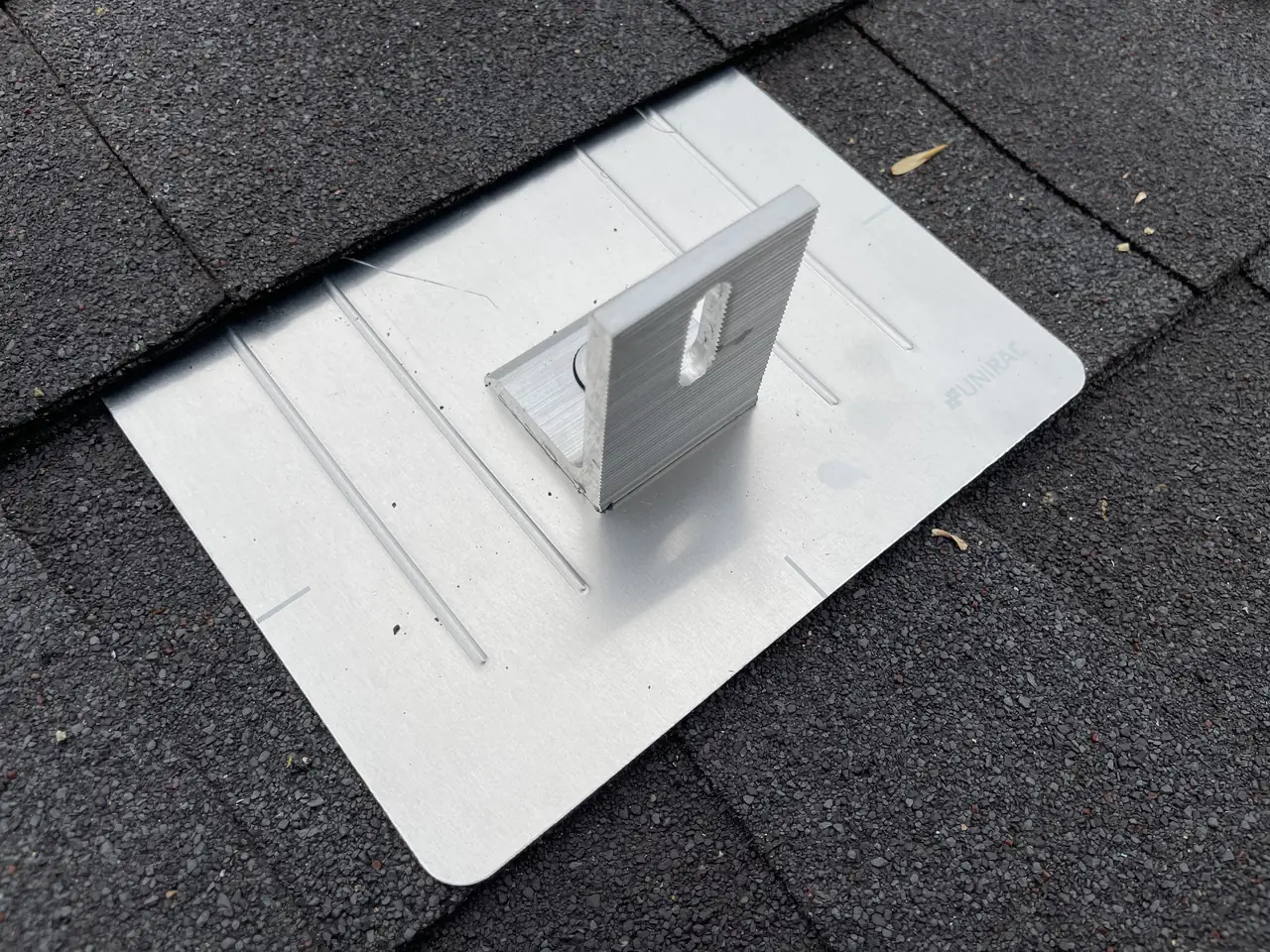
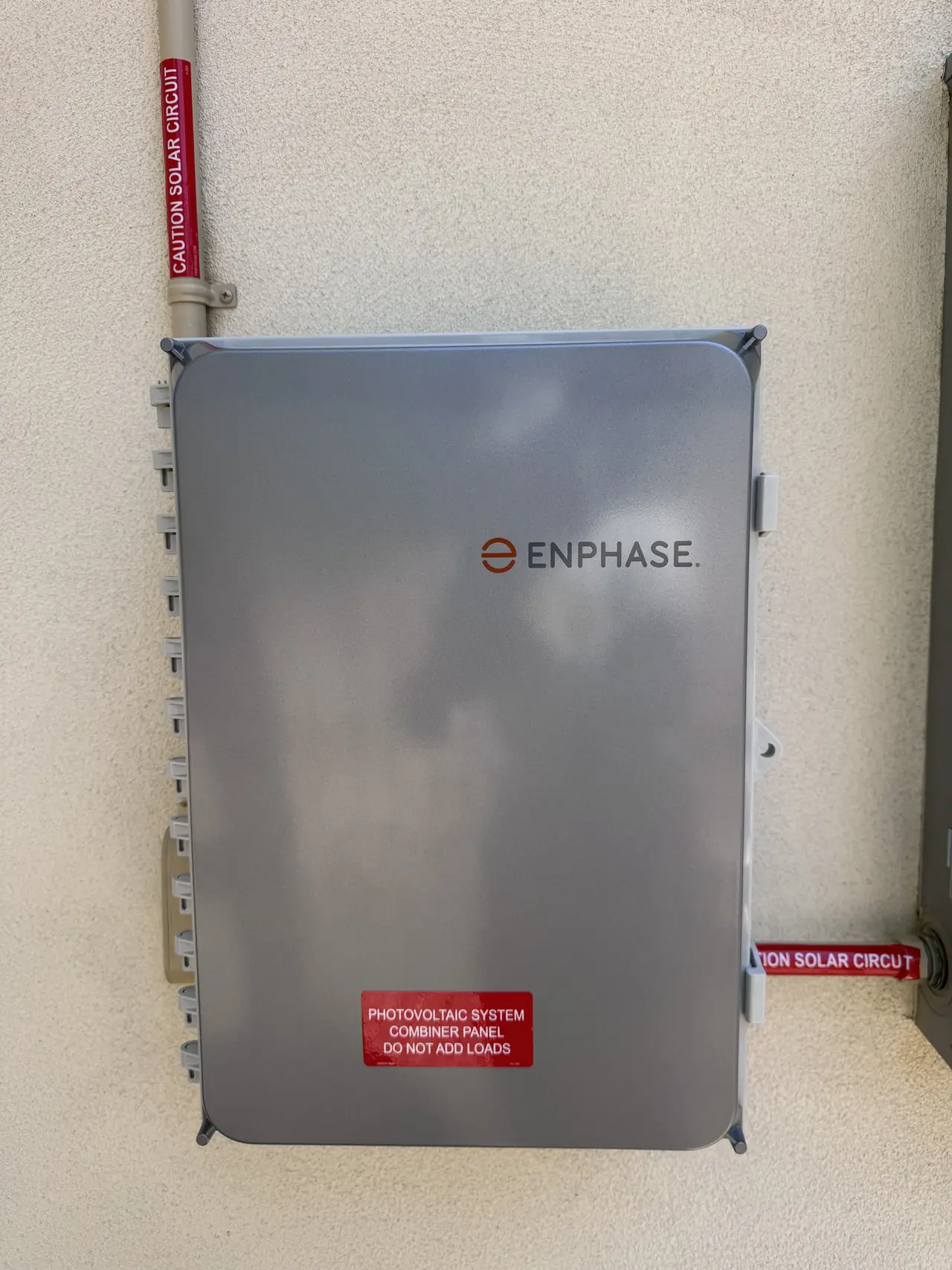
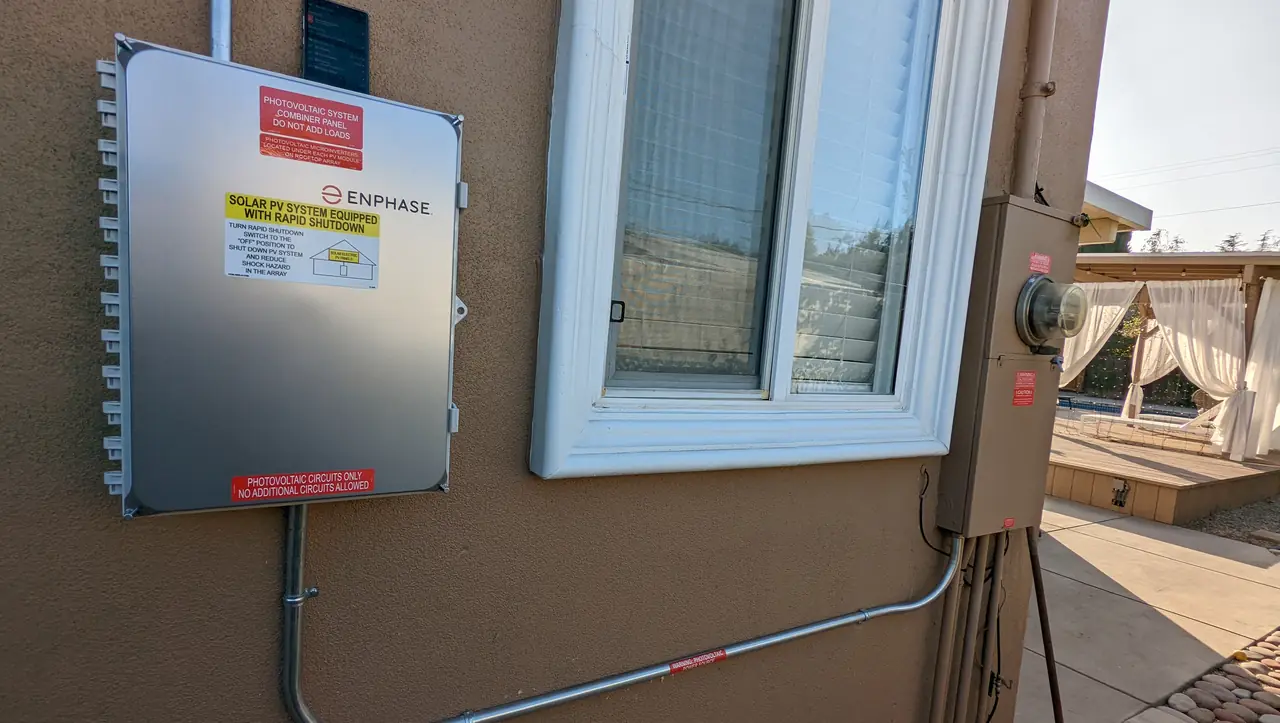
- Installed the array on the new shingle roof on flashed attachments, with an Enphase IQ7A microinverter under each module and a combiner on the ADU wall (C-10).
- Ran the solar circuit to the main house's service panel, where the lot's only meter is.
- Pulled the electrical permit under the ADU's address and carried it to final.
- Filed the interconnection under the house's address and, when the utility review began, had the pending meter-panel request withdrawn.
- Matched the building department's release to the utility's work request so the meter order could go out.
System specifications
| Recorded by the utility | 2.59 kW AC-CEC |
|---|---|
| Modules | 7 |
| Inverters | Enphase IQ7A microinverters, one per module |
| Combiner | Enphase IQ Combiner on the ADU wall |
| Building | New detached ADU under the Los Angeles ADU ordinance; certificate of occupancy issued |
| Service | ADU subpanel fed from the main house's panel; one meter on the lot |
| Racking | Rail on flashed attachments |
| Roof | Composition shingle, new |
| Battery | None |
| Utility / AHJ | LADWP / LADBS |
Is your project like this one?
- You are building a detached ADU and have been told it needs solar.
- Your ADU will run off the main house's panel rather than its own meter.
- You have a solar application and a panel upgrade request open with the utility at the same time.
- The utility says it has no release for your project and the city says it sent one.
- Your Tarzana property is served by LADWP, while permits are handled by LADBS.
Cali Energy in Tarzana
Tarzana is inside City of Los Angeles boundaries: permits run through LADBS, interconnection through LADWP.
Tarzana is inside the City of Los Angeles, so a new accessory dwelling unit here is permitted by LADBS under the city's ADU ordinance and receives its own address when it is permitted, whether or not it gets its own meter.
This installation is on the Tarzana projects page alongside the others, and what the work covers is set out on the Tarzana service area page.
- License and classifications: CSLB #1032379
- Official reference for this process: California Energy Commission — 2022 Building Energy Efficiency Standards (Title 24, Part 6)
- Official reference for this process: LADBS — accessory dwelling unit permits
Frequently asked questions
Does a new ADU have to have solar?
Under California's building energy standards, a newly constructed dwelling unit needs a photovoltaic system unless an exception applies, and a detached ADU built from the ground up counts. The size is set by the energy compliance documents for the unit, not by what the occupants might use. Seven modules met it here.
Why was the solar filed under the house's address?
Because the utility interconnects at a meter and the ADU does not have one. The unit's loads come off a subpanel fed from the main house's panel, so the net meter is the house's meter and the work request is written to the house's address. The building department, which inspects the roof and the wiring where they are, permits the same array under the ADU's address.
What stopped the utility from setting the meter?
Two things. A separate request for a meter panel upgrade was still open at the same service, and the utility will not interconnect solar while the meter it would use is about to be replaced; that request was withdrawn. And the building department's release had gone out under the ADU's address, so the utility's record for the house showed no release. Once the two were matched, the meter order went out the same day.
Can an ADU have its own meter instead?
It can, if a separate service is run to it and the utility sets a second meter. That is a larger piece of electrical work, and it is a choice the owner makes when the unit is designed, not when the solar is added. On this lot the unit shares the house's service, which is the more common arrangement for a detached ADU behind an existing home.
How long did this one take?
The interconnection application went in on the thirteenth of June 2025 and permission to operate came on the first of July 2026. The array itself was installed in October 2025 and finaled by the city in April 2026. On the utility's side the application sat behind a meter-panel upgrade request on the same service until that request was withdrawn in May; the release was matched in June and the meter set on the first of July.
What this would look like on your roof
Planning solar in Tarzana? Tell us your utility, your roof and what your bill looks like now, and we will model what a system like this would do on your house before you commit to anything.
Or call +1 (323) 844-7777 · Cali Energy, Northridge · CSLB #1032379 (B, C-10, C-39) — design, permits, install and electrical under one licensed contractor.
Related
This timeline reflects this property and this permitting path. Updated September 2026.