

Studio City, CA · 2022 – August 2024 · LADWP / LADBS
Everything ends with somebody reaching the meter.
Approval, release, permission to operate — the last step in all of it is a utility crew physically getting to the meter. On this one the equipment was behind a gate that locks, and somebody thought about that in advance.
The last step of an interconnection is physical. Once the paperwork clears, a utility crew comes to set or exchange the meter, generally inside a window of about ten business days rather than at a booked time. A crew that cannot get to the meter does not climb the gate. If your equipment is behind a gate, a dog or a locked side yard, the cheap move is to ask your service planner for the date and clear the way that morning — which is what the owner did here.
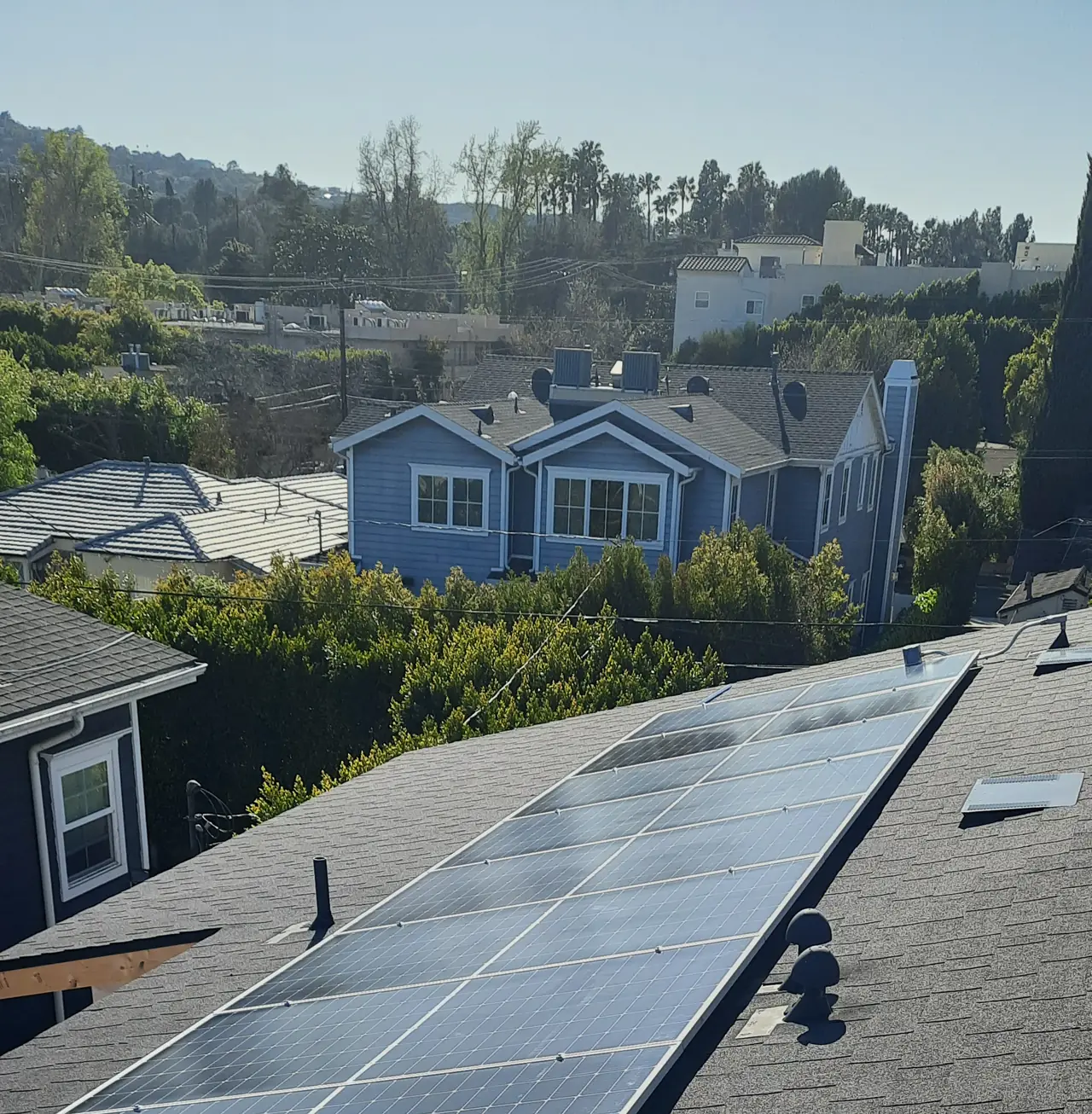
At a glance
- Dwelling
- New two-story, with an attached two-car garage
- Recorded by the utility
- 3.45 kW
- Modules
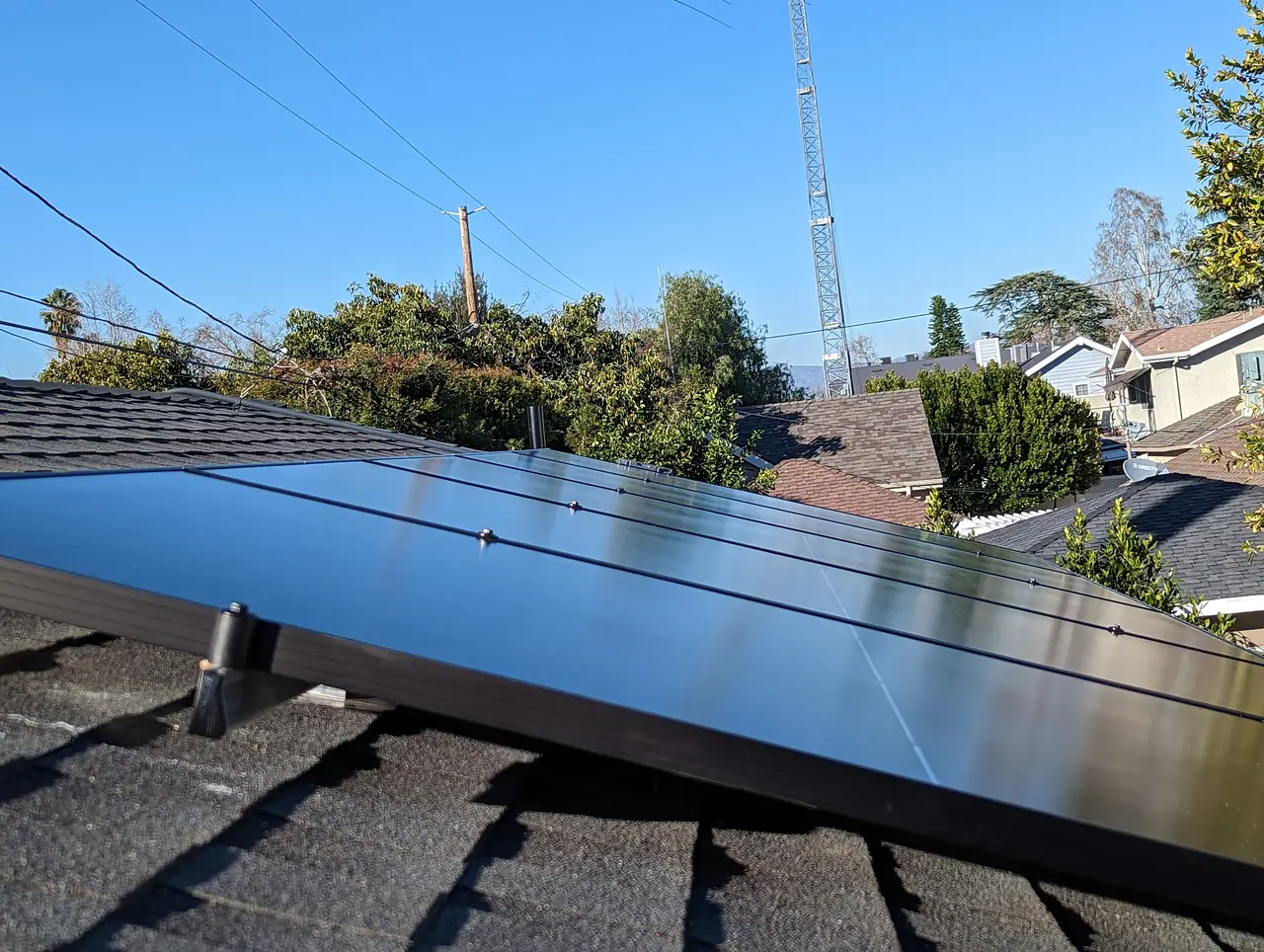
- Canadian Solar dual-glass, 445 W
- Microinverters
- Enphase, with an IQ Combiner
- Array installed
- March 2023, during construction
- Filing to permission to install
- Seven days
- Approval to meter set
- Three days
- Filing to permission to operate
- 35 days
The story
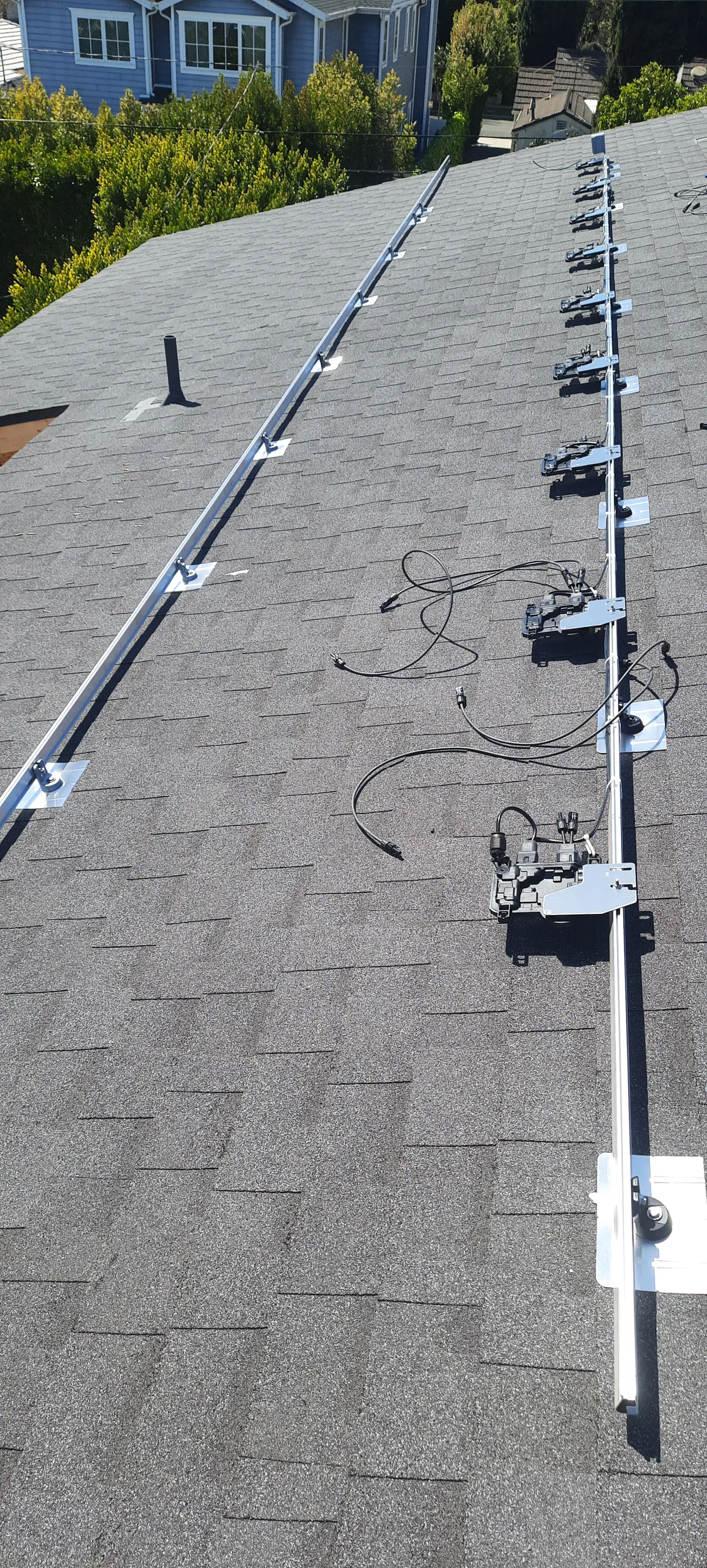
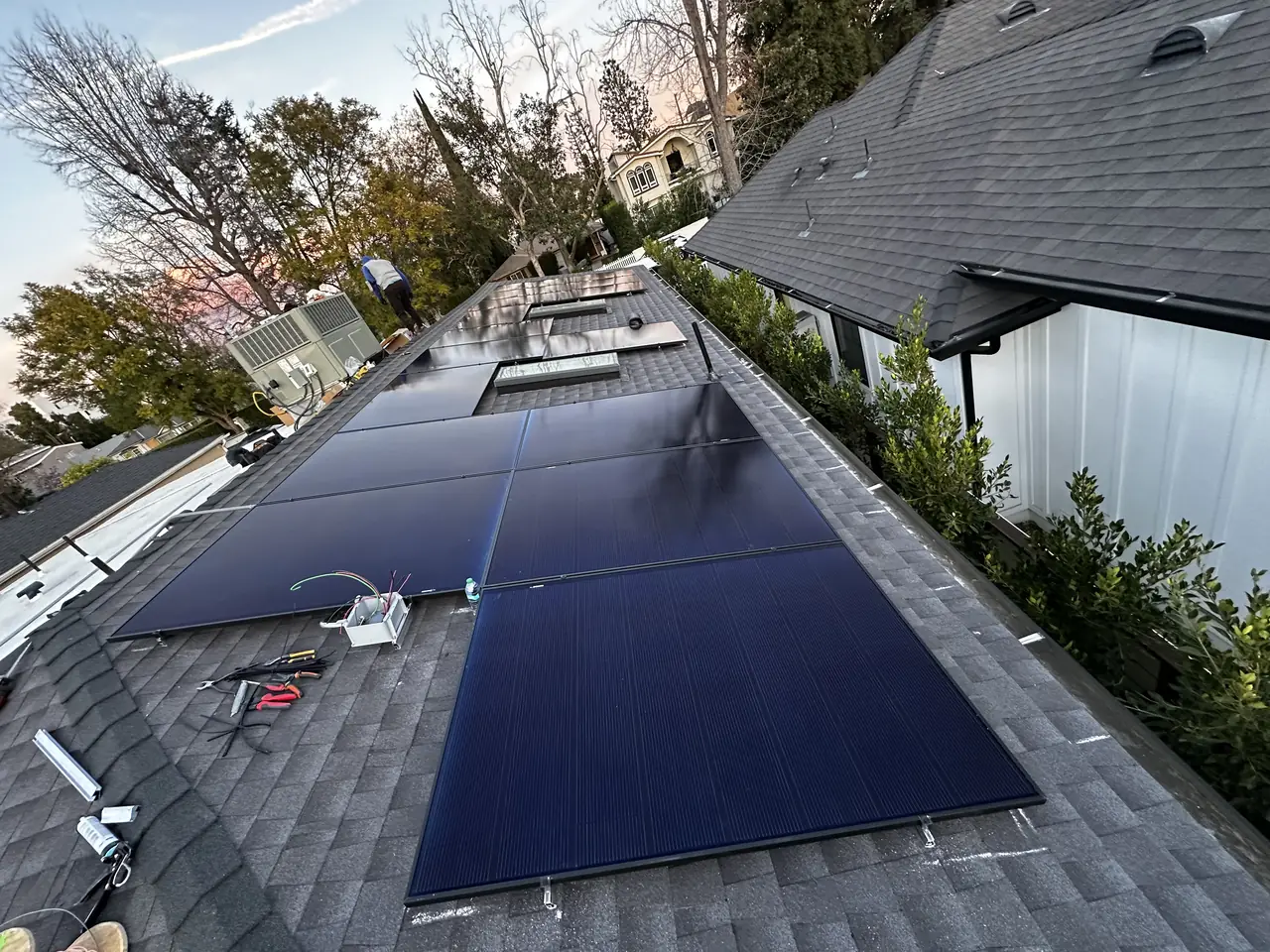
The array on this house went up in March 2023, while the inside was still open framing and the conduit could be run through the studs before anybody thought about drywall. The interconnection was not filed until April 2024, and from filing to a working system took thirty-five days. Most of that was review. The part worth describing is the last three days.
On the sixth of May the approval arrived in two notices at once: the building department's final release had reached the utility, and the interconnection review was finished with a request gone out to schedule the meter. The notice says a crew will typically respond within ten business days on a project of this size. Respond — not attend at a time you agreed.
The same day, the owner wrote to the service planner with the practical question. When is the meter install scheduled? Because the side gate that gets you to the electrical equipment is locked, and it would have to be left unlocked that morning.
The crew came and the meter went in on the first visit. What a missed visit costs is easy to describe. A meter crew arrives in a window rather than at an agreed time, and they are not there to negotiate access. If the gate is shut they record that there was none and go to the next address, and everything upstream waits on a padlock.
The meter went in on the ninth of May, three days after the approval, and permission to operate came with it. Three days is at the fast end of the ten business days the utility gives itself.
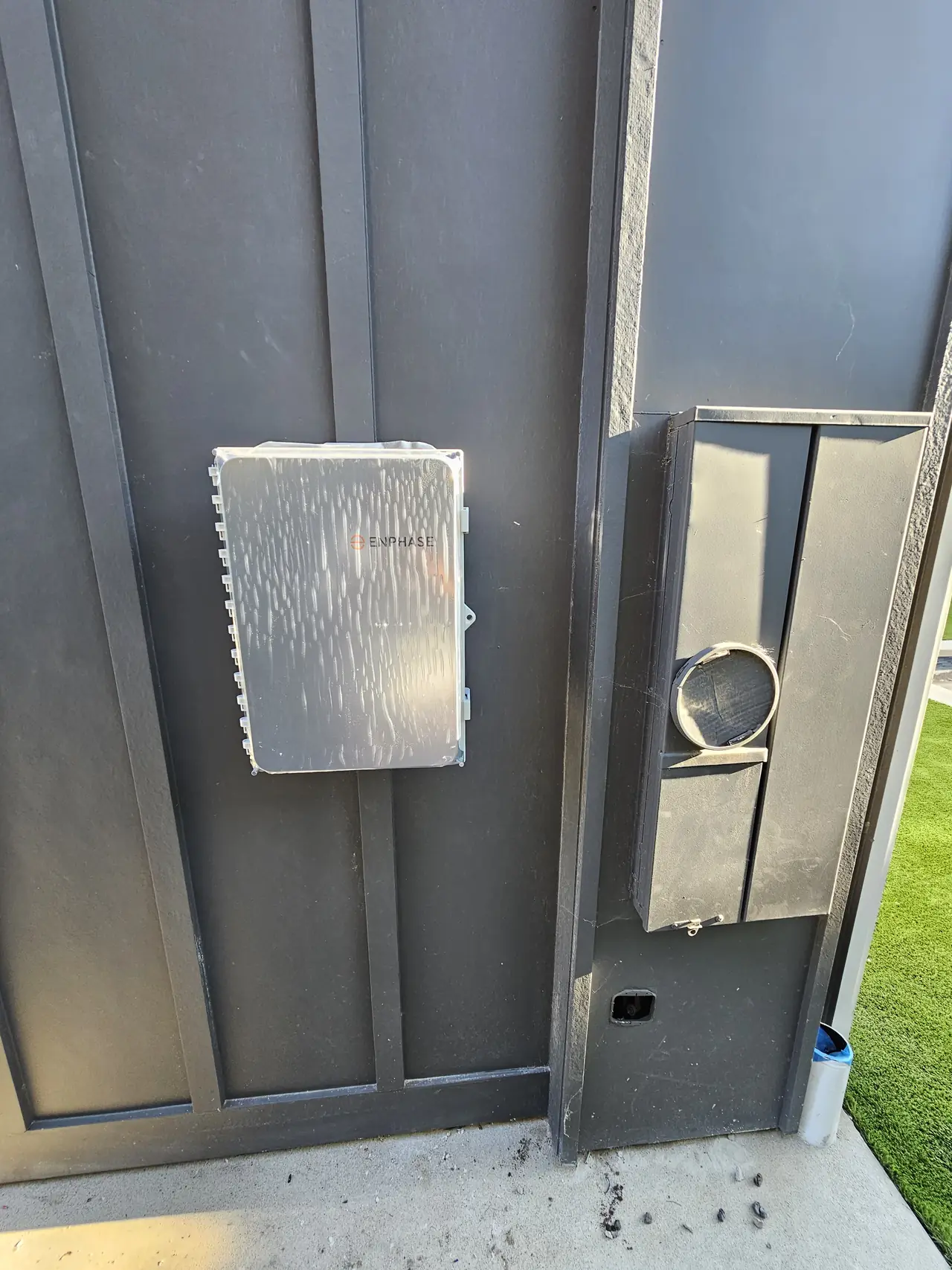
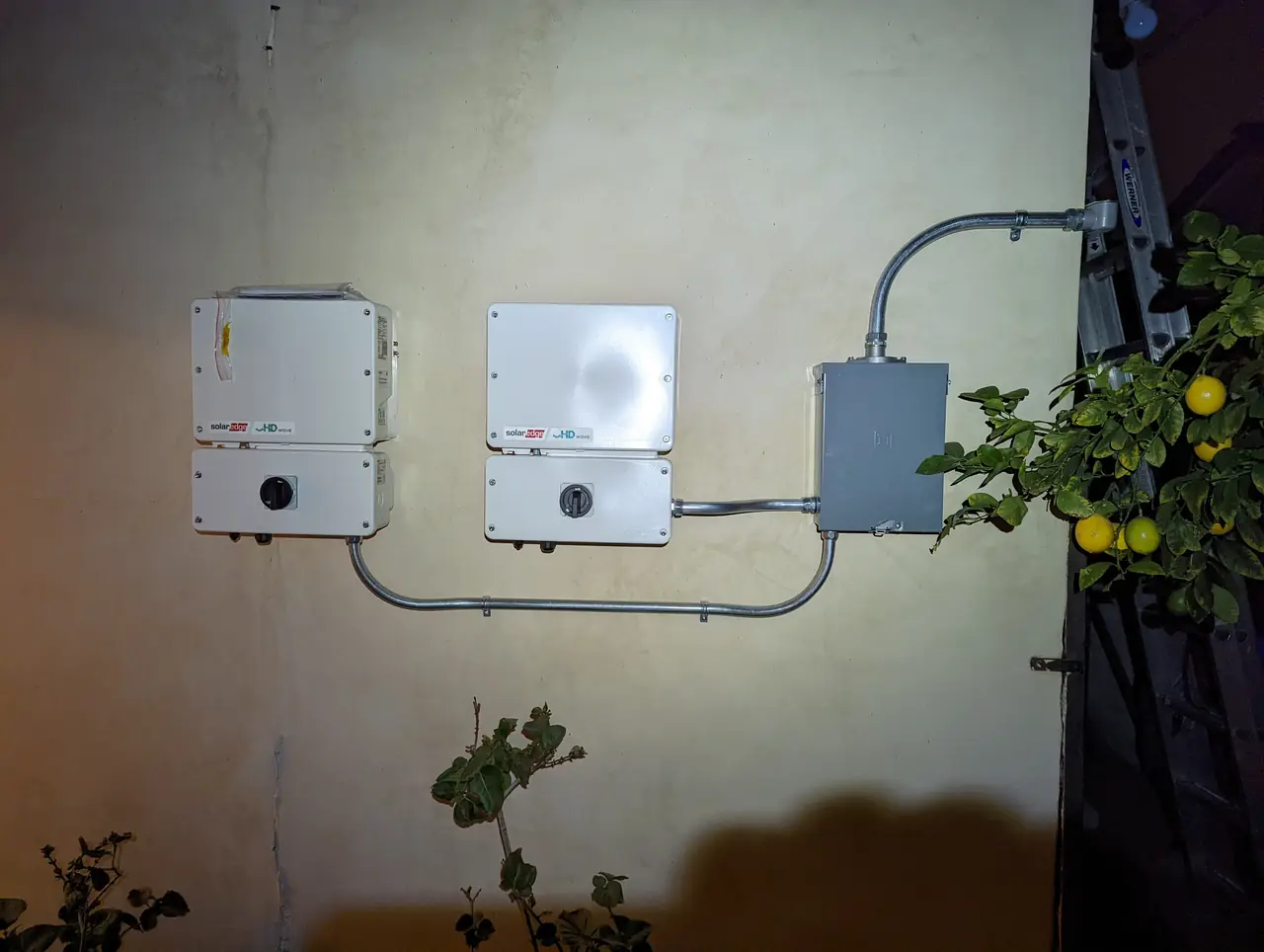
What was waiting for that crew had been on the wall since the previous August. The combiner, the conduit, the socket. A meter socket is the one part of the installation a contractor mounts and cannot finish: the utility sets the meter and seals it. Until that happens the socket is an empty ring and the system is an expensive roof.
Next to it is a red placard reading AC MICRO INVERTERS LOCATED ON ROOF UNDER MODULES. That is not decoration. It is written for whoever opens the equipment next — a meter crew, an inspector, a firefighter at two in the morning — and it tells them where the live parts are. Labels sit at the bottom of every punch list and they are the part a utility crew actually reads.
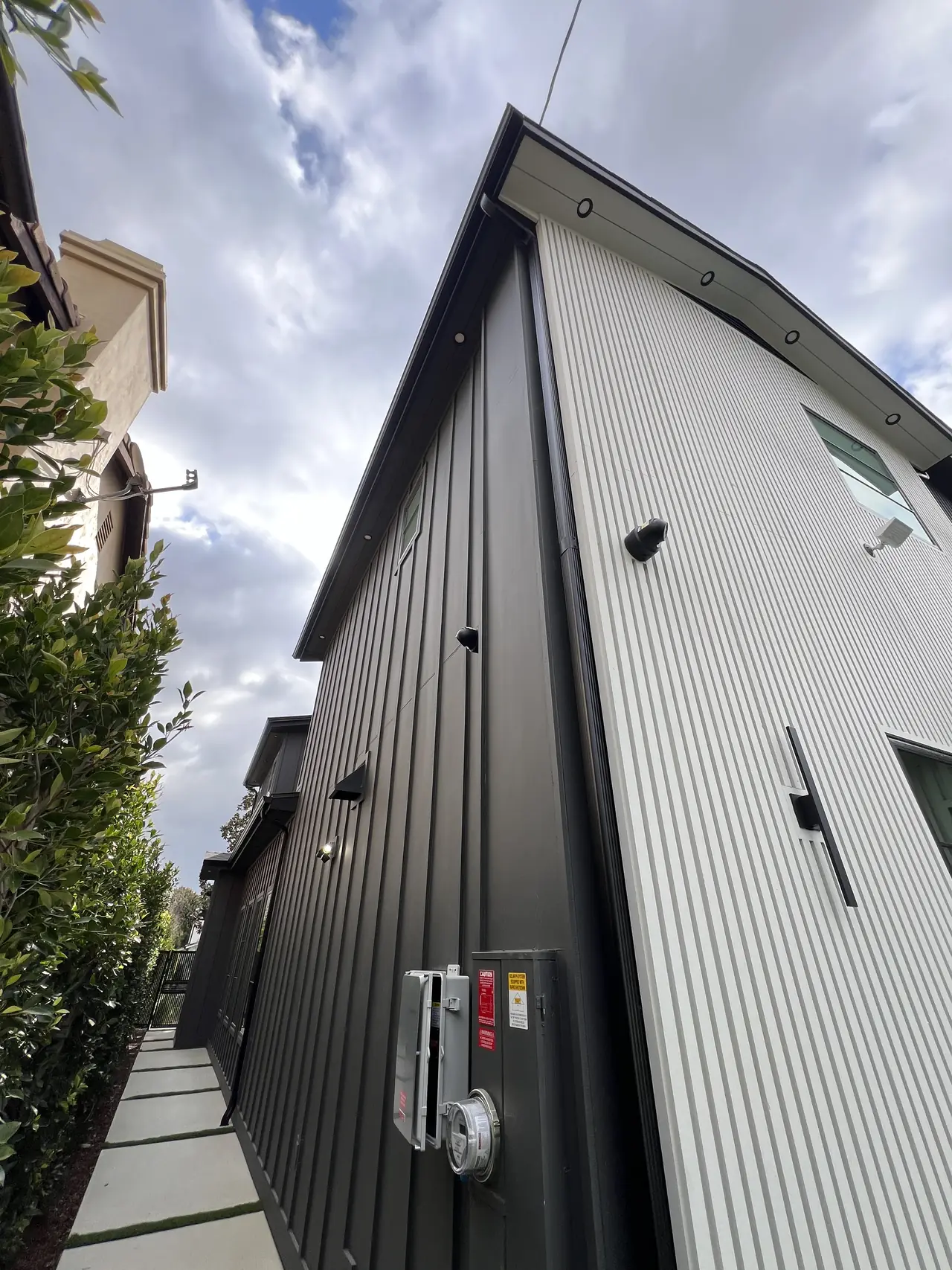
The rest of the lot, for scale. The old house and its detached garage came down in 2022 and a new two-story dwelling went up in their place, with an attached two-car garage and fire sprinklers throughout, a pool behind it, and a separate rec room with a bathroom reached only from outside.
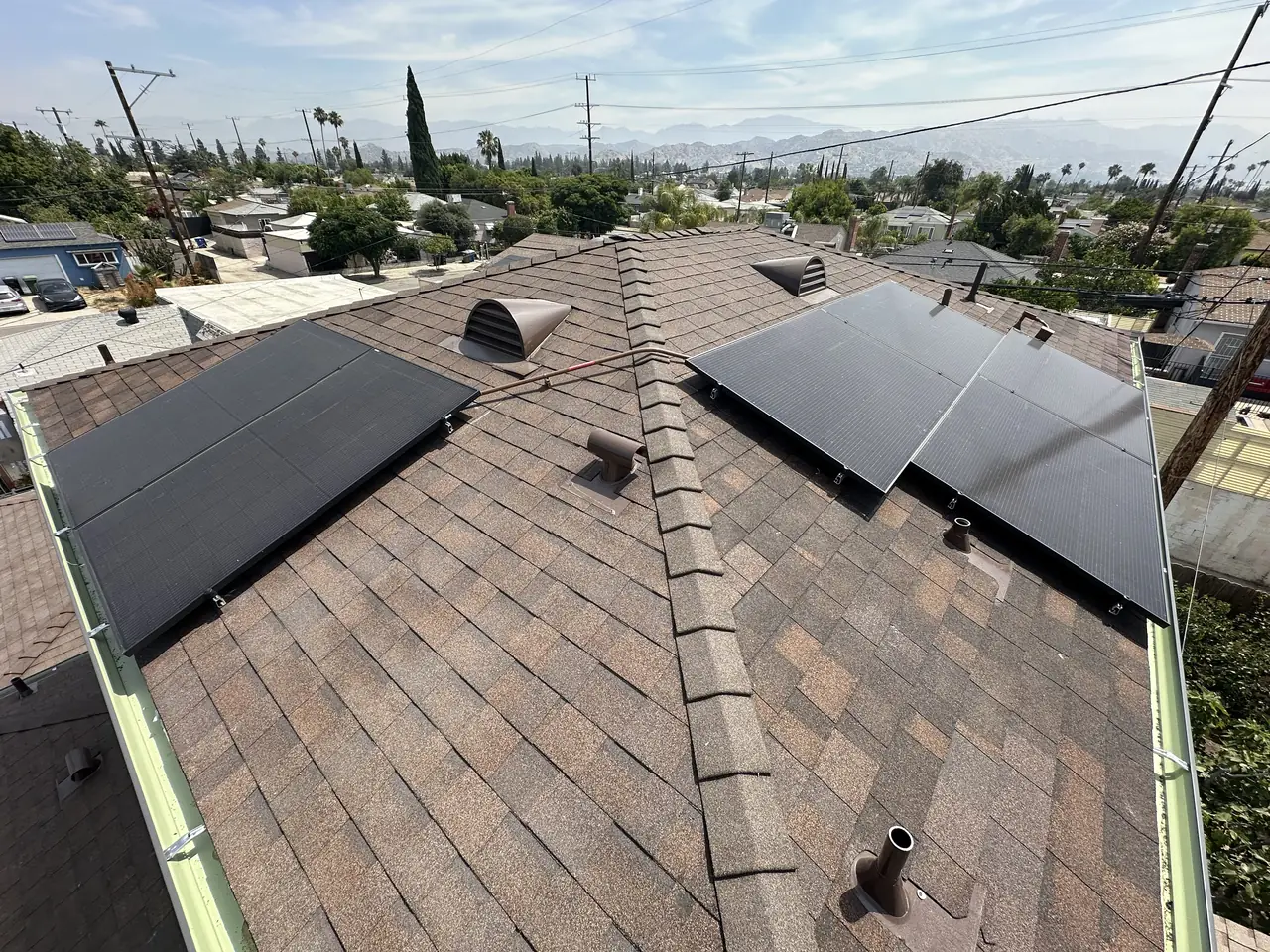
Against all of that the array is small: the utility recorded it at 3.45 kilowatts. New low-rise homes in California have had to include solar since the 2019 energy standards took effect, and the required size comes out of a formula rather than out of the household's bill. A new house therefore tends to arrive with the array the code asks for, which is not the same as the array the roof would carry. Worth knowing before you assume a new build is finished on that front.
Three questions are worth asking before you reach the meter stage, and none of them are technical. Where is my meter. Can somebody get to it without me being home. Who do I ask for the date. Here the owner asked the third one on the day the approval came through, and the meter was set three days later.
How it ran
| 2022 | Old house and detached garage demolished |
|---|---|
| 2022–2023 | New two-story dwelling built, with a pool, a spa and a detached rec room |
| 25 March 2023 | Conduit run through open framing; array set on the roof |
| 22 August 2023 | Combiner and meter socket mounted on the side wall |
| 21 September 2023 | Building inspection requested |
| 4 April 2024 | Interconnection request filed; the charge paid the same day |
| 11 April 2024 | Reviewed, confirmed and site evaluation closed out — permission to install, seven days after filing |
| 6 May 2024 | Building department's final release reached the utility and the meter request went out; the owner asked the service planner for the date so the side gate could be unlocked |
| 9 May 2024 | Net meter set; permission to operate |
| 19 August 2024 | Monitoring activated for the owner |
Thirty-five days from filing. The last three of them depended on a gate.
What we did
- Ran the conduit through open framing before the drywall went on.
- Set the array on the roof while the house was still under construction.
- Mounted the combiner and the meter socket and left the wall ready for the utility.
- Labeled the equipment so that whoever opens it next knows where the live parts are.
- Carried the interconnection from filing to permission to operate in thirty-five days.
System specifications
| Dwelling | New two-story, attached two-car garage and trellis, NFPA 13D sprinklers throughout |
|---|---|
| Also on the lot | Pool with spa; detached rec room with a bathroom, exterior access only |
| Modules | Canadian Solar dual-glass, 445 W |
| Microinverters | Enphase, with an IQ Combiner |
| Recorded by the utility | 3.45 kW |
| Array installed | March 2023, while the house was still being built |
| Meter | Existing meter exchanged for a net meter, 9 May 2024 |
| Utility / AHJ | LADWP / LADBS |
Is your project like this one?
- Your meter or your panel sits behind a gate or a fence that locks.
- You are building and want the solar conduit in before the drywall.
- You want to know what the last month of an interconnection actually consists of.
- You have been told a crew will come within ten business days and want to know what that means in practice.
- Your new house came with a small array and you want to know why.
Cali Energy in Studio City
Studio City is inside City of Los Angeles boundaries: permits run through LADBS, interconnection through LADWP.
On plenty of Studio City houses the service equipment ends up somewhere that can be closed off — behind a gate, a fence or a side yard. That is a sensible place to put it and an easy place to lock.
This installation is on the Studio City projects page alongside the others, and what the work covers is set out on the Studio City service area page.
- License and classifications: CSLB #1032379
- Official reference for this process: LADWP interconnection requirements
- Official reference for this process: California Energy Commission — Building Energy Efficiency Standards
Frequently asked questions
What happens if the utility crew cannot reach my meter?
They record that there was no access and leave. Nothing is canceled, but the visit goes back into the queue and the system stays off until the next one. That is why a locked gate is worth a phone call: it is one of the cheapest delays on a project to avoid.
Can I get a date for the meter installation?
You can ask. The notice that says a crew will respond within about ten business days also names your service planner, and a planner can usually tell you when the work is scheduled. On this job the owner asked on the day the approval came through and the meter was set three days later.
How long after approval does the meter go in?
The utility quotes roughly ten business days for small residential projects and longer for larger ones. In practice it varies with the crews and the address. Three days, as here, is at the fast end; a two weeks is ordinary.
Why is my meter socket still empty after the installer has finished?
Because setting and sealing the meter is the utility's work, not the contractor's. The installer mounts the socket, runs the conduit and wires everything up to that point; the socket then sits empty until a crew comes to fit the meter and seal it.
Why is the array on my new house so small?
New low-rise homes in California have had to include solar since the 2019 energy standards took effect, and the size required is set by a formula based on the building rather than on what the household uses. A builder generally provides that minimum. Adding to it later is a normal job, and often a cheaper one than people expect, because the roof and the service are already set up for it.
What this would look like on your roof
Planning solar in Studio City? Tell us your utility, your roof and what your bill looks like now, and we will model what a system like this would do on your house before you commit to anything.
Or call +1 (323) 844-7777 · Cali Energy, Northridge · CSLB #1032379 (B, C-10, C-39) — design, permits, install and electrical under one licensed contractor.
Related
This timeline reflects this property and this permitting path. Updated September 2026.