

Studio City, CA · December 2022 – August 2023 · LADWP / LADBS
Two dwellings on one lot. Two of everything on the paperwork.
The old house and garage came down, a new two-story house went up with a detached accessory dwelling behind it, and each building got its own meter, its own work request and its own fee. Both were switched on the same day.
This lot was metered as two services: the house and the accessory dwelling each had a meter of its own. Where that is the case, each meter needs its own interconnection request with its own charge, even when one crew installs both arrays in the same week. So the first question on a two-dwelling lot is not how big the arrays are, it is how many meters there are. The site work merges. The paperwork follows the meters.
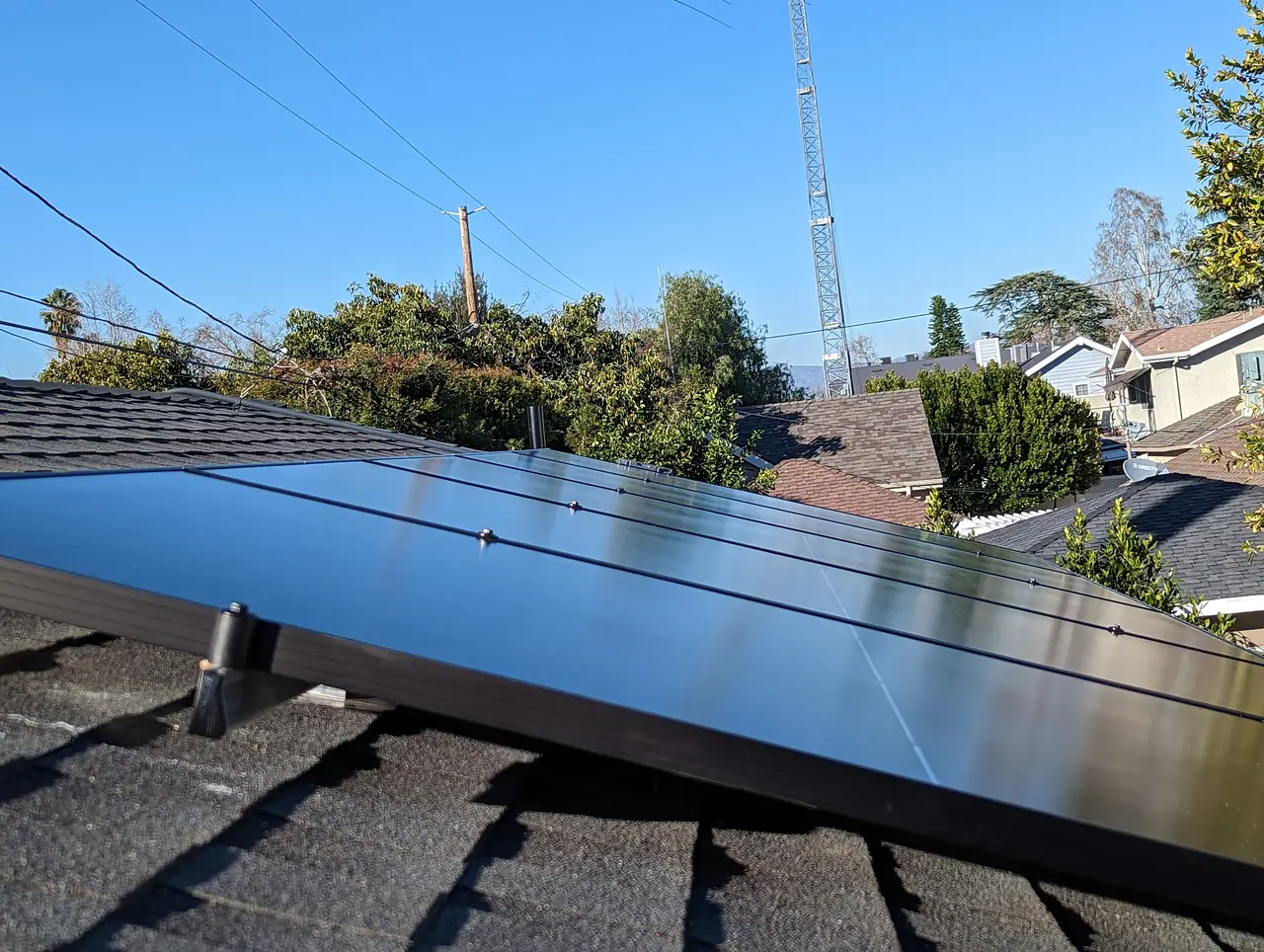
At a glance
- Lot
- New house and a detached ADU
- Work requests
- Two, filed the same day
- Recorded by the utility
- 2.32 kW and 1.45 kW
- Modules
- Silfab
- Meters
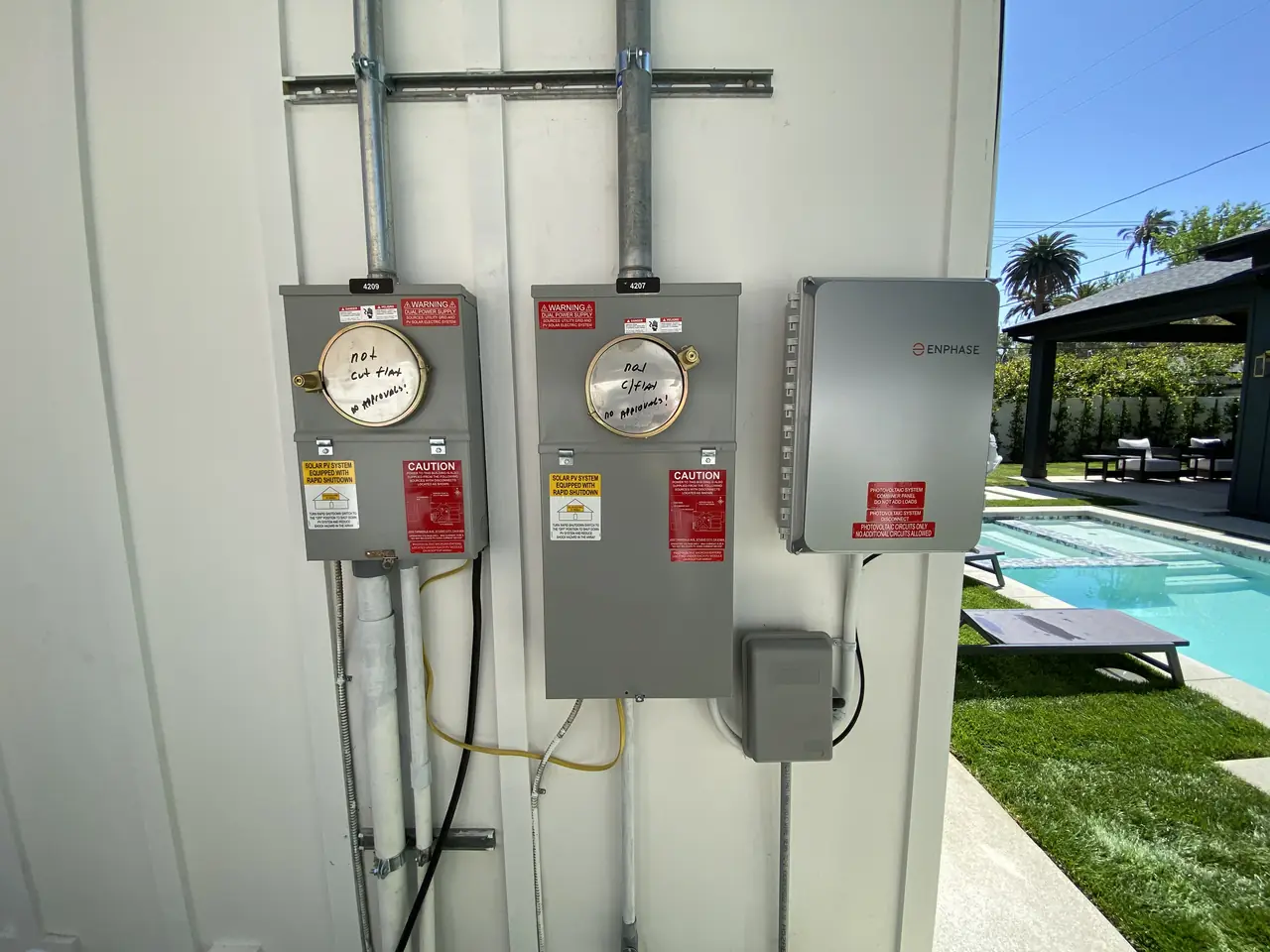
- Two, side by side on one wall
- Filing to permission
- Sixty days, both
- Meter work
- Existing meters changed for net meters
- Utility / AHJ
- LADWP / LADBS
The story
This lot was cleared before any of it began. The existing house, an accessory structure and the garage were demolished under one permit, the old pool was backfilled and the shell taken out, and what went up in their place was a new two-story dwelling with an attached two-car garage, plus a detached accessory dwelling unit at the back.
Two dwellings on one piece of land. That sentence is the whole design problem, and not for the reason people expect. The arrays are small and the roofs are ordinary. What doubles is the paperwork.
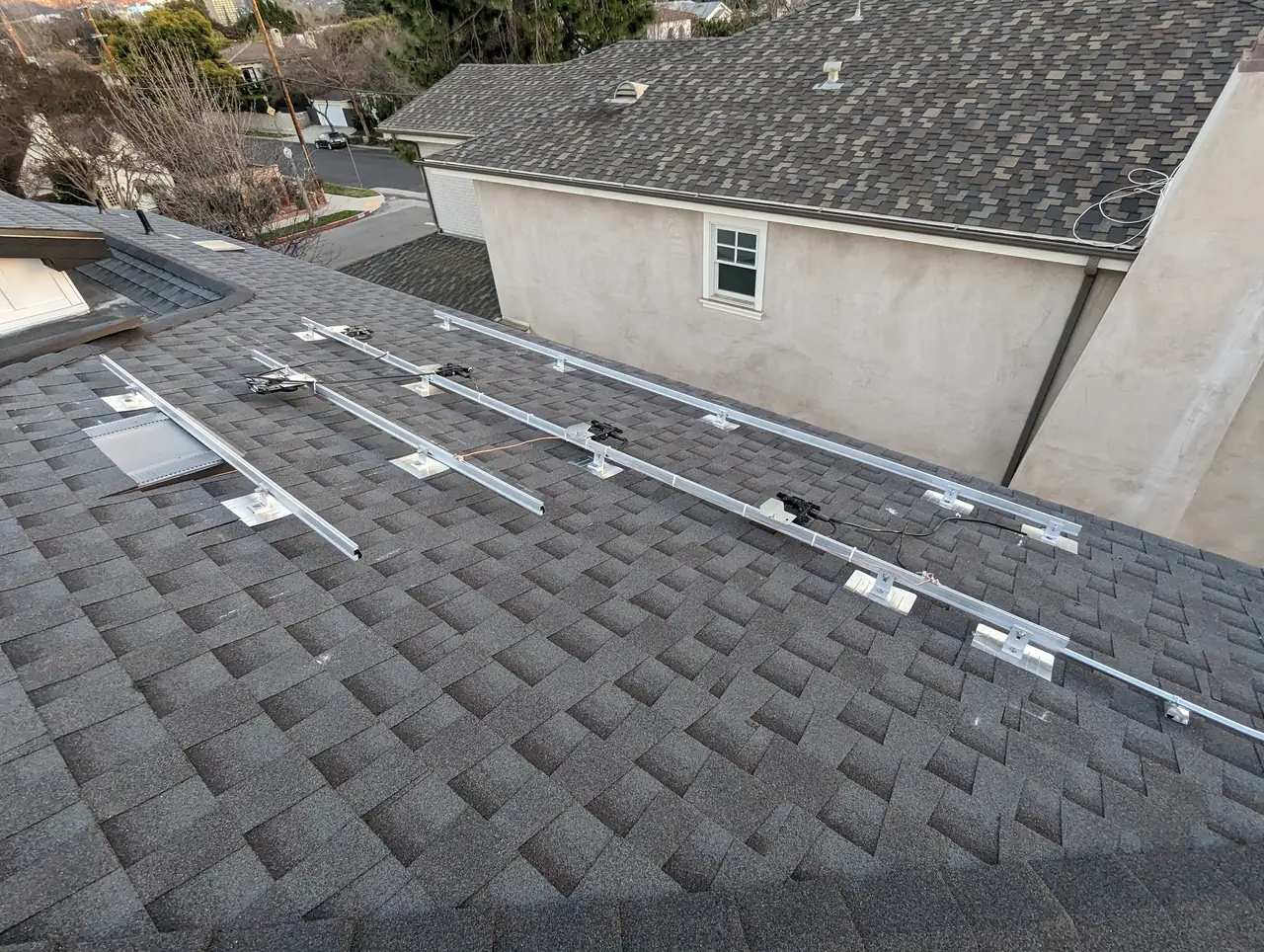
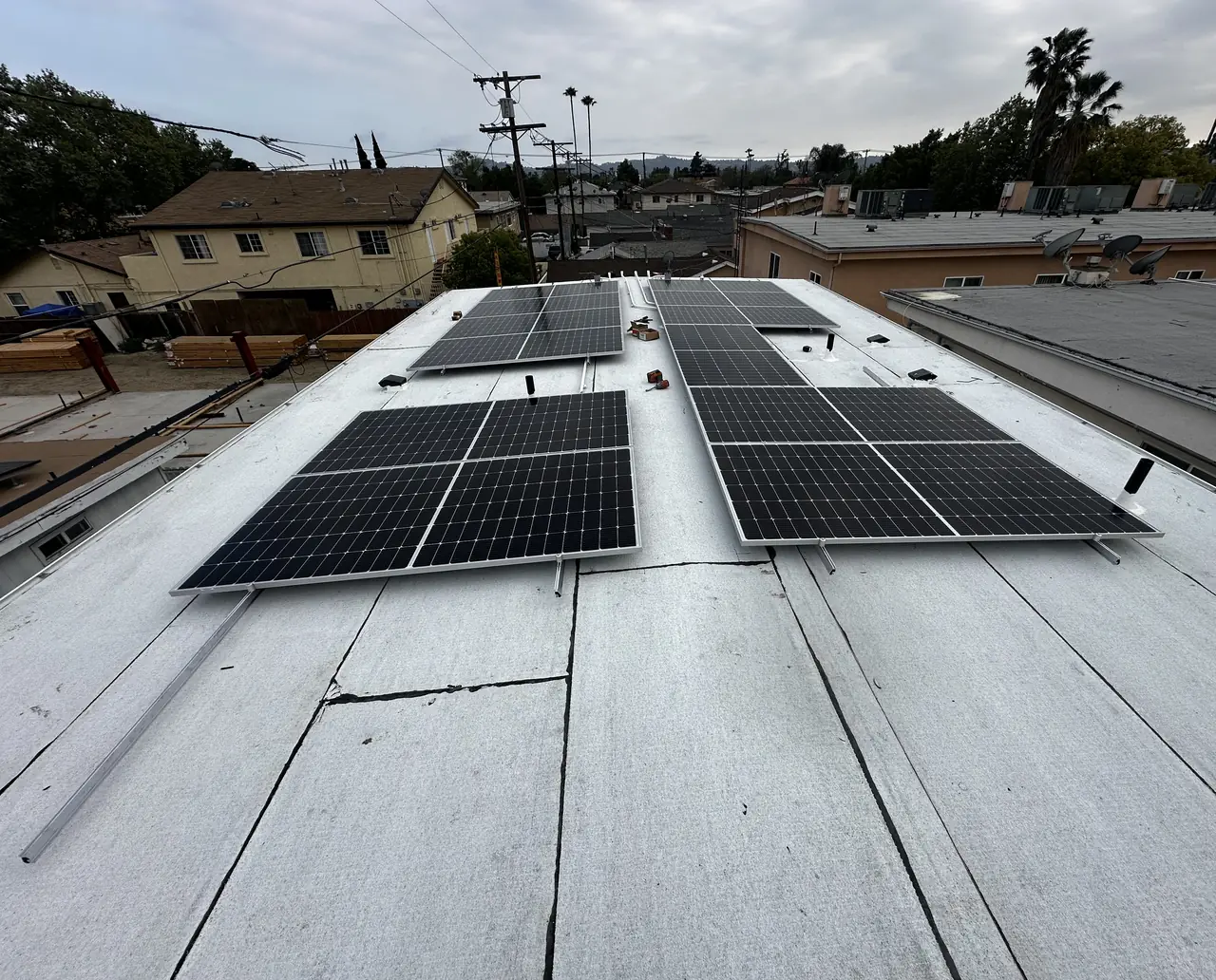
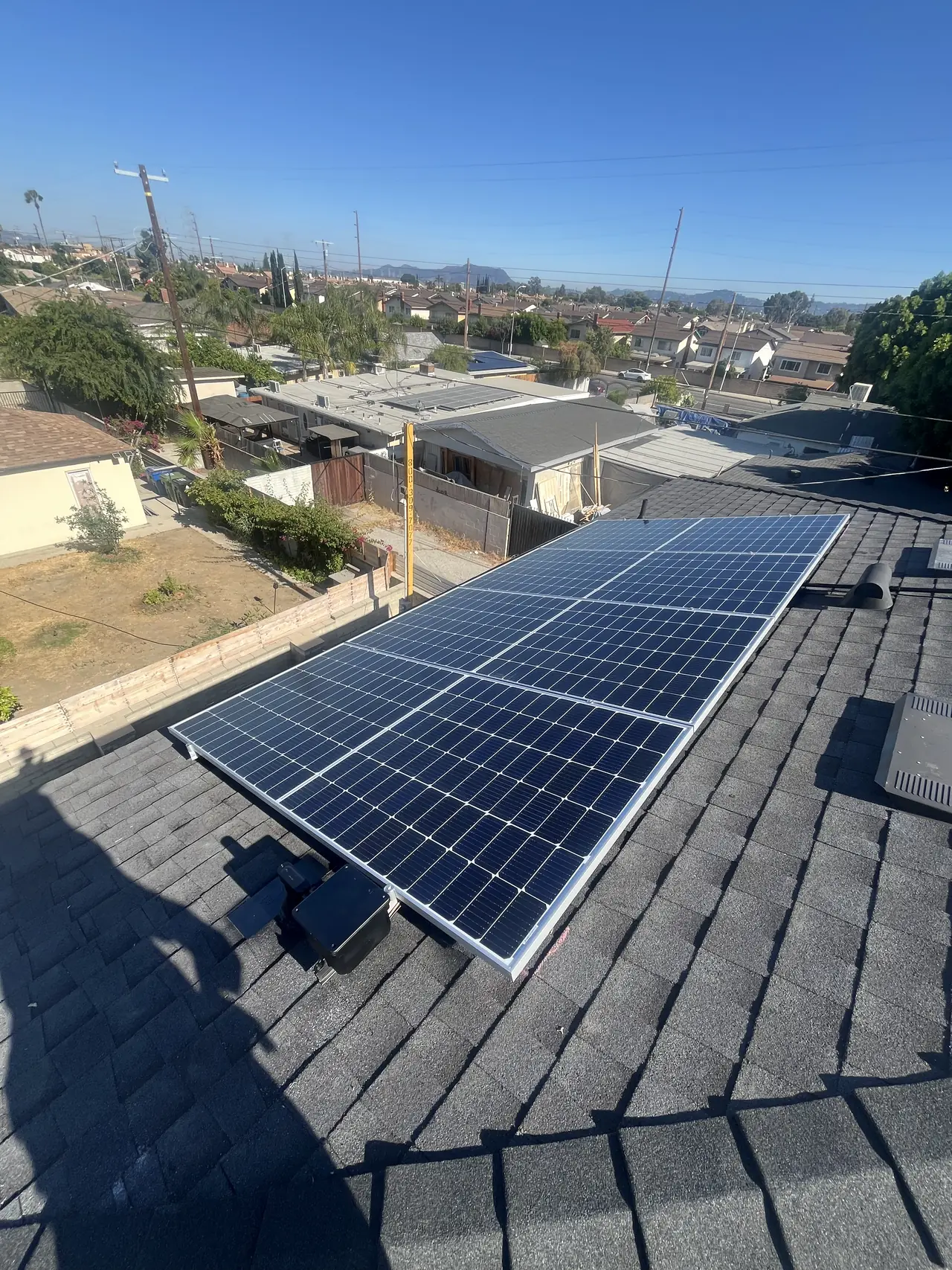
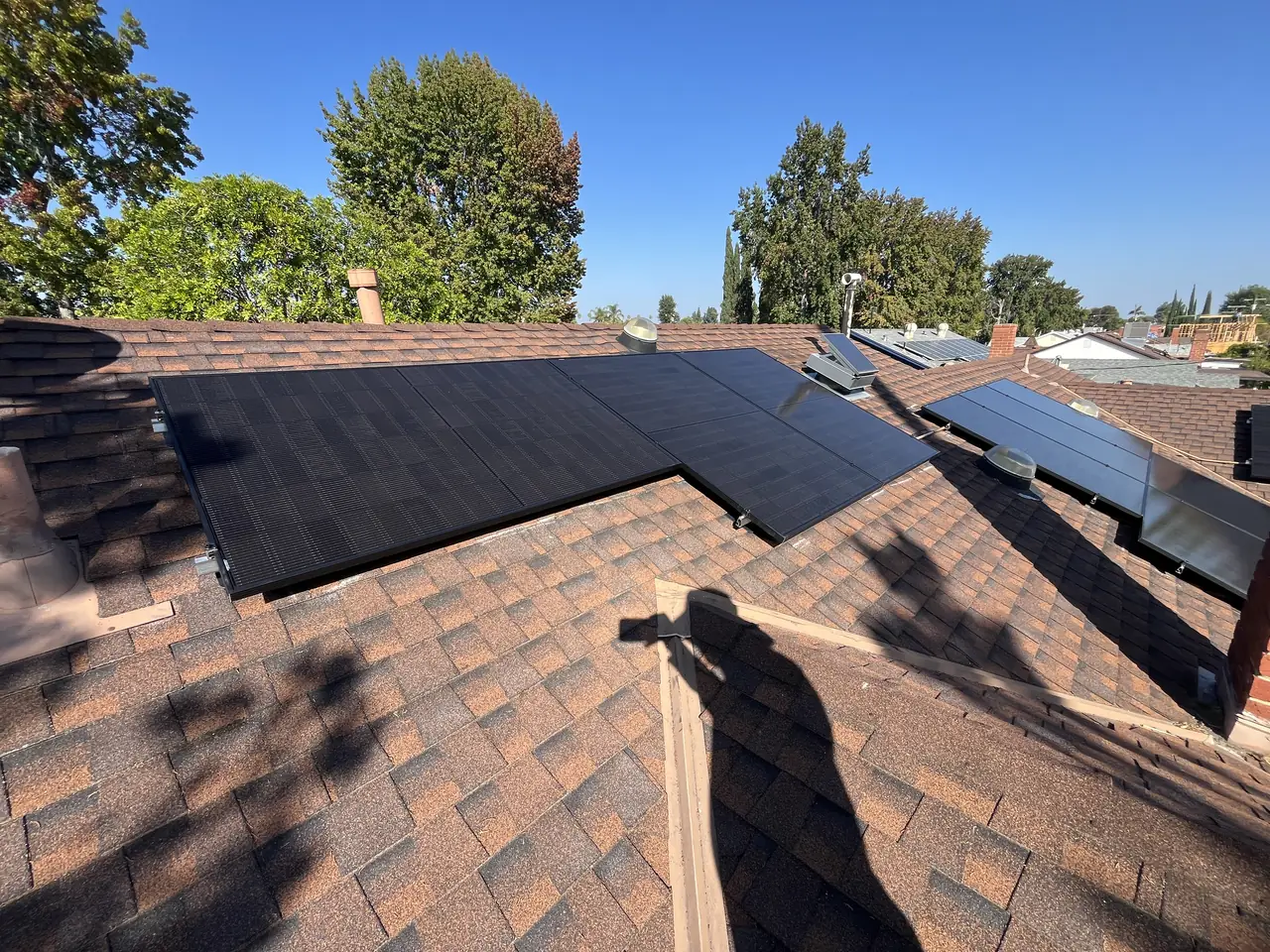
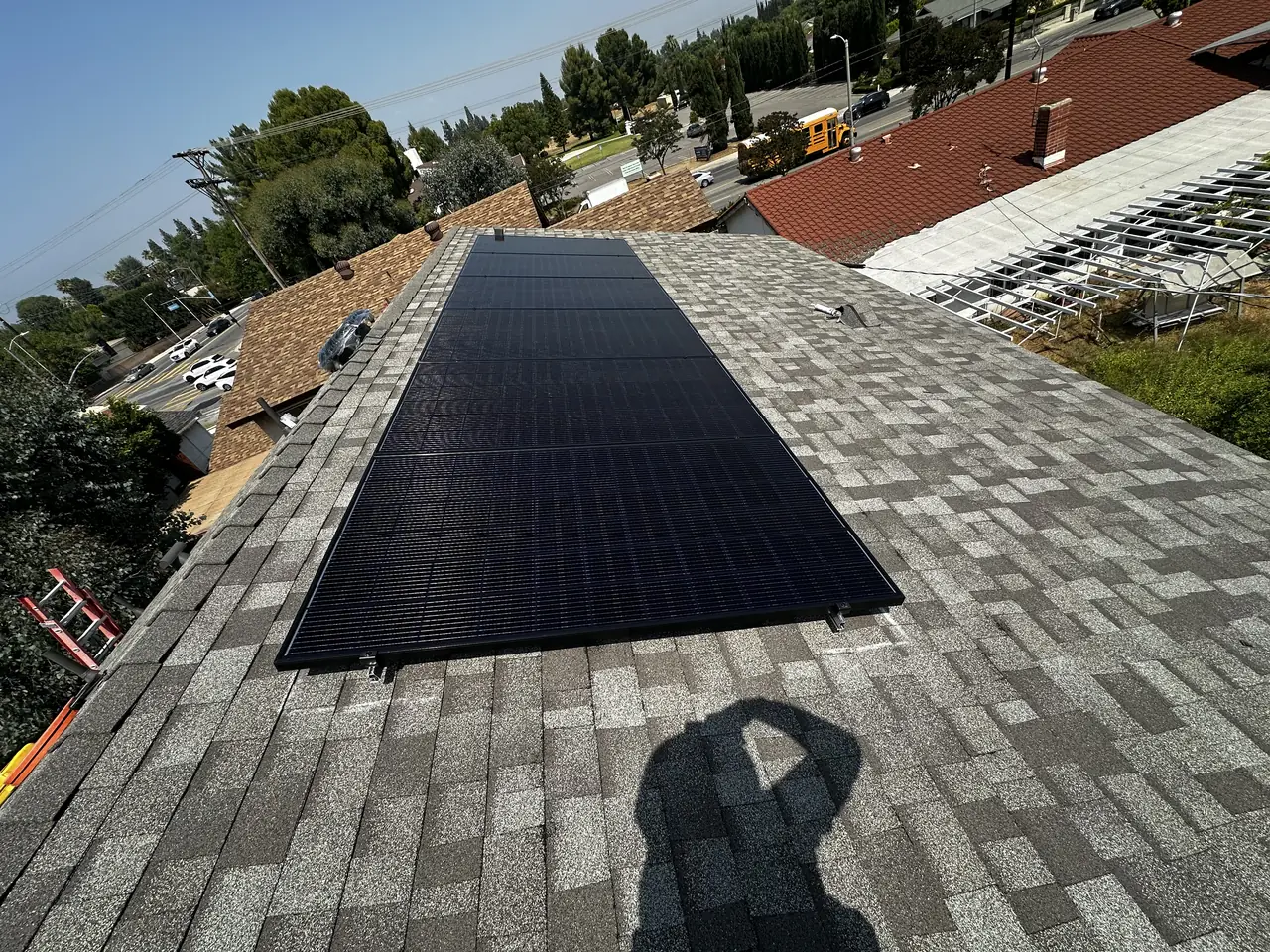
Here each building had a service and a meter of its own, and that is what decided the paperwork. An interconnection request attaches to a meter, so two meters meant two of everything: two work requests filed on the same day, two expenditure recovery charges paid two days later, two site evaluations, two building department releases and two grants of permission to operate — for arrays the utility recorded at 2.32 and 1.45 kilowatts. A second dwelling fed from the main house on one meter is a different job, and worth establishing before anybody quotes.
That is worth knowing before you budget an accessory dwelling unit. The modules and the labor scale with the roof; the filing scales with the number of meters. Two small arrays on two services carry two applications and two charges, and that pair of charges is the line people leave out of the budget.
Now the part that is specific to a house somebody builds to sell rather than to live in. On an owner-occupied job the person who knows what is happening on site is the person paying the bill, and they tell you. On a development there is an office, a general contractor, subcontractors and a solar installer, and information travels between them at whatever speed somebody remembers to send an email.
At the end of June the developer's office wrote to say a meter had been installed at the property by the utility, adding that they had only just worked out that this was something we needed to know. That is not carelessness so much as the ordinary shape of a job with four companies on it. But it mattered here, because until an ordinary meter exists there is nothing for the utility to change into a net meter — and because the system could not be commissioned until the metering was actually in place.
We went out the next morning to photograph the installation for the application. The gate was locked and nobody on site had been told to expect us, which cost an hour and two phone calls. Both of those are worth building into a schedule on a development: access is somebody else's decision, and that somebody is rarely the person who booked you.
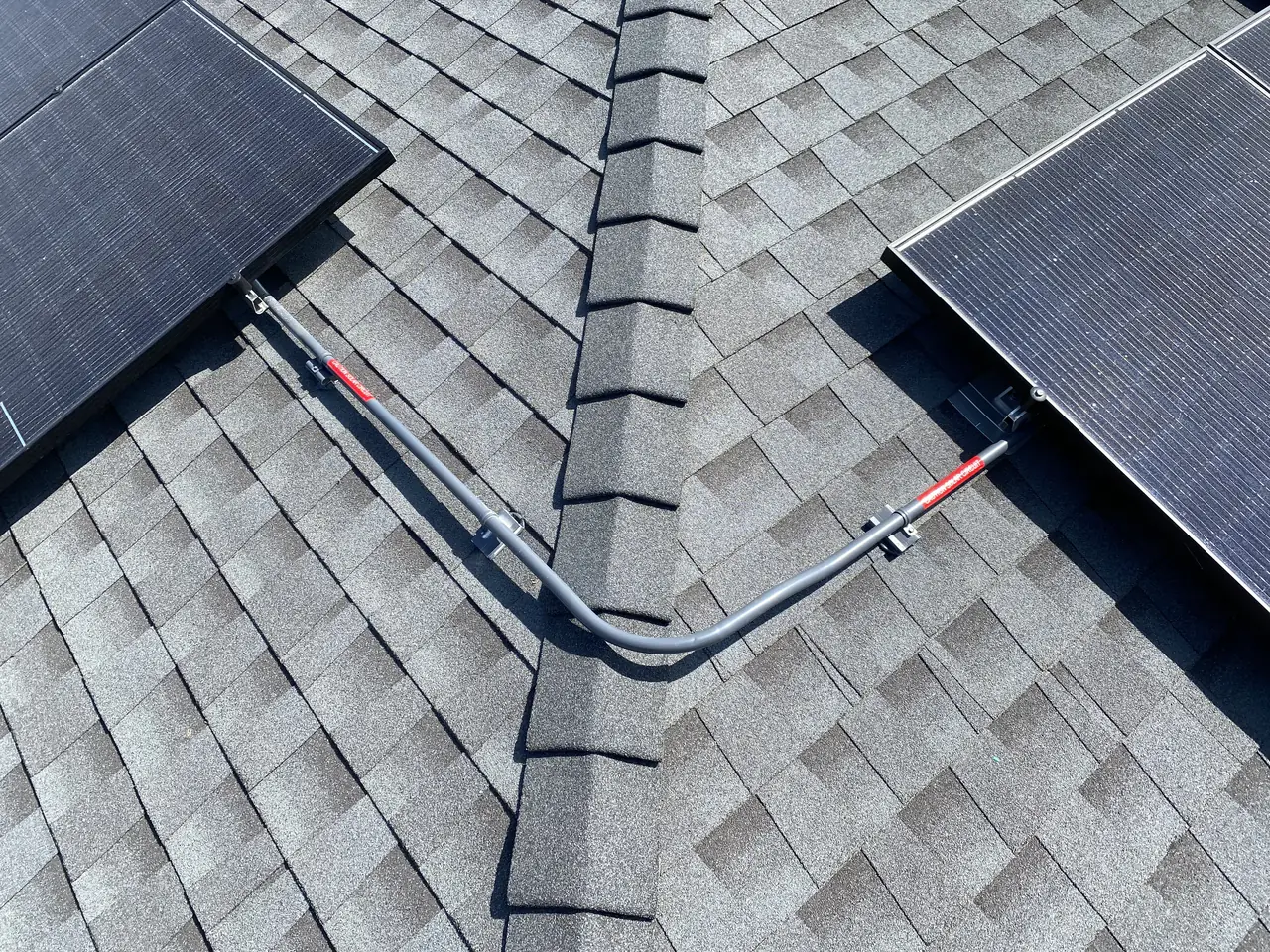
Once filed, the utility side moved quickly. The requests went in on the first of July and the fees on the third; five days after filing, the review, the confirmation and the site evaluation all landed on the same day for both dwellings. The building department's final release came in the middle of August, and permission to operate for both buildings arrived on the thirtieth — the same day the net meters went on. Sixty days from filing on each.
One detail from the permission notice matters if you are buying a newly built house with solar on it. The work type is recorded as a change: an existing meter was taken off and a net meter put on in its place. A new building gets an ordinary meter first so the site has power during construction, and the solar meter replaces it at the end. If somebody tells you a new house is already solar-ready, that is the step to ask about.
And if there are two dwellings, ask for both sets of numbers. Two buildings on one lot means two meters, two accounts and two interconnection records, and they do not have to be the same size or even switched on in the same month. Here they were. That was a choice somebody made, not a rule.
How it ran
| January 2022 | Existing house, accessory structure and garage demolished; old pool backfilled |
|---|---|
| 2022 | New two-story house with attached two-car garage, detached accessory dwelling and a new pool with spa |
| December 2022 | First contact about the solar |
| 28 June 2023 | Developer reports a meter has been installed at the property |
| 29 June 2023 | Site visit to photograph the installation for the application |
| 1 July 2023 | Two interconnection requests filed, one per dwelling |
| 3 July 2023 | Charges paid on both |
| 6 July 2023 | Review, confirmation and site evaluation on both, same day |
| 14 August 2023 | Building department final release; interconnection approved |
| 30 August 2023 | Permission to operate on both; net meters set |
Sixty days from filing to permission, on both dwellings at once.
What we did
- Filed a separate interconnection request for each dwelling on the same day.
- Installed both arrays on a lot that was still an active construction site.
- Photographed the installation for the application when the developer reported the meter was in.
- Carried both work requests from filing to permission to operate in sixty days.
- Left two meters and two sets of solar labeling on one wall, one per dwelling.
System specifications
| Dwellings | New two-story house and a detached accessory dwelling unit |
|---|---|
| Recorded by the utility | 2.32 kW on the house, 1.45 kW on the accessory unit |
| Modules | Silfab |
| Roof | Composition shingle, new |
| Work requests | Two, one per dwelling |
| Charges | Two, one per work request |
| Meters | Two; existing meters changed for net meters |
| Also on the lot | New pool with spa |
| Utility / AHJ | LADWP / LADBS |
Is your project like this one?
- You are building a second dwelling and want to know what doubles.
- You are a developer and solar is one of four trades on your site.
- You are buying a newly built house that already has an array on it.
- Your lot has two meters and you do not know which serves what.
- You want the accessory dwelling connected in its own right, not off the house.
Cali Energy in Studio City
Studio City is inside City of Los Angeles boundaries: permits run through LADBS, interconnection through LADWP.
A Studio City lot that changes hands usually changes shape: the old house comes down, a larger one goes up, and a second dwelling appears at the back. How the utility treats that depends on how the lot is metered.
This installation is on the Studio City projects page alongside the others, and what the work covers is set out on the Studio City service area page.
- License and classifications: CSLB #1032379
- Official reference for this process: LADWP interconnection requirements
- Official reference for this process: LADBS — accessory dwelling units
Frequently asked questions
Does an ADU need its own interconnection?
If it has its own service and its own meter, yes. On this lot the house and the accessory dwelling each had their own work request, their own charge and their own grant of permission to operate, for arrays the utility recorded at 2.32 and 1.45 kilowatts.
Does filing two requests cost twice as much?
The utility charge is per work request, and a work request attaches to a meter — so two separately metered dwellings means two charges. It is the count of services that doubles the paperwork, not the size of the arrays.
Can both dwellings be switched on at once?
They can, and here they were — both grants of permission arrived on the same day, sixty days after filing. It is not automatic, though. Two work requests can move at different speeds, and filing them together is what keeps them in step.
Why was the meter changed rather than installed?
Because a new building gets an ordinary meter first, so the site has power while it is being built. The net meter replaces it once the solar is released. On this lot the permission notice records both dwellings as a meter change rather than a new set.
What is different about solar on a developer's build?
Who knows what, and when. On an owner-occupied job the person paying tells you what is happening. On a development the information sits with an office, a general contractor and several subcontractors, and it reaches the solar installer last. Build site access and notice into the schedule rather than assuming them.
What this would look like on your roof
Planning solar in Studio City? Tell us your utility, your roof and what your bill looks like now, and we will model what a system like this would do on your house before you commit to anything.
Or call +1 (323) 844-7777 · Cali Energy, Northridge · CSLB #1032379 (B, C-10, C-39) — design, permits, install and electrical under one licensed contractor.
Related
This timeline reflects this property and this permitting path. Updated September 2026.