

Panorama City, CA · December 2024 · LADWP / LADBS
Two meters on one Panorama City wall. One roof, and one day on it.
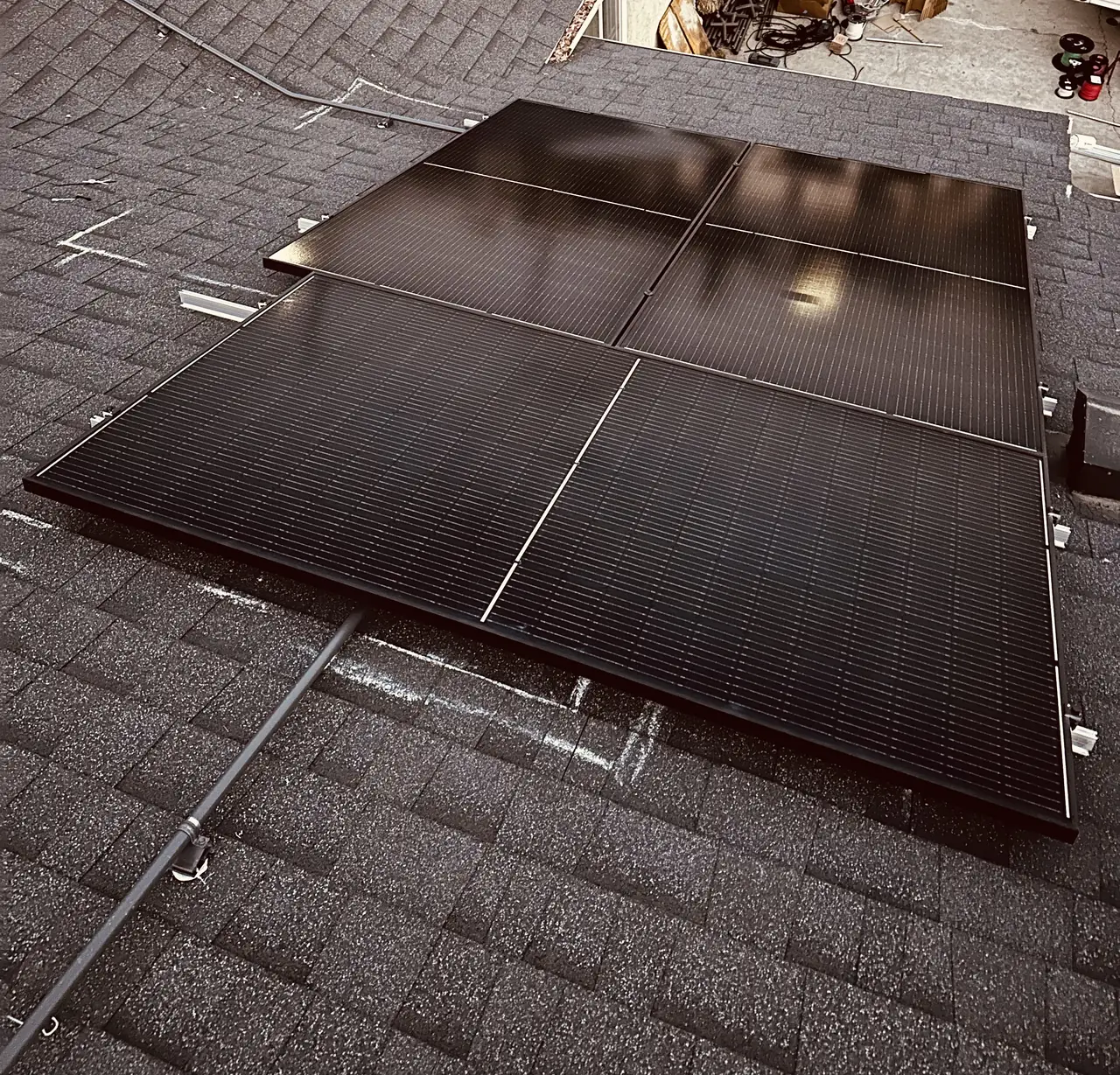
Four hundred watt modules, a microinverter under each, and a shingle roof that went from chalk lines to a finished array inside a single working day.
An ordinary residential array on composition shingle is a one-day job when the design is settled before the crew arrives and the property's electrical questions have already been answered. On this Panorama City property, in the north end of the City of Los Angeles, two separate services share one exterior wall, so the first decision was which one the array would feed. Cali Energy set the flashings and standoffs, ran the conduit, mounted the microinverters and laid the modules between eight in the morning and last light, with the roof penetrations flashed rather than sealed with compound alone.
At a glance
- Modules
- Hyundai HiS-S400YH(BK), 400 W, all black
- Microinverters
- Enphase IQ8M, one per module
- Roof
- Composition shingle, two planes
- Attachment
- Flashed standoffs; no compound-only penetrations
- Services on the property
- Two, on one exterior wall
- Battery
- None
- Work on site
- One day
- Utility / AHJ
- LADWP / LADBS
The story
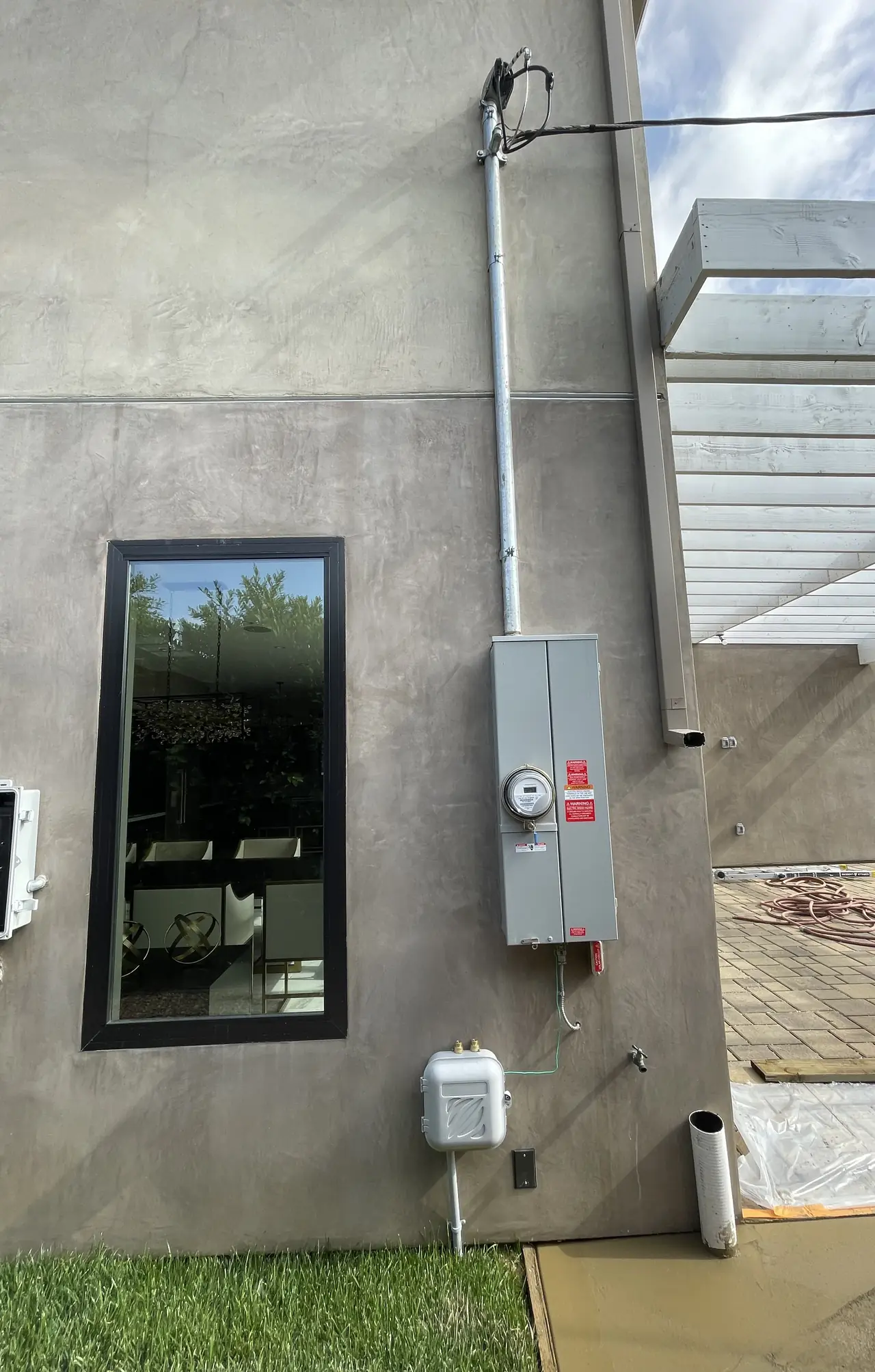
The crew was on the property at two minutes past eight, and the first job of the morning was not the roof. It was the wall.
Two services sit side by side here, each with its own meter and its own enclosure, the way a great many properties in this part of the Valley were built. On a job like this the question that has to be settled before anything goes on the roof is which service the array lands behind, because that decides the breaker, the conduit route and which account the production is credited to. Getting it wrong is not a correction. It is a rebuild.
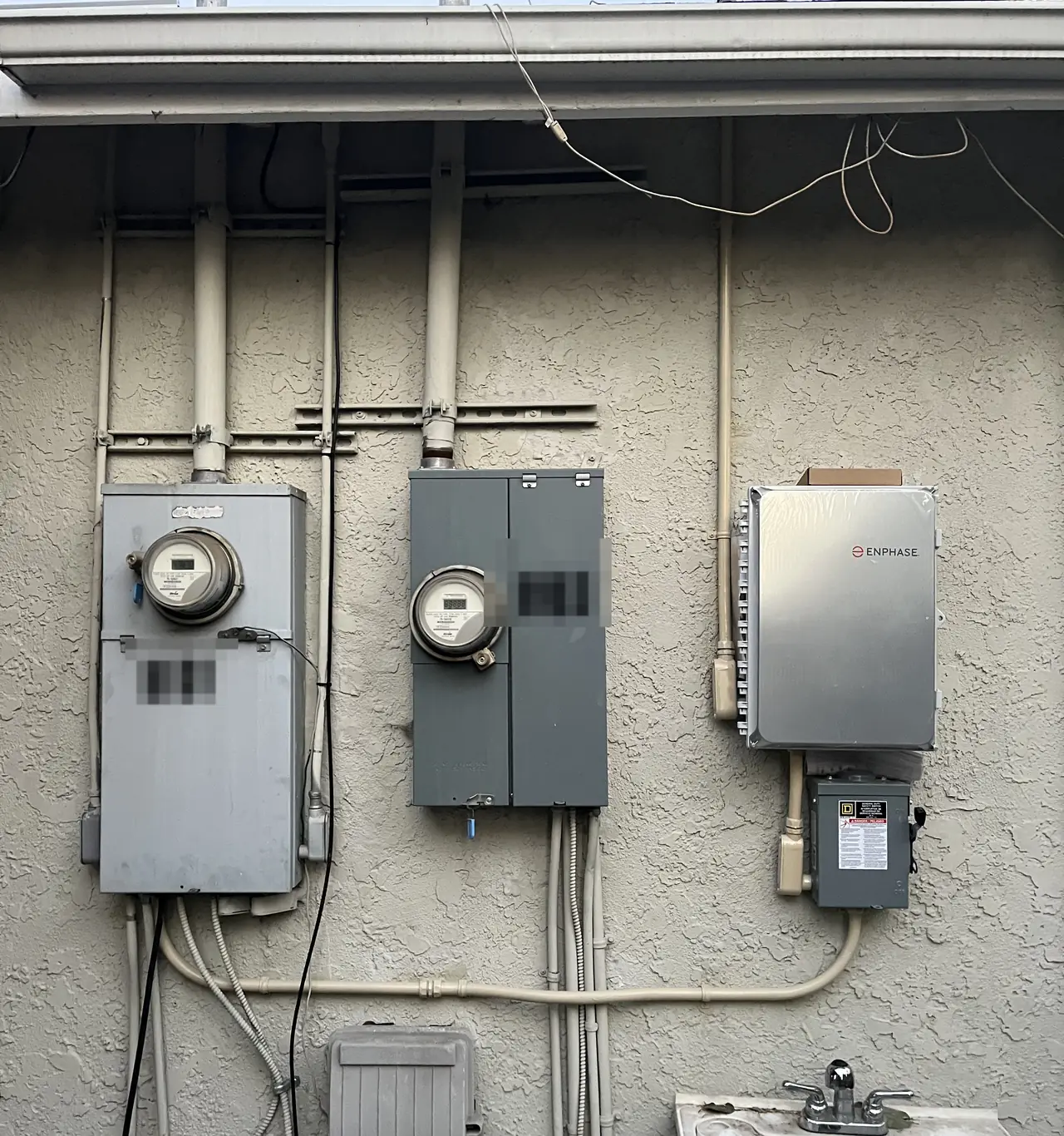
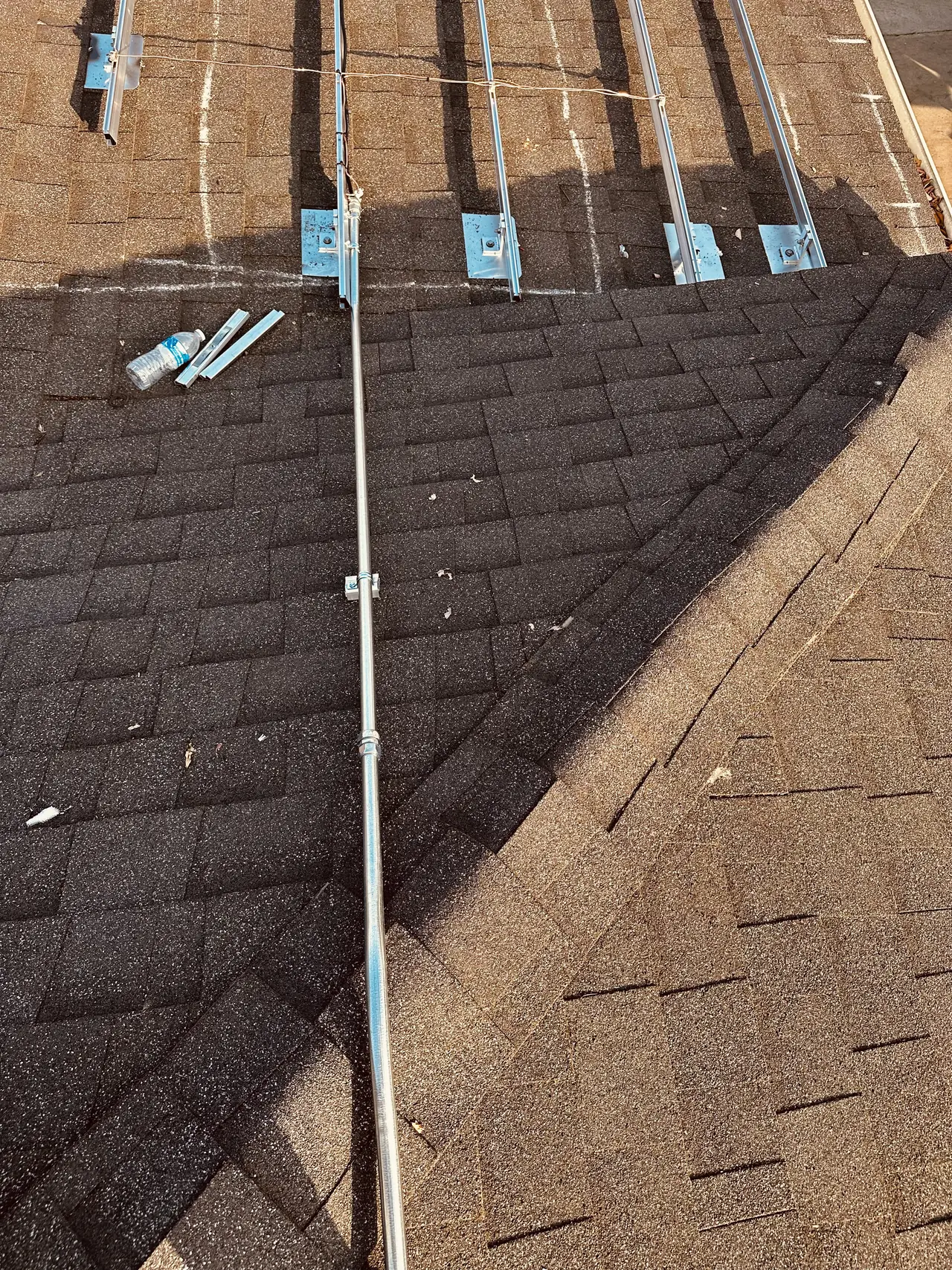
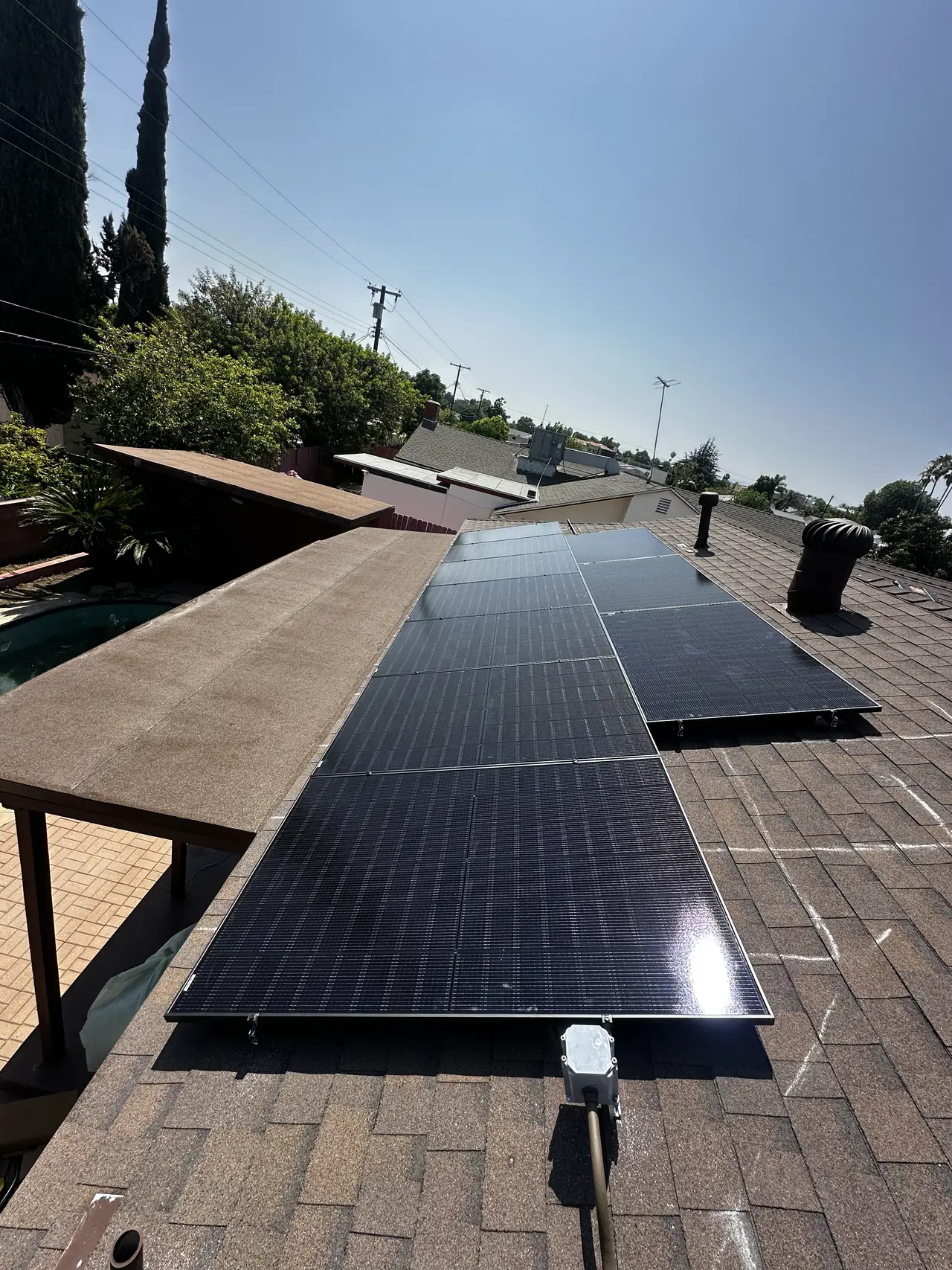
By mid-morning the electrical was done and the crew moved up. The chalk lines were already on the shingle: the array outline and the rail positions, snapped before a single hole was drilled, which is how you find out that a layout does not fit while it still costs nothing to change.
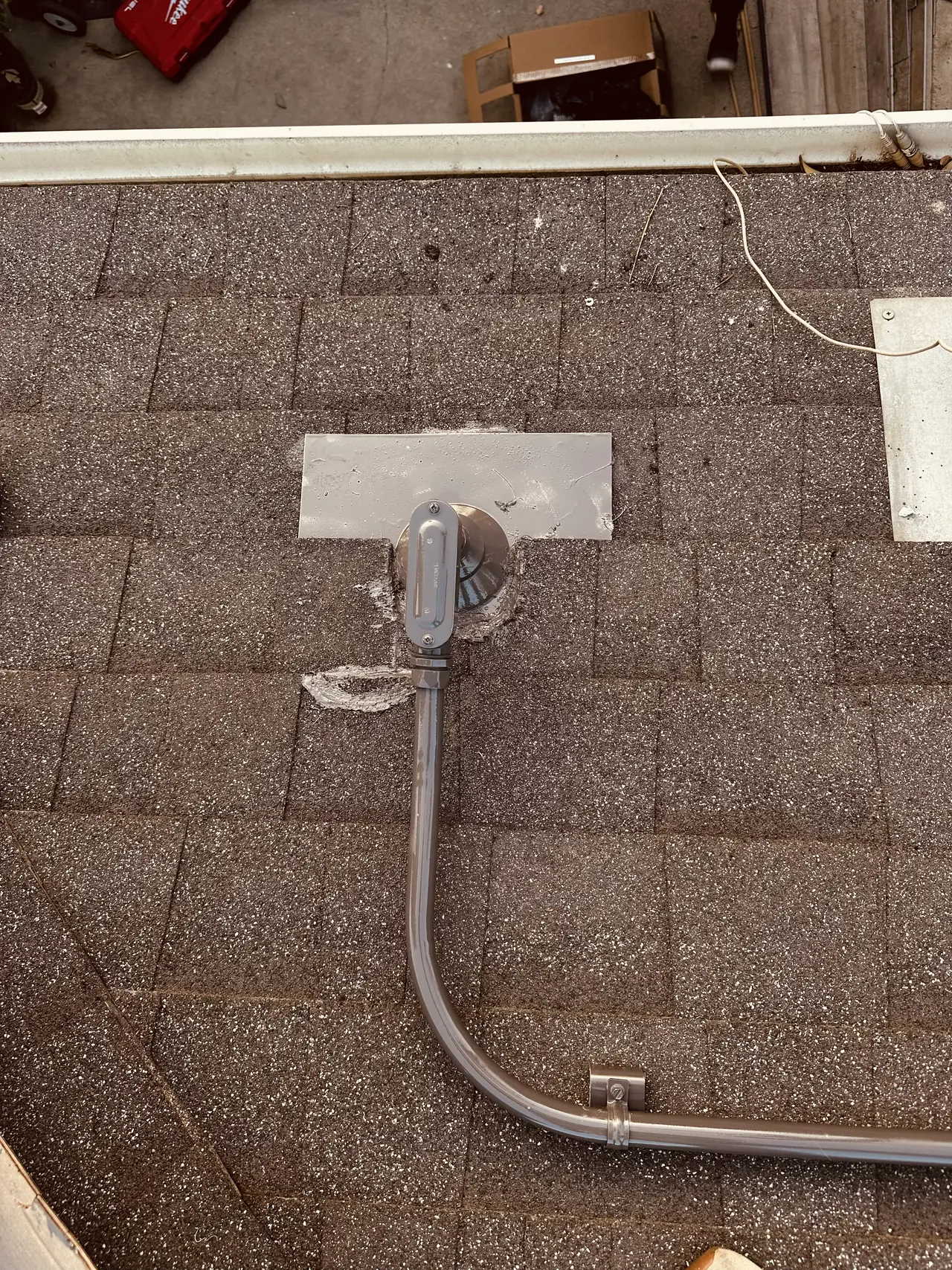
Look closely at that detail if you are deciding between installers. A penetration through a shingle roof can be done two ways. It can be drilled and filled with sealant, which works until the sealant ages, or the course above can be lifted and a flashing plate slid underneath so the water is carried over the top of the opening by the roof itself. The second way takes a few minutes longer per hole. It is the only one that is still working in fifteen years.
The modules are four hundred watt all-black units with a microinverter under each one. A microinverter under every module means the array has no string voltage to manage, each module is measured on its own, and the shading of one does not drag its neighbors down with it. It also means the rapid shutdown the code requires is built into the hardware rather than added as a separate device.
One number on the module label is worth carrying away. These modules open at about forty-five volts and are rated for a fifteen hundred volt system, which is a figure that matters enormously on a string inverter and not at all here. The microinverter under each module accepts a direct-current input between sixteen and fifty-eight volts, which is one module and no more. Nothing on this roof ever sits at a voltage that could not be handled by hand, and that is a safety property of the design rather than of the crew.
The second thing the labels give you is the ratio. Four hundred watts of module feeding a microinverter rated at three hundred and twenty-five volt-amperes continuous is deliberate, not a mismatch. Modules almost never reach their rated output in the real world, so the direct-current side is sized above the alternating-current side on purpose; the array spends more of the day at the microinverter's best operating point, and the handful of hours a year it would have exceeded it are cheaper to give up than to buy hardware for.
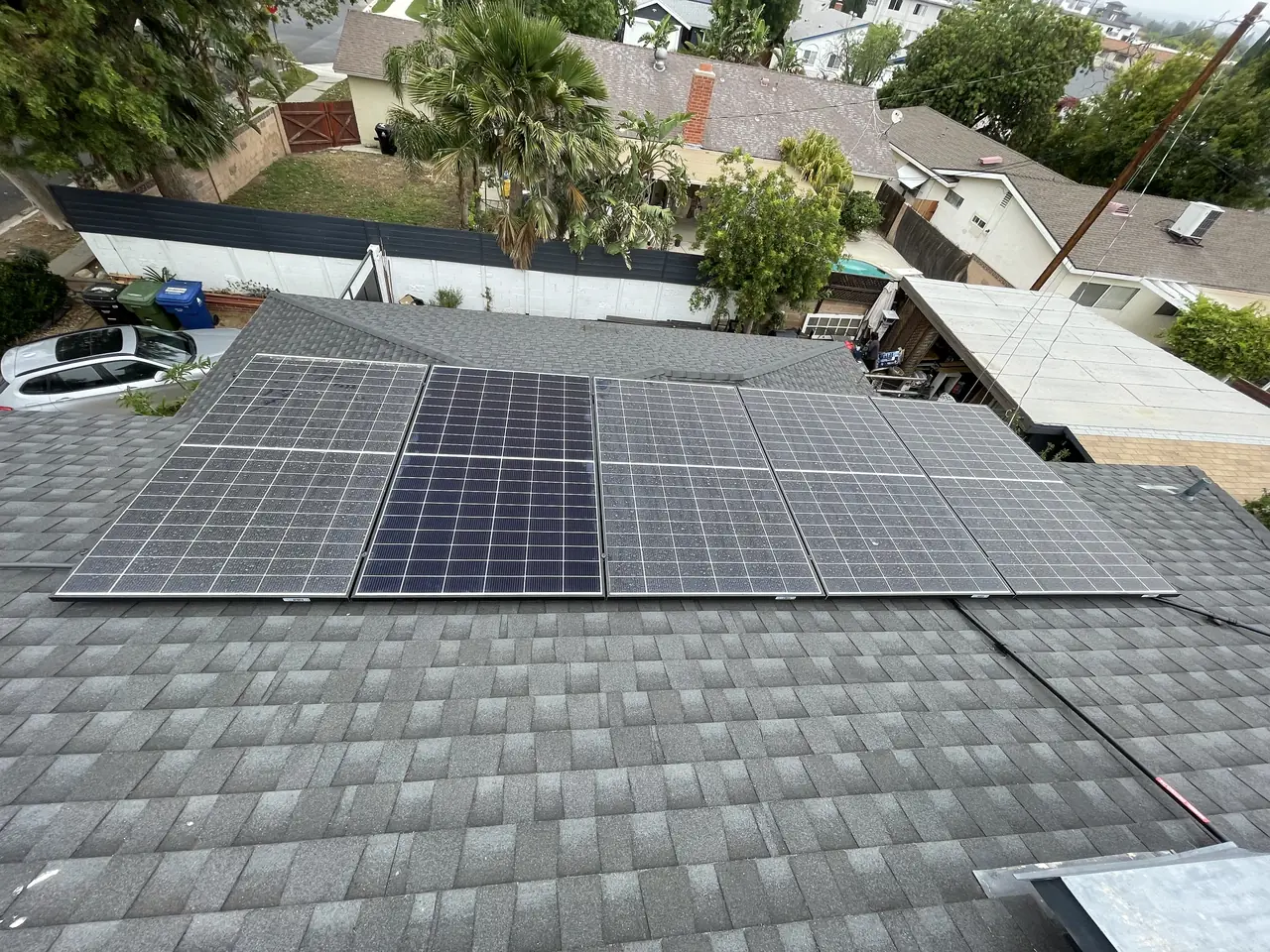
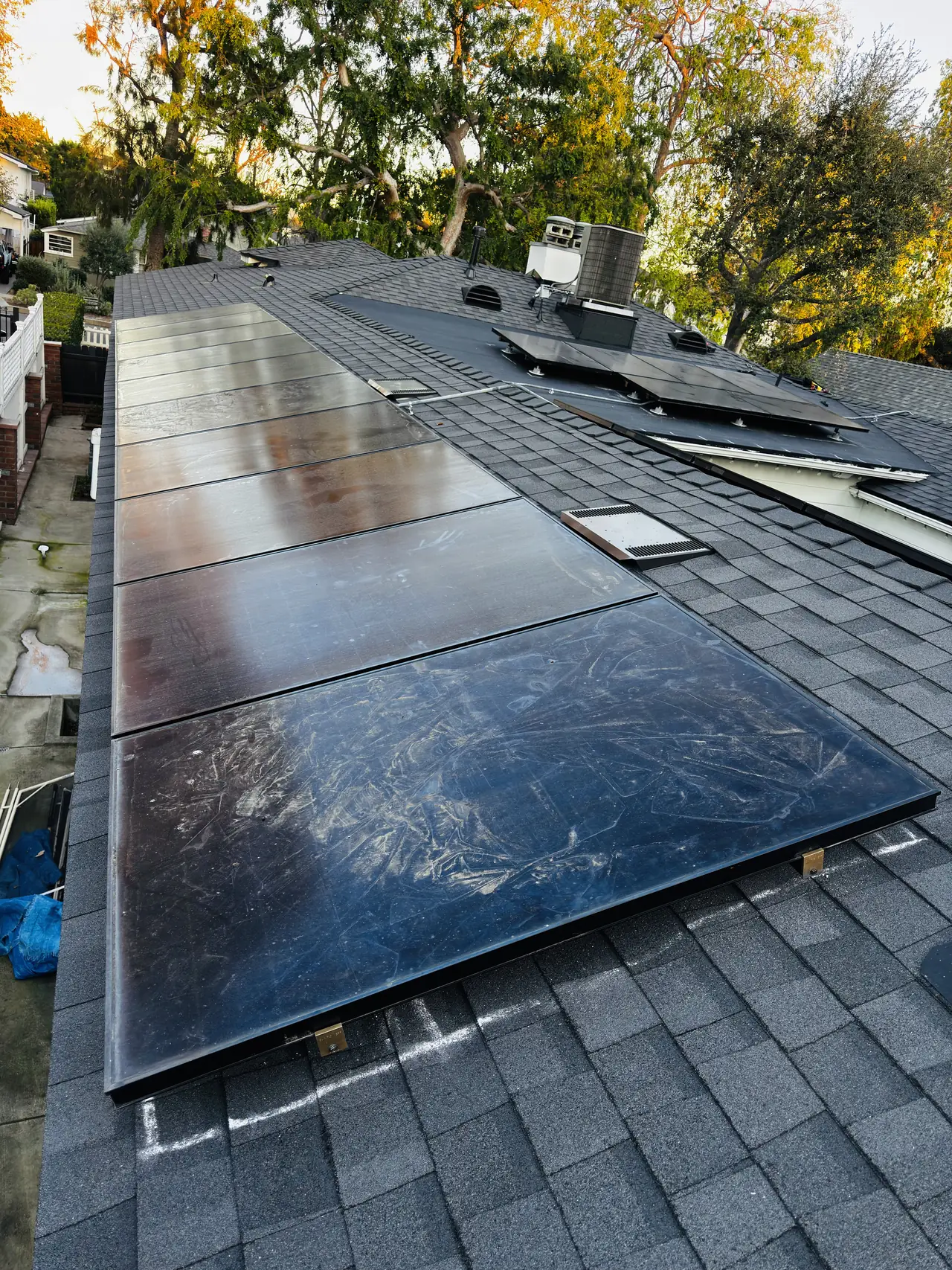
The modules went down through the afternoon. By five the array was complete on both planes, every module connected to the microinverter under it and the whole run closed back into the combiner on the wall. The crew walked the roof once more after dark, checking every attachment and every clamp, and left nothing on the property to come back for.
One day on site, from a bare roof to a finished array. That is what an ordinary residential job looks like when the design is settled first, and it is the reason the projects that run long almost never lose their time on the roof.
How it ran
| 8:02 | Crew on site; the existing services on the wall photographed before anything is touched |
|---|---|
| 10:45 | Electrical work at the wall complete |
| 13:20 | Microinverters checked and staged on the roof |
| 15:15 | Flashings and standoffs set to the lines snapped that morning; rails run on both planes |
| 16:15 | Conduit complete; the first modules set |
| 16:25 | Module and equipment labels photographed and checked against the design |
| 17:05 | Array complete on both planes and connected |
| 18:02 | Last walk of the roof, after dark |
Start to finish inside one visit, with no second trip for anything.
What we did
- Settled which of the property's two services the array would land behind before the design was drawn (C-10).
- Snapped the array outline and rail positions on the shingle before drilling a single hole.
- Flashed every roof penetration under the course above rather than sealing it with compound.
- Installed four hundred watt modules with a microinverter under each, so rapid shutdown is in the hardware and no module is measured as part of a string.
- Completed the installation inside one working day.
System specifications
| Modules | Hyundai Energy Solutions HiS-S400YH(BK), 400 W, all black |
|---|---|
| Module electrical | 45.3 V open circuit, 11.25 A short circuit, 1500 V system |
| Microinverters | Enphase IQ8M, 325 VA continuous at 240 V, one per module |
| Rapid shutdown | Module-level, built into the microinverter |
| Roof | Composition shingle |
| Attachment | Flashed standoffs with the flashing under the course above |
| Battery | None |
| Utility / AHJ | LADWP / LADBS |
Is your project like this one?
- Your lot has two dwellings and two meters and you do not know which one solar should feed.
- You want to know how a solar installer makes holes in a shingle roof.
- You have been offered a string inverter and a microinverter system and want the difference in plain terms.
- Your roof is composition shingle and you are wondering how long the work takes.
- Your Panorama City property is served by LADWP, while permits are handled by LADBS.
Cali Energy in Panorama City
Panorama City is inside City of Los Angeles boundaries: permits run through LADBS, interconnection through LADWP.
A great deal of the housing here was built as pairs: two dwellings on one lot, two services on one wall, two accounts with the utility. It changes almost nothing about how an array is built and almost everything about which meter it has to land behind, which is a question to settle before the design is drawn rather than on the day.
This installation is on the Panorama City projects page alongside the others.
- License and classifications: CSLB #1032379
- Official reference for this process: California Energy Commission — solar equipment lists
- Official reference for this process: NFPA 70, National Electrical Code — Article 705, interconnected power sources
Frequently asked questions
Which meter should solar connect to on a property with two services?
The one belonging to the dwelling whose consumption the system is sized against. Production is credited to the account behind the meter the array feeds, so an array sized for one unit and connected to the other will not offset what it was bought to offset. This is a design decision, not a field decision, and it has to be settled before the drawings are stamped.
How should a solar penetration through a shingle roof be made?
With a flashing plate slipped under the course above the hole, so the roof itself carries water over the opening. A penetration sealed with compound alone depends on the sealant lasting as long as the array, which it does not. Every penetration on this roof was flashed.
What does a microinverter under each module change?
Three things. There is no high-voltage string on the roof, each module is measured and reported on its own, and the rapid shutdown the electrical code requires is built into the device rather than added separately. The trade is more hardware on the roof and a higher up-front cost.
Can a residential array really be installed in one day?
An ordinary one, yes, when the design is settled and the materials are on site. The projects that take weeks lose their time to permits, corrections and interconnection reviews, not to the work itself. This array went from a bare roof to complete between eight in the morning and last light.
Does Cali Energy install on shingle roofs in Panorama City?
Yes, and shingle is the most common roof in this neighborhood. On this Panorama City property Cali Energy set flashed standoffs, ran the conduit, mounted Enphase IQ8M microinverters and completed the array in a single day. California contractor license number 1032379.
What this would look like on your roof
Planning solar in Panorama City? Tell us your utility, your roof and what your bill looks like now, and we will model what a system like this would do on your house before you commit to anything.
Or call +1 (323) 844-7777 · Cali Energy, Northridge · CSLB #1032379 (B, C-10, C-39) — design, permits, install and electrical under one licensed contractor.
Related
This timeline reflects this property and this permitting path. Updated September 2026.