

Panorama City, CA · December 2021 – May 2022 · LADWP / LADBS
Twenty-nine days from filing to permission to operate in Panorama City.
Nine modules laid almost flat on a low-slope roof, an equipment wall with nothing exotic on it, and a utility review that cleared in four days. From the day the application went in to the day the meter was set: twenty-nine days, no corrections.
A finished solar array produces nothing for its owner until the utility sets a net meter, and the clock that decides when that happens starts on the day the interconnection application is filed, not on the day the modules go on the roof. On this Panorama City project, in LADWP territory inside the City of Los Angeles, the array was on a low-slope roof in December and the application went in the following May; from filing to permission to operate took twenty-nine days, with the utility clearing its review in four. Cali Energy filed the application, assembled the photograph package the utility requires and closed the job out with the unconditional lien release on the day the meter was set.
At a glance
- Recorded by the utility
- 2.9 kW AC-CEC
- Array
- 9 modules, one microinverter under each
- Roof
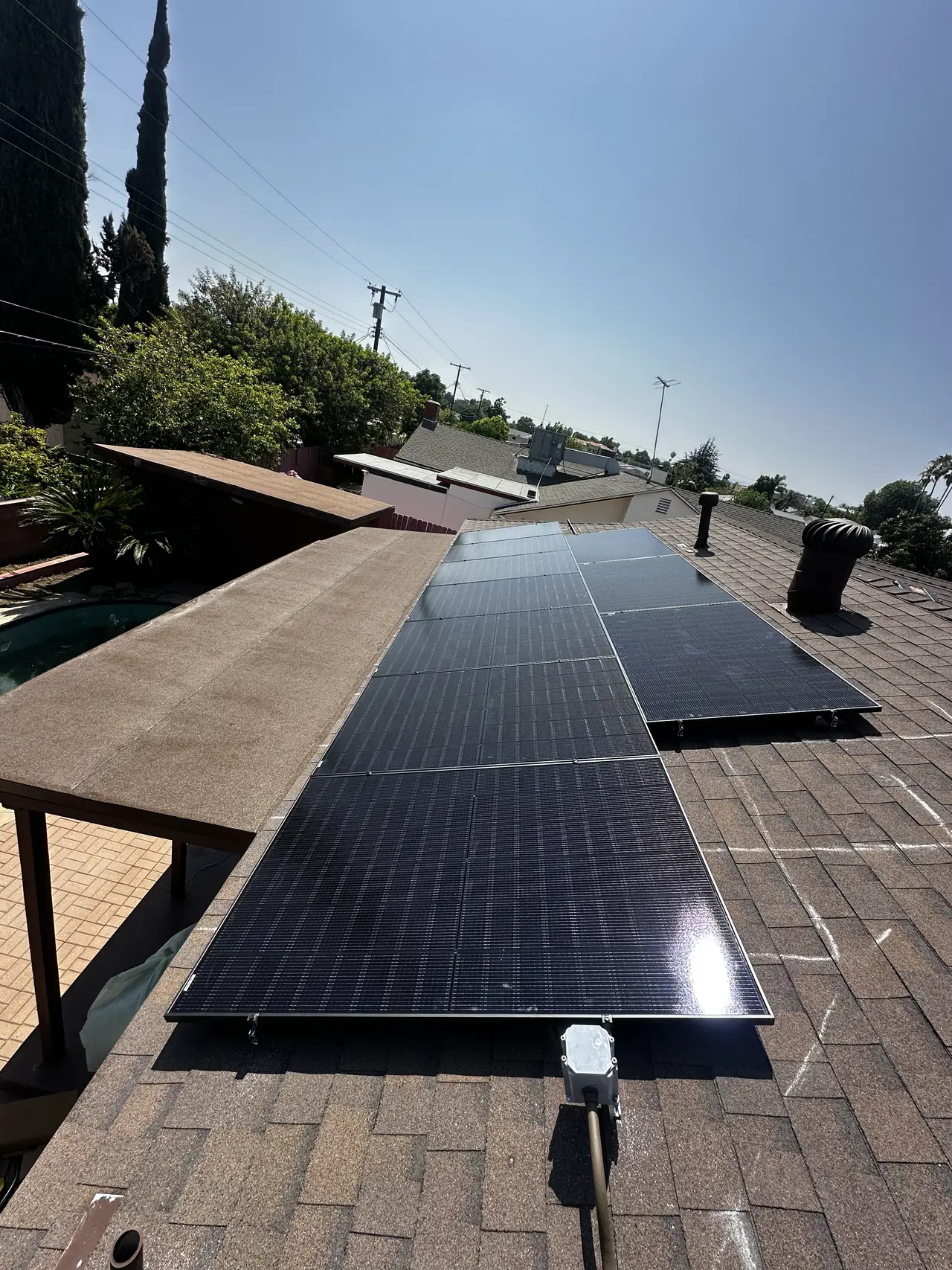
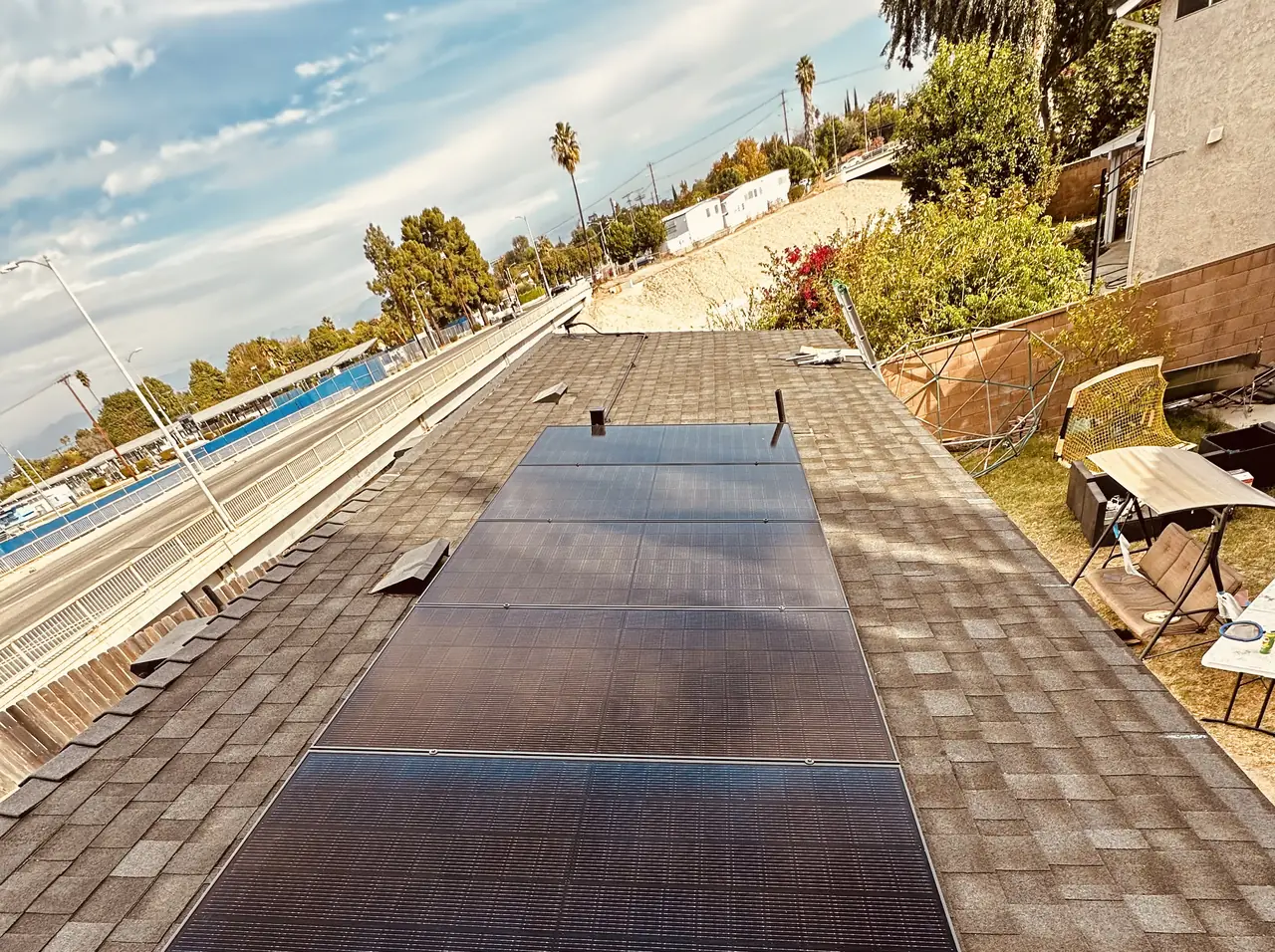
- Low-slope, modules set close to horizontal
- Combiner
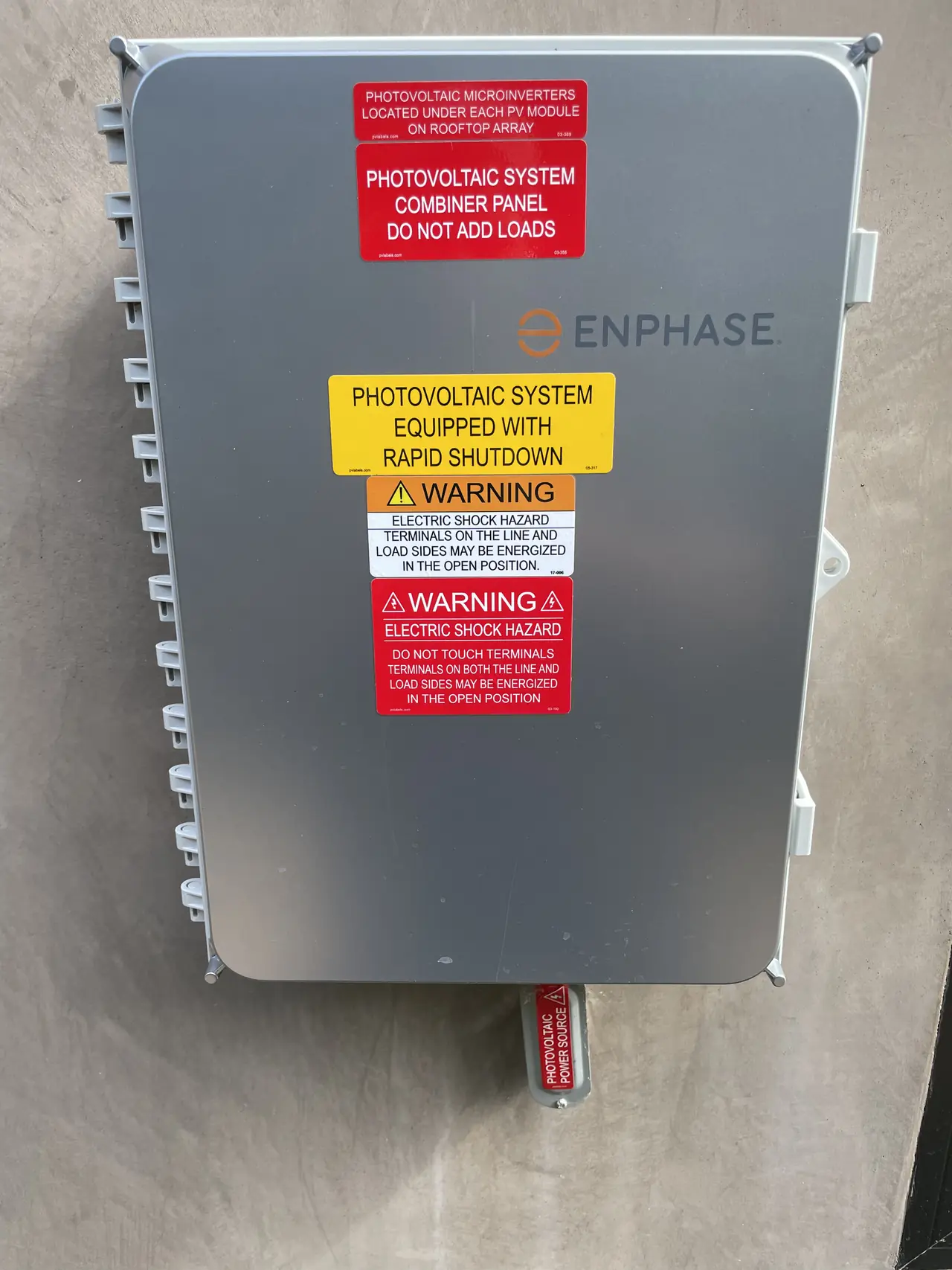
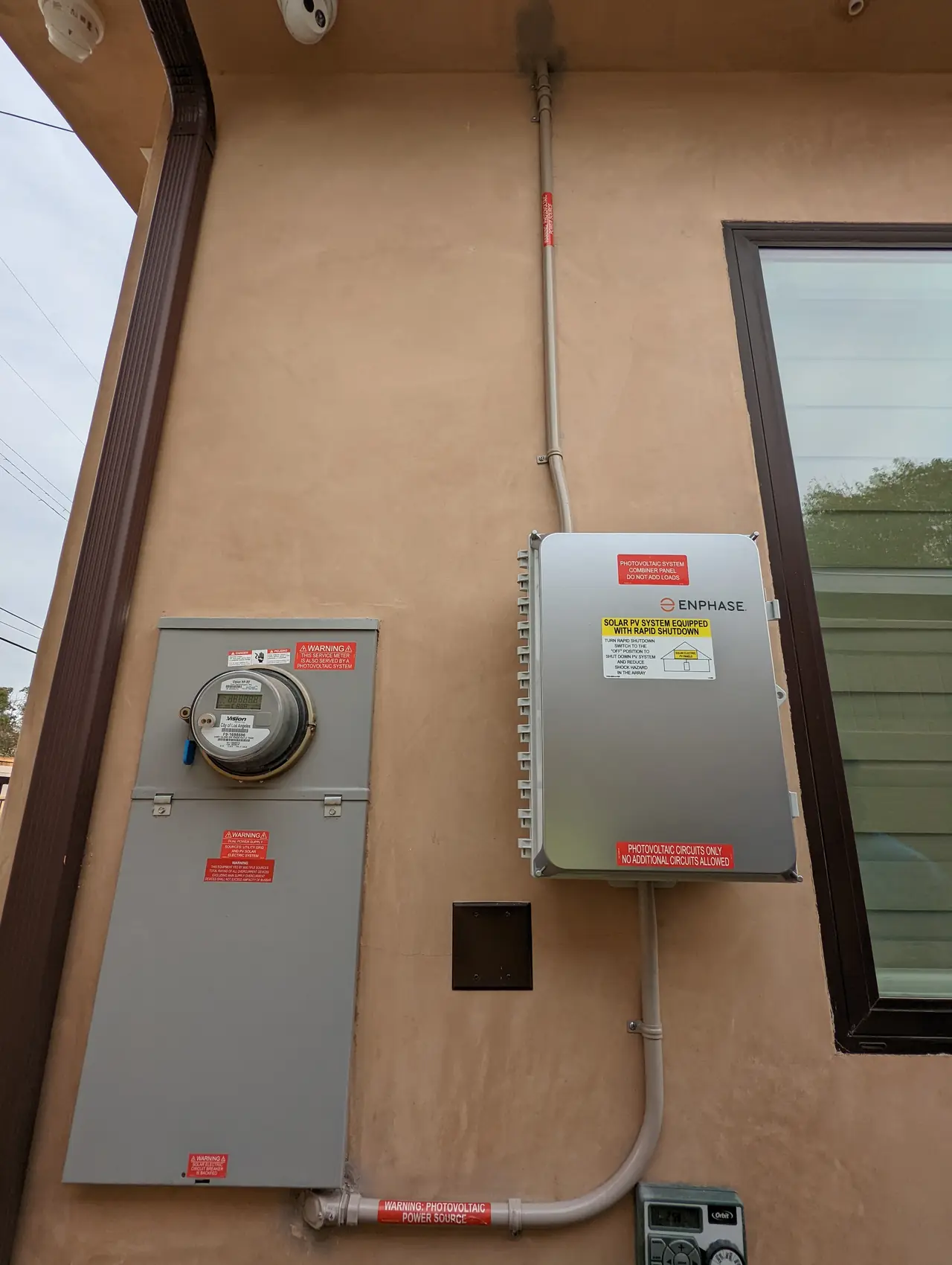
- Enphase, with the full placard set
- Battery
- None
- Filing to permission to operate
- 29 days
- Utility review
- Cleared in 4 days, no corrections
- Utility / AHJ
- LADWP / LADBS
The story
Nine modules is a small system by any measure, and small systems are where process costs show up most clearly. The equipment is the same, the paperwork is the same, and the number of kilowatts across which all of it has to make sense is a fraction of a typical job.
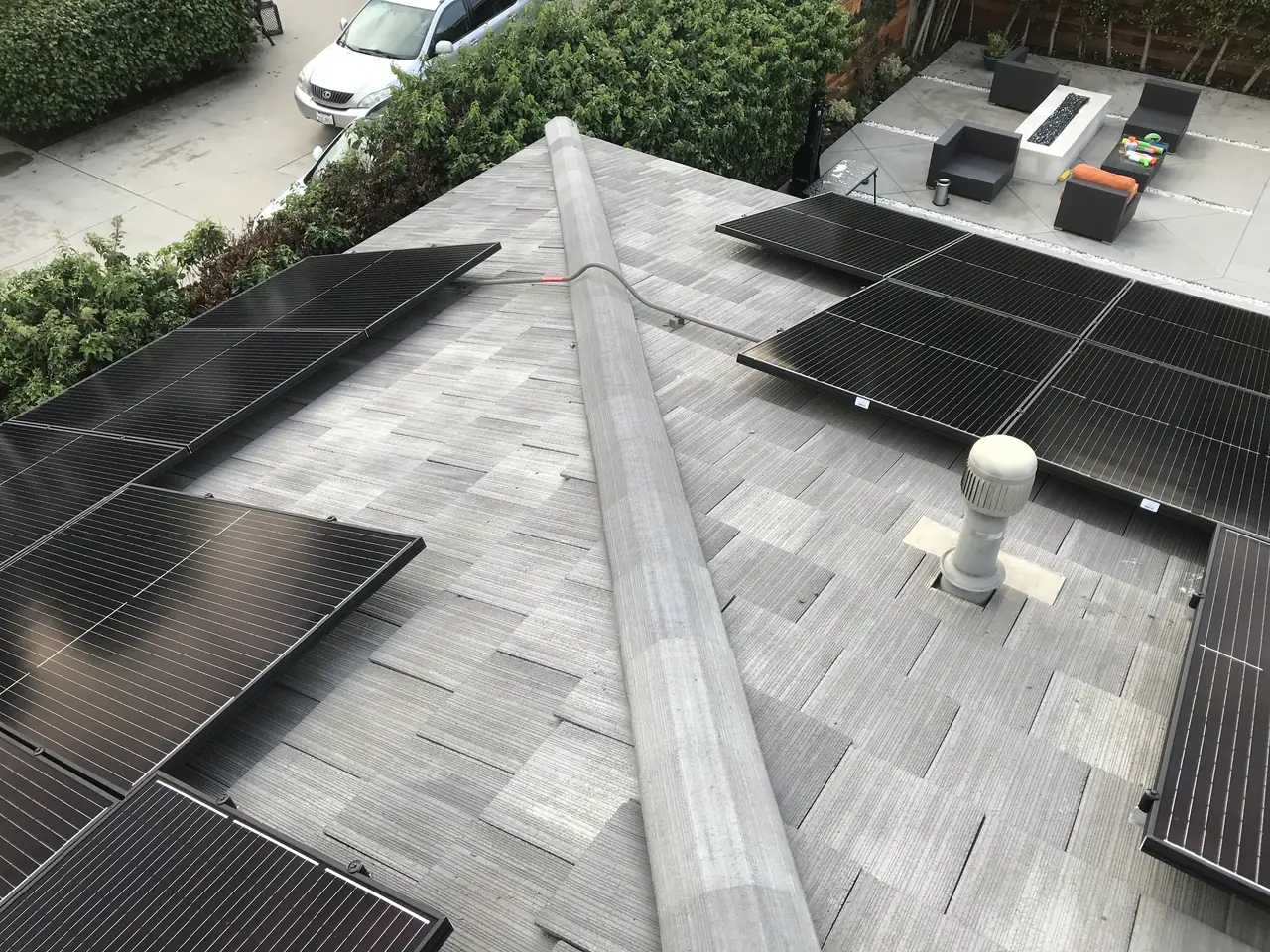
The modules went on in December, laid almost flat on a low-slope roof. That is not the compromise it sounds like. On a roof with no usable pitch the alternative is a tilted frame, and a tilted frame on a low-slope roof buys a few percent of production in exchange for wind load, extra penetrations, a taller profile the neighbors can see and a structural calculation somebody has to pay an engineer for. Flat and low is usually the right trade on a system this size.
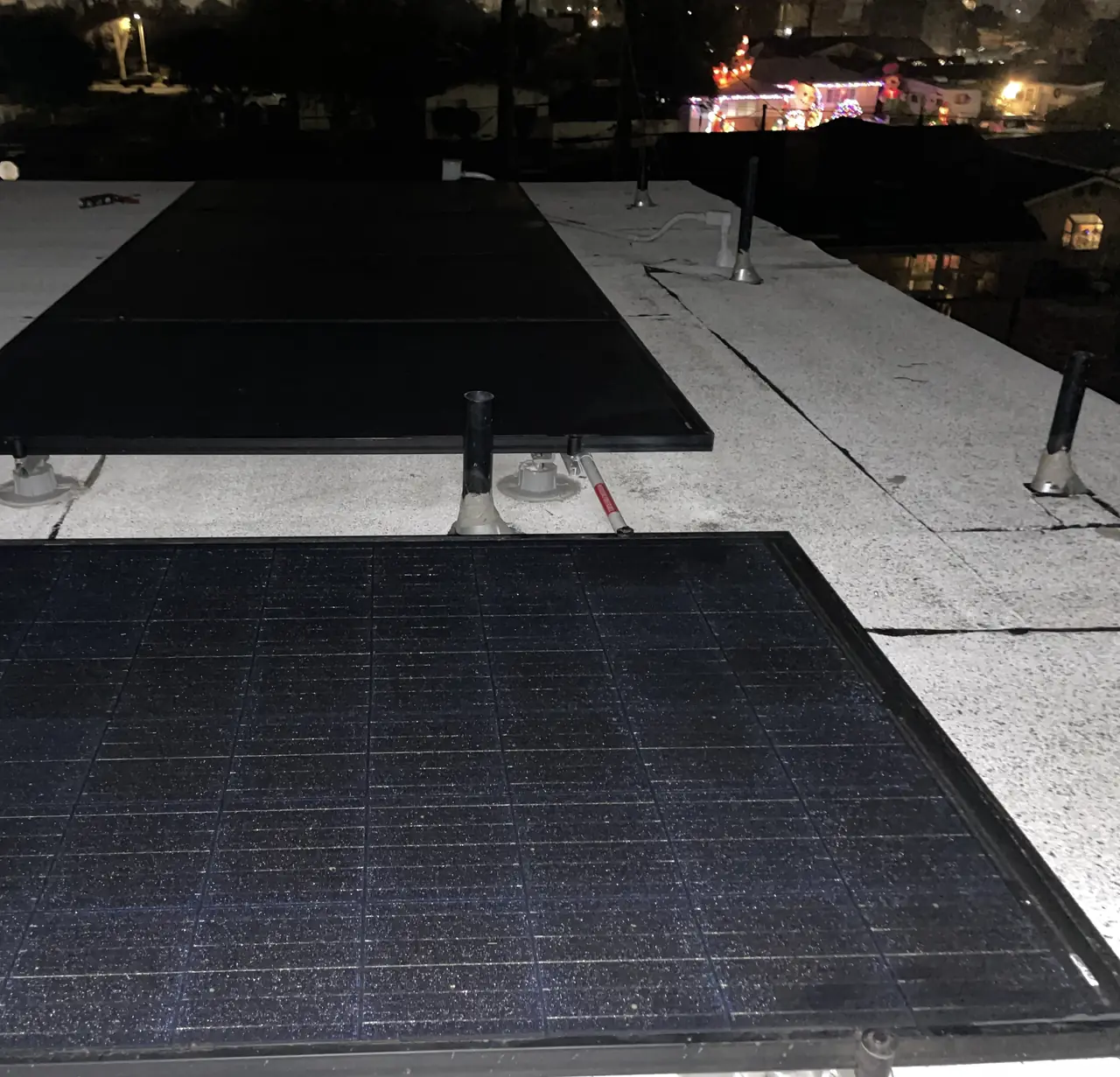
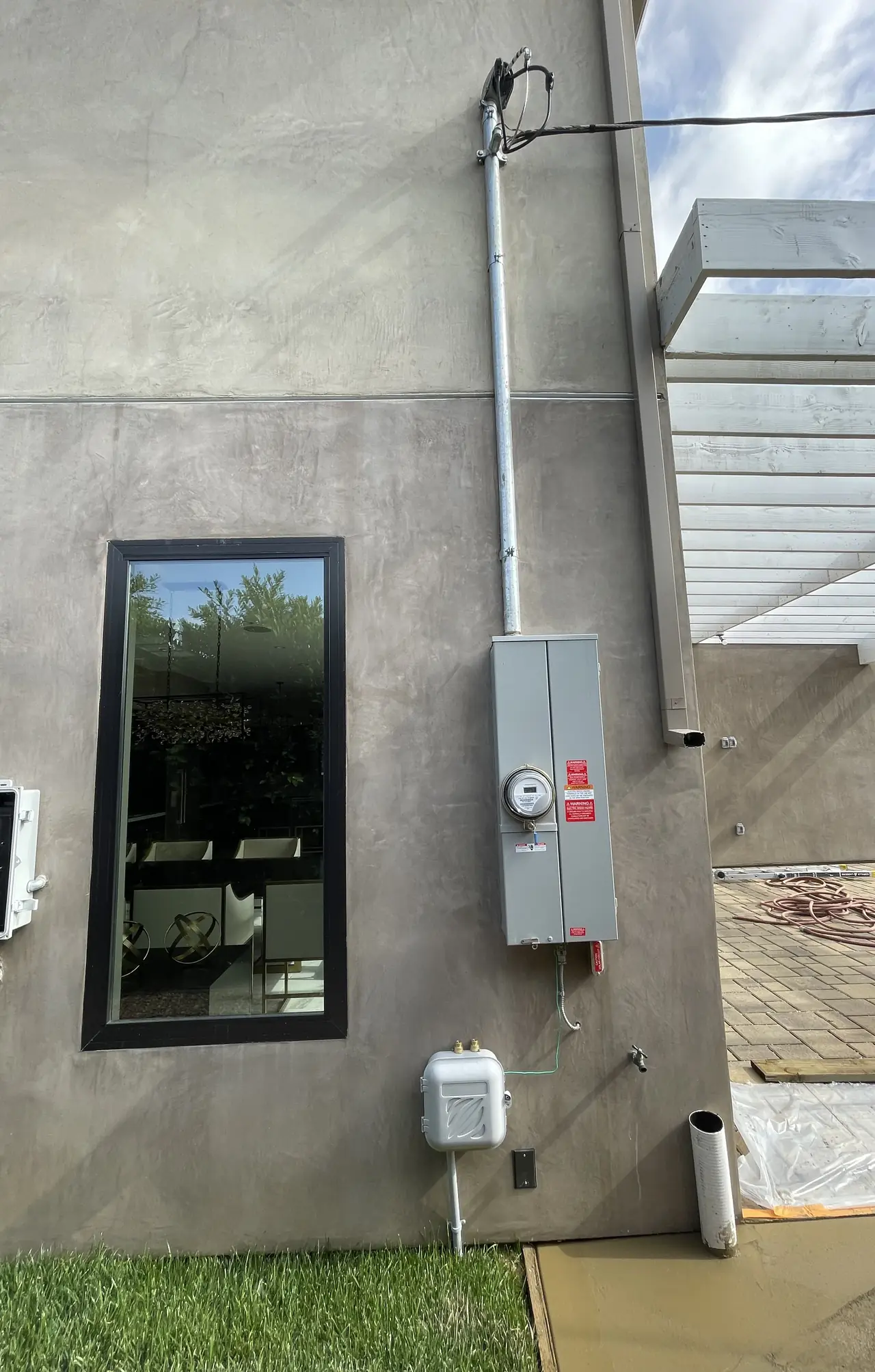
The second half of this project is paperwork, and it is worth setting out because the sequence surprises people. The interconnection application went in on the second of May. The photographs the utility asks for — the service equipment, the meter, the point of connection, the array — were taken that same day, which is the right way round: a photograph package assembled from the day the application is filed shows the system as it will be inspected, not as it was halfway through a build.
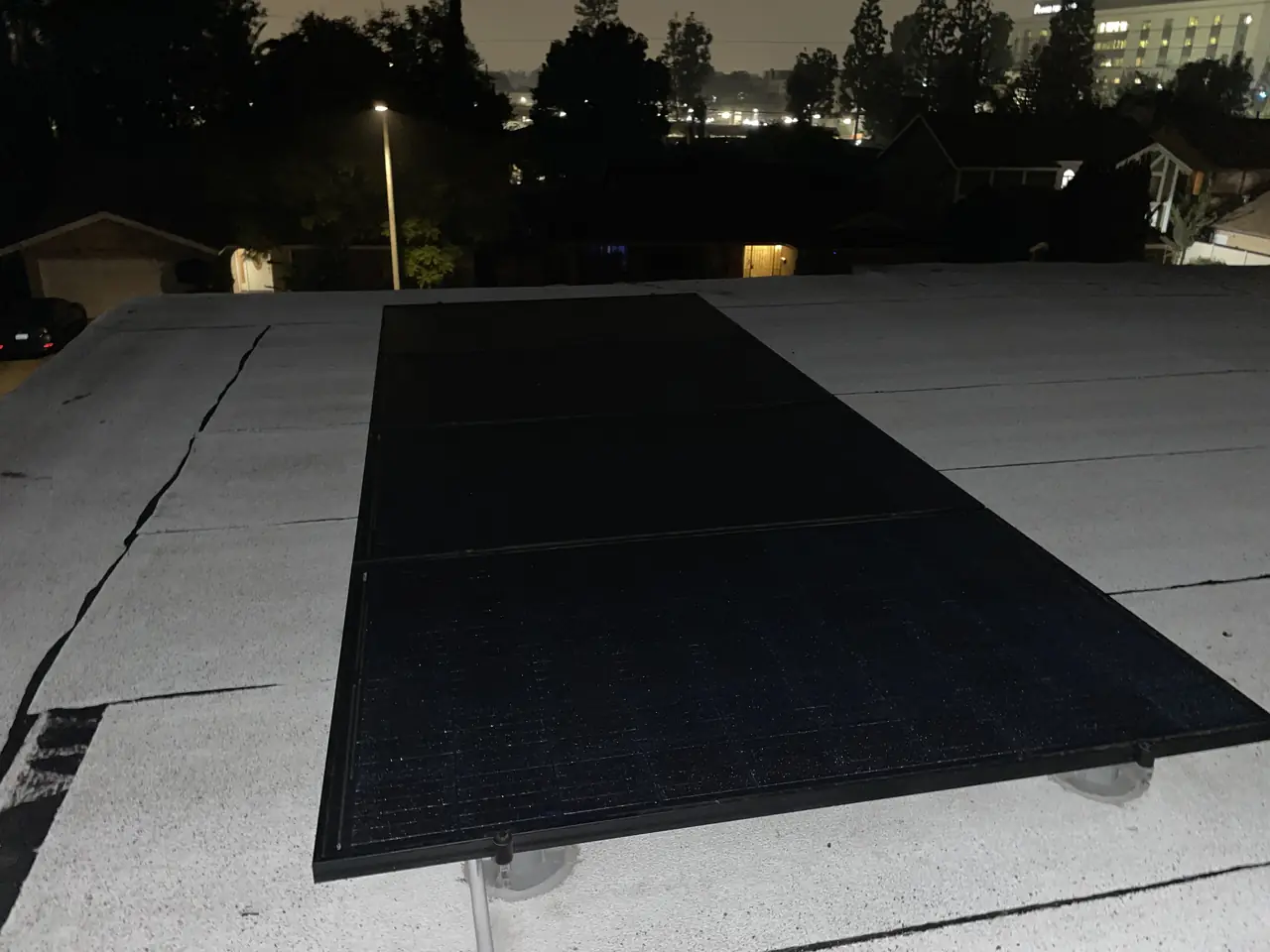
It helps to know what the utility is actually looking at. The package is the service equipment as it stands, the meter and its surroundings, the point where the solar circuit lands, and the array itself. From those images a representative decides whether the interconnection can be built as drawn and whether anyone needs to come out. Complete photographs are the difference between a review that clears from a desk and one that waits for a site assessment to be scheduled.
What followed is what a clean application looks like. The utility confirmed the details, ran its review from the photographs without sending anyone out, and granted permission to install — all inside four days. The approval that releases the meter order followed the next morning.
Those are three separate gates and they are easy to confuse. Permission to install says the system may be built. The approval says the interconnection review is finished and a meter may be ordered. Permission to operate says the meter is set and the system may legally run. A homeowner who has been told the utility approved the project has usually been told about the second of those, not the third.
The net meter was set on the thirty-first of May. Twenty-nine days from filing to a system its owner could legally run, with no corrections at any stage.
The job closed the same day the meter went on: monitoring instructions to the owner and the paperwork the owner would need at tax time. A system is not handed over when the crew leaves the roof. It is handed over when the owner has the meter, the monitoring and the documents.
The rule to take from this one is simple. If you are buying solar, ask when the interconnection application will be filed and put the answer in writing. Everything that decides when your system starts paying for itself is downstream of that date.
How it ran
| December 2021 | Modules and equipment installed; nine microinverters, one per module |
|---|---|
| 2 May 2022 | Interconnection application filed at 2.9 kW AC-CEC; the utility's photograph package assembled the same day |
| 2 May 2022 | Utility recovery charge paid |
| 5 May 2022 | Application confirmed, site assessment cleared from the photographs, permission to install granted |
| 6 May 2022 | Utility approves the installation and releases the meter order |
| 31 May 2022 | Net meter set; permission to operate granted |
| 31 May 2022 | Monitoring handed over |
Nothing in this project was returned for correction at any stage. The whole utility process ran to twenty-nine days from filing.
What we did
- Installed nine modules and nine microinverters on a low-slope roof without a tilted frame or a structural calculation the system did not need.
- Filed the interconnection application and assembled the utility's photograph package on the same day, so the images matched the system as built (C-10).
- Carried the application through confirmation, site assessment and approval without a single correction.
- Handed over monitoring and the tax paperwork on the day the meter was set.
System specifications
| System size | 2.9 kW AC-CEC as recorded by the utility |
|---|---|
| Array | 9 modules on one low-slope plane |
| Inverters | 9 Enphase microinverters, one per module |
| Combiner | Enphase, closed and placarded |
| Roof | Low-slope; modules mounted close to horizontal on feet |
| Service work | None |
| Battery | None |
| Corrections | None, at either agency |
| Utility / AHJ | LADWP / LADBS |
Is your project like this one?
- Your roof is flat or nearly flat and you have been told it is unsuitable for solar.
- You have been quoted a tilted frame on a low-slope roof and want to know what it buys.
- Your system is installed and you do not know whether the interconnection has been filed.
- You want to know what the utility actually reviews on a small residential system.
- Your Panorama City property is served by LADWP, while permits are handled by LADBS.
Cali Energy in Panorama City
Panorama City is inside City of Los Angeles boundaries: permits run through LADBS, interconnection through LADWP.
Flat and low-slope roofs are common on this side of the Valley, and they change the arithmetic of a small array. There is no ridge to work to and no pitch to shed water off the modules, so the layout is set by the roof's own drainage and by the feet that carry the frames rather than by which slope faces south.
This installation is on the Panorama City projects page alongside the others.
- License and classifications: CSLB #1032379
- Official reference for this process: LADWP — residential solar programs
- Official reference for this process: LADWP Electric Service Requirements
Frequently asked questions
Can solar go on a flat roof?
Yes, and it is routine. On a low-slope roof the modules are usually set close to horizontal on feet rather than tilted up on frames. A flat module loses a few percent against an optimally tilted one, and it avoids wind load, extra penetrations and a structural calculation. On a small system that trade is almost always the right one.
Why does a finished array sometimes sit before it is switched on?
Because generation is not the same thing as interconnection. The modules can be up, wired and ready and the system still cannot be operated until the utility has reviewed the application, the building department has released the permit and a net meter has been set. The date that starts that clock is the day the application is filed.
What does the utility look at on a small residential system?
Photographs, mostly. On systems under a certain size the review is done from the images uploaded with the application rather than from a site visit — the service equipment, the meter, the point of connection and the array. A complete package is the single biggest reason a review clears in days instead of weeks.
What is an unconditional release on final payment?
It is the document a contractor issues confirming that the amount for the installation has been paid in full and that no lien can follow from it. Ask for it when you make the final payment; on this project it went out the same day the meter was set.
Does Cali Energy install small systems in Panorama City?
Yes. This Panorama City system is nine modules at 2.9 kilowatts as the utility records it, on a low-slope roof, and Cali Energy carried it from filing to permission to operate in twenty-nine days without a correction at either agency. California contractor license number 1032379.
What this would look like on your roof
Planning solar in Panorama City? Tell us your utility, your roof and what your bill looks like now, and we will model what a system like this would do on your house before you commit to anything.
Or call +1 (323) 844-7777 · Cali Energy, Northridge · CSLB #1032379 (B, C-10, C-39) — design, permits, install and electrical under one licensed contractor.
Related
This timeline reflects this property and this permitting path. Updated September 2026.