

Panorama City, CA · May 2025 · LADWP / LADBS
The roof took a day. The service underneath it was decades older.
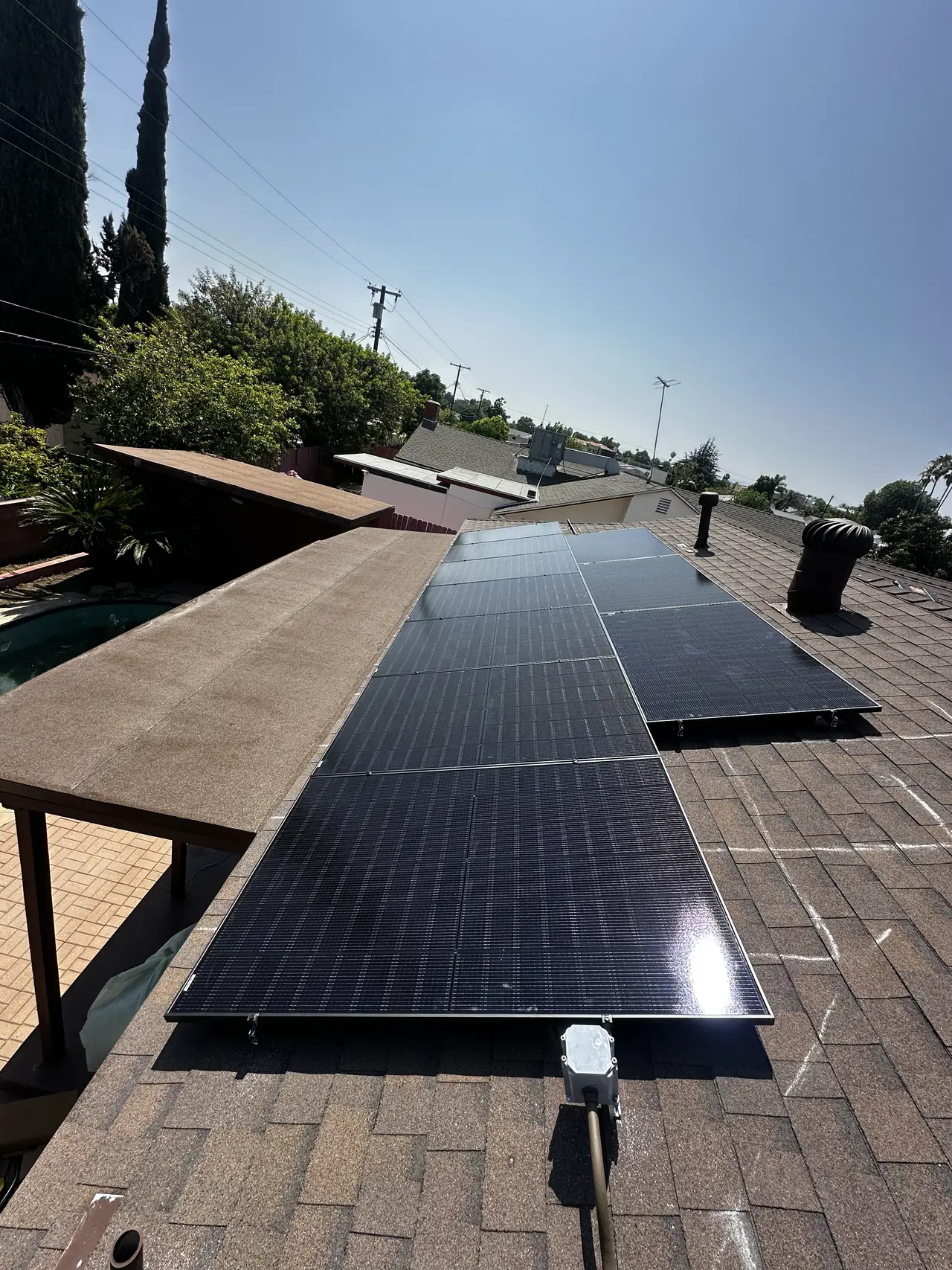
Four hundred and thirty-five watt modules, a microinverter under each, and a long single-plane roof that took one visit. The oldest thing on the job was the wall the new equipment had to join.
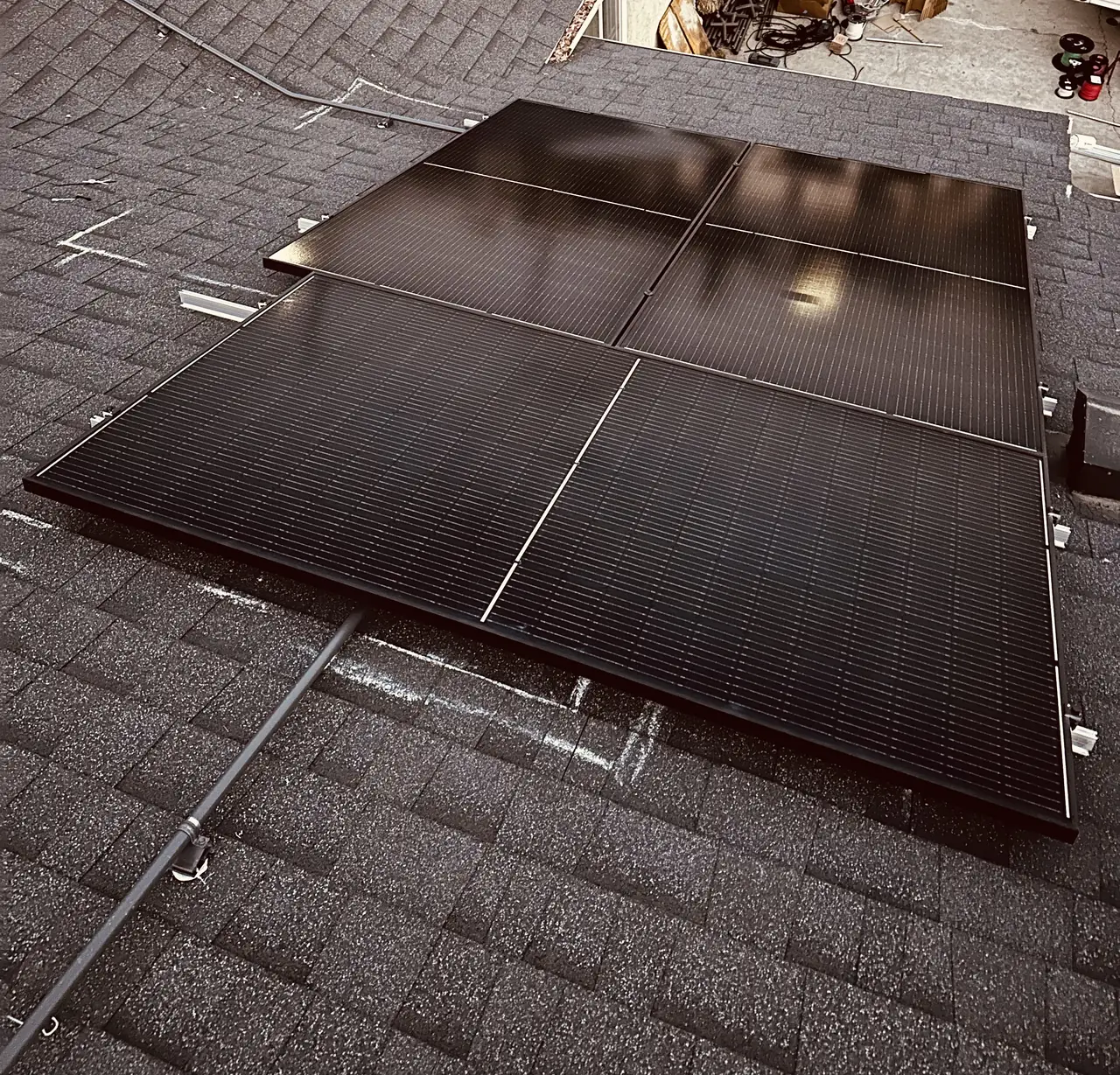
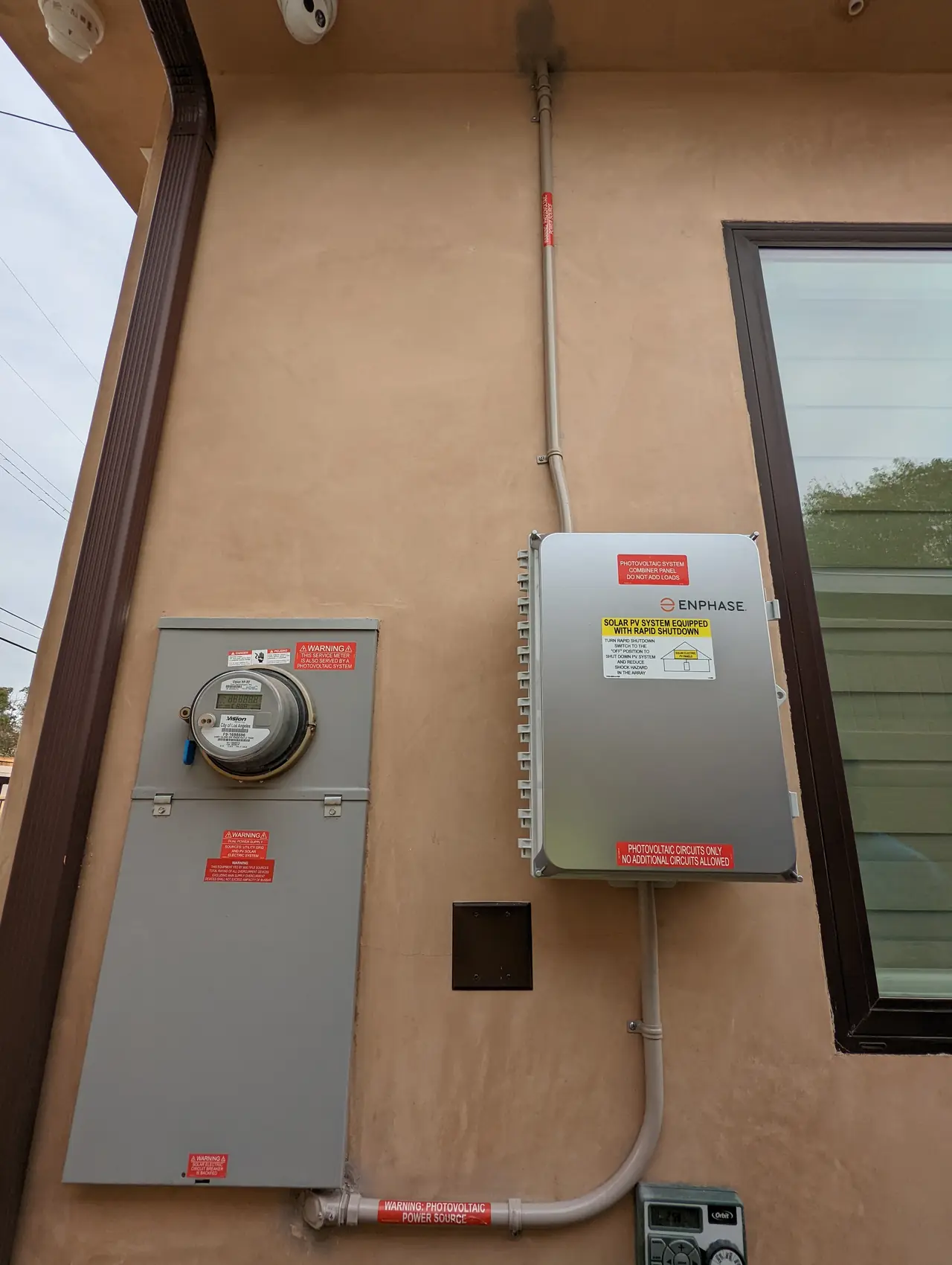
On a postwar house the roof is usually the easy half of a solar project and the existing electrical service is the half that decides the design. On this Panorama City project, on a postwar street inside the City of Los Angeles, the array went onto a long composition shingle plane in one day, with flashed standoffs, rails set to snapped lines and a microinverter under every module, and the new solar equipment was added to a service wall that had been there for decades. Cali Energy mounted the combiner and the disconnect beside the existing gear rather than rebuilding the wall around them.
At a glance
- Modules
- HD Hyundai HiN-T435NF(BK), 435 W, monocrystalline
- Microinverters
- Enphase IQ8MC, one per module
- Roof
- Composition shingle, single main plane
- Attachment
- Flashed standoffs with sealed collars
- Solar equipment
- Enphase combiner and a fused disconnect, added beside the existing service
- Battery
- None
- Work on site
- One day
- Utility / AHJ
- LADWP / LADBS
The story
The crew started a little after nine, and the first hour went on the part of the job that is invisible by the end of it: the flashings.
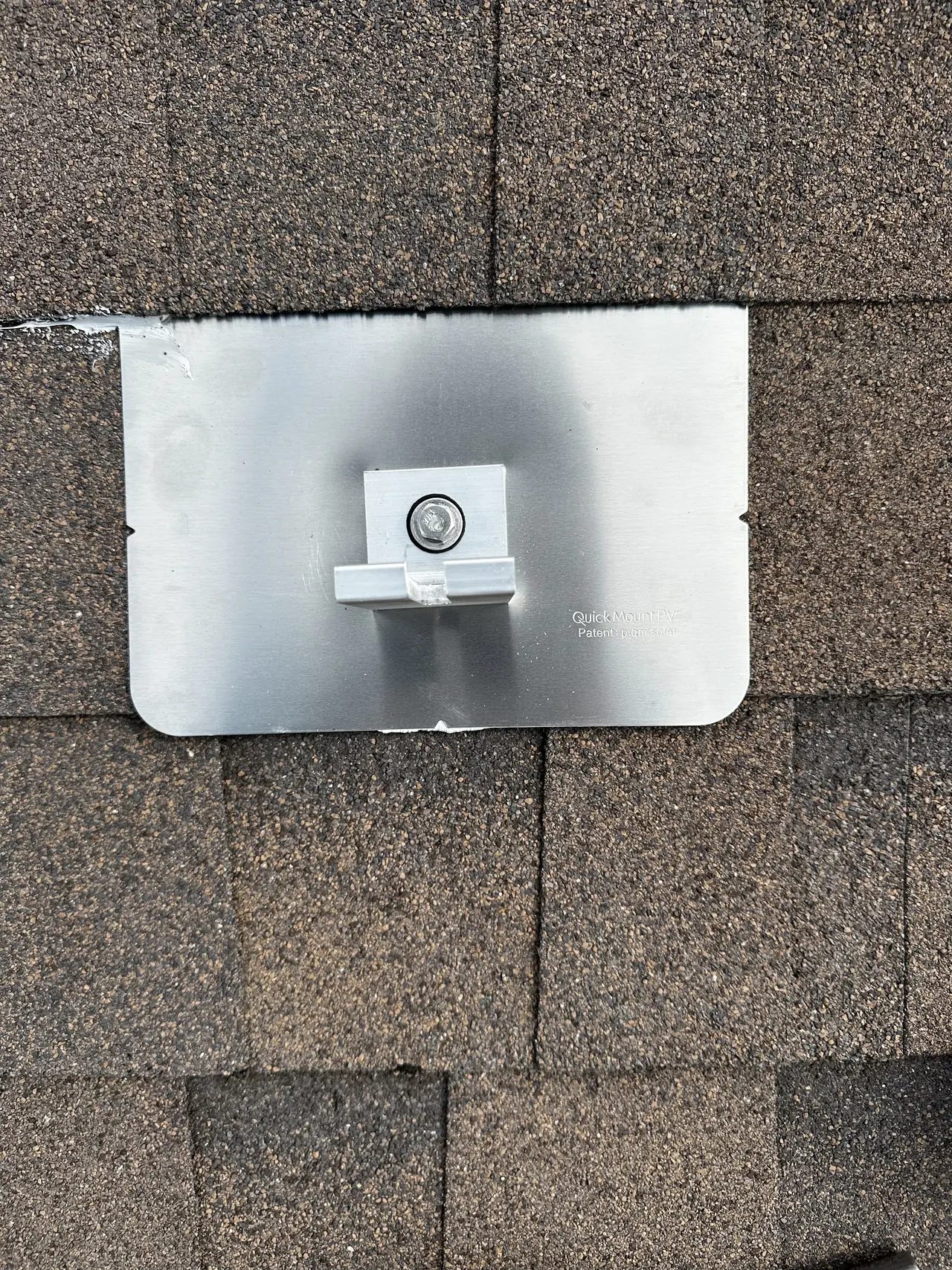
Every attachment on this roof is the same detail repeated: lift the course above, slide a flashing plate underneath, set the standoff through a sealed collar, torque it into the framing below. It is slower than drilling and sealing, and it is the only version of the job that treats a roof as a roof rather than as somewhere to hang hardware.
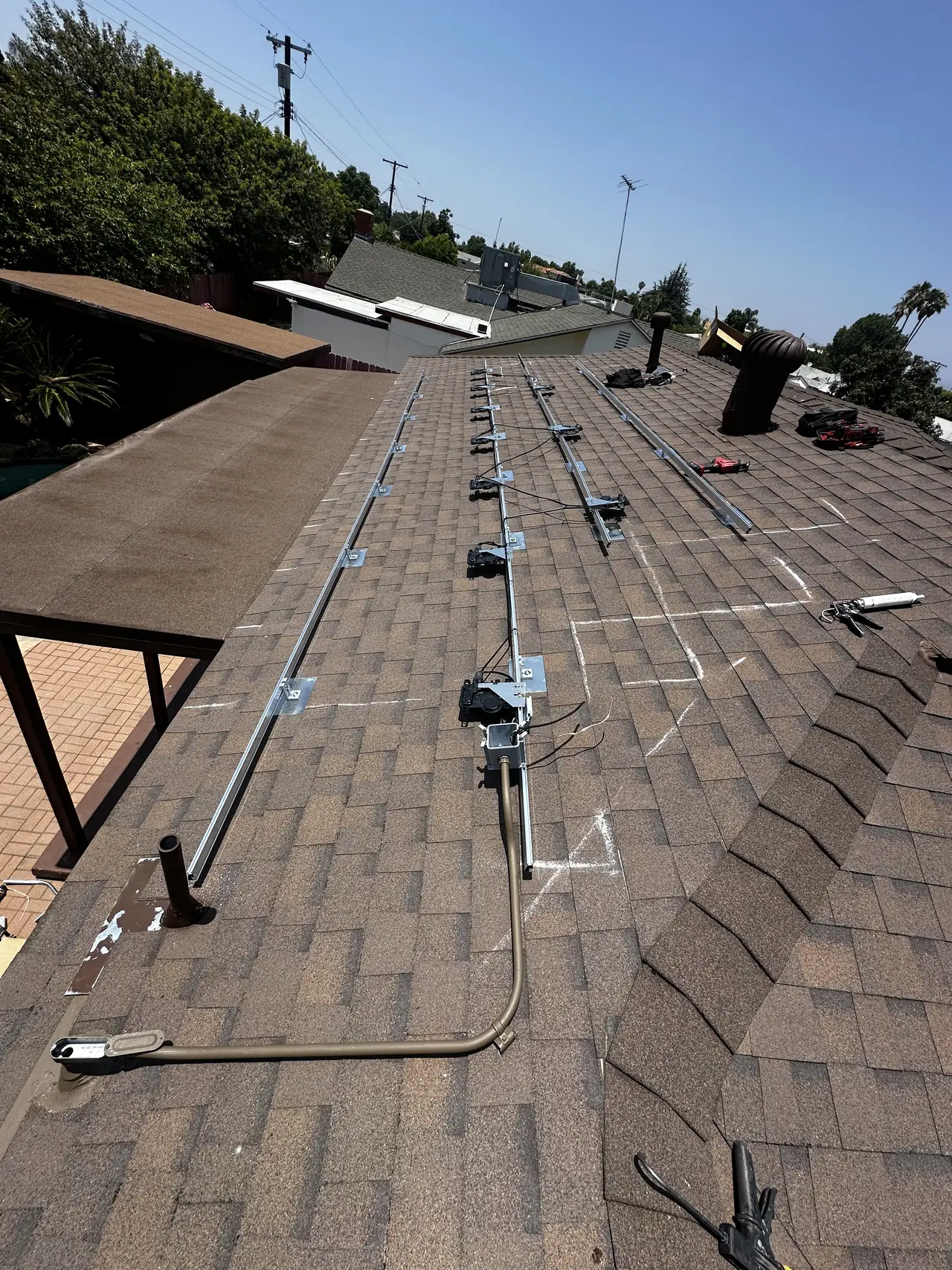
The roof itself is the kind that makes an installer's day easy. One long composition shingle plane, no valleys to work around, framing on the spacing you expect. Rails went up to the lines snapped that morning and the microinverters were mounted on the rails before a single module was carried up — which is the right order, because a microinverter is far easier to seat and connect on an open rail than underneath a module somebody is holding.
The modules are four hundred and thirty-five watt monocrystalline units, a little over five and a half feet by three and three quarters, at about fifty-four pounds each. That last number is why the order matters: once a module is down, anything underneath it is a two-person lift away.
A word about torque, because it is the part of this job that is invisible in every photograph. A standoff is a lag bolt into a rafter, and the number it is tightened to is specified: too little and the attachment moves under wind uplift, too much and the threads strip the wood and the hole is worse than before it was drilled. There is no way to see the difference afterwards, which is exactly why it is the detail to ask an installer about.
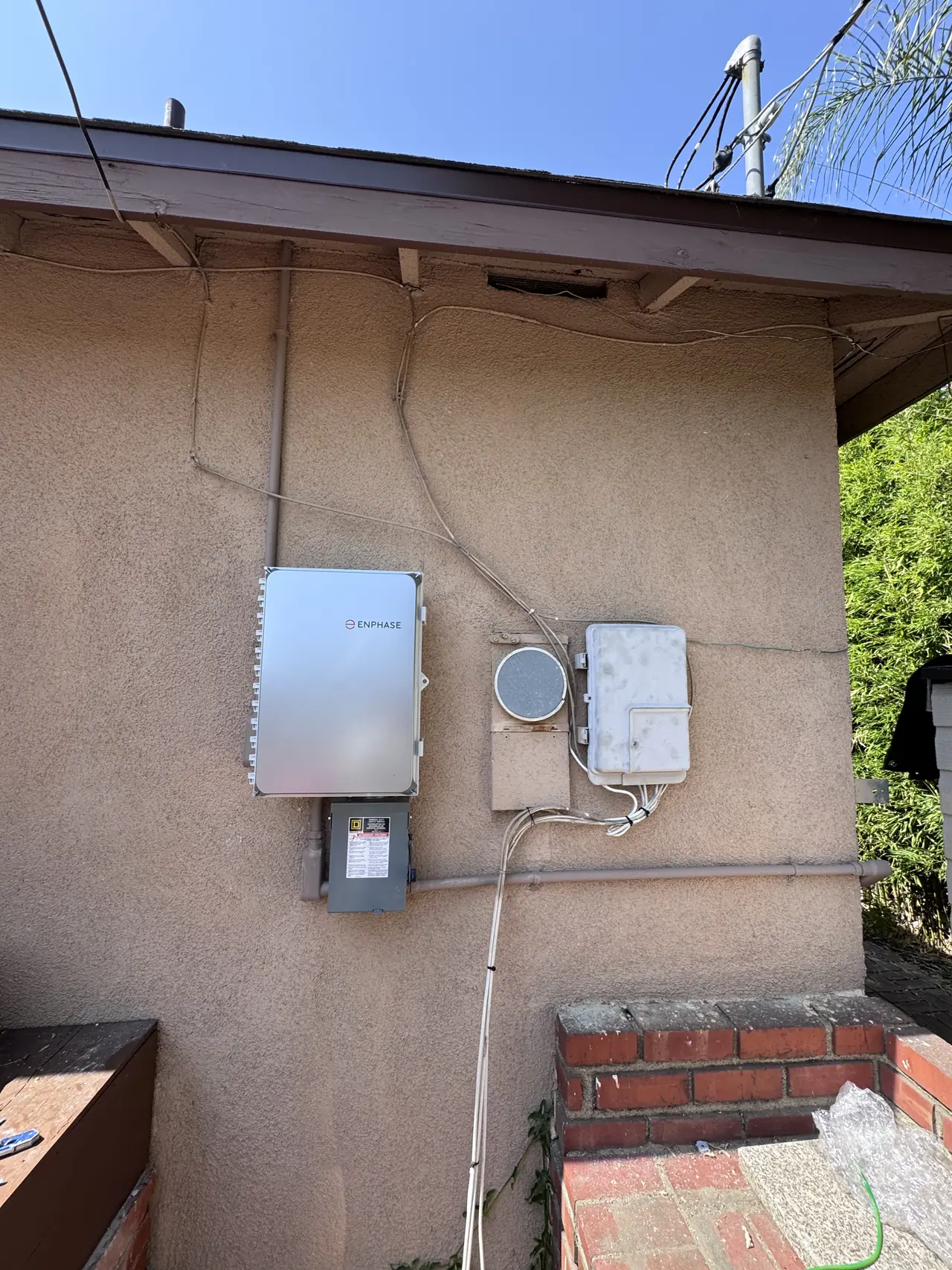
Then the wall. The existing service here has been on this house for a long time, and the decision on a job like this is whether to rebuild it or to work alongside it. The array did not need a new service, so it did not get one. The Enphase combiner and a fused disconnect went up beside the equipment that was already there, tied into it rather than replacing it.
These modules are four hundred and thirty-five watts against a microinverter rated at three hundred and twenty volt-amperes, which is a wider spread than the usual and entirely on purpose. On a roof plane that faces one direction and is shaded by nothing, the array reaches its peak for a short part of the day and sits below it for the rest; sizing the module side generously buys production in the mornings and the winter, which is when a house actually notices it.
That choice is the one to examine when you compare quotes. A main service upgrade is real money and real schedule: a utility visit, an inspection, and weeks. It is the right answer when the existing service genuinely cannot carry the array, and it is an expensive habit when it is quoted by default. The question to ask is what specifically about your service makes the upgrade necessary.
The array was finished the same day it was started: every module set, every connection made, the combiner and the disconnect closed and labeled, and the roof left with nothing outstanding. The oldest equipment on the property is still doing its job, with a new array feeding into it.
How it ran
| 9:08 | Crew on site; the existing service wall photographed before work begins |
|---|---|
| 10:02 | Microinverters checked and staged |
| 12:30 | Flashings set and standoffs torqued into the framing |
| 13:03 | Module labels photographed and checked against the design |
| 13:05 | Rails run the length of the plane; microinverters mounted on them |
| 15:05 | Solar equipment mounted at the wall beside the existing service |
| 15:15 | Modules set and connected; the array is complete |
The array was started and finished in one visit, with the service wall left as it was found.
What we did
- Flashed every roof attachment under the course above rather than sealing the penetration with compound (C-10).
- Mounted the microinverters on open rails before the modules went down, so nothing needed reaching under a module later.
- Added the solar combiner and disconnect beside the existing service rather than quoting a main service upgrade the array did not require.
- Completed the array in a single visit.
System specifications
| Modules | HD Hyundai Energy Solutions HiN-T435NF(BK), 435 W, monocrystalline |
|---|---|
| Module size | About 1722 × 1134 × 30 mm, 24.5 kg each |
| Microinverters | Enphase IQ8MC, 320 VA continuous at 240 V, one per module |
| Roof | Composition shingle, one main plane |
| Attachment | Flashed standoffs with sealed collars, torqued into framing |
| Service work | None; solar equipment added beside the existing service |
| Battery | None |
| Utility / AHJ | LADWP / LADBS |
Is your project like this one?
- Your house is postwar and you have been told the electrical service has to be replaced before solar.
- You want to know what an installer does to your roof before anything is mounted on it.
- You are comparing quotes and one of them includes a main service upgrade.
- Your roof is a single long plane and you want to know how straightforward that makes the job.
- Your Panorama City property is served by LADWP, while permits are handled by LADBS.
Cali Energy in Panorama City
Panorama City is inside City of Los Angeles boundaries: permits run through LADBS, interconnection through LADWP.
Houses here were largely built in one postwar push, which means the roofs are simple and the electrical services are old. The roof is rarely the constraint on a project like this. What sits on the wall underneath it usually is, and it is the first thing to look at rather than the last.
This installation is on the Panorama City projects page alongside the others.
- License and classifications: CSLB #1032379
- Official reference for this process: California Energy Commission — solar equipment lists
- Official reference for this process: LADWP Electric Service Requirements
Frequently asked questions
Does an older electrical service have to be replaced before solar?
Not automatically. It has to be able to accept the solar breaker within what the code allows to be fed into a busbar, and there are more ways to satisfy that than replacing the panel. Ask any contractor quoting an upgrade to say specifically what about your service makes it necessary; on this project the answer was that nothing did, and no service work was done.
Why mount microinverters before the modules?
Because everything that needs a pair of hands on it is reachable while the rails are still open. Once a module is down, the microinverter beneath it is behind fifty-odd pounds of glass and frame. The sequence costs nothing and saves the whole job on the one occasion something needs a second look.
How heavy is a modern solar module?
Around fifty to fifty-five pounds for a residential unit of this size — the ones on this roof are 24.5 kilograms each, a little over five and a half feet by three and three quarters. Weight is why layout and attachment are settled before anything is carried up a ladder.
What is a solar combiner panel for?
It gathers the alternating-current branch circuits from the array into one point, carries the overcurrent protection for them and provides the labeled place an inspector or a firefighter looks first. On a microinverter system it is the box that everything on the roof lands in before it reaches the service.
Does Cali Energy work on older homes in Panorama City?
Yes, and most of the housing stock here is postwar. On this Panorama City project Cali Energy flashed every attachment, mounted Enphase IQ8MC microinverters on open rails, added the solar equipment beside a service that was decades old and finished the array in one visit. California contractor license number 1032379.
What this would look like on your roof
Planning solar in Panorama City? Tell us your utility, your roof and what your bill looks like now, and we will model what a system like this would do on your house before you commit to anything.
Or call +1 (323) 844-7777 · Cali Energy, Northridge · CSLB #1032379 (B, C-10, C-39) — design, permits, install and electrical under one licensed contractor.
Related
This timeline reflects this property and this permitting path. Updated September 2026.