

Northridge, CA · May – September 2022 · LADWP / LADBS
Plan check, corrections, and five voicemails.
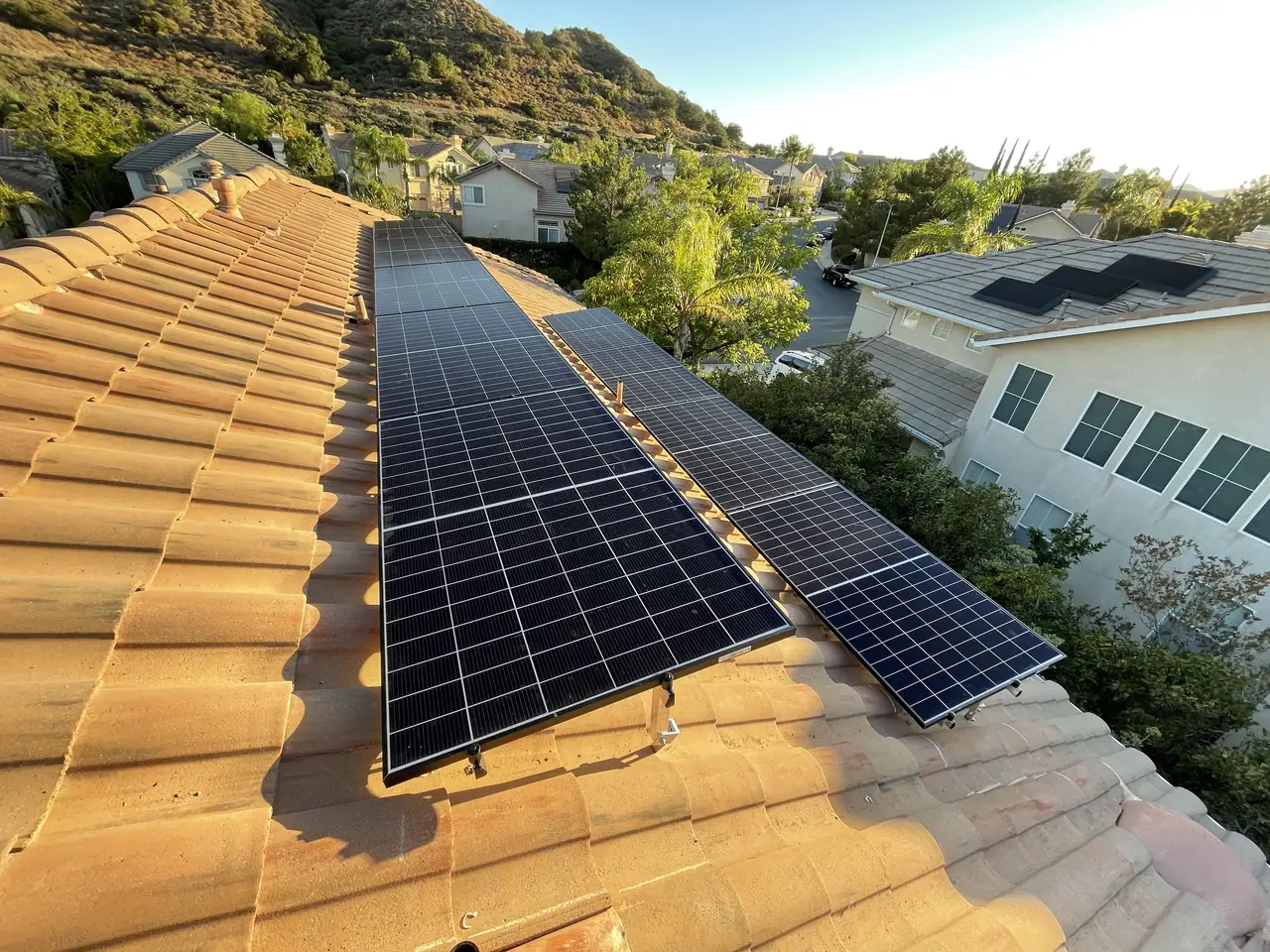
Fourteen point four kilowatts AC-CEC on barrel tile. The permit went through full plan check with corrections in the middle, and the last two weeks were spent getting one inspector to close it out.
When a residential project goes through full plan check rather than over the counter, the route is fixed: documents uploaded, fees paid, plan assigned to a reviewer, corrections issued, corrections cleared, permit issued. What that route does not include is a guaranteed date, and the last signature is often the slowest part.
At a glance
- System
- 14.4 kW AC-CEC
- Roof
- Barrel tile
- Permit route
- Full plan check
- Corrections
- One round
- Documents to permit
- One month
- Final inspection to PTO
- Five weeks
- Inverters
- Microinverters, one per module
- Utility / AHJ
- LADWP / LADBS
The story
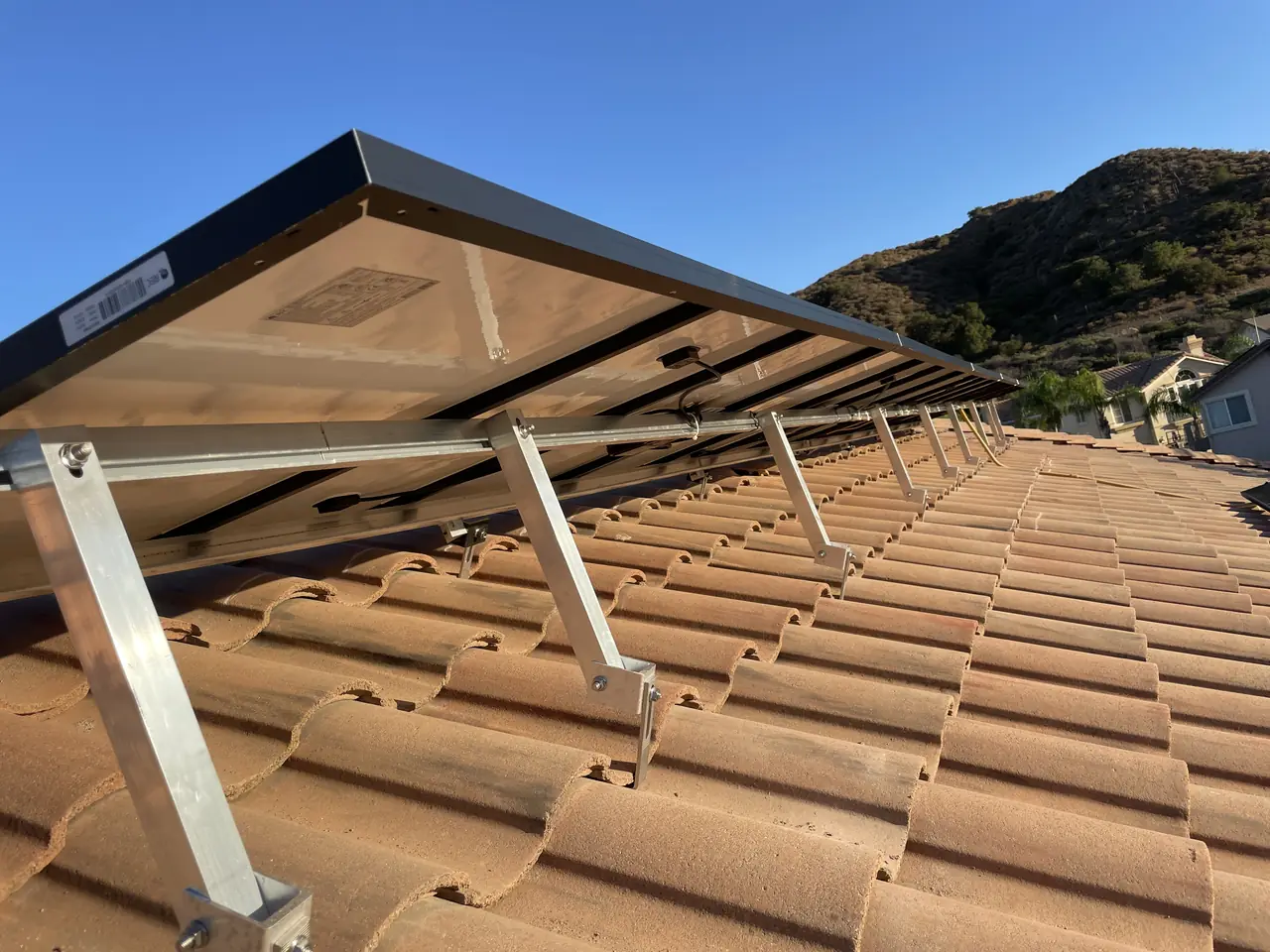
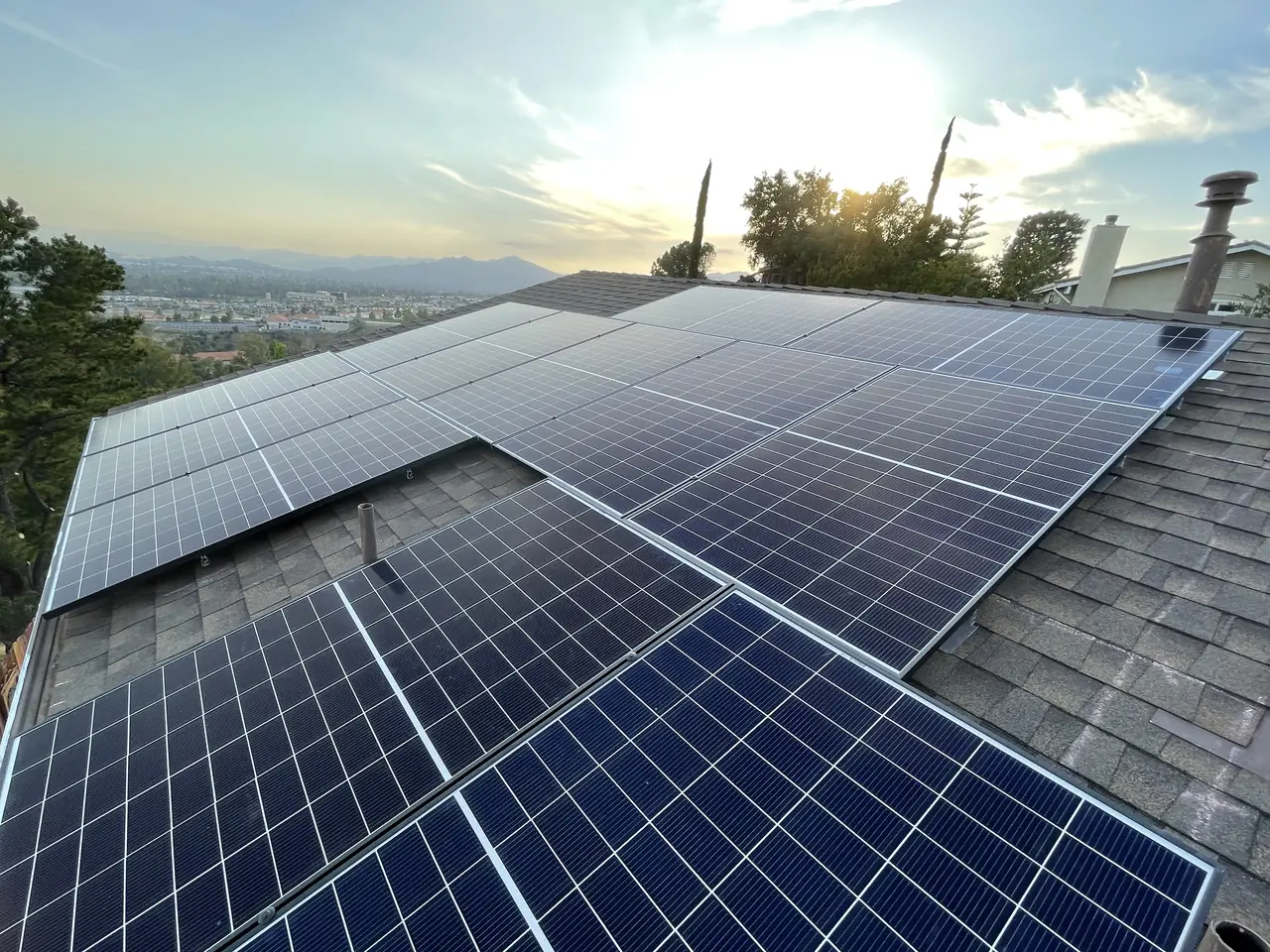
Fourteen point four kilowatts AC-CEC on a barrel tile roof, laid in long runs down two slopes with the hills behind the house. On tile every attachment means lifting the tile, fixing to the structure, flashing the penetration and setting the tile back — and at this size there are a lot of attachments.
A system this large does not go over the counter. It goes through full plan check, and the route is the same every time.
Documents uploaded at the start of July. Plan check fees invoiced and paid on the seventh. Plan assigned to a reviewer on the fourteenth. Corrections issued on the twenty-second — which is not a problem, it is the normal middle of the process. Corrections cleared and plan check complete on the first of August. Permit fee paid and the permit issued on the third. One month from upload to permit, with a correction round inside it.
Then the part nobody quotes for. The final inspection was scheduled for the nineteenth of August. The owner asked two sensible questions beforehand: do I need to be home, and what happens next. No — we need access to the main panel. And after the inspection we wait for permission to operate, then come back and switch the system on.
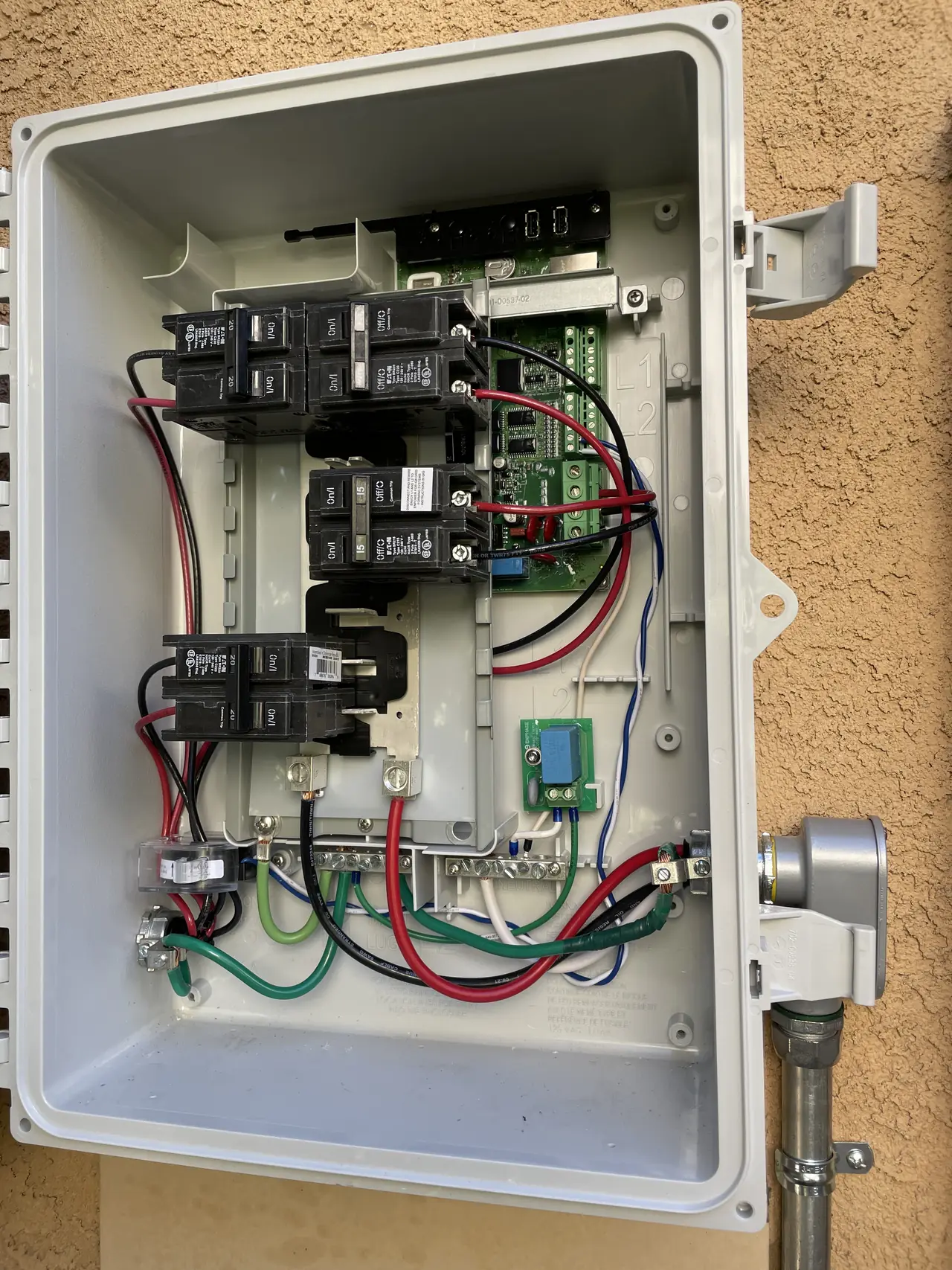
The inspection happened. Then nothing moved. A week later we left a message for the utility inspector. Three days after that, another voicemail. By the end of the month we had left five voicemails with no response, called the City — who told us to contact that same inspector — and finally sent him an email, which is what worked. He replied the next day to say he would take care of it, and asked for one more thing: a photograph of the main service panel.
We told the owner where things stood at every step of that fortnight, including the steps where the honest answer was that we had called again and heard nothing. That is the part of the job that does not appear on a proposal and is most of what a homeowner actually experiences.
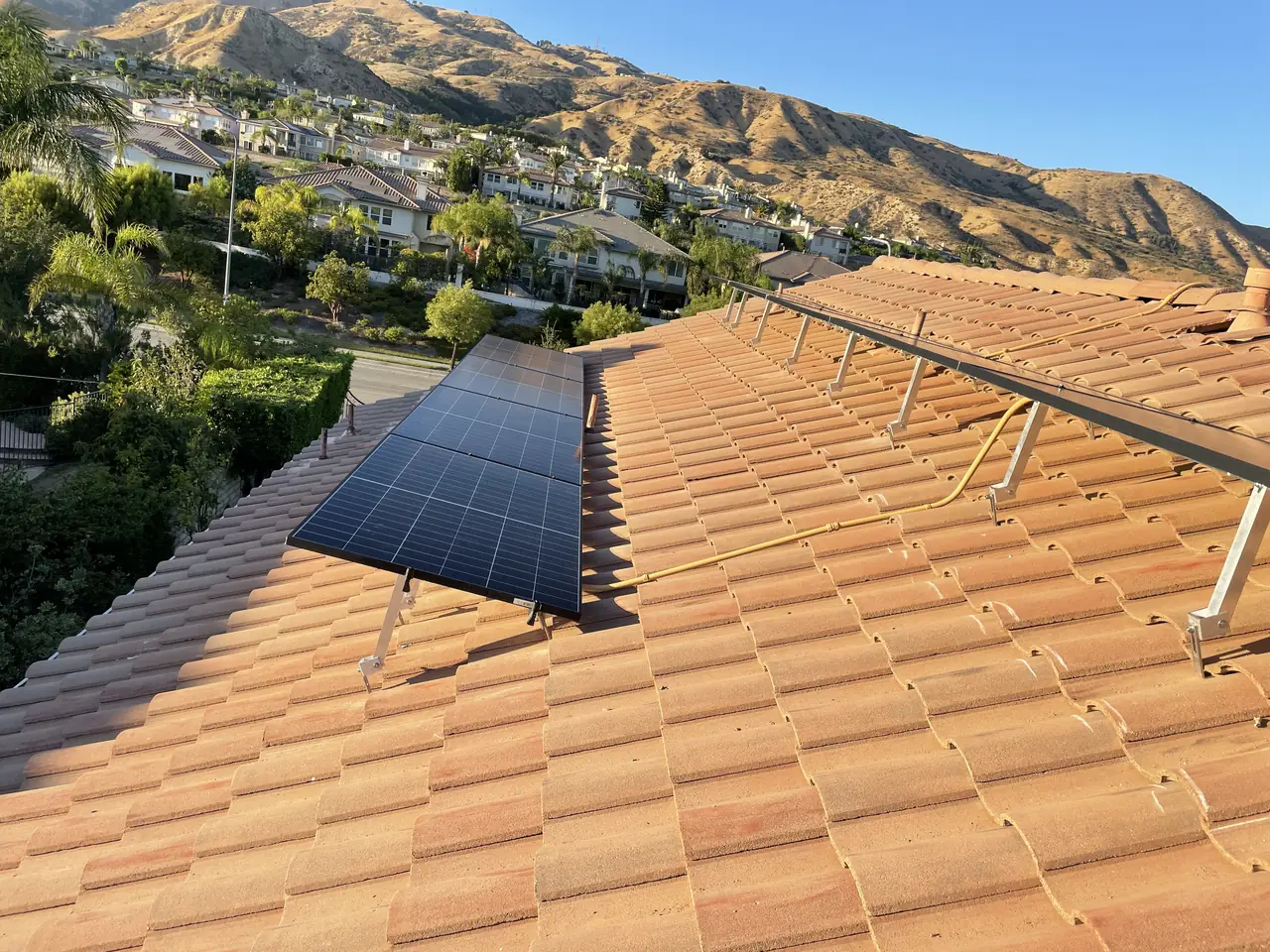
The building department released the installation on the twenty-second of August. Permission to operate came on the twenty-second of September.
How it ran
| 1 July 2022 | Plan check documents uploaded |
|---|---|
| 7 July 2022 | Plan check fees invoiced and paid |
| 14 July 2022 | Plan assigned to a reviewer |
| 22 July 2022 | Corrections issued |
| 1 August 2022 | Plan check complete |
| 3 August 2022 | Permit fee paid; permit issued |
| 16 August 2022 | Inspection requested |
| 19 August 2022 | Final inspection |
| 22 August 2022 | Building department release |
| 26–31 August 2022 | Five voicemails, a call to the City and an email to reach the inspector |
| 22 September 2022 | Permission to operate |
One month from documents to permit. Five more weeks from final inspection to switch-on.
What we did
- Put a system large enough to need full plan check through the whole route rather than looking for a shortcut.
- Cleared the correction round in nine days.
- Set every attachment into barrel tile: tile lifted, mount fixed to structure, penetration flashed, tile set back.
- Chased the inspector by voicemail, through the City and finally by email until the release moved.
- Kept the owner informed through the fortnight when there was nothing to report.
- Carried the project to permission to operate at 14.4 kilowatts AC-CEC.
System specifications
| System | 14.4 kW AC-CEC |
|---|---|
| Roof | Barrel tile |
| Inverters | Microinverters, one per module |
| Combiner | Enphase IQ Combiner |
| Permit route | Full plan check with one correction round |
| Battery | None |
| Utility / AHJ | LADWP / LADBS |
Is your project like this one?
- Your system is too large for an over-the-counter permit.
- You have been told your plans came back with corrections and want to know what that means.
- Your roof is barrel tile and you have been told solar will damage it.
- Your installation passed inspection weeks ago and nothing has happened since.
- Your permit is issued and you are waiting on the final inspection.
Cali Energy in Northridge
Northridge is inside City of Los Angeles boundaries: permits run through LADBS, interconnection through LADWP.
The larger houses on the north edge of Northridge sit on barrel tile, and systems this size go through full plan check rather than over the counter.
This installation is on the Northridge projects page alongside the others, and what the work covers is set out on the Northridge service area page.
- License and classifications: CSLB #1032379
- Official reference for this process: LADBS — plan review and permitting
- Official reference for this process: LADBS — inspections
Frequently asked questions
What is plan check and when does a solar project need it?
It is the building department's engineering review of the submitted drawings, as opposed to an express permit issued over the counter. Larger residential systems go this route. On this project the sequence was: documents uploaded, fees paid, plan assigned to a reviewer, corrections issued, corrections cleared, permit issued — one month end to end.
Are corrections a bad sign?
No. A correction round is a normal part of plan check: the reviewer asks for changes or clarification and the set is resubmitted. Here corrections were issued on the twenty-second of July and the plan check was complete on the first of August. What costs time is not the correction, it is a slow answer to it.
How is solar attached to a barrel tile roof?
The tile is lifted clear of each attachment point, the mount is fixed to the structure below and the penetration is flashed, and the tile is set back over it. Nothing is screwed through a tile. At fourteen kilowatts that is a large number of attachments, which is why tile takes longer than shingle.
Why can there be weeks between the final inspection and switch-on?
Because the final inspection and permission to operate are two different approvals from two different bodies. On this project the building department released the installation three days after the inspection; the utility's permission to operate came a month later, and reaching the inspector took five voicemails, a call to the City and an email.
What can the installer actually do during that wait?
Chase it, and say so honestly. We called, we called again, we went through the City, and in the end an email got a reply the next day — along with a request for a photograph of the main service panel. What we cannot do is promise a date that is not ours to set.
Does Cali Energy work on tile roofs in Northridge?
Yes. Cali Energy holds B, C-10 and C-39 classifications under CSLB #1032379, which covers the roofing work a tile installation involves as well as the electrical.
What this would look like on your roof
Planning solar in Northridge? Tell us your utility, your roof and what your bill looks like now, and we will model what a system like this would do on your house before you commit to anything.
Or call +1 (323) 844-7777 · Cali Energy, Northridge · CSLB #1032379 (B, C-10, C-39) — design, permits, install and electrical under one licensed contractor.
Related
This timeline reflects this property and this permitting path. Updated September 2026.