

Northridge, CA · March 2021 – March 2026 · LADWP / LADBS
Five quotes for the same roof. Then five years of coming back.
The roof was replaced first. Then the same house was priced five ways before anything was ordered — three module brands and two inverter architectures — and over the five years that followed it came back for an EV charger and for service.
Comparing solar quotes is hard because most of them are for different things. The way to make them comparable is to price the same roof several ways — same layout, same design, different modules and different inverter architecture — and put the numbers side by side.
At a glance
- System
- 7.4 kW AC-CEC
- Quotes priced
- Five packages
- Roof
- Re-roofed first — 28 squares
- Inverter
- SolarEdge with DC optimisers
- Also installed
- EV charger
- Span
- Five years of return visits
- Utility / AHJ
- LADWP / LADBS
The story
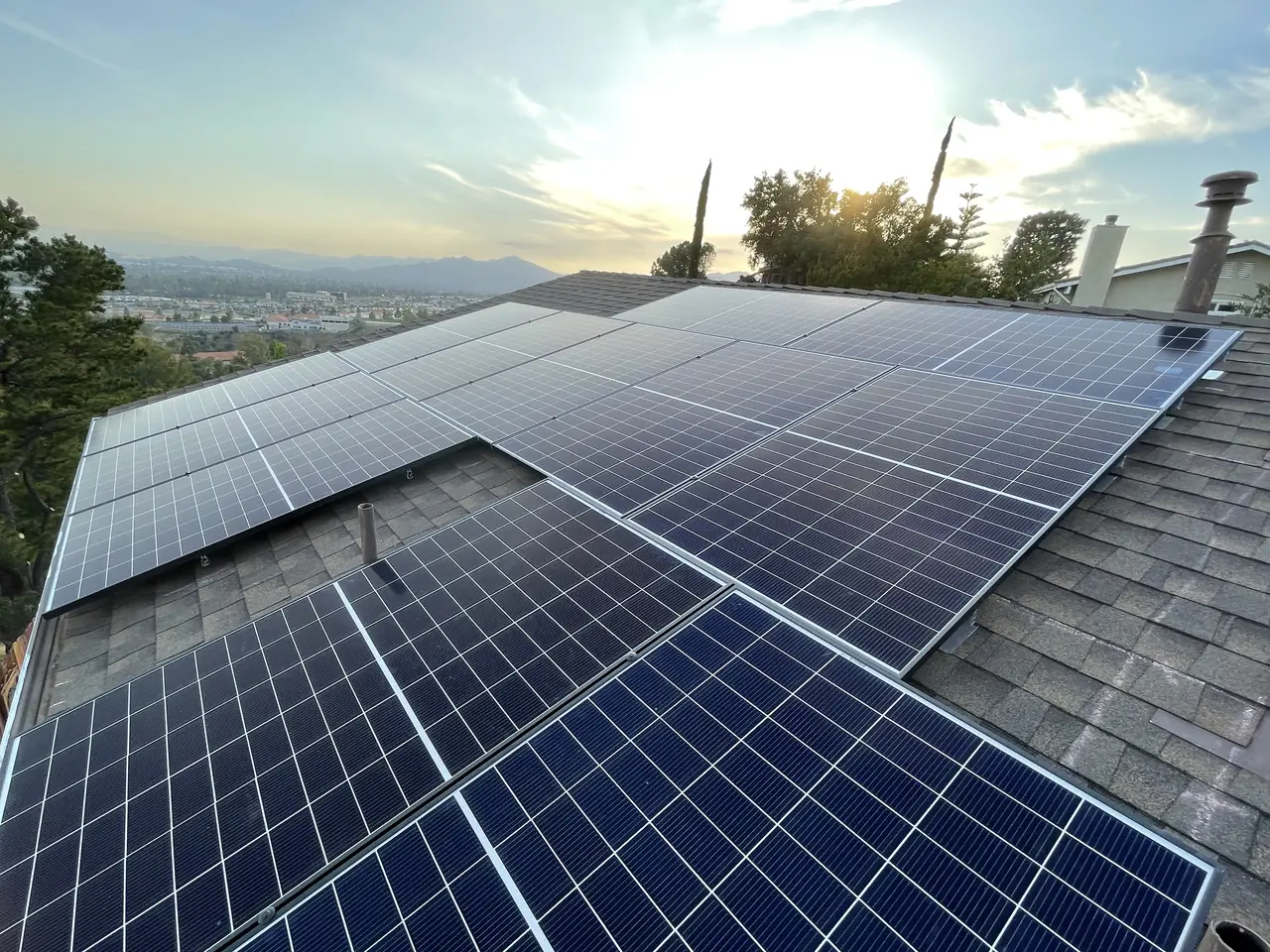
The roof was replaced in 2020. When the house came back to solar the following spring, this roof was priced five different ways before anything was ordered. Three module brands, and for one of them two different inverter architectures: string inverter with DC optimisers, or microinverters. Same roof, same layout, five sets of numbers.
That is a slower way to sell a system and a better way to buy one. When quotes come from different companies the module, the inverter, the racking and the warranty often all differ at once, and the price gap does not say which of them caused it. Holding the roof still and changing one thing at a time is what made these five comparable.
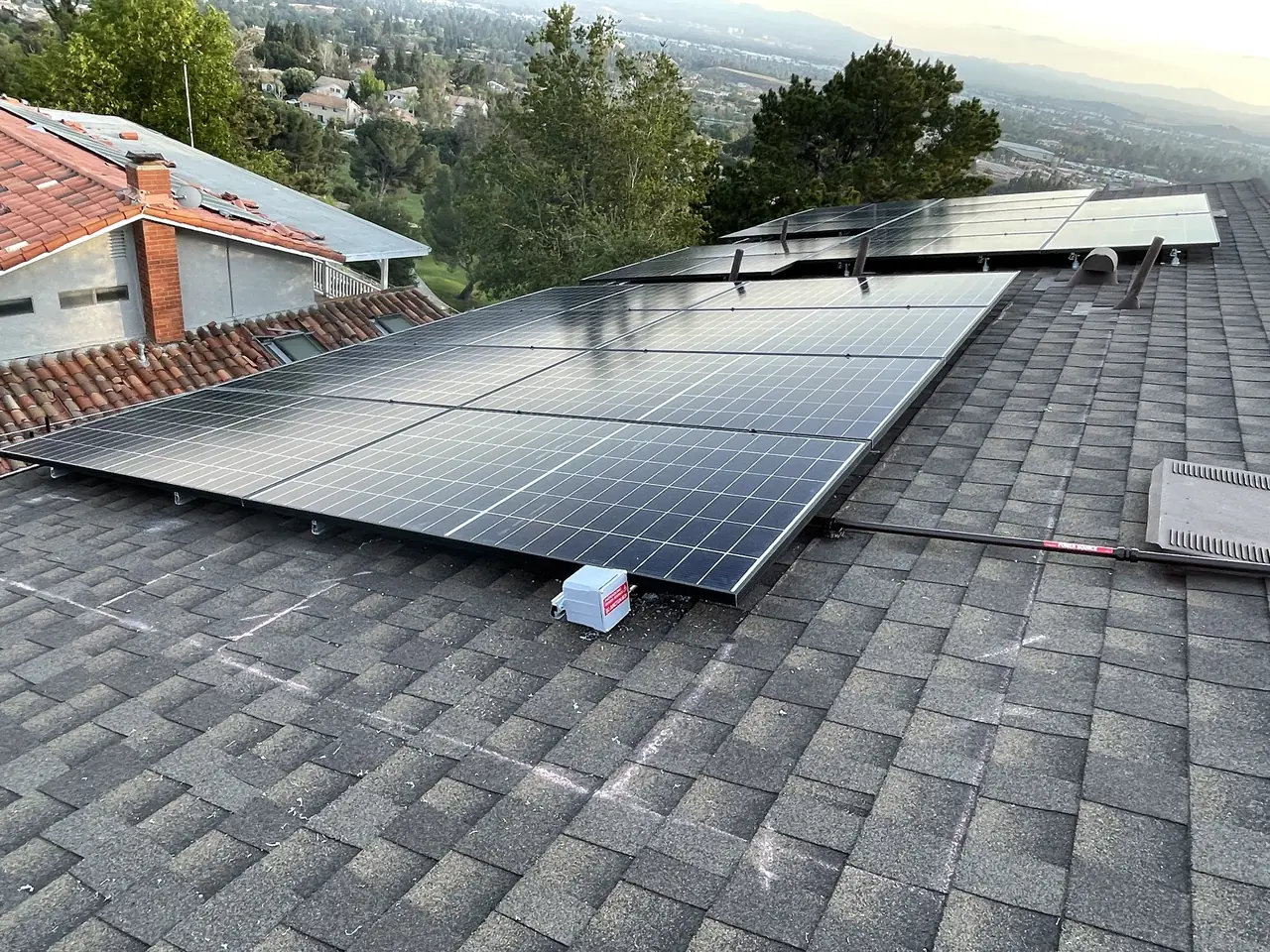
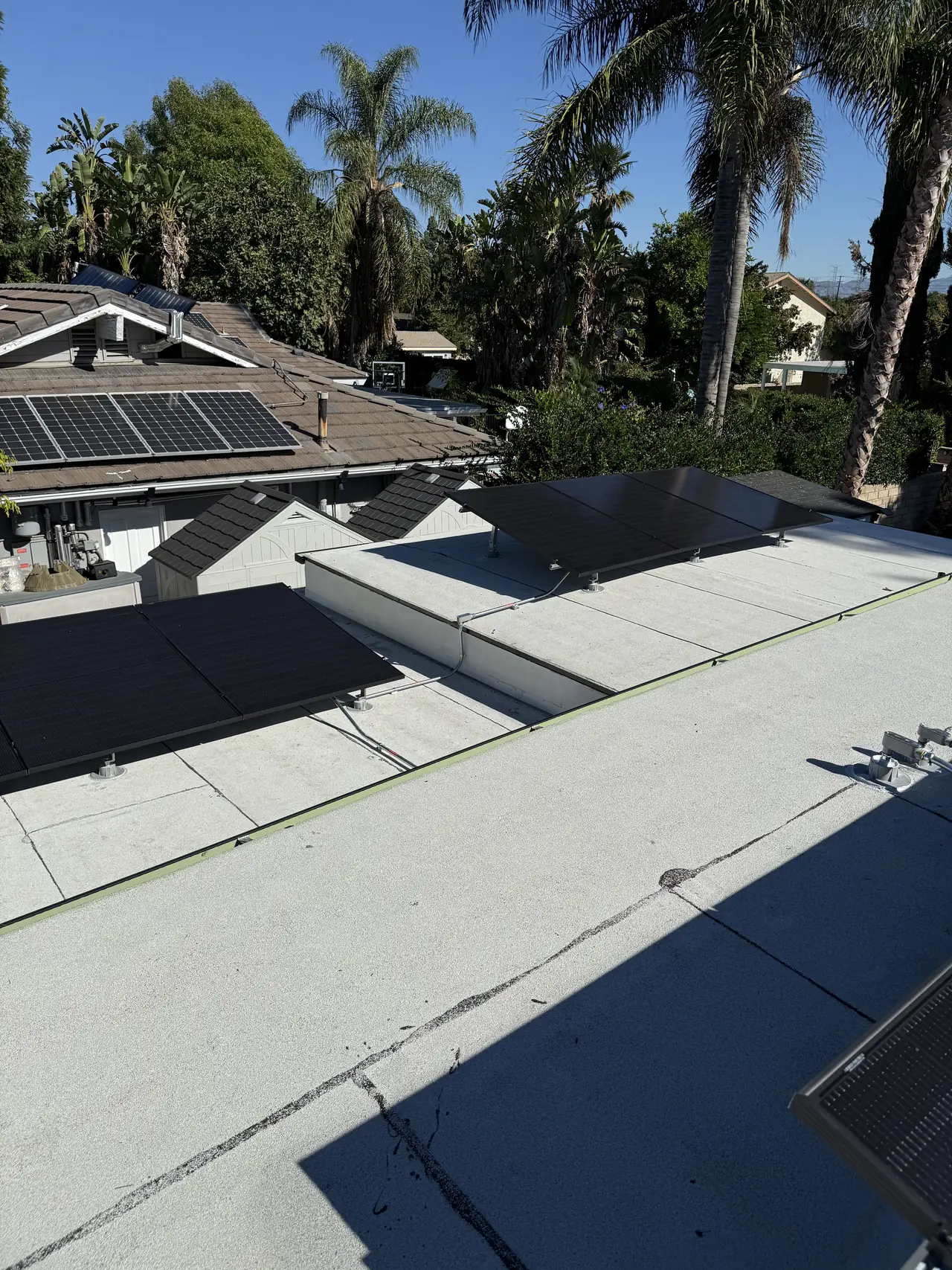
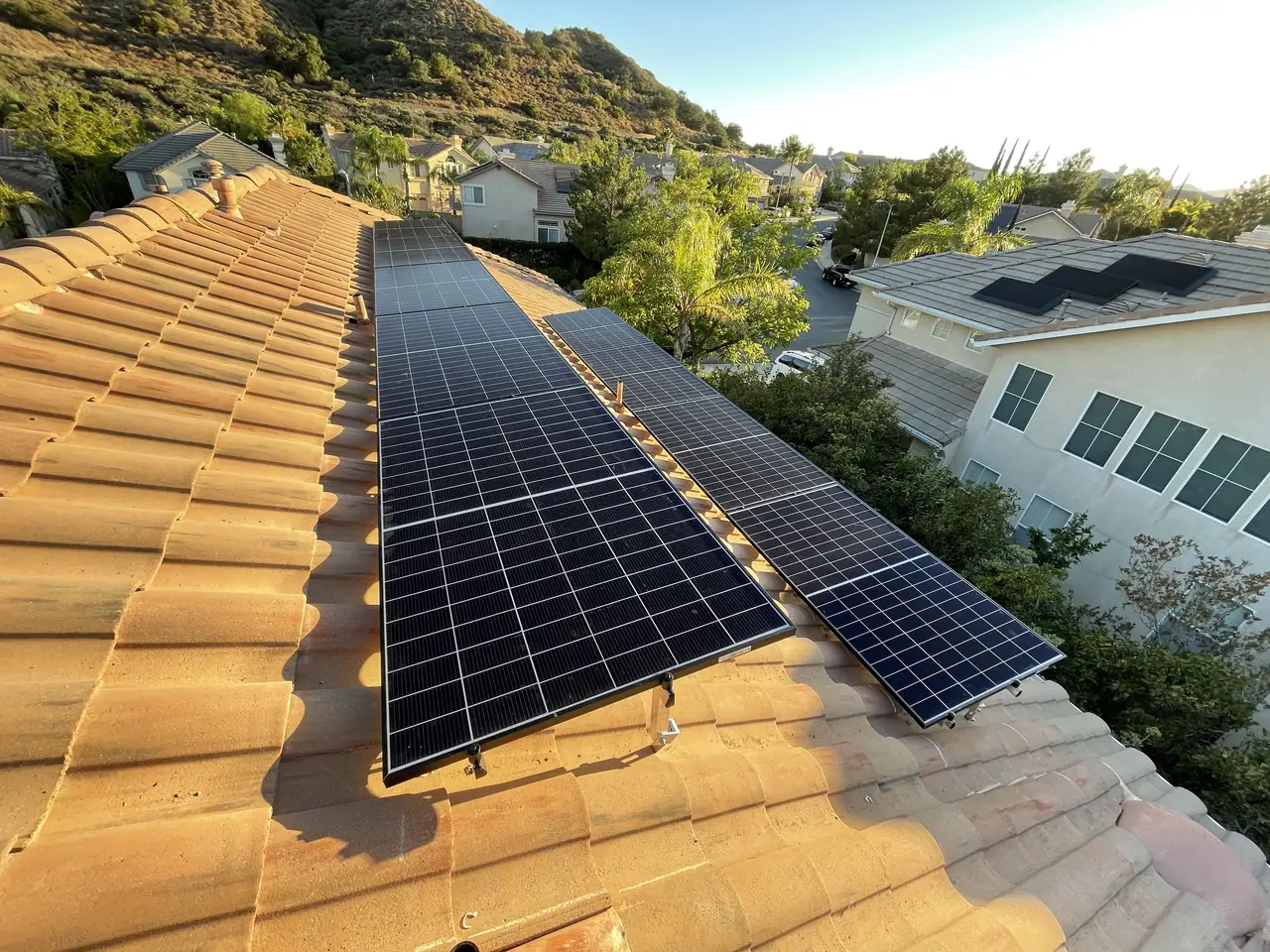
The package chosen was a string inverter with a DC optimiser under every module — the architecture that keeps per-module behaviour without putting the inverter electronics on the roof. The equipment datasheets went to the owner before the contract was signed, not after.
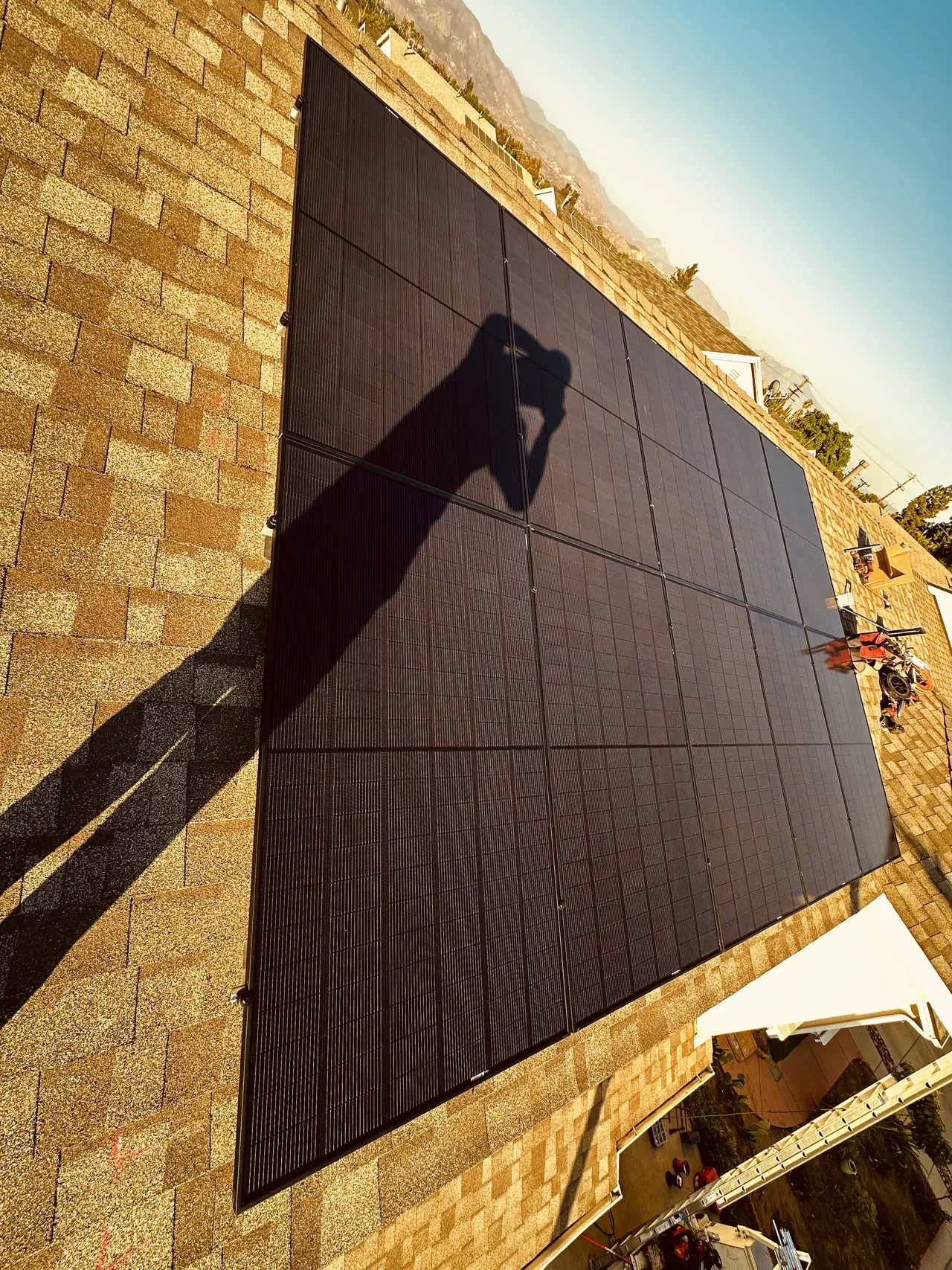
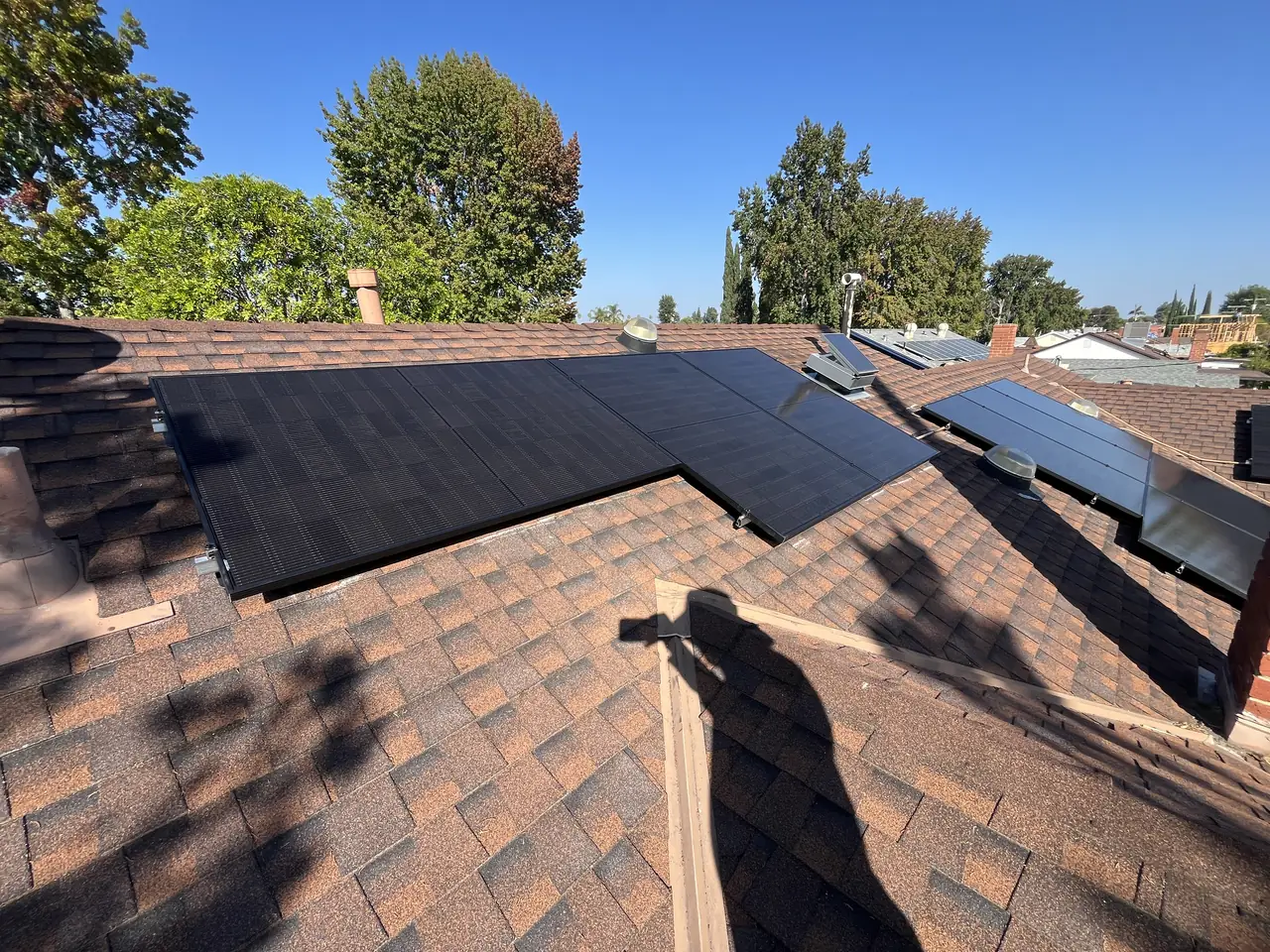
The roof came first. Twenty-eight squares of composition shingle, permitted and finaled before the array was designed. Nobody wants to take an array off a four-year-old roof, and nobody should have to.
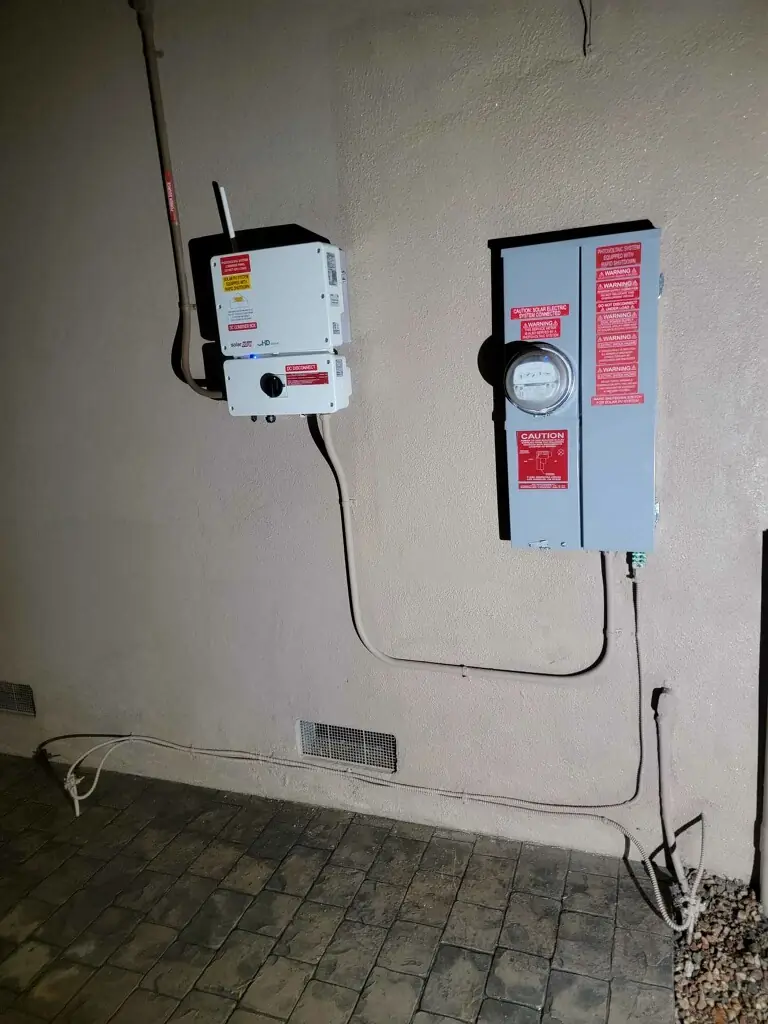
The interconnection ran through the spring of 2021 and permission to operate came on the fourteenth of May, at 7.4 kilowatts AC-CEC. The inspection was done under the building department's remote video programme, which needs a signed participation agreement, and the utility required its own set of photographs of the finished work.
Then the part that does not fit on a proposal. Over the next five years this house came back. A site visit when something needed looking at. An estimate for an electric vehicle charger, and then the charger itself, wired into the same service the array runs on. A relationship that runs to 2026 on a system switched on in 2021.
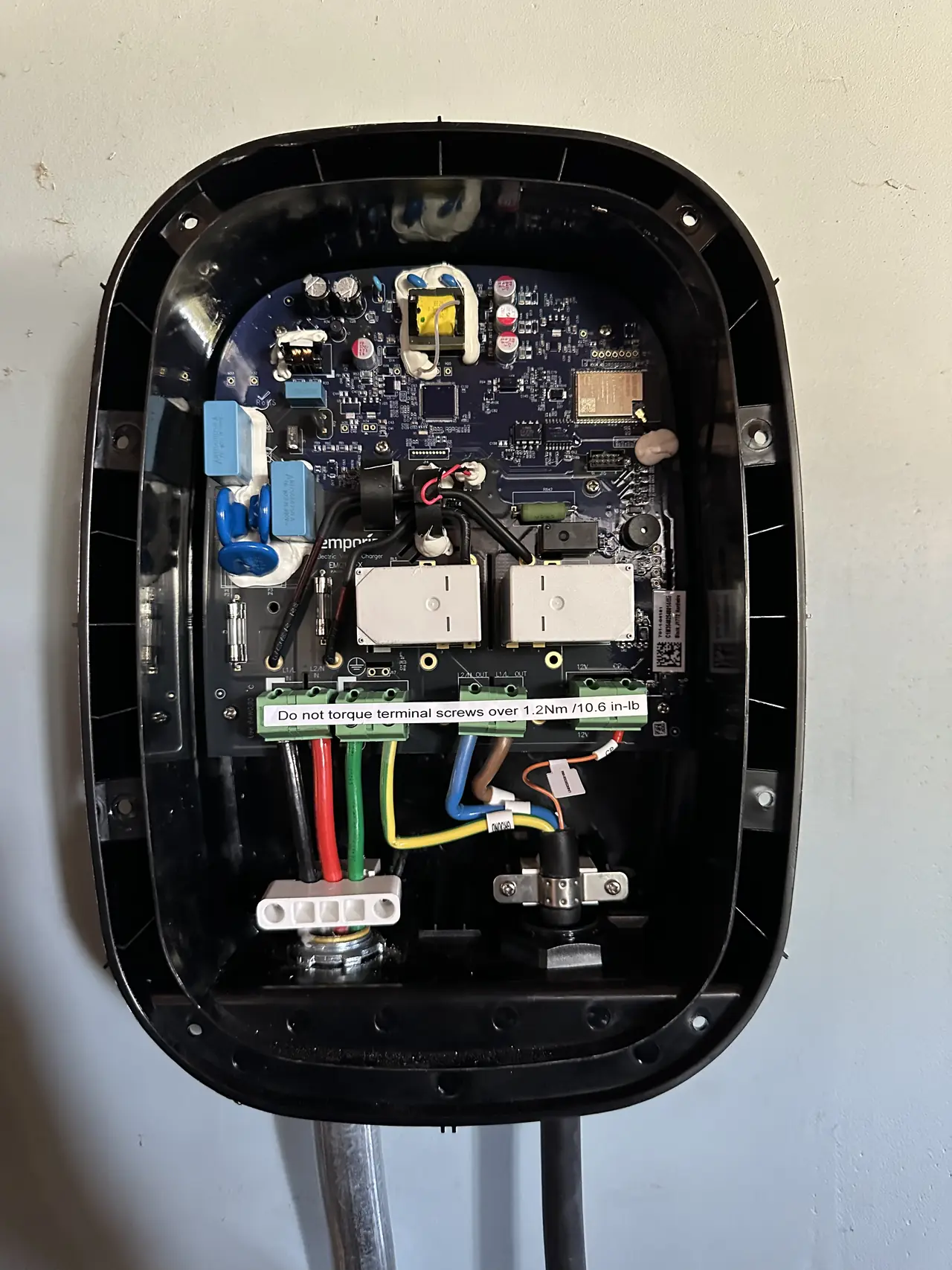
On this house that is what one contractor across the roof, the electrical and the solar meant in practice: when the charger went in, the person doing it already knew what was in the panel.
How it ran
| 2020 | Roof replaced — 28 squares of composition shingle, permit finaled |
|---|---|
| 15 March 2021 | Five equipment packages priced on the same roof |
| 17–18 March 2021 | Chosen package refined; equipment datasheets sent |
| 24 March 2021 | Contract signed |
| 29 March 2021 | Permit set issued |
| April 2021 | Utility photo requirements met; remote video inspection agreement signed |
| 14 May 2021 | Permission to operate — 7.4 kW AC-CEC |
| 2021–2026 | Return visits: site visit, EV charger estimate and installation |
Two months from the first set of quotes to switch-on; five years of the house coming back afterwards.
What we did
- Priced the same roof five ways so the equipment choice could be made on comparable numbers.
- Sent the inverter and optimiser datasheets to the owner before the contract, not after.
- Replaced the roof first and designed the array onto the new one.
- Met the utility's photographic requirements and put the project through remote video inspection.
- Carried the interconnection to permission to operate in two months from the first quotes.
- Came back over the following years for a site visit and for an EV charger on the same service.
System specifications
| System | 7.4 kW AC-CEC |
|---|---|
| Inverter | SolarEdge string inverter with DC power optimisers |
| Roof | Composition shingle, replaced before the array — 28 squares |
| Quotes priced | Three module brands; two inverter architectures |
| Inspection | Remote video inspection under the building department programme |
| Later work | EV charger on the same service |
| Battery | None |
| Utility / AHJ | LADWP / LADBS |
Is your project like this one?
- You have three quotes and no way to tell what the differences are for.
- You are trying to decide between microinverters and optimisers.
- Your roof is due for replacement and you are being sold solar anyway.
- You want an EV charger later and do not want a second contractor learning your panel.
- You want the same roof priced several ways before you choose equipment.
Cali Energy in Northridge
Northridge is inside City of Los Angeles boundaries: permits run through LADBS, interconnection through LADWP.
Houses on this ridge look out over the valley, which is good for production and means the roofs are exposed to everything the weather does.
This installation is on the Northridge projects page alongside the others, and what the work covers is set out on the Northridge service area page.
- License and classifications: CSLB #1032379
- Official reference for this process: California Energy Commission — solar equipment lists
- Official reference for this process: CSLB — check a contractor's license
Frequently asked questions
How do I compare solar quotes that are all different?
Make them comparable. On this project the same roof and the same layout were priced with three module brands, and one of them with two different inverter architectures. When only one variable moves at a time, the price difference means something.
Optimisers or microinverters?
Both give you per-module behaviour, so a shaded or dirty module does not drag the others down. The difference is where the electronics live: a microinverter converts on the roof under each module, while an optimiser conditions the module and a single inverter on the wall does the conversion. This owner was priced both and chose optimisers with a wall-mounted inverter.
Should the roof be replaced before solar?
If it is near the end of its life, yes. This roof — twenty-eight squares of composition shingle — was replaced and finaled before the array was designed, so nothing has to come off and go back on in a few years.
What is a remote video inspection?
It is the building department's programme for inspecting certain work by video rather than in person. It requires a signed participation agreement before the slot. This project used it, and the utility separately required its own photographs of the finished installation.
Can you add an EV charger to an existing solar installation?
Yes — it is an electrical job on the same service, and it is simpler when whoever does it already knows what is in the panel. On this house the charger was quoted and installed years after the array, by the same contractor.
Does Cali Energy do roofing, solar and EV charging in Northridge?
All three were involved on this house. Cali Energy holds B, C-10 and C-39 classifications under CSLB #1032379.
What this would look like on your roof
Planning solar in Northridge? Tell us your utility, your roof and what your bill looks like now, and we will model what a system like this would do on your house before you commit to anything.
Or call +1 (323) 844-7777 · Cali Energy, Northridge · CSLB #1032379 (B, C-10, C-39) — design, permits, install and electrical under one licensed contractor.
Related
This timeline reflects this property and this permitting path. Updated September 2026.