

North Hollywood, CA · August 2021 – January 2022 · LADWP / LADBS
The condensers were there first. The array went around them.
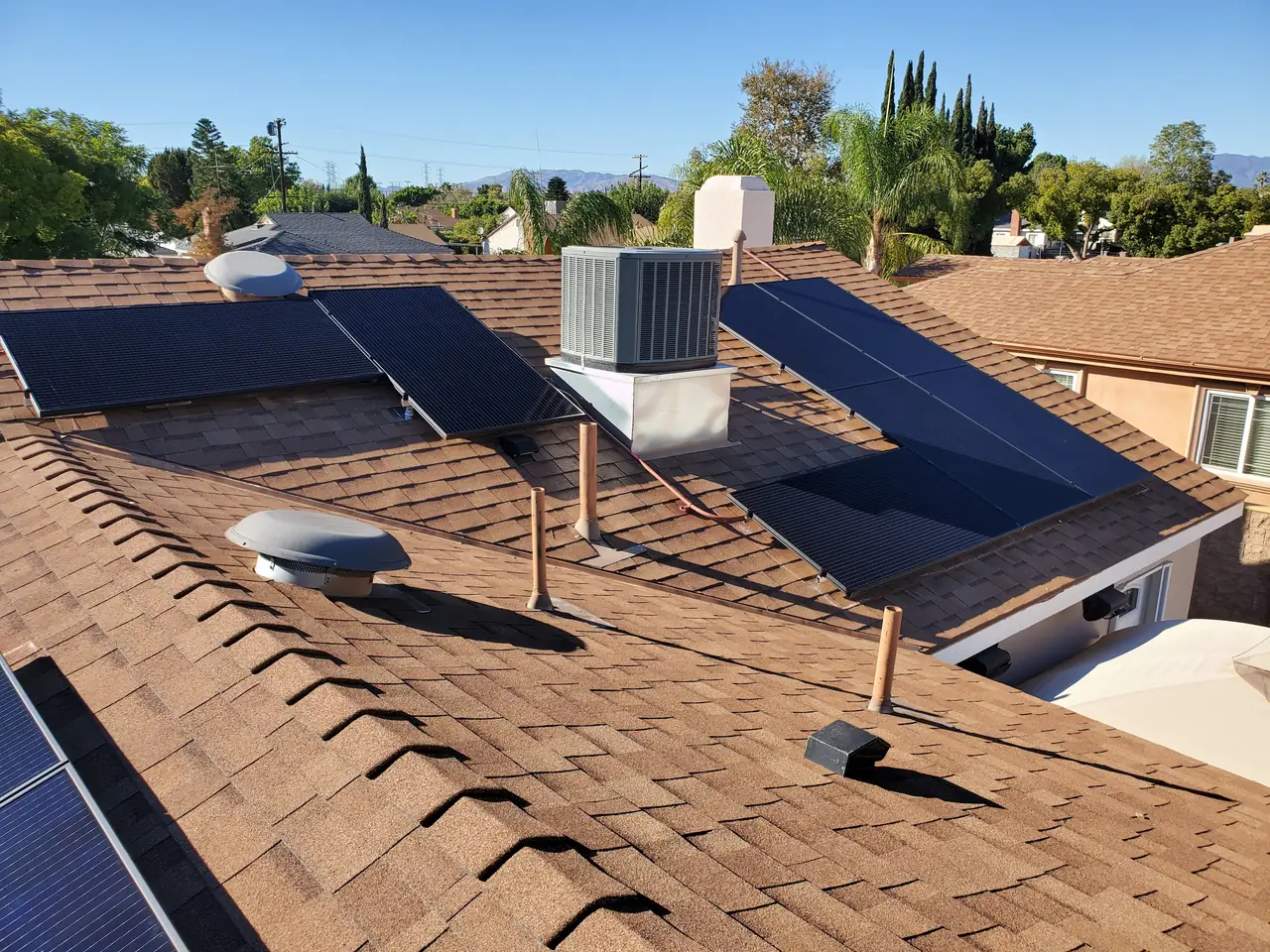
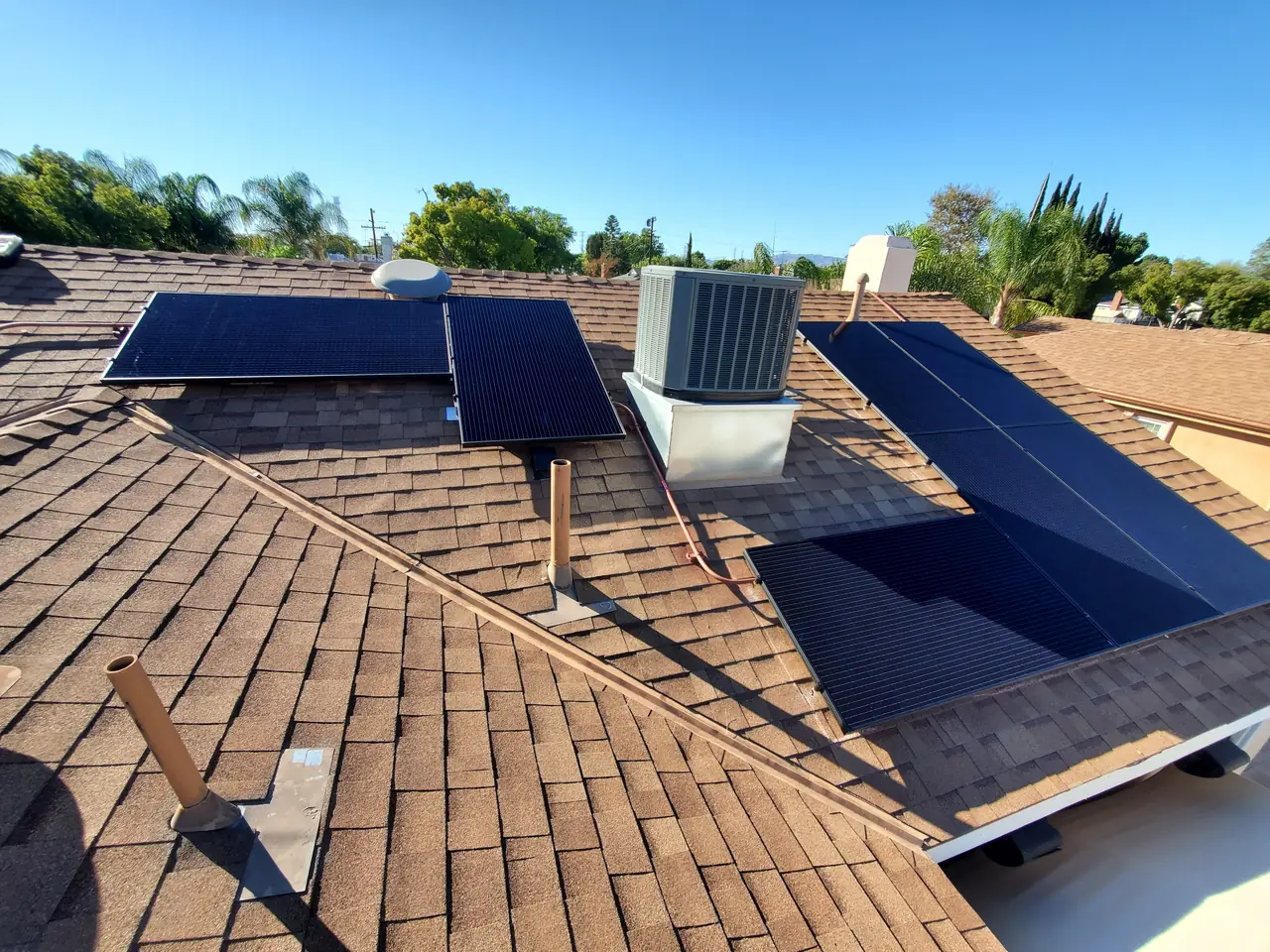
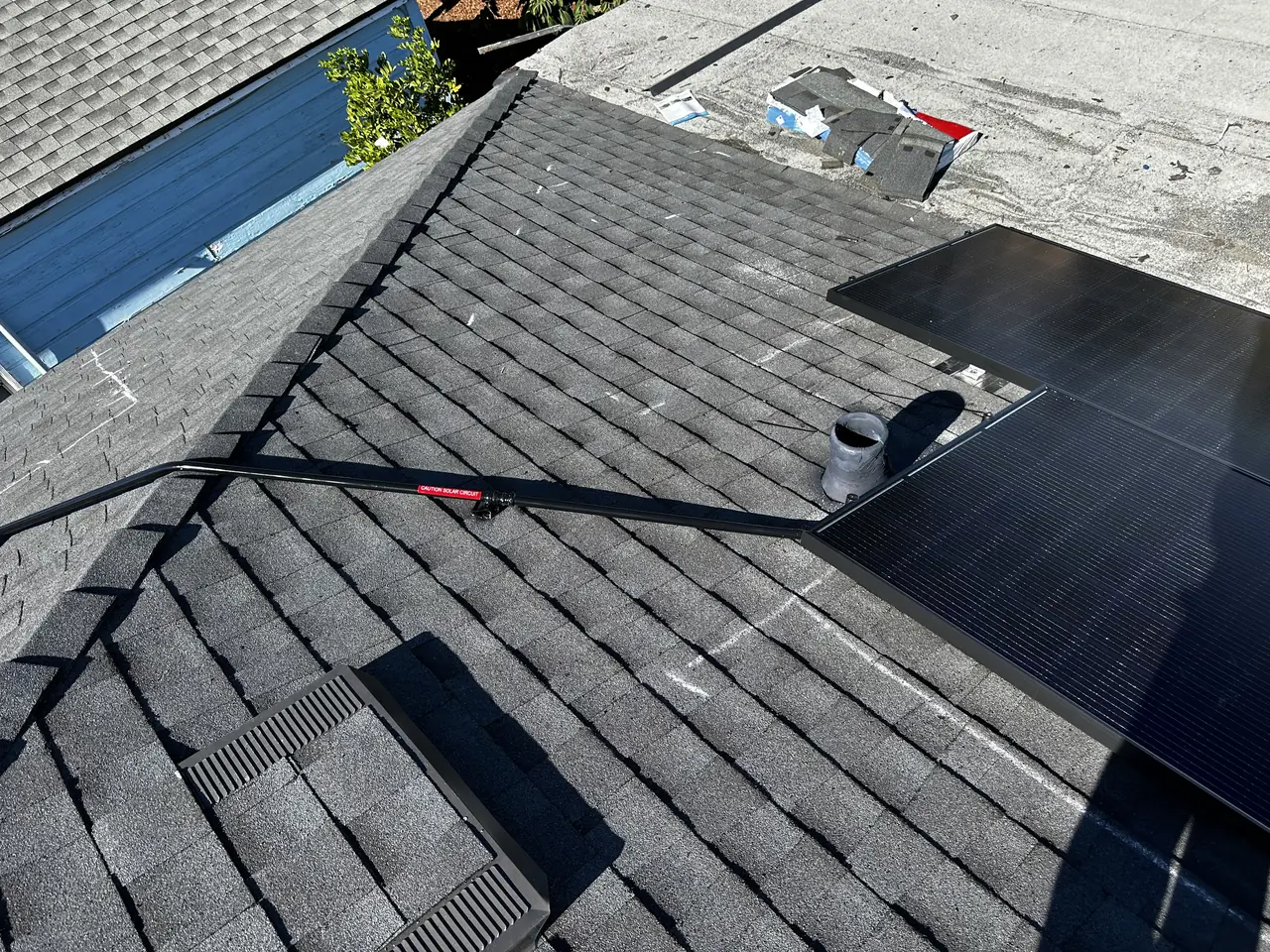
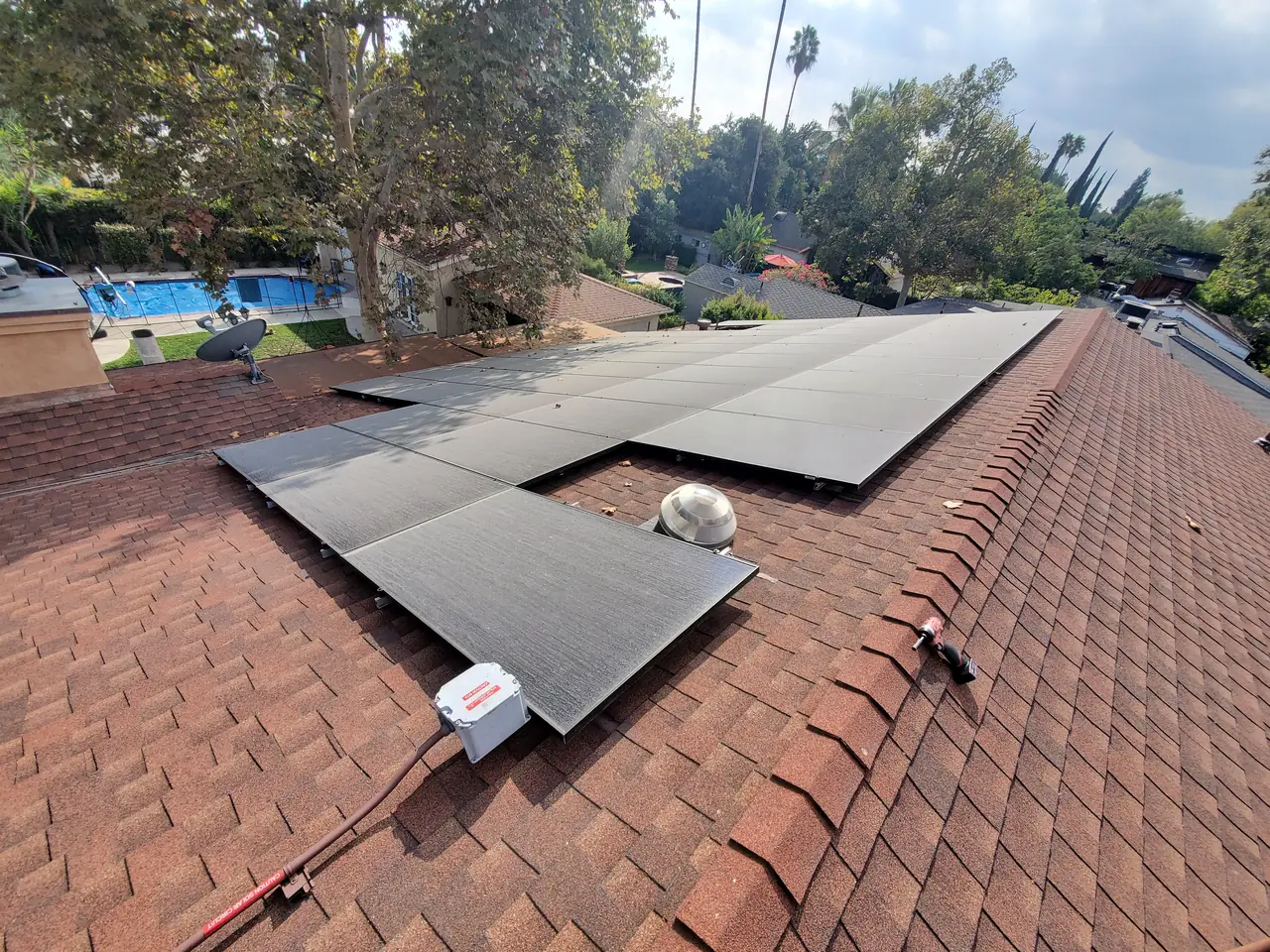
Eleven point eight kilowatts across four orientations on a roof that already had air-conditioning units, vent stacks and whirlybirds on it. Nothing was moved, and the conduit was painted to match.
Rooftop equipment cannot simply be relocated to make an array tidy: condensers need their clearances, vents need their positions and both need to stay serviceable. The array is designed around them, which means more sub-arrays, more conduit and more attention to how it all looks from the ground.
At a glance
- Array
- 11.84 kW DC — 32 × 370 W
- Modules
- REC Alpha REC370AA
- Microinverters
- 32 × Enphase IQ7+
- Orientations
- Four — west, east and south twice
- Tilt
- 18.43° throughout
- Mounting
- Flush
- On the roof already
- Condensers, vent stacks, whirlybirds
- Utility / AHJ
- LADWP / LADBS
The story
The air conditioning on this house lives on the roof. So do the vent stacks and a pair of whirlybirds. By the time anyone thought about solar, the roof was already doing three jobs.
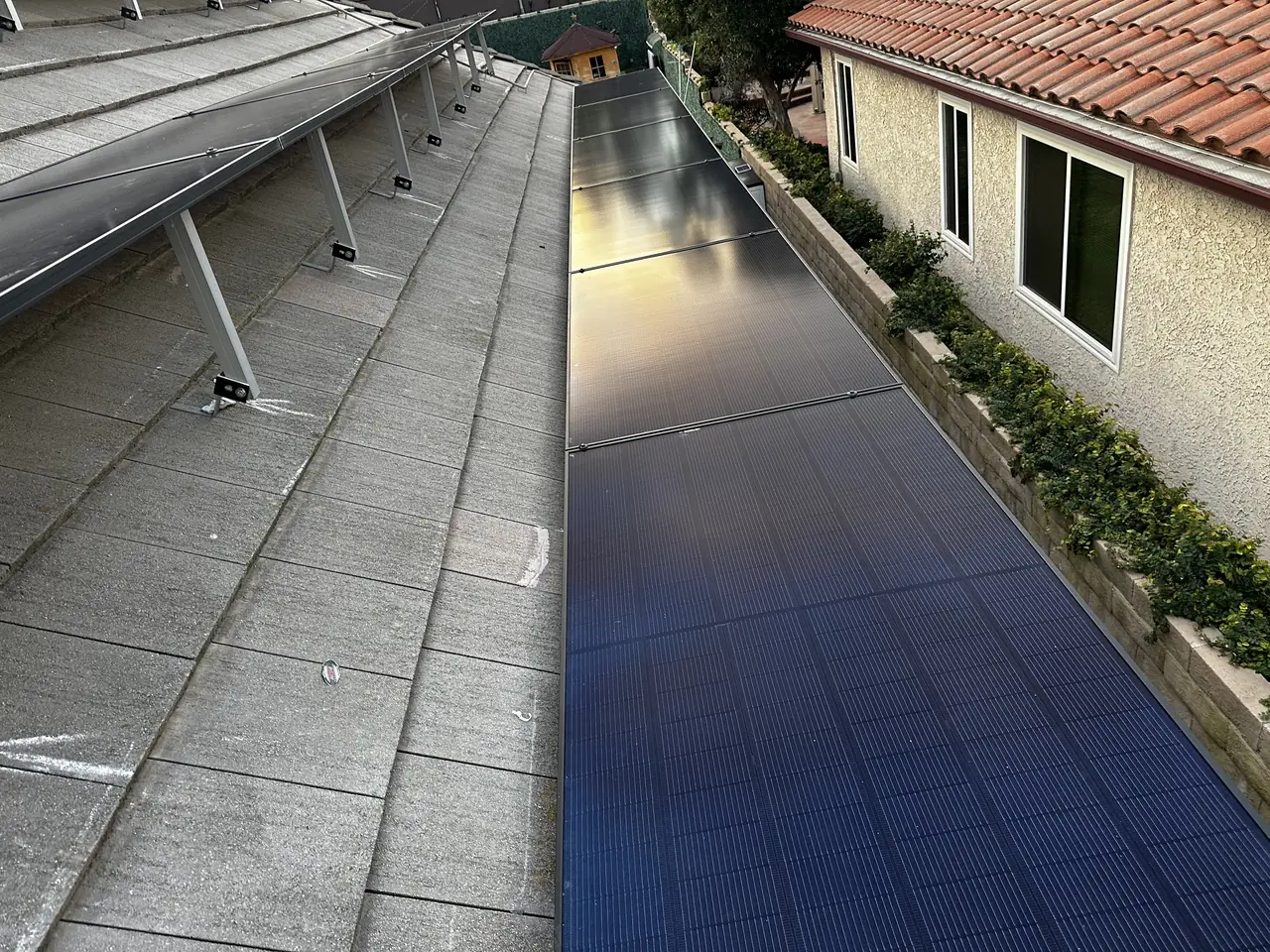
None of that moves. A condenser needs clear space around it for airflow and for whoever services it next; a plumbing vent is where it is because of what is underneath it. So the array was drawn around the equipment rather than the other way round, and that is what produced four separate orientations — west, east, and south twice at slightly different bearings — for thirty-two REC Alpha 370 watt modules, 11.84 kilowatts DC, all flush at the roof's own eighteen and a half degrees.
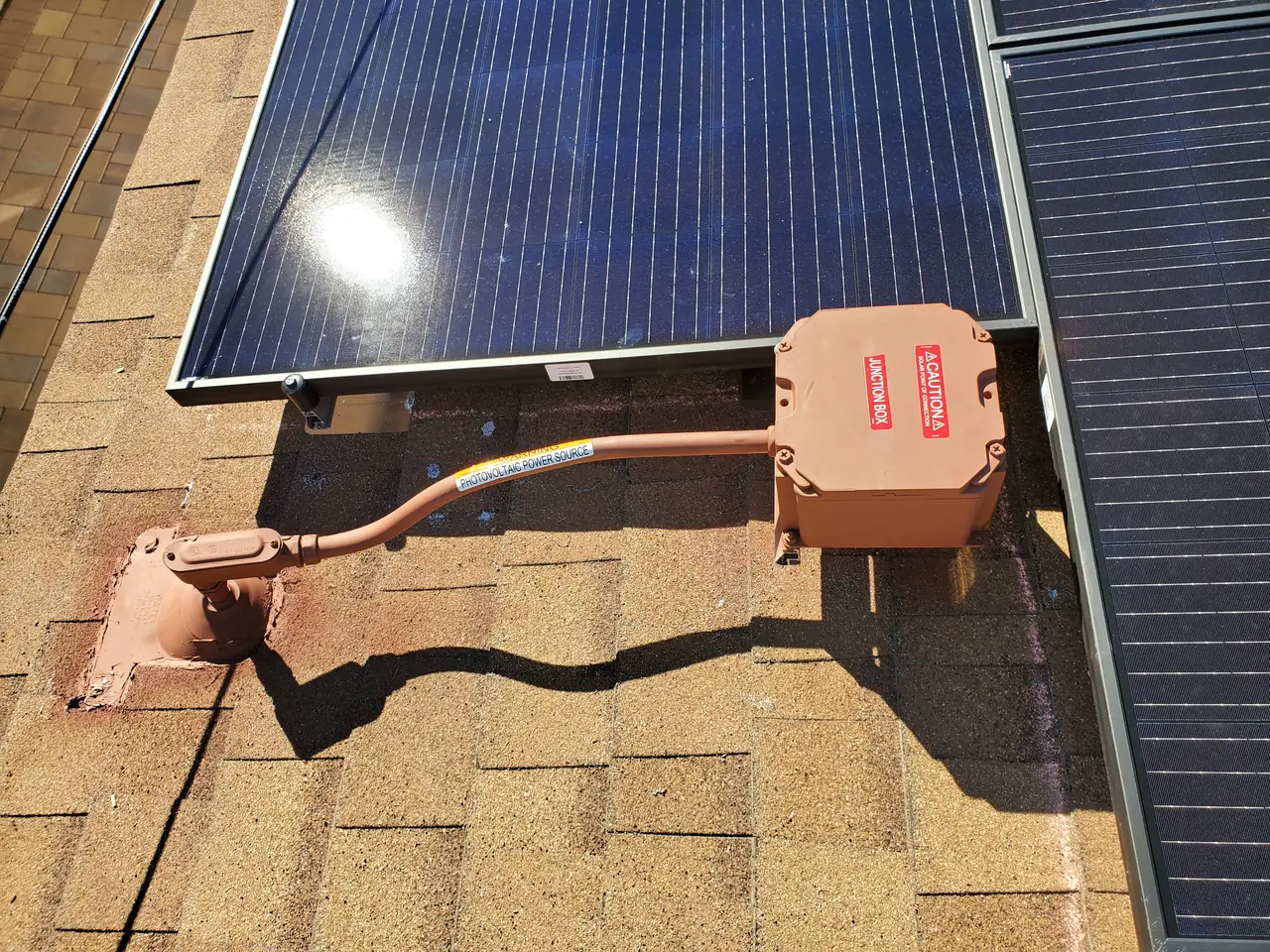
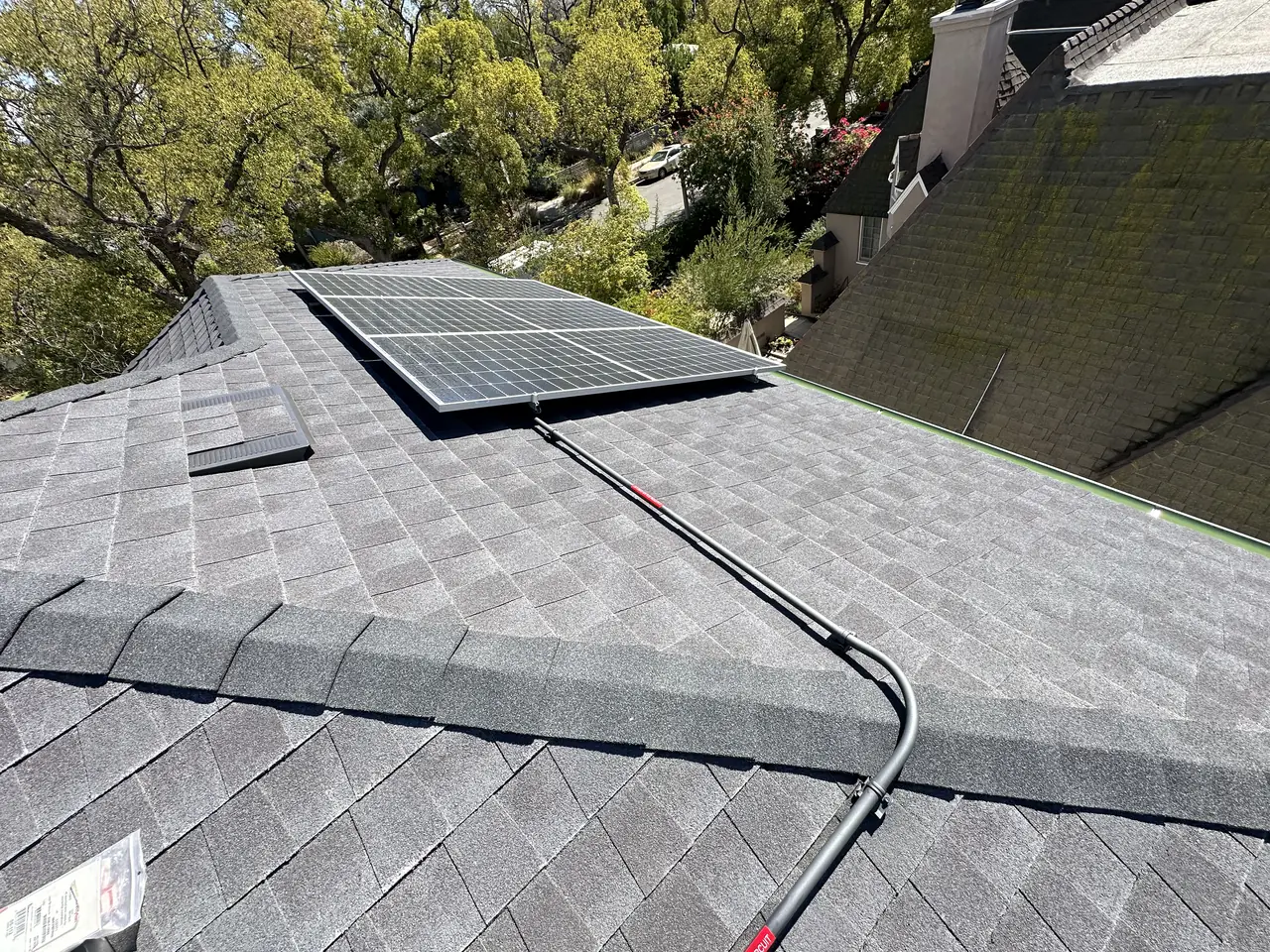
That photograph is the detail worth pausing on. The conduit and the roof junction box have been painted to match the shingle. It does nothing for production and it is not required by anybody. It is there because on a roof with this many separate sub-arrays there is a lot of conduit, and unpainted galvanised pipe crossing a terracotta roof is visible from the street for the next twenty years.
Thirty-two modules on thirty-two Enphase IQ7+ microinverters, one each. On a roof split four ways the point is that every group has to be able to work on its own terms — the east group peaks in the morning, the west group in the afternoon, and neither is tied to the other. A microinverter per module is one way to get that. Per-module optimisers are another, and a string inverter with a separate tracker for each group is a third. What does not work is one shared string across four bearings with nothing at module level.
The rest of the project was ordinary. The proposal went out at the end of August 2021. The interconnection request was filed at the end of October with the fee paid the same day, the first progress notice came the following morning, and permission to operate arrived in January.
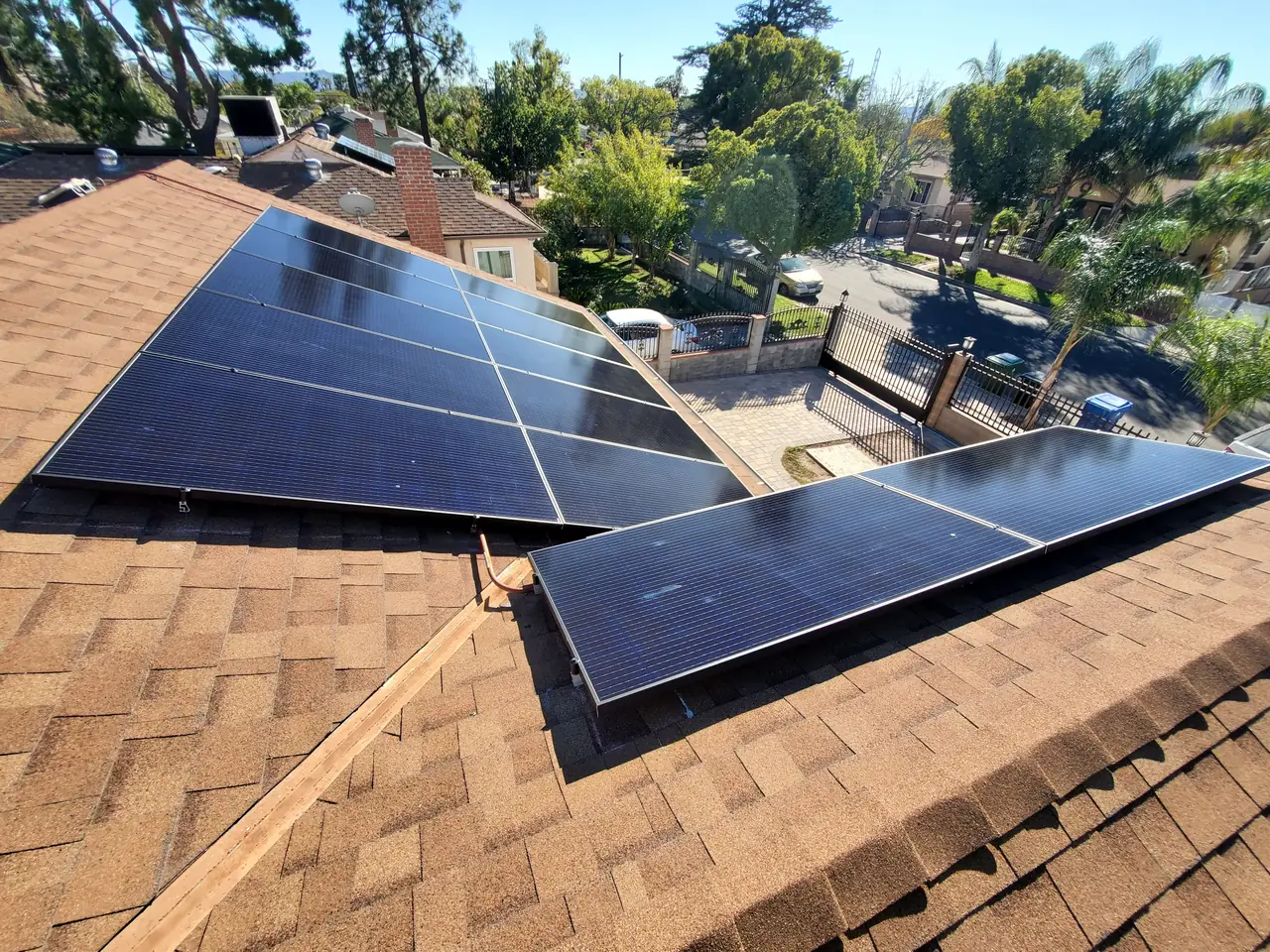
If your air conditioning is on the roof, expect a quote with more sub-arrays and more conduit than a clean roof would need, and ask two questions: what clearance is being left around the equipment for the next service call, and what the conduit will look like from the street.
How it ran
| 27 August 2021 | Proposal issued — thirty-two modules across four orientations |
|---|---|
| 27 October 2021 | Interconnection request filed; fee paid the same day |
| 28 October 2021 | First progress notice |
| January 2022 | Permission to operate |
Two months from filing to switch-on, over the holidays.
What we did
- Designed four sub-arrays around rooftop condensers, vent stacks and whirlybirds rather than relocating any of them.
- Kept service clearance around the air-conditioning equipment.
- Fitted one Enphase IQ7+ microinverter per module so each of the four groups works independently of the others.
- Painted the roof conduit and junction boxes to match the shingle.
- Filed the interconnection and paid the fee the same day.
System specifications
| Array | 11.84 kW DC on the signed proposal |
|---|---|
| Modules | 32 × REC Alpha REC370AA, 370 W |
| Microinverters | 32 × Enphase IQ7+ |
| Orientation 1 | West, 271° at 18.43° |
| Orientation 2 | South, 180° at 18.43° |
| Orientation 3 | East, 90° at 18.43° |
| Orientation 4 | South, 183° at 18.43° |
| Mounting | Flush |
| Roof | Composition shingle, several planes, rooftop condensers and vents |
| Finish | Roof conduit and junction boxes painted to match the shingle |
| Utility / AHJ | LADWP / LADBS |
Is your project like this one?
- Your air conditioning sits on the roof and you want to know if solar still fits.
- Your roof has vents, stacks and whirlybirds you do not want moved.
- You care what the conduit looks like from the street.
- You have several roof faces and want all of them used.
- You want the equipment on your roof to stay serviceable afterwards.
Cali Energy in North Hollywood
North Hollywood is inside City of Los Angeles boundaries: permits run through LADBS, interconnection through LADWP.
Plenty of the older housing here has its air conditioning on the roof rather than beside the house, which turns the roof into shared territory long before solar turns up.
This installation is on the North Hollywood projects page alongside the others, and what the work covers is set out on the North Hollywood service area page.
- License and classifications: CSLB #1032379
- Official reference for this process: California Energy Commission — solar equipment lists
- Official reference for this process: LADWP Electric Service Requirements
Frequently asked questions
Can solar go on a roof that already has air-conditioning units?
Yes. On this roof the condensers, vent stacks and whirlybirds all stayed where they were and the array was designed around them, which is what produced four separate sub-arrays instead of one or two.
Will the array block access to my rooftop equipment?
It should not. Clearance has to be kept for airflow and for whoever services the equipment next, and that clearance is part of the layout rather than something checked afterwards.
Why is the conduit painted?
So it does not read as a silver line across a terracotta roof. It makes no difference to production. On a roof with four sub-arrays there is enough conduit for it to matter visually, and it is worth asking whether a quote includes it.
Does splitting an array across four directions hurt output?
Yes, some. Orientation changes how much a module makes over a year as well as when it makes it — an east or west face produces less annually than a south one, and the gap is real rather than rhetorical. What per-module electronics prevents is a second, avoidable loss: one group dragging another down because they share a string. The first loss is physics and you accept it; the second is a design choice and you should not.
How long did this take?
The proposal went out at the end of August, the interconnection was filed at the end of October with the fee paid the same day, and permission to operate came in January.
Does Cali Energy work around rooftop mechanical equipment?
Yes — it is normal on the older housing stock here. Cali Energy holds B, C-10 and C-39 classifications under CSLB #1032379.
What this would look like on your roof
Planning solar in North Hollywood? Tell us your utility, your roof and what your bill looks like now, and we will model what a system like this would do on your house before you commit to anything.
Or call +1 (323) 844-7777 · Cali Energy, Northridge · CSLB #1032379 (B, C-10, C-39) — design, permits, install and electrical under one licensed contractor.
Related
This timeline reflects this property and this permitting path. Updated September 2026.