

North Hollywood, CA · October 2020 – January 2021 · LADWP / LADBS
Forty-seven modules. Forty-seven of everything else.
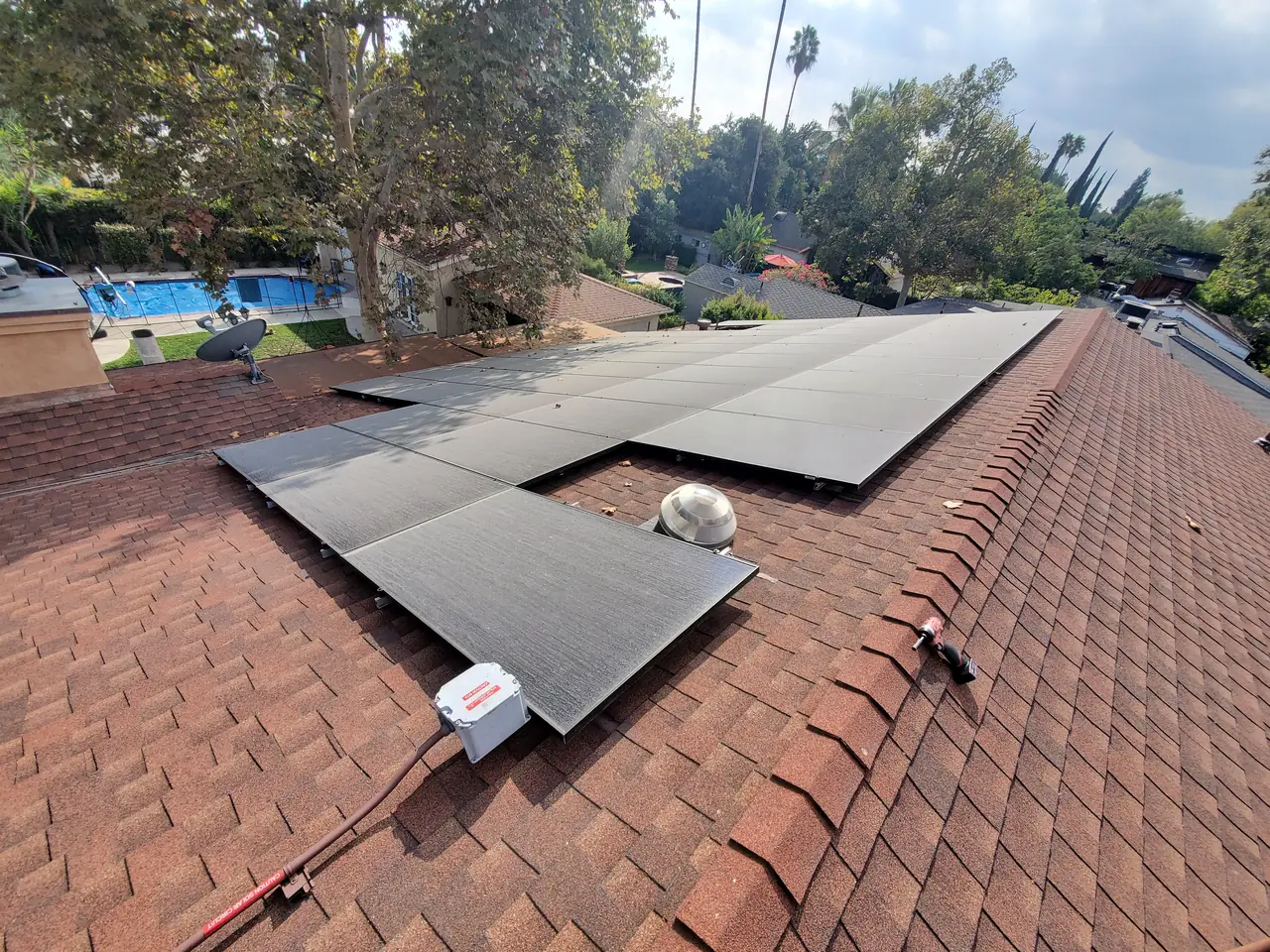
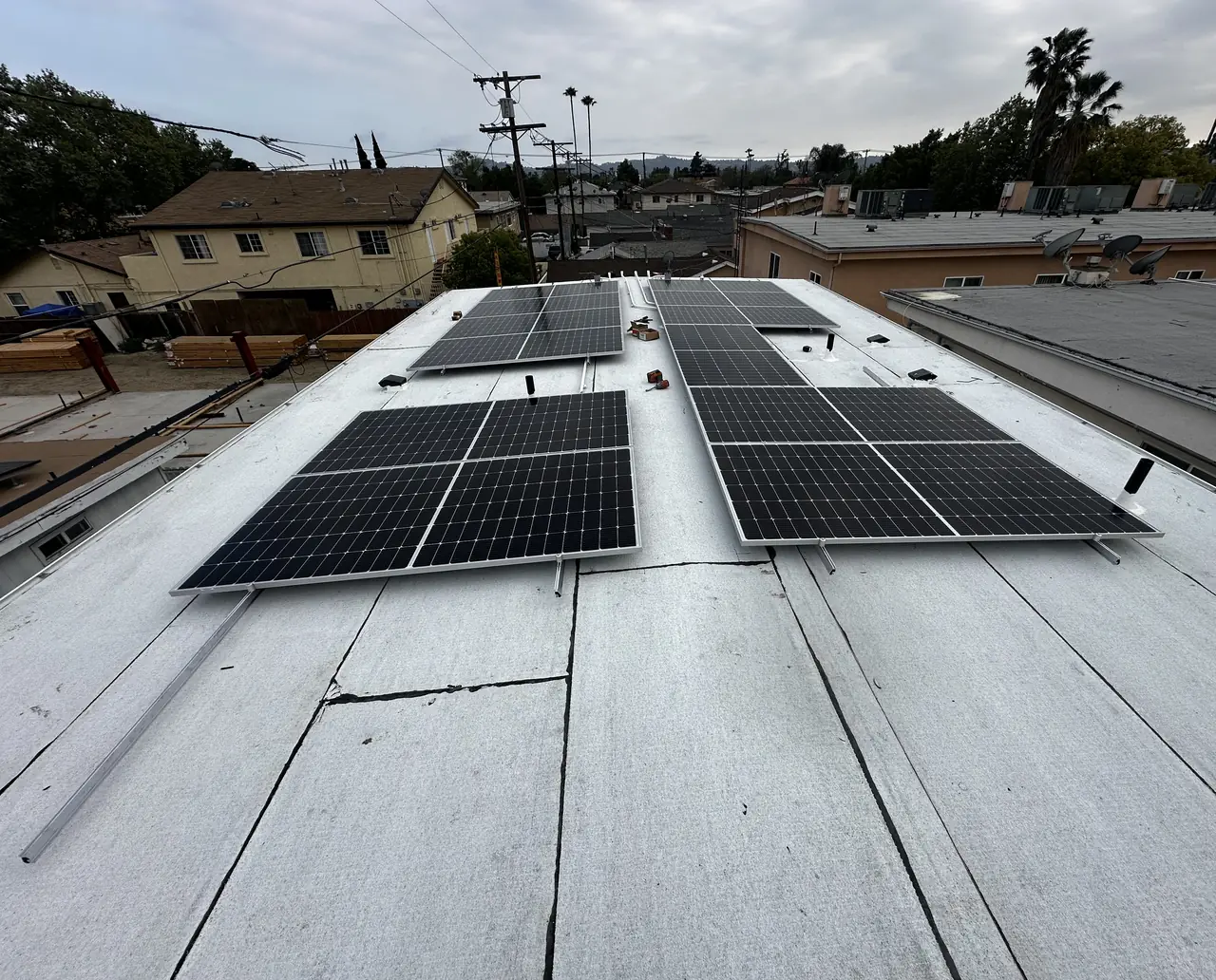
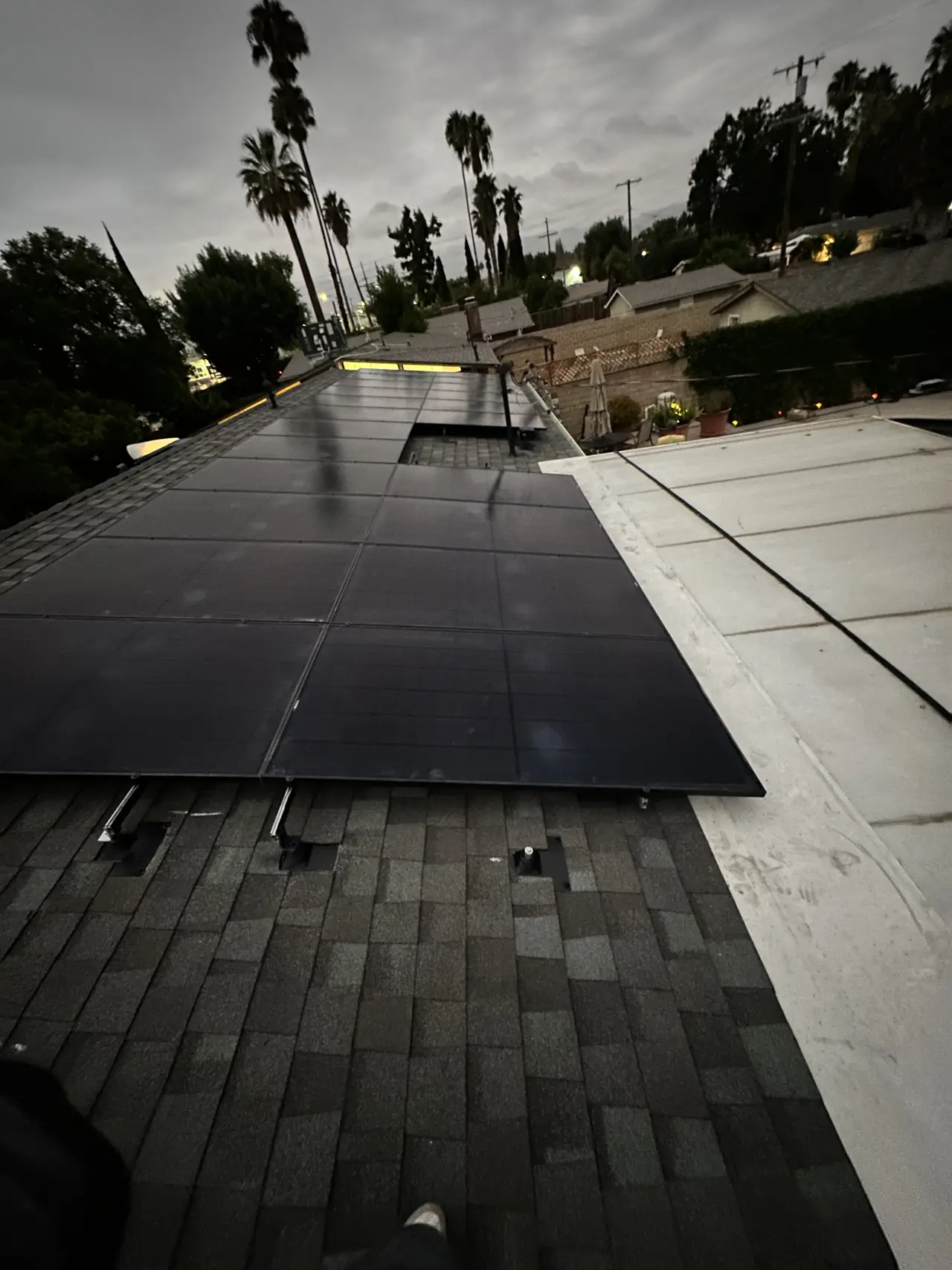
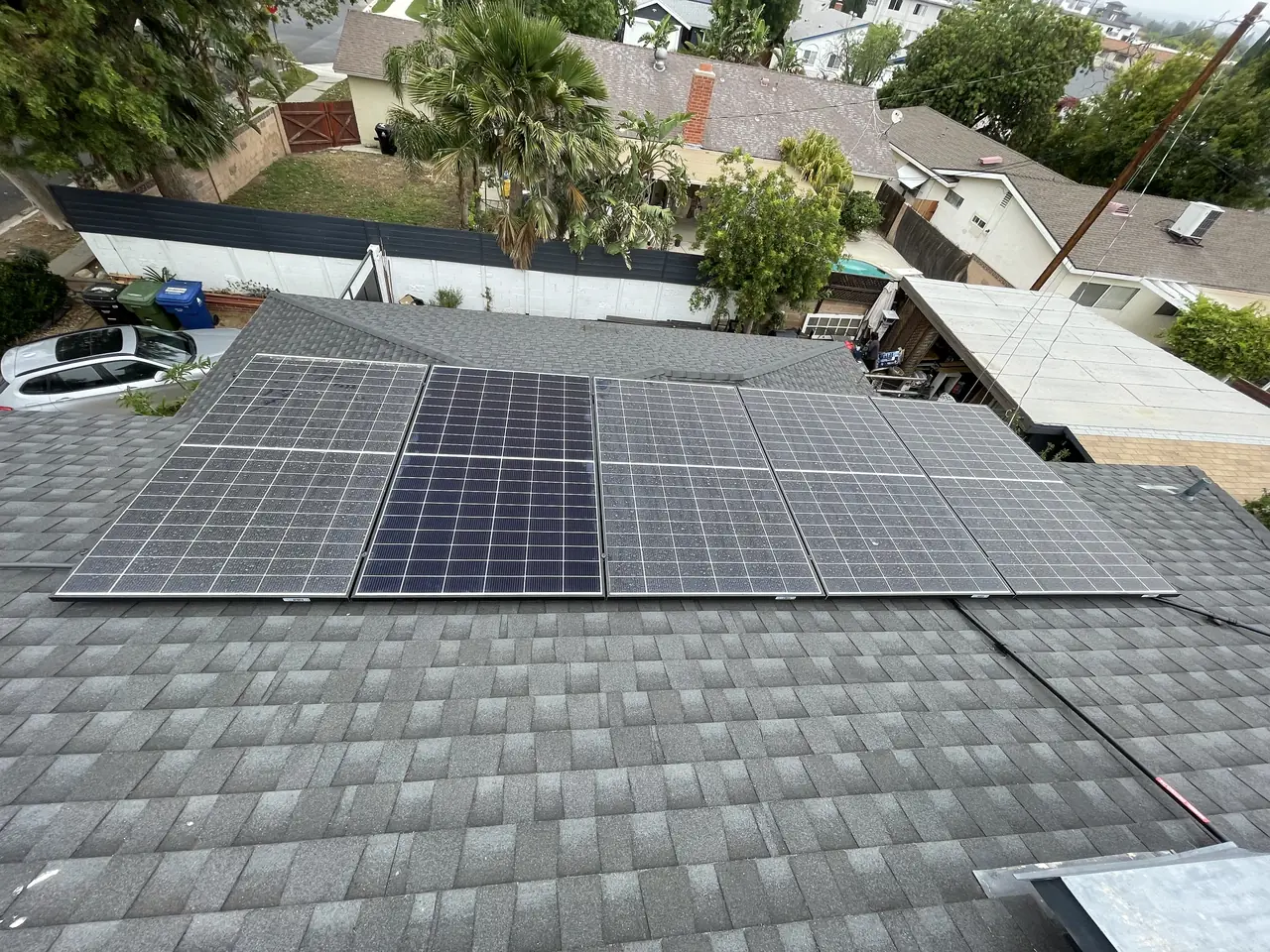
Sixteen kilowatts of panel across a wide shingle roof — the largest count we have put on a North Hollywood roof. The array was the straightforward part.
A large residential array is not a harder installation per module, it is the same installation repeated. What scales with it is the counting: every module is an attachment, a microinverter, a serial number and a line in the commissioning report, and the job is not finished until all of those numbers agree.
At a glance
- Array
- 15.98 kW DC — 47 × 340 W, largest count among our North Hollywood projects
- Modules
- Hanwha Q CELLS Q.PEAK DUO BLK-G6+
- Microinverters
- 47 × Enphase IQ7, one per module
- PTC rating
- 14.951 kW
- Racking
- IronRidge FlashFoot2 on XR-10
- Structure
- 2×6 rafters at 24 in
- Main panel
- Not upgraded
- Utility / AHJ
- LADWP / LADBS
The story
Forty-seven modules is the largest count among our North Hollywood projects. The array is Hanwha Q CELLS Q.PEAK DUO BLK-G6+ panels at 340 watts each — 15.98 kilowatts on the approved plans, 14.951 kilowatts by the PTC rating used for sizing — with one Enphase IQ7 microinverter under every one of them.
The roof is what makes it possible. A wide, low single-storey plan with long uninterrupted planes, 2×6 rafters at twenty-four inches, and enough of it facing the right way that the array could be laid in long straight runs rather than broken into patches. The attachments are IronRidge FlashFoot2 on XR-10 rail, and the existing main panel took the connection without being replaced.
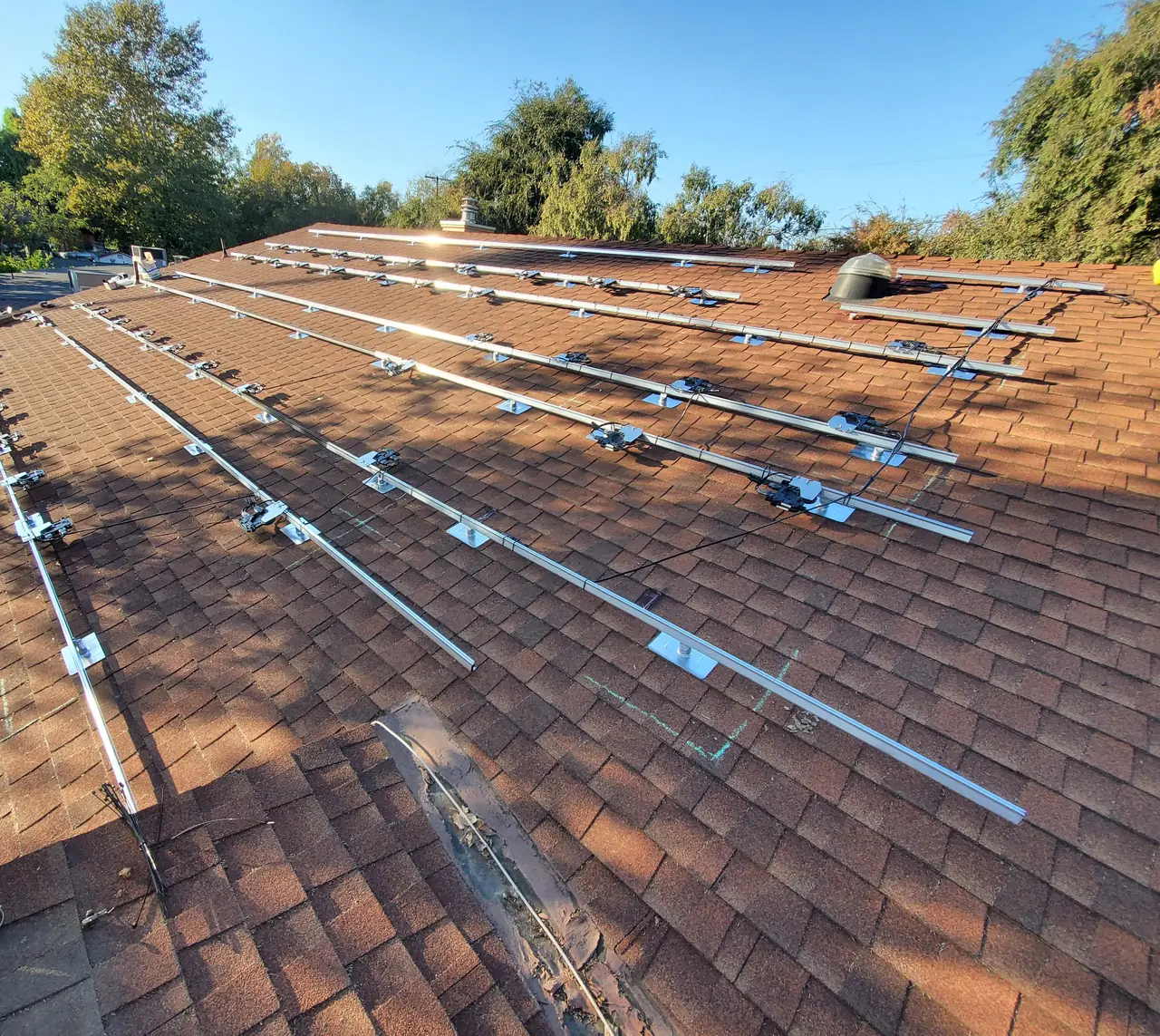
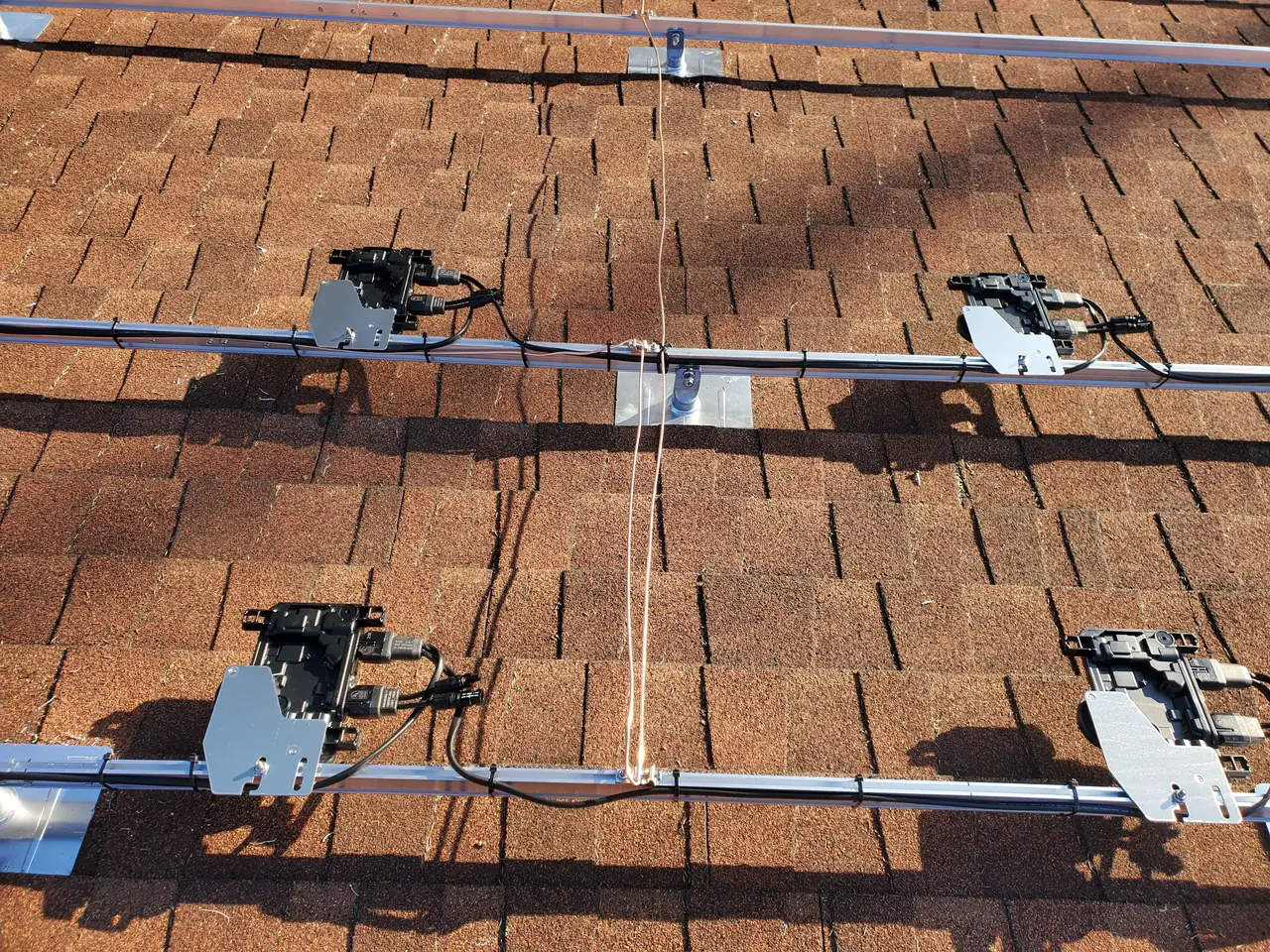
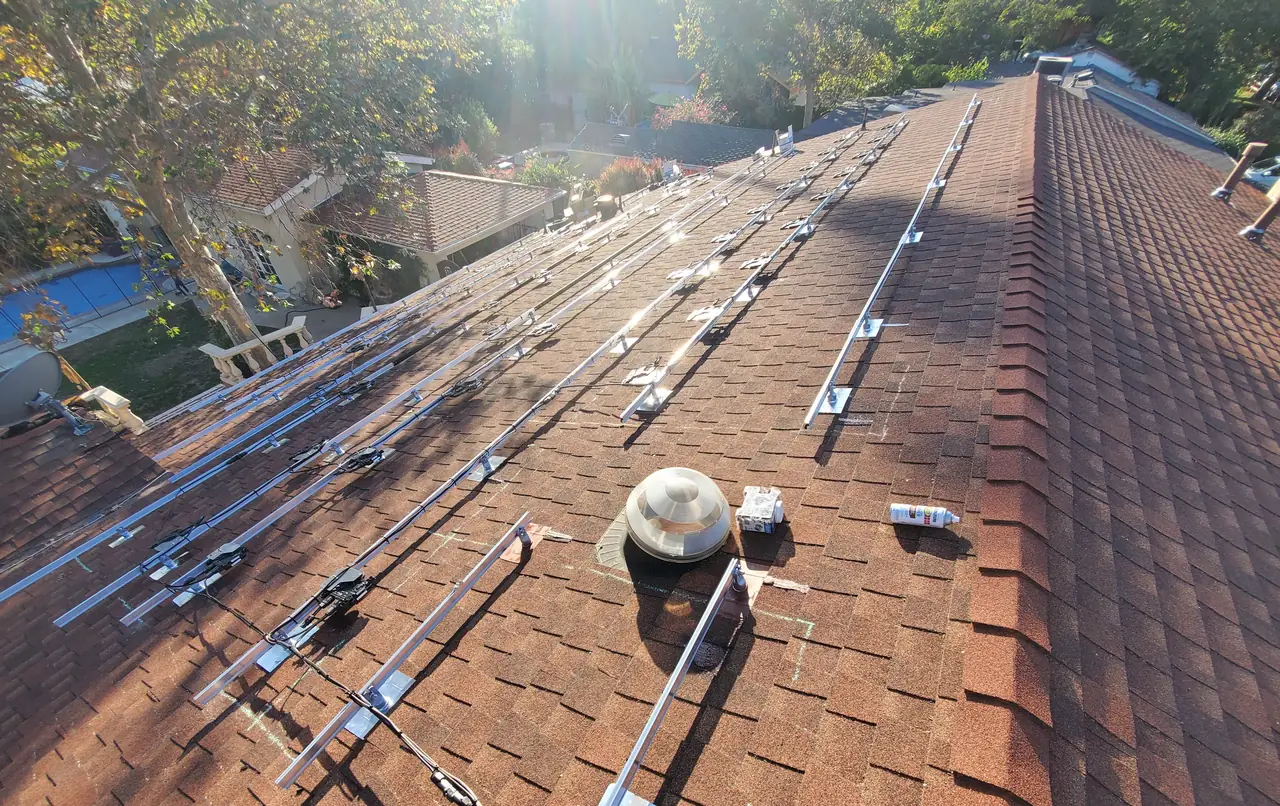
At this scale the work stops being about individual modules and becomes about repetition. Every rail run is set off a chalk line, because a quarter-inch of drift over forty-seven modules becomes a visible bend in the finished array. Every attachment lands in a rafter, not between two. Every microinverter goes on before the module that covers it.
The paperwork was the longer half. The contract was signed in the second week of October 2020 and the first permit set was issued the day after. Then a second at the end of the month, a third in the third week of November, and a fourth the week after that — four issues of the same drawing set over six weeks. In between, the utility asked for photographs of the site, which we sent.
Four issues of a drawing set is not four arguments with the city, and it is worth knowing that before you read anything into your own. Drawings are reissued for plenty of reasons that never reach a plan checker: a module substitution, a layout change the owner asked for, a correction the designer caught.
The honest version is duller and more useful. On a system this size the drawing carries more of everything — more attachment points, more conductor runs, a longer load calculation — and more of everything means more chances for a version to be superseded. Budget for that in the calendar rather than being surprised by it.
The express permit inspection record came back in the middle of December. The installation was released in the middle of January and permission to operate followed eleven days later.
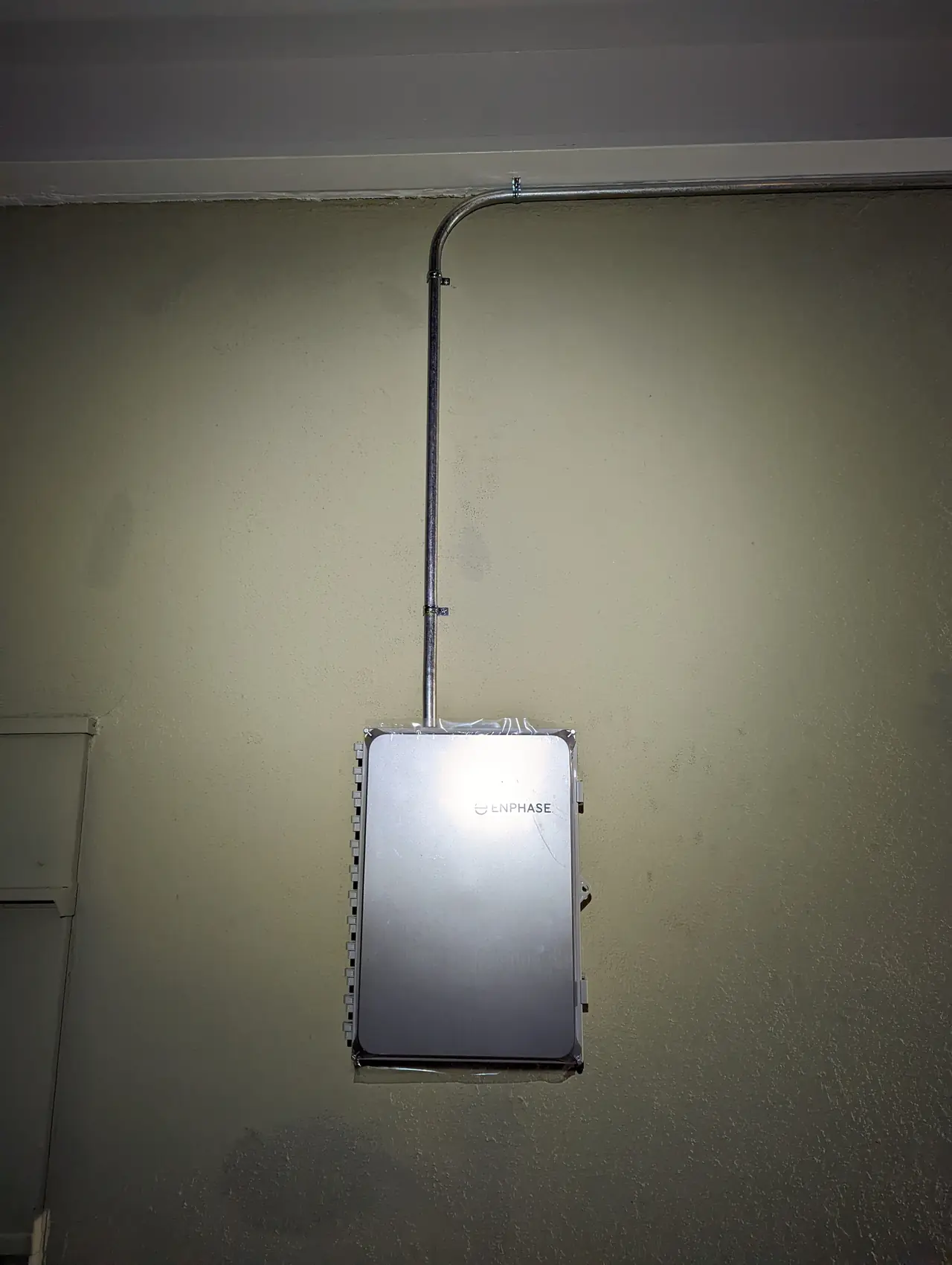
The last step on a system like this is a count. At commissioning all forty-seven microinverters were detected, all forty-seven were communicating, and all forty-seven had the grid profile the utility requires. On a system this size that report is the only proof that every module on the roof is actually working — you cannot tell by looking at it.
How it ran
| 1 October 2020 | First site visit |
|---|---|
| 7 October 2020 | Proposal issued |
| 10 October 2020 | Contract signed |
| 13 October 2020 | First permit set issued |
| 19 October 2020 | Interconnection request confirmed |
| 27 October 2020 | Utility requests site photographs |
| 29 Oct – 25 Nov 2020 | Permit set reissued three more times |
| 15 December 2020 | Express permit inspection record |
| 15 January 2021 | Installation released |
| 26 January 2021 | Permission to operate |
Sixteen weeks, and four of them were the drawing set.
What we did
- Designed a forty-seven module array in long runs rather than scattered patches.
- Set every rail run off a chalk line so the finished array reads straight across the whole roof.
- Fixed each attachment into a rafter with FlashFoot2 flashings.
- Installed one Enphase IQ7 microinverter per module.
- Carried the drawing set through four issues and supplied the photographs the utility asked for.
- Confirmed at commissioning that all forty-seven devices were detected, communicating and set to the required grid profile.
System specifications
| Array | 15.98 kW DC on the approved plans; 14.951 kW PTC |
|---|---|
| Modules | 47 × Hanwha Q CELLS Q.PEAK DUO BLK-G6+, 340 W |
| Microinverters | 47 × Enphase IQ7-60-2-US |
| Racking | IronRidge XR-10 rail on FlashFoot2 attachments |
| Structure | 2×6 rafters at 24 in on centre |
| Design wind | 110 mph three-second gust, exposure B |
| Main panel | Existing, not upgraded |
| Utility / AHJ | LADWP / LADBS |
Is your project like this one?
- You have a large roof and want to know what the upper end of a residential array looks like.
- You have been told your main panel must be replaced for a big system.
- You want the commissioning report, not just a handshake at the end.
- You are wondering why a permit set goes out more than once.
- Your roof is long and low and you want the array to read straight from the street.
Cali Energy in North Hollywood
North Hollywood is inside City of Los Angeles boundaries: permits run through LADBS, interconnection through LADWP.
South of the boulevard the lots get deep and the houses spread out low and wide, which is how a single-storey roof here ends up with enough south-facing surface for an array this size.
This installation is on the North Hollywood projects page alongside the others, and what the work covers is set out on the North Hollywood service area page.
- License and classifications: CSLB #1032379
- Official reference for this process: California Energy Commission — solar equipment lists
- Official reference for this process: LADBS — plan review and permitting
Frequently asked questions
How many solar panels can go on a house?
As many as the roof, the structure and the electrical service will carry. This one took forty-seven modules at 340 watts, 15.98 kilowatts DC — the largest we have installed here — on 2×6 rafters at twenty-four inches, with the existing main panel left in place.
Does a big array always mean a new main panel?
No. On this house the existing panel took the connection and the approved plans record no main panel upgrade. What decides it is what the busbar and main breaker will carry alongside the household, not the size of the array on its own.
Why was the permit set issued four times?
Not necessarily because anybody objected. Drawings are reissued for plenty of reasons that never reach a plan checker: a module substitution, a layout change the owner asked for, a correction the designer caught. What is reliably true is that a larger system puts more on the drawing, and more of everything means more chances for a version to be superseded.
What is the PTC rating and why is it lower than the panel rating?
The panel's rating is measured under standard test conditions; PTC is measured under conditions closer to a real roof. Here 47 modules rate 15.98 kilowatts at STC and 14.951 kilowatts at PTC. Both are on the approved plans and they are not interchangeable.
How do I know every panel is working?
On a microinverter system, from the commissioning report. Each module has its own device that has to be detected, communicating and set to the utility's grid profile. On this roof that is forty-seven of each, and the count has to match the modules installed.
What this would look like on your roof
Planning solar in North Hollywood? Tell us your utility, your roof and what your bill looks like now, and we will model what a system like this would do on your house before you commit to anything.
Or call +1 (323) 844-7777 · Cali Energy, Northridge · CSLB #1032379 (B, C-10, C-39) — design, permits, install and electrical under one licensed contractor.
Related
This timeline reflects this property and this permitting path. Updated September 2026.