

North Hollywood, CA · December 2024 · LADWP / LADBS
Eight modules, sized against a year of actual bills.
A 2.84 kilowatt system on a house that had been extended three times in two years — and a design document issued in the homeowner's own language as well as in English.
Sizing a small system starts from arithmetic rather than guesswork: a year of measured consumption on one side, an estimated annual yield on the other. Those two numbers tell you the array is the right order of magnitude. They do not by themselves tell you the bill goes away, because that depends on when the energy is produced against when it is used, and on the rate. What makes the difference on a small job is whether the homeowner can read the document that explains any of it.
At a glance
- System
- 2.84 kWp
- Modules
- 8 × LONGi
- Annual usage
- 3,492 kWh measured
- Estimated production
- 4,201 kWh a year
- Service
- Not greater than 225 A
- Existing solar or storage
- None
- Design document
- English and Spanish
- Utility / AHJ
- LADWP / LADBS
The story
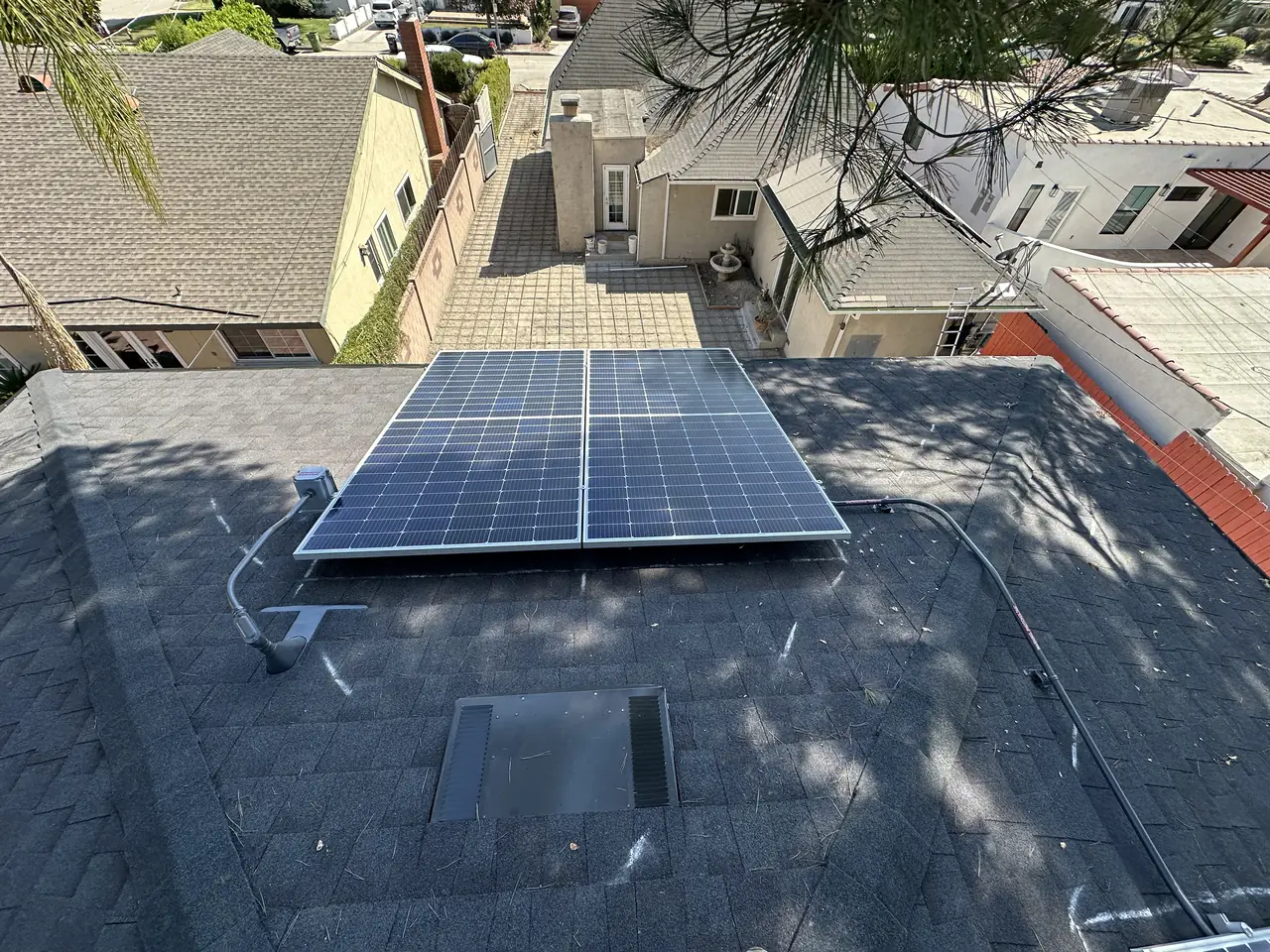
Eight modules. Two point eight four kilowatts. On its own that number says very little, which is why the design document puts it next to two others: the household used 3,492 kilowatt-hours over the preceding year, and the array is estimated to produce 4,201.
That is how a small system should be argued — against measured consumption, not against a roof's theoretical capacity. An array sized to fill the roof on a house that uses very little is somebody else's revenue target.
But be careful what those two numbers prove. An estimated 4,201 kilowatt-hours against a measured 3,492 means the array is the right order of magnitude for the house. It does not mean the bill goes to zero. Annual production exceeding annual consumption is a coarse test: what you actually pay depends on how much of that output is used as it is made, what the rest is credited at, and which tariff the house is on. Anybody who converts those two figures straight into a monthly saving has skipped three steps.
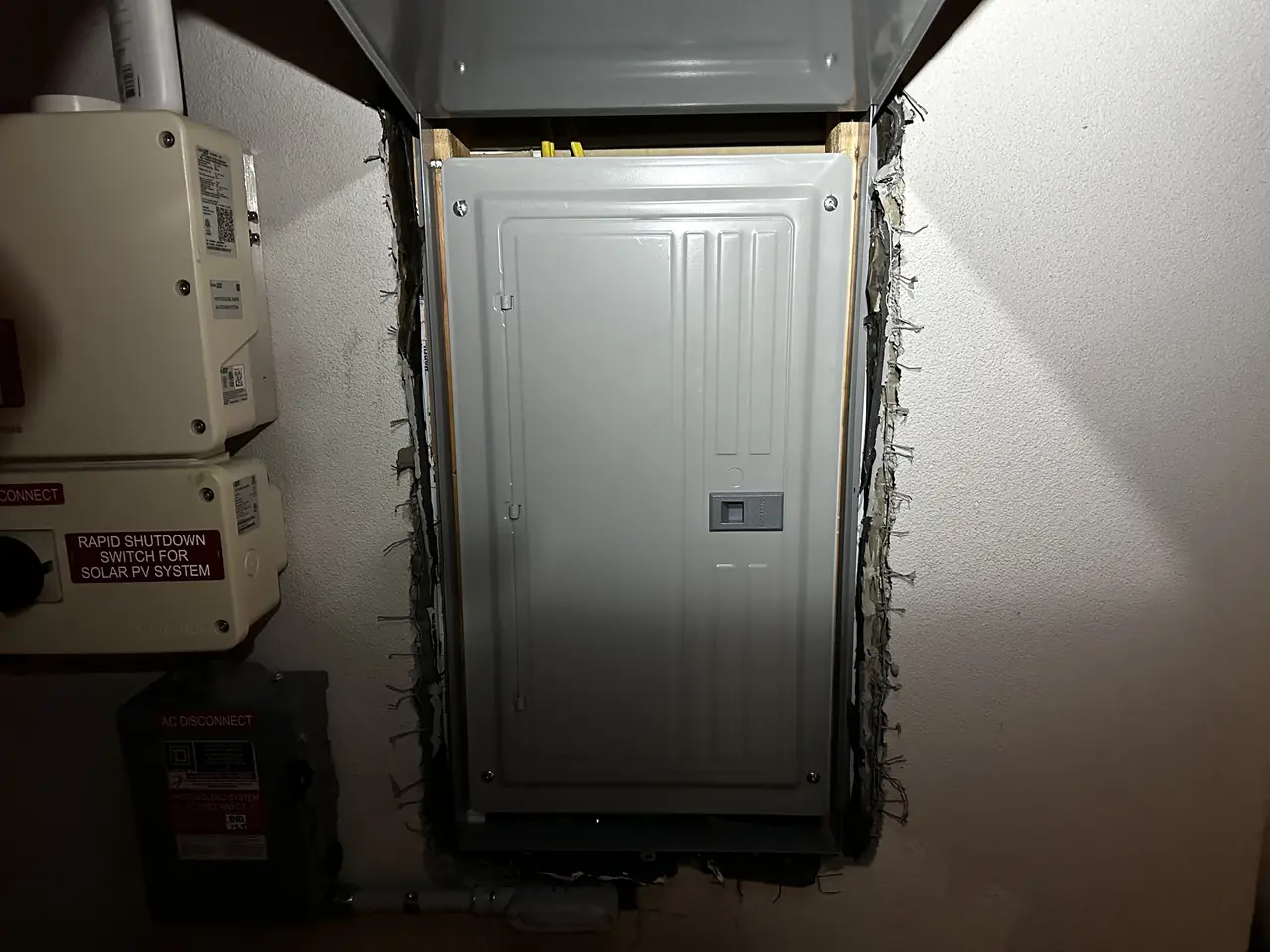
The house it sits on is worth a paragraph. Over two years it collected a run of permits: first an addition for a new bathroom and walk-in closet off an existing bedroom, then a further addition for a new bedroom with the old one remodelled, then an attached storage addition with the existing garage removed. A block wall along the side went up in between.
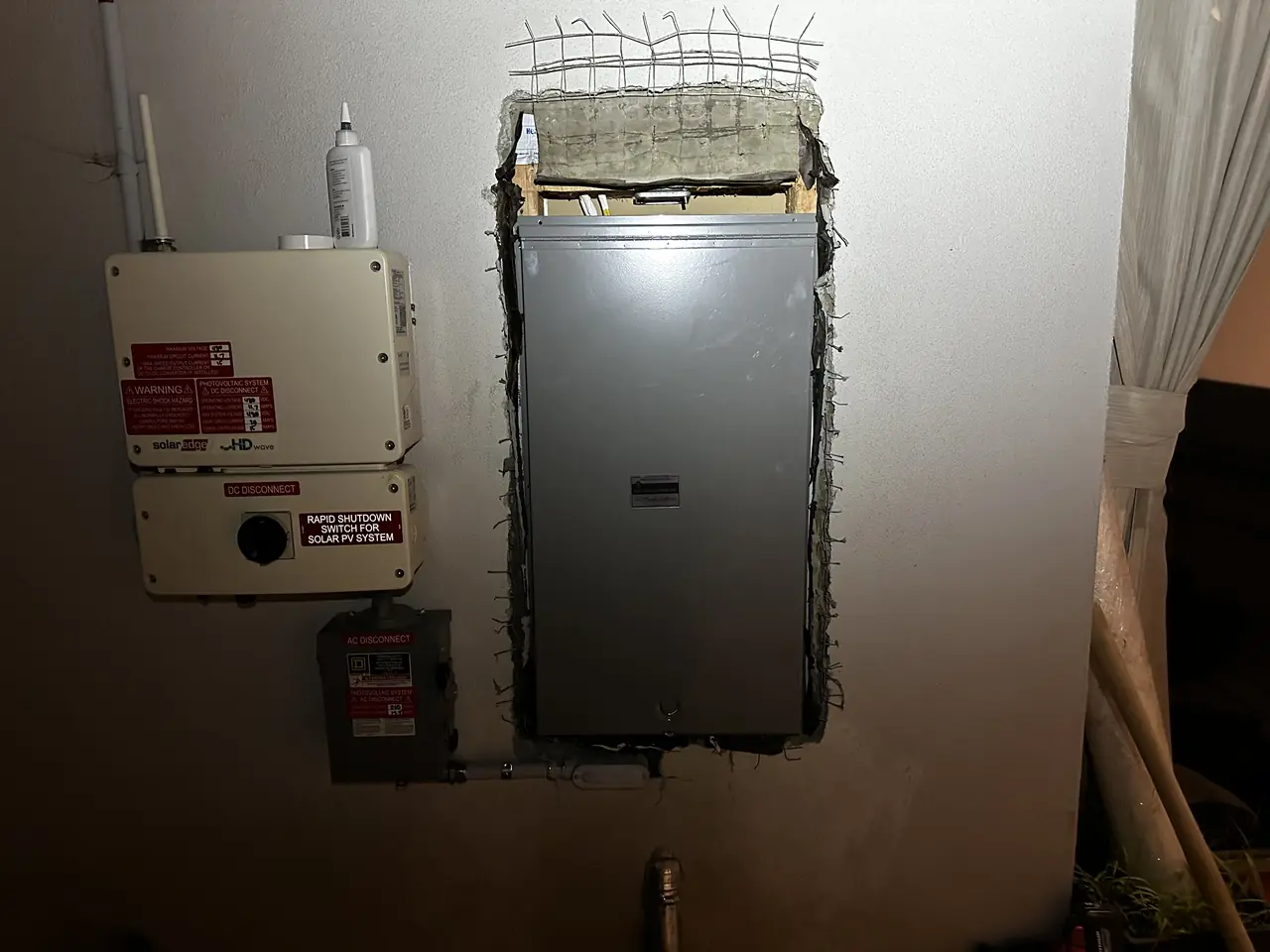
A house extended like that does not have the electrical load it was built with, and it usually does not have the service either. The standard plan sheet for this system records the checks that matter for a small array on such a house: no existing solar or storage on the property, and a service not greater than 225 amps — which is what determines whether the array can connect without the panel being replaced first.
One detail from the paperwork is worth more than the technical specification. The design document for this project was issued in two languages — the same figures, the same layout, once in English and once in Spanish.
That is not a courtesy, it is the job. A homeowner who cannot read the document explaining what they are buying cannot check it, cannot compare it against another quote, and has to take somebody's word for the whole thing. In a city where a large share of households speak Spanish at home, issuing the design in one language only is a decision — and it is usually made without anyone admitting it was made.
Ask for the document in the language you actually read. If a contractor cannot produce it, that tells you how much of the explanation was ever meant to be checked.
How it ran
| 2020–2022 | The house extended in stages — bathroom and closet, then a bedroom, then storage; garage removed |
|---|---|
| December 2024 | Design plan issued in English and Spanish |
| December 2024 | Standard plan sheet filed — no existing solar or storage, service not greater than 225 A |
Sized against a year of measured usage, not against the roof.
What we did
- Sized the array against a measured year of consumption rather than the available roof.
- Filed the standard plan sheet confirming no existing solar or storage and the service rating.
- Issued the design document in both English and Spanish.
- Established from the standard plan sheet that the existing service carried the array without a panel replacement.
System specifications
| System | 2.84 kWp |
|---|---|
| Modules | 8 × LONGi |
| Measured annual usage | 3,492 kWh |
| Estimated annual production | 4,201 kWh |
| Existing PV or storage on site | None |
| Service | Not greater than 225 A |
| Busbar | 400 A or less |
| Design document | Issued in English and Spanish |
| Utility / AHJ | LADWP / LADBS |
Is your project like this one?
- Your house has been extended and you are not sure what your load is now.
- You want a system sized to your bill rather than to your roof.
- You would rather read the proposal in Spanish.
- You have been quoted something that seems larger than you need.
- You want to know whether your panel has to be replaced first.
Cali Energy in North Hollywood
North Hollywood is inside City of Los Angeles boundaries: permits run through LADBS, interconnection through LADWP.
Houses here are often extended a room at a time over several years, which means the electrical load a solar system has to meet is not the one the house was built with.
This installation is on the North Hollywood projects page alongside the others, and what the work covers is set out on the North Hollywood service area page.
- License and classifications: CSLB #1032379
- Official reference for this process: California Energy Commission — solar equipment lists
- Official reference for this process: LADBS — plan review and permitting
Frequently asked questions
How should a solar system be sized?
Against a year of measured consumption rather than against the roof. On this project the household used 3,492 kilowatt-hours over the preceding year and the array is estimated to produce 4,201 on eight modules. That comparison shows the array is the right size for the house; it is not the same as showing the bill disappears.
If my system produces more than I use, is my bill zero?
Not necessarily. The annual comparison is a sizing check, not a billing calculation. What you pay depends on how much output you consume as it is generated, what the exported remainder is credited at, and which tariff you are on. Ask for those terms rather than accepting a headline figure.
Is a bigger system always better?
No. A system sized to fill the roof on a house that uses very little produces more than the household can use and costs more to install. The usage figure is the starting point, not the roof area.
Can I get the proposal in Spanish?
Yes. The design document on this project was issued in both English and Spanish, with the same figures in each. If you cannot read the document you cannot check it, and checking it is the point.
Does my panel need replacing for a small system?
It depends on the service rating and what the busbar will carry. The standard plan sheet for this system records a service not greater than 225 amps and a busbar of 400 amps or less, and the array connected without a replacement.
Does it matter that the house was extended?
It matters for the load. A house that has gained a bathroom, a bedroom and a storage room does not use what it used to, which is exactly why the sizing starts from a recent year of bills rather than from the original house.
What this would look like on your roof
Planning solar in North Hollywood? Tell us your utility, your roof and what your bill looks like now, and we will model what a system like this would do on your house before you commit to anything.
Or call +1 (323) 844-7777 · Cali Energy, Northridge · CSLB #1032379 (B, C-10, C-39) — design, permits, install and electrical under one licensed contractor.
Related
This timeline reflects this property and this permitting path. Updated September 2026.