

North Hollywood, CA · September 2024 – March 2026 · LADWP / LADBS
No south face. The array went west and north instead.
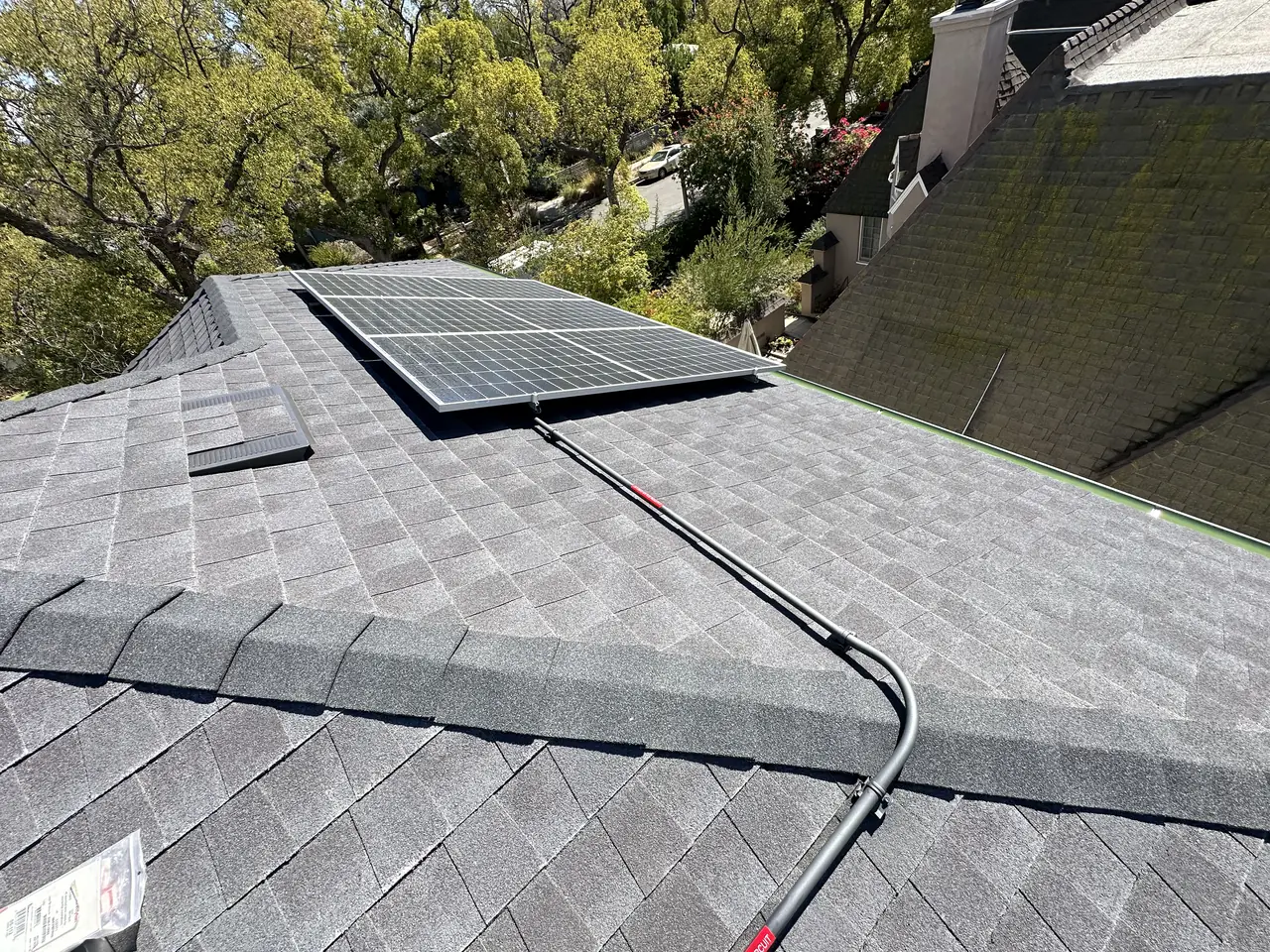
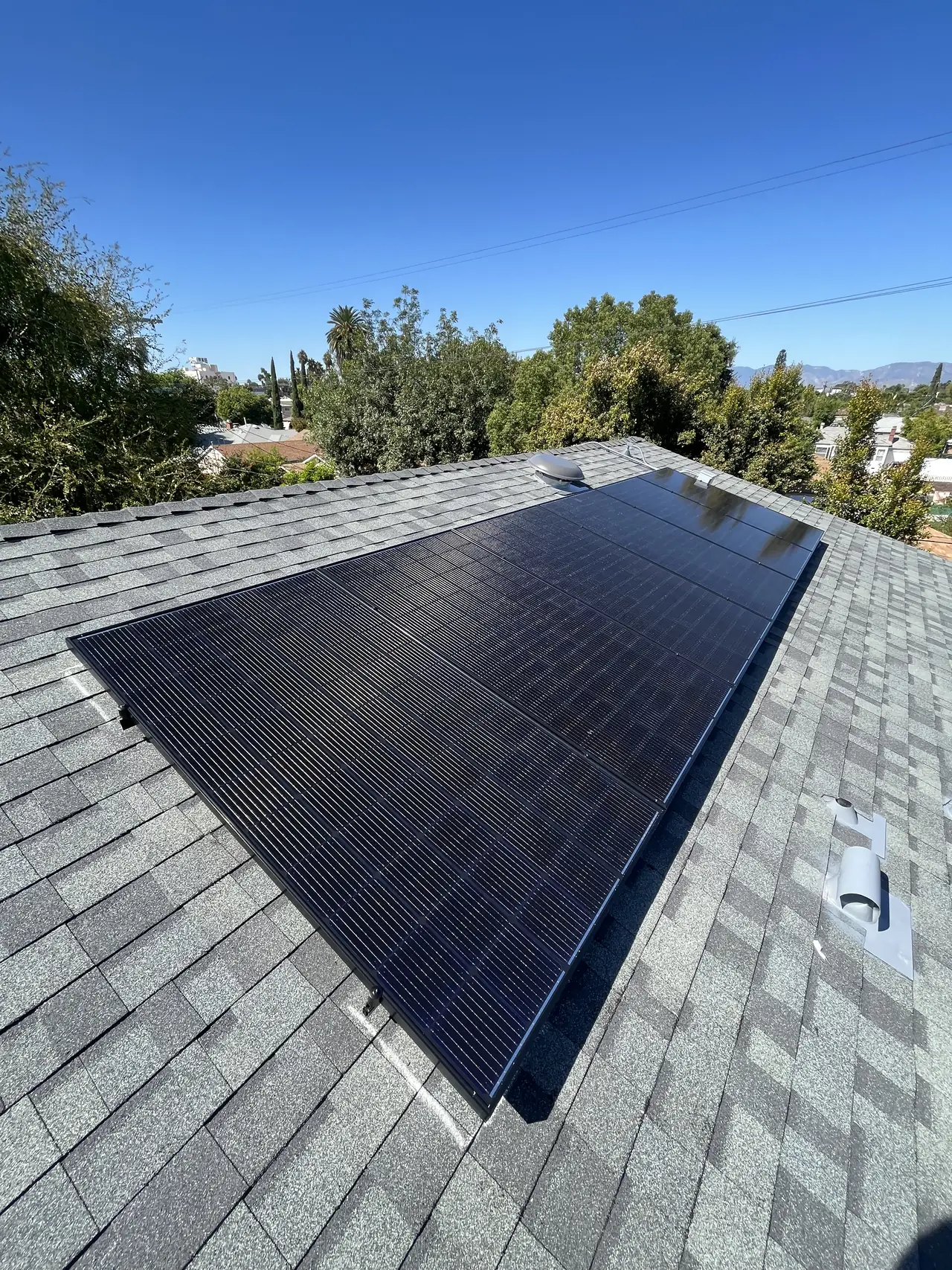
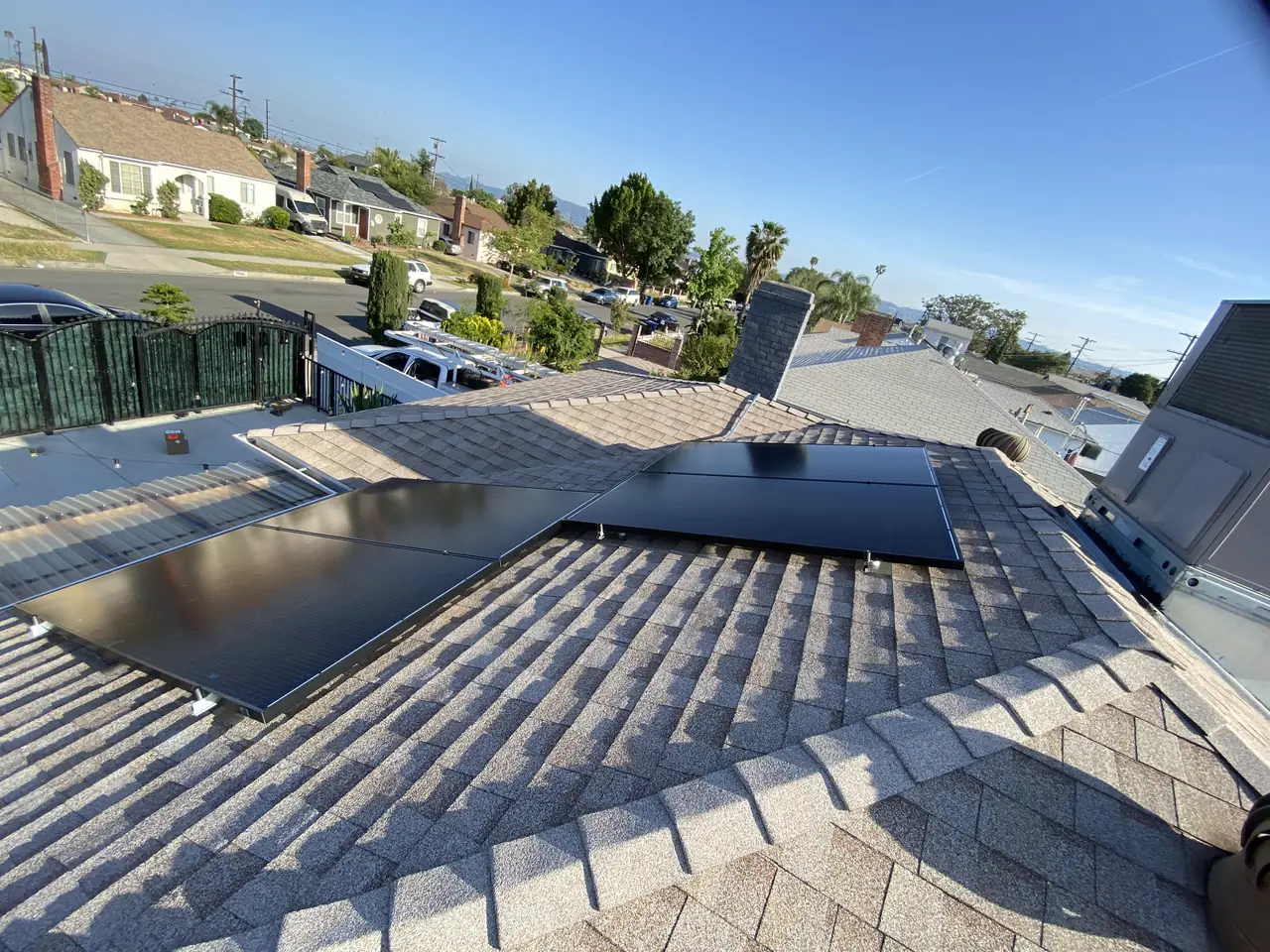
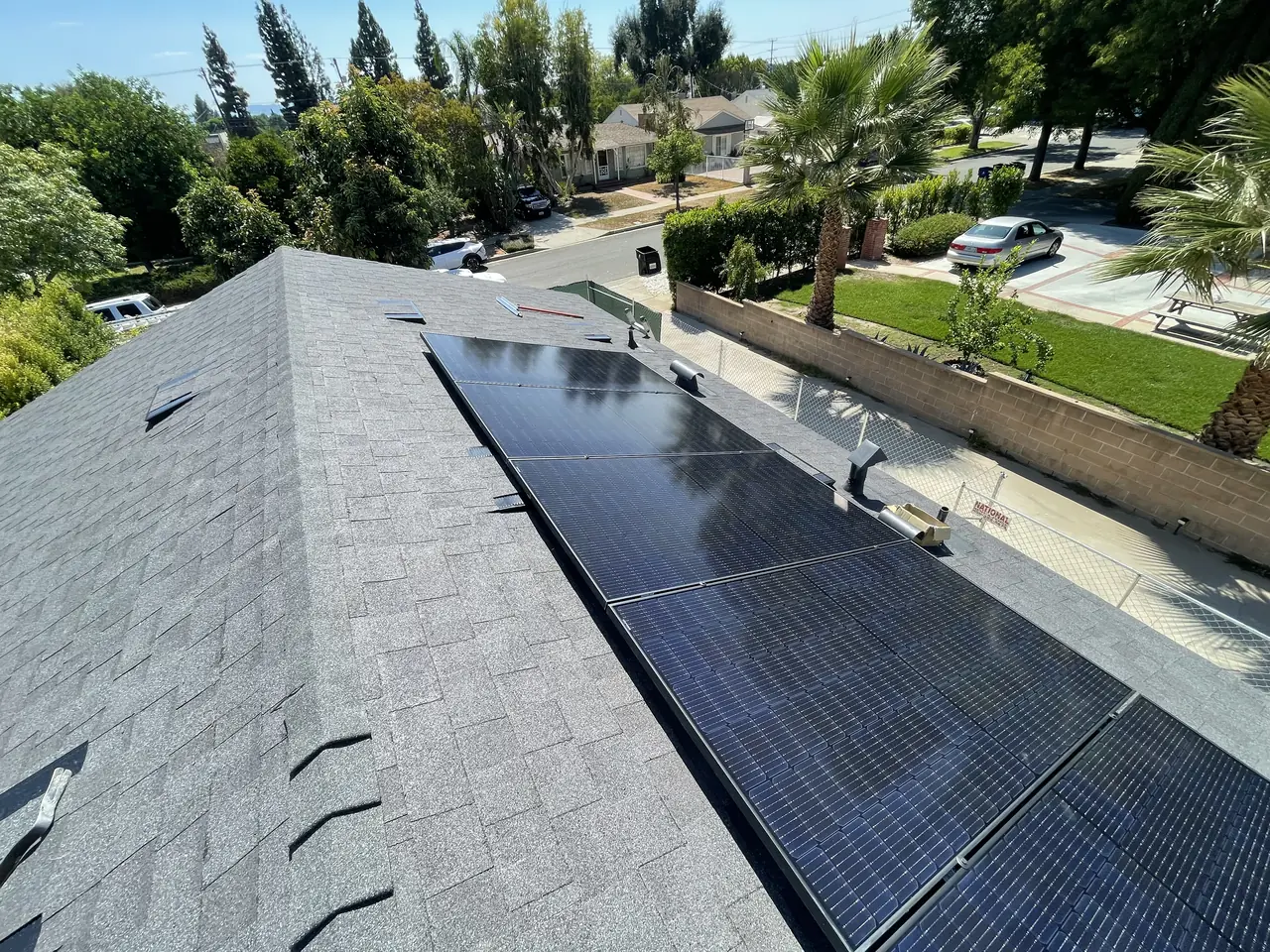
A lot with two dwellings on it: the original house converted into an accessory dwelling unit, a new two-storey home built in front of it. We re-roofed the converted building and put six modules on it, facing west and north.
South is the best orientation in Los Angeles, not the only one that works. West produces less over a year than south but produces it later in the day, which matches when a household is home. Whether that later output is also worth more money depends entirely on your rate: it is on a time-of-use tariff and it is not on the standard tiered one. North produces the least of the four and earns its place only when the alternative is leaving modules off the roof.
At a glance
- Array
- 2.67 kW DC — 6 × 445 W
- Modules
- Canadian Solar CS3W-445MB-AG
- Orientation
- West at 18°, north at 18°, no south face
- Roof
- New — 21 squares over 1,837 sq ft
- Roof to array
- A year apart — roof autumn 2024, modules autumn 2025
- Lot
- Two dwellings, one work request
- Install to permission
- Under five months
- Utility / AHJ
- LADWP / LADBS
The story
This lot holds two homes. The house that was already here was converted into an accessory dwelling unit, and a new two-storey main dwelling with an attached garage was built in front of it. The carport at the older building was enlarged in the same run of permits — worth saying plainly that state law does not let a city demand replacement parking for an accessory dwelling unit, so that carport was a decision about the lot rather than a condition of approval.
Our part was the back building: a new roof on it, and solar on the new roof.
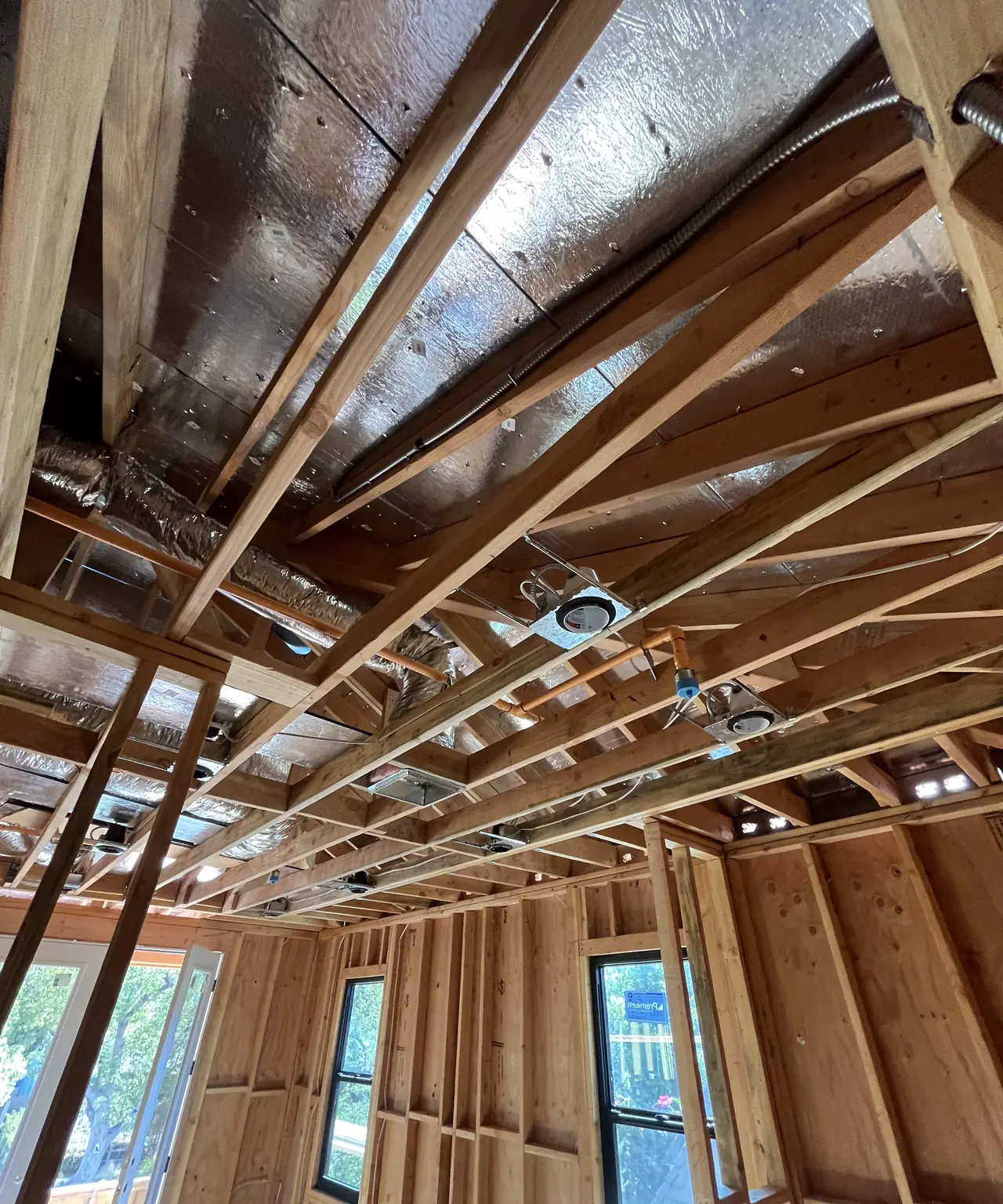
The roof came first, and it came a year before the modules did — twenty-one squares of shingle over eighteen hundred and thirty-seven square feet, synthetic underlayment, a roll of weather-lock at the vulnerable edges, a hundred and sixty feet of ridge cap, twenty-six pieces of drip edge, eight low-profile vents, step flashing and roof-to-wall flashing. The material was delivered onto the roof rather than the driveway, because the building sits at the back of the lot behind a house that was still being built.
Then the array. Six Canadian Solar 445 watt modules, two point six seven kilowatts DC on the signed proposal, in two groups: one facing west at eighteen degrees, one facing north at eighteen degrees. No south.
People hear north and assume the whole thing is pointless. It is not, but it is worth being straight about the order. South is the best face in Los Angeles. West gives up some annual output against south and gives back timing: it produces into the late afternoon and early evening, when a household is home and the air conditioning is running.
Whether that timing is also worth money is a question about your rate, and it needs more care than the word evening. Our utility offers a standard residential tariff charged by tier and season, and a separate time-of-use tariff. On the time-of-use one the expensive block is the weekday afternoon — roughly one o'clock to five — after which the price steps back down.
So a west face is not automatically worth more in the evening. The hours it gains over south sit partly inside that afternoon block and partly after it, and how they split depends on the season and on the exact bearing. On the standard tariff the question does not arise at all, because the price does not move with the clock. If somebody is selling you a west-facing premium, ask which rate they assumed and for the production split by hour. A claim about orientation and money is an hourly calculation or it is nothing.
North is the weakest of the four faces on annual output as well as on timing, and it earns its place only when the alternative is leaving the modules off the roof altogether.
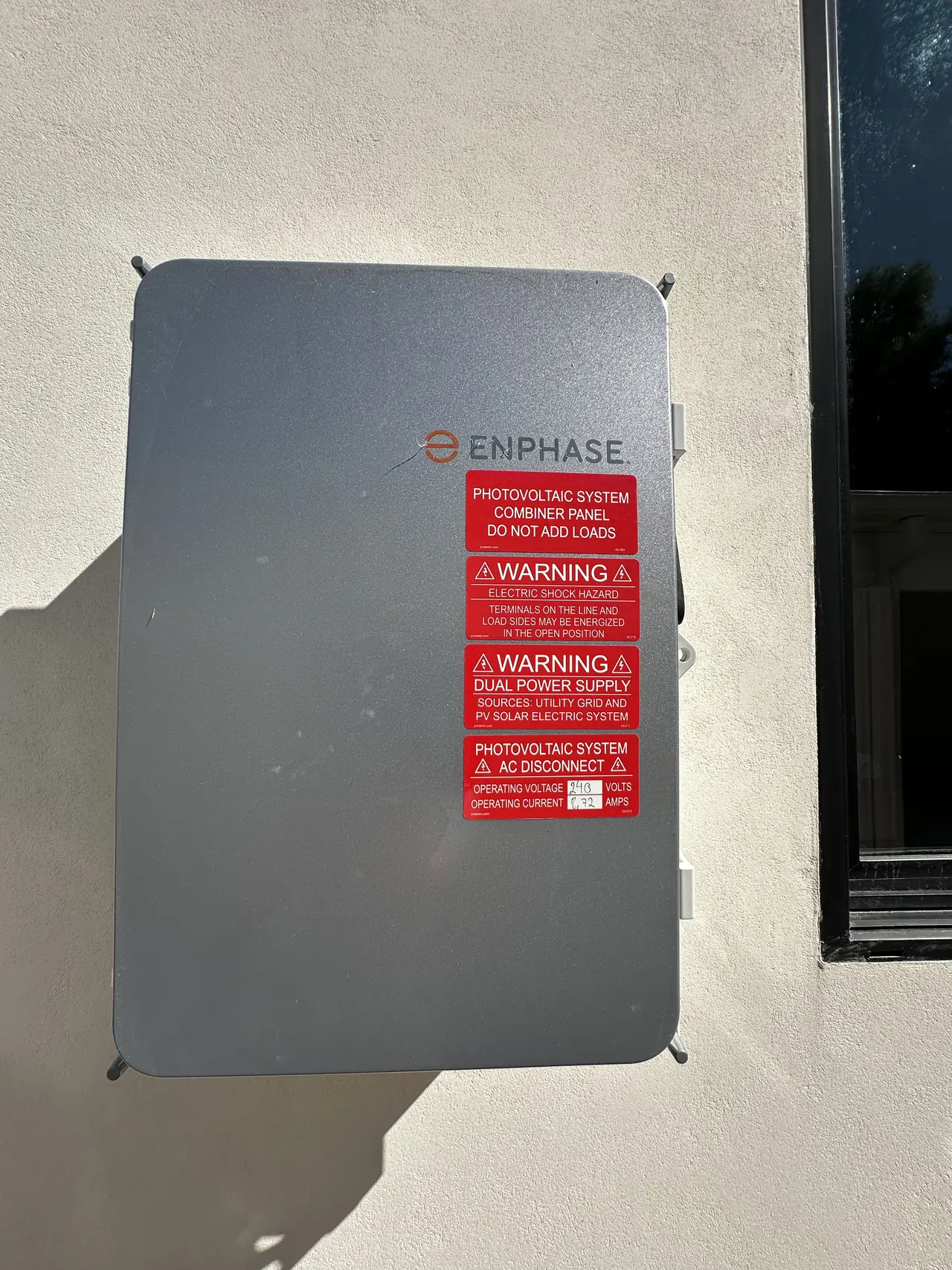
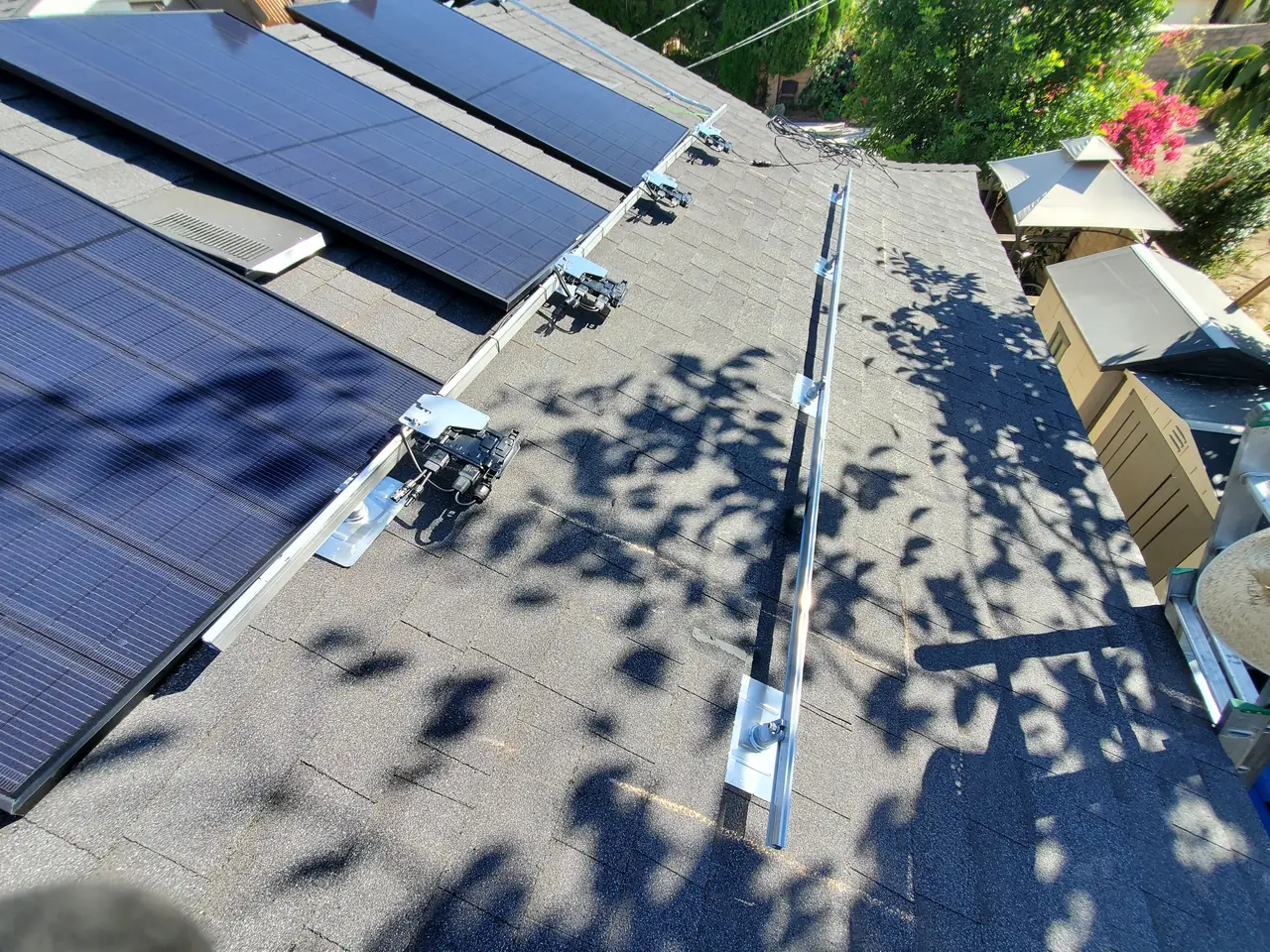
On a small converted dwelling the alternative usually is leaving them off. The roof is the size it is, the faces point where they point, and a second building on the lot does not improve matters. What you can do is put each module on its own microinverter so the weaker face never drags the stronger one down, which is what was done here.
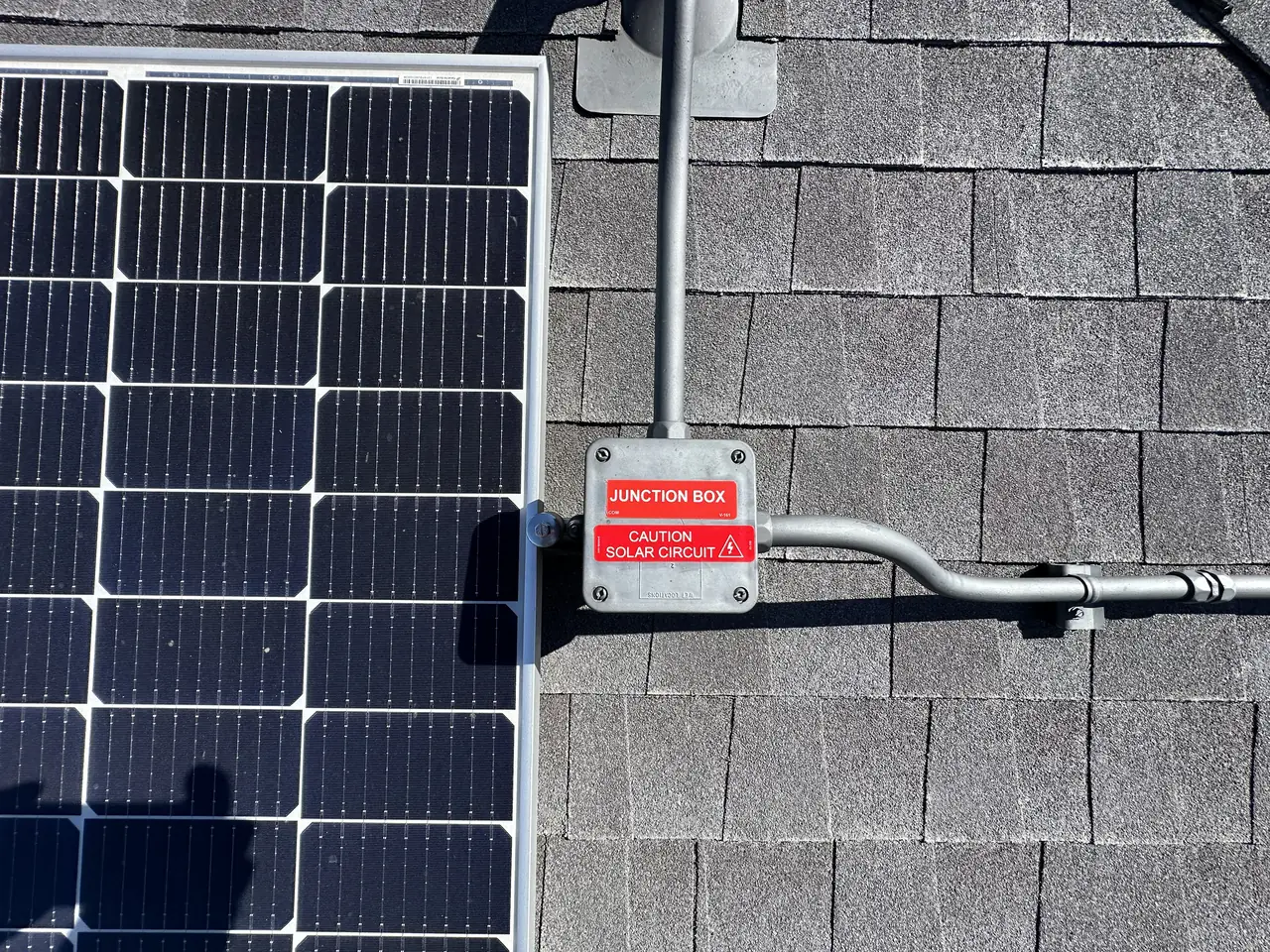
The interconnection covered both dwellings on the lot as one work request, with fees paid against each address on consecutive days in the middle of October 2025. The system went on the roof a week later, and permission to operate came through in March.
If a contractor tells you your roof faces the wrong way and stops there, ask them what west would give you and what it would cost. The honest answer on a small roof is sometimes no. It is worth hearing the number before you accept it.
How it ran
| 26 September 2024 | Builder brings the job — new roof and solar on the converted building |
|---|---|
| 30 September 2024 | Roof scope and array proposal issued |
| October 2024 | Roofing material delivered onto the roof; roof laid |
| 14–15 October 2025 | Interconnection fees paid against both dwellings |
| 22 October 2025 | System installed |
| 26 January 2026 | Utility progress notices and site evaluation |
| 12 March 2026 | Permission to operate |
One work request, two dwellings, two addresses on the receipts.
What we did
- Re-roofed the converted building before any module went near it.
- Had the roofing material delivered onto the roof, because the building sits behind an active construction site.
- Laid six modules in two groups on the only two faces the roof offers.
- Put every module on its own microinverter so the north group cannot drag the west group down.
- Carried an interconnection covering both dwellings on the lot to permission to operate.
System specifications
| Array | 2.67 kW DC on the signed proposal |
|---|---|
| Modules | 6 × Canadian Solar CS3W-445MB-AG, 445 W |
| Microinverters | Enphase, one per module |
| Orientation | Three modules west at 270°, three north at 0°, both at 18° tilt |
| Mounting | Flush |
| Roof scope | 21 squares of shingle over 1,837 sq ft, synthetic underlayment, weather-lock, 160 ft ridge cap, 26 drip edge, 8 low-profile vents, step and roof-to-wall flashing |
| Lot | Existing house converted to an ADU; new two-storey dwelling in front |
| Utility / AHJ | LADWP / LADBS |
Is your project like this one?
- You have been told your roof faces the wrong way for solar.
- Your lot has a second dwelling on it and the good roof is taken.
- You want the roof replaced and the array installed by the same contractor.
- You are a builder handing over a converted dwelling and an ADU together.
- Your roof is small and you want to know whether it is worth doing at all.
Cali Energy in North Hollywood
North Hollywood is inside City of Los Angeles boundaries: permits run through LADBS, interconnection through LADWP.
When a North Hollywood lot gains a second dwelling, the building at the back keeps whatever roof faces are left over. That is increasingly the roof solar has to work with here.
This installation is on the North Hollywood projects page alongside the others, and what the work covers is set out on the North Hollywood service area page.
- License and classifications: CSLB #1032379
- Official reference for this process: LADWP — residential electric rates
- Official reference for this process: California Energy Commission — solar equipment lists
Frequently asked questions
Is solar worth it if my roof does not face south?
Often yes, with smaller numbers. West gives up some annual output against south but produces into the late afternoon, when a household is using the most. North is the weakest face on both counts and is worth it mainly when the alternative is fewer modules. This roof used west and north and no south at all.
Is west-facing solar worth more because evening power costs more?
Not as simply as that. On the standard residential tariff the price does not move with the clock at all, so the question does not arise. On the time-of-use tariff the expensive block is the weekday afternoon, roughly one to five, and the hours a west face gains over south sit partly inside it and partly after it. Whether that is worth a premium is an hourly calculation, not a slogan. Ask which rate was assumed and for the production split by hour.
Does one bad panel drag the rest down?
Not on this design. Each module has its own microinverter, so the north-facing group and the west-facing group produce independently. That matters more on a split-orientation roof than on a single clean plane.
Should the roof be replaced before the array?
If it is due, yes, and on this building it was part of the same job — twenty-one squares of new shingle went on before the modules did.
Can one interconnection cover two dwellings on a lot?
On this property the work request covered both, with fees paid against each address. How it is split depends on how the dwellings are metered, and it is worth settling before the design rather than after.
Why deliver roofing material onto the roof?
Access. The building sits at the back of the lot behind a house that was still under construction, so carrying twenty-one squares through the site was not sensible.
What this would look like on your roof
Planning solar in North Hollywood? Tell us your utility, your roof and what your bill looks like now, and we will model what a system like this would do on your house before you commit to anything.
Or call +1 (323) 844-7777 · Cali Energy, Northridge · CSLB #1032379 (B, C-10, C-39) — design, permits, install and electrical under one licensed contractor.
Related
This timeline reflects this property and this permitting path. Updated September 2026.