

Northridge, CA · August – October 2025 · LADWP / LADBS
Seven modules, and a permit file that barely got smaller.
Three kilowatts DC in two small blocks on a shingle roof, and a permit and interconnection file that is indistinguishable from a system five times larger.
A small system does not come with a small file. This seven module array went through standard plans, a solar permit, an interconnection request with its own fees and an inspection — the same steps a much larger array goes through. Most of that cost does not scale down with the number of modules.
At a glance
- System
- 3.01 kW DC
- Modules
- 7 × URECO 430 W
- Microinverters
- 7 × Enphase IQ8A
- Layout
- Two blocks — three and four
- Orientation
- South, 9.5° tilt, flush mount
- Estimate to PTO
- Six weeks
- Utility / AHJ
- LADWP / LADBS
The story
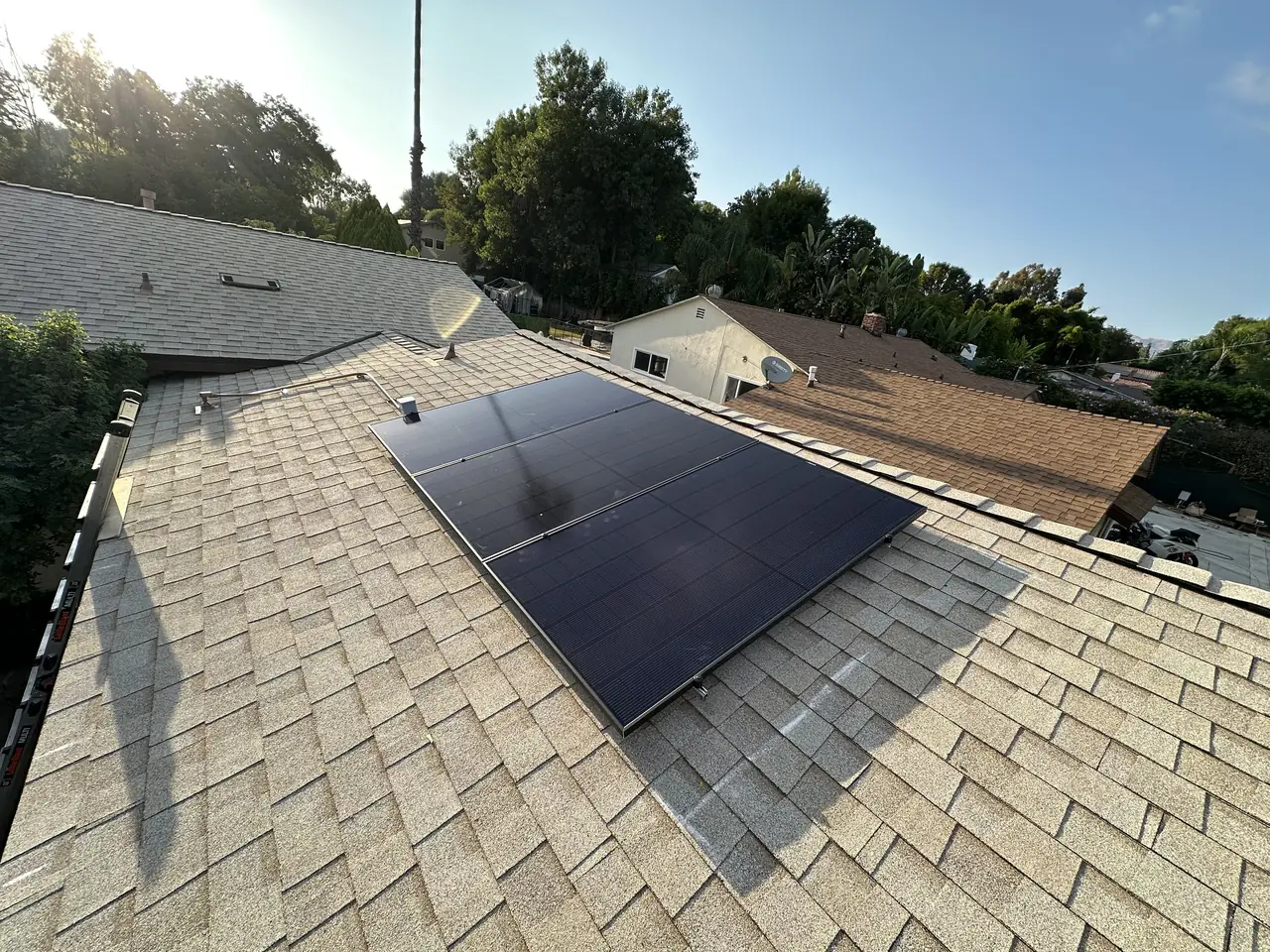
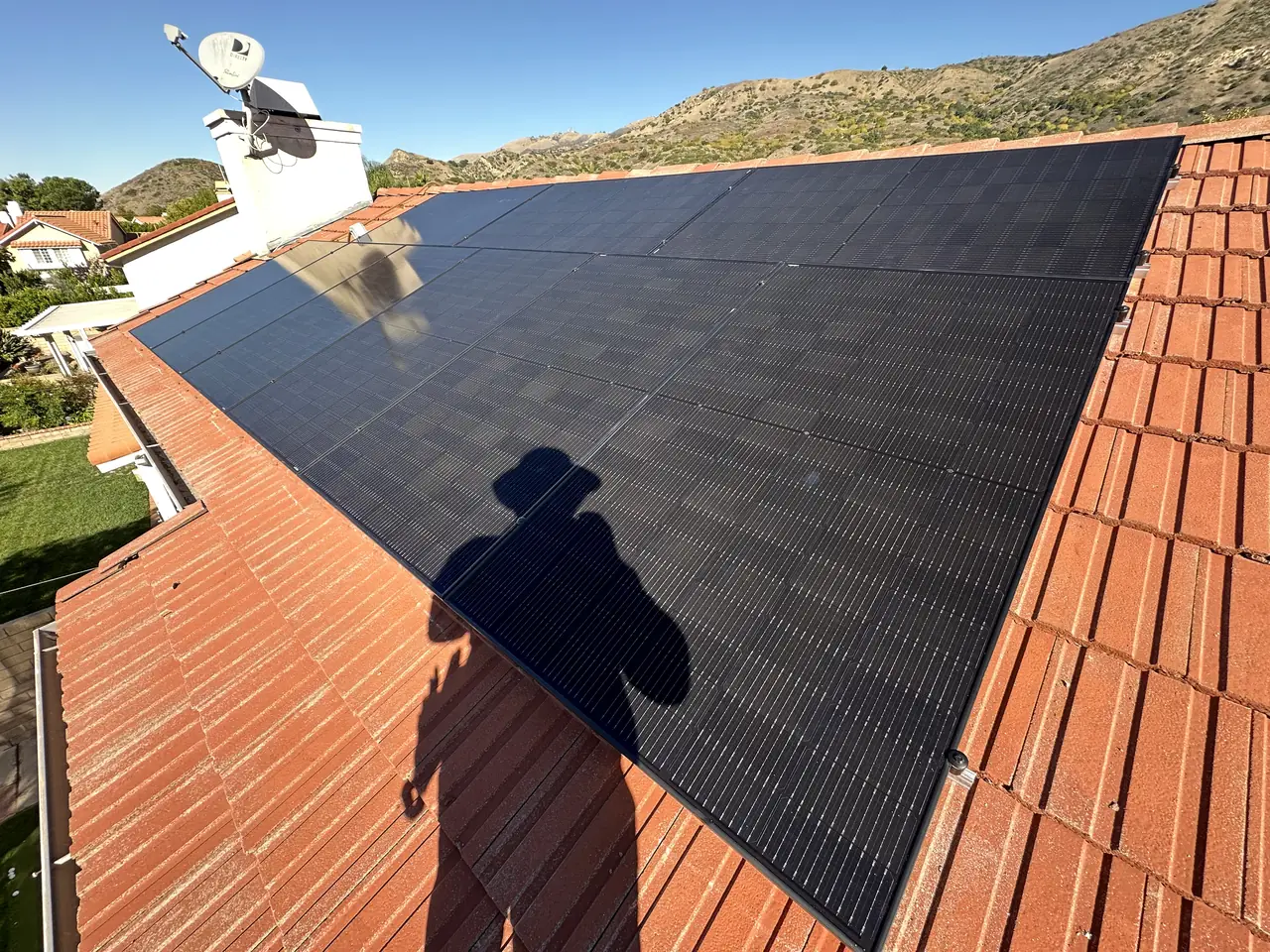
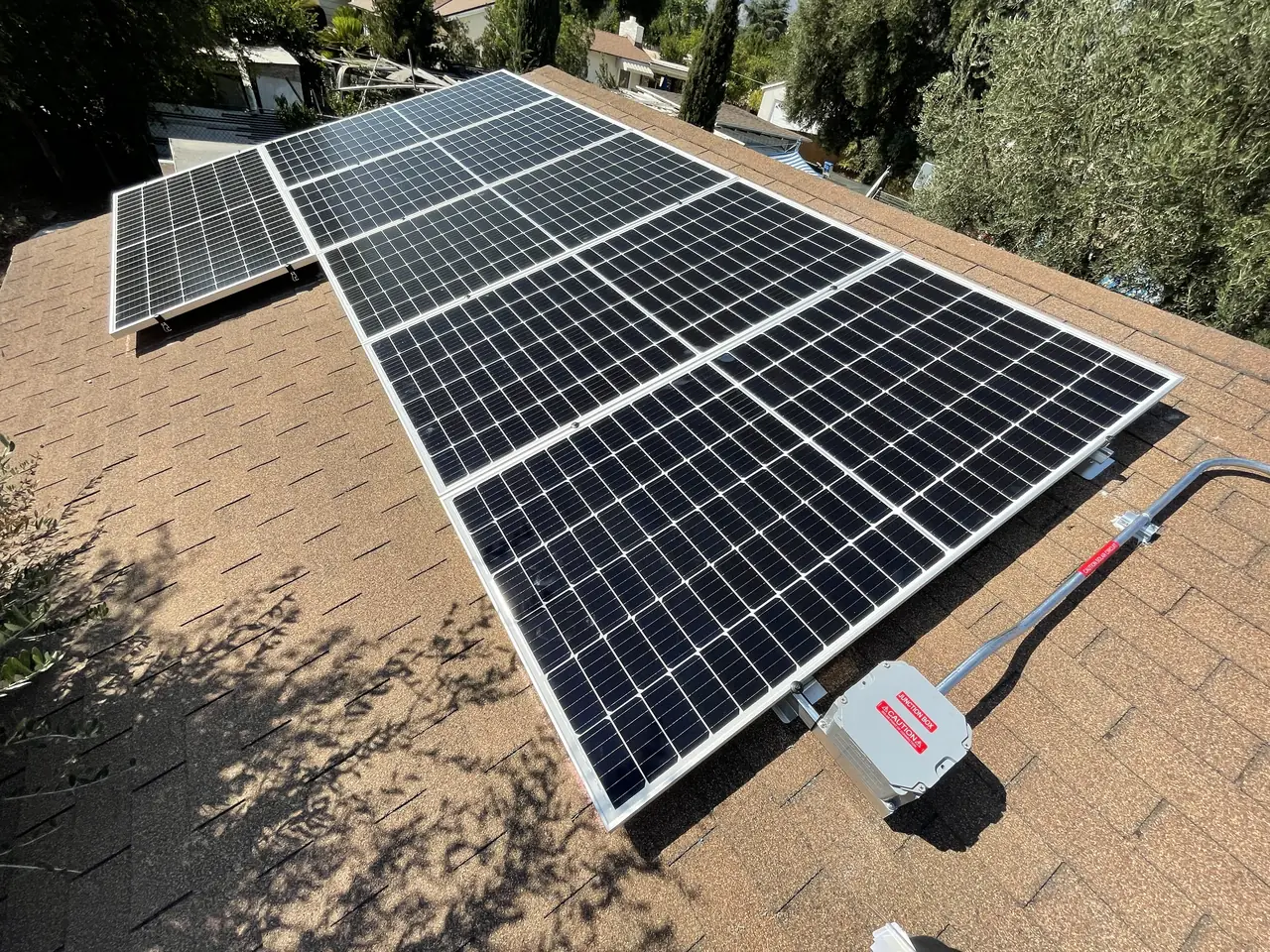
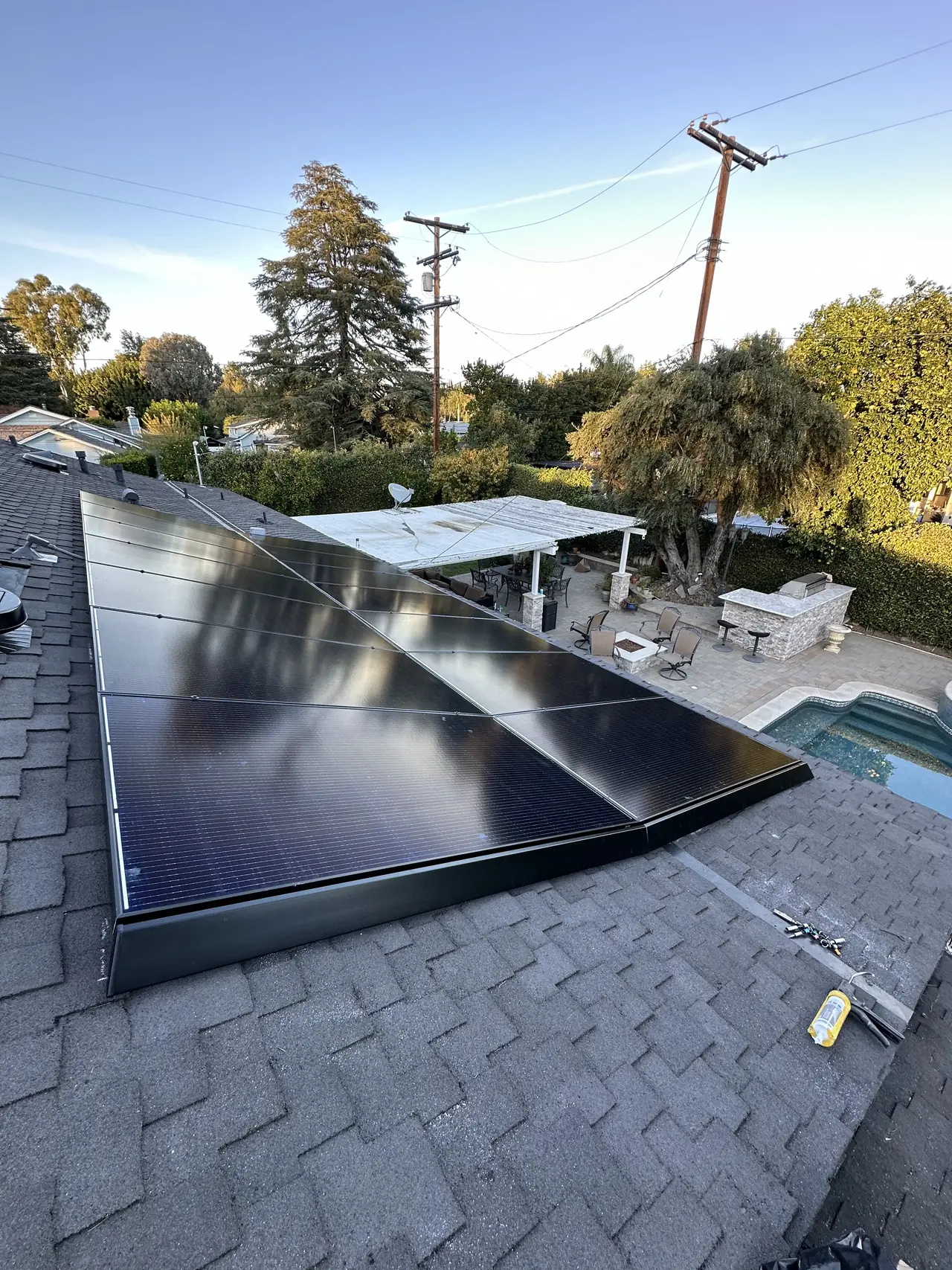
This is the smallest array we have built in the neighbourhood: seven URECO 430 watt modules, three kilowatts DC, laid flush on a composition shingle roof in two blocks — three modules and four — both facing almost due south at the roof's own nine and a half degree pitch.
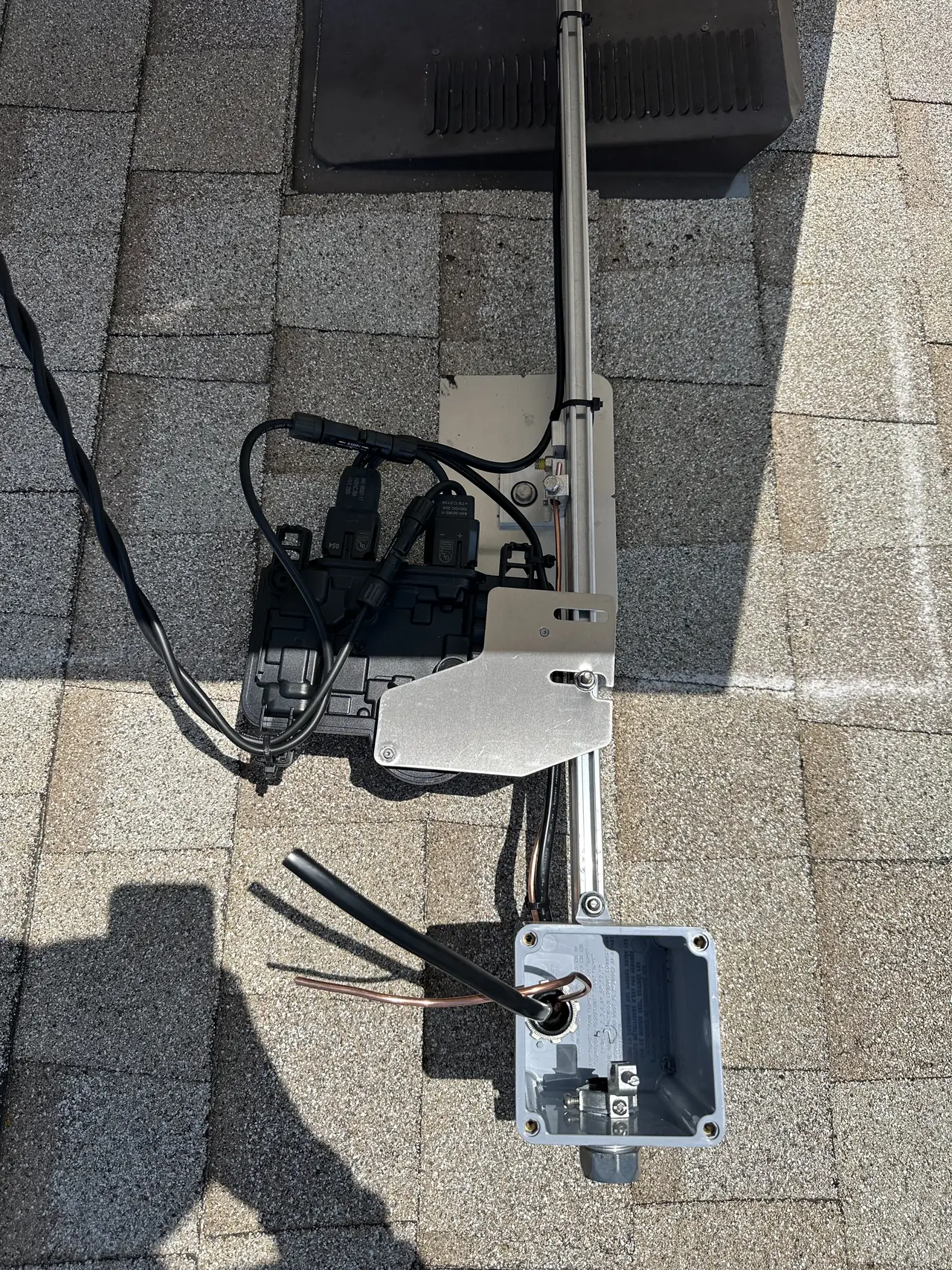
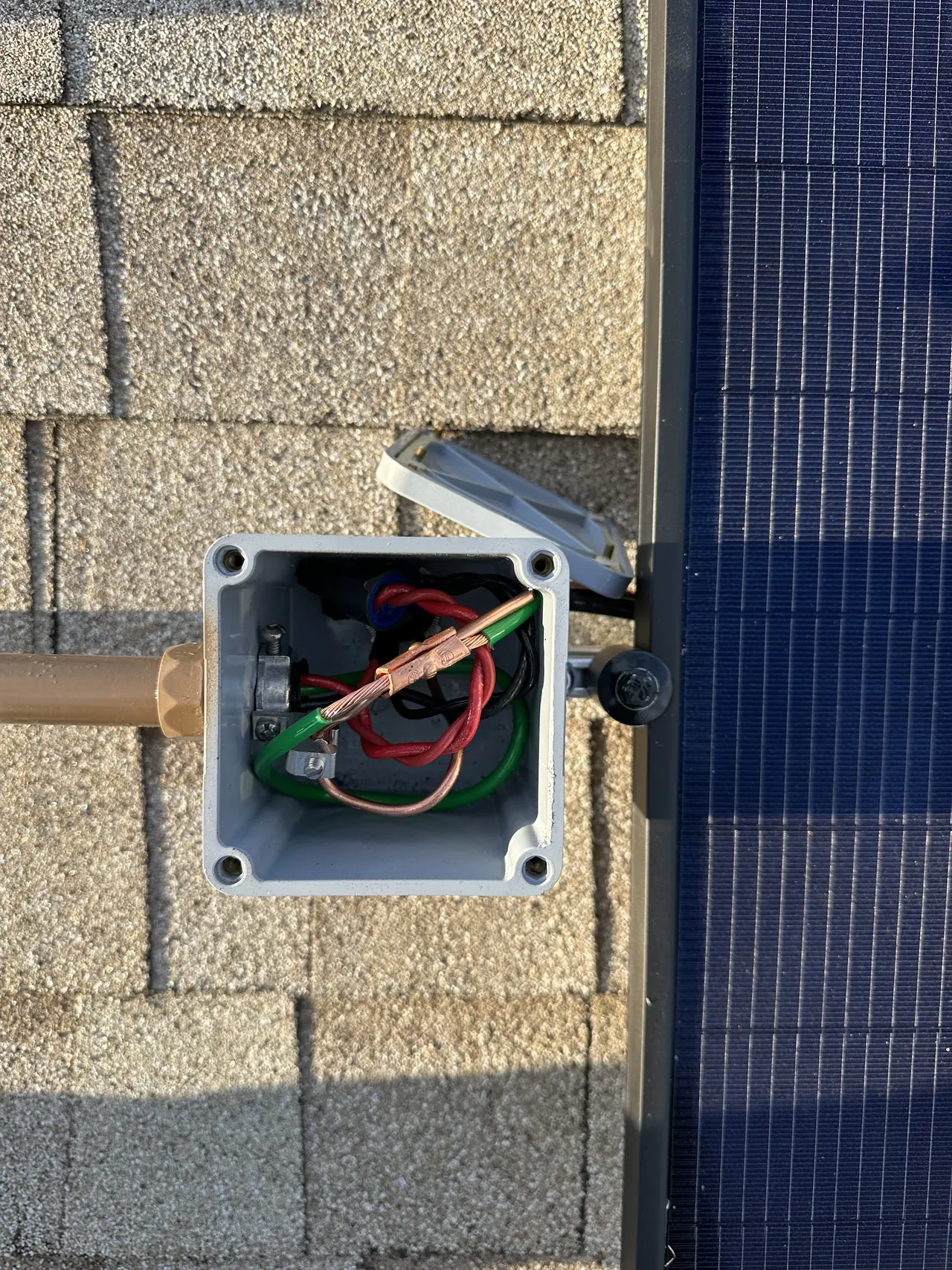
The interesting thing about a system this size is what it does not save you. It went through standard plans, a solar permit, an interconnection request with the same sequence of progress notices, utility fees and an inspection at the end. Some of those steps scale with system size and some do not; on a seven module array the ones that do not are most of the job.
Behind it sit the standard plan set, the solar permit and the interconnection filing — the same paperwork as an array five times the size, on a system that fits in the back of a van.
What it does save is time on the roof, and the calendar shows it. The estimate went out at the end of August. The interconnection request was filed on the eighth of September and the fees paid within two days. The progress notices and the completed site evaluation came on the seventeenth, the installation was released on the twenty-second, and permission to operate arrived on the ninth of October. Six weeks from a first estimate.
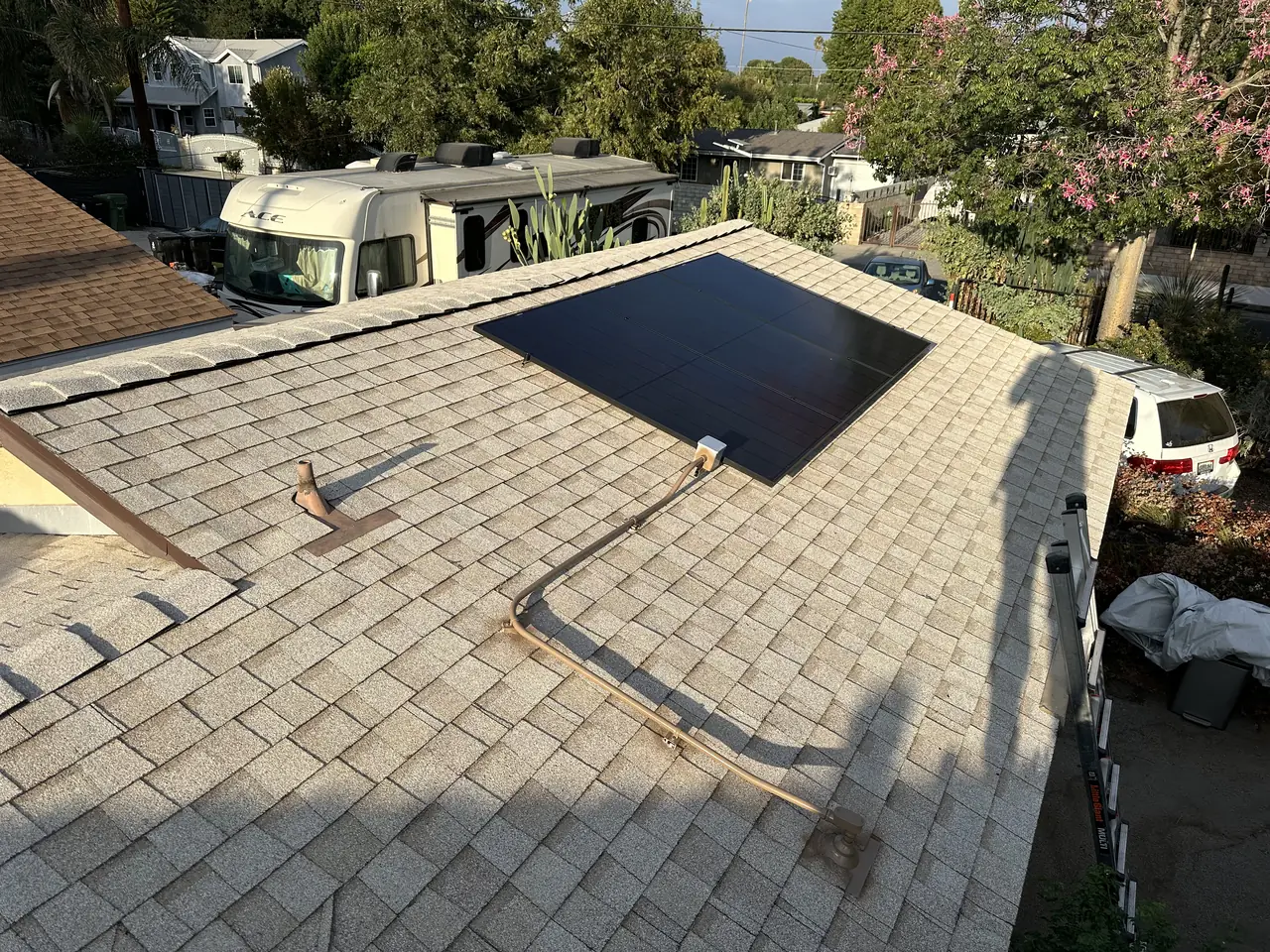
Small systems are worth doing when the roof only has one usable face, or when the household load is modest, or when the array is a first step rather than a final one. Whether this one can be added to later depends on the roof space and what the service will take; any addition needs its own permit and an updated interconnection.
How it ran
| 28 August 2025 | First estimate |
|---|---|
| 3 September 2025 | Final proposal — seven modules, 3.01 kW DC |
| 8 September 2025 | Interconnection request filed |
| 9–10 September 2025 | Utility fees paid |
| 12 September 2025 | Solar permit and standard plans issued |
| 17 September 2025 | Progress notices; solar site evaluation complete |
| 22 September 2025 | Solar service installation released |
| 9 October 2025 | Permission to operate |
Six weeks from estimate to switch-on, on seven modules.
What we did
- Issued three proposals, including two different module families, before the design was fixed.
- Laid seven modules flush in two blocks on the one usable roof face.
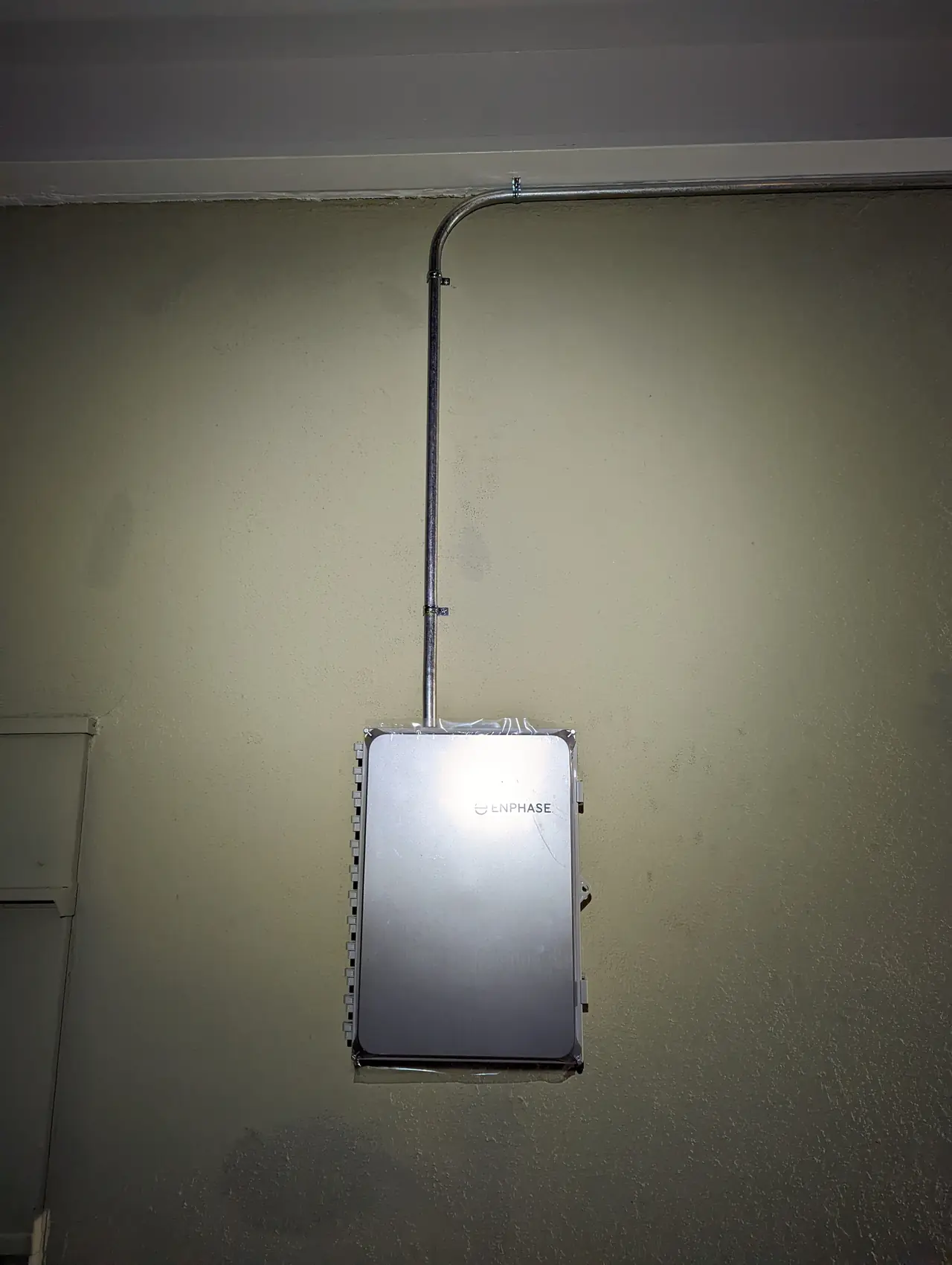
- Installed one Enphase IQ8A microinverter per module.
- Filed the standard plans, the solar permit and the interconnection request.
- Took the project from first estimate to permission to operate in six weeks.
System specifications
| System | 3.01 kW DC (signed proposal) |
|---|---|
| Modules | 7 × URECO FBF430BFG-BB, 430 W |
| Microinverters | 7 × Enphase IQ8A-72-2-US |
| Mounting | Flush, composition shingle |
| Orientation | Azimuth 181°, tilt 9.5° |
| Layout | Two blocks — three modules and four |
| File | Standard plans, solar permit, interconnection request |
| Utility / AHJ | LADWP / LADBS |
Is your project like this one?
- Your roof only has one face that works and you think it is too small to bother.
- You want to know what a first, small step towards solar looks like.
- You are comparing two module families and want the datasheets rather than a summary.
- You want to know why small systems are not proportionally cheaper.
- You have been told your roof is too small to be worth quoting.
Cali Energy in Northridge
Northridge is inside City of Los Angeles boundaries: permits run through LADBS, interconnection through LADWP.
Not every Northridge roof has room for a full array. Some of them face the wrong way, and some of them are mostly taken up by the house they sit on.
This installation is on the Northridge projects page alongside the others, and what the work covers is set out on the Northridge service area page.
- License and classifications: CSLB #1032379
- Official reference for this process: California Energy Commission — solar equipment lists
- Official reference for this process: LADBS Information Bulletin — express permits
Frequently asked questions
Is a seven module system worth installing?
It is when the roof has one usable face, or the household load is modest, or the array is a first step. This one is 3.01 kilowatts DC and went from estimate to permission to operate in six weeks.
Why isn't a small system proportionally cheaper?
Because much of the work does not scale with the number of modules. Drawing the plans, pulling the permit, filing the interconnection and passing the inspection all have to happen whatever the array size. The roof time and the equipment are the parts that scale down.
Can I add modules later?
It depends on the roof space left and what the service will take, and it is worth asking before the first array is designed rather than after. Any addition needs its own permit and an updated interconnection.
What went into the paperwork?
The standard plan set, the solar permit, the interconnection request with its utility fees, and the final inspection — the same steps as a much larger array.
How were the modules laid out?
In two blocks — three modules and four — flush on composition shingle, facing azimuth 181 degrees at the roof's own nine and a half degree pitch.
Does Cali Energy take on small installations in Northridge?
Yes. Cali Energy holds B, C-10 and C-39 classifications under CSLB #1032379.
What this would look like on your roof
Planning solar in Northridge? Tell us your utility, your roof and what your bill looks like now, and we will model what a system like this would do on your house before you commit to anything.
Or call +1 (323) 844-7777 · Cali Energy, Northridge · CSLB #1032379 (B, C-10, C-39) — design, permits, install and electrical under one licensed contractor.
Related
This timeline reflects this property and this permitting path. Updated September 2026.