

North Hills, Los Angeles, CA · January – February 2025 · LADWP / LADBS
One house, four city names, one meter
The quote said Los Angeles. The payment receipt said Northridge. The progress notices said Sepulveda. The permission to operate said Sepulveda too. Every one of them was the same roof, and every one of them had to be matched to a single work request before anything could be switched on.
North Hills carries more than one name in the utility's records, and on this project LADWP addressed its own letters to two different places for the same house, neither of them the name on the homeowner's mail. Cali Energy filed one interconnection request, tracked every notice against that single work request number rather than against the address printed on it, and took the job from signed contract to permission to operate in 49 days — three weeks of which were spent waiting for a meter crew.
At a glance
- Array
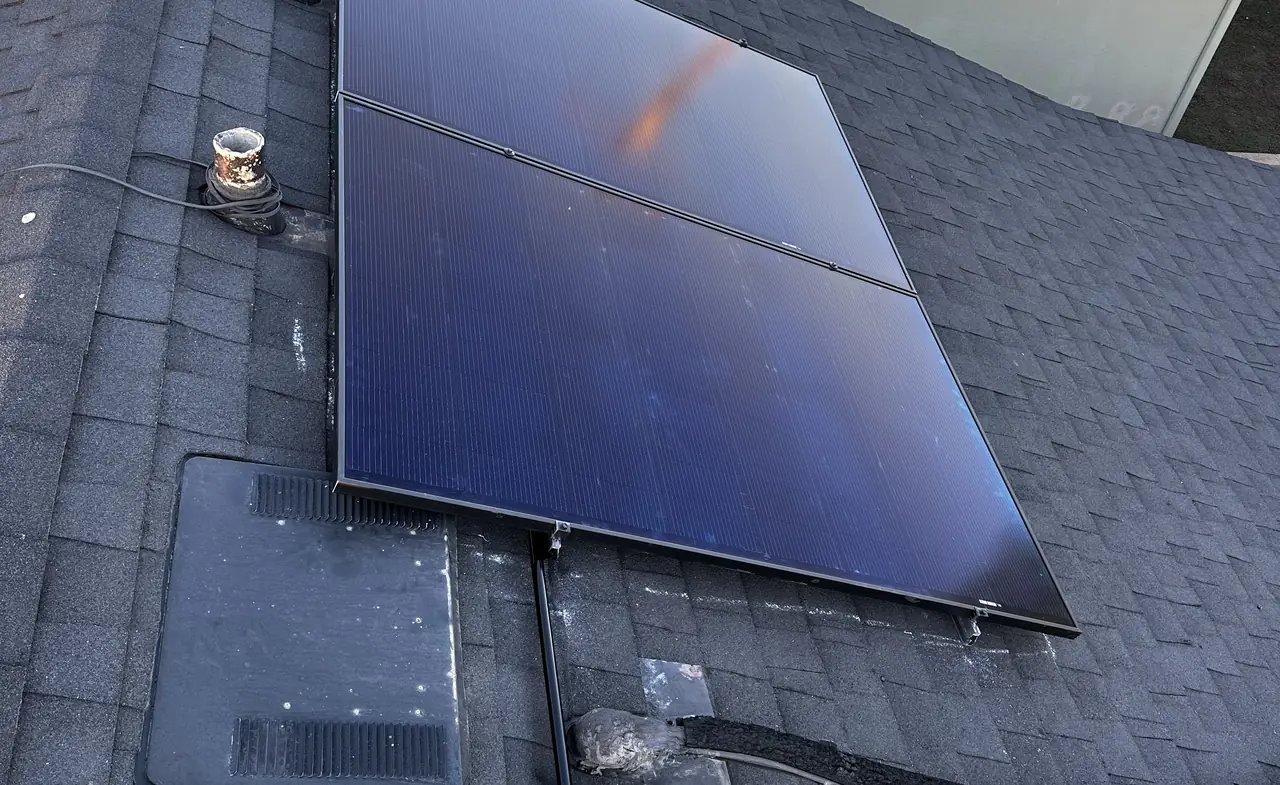
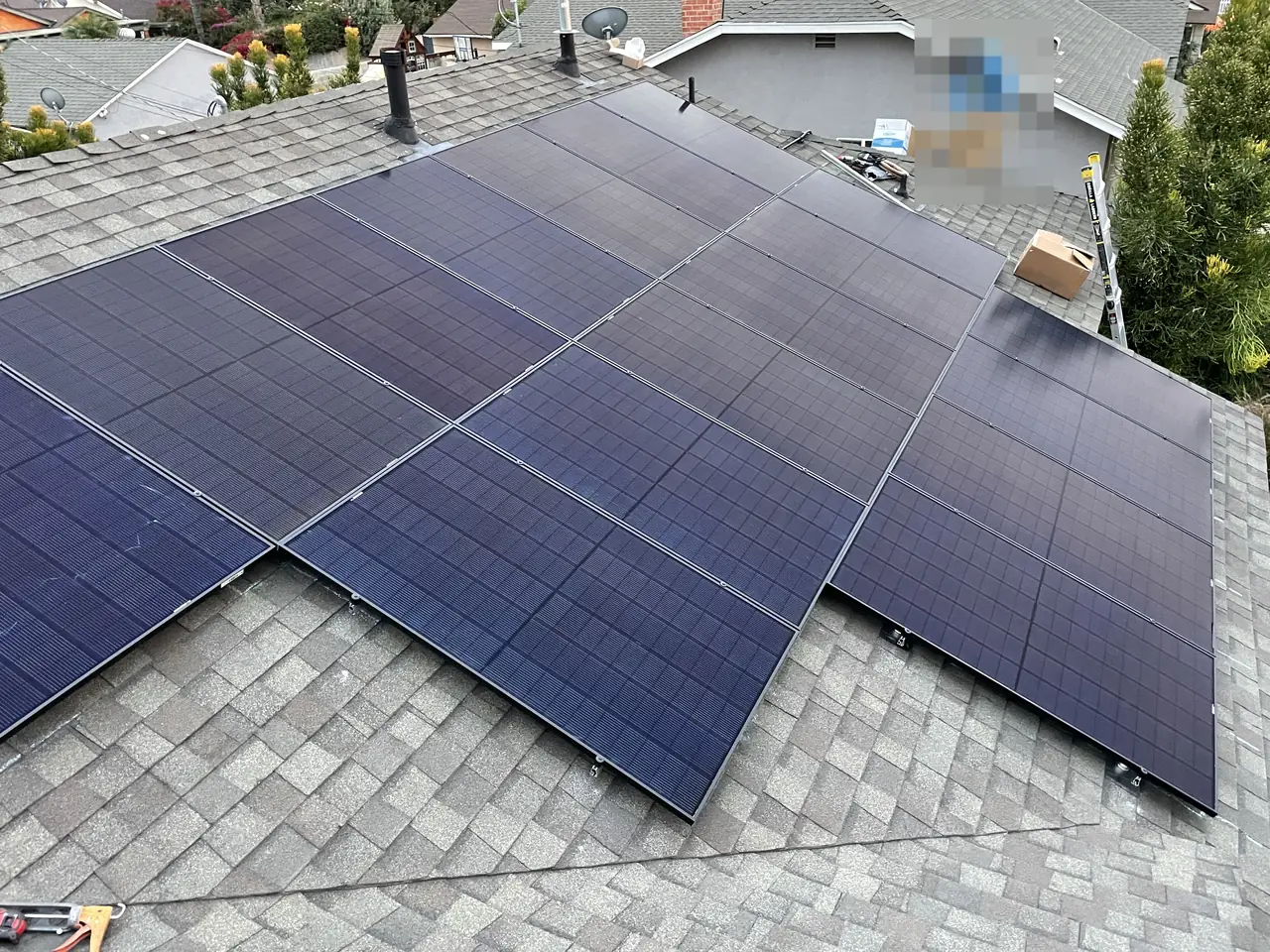
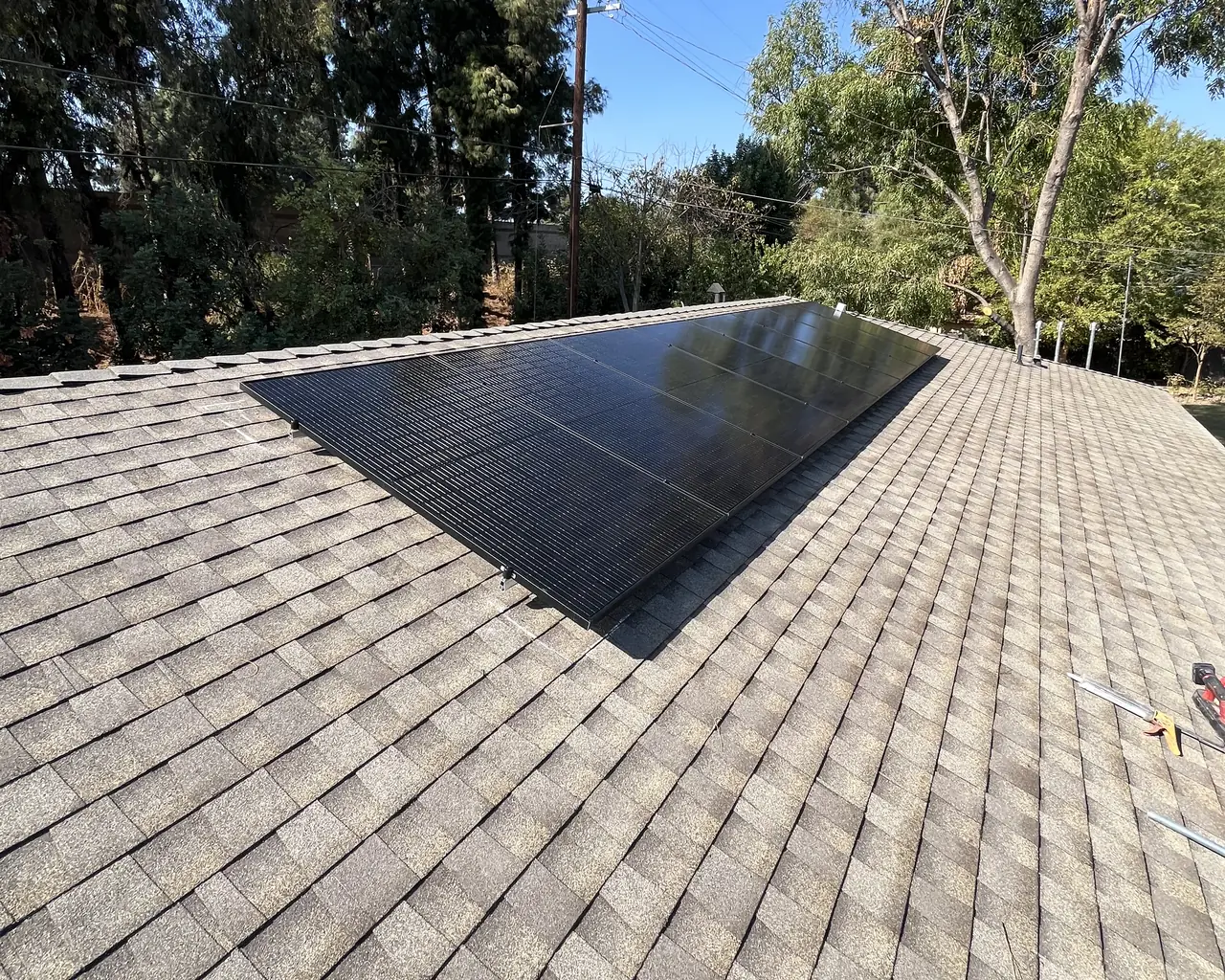
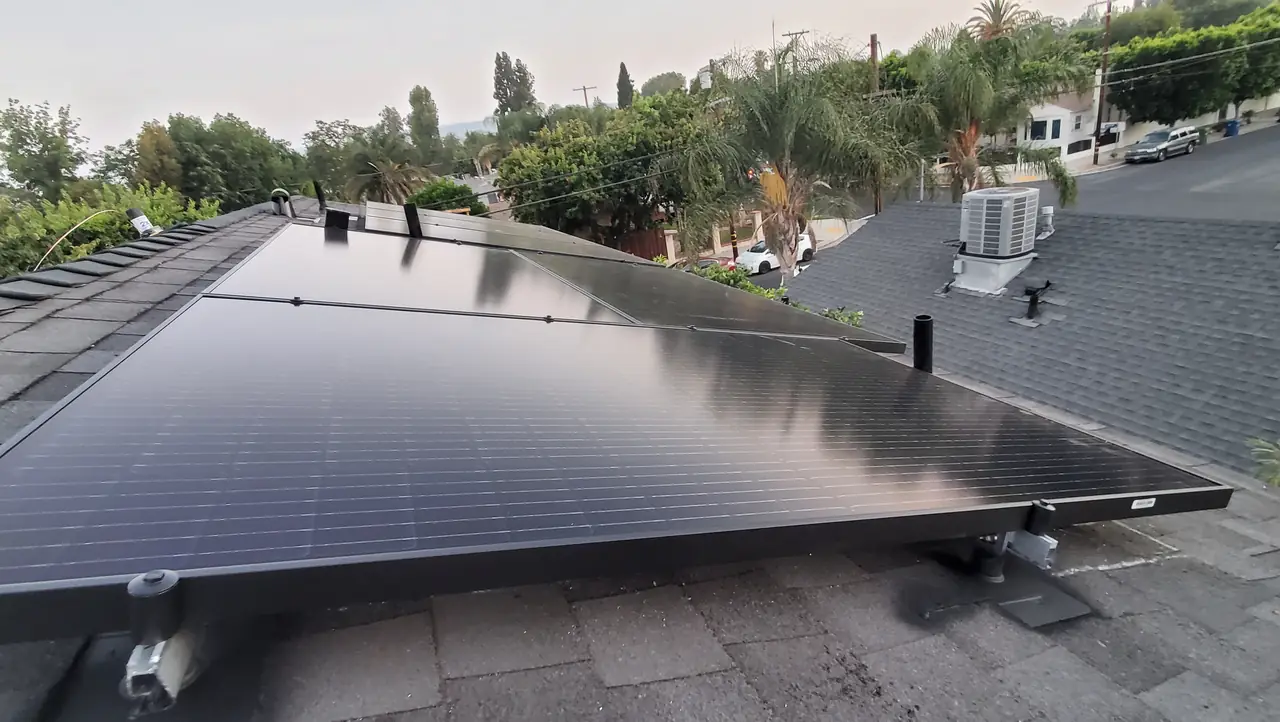
- 12 REC modules, 460 W each — 5.52 kW DC
- Inverters
- 12 Enphase IQ8X microinverters, one per module
- Size recorded by the utility
- 5.39 kW AC-CEC
- Service work
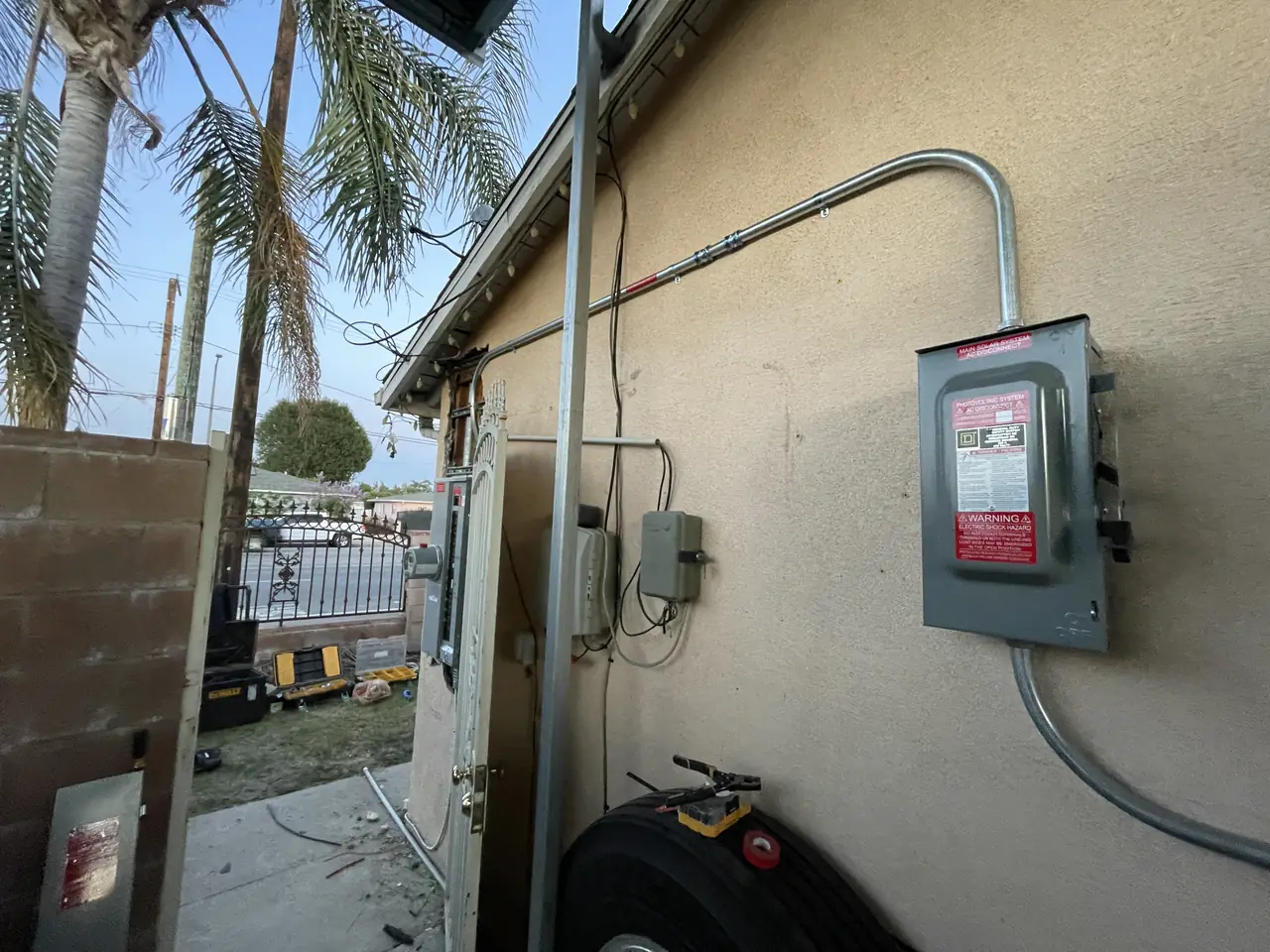
- Main panel replaced, overhead meter and service
- Signature to permission
- 49 days
- Waiting on the meter crew
- Three weeks
- Roof
- Composition shingle, gabled
- Utility / AHJ
- LADWP / LADBS
The story
The project moved faster at the start than almost anything in this part of the valley. The homeowner accepted a quote on a Monday in early January. The contract came back signed the same afternoon. Financing was approved the following morning, confirmed the day after that, and by Thursday the solar permit and the permit for the main panel replacement were both in hand.
Thursday was the ninth of January 2025. Evacuation alerts were going out across Los Angeles County that week and our office was closed for the day. The permits were pulled anyway, because the counter was open and the work could start as soon as the week allowed. The interconnection request went to the utility on Friday.
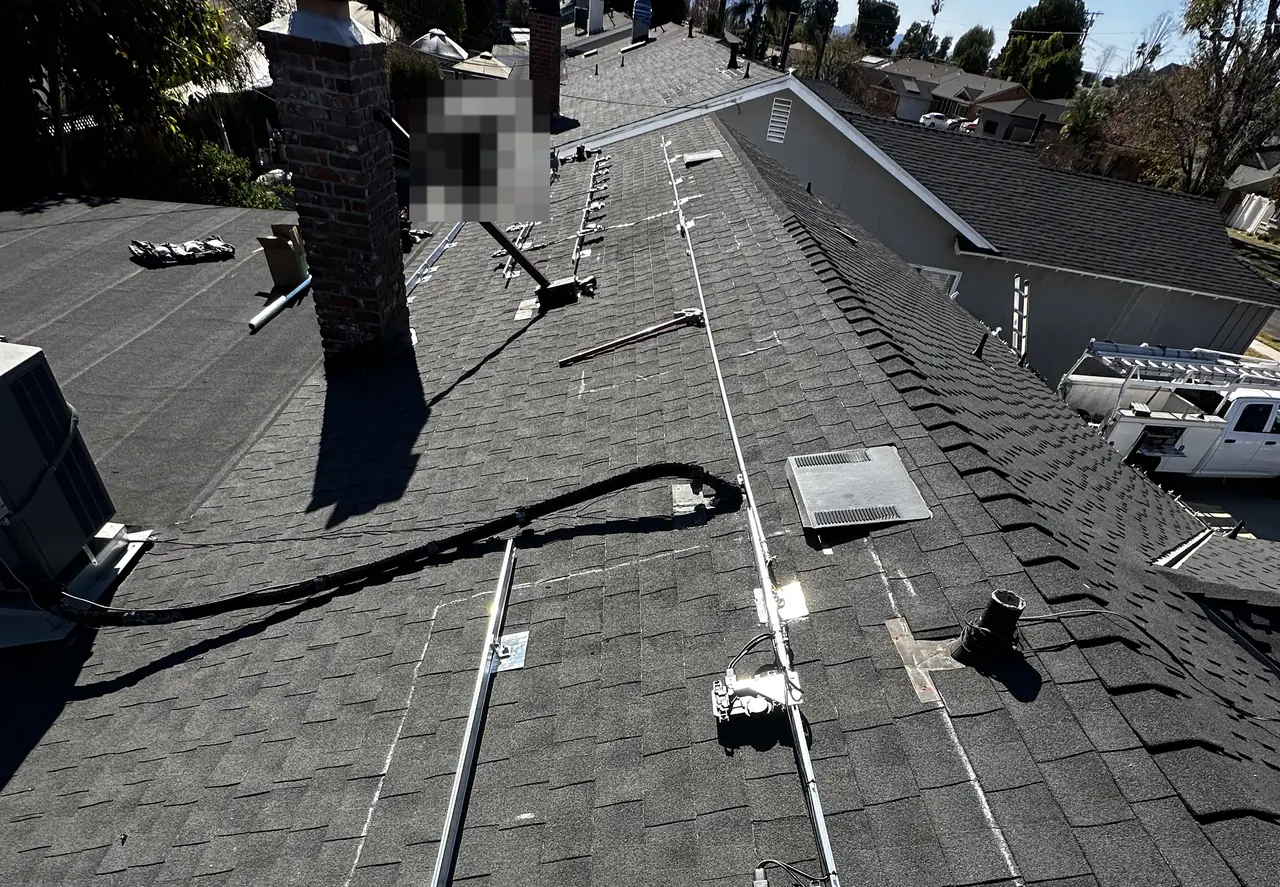
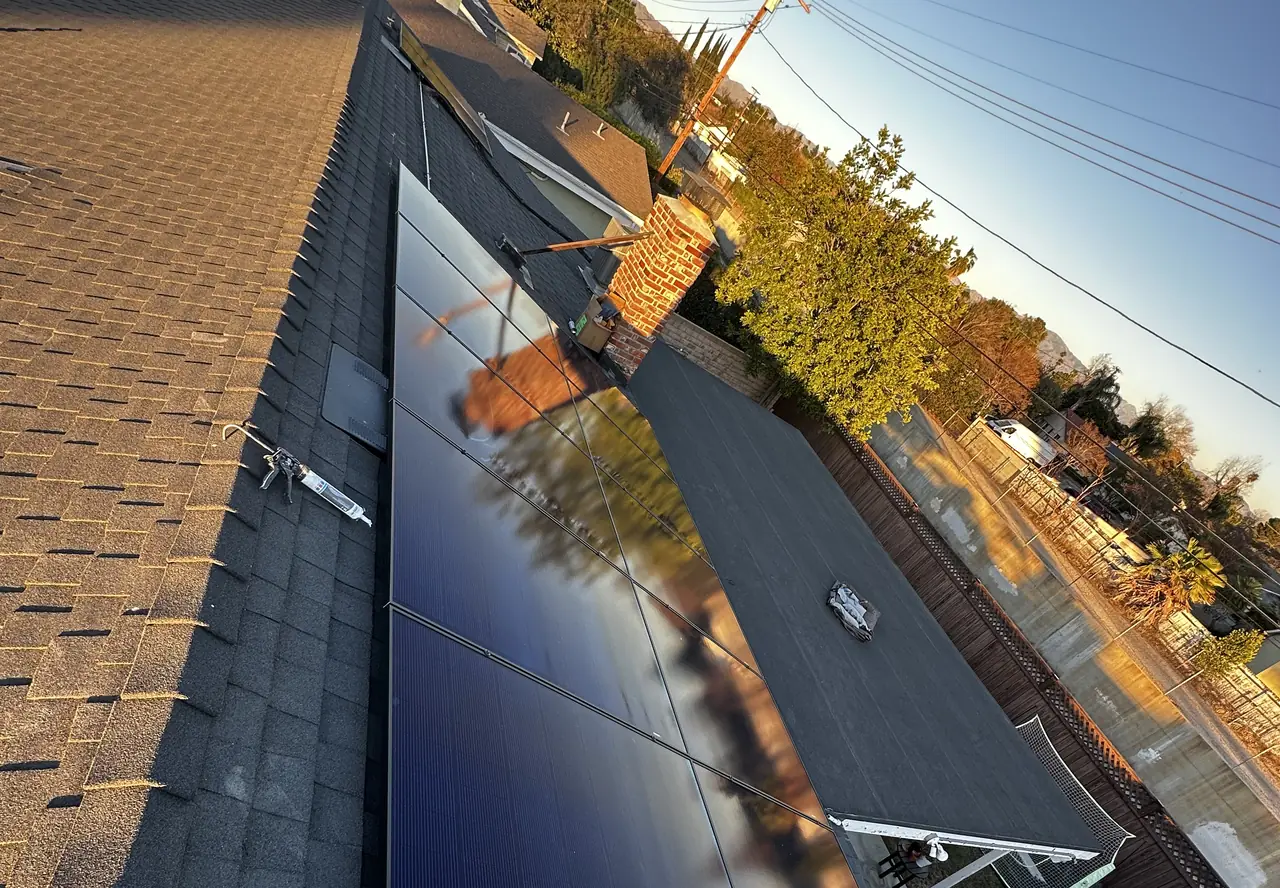
On the following Monday the utility issued the meter spot — the drawing that fixes exactly where the new meter will sit and how the service will land on the wall. Modules and microinverters were ordered the same afternoon, for delivery first thing the next morning. The array went up on the Tuesday: twelve modules of 460 watts with a microinverter under each one, and the service equipment replaced at the same time. The city inspection was requested that day.
Then came the part nobody can speed up. The work request moved into the meter queue at the start of February. A crew was assigned on the third. And then nothing happened for three weeks, because that February the utility's field crews were working through properties damaged by the January fires, and the meter changes waited behind them.
While we waited, the address problem showed itself. The receipt for the interconnection charge was addressed to Northridge. The first progress notice was addressed to Northridge as well. Every notice after that — the review, the site assessment, the meter spot, the approval to build, and finally the permission to operate — was addressed to Sepulveda. Our own application and the quote before it said Los Angeles. The homeowner's mail said North Hills.
Sepulveda is what this part of the valley used to be called, and the utility's records still carry it. None of that changes the electricity, but it changes how you chase a job. Search the utility's tracking page by address and you can miss your own project, because the address you type is not the address the utility holds. The work request number is the only handle that never changes, and that is what we track every LADWP project by.
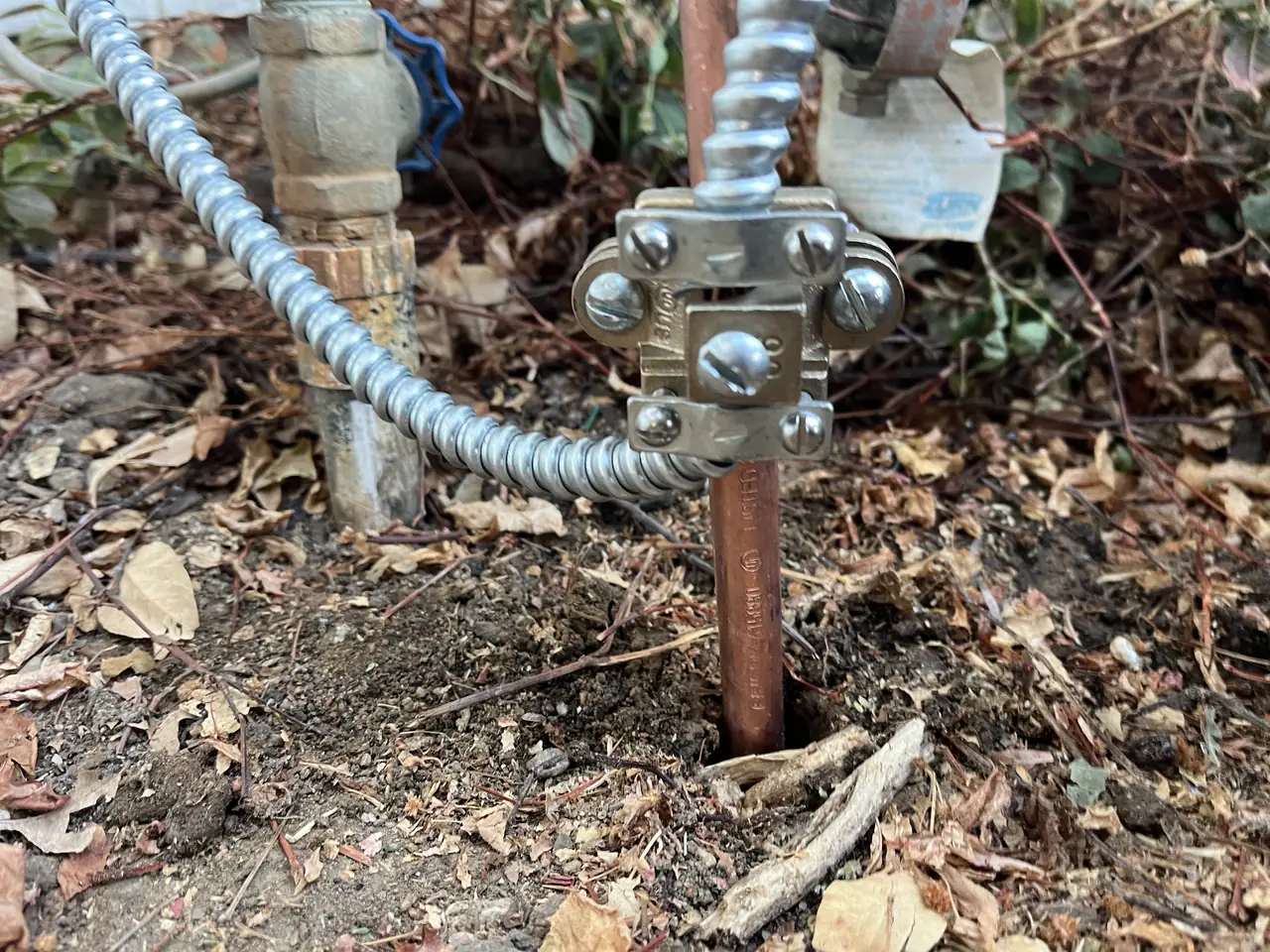
The meter was set on the twenty-fourth of February and permission to operate was issued the same morning. Three days later a technician was on site to start the system and set up monitoring, so the homeowner could see production module by module from the first afternoon — and the house has run on the array since.
How it ran
| Monday, early January 2025 | Quote accepted; contract signed the same day |
|---|---|
| Tuesday – Wednesday | Financing approved and confirmed |
| Thursday 9 January | Solar and main panel permits pulled; office closed for the county evacuation alerts |
| Friday 10 January | Interconnection request filed — 5.39 kW AC-CEC |
| Monday 13 January | Meter spot issued; modules and microinverters ordered |
| Tuesday 14 January | Array installed, service equipment replaced, city inspection requested |
| 3 February | Meter change assigned to a utility crew |
| 24 February | Net meter set; permission to operate the same morning |
Eight days from signature to a finished array. Six more weeks before the utility could get a meter crew to the wall.
What we did
- Designed a 12-module array with a microinverter under each module.
- Pulled the solar permit and the permit for the main panel replacement.
- Filed the interconnection request and carried it through the utility's review, site assessment and meter spot.
- Replaced the main panel and the service equipment, and installed the array.
- Took the job through the city inspection and tracked the work request daily through the meter queue.
- Commissioned the system and set up per-module monitoring for the homeowner.
- Finished the stucco where the new conduit entered the wall.
System specifications
| Modules | 12 × REC 460 W — 5.52 kW DC |
|---|---|
| Inverters | 12 × Enphase IQ8X, one per module |
| Size recorded by the utility | 5.39 kW AC-CEC |
| Service | Overhead; meter and service equipment replaced |
| Main panel | Replaced as part of the project |
| Roof | Composition shingle |
| Metering | House meter exchanged for a net meter |
| Utility / AHJ | LADWP / LADBS |
Is your project like this one?
- Your mail says North Hills but official letters about your house say something else.
- You are on LADWP and cannot work out which of your notices needs an answer.
- Your array is finished and you are being told to wait for a meter crew.
- You are replacing a main panel at the same time as adding solar.
- Your project has a work request number and nobody has told you what it is.
Cali Energy in North Hills
North Hills sits inside City of Los Angeles boundaries: permits run through LADBS, interconnection through LADWP.
A postal code is not a neighborhood, and in the San Fernando Valley the two come apart more often than people expect. The letters that carry a solar project — the application, the payment receipt, the progress notices, the permission to operate — are generated by different systems, and those systems do not always agree on what the place is called.
This installation is on the North Hills projects page alongside the others.
- License and classifications: CSLB #1032379
- Official reference for this process: LADWP interconnection requirements
- Official reference for this process: USPS — ZIP Code lookup
Frequently asked questions
Why does LADWP address letters about North Hills to Sepulveda?
Because Sepulveda is what this part of the San Fernando Valley used to be called, and the name is still held in the utility's service records. On this project the utility's own notices called the same house Northridge first and Sepulveda afterwards, while our application called it Los Angeles and the homeowner's mail said North Hills. It is a records artifact, not a mistake about your property, and it has no effect on your service. It does matter when you try to look your own job up by address.
How do I track an LADWP solar project if the address keeps changing?
By work request number. Every interconnection request is assigned one, it appears on the first confirmation notice, and it stays the same from application to permission to operate. The utility's status page accepts it directly. Ask your installer for that number at the start rather than at the end, because it is the only handle that survives whatever the letters call your neighborhood.
How long does it take from contract to permission to operate?
On this house it was 49 days. Eight of those covered the contract, the financing, both permits, the interconnection filing, the meter spot and the installation itself. The remaining six weeks were the utility's meter queue, which that winter was running behind because field crews had been moved onto fire-damaged properties. The part an installer controls is the first week. The rest is the queue, and it varies.
Do I need a new main panel to add solar?
Only when the existing one cannot carry the solar breaker within the limits the code allows for a busbar. On this house the panel was replaced as part of the project, along with the overhead meter and service. Where there is room, a smaller solar breaker or a de-rated main can avoid the work entirely. The answer comes from the panel's busbar rating and its main breaker, not from the size of the array.
Does Cali Energy install solar in North Hills?
Yes. North Hills is part of the City of Los Angeles, so permits run through LADBS and interconnection through LADWP, and our work here covers design, permitting, panel and service upgrades, installation, inspection and commissioning. Our license is CSLB #1032379, and we work across this neighborhood and the rest of the San Fernando Valley.
What this would look like on your roof
Planning solar in North Hills? Tell us your utility, your roof and what your bill looks like now, and we will model what a system like this would do on your house before you commit to anything.
Or call +1 (323) 844-7777 · Cali Energy, Northridge · CSLB #1032379 (B, C-10, C-39) — design, permits, install and electrical under one licensed contractor.
Related
This timeline reflects this property and this permitting path. Updated September 2026.