

North Hills, Los Angeles, CA · October 2021 · LADWP / LADBS
Twenty-one modules and twenty-one inverters on one North Hills roof
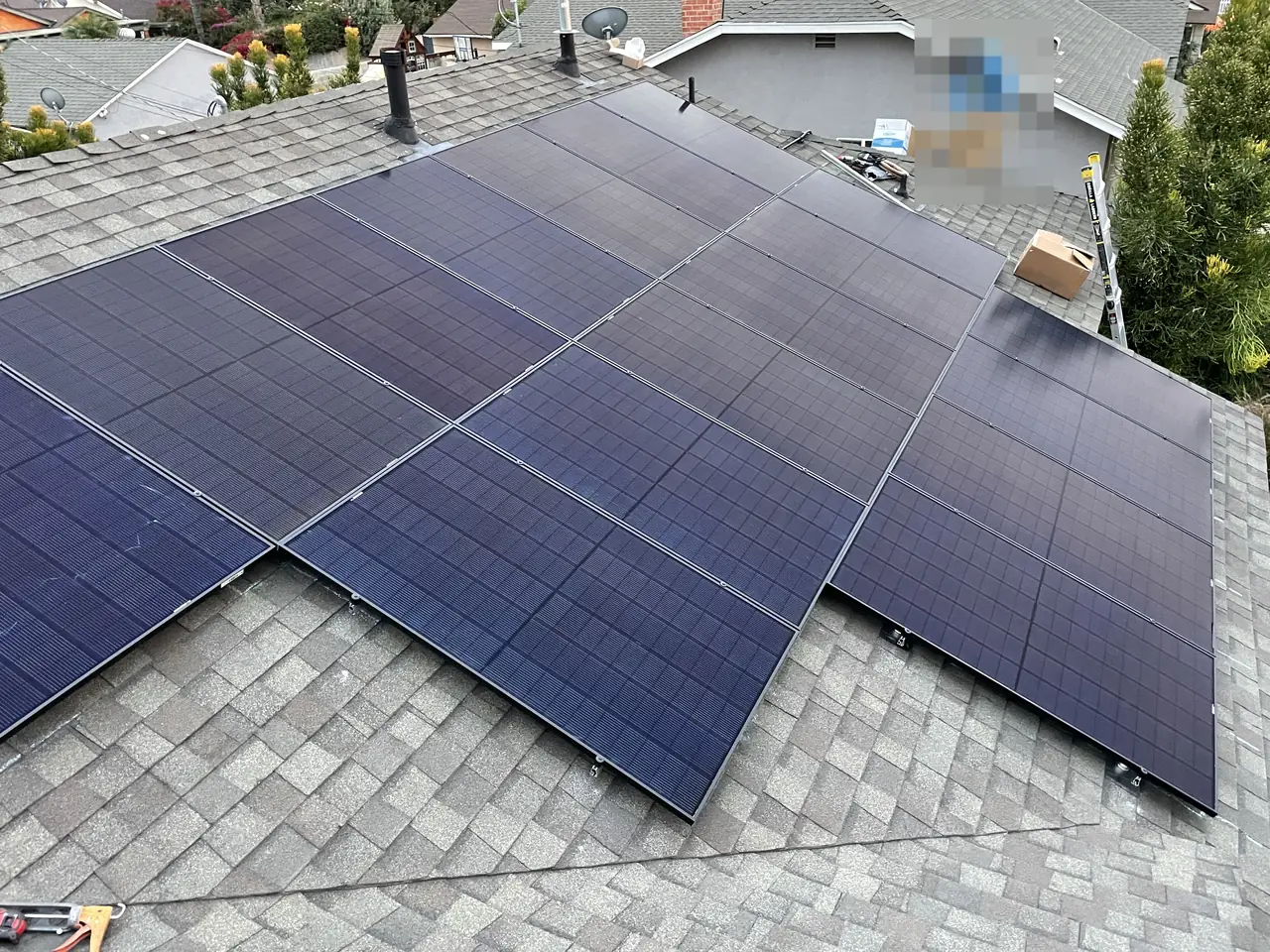
This roof has no single face big enough for the array, so the array was split across the faces it does have. That decision is only affordable because every module carries its own inverter and stops caring what the module beside it is doing.
This North Hills roof gave no single plane large enough for the system, so Cali Energy split twenty-one modules across several faces and put a microinverter under each one, which lets every module produce independently of its neighbors. At commissioning all twenty-one were detected, all twenty-one were communicating and all twenty-one were producing.
At a glance
- Array
- 21 modules across several roof planes
- Inverters
- 21 Enphase microinverters, one per module
- At commissioning
- 21 detected, 21 communicating, 21 producing
- Roof
- Composition shingle, hips and crossing gables
- Installed
- Late October 2021
- Final inspection
- Requested the same week
- Utility / AHJ
- LADWP / LADBS
The story
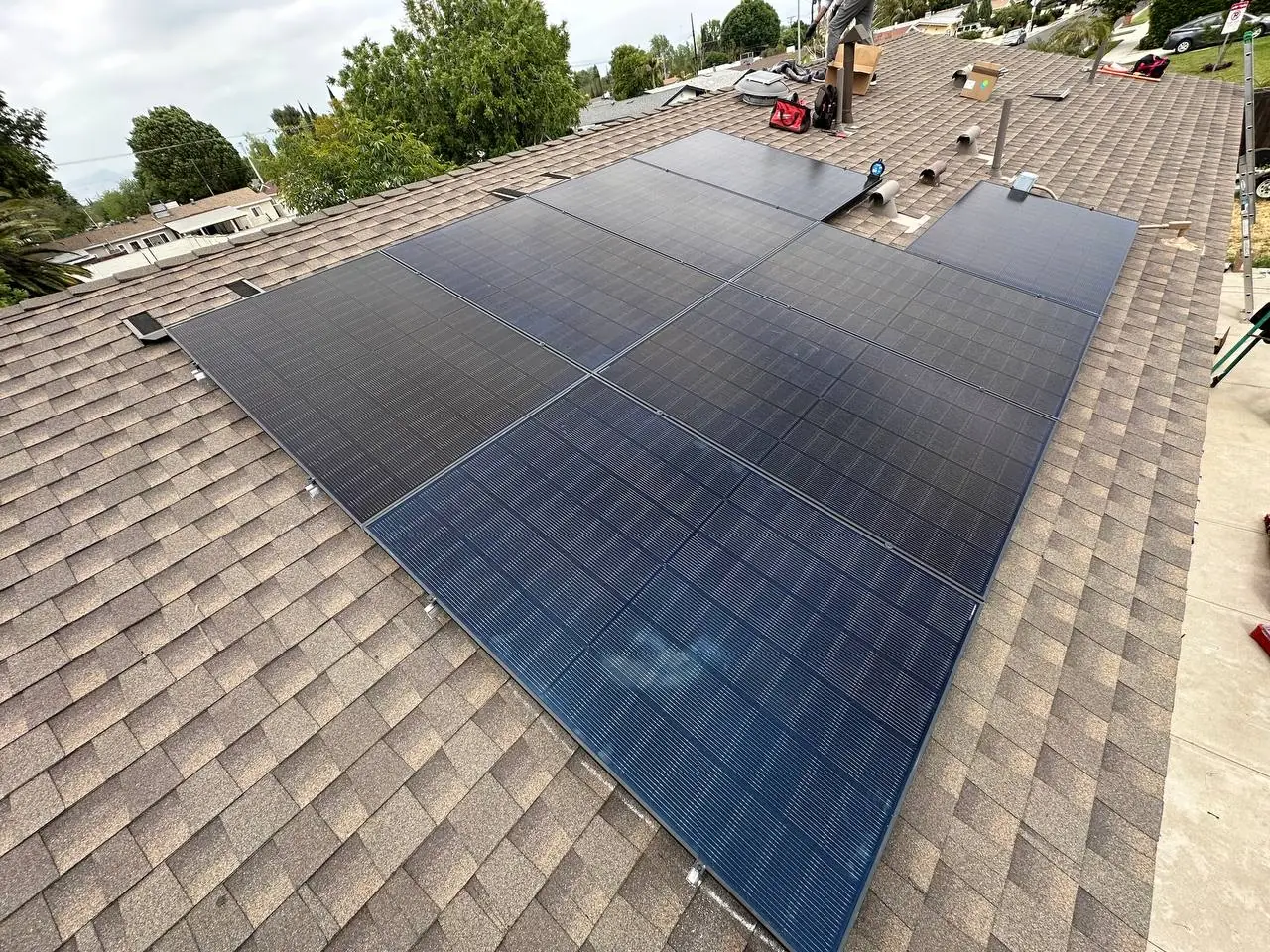
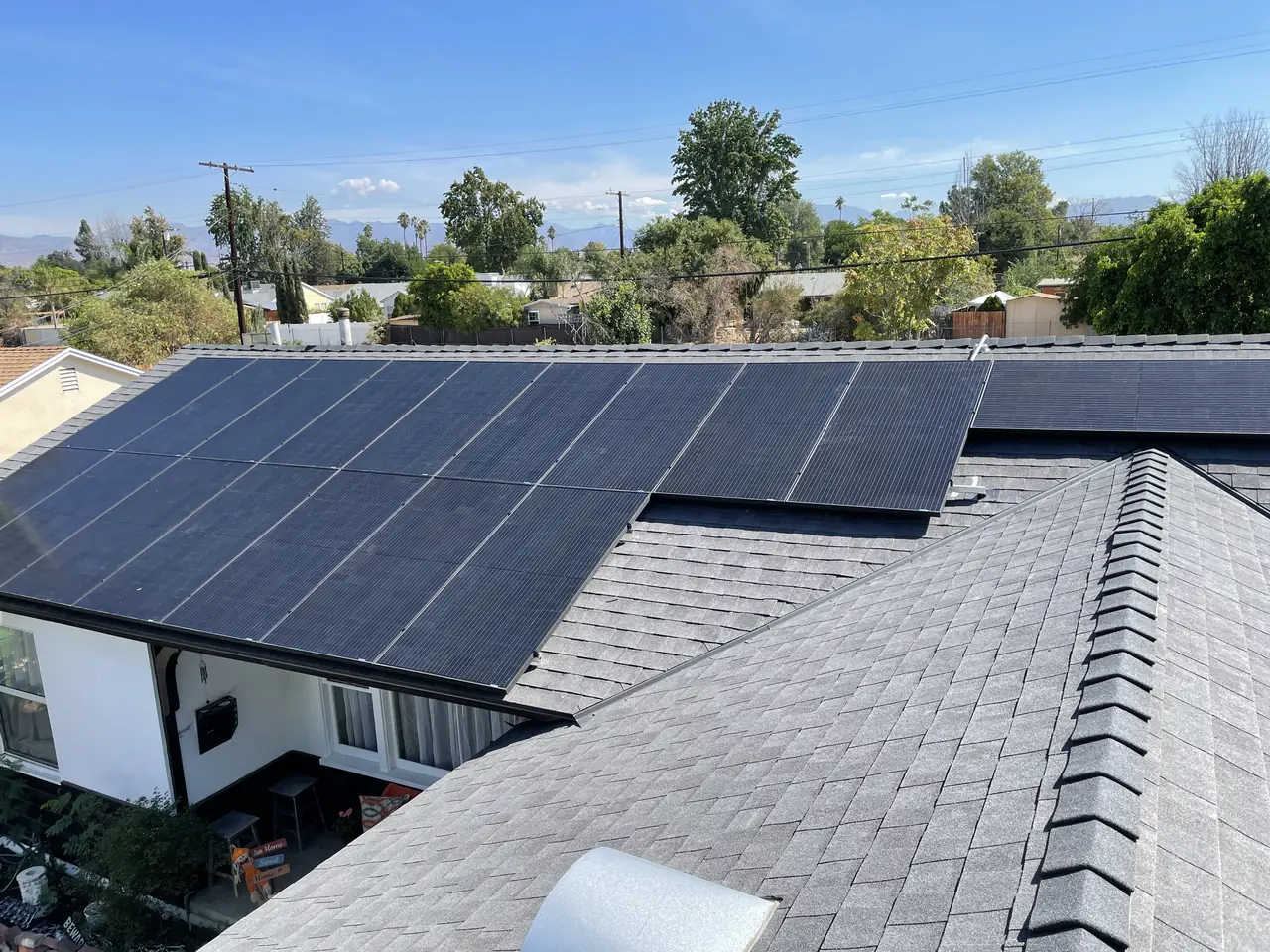
The house is a long low ranch with the roof broken into several planes by hips and a crossing gable. It is a common shape here and an awkward one for solar, because none of the individual faces is big enough on its own to hold a system worth having.
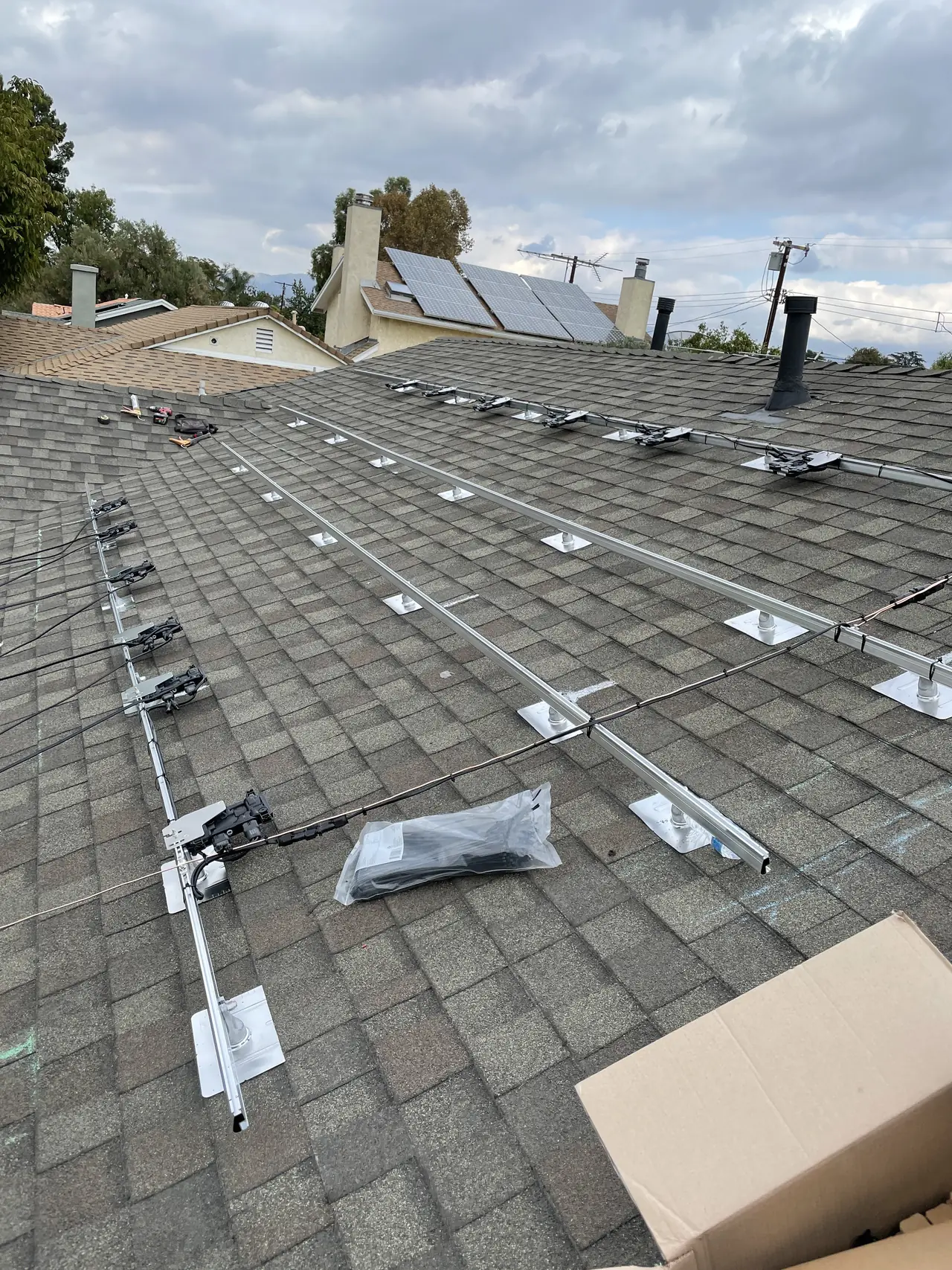
There are two ways to handle that. One is to use only the best face and accept a smaller system. The other is to spread the array over several faces, which gets the size but means modules pointing in different directions, coming into and out of sun at different times, and shading each other's groups at different hours.
With a single string inverter the second option is expensive, because modules wired in series are held to the performance of the weakest one in the string. Put an inverter under each module and that constraint disappears. Each module converts on its own, reports on its own, and a module in shade at four o'clock costs you that module and nothing else.
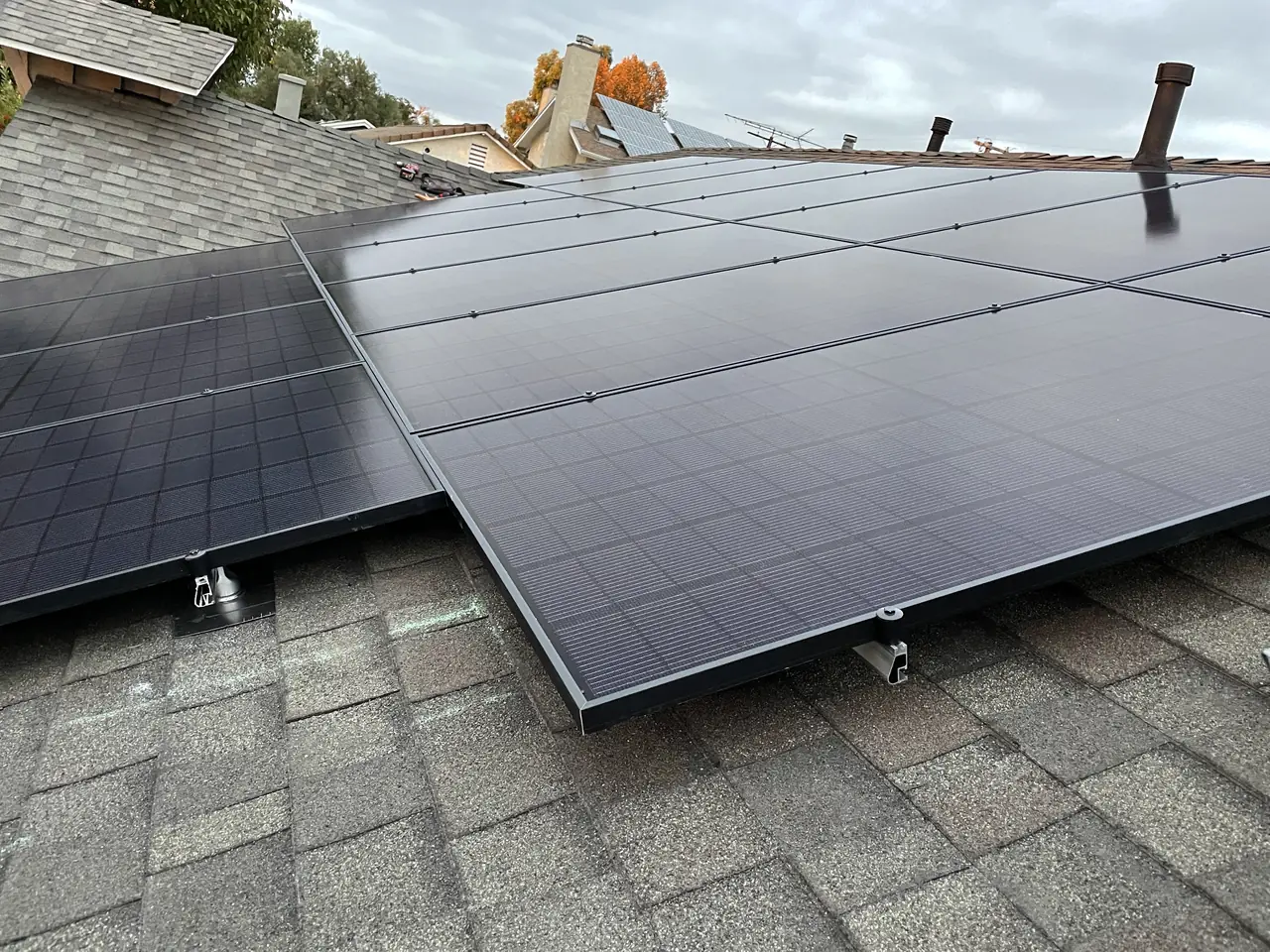
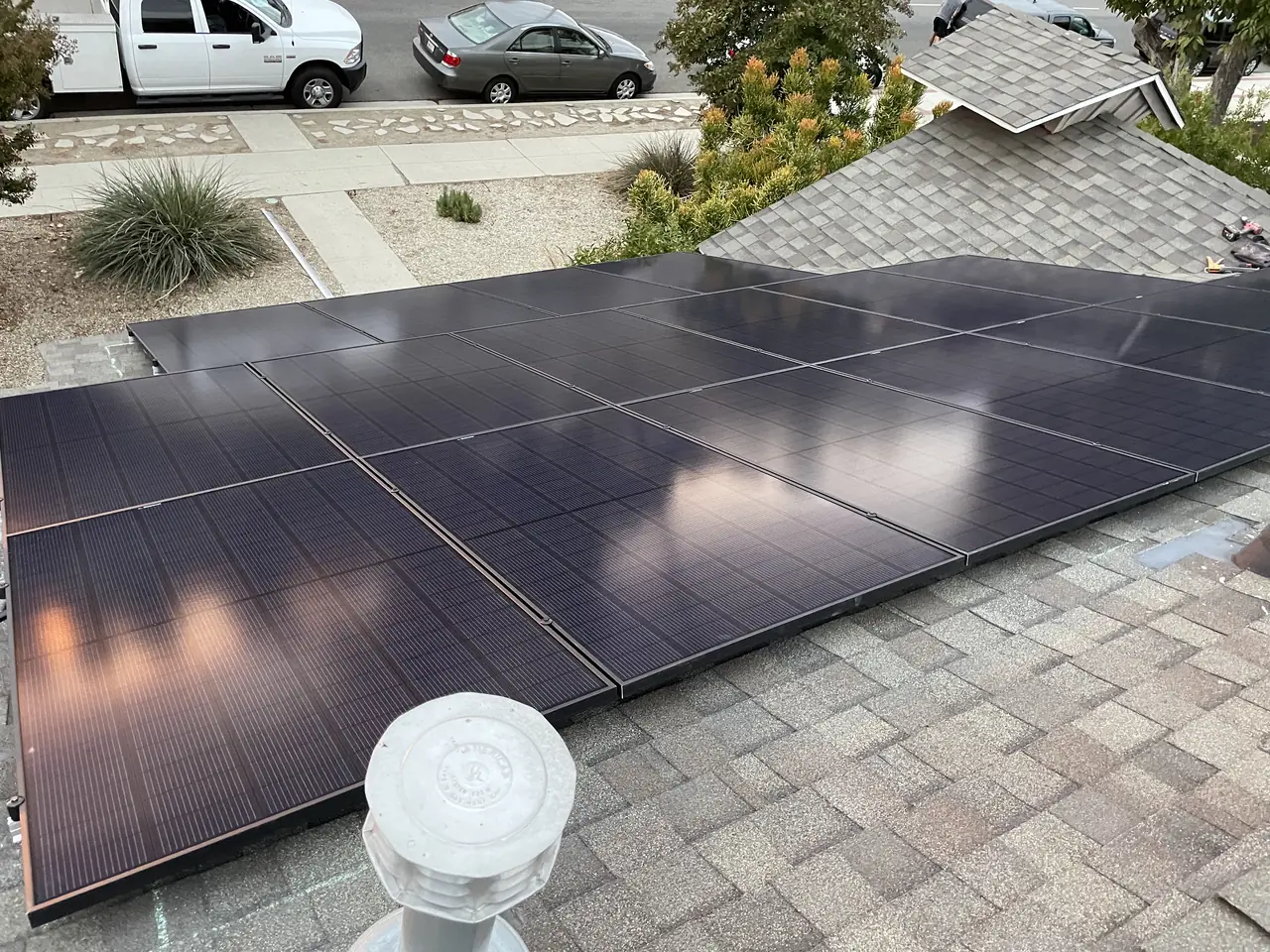
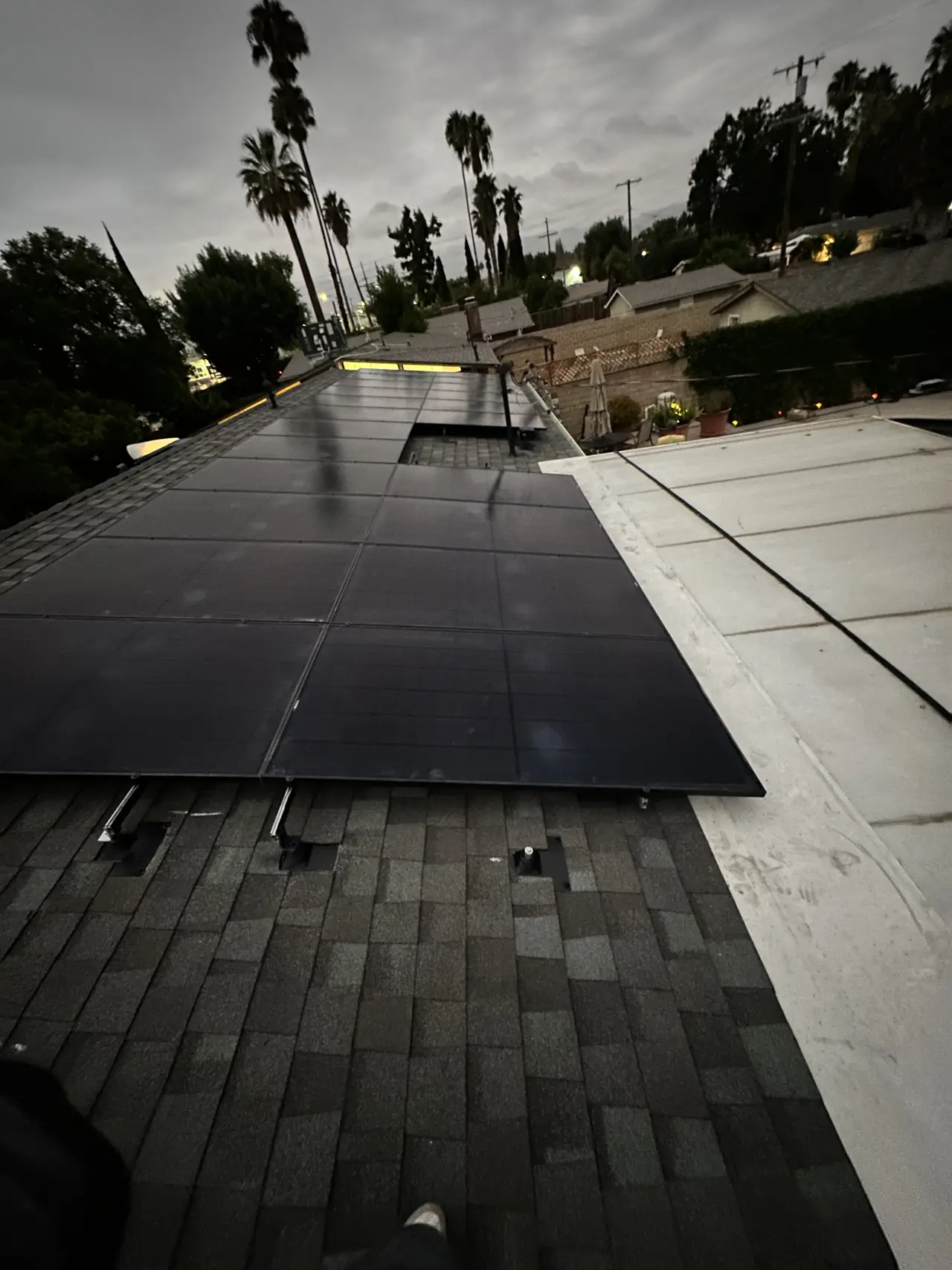
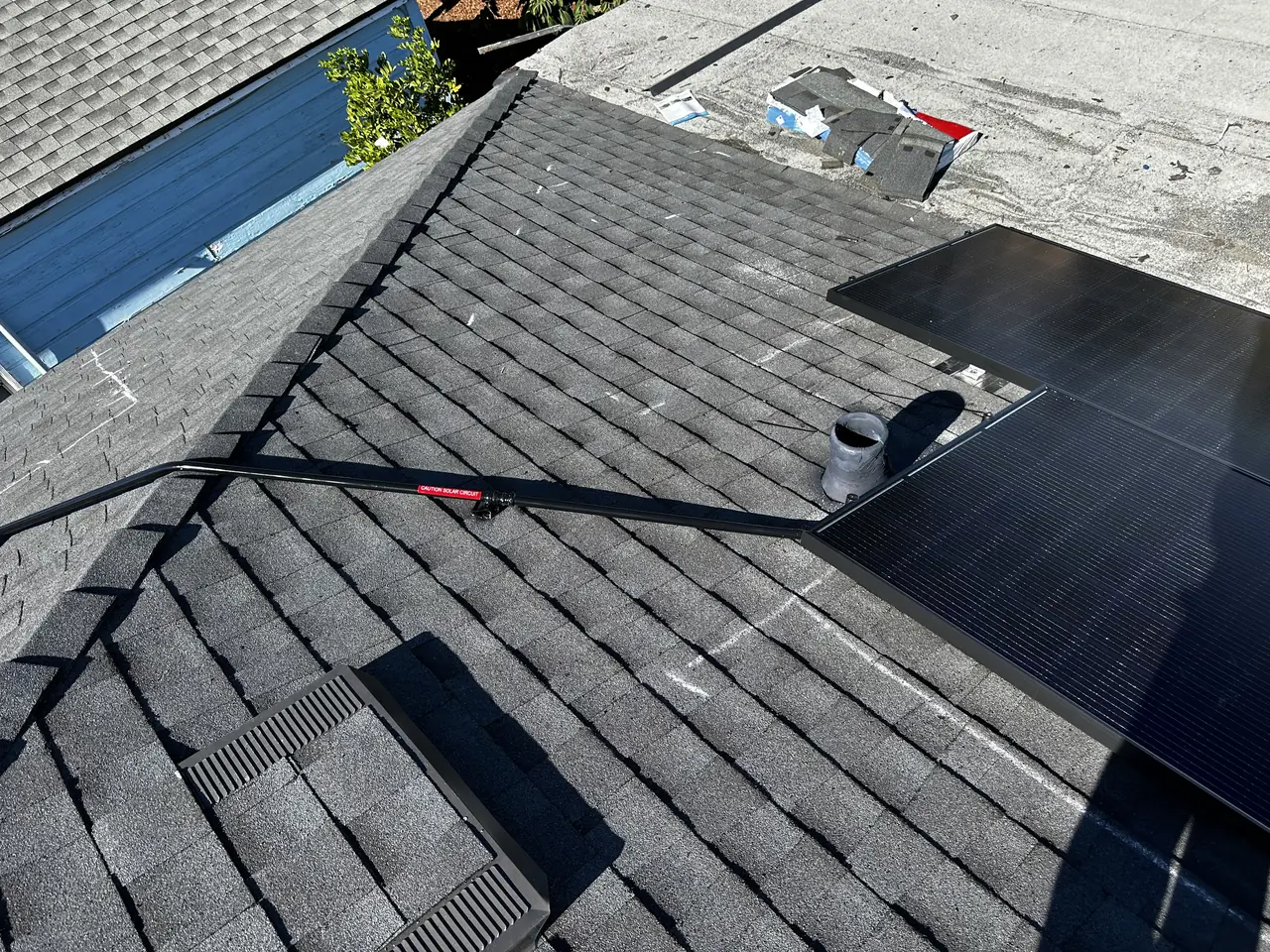
So the array was laid out as a set of groups rather than one block: a run along the front plane, a second turning the corner onto the adjoining face, and smaller groups filling what was left. Twenty-one modules, twenty-one microinverters.
The payoff shows at commissioning. When the system was brought online, the commissioning screen listed twenty-one microinverters detected, twenty-one communicating, and twenty-one producing power. Not a system size, not an estimate — a count, matching the count that went on the roof.
That is a kind of proof a string system cannot give you. A string inverter reports one number for everything connected to it, and a single underperforming module inside a string is invisible until somebody goes looking. Module-level conversion turns commissioning into an inventory: every unit is either reporting or it is not, and if one is missing you know which one before anybody leaves the site.
The city inspection was called in the same week the array went up and the final passed, and from commissioning day all twenty-one modules have been producing.
How it ran
| 22 October 2021 | Final inspection called in |
|---|---|
| 23 October 2021 | Rails and mounting hardware set across the planes |
| 23 October 2021 | Twenty-one modules and twenty-one microinverters installed |
| 23 October 2021 | System commissioned — 21 detected, 21 communicating, 21 producing |
The count on the commissioning screen matched the count on the roof, which is the whole point of module-level conversion.
What we did
- Laid the array out as groups across several roof planes rather than one block.
- Installed twenty-one modules with a microinverter under each one.
- Set rails and flashed attachments on every plane the array touches.
- Commissioned the system and confirmed all twenty-one units detected, communicating and producing.
- Called the final inspection in the same week the array went up.
System specifications
| Modules | 21, across several roof planes |
|---|---|
| Inverters | 21 × Enphase, one per module |
| Orientation | Multiple, following the hips and crossing gable |
| Commissioning check | All 21 detected, communicating and producing |
| Roof | Composition shingle |
| Mounting | Rafter-fixed attachments with rail above |
| Utility / AHJ | LADWP / LADBS |
Is your project like this one?
- Your roof is broken into several small faces and no single one is big enough.
- You have been told your roof is not suitable because of its shape.
- You want production you can see module by module rather than as one number.
- Part of your roof is shaded for part of the day.
- You want an installer who proves the count at commissioning.
Cali Energy in North Hills
North Hills sits inside City of Los Angeles boundaries: permits run through LADBS, interconnection through LADWP.
A roof that faces several directions at once is the normal condition in the San Fernando Valley, not the exception. Ranch houses from the middle of the last century were built long and low with hips and crossing gables, which gives a solar designer four or five small planes instead of one big one.
This installation is on the North Hills projects page alongside the others.
- License and classifications: CSLB #1032379
- Official reference for this process: California Energy Commission — solar equipment lists
- Official reference for this process: LADBS — inspections
Frequently asked questions
Why put an inverter under every module?
Because it removes the dependence between modules. In a string, modules are wired in series and the whole string is limited by its weakest member, so shade or orientation on one module costs output from all of them. With a microinverter under each module, every module converts independently. On a roof split across several faces, which is common in this part of the valley, that is what makes using all of them worthwhile.
Can I put solar on a roof with several small faces?
Usually yes, and that is the normal situation on a ranch house here. The array is laid out as groups that follow the planes rather than as one block, with each group sized to what its face allows once vents and setbacks are excluded. The result looks less tidy than a single rectangle and produces across a longer part of the day, because the faces come into sun at different times.
What does a commissioning report actually prove?
On a module-level system, that every unit installed is present and working. The screen lists how many microinverters were detected, how many are communicating and how many are producing power, and those three numbers should match the number of modules on the roof. Here all three read twenty-one. If one is short, the problem is found before the crew leaves rather than months later.
Does Cali Energy install microinverter systems in North Hills?
Yes, and on the broken-up ranch roofs common in North Hills it is usually the right choice. A module-level system lets each module convert on its own, so an array split across four or five small faces is not held back by whichever group is in shade. Cali Energy designs, installs and commissions these systems, and confirms unit by unit at commissioning that every one of them is reporting. License CSLB #1032379.
What this would look like on your roof
Planning solar in North Hills? Tell us your utility, your roof and what your bill looks like now, and we will model what a system like this would do on your house before you commit to anything.
Or call +1 (323) 844-7777 · Cali Energy, Northridge · CSLB #1032379 (B, C-10, C-39) — design, permits, install and electrical under one licensed contractor.
Related
This timeline reflects this property and this permitting path. Updated September 2026.