

Reseda, CA · December 2021 – February 2023 · LADWP / LADBS
The new unit had its own address. The utility had never heard of it.
A detached accessory dwelling unit built on the footprint of a demolished garage at the back of a Reseda lot. It has its own street address on the cross street, not the parent house's. The building permits were filed correctly against it. The utility interconnection could not be, and that took a month to unpick.
A new detached unit gets its own address the moment the building department permits it, and every city record then has to be filed against that address rather than the parent house's. The utility is different: it keeps records against services, and there is no service history at an address that did not exist last year, so the interconnection opens under the only address it recognizes. Cali Energy pulled the city permits under the unit's address, then had the utility re-address the work request mid-flight.
At a glance
- Recorded by the utility
- 2.0 kW AC-CEC
- Modules
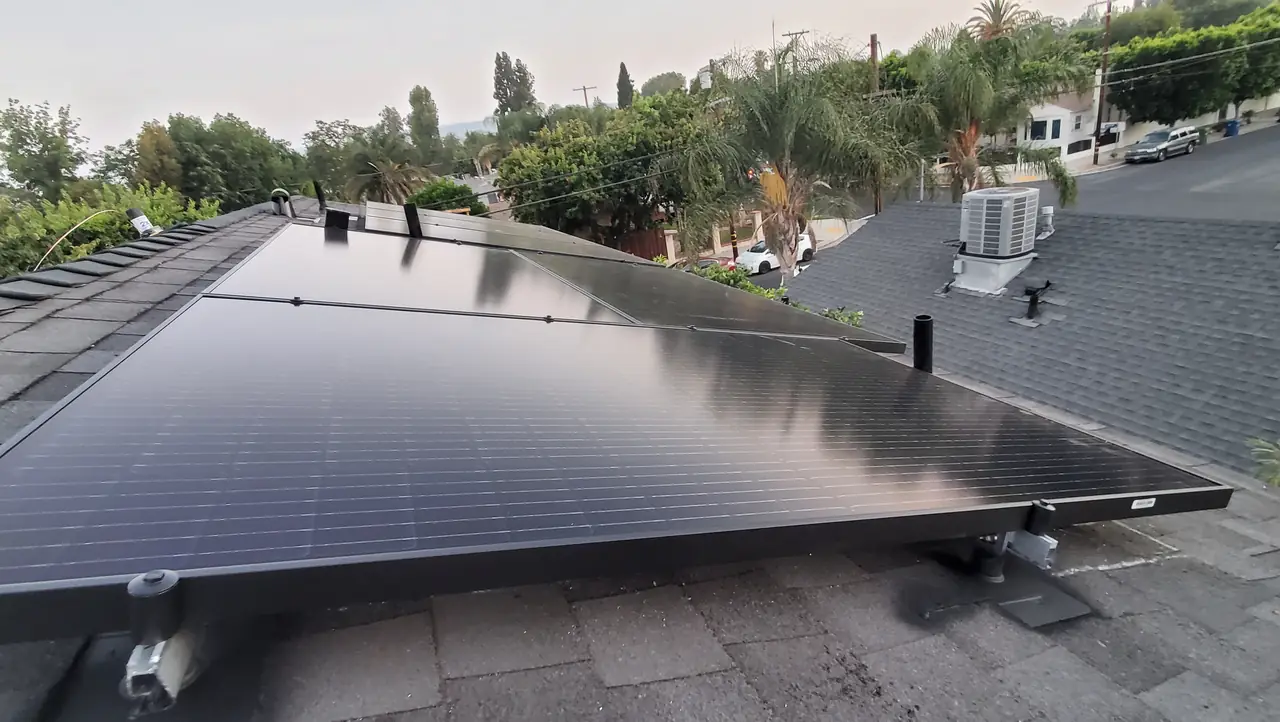
- Q CELLS Q.PEAK DUO BLK-G6
- Dwelling
- New detached two-story unit on a demolished garage footprint
- Addresses
- Parent house on one street, new unit on the cross street
- City permits
- Filed against the new unit's address
- Utility work request
- Opened under the parent house, re-addressed later
- Battery
- None
- Utility / AHJ
- LADWP / LADBS
The story
The garage came down first. The demolition permit and the permit for the new two-story unit were applied for on the same day, and the unit went up on the footprint the garage had occupied at the back of the lot. Because the lot turns a corner, the new building fronts the cross street, and the city gave it an address there. The parent house kept its own.
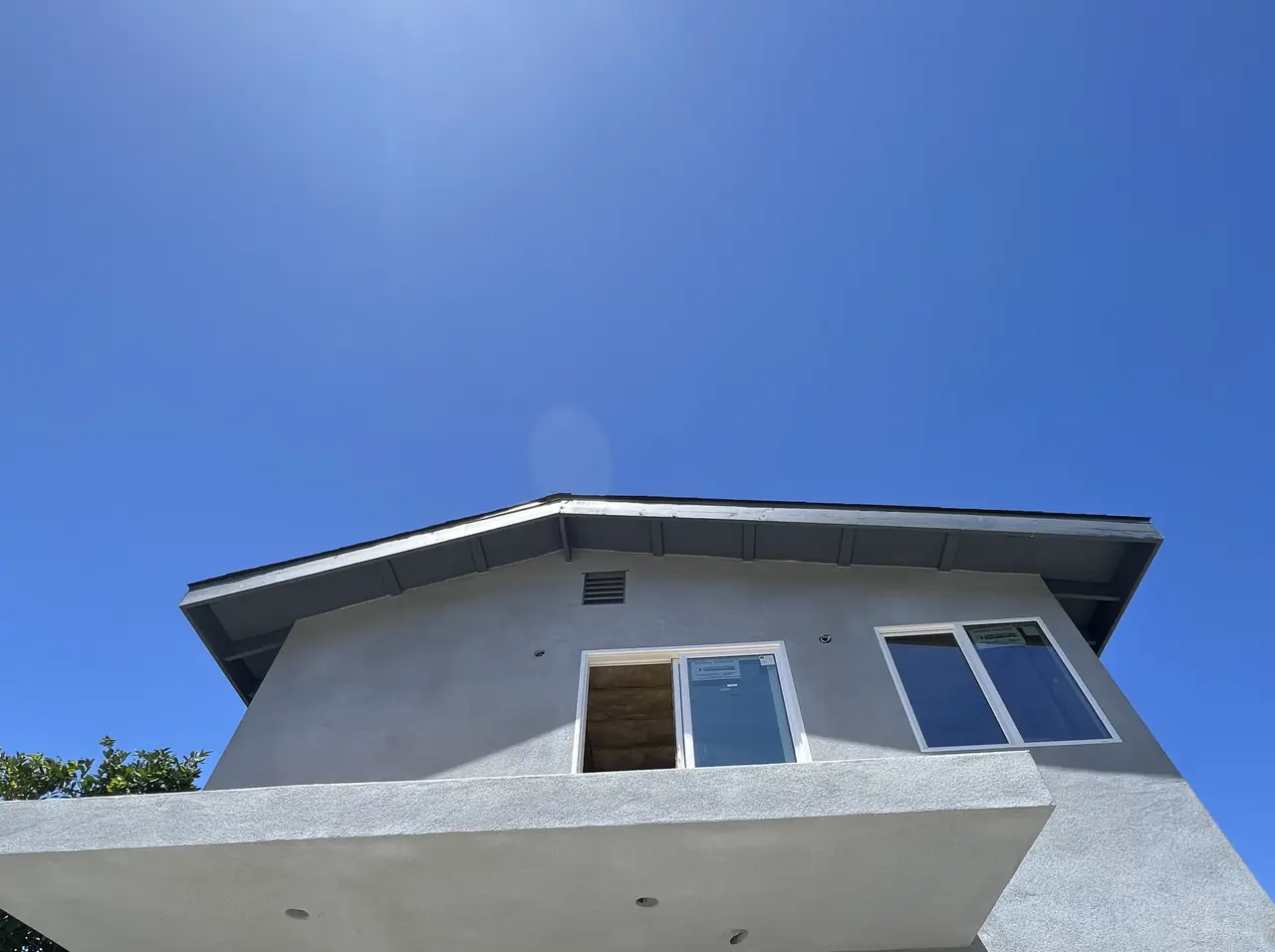
That address is not a formality. A solar permit has to be pulled against the building the array sits on, so the first thing to establish is which address the unit actually carries. It is a question owners routinely get wrong, because they think of the property as one thing. Asked outright, this owner answered with the house's address. Asked again, more precisely, the correct one came back.
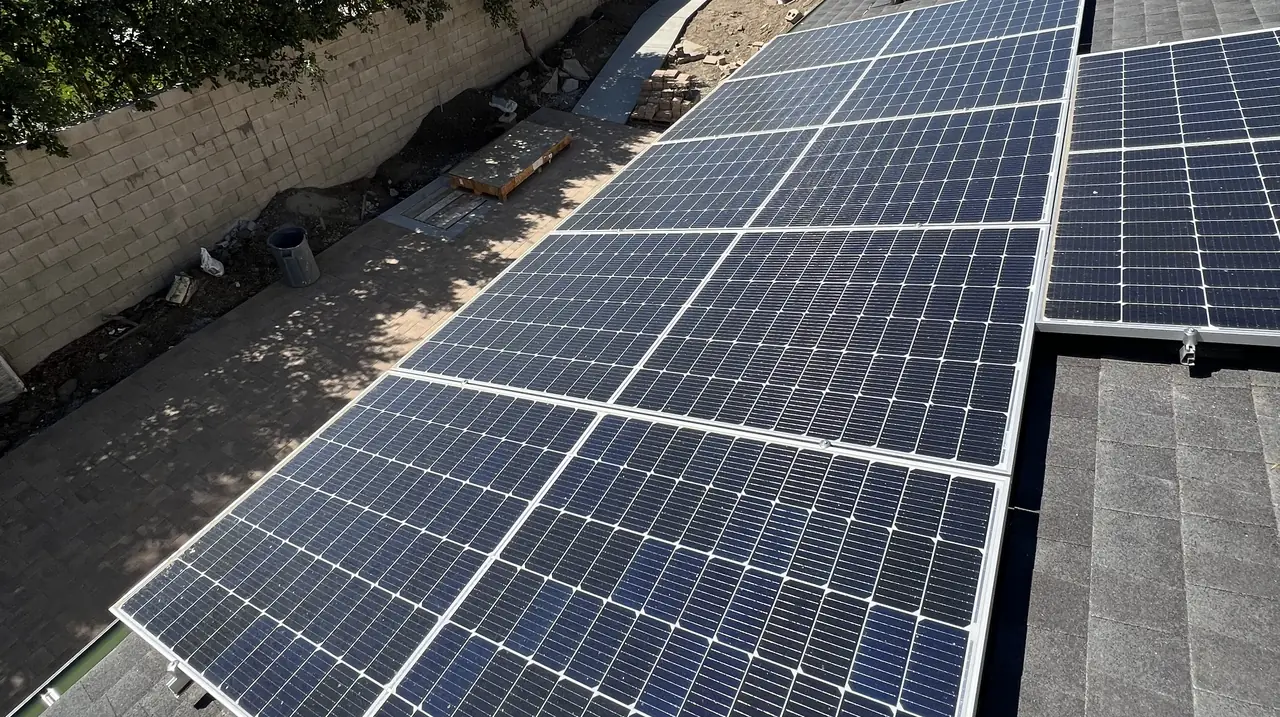
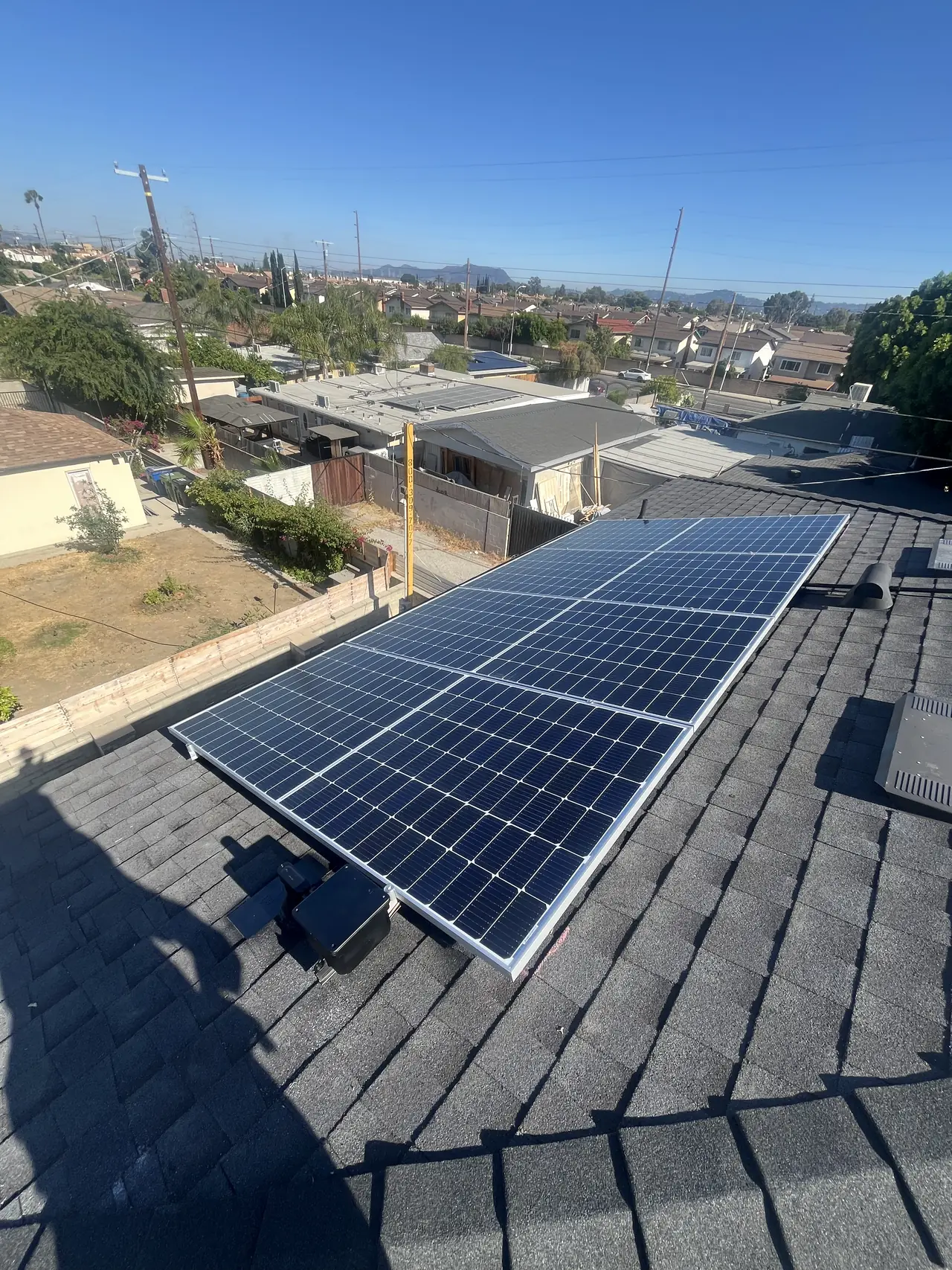
With that in hand the city permits were correct from the start, the array went on the new shingle roof in June, and the building's own final inspection ran its course through the fall.
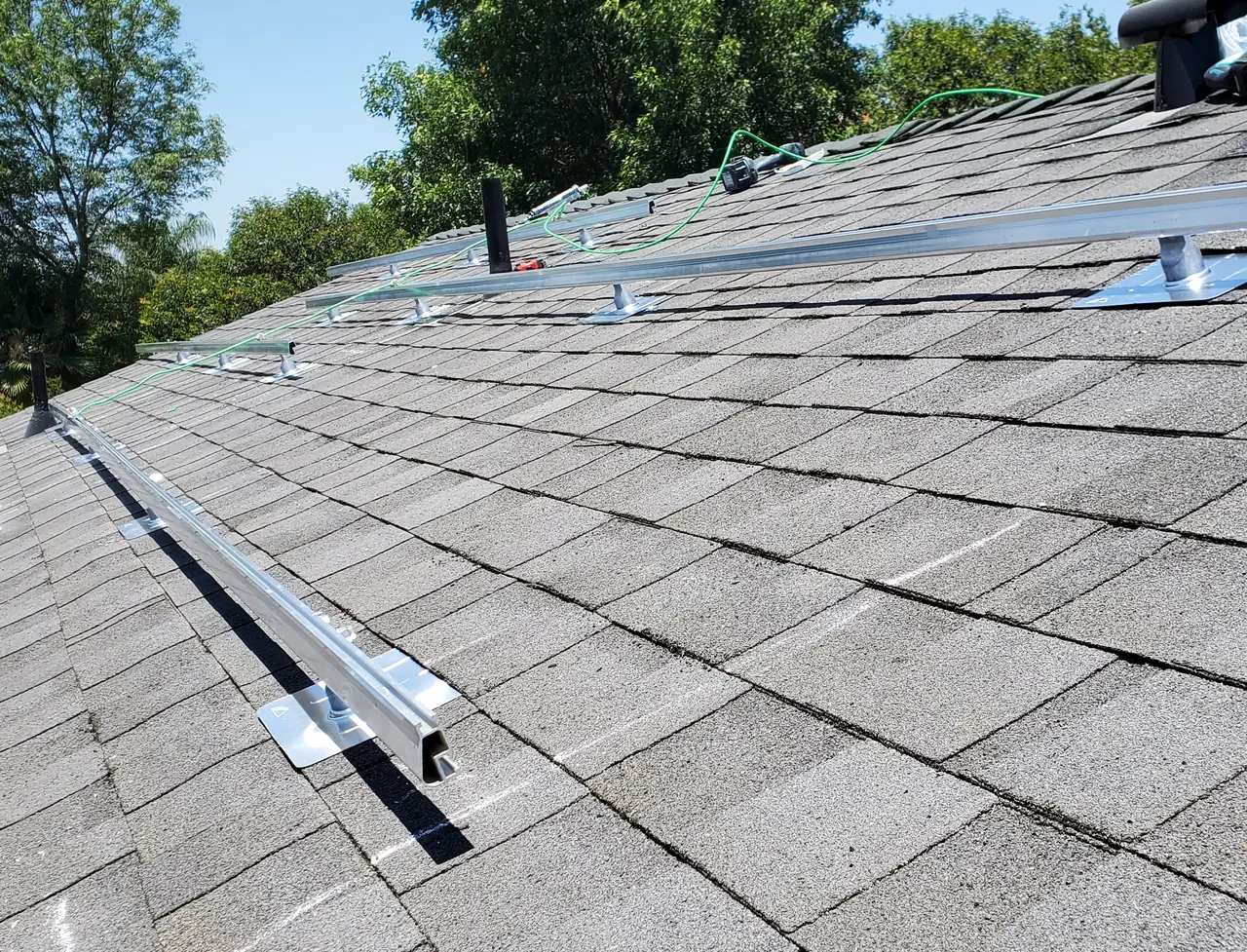
Then the interconnection went in, four months later, under the parent house's address. Not by mistake, and this is the mechanism worth carrying away. The building department issues addresses; the utility keeps records against electrical services. There is no service history at an address that did not exist the year before, so when the application is filed the only address the utility's system recognizes is the one that has been receiving a bill. The work request opens there.
Which is fine until it is not. The meter is going to be set at the new unit. The permission to operate letter has to name the new unit. And the building department's release, which the utility waits on, was issued against the new unit's address — so the two records do not meet. Somebody has to ask, in writing, for the work request to be re-addressed.
That is what happened here. In late January a message went to the utility's service planner asking that the address on the work request be changed to the unit's, because that is the correct address of the accessory dwelling unit. Once the correction was made, the meter was set and permission to operate issued inside eighteen days.
Two other things slowed this project and both are worth naming, because neither was solar work. The general contractor was responsible for the unit's service panel and for the utility's meter spot, and in June we put it in writing that those permits were not yet in hand. And in October the photographs the utility needs of the service equipment came back insufficient, so the specification sheet showing exactly what the utility wants photographed was sent over and the shots retaken.
If you are putting solar on a new unit at the back of a lot, ask two questions early. What address did the building department give this building, and does the utility have a service record at it. If the answer to the second is no, expect the work request to open under the house and plan to have it re-addressed before the release lands.
How it ran
| December 2021 | Demolition permit for the existing garage and building permit for the new two-story unit applied for the same day |
|---|---|
| May 2022 | Preliminary proposal issued; site inspected and layout revised |
| June 2022 | Unit's own address established with the owner; city permits pulled against it; array installed |
| September 2022 | Building department correction issued on the unit's own building permit |
| October 2022 | Utility service photographs retaken to specification; interconnection application filed at 2.0 kW AC-CEC under the parent house's address |
| Late October 2022 | Application reviewed and cleared to install |
| January 2023 | Written request to the utility to re-address the work request to the unit |
| 14 February 2023 | Net meter set; permission to operate, issued against the unit's address |
This timeline reflects this property and this permitting path: a new dwelling with its own address on a cross street, and a utility with no service record at it.
What we did
- Established the unit's own street address with the owner before pulling any permit, rather than assuming the parent house's.
- Filed the city permits against the unit and installed the array on its new shingle roof (C-10).
- Warned the owner in writing when the service panel and meter spot permits, which belonged to the general contractor, were not yet in hand.
- Supplied the utility's photograph specification when the service shots came back insufficient, and had them retaken.
- Asked the utility in writing to re-address the work request to the unit so the release and the meter would meet.
- Carried the project to permission to operate eighteen days after that correction.
System specifications
| Recorded by the utility | 2.0 kW AC-CEC |
|---|---|
| Modules | Q CELLS Q.PEAK DUO BLK-G6 |
| Inverters | Enphase microinverters, one per module |
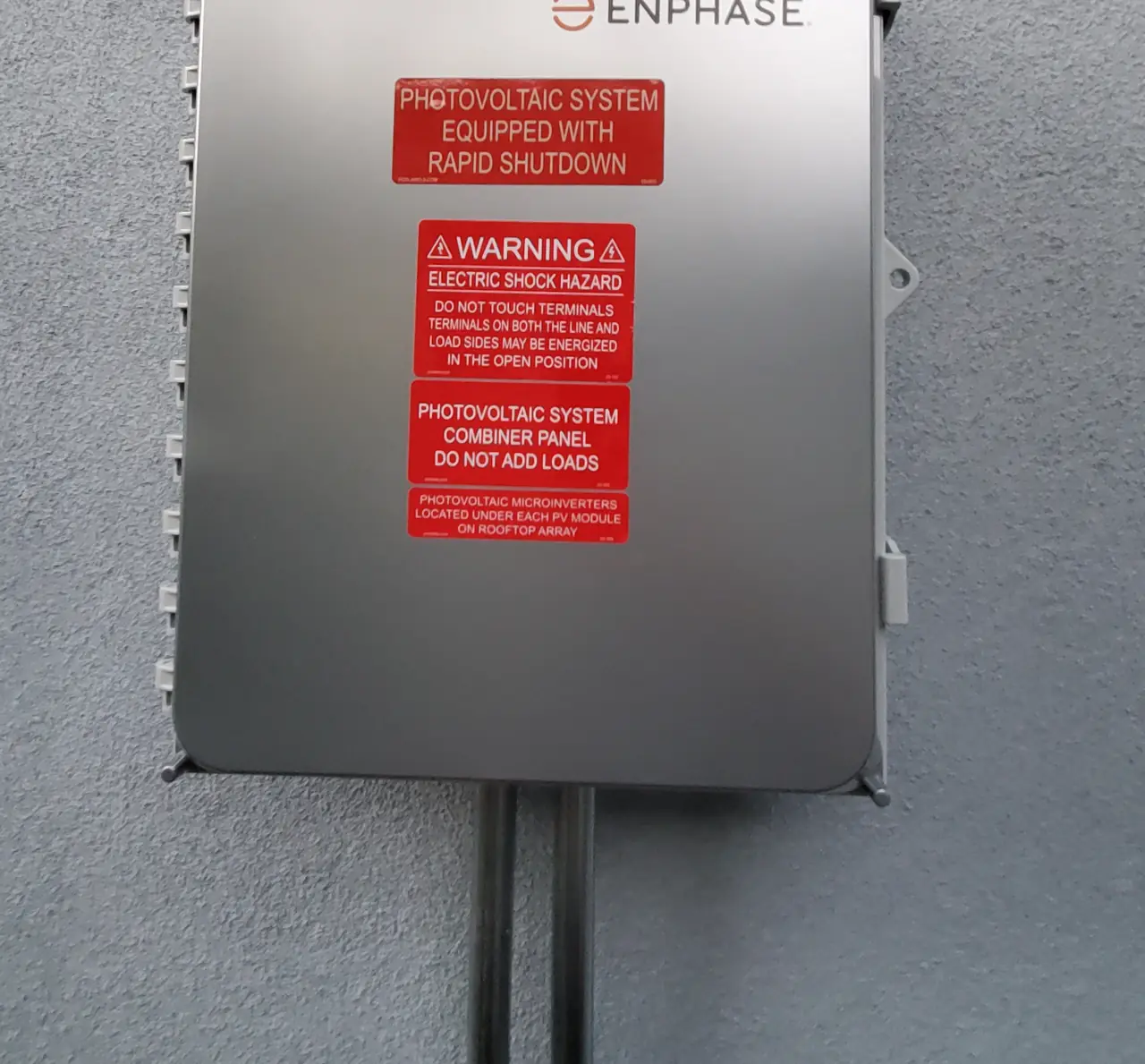
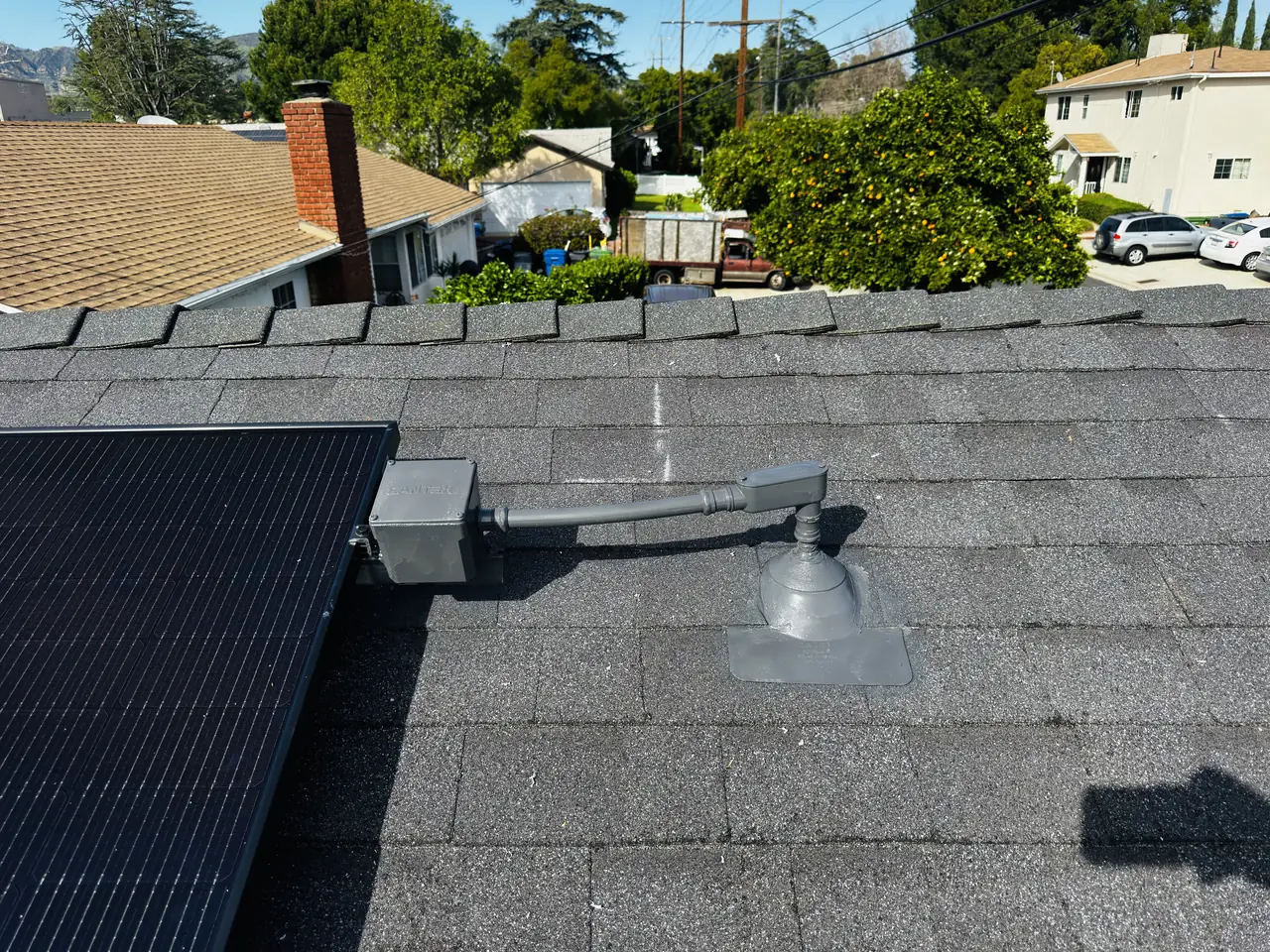
| Combiner | Enphase IQ Combiner on the unit's exterior wall |
| Dwelling | New detached two-story unit, built on a demolished garage footprint |
| Roof | Composition shingle, new |
| Addresses | Parent house on one street; the unit on the cross street |
| Service panel and meter spot | General contractor's scope, not ours |
| Battery | None |
| Utility / AHJ | LADWP / LADBS |
Is your project like this one?
- You have built or are building a detached unit at the back of a lot.
- Your new unit fronts a different street from the main house.
- Your building department paperwork and your utility paperwork name different addresses.
- Your general contractor holds the service panel and meter scope, not your solar installer.
- Your Reseda property is served by LADWP, while permits are handled by LADBS.
Cali Energy in Reseda
Reseda is inside City of Los Angeles boundaries: permits run through LADBS, interconnection through LADWP.
Reseda is a neighborhood in the west San Fernando Valley, inside the City of Los Angeles. On its corner lots a detached second unit built at the back often fronts the cross street, and the building department gives it an address to match.
This installation is on the Reseda projects page alongside the others, and what the work covers is set out on the Reseda service area page.
- License and classifications: CSLB #1032379
- Official reference for this process: LADBS — accessory dwelling unit permits
- Official reference for this process: LADWP interconnection requirements
Frequently asked questions
Which address does a new backyard unit use?
Its own. The building department assigns the unit an address when it permits it, and on a corner lot that address is often on the cross street rather than the one the house faces. Every city record for the unit, including the solar permit, is filed against it. Owners frequently give the house's address when asked, so it is worth confirming from the permit itself.
Why did the utility use the house's address instead?
Because a utility keeps records against electrical services, not against buildings, and there is no service history at an address that did not exist the previous year. When the interconnection application goes in, the only address in the utility's system is the one that has been receiving a bill. The work request opens there by default.
What goes wrong if nobody corrects it?
The building department's release is issued against the unit's address and the utility's work request sits under the house's, so the two records never meet and the meter order does not go out. Here a written request to the service planner to re-address the work request fixed it, and the meter followed within eighteen days.
Who is responsible for the unit's service panel?
Whoever the owner contracted for it, and it is often the general contractor building the unit rather than the solar installer. That was the case here. It matters because the utility's meter spot and the service permits sit on that critical path, and a solar contractor who does not hold that scope can only flag it, which is what we did in writing.
Does Cali Energy pull permits for accessory dwelling units in Reseda?
Yes, and the first step is establishing which address the unit carries. The building department assigns a new unit its own address, often on a different street from the house, and every city record has to be filed against it. Cali Energy confirms that address from the permit itself rather than from the owner's recollection, files the solar permit against it, and asks the utility to re-address the work request when its records still name the parent house.
What this would look like on your roof
Planning solar in Reseda? Tell us your utility, your roof and what your bill looks like now, and we will model what a system like this would do on your house before you commit to anything.
Or call +1 (323) 844-7777 · Cali Energy, Northridge · CSLB #1032379 (B, C-10, C-39) — design, permits, install and electrical under one licensed contractor.
Related
This timeline reflects this property and this permitting path. Updated September 2026.