

Long Beach, CA · March – June 2021 · Southern California Edison / City of Long Beach
Long Beach kept the meter. The weather head moved to the corner
Twenty-five modules, a new main panel and an overhead service that had to be re-landed. The utility settled where the wires were allowed to come in three months before anybody got on the roof, and the whole job was built to that one line.
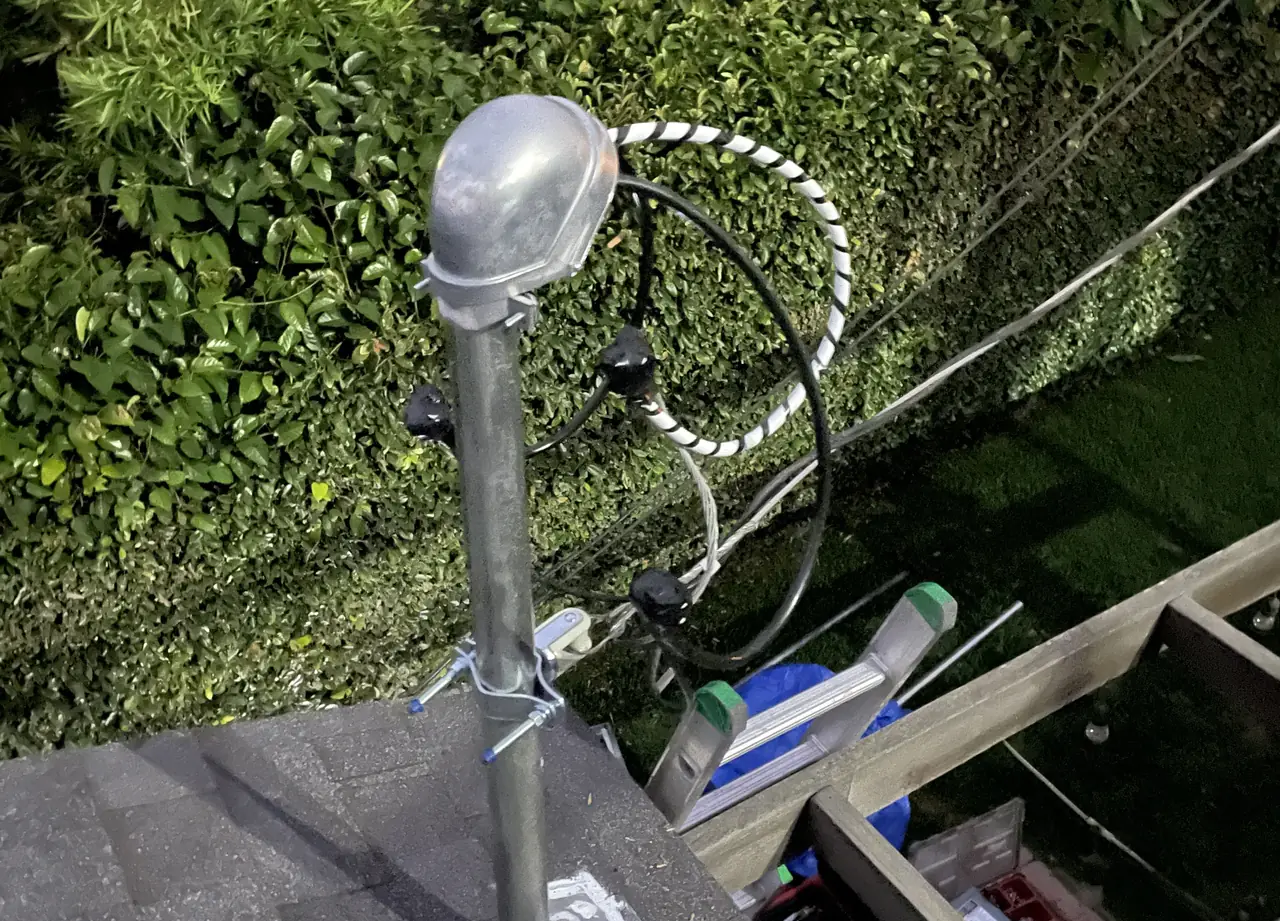
On this Long Beach house the utility approved the meter spot in its existing location in March 2021 and required the weather head — the point where the overhead service lands on the building — to be moved to the corner. Cali Energy built to that approval in June: twenty-five REC 445 W modules with a SolarEdge inverter, a new main panel, and a new mast landing the service at the corner. The final inspection passed on 24 June 2021.
At a glance
- Array
- 25 modules, 445 W each — 11.1 kW DC
- Inverter
- SolarEdge string inverter
- Service
- Overhead; main panel replaced
- Meter position
- Approved in the existing location, March 2021
- What changed
- Weather head relocated to the corner
- Monitoring
- Cellular
- Roof
- Composition shingle
- Final inspection
- Passed 24 June 2021
The story
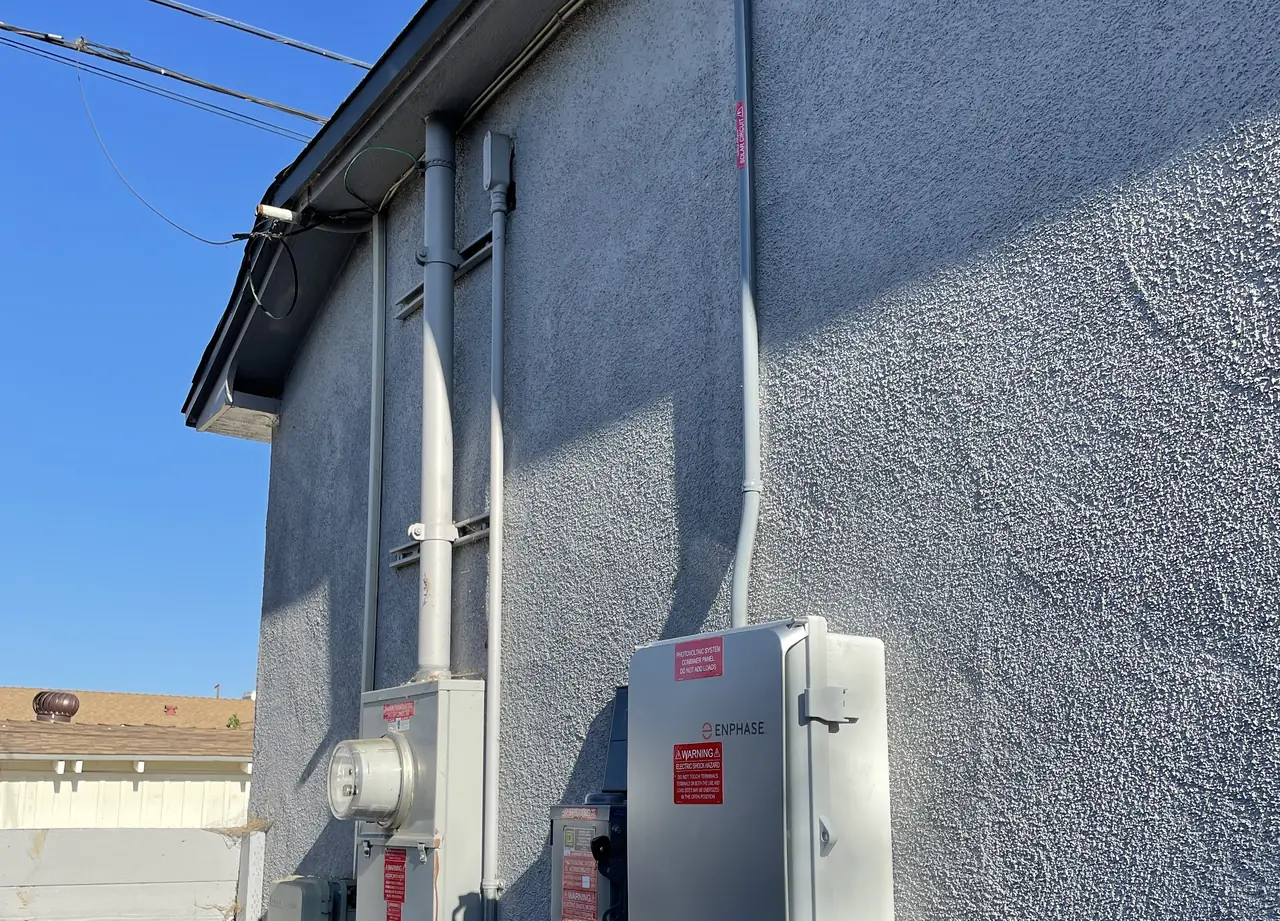
The utility settles the shape of a job like this long before the crew arrives. In March the meter spot came back approved: the meter could stay exactly where it was, and the weather head — the fitting at the top of the service mast where the overhead wires from the pole land on the building — had to move to the corner.
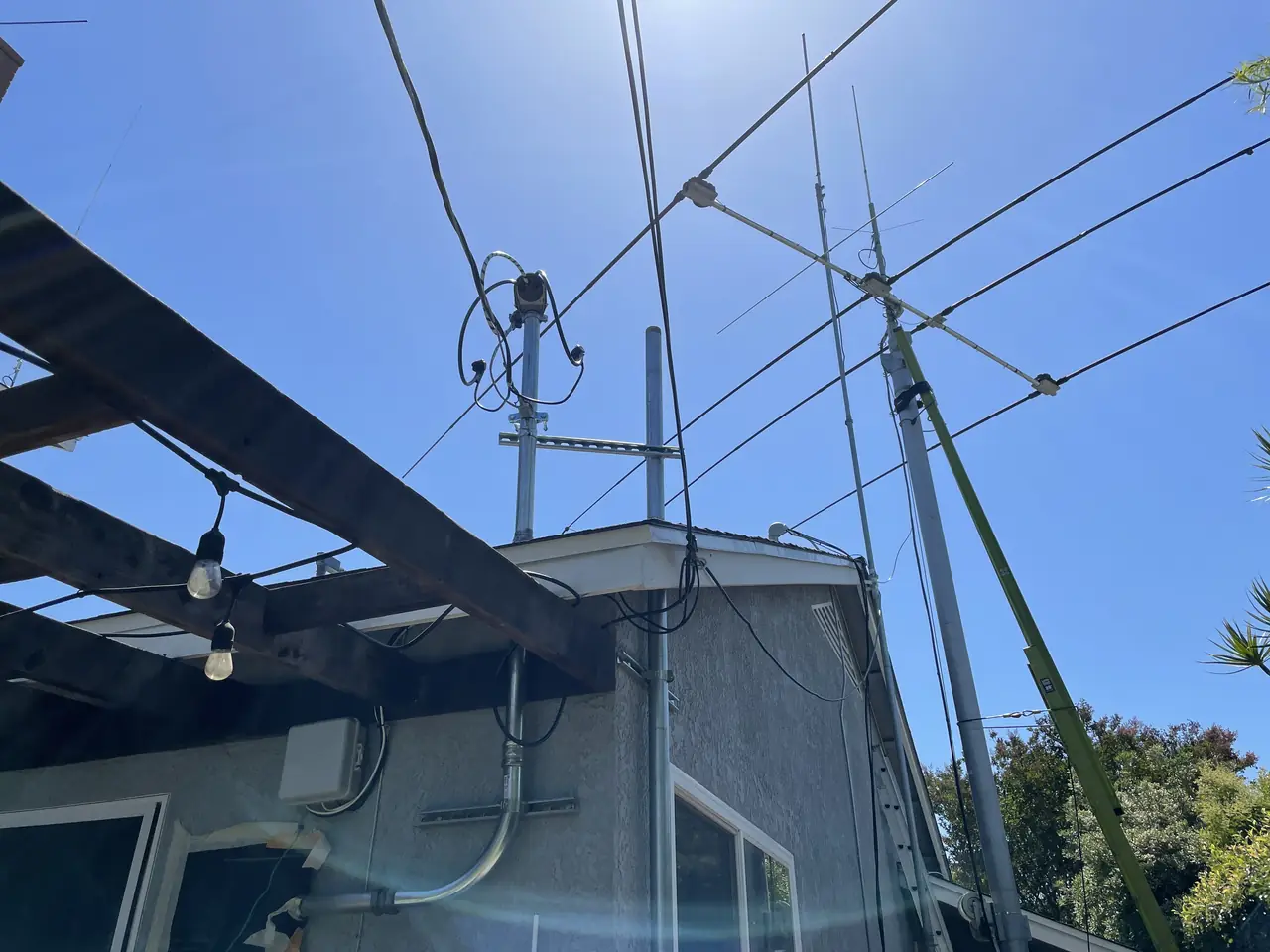
That is a small sentence and a real piece of work. The service mast comes off the roof, and moving where it lands means a new mast, a new penetration, a new path for the service conductors down to the meter, and a day when the house has to be disconnected and reconnected to the pole. None of it is difficult. All of it has to be scheduled around one crew, one inspector and one utility.
Why the utility asks for this is worth understanding, because it is not arbitrary. A weather head has to sit where a line crew can reach it from a ladder and work it in front of them, without stepping onto a homeowner's roof, and where the wires from the pole clear the roof surface, the windows and anything a person could reach. When a panel upgrade changes the equipment below, the geometry above is reconsidered — and on an older street the original position often no longer meets what is now required.
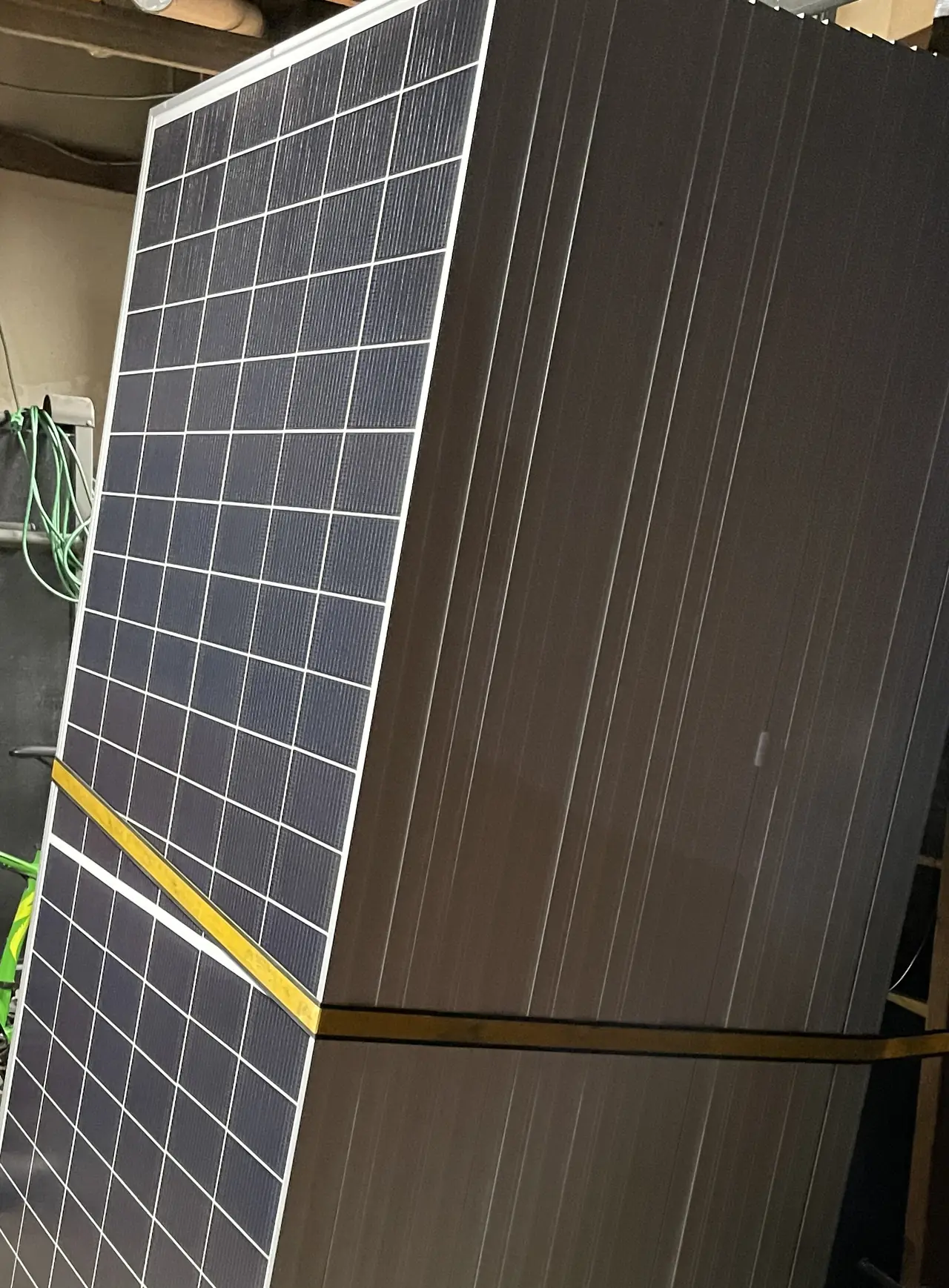
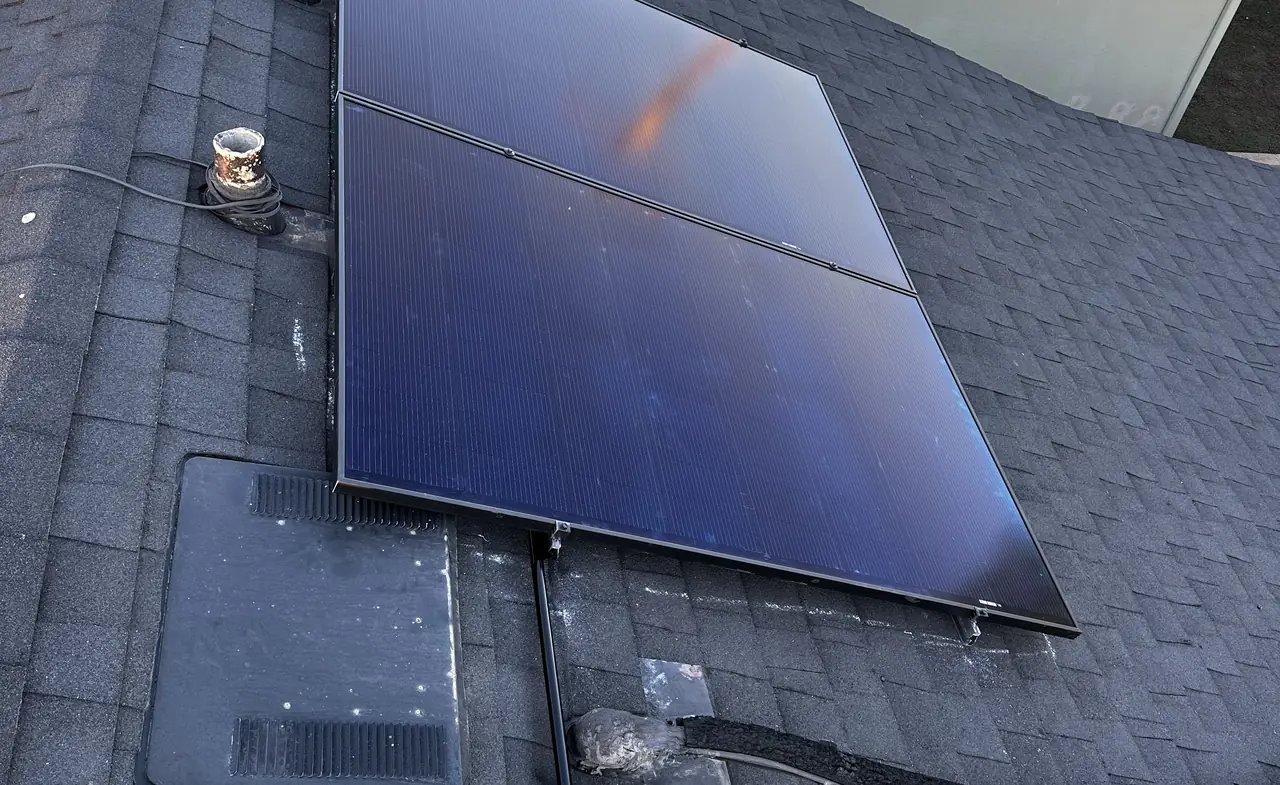
The build ran in a single week in June. Twenty-five modules of 445 watts went onto composition shingle with a SolarEdge inverter, the main panel was replaced in the position it already occupied, and the new mast went up at the corner with the service re-landed onto it — all of it to the approval that had been sitting in hand since March. Rain stopped the work partway through, and the crew came back on the Friday to finish rather than rush the last of it in the wet.
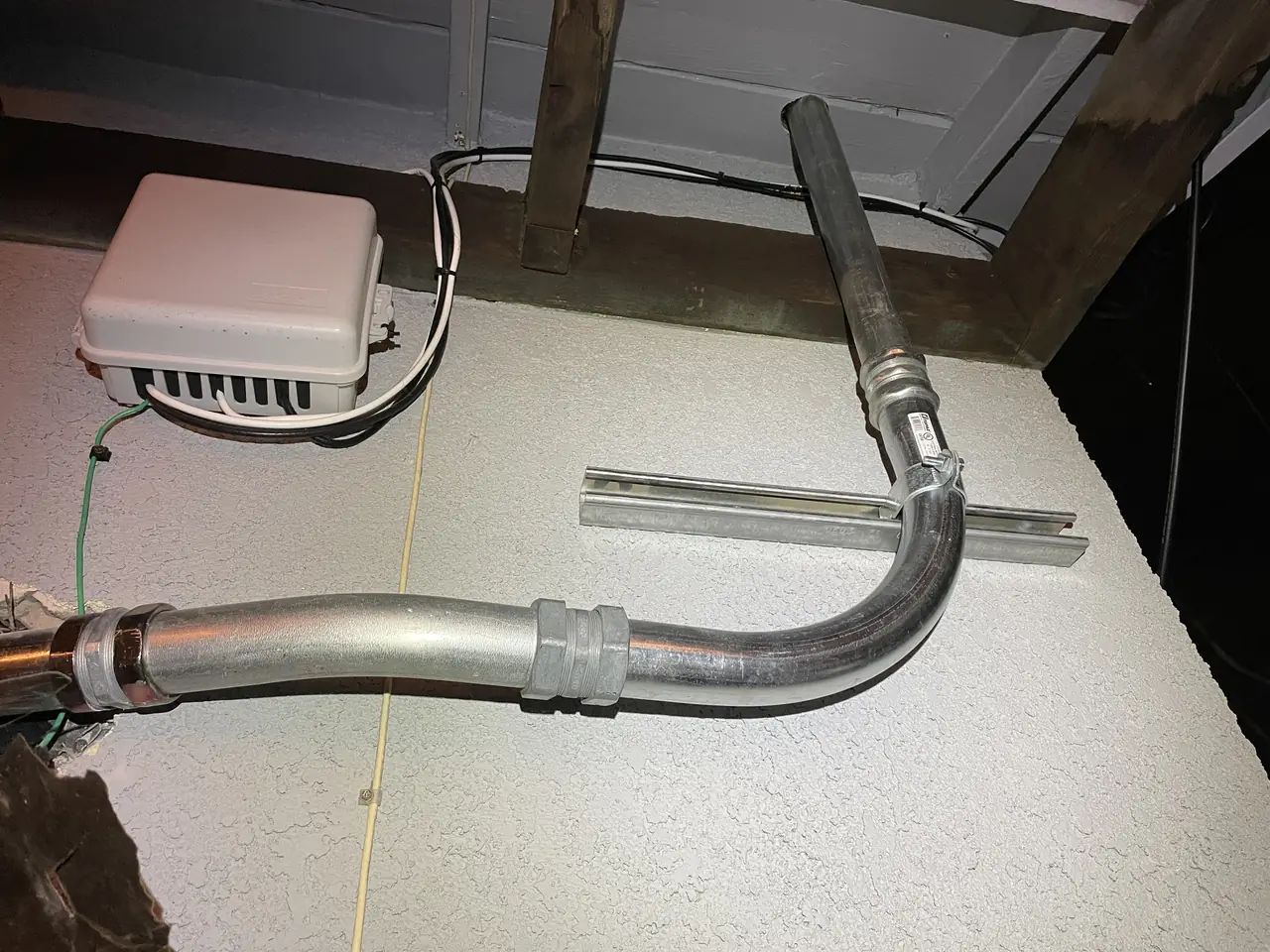
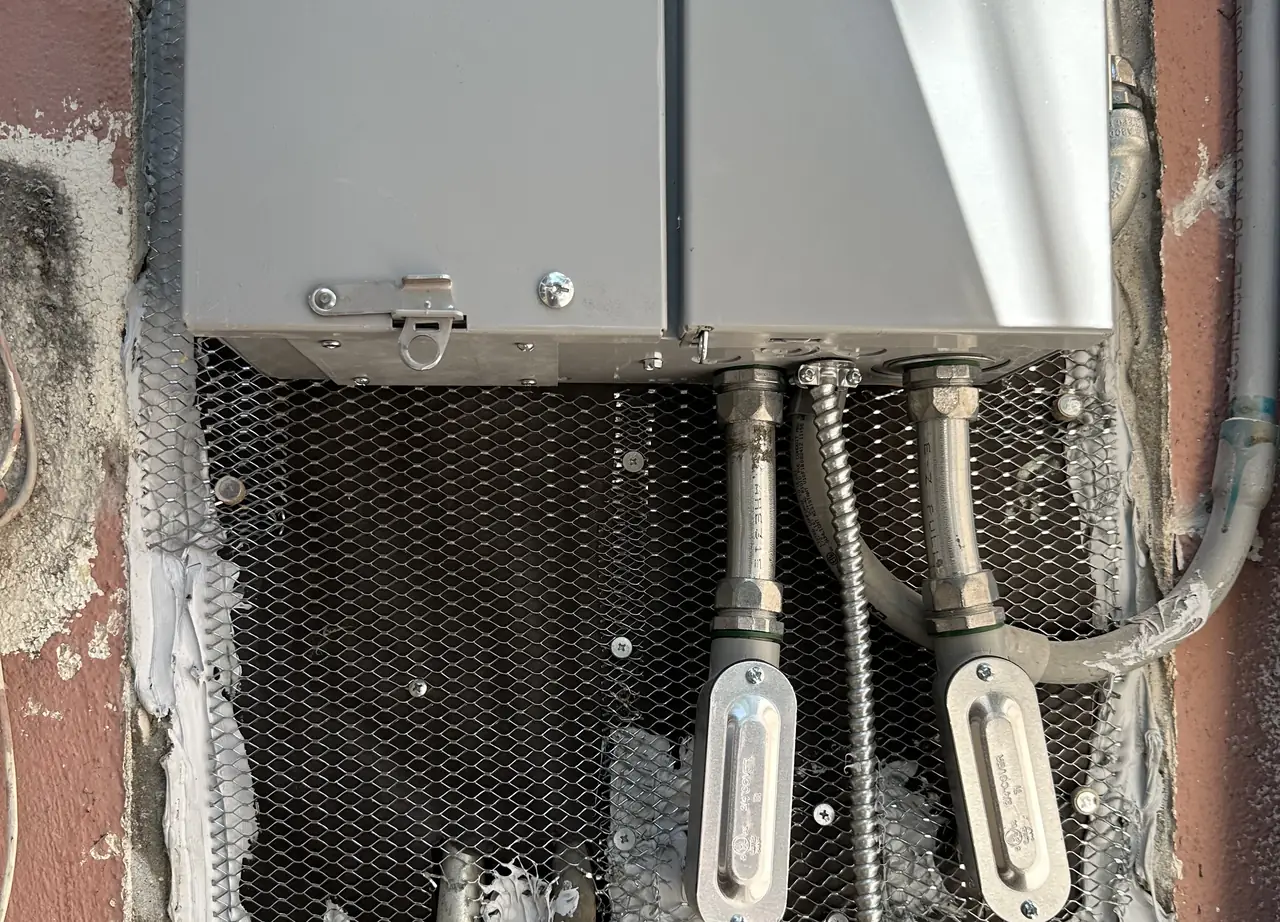
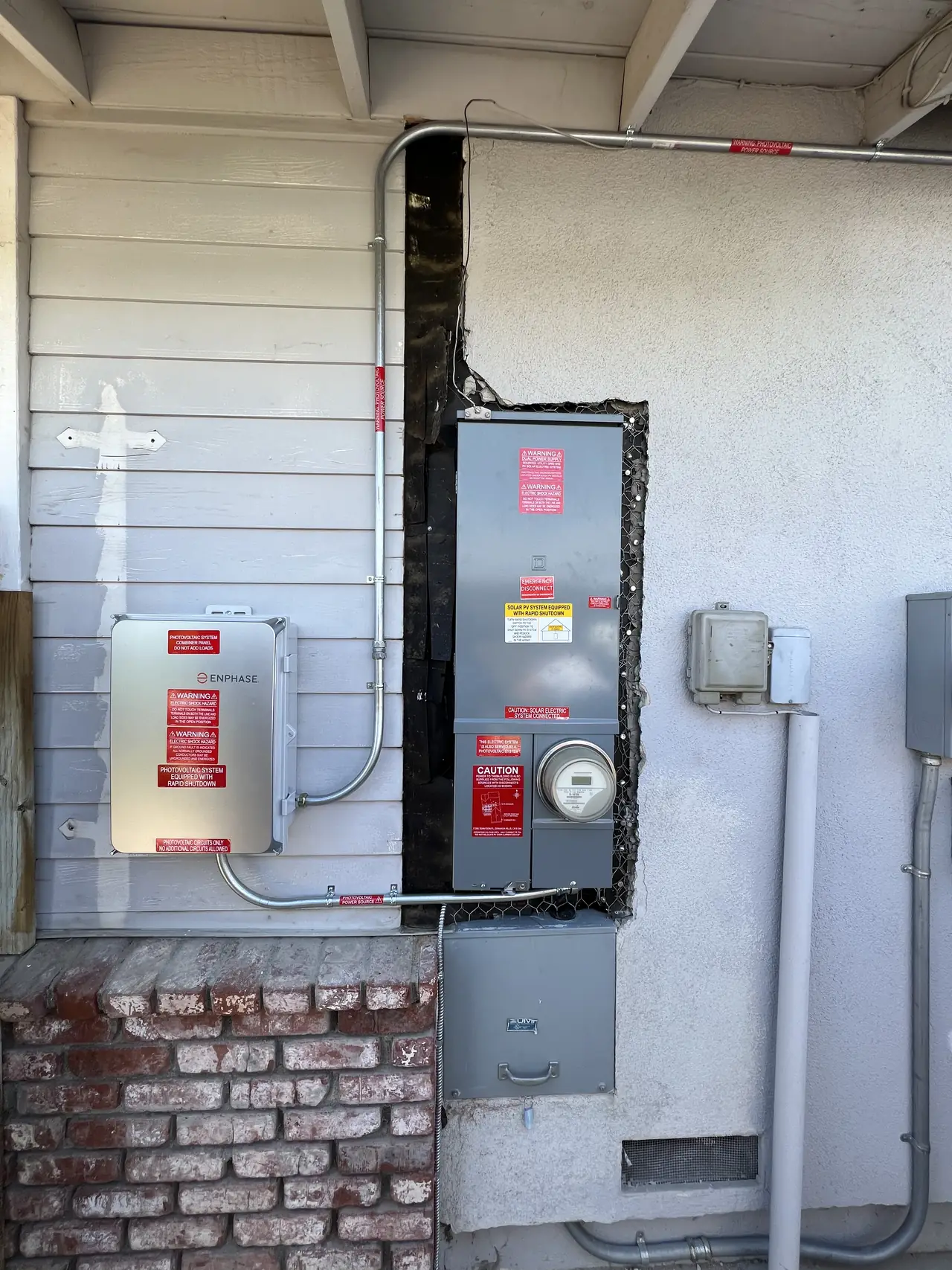
One more thing had to be settled before the inspection, and the way it was handled is the part worth copying. The city inspector wanted the utility's own written note about the meter spot, not a summary of it, because the city and the utility approve different things and neither sends the other a copy. The note that first came back did not say it plainly enough, so the booking was pulled rather than spent on a failure — there is no prize for turning up to an inspection you already know will not pass. The inspector was asked in advance exactly what wording he needed, the note was produced in that form, and the final passed on 24 June. The stucco around the new equipment was made good the same day, because he asked to see that too, and the monitoring went on a cellular link rather than the house network.
The thing worth taking from this one is that on an overhead-fed house the utility has a say in the shape of the building, not only in the meter. If a project quotes a panel upgrade and says nothing about the service above it, the question to ask before signing is what happens to the weather head.
How it ran
| 22 March 2021 | Meter spot approved in the existing location |
|---|---|
| Same approval | Weather head required to move to the corner |
| 7 June 2021 | Array installed, main panel replaced, new mast set at the corner |
| 11 June 2021 | Work finished after rain stopped the first visit |
| Mid-June 2021 | Inspector asks for the utility's written note on the meter spot |
| 18 June 2021 | Booking pulled rather than spent on a final that would not pass |
| 23 June 2021 | Inspector asked in advance exactly what the note had to say; rebooked |
| 24 June 2021 | Final inspection passed; stucco made good the same day |
The meter did not move an inch. The wires coming to it moved to the other end of the wall — and that was settled in March, not in June.
What we did
- Built to the approved meter spot: meter left in place, weather head moved to the corner.
- Installed twenty-five REC 445 W modules with a SolarEdge inverter on composition shingle.
- Replaced the main panel in its existing position.
- Set a new service mast at the corner and ran the conductors on the new path down to the meter.
- Pulled the crew back from a final we judged would not pass, went to the inspector first to establish exactly what the utility's note had to say, then rebooked and walked him through it.
- Passed the final inspection on 24 June and made the stucco good the same day.
System specifications
| Modules | 25 × REC 445 W — 11.1 kW DC |
|---|---|
| Inverter | SolarEdge string inverter |
| Main panel | Replaced in the existing position |
| Service | Overhead, re-landed at the corner |
| Monitoring | Cellular |
| Roof | Composition shingle |
| Final inspection | Passed 24 June 2021 |
| Utility / AHJ | Southern California Edison / City of Long Beach |
Is your project like this one?
- Your house is fed from a pole rather than from under the street.
- You are replacing a main panel and nobody has mentioned the service above it.
- The utility has approved your meter spot with conditions attached.
- Your inspector is asking for paperwork from the utility that you do not have.
- You want to know what a service relocation adds to a solar project.
Cali Energy in Long Beach
Long Beach is its own city, not a Los Angeles neighborhood: permits run through the City of Long Beach Building & Safety Bureau, interconnection through Southern California Edison.
Much of Long Beach is old enough to be fed from the pole rather than from under the street. That makes the point where the service wires land on the house — the weather head — part of every panel upgrade conversation, and it is the utility, not the contractor, that decides where it is allowed to sit.
This installation is on the Long Beach projects page alongside the others, and what the work covers is set out on the Long Beach service area page.
- License and classifications: CSLB #1032379
- Official reference for this process: Southern California Edison — generating your own power
- Official reference for this process: City of Long Beach — Building & Safety Bureau
Frequently asked questions
What is a weather head and why would it have to move?
It is the fitting at the top of the service mast where the overhead wires from the pole land on the building. Its position has to let a line crew work it from a ladder without stepping onto the roof, and keep the wires clear of the roof, the windows and anything reachable. When a panel upgrade changes the equipment below, the utility reconsiders the geometry above, and on older streets the original position often no longer meets what is required today.
Does moving the weather head mean moving the meter?
Not necessarily, and on this project it did not. The utility approved the meter in the position it already occupied and asked only for the point where the service lands to be relocated to the corner. The two are separate decisions: one is about where a person reads and works on equipment, the other is about where wires can safely cross the air to the building.
How much does a service relocation add to the job?
A day of work and a scheduling problem rather than a redesign. It means a new mast, a new roof penetration, a new path for the conductors down to the meter, and a disconnection and reconnection at the pole that has to line up with the utility's own crew. The cost is real but the risk is in the calendar, not in the engineering.
Why did the inspector want the utility's notes?
Because the city and the utility approve different things and neither sends the other a copy. The inspector was confirming that the meter position on the wall was the position the utility had approved, and wanted the planner's own written note rather than a description of it. Rather than walk into a failure, Cali Energy pulled the booking, went to the inspector to find out exactly what the note had to say, and rebooked once it said it. The final passed on 24 June.
Does Cali Energy handle service and panel upgrades in Long Beach?
Yes. On an overhead-fed house a panel upgrade usually brings the service above it into the job, and Cali Energy carries that work as part of the project: the new mast, the relocated weather head, the conductor path down to the meter and the coordination with the utility crew that reconnects at the pole. We work across Long Beach on this and on new solar. License CSLB #1032379.
What this would look like on your roof
Planning solar in Long Beach? Tell us your utility, your roof and what your bill looks like now, and we will model what a system like this would do on your house before you commit to anything.
Or call +1 (323) 844-7777 · Cali Energy, Northridge · CSLB #1032379 (B, C-10, C-39) — design, permits, install and electrical under one licensed contractor.
Related
This timeline reflects this property and this permitting path. Updated September 2026.