

Long Beach, CA · July – September 2021 · Southern California Edison / City of Long Beach
A Long Beach permit in eight days. The utility queue had a date on it
Applied on a Thursday through the expedited route, approved the following Friday, paid and printed the same afternoon. Then the other half of the project — the interconnection — turned out to be measured not in days but in which day's applications the utility had reached.
A residential solar permit in Long Beach is issued by the city's own Building & Safety Bureau, and on this project the expedited route took eight days from application to a printable permit. The interconnection is separate: Cali Energy filed the Edison application and chased it, the utility answered with the date it had reached in the queue rather than an estimate, technical approval came back the same afternoon the engineer was assigned, and permission to operate was issued on 17 September 2021.
At a glance
- Array
- 17 modules, one Enphase microinverter under each
- Permit route
- Expedited, City of Long Beach
- Application to permit
- Eight days
- Required with the application
- The contractor's city business license
- Installed
- 20 July 2021
- Utility answer when chased
- The date it had reached in the queue
- Technical approval
- Same afternoon the engineer was assigned
- Permission to operate
- 17 September 2021
The story
The permit application went in on a Thursday in July. Long Beach runs an expedited route for residential solar, which means the package is reviewed against a checklist rather than queued for a full plan check, and the whole thing is done by email with the Building & Safety Bureau.
One item on that checklist is not about the array at all. The city wants the contractor's Long Beach business license — the number and the expiry date. A state contractor's license is not a substitute. On this project the license was paid for the same morning the application went out, which is why the application carried a number and a date rather than a copy of the certificate: the paperwork for it had not come back yet.
The city's own reply that week set expectations plainly: the permit center was closed to the public, processing was running longer than usual, and the target was to read incoming email within a day. That is worth more than a promise. It tells an applicant what to plan for rather than leaving them to guess.
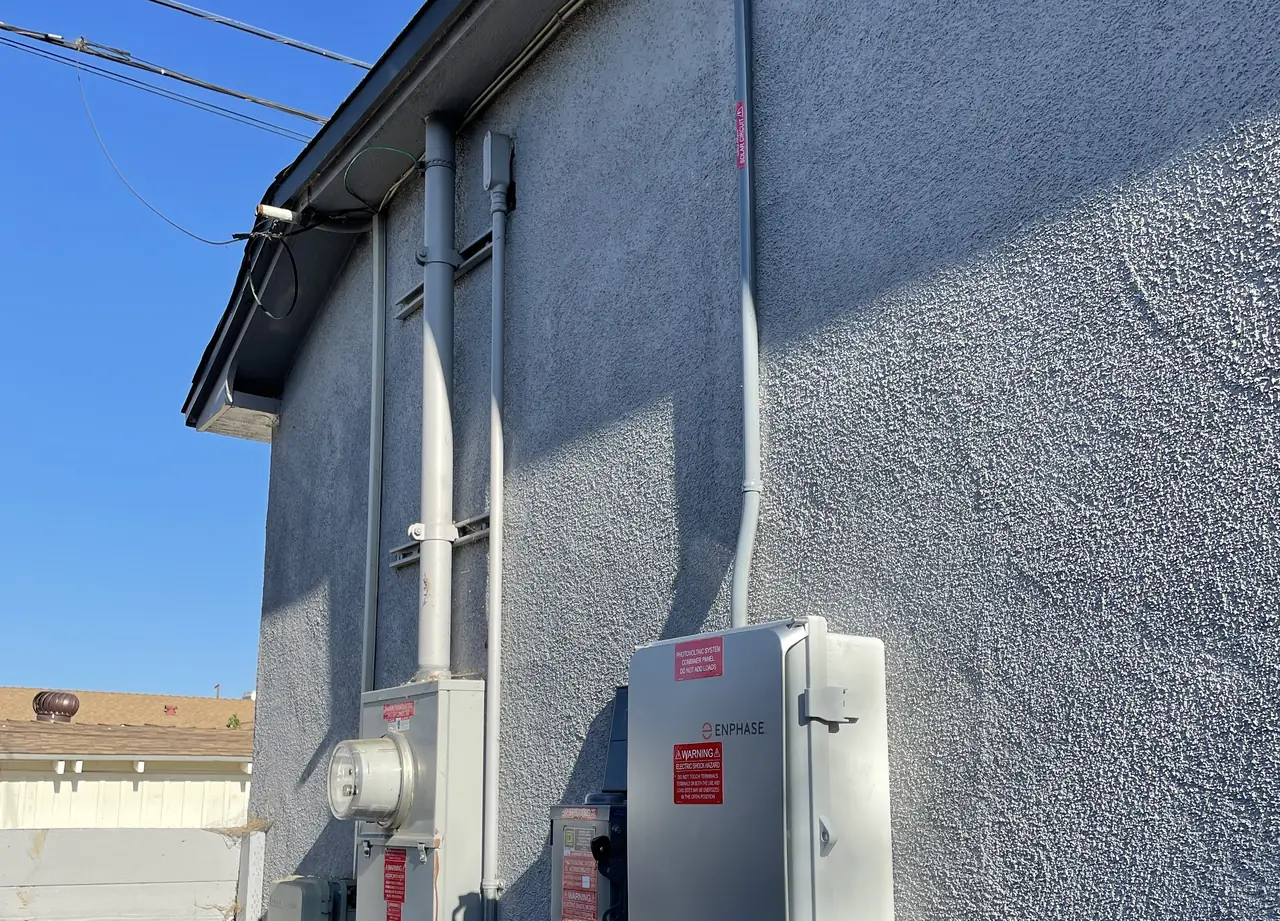
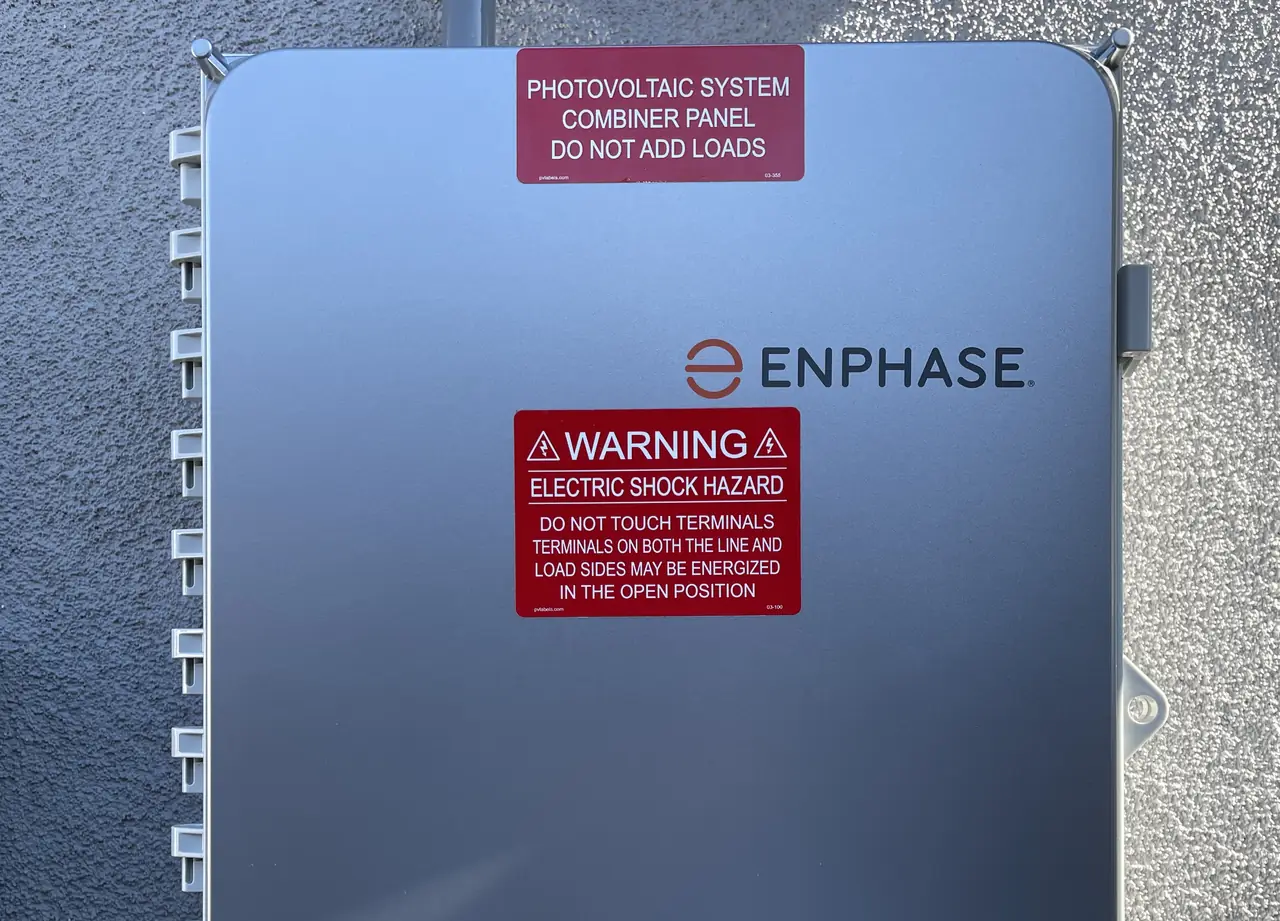
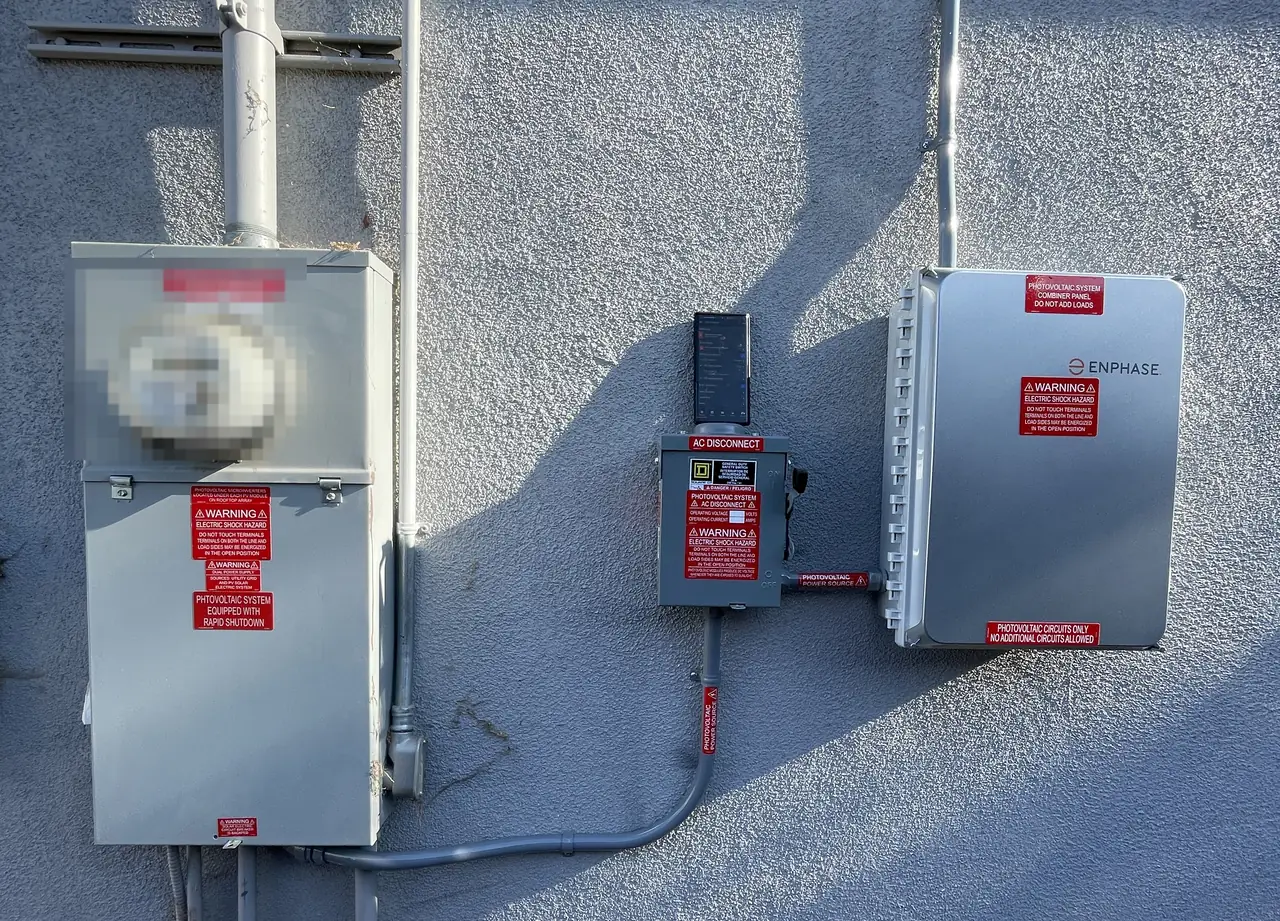
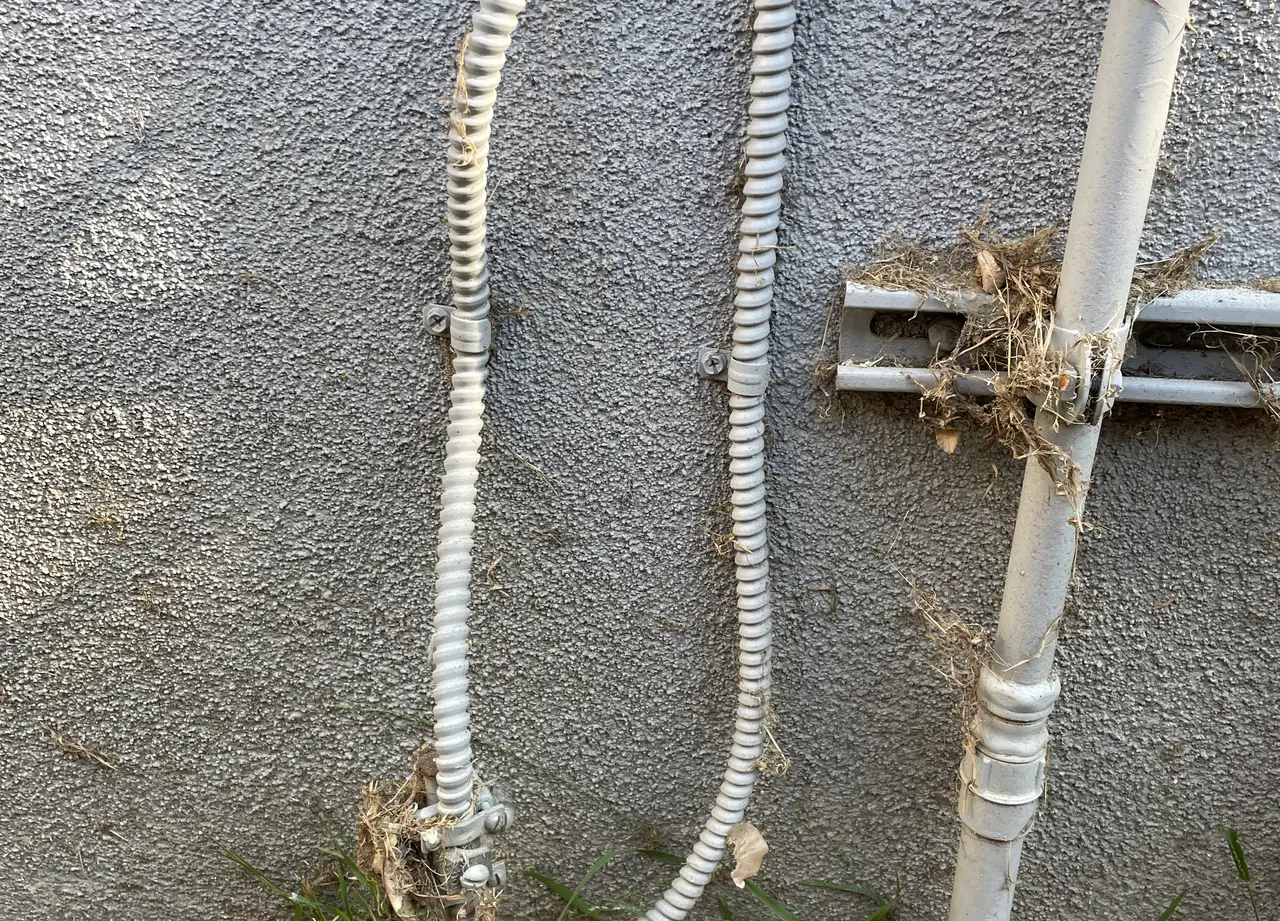
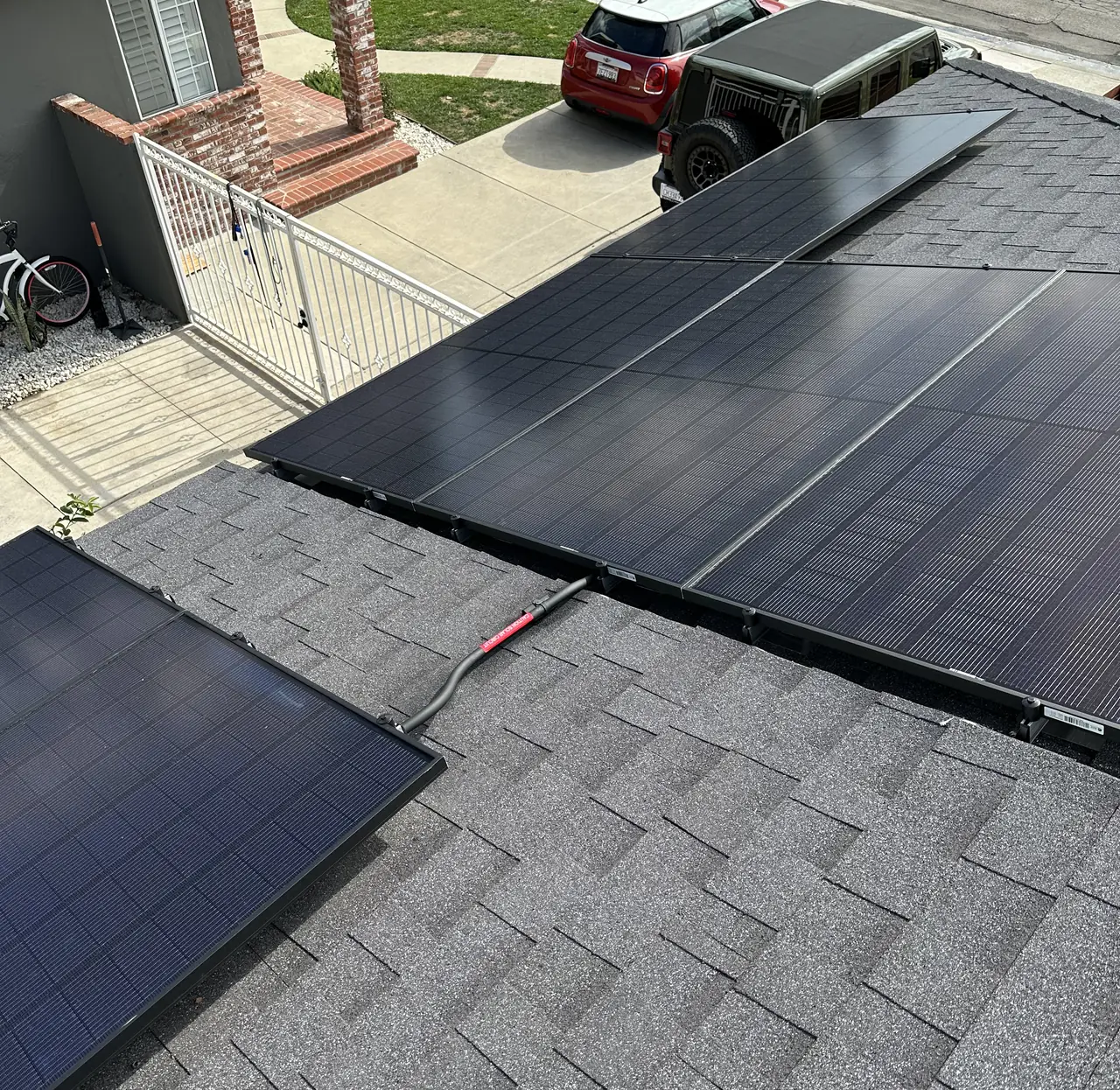
The permit was approved eight days later, on the following Friday. What arrives then is not a trip to a counter. The cashier emails a payment link, the fee is paid online, and the permit comes back as a file the contractor prints. The job card — the card an inspector signs at each stage — is not issued with it: the inspector brings it to the first inspection. The array went on four days later, on 20 July: seventeen modules with a microinverter under each and a new run of service equipment along the wall.
That is the fast half. The other half is the utility, and it runs on its own calendar. The interconnection application went to Edison in August. Six days after the corrected version went back, with nothing visible happening, it was chased.
The answer is worth quoting for its shape rather than its content. The utility did not say «soon» or «two to four weeks». It said which day's applications the review team had reached — a date two days before the one on this project. From that a contractor can do arithmetic, and a homeowner can be told something true instead of something reassuring.
Two days after that exchange an engineer was assigned to the project, and the technical approval landed the same afternoon — minutes later, not the following week. One more document was asked for in mid-September and went back the same day. Permission to operate was issued on 17 September, and the system was allowed to run.
The lesson of this project is not that Long Beach is fast, although the city half was. It is that the two halves are independent and only one of them is in anybody's control. A contractor can prepare a complete package and get a permit in a week. Nobody can move a utility queue. What can be done is ask for the date it has reached and plan from that.
How it ran
| Thursday, 8 July 2021 | Solar permit applied for through the expedited route |
|---|---|
| Same day | City business license paid for; number filed with the application |
| Friday, 16 July 2021 | Permit approved, paid online and issued as a printable file |
| 20 July 2021 | Array and new service equipment installed |
| August 2021 | Edison interconnection application submitted |
| 31 August 2021 | Chased; utility names the date it has reached in the queue |
| 2 September 2021 | Engineer assigned; technical approval the same afternoon |
| 17 September 2021 | Permission to operate issued |
Eight days for the city half. The utility half was measured in which day's applications had been reached.
What we did
- Assembled the expedited-route package and filed it with the city the same week.
- Carried the city business license so the application could be accepted.
- Paid the permit fee online and issued the printed permit to the job.
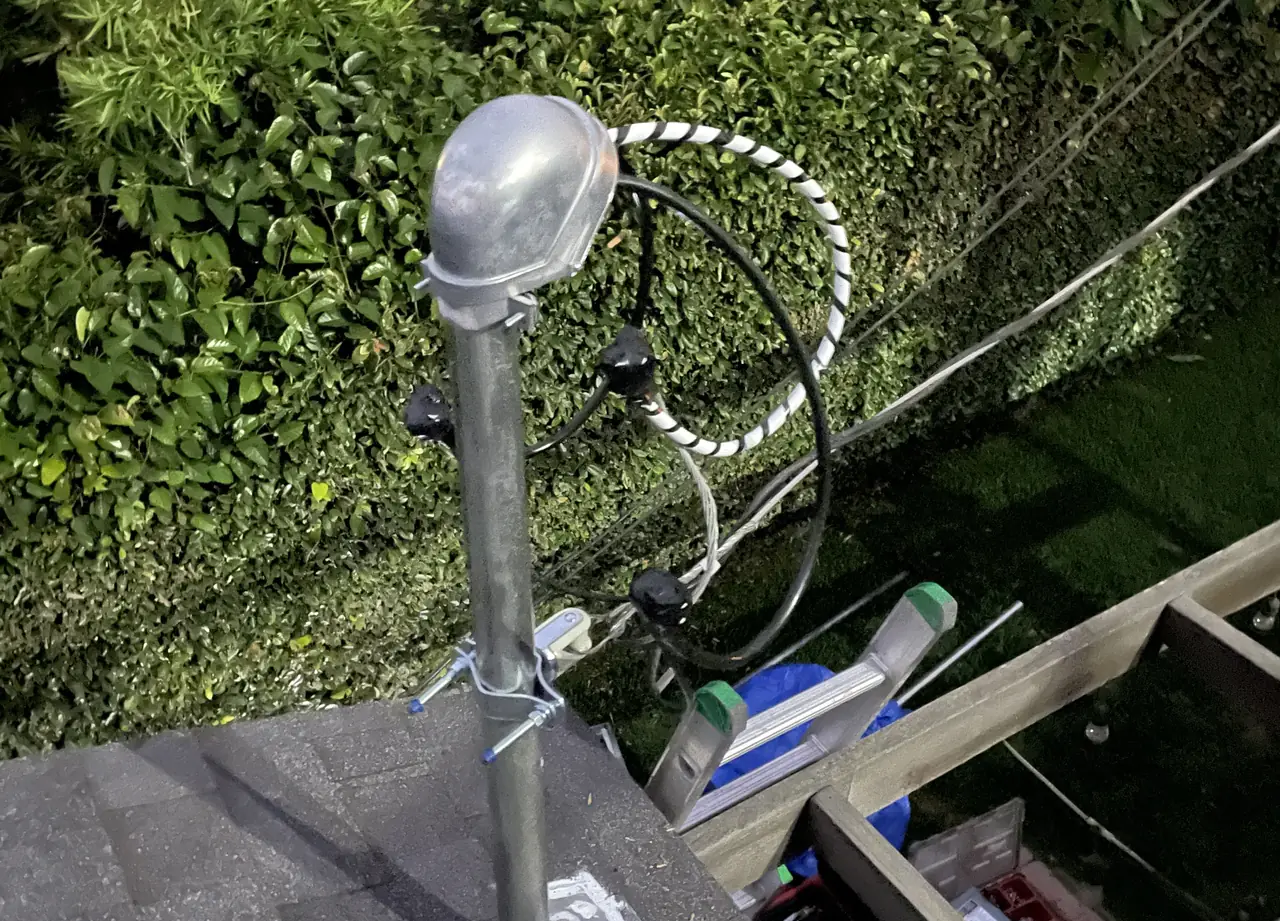
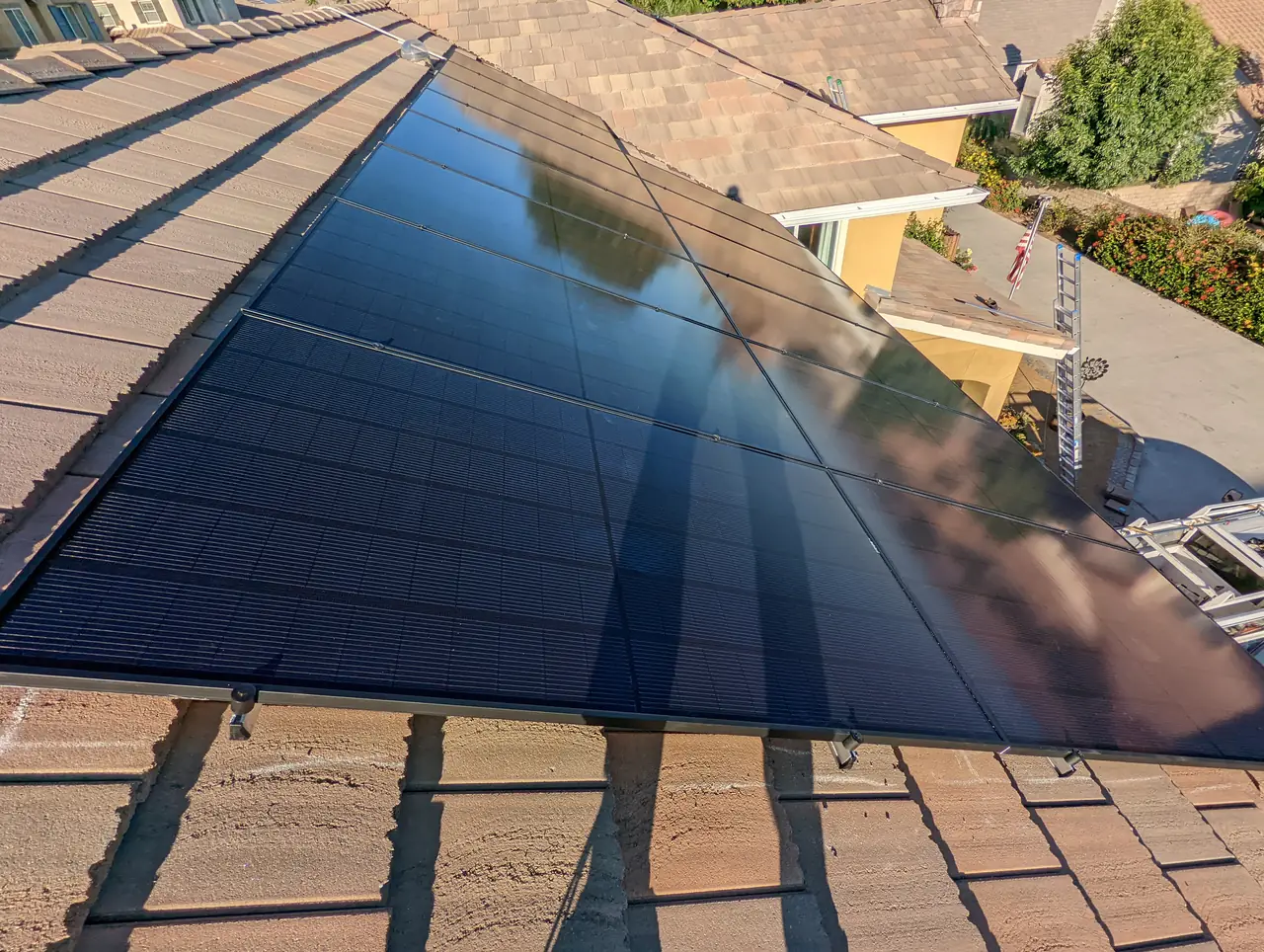
- Installed the array with a microinverter under each module and ran new service equipment along the wall.
- Filed the Edison interconnection application and chased it until the utility named the date it had reached.
- Followed the review through technical approval to permission to operate.
System specifications
| Modules | 17, with an Enphase microinverter under each |
|---|---|
| Service equipment | Meter enclosure, AC disconnect and combiner, new run |
| Permit | Expedited residential solar, City of Long Beach |
| Permit delivery | Printable file; job card brought by the inspector |
| Interconnection | Edison NEM application |
| Permission to operate | 17 September 2021 |
| Utility / AHJ | Southern California Edison / City of Long Beach |
Is your project like this one?
- You are installing in Long Beach and expect it to work like Los Angeles.
- Your permit is issued but nothing is happening on the utility side.
- You have been told your interconnection will take «a few weeks» and want a date.
- Your contractor does not hold a Long Beach city business license.
- You want to know which half of a solar project anyone can actually speed up.
Cali Energy in Long Beach
Long Beach is its own city, not a Los Angeles neighborhood: permits run through the City of Long Beach Building & Safety Bureau, interconnection through Southern California Edison.
Long Beach is not a Los Angeles neighborhood and its paperwork does not behave like one. The permit comes from the city's own Building & Safety Bureau, the interconnection goes to Southern California Edison rather than to a municipal utility, and the two run on completely different clocks.
This installation is on the Long Beach projects page alongside the others, and what the work covers is set out on the Long Beach service area page.
- License and classifications: CSLB #1032379
- Official reference for this process: City of Long Beach — Permit Center
- Official reference for this process: Southern California Edison — Net Energy Metering
Frequently asked questions
How long does a residential solar permit take in Long Beach?
Through the expedited route it can be days rather than weeks. On this project the application went in on a Thursday and the permit was approved the following Friday, eight days later, with the fee paid online the same afternoon. That assumes a complete package: an incomplete one goes back and the clock restarts, which is the usual reason a Long Beach permit takes a month instead.
Does my contractor need a Long Beach business license?
Yes, and it is checked at application. A California state contractor's license is required but not sufficient — the city also wants a current Long Beach business license from whoever is pulling the permit, with its number and expiry date. It is a common reason an otherwise complete solar application is not accepted, and it is worth asking about before signing anything.
How do I find out where my Edison interconnection actually is?
Ask, and ask for a date rather than an estimate. Southern California Edison's review team will say which day's applications it is currently working through, and comparing that to the day yours was submitted gives you a real position in the queue instead of a guess. On this project the answer was a date two days before the application, and an engineer was assigned two days after that.
How long after the install does permission to operate take?
It is the utility's clock, not the installer's. Here the array went on in late July, the interconnection application went in during August, technical approval came through at the start of September, and permission to operate was issued on 17 September. A system can be finished and inspected weeks before it is legally allowed to export, and that gap is normal rather than a sign of a problem.
Does Cali Energy install solar in Long Beach?
Yes. Long Beach is its own city, so permits run through the city's Building & Safety Bureau and interconnection through Southern California Edison, not through the Los Angeles departments. Cali Energy covers design, permitting, installation, inspection and commissioning here, and carries the city business license the permit route requires. Our license is CSLB #1032379.
What this would look like on your roof
Planning solar in Long Beach? Tell us your utility, your roof and what your bill looks like now, and we will model what a system like this would do on your house before you commit to anything.
Or call +1 (323) 844-7777 · Cali Energy, Northridge · CSLB #1032379 (B, C-10, C-39) — design, permits, install and electrical under one licensed contractor.
Related
This timeline reflects this property and this permitting path. Updated September 2026.