

Long Beach, CA · May – June 2021 · Southern California Edison / City of Long Beach
The best roof on this Long Beach lot was not the house
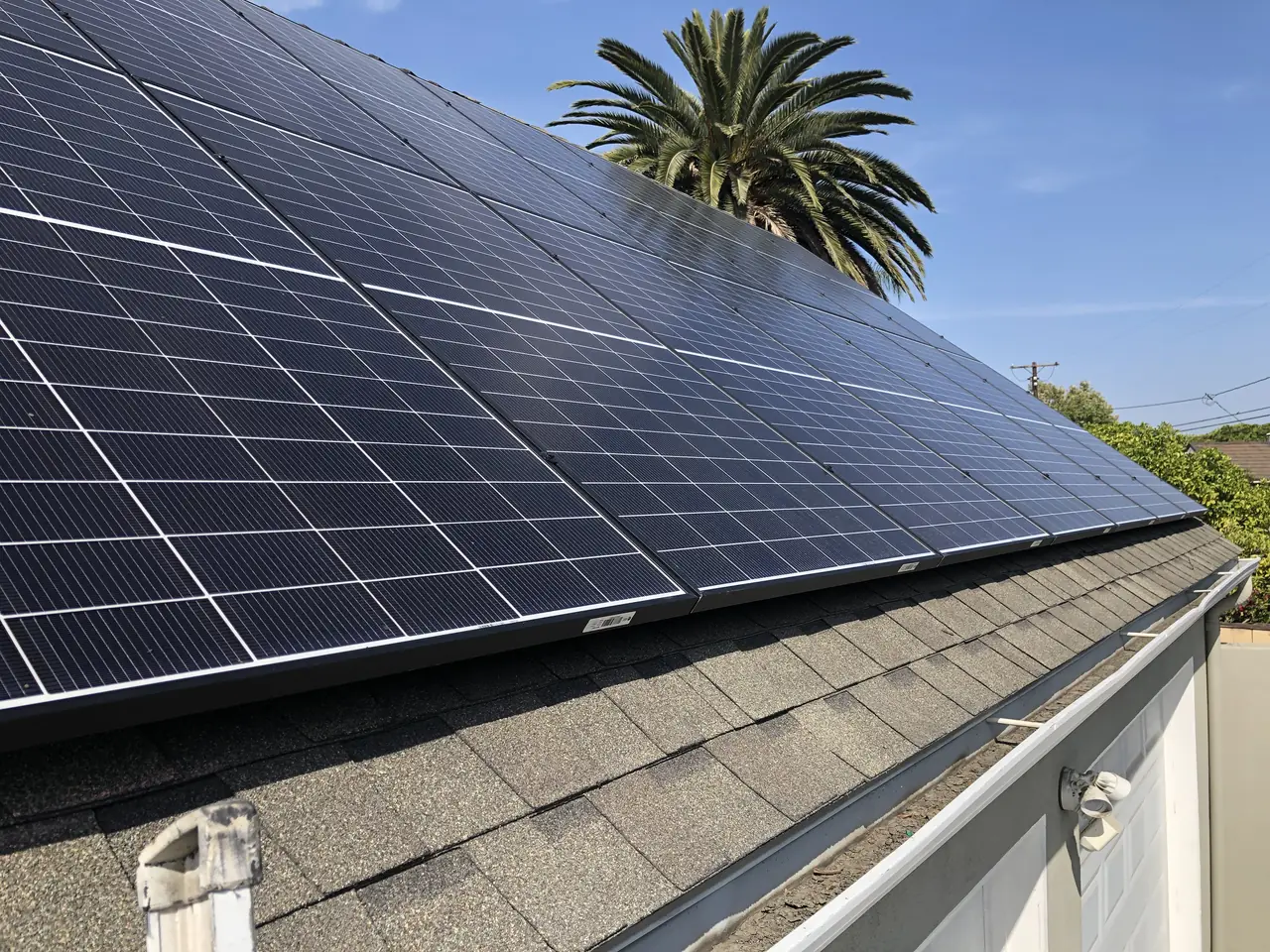
Thirty-one modules, eleven and a half kilowatts, and not one of them on the main roof. Two buildings at the back of the lot carried the whole array — and once the inverter was out there, the house network could not reach it either.
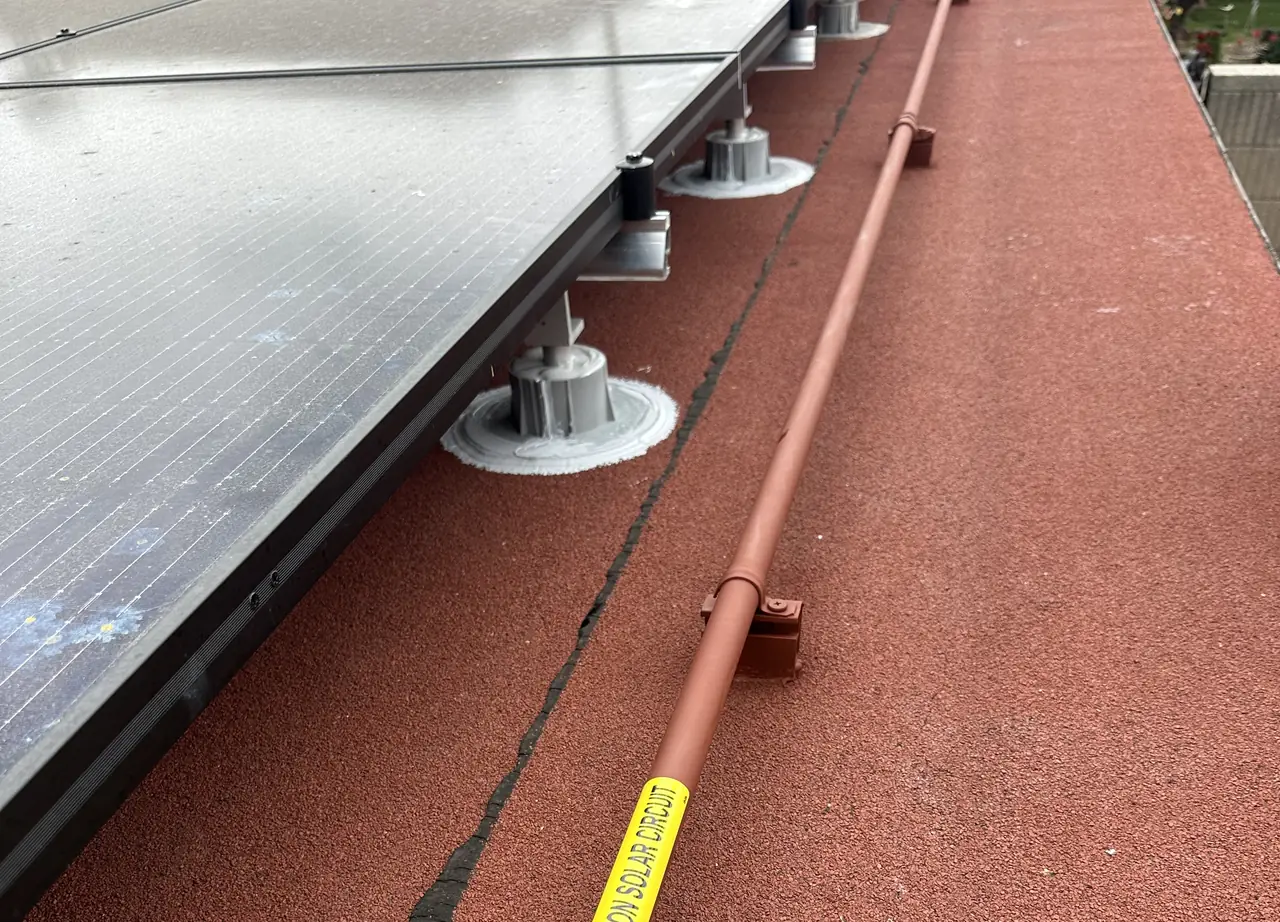
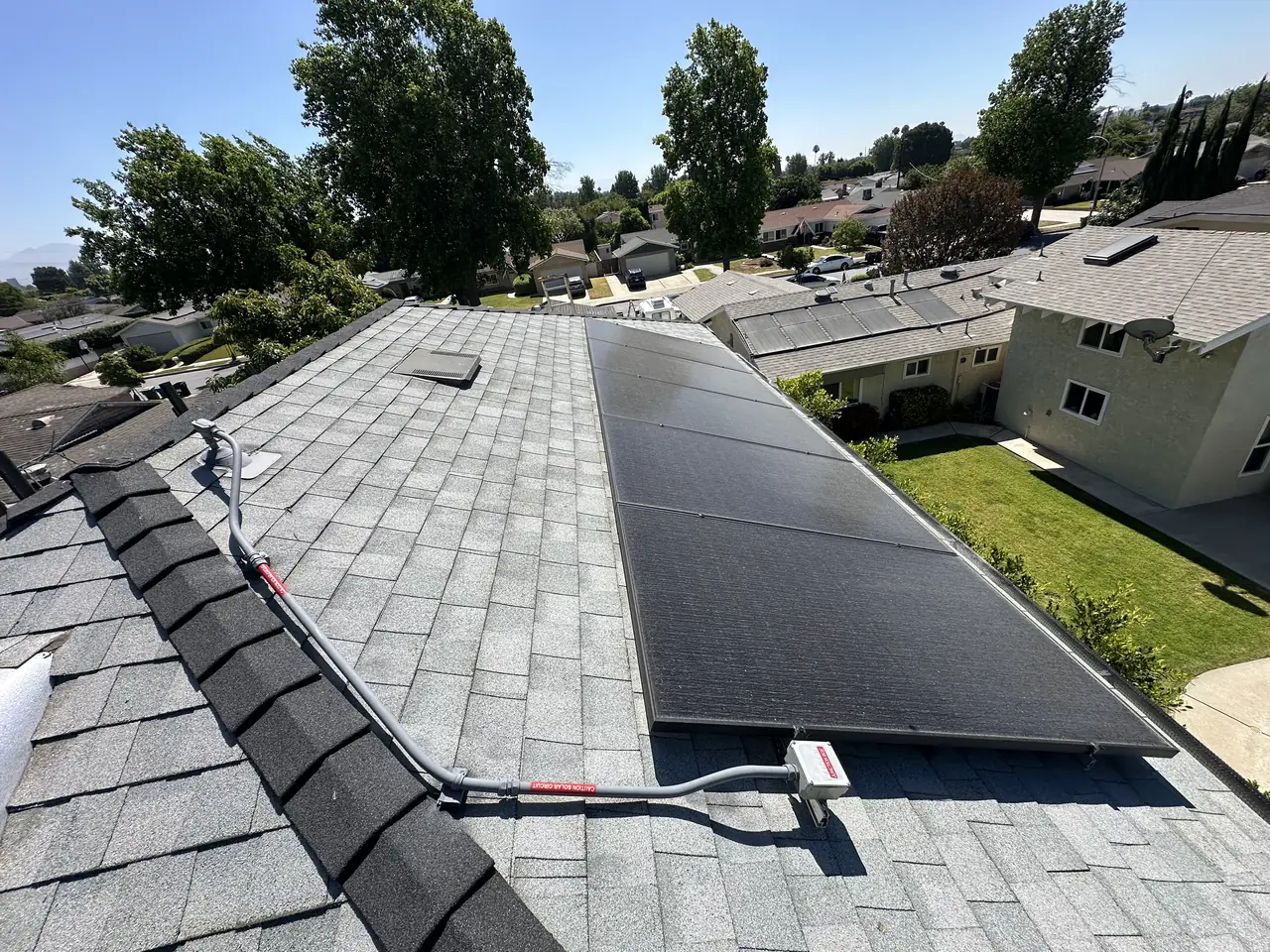
On this Long Beach property the two buildings at the back of the lot had longer, clearer roof planes than the house, so all thirty-one REC 370 W modules went there — 11.47 kW DC on a SolarEdge inverter. The main panel did not need replacing; the work on the electrical side was a sub panel sized to the array. The array took three working days and the final inspection passed on 3 June 2021.
At a glance
- Array
- 31 modules, REC 370 W — 11.47 kW DC
- Inverter
- SolarEdge string inverter
- Where
- Two buildings at the back of the lot
- Electrical work
- Sub panel; main panel unchanged
- Roof
- Composition shingle, low slope
- Installed
- Three working days, late May 2021
- Monitoring
- Cellular — no house network at the far building
- Final inspection
- Passed 3 June 2021
The story
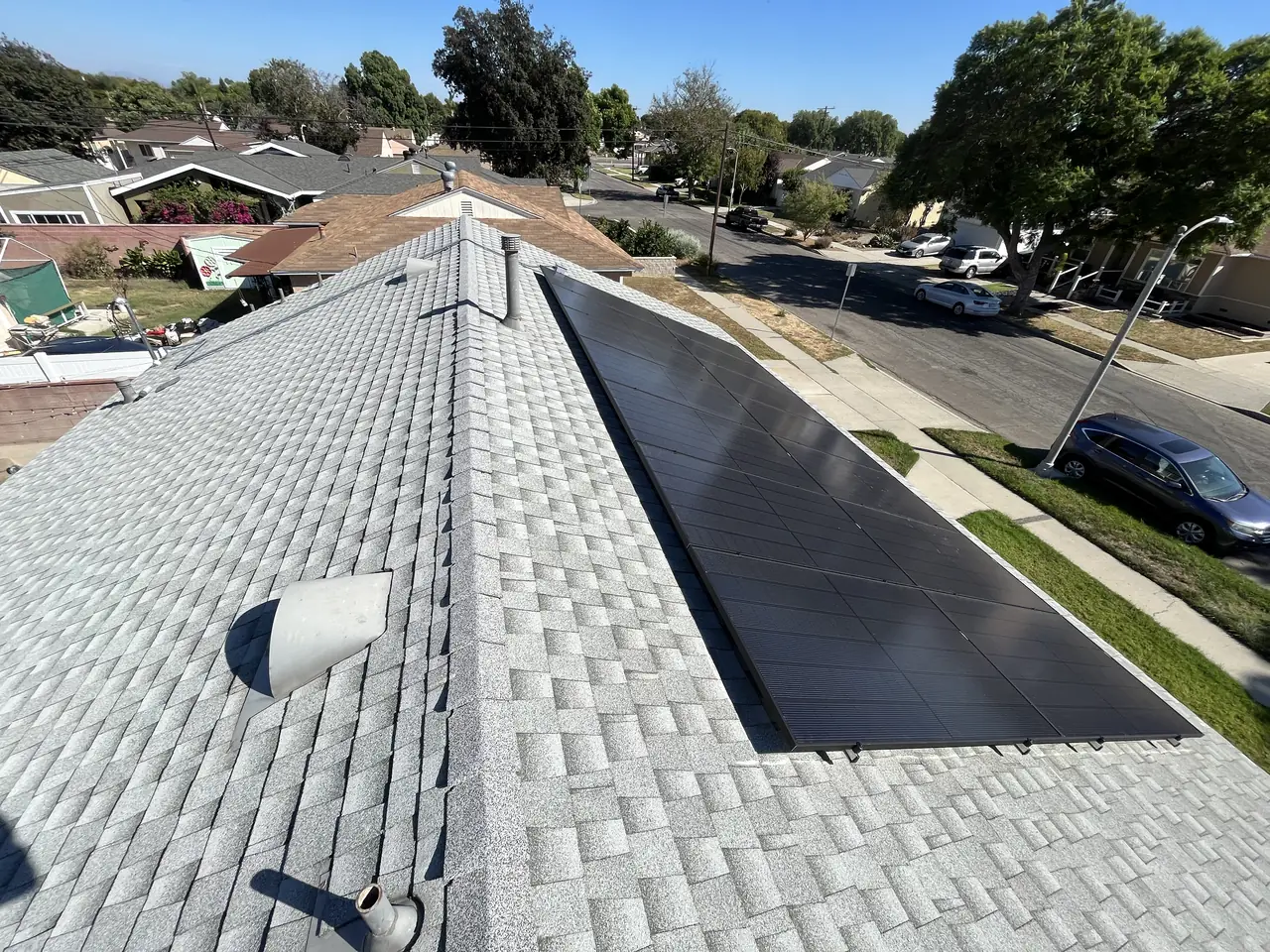
The house at the front of this lot has the roof you would expect: broken up, facing several ways, with the usual vents and a tree on one side. The two buildings at the back have something better — long, low, uninterrupted planes with nothing above them. So that is where the array went, all thirty-one modules of it, and the main roof stayed empty.
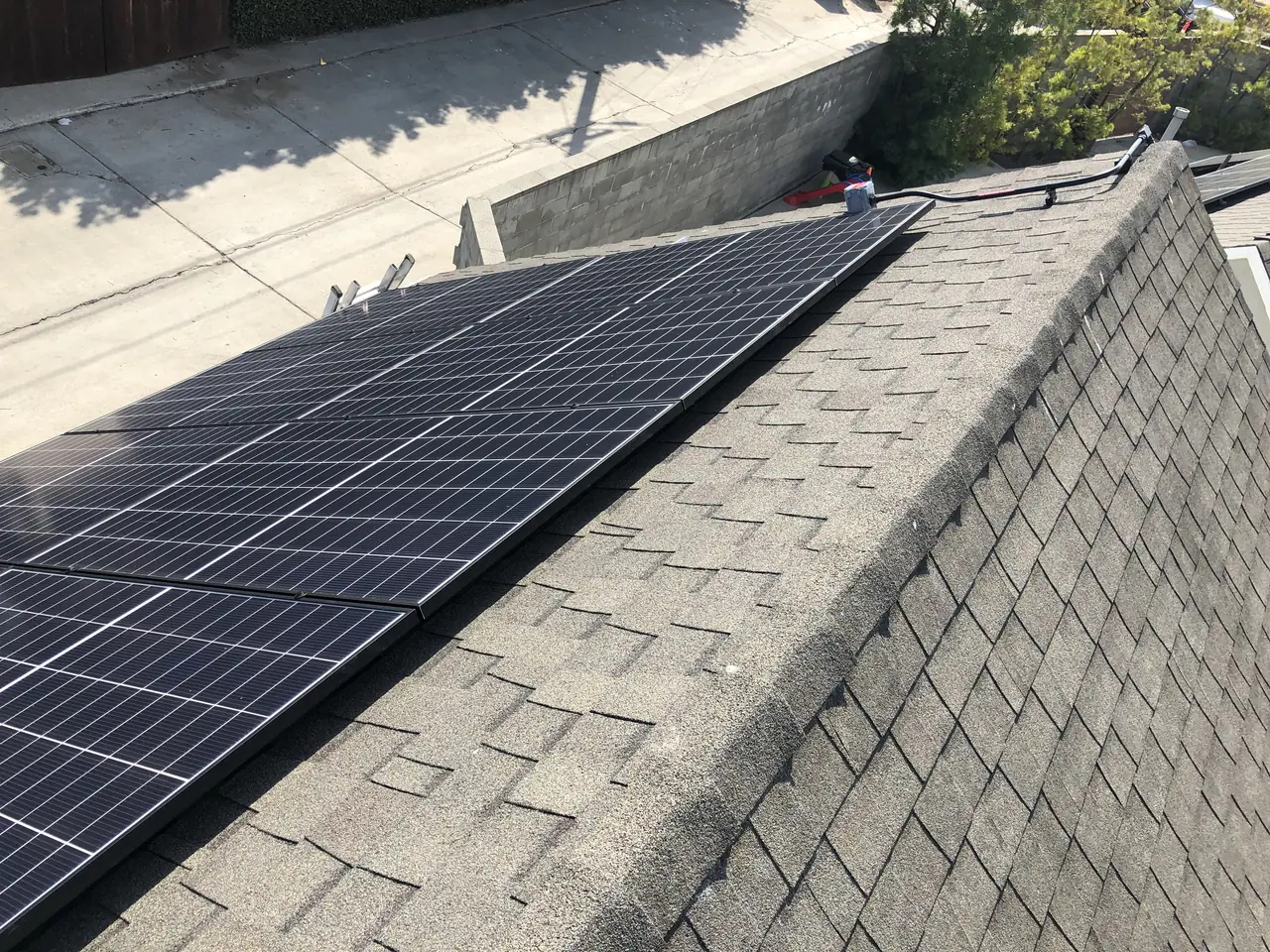
People are often surprised by this, because the instinct is that solar belongs on the house. Nothing in the electrical design cares. The modules are wired back to one inverter and one point of connection either way, and what decides the layout is usable plane area, orientation and shade. A detached garage with a clean south-facing slope beats a cut-up main roof every time.
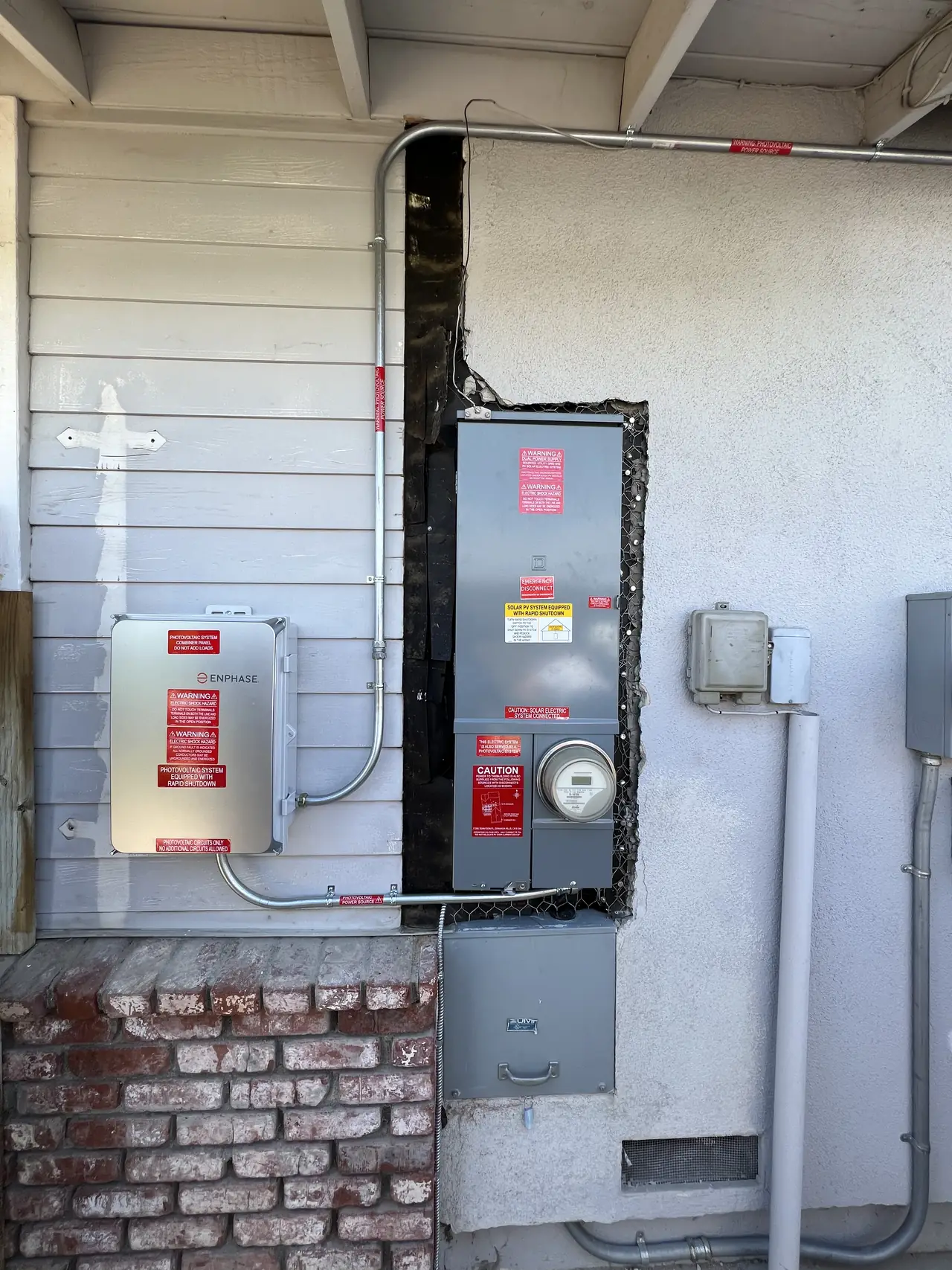
The second thing this project settles is a question that comes up on almost every quote: does adding solar mean a new main panel? Here it did not. The main service stayed exactly as it was, and the work was a sub panel instead — a smaller job, sized for what the array actually needed rather than replacing the whole service because it is the easier answer to give.
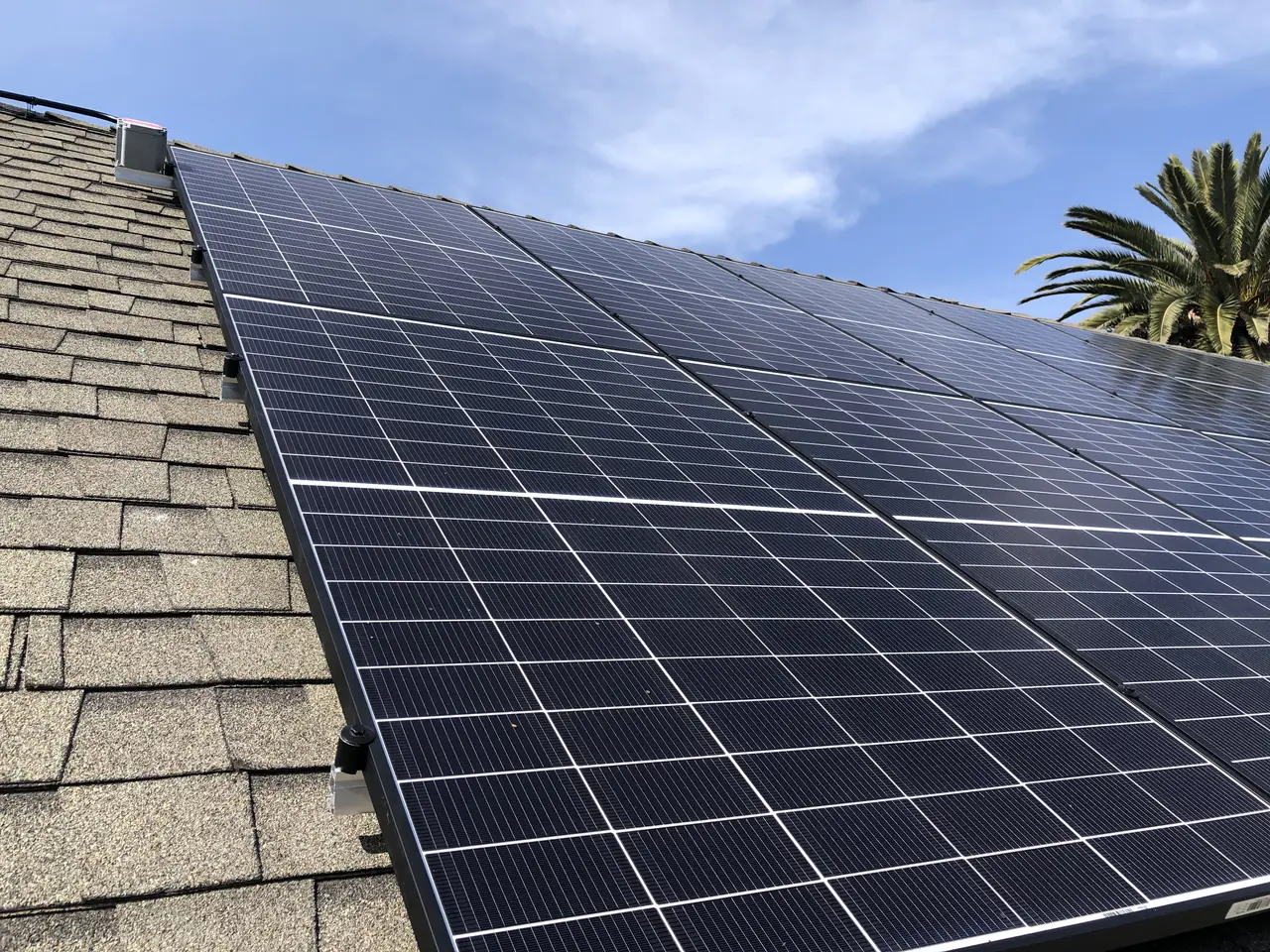
The installation ran over three working days — a Friday, a Saturday and the following Tuesday — with the owners away and access agreed in writing beforehand. Materials were collected in the morning and the modules delivered straight to the site. The final inspection was requested for the Thursday and passed on 3 June.
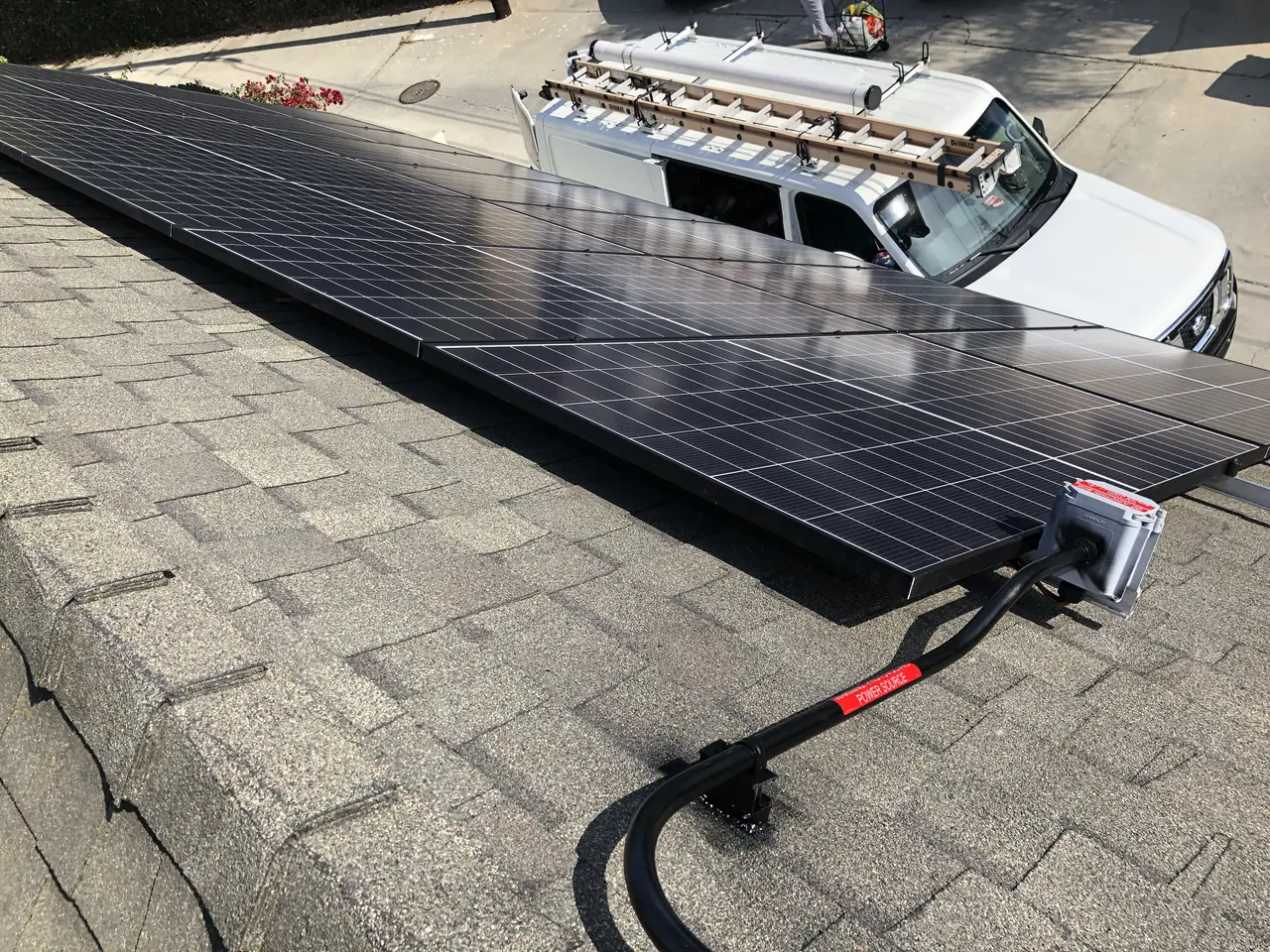
There was one consequence of putting the array out the back that only showed up at commissioning. The inverter is on the wall of the far building, and the house network does not reach that far — so the monitoring had to come off the house connection and onto a cellular module instead. It was fitted the following week. That is worth knowing in advance on any deep lot: if the equipment is going to live at the back, the link that reports on it has to be planned for as well.
What is worth taking from this one is that the question «will it fit on my roof?» is the wrong question on a deep lot. The right one is which roof, and the answer is settled by walking all of them rather than by looking at the front of the house.
How it ran
| 25 May 2021 | Project handed over with the survey photographs |
|---|---|
| 26 May 2021 | Install confirmed for the Friday; access agreed with the owners away |
| 28 May 2021 | First day: array started across the back buildings |
| 29 May and 1 June 2021 | Second and third days: array completed and the sub panel fitted |
| 3 June 2021 | Final inspection passed |
| 11 June 2021 | Monitoring moved to a cellular module |
Three working days on the roof, a week later for the monitoring — and the main panel was never touched.
What we did
- Laid the array out on the two back buildings rather than on the main roof.
- Installed thirty-one REC 370 W modules across two low roofs over three working days.
- Fitted a sub panel instead of replacing the main service.
- Arranged and observed the access terms while the owners were away.
- Passed the final inspection on 3 June 2021.
- Moved the monitoring onto a cellular module when the house network could not reach the far building.
System specifications
| Modules | 31 × REC 370 W — 11.47 kW DC |
|---|---|
| Inverter | SolarEdge string inverter |
| Buildings used | Two, both at the back of the lot |
| Electrical work | Sub panel, supplied by us |
| Main service | Unchanged |
| Monitoring | Cellular |
| Final inspection | Passed 3 June 2021 |
| Utility / AHJ | Southern California Edison / City of Long Beach |
Is your project like this one?
- Your lot has a garage or workshop with a better roof than the house.
- You have been told you need a new main panel and want to know if that is true.
- Your main roof is cut up by vents, valleys and a tree.
- You will not be home on the day of the installation.
- Your equipment will end up somewhere your home network does not reach.
Cali Energy in Long Beach
Long Beach is its own city, not a Los Angeles neighborhood: permits run through the City of Long Beach Building & Safety Bureau, interconnection through Southern California Edison.
A Long Beach lot is often deeper than it is wide, and what stands at the back of it — a garage, a workshop, a converted outbuilding — can have more clear roof than the house does. Where the modules go is a question about roof planes and shade, not about which building people sleep in.
This installation is on the Long Beach projects page alongside the others, and what the work covers is set out on the Long Beach service area page.
- License and classifications: CSLB #1032379
- Official reference for this process: California Energy Commission — solar equipment lists
- Official reference for this process: City of Long Beach — Permit Center
Frequently asked questions
Can solar go on a garage instead of the house?
Yes, and it is often the better answer. The modules are wired back to one inverter and one point of connection wherever they sit, so what decides the layout is usable plane area, orientation and shade. On this property the two back buildings had longer, clearer runs than the main roof, so the whole array went there and the house roof stayed empty.
Does adding solar always mean a new main panel?
No. A main panel is replaced when its busbar and main breaker cannot carry the solar breaker within what the code allows, and plenty of services can. On this project the main panel stayed exactly as it was and the work was a sub panel — a smaller job. It is worth asking a quote to explain why a panel replacement is being proposed.
What happens if my inverter is out of Wi-Fi range?
The monitoring goes onto a cellular module instead of the house network. On this property the inverter sits on the wall of a building at the back of the lot, well outside the range of the house connection, and the link was swapped a week after the final. It is worth deciding before commissioning rather than after, because it changes what gets ordered.
Do I need to be home for the installation?
Not usually, provided access is agreed in writing beforehand and everything the crew needs to reach can be reached without anybody making a decision on the day. On this job the owners were away for all three working days and the work ran normally. What matters is that the arrangement is settled in advance and written down, not improvised on the morning.
Does Cali Energy install solar in Long Beach?
Yes, across the city and on every kind of roof it has, including detached garages and outbuildings at the back of deep lots. Cali Energy handles design, installation, panel and sub panel work, and commissioning. Permits here come from the city's own Building & Safety Bureau and interconnection from Southern California Edison. License CSLB #1032379.
What this would look like on your roof
Planning solar in Long Beach? Tell us your utility, your roof and what your bill looks like now, and we will model what a system like this would do on your house before you commit to anything.
Or call +1 (323) 844-7777 · Cali Energy, Northridge · CSLB #1032379 (B, C-10, C-39) — design, permits, install and electrical under one licensed contractor.
Related
This timeline reflects this property and this permitting path. Updated September 2026.