

Long Beach, CA · August 2022 · Southern California Edison / City of Long Beach
One Long Beach service, two demands on it: an array and a charger
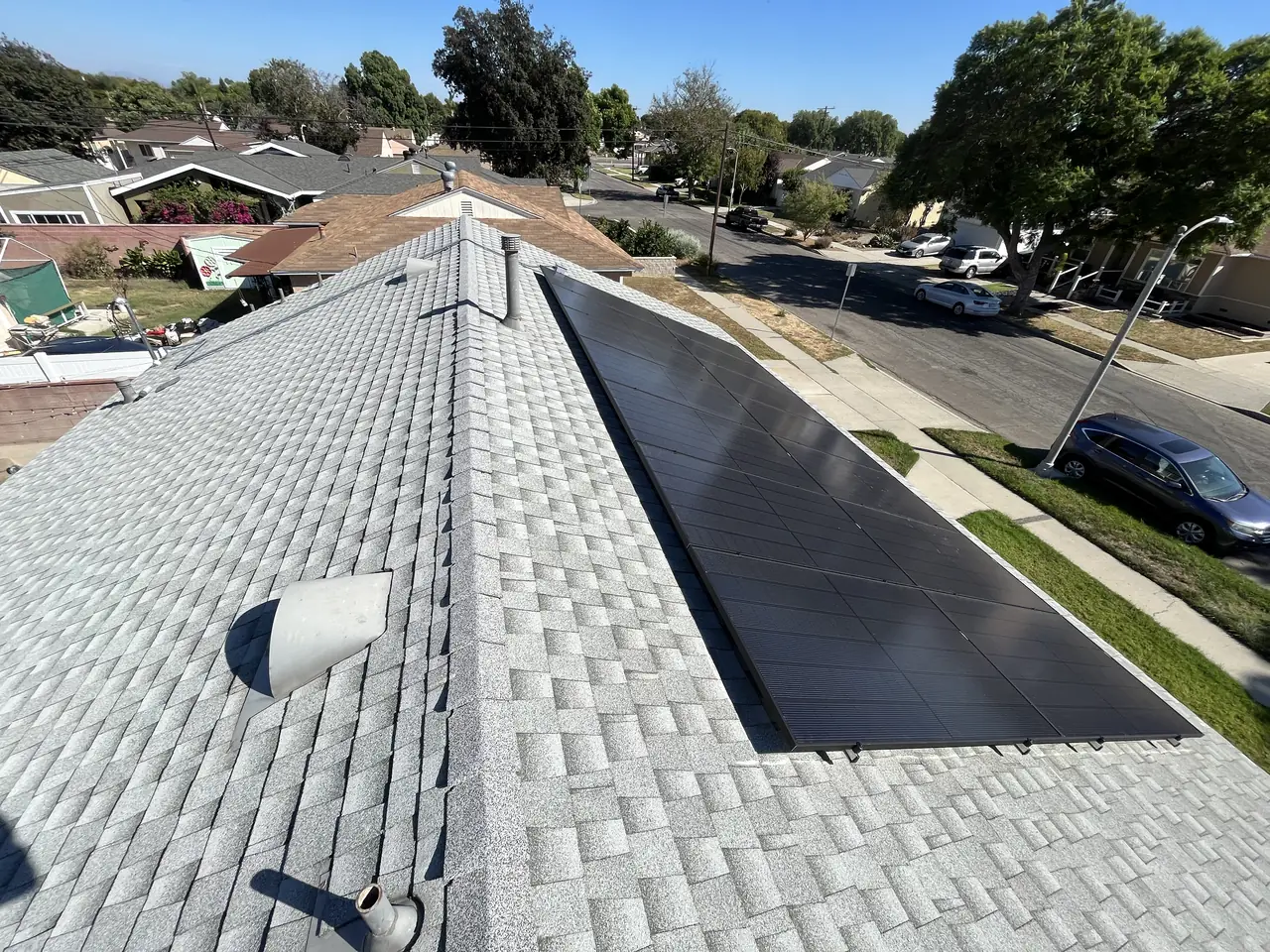
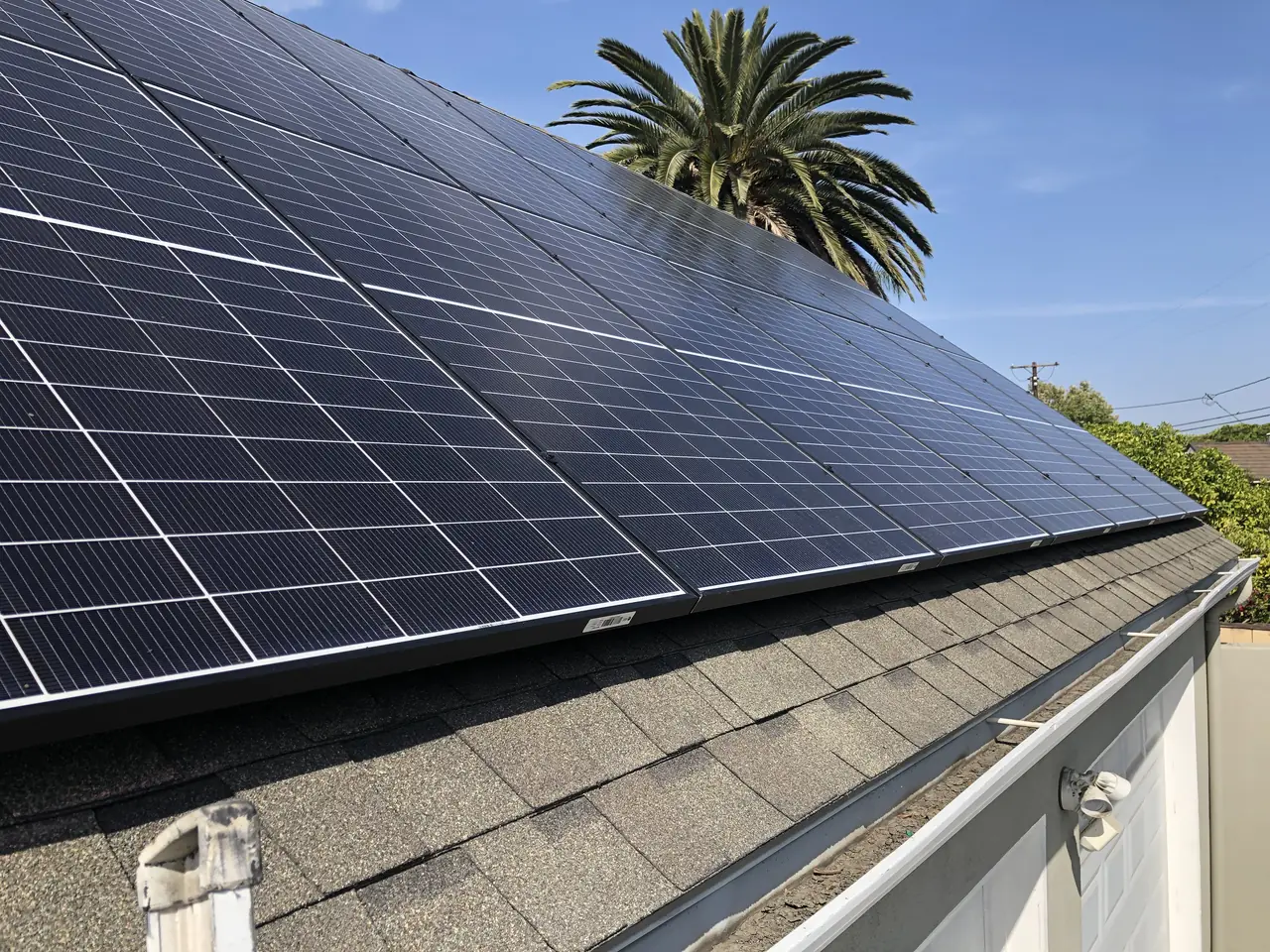
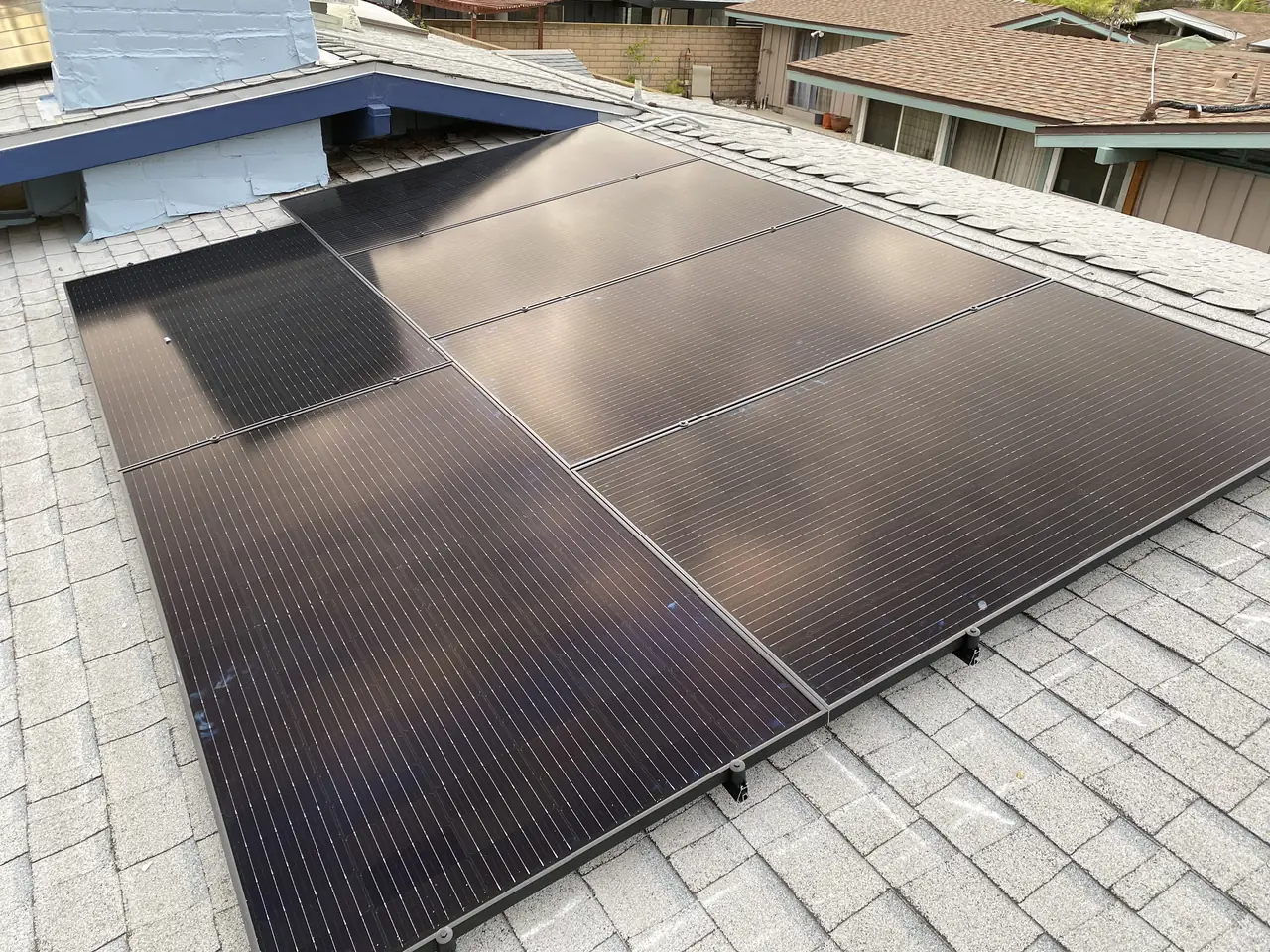
An array along the shingle and a car charger beside the door on a fifty-amp circuit of its own. The roof was the straightforward half.
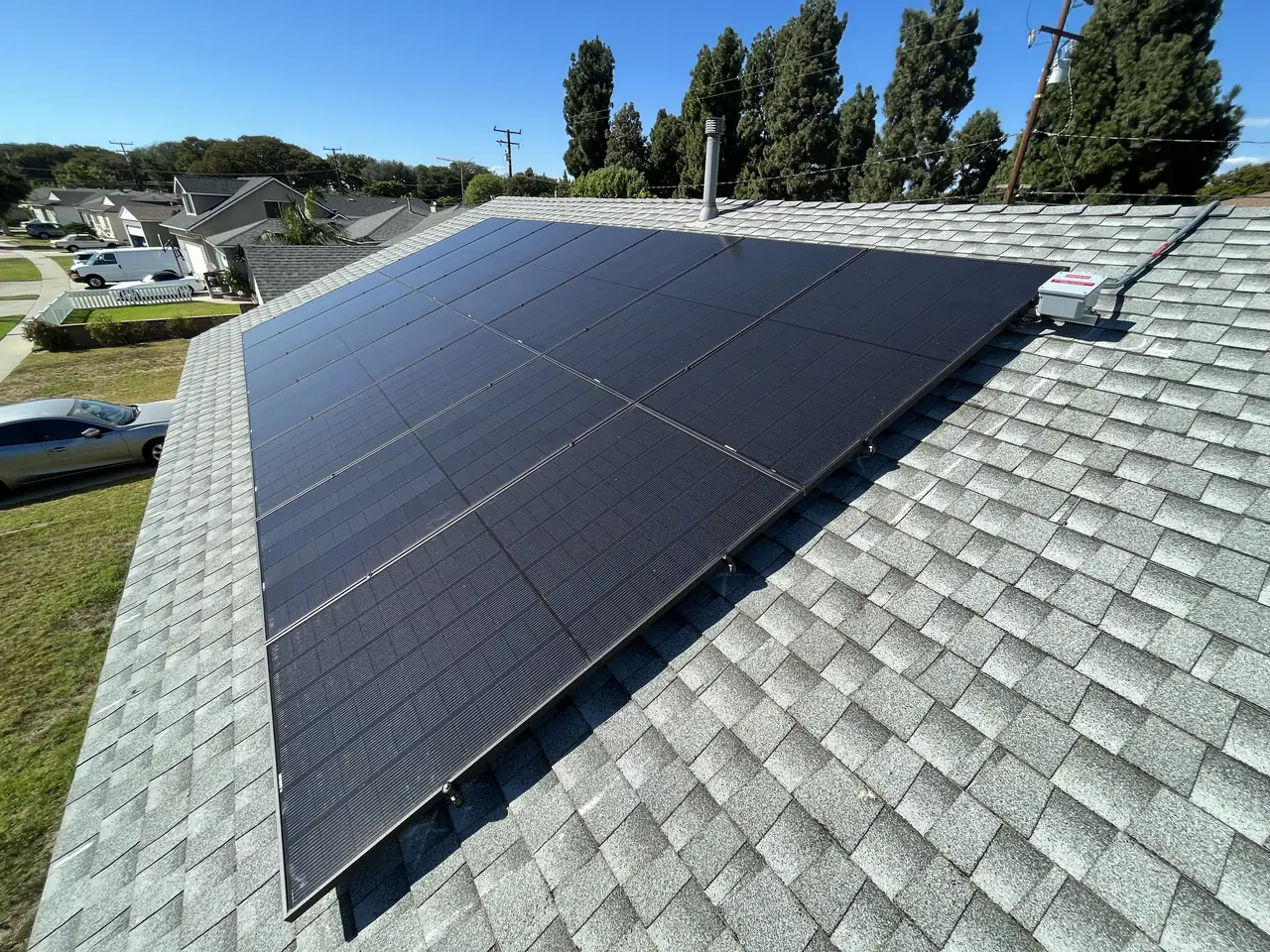
This Long Beach house put two things on one service: a solar array across the shingle roof and a wall-mounted car charger fed from a fifty-amp outlet beside it. Solar adds current to the panel and a charger takes it away, so what the service could carry with both on it was settled before anything was fixed to the wall. Cali Energy installed both and passed the final inspection on 31 August 2022.
At a glance
- Array
- Solar on composition shingle, along one long slope
- Also on the wall
- Car charger on a fifty-amp outlet
- Sizing
- Array and charger assessed against the service together
- Why it matters
- One feeds the panel, the other draws from it
- Final inspection
- Passed 31 August 2022
- Utility / AHJ
- Southern California Edison / City of Long Beach
The story
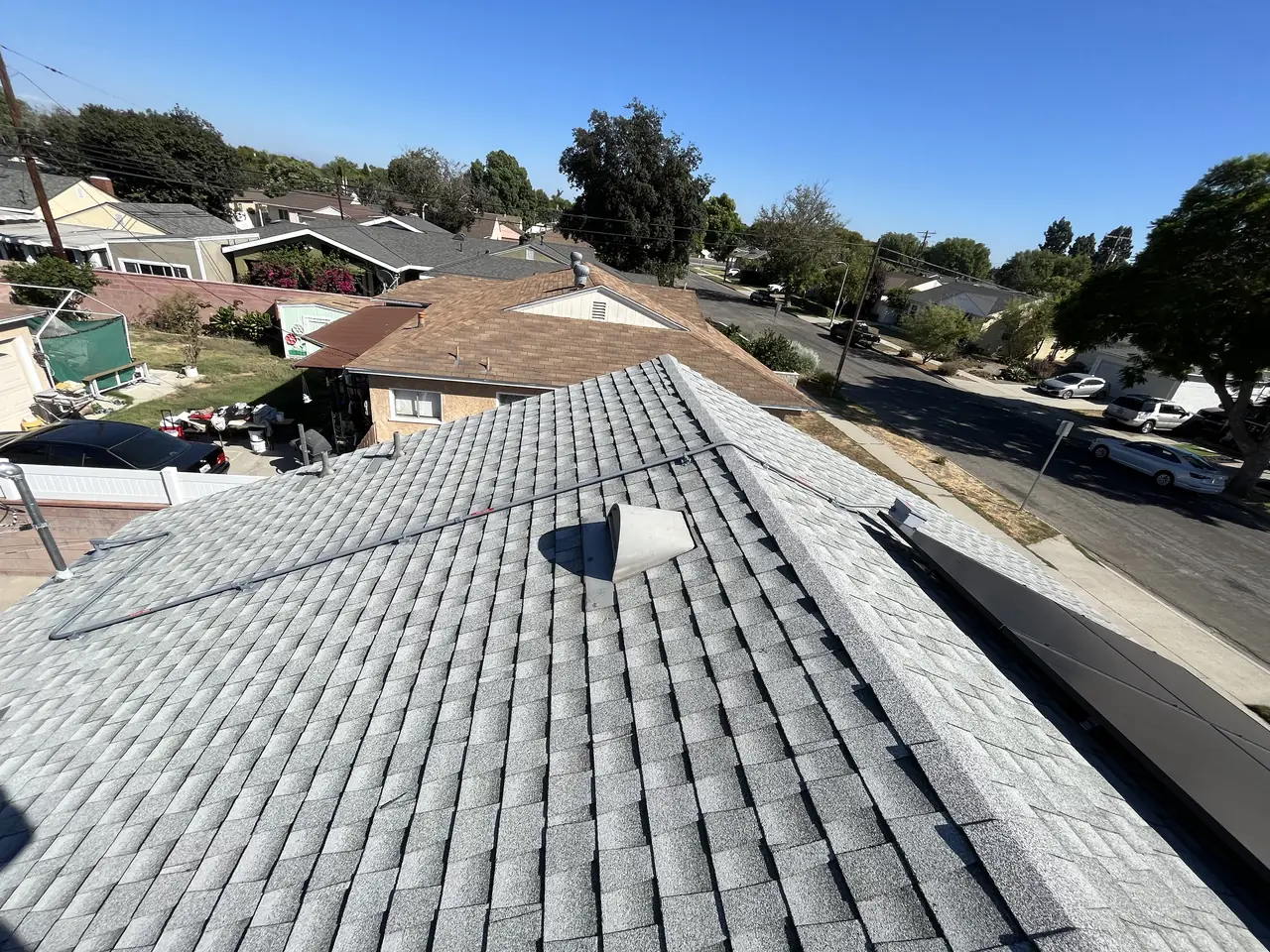
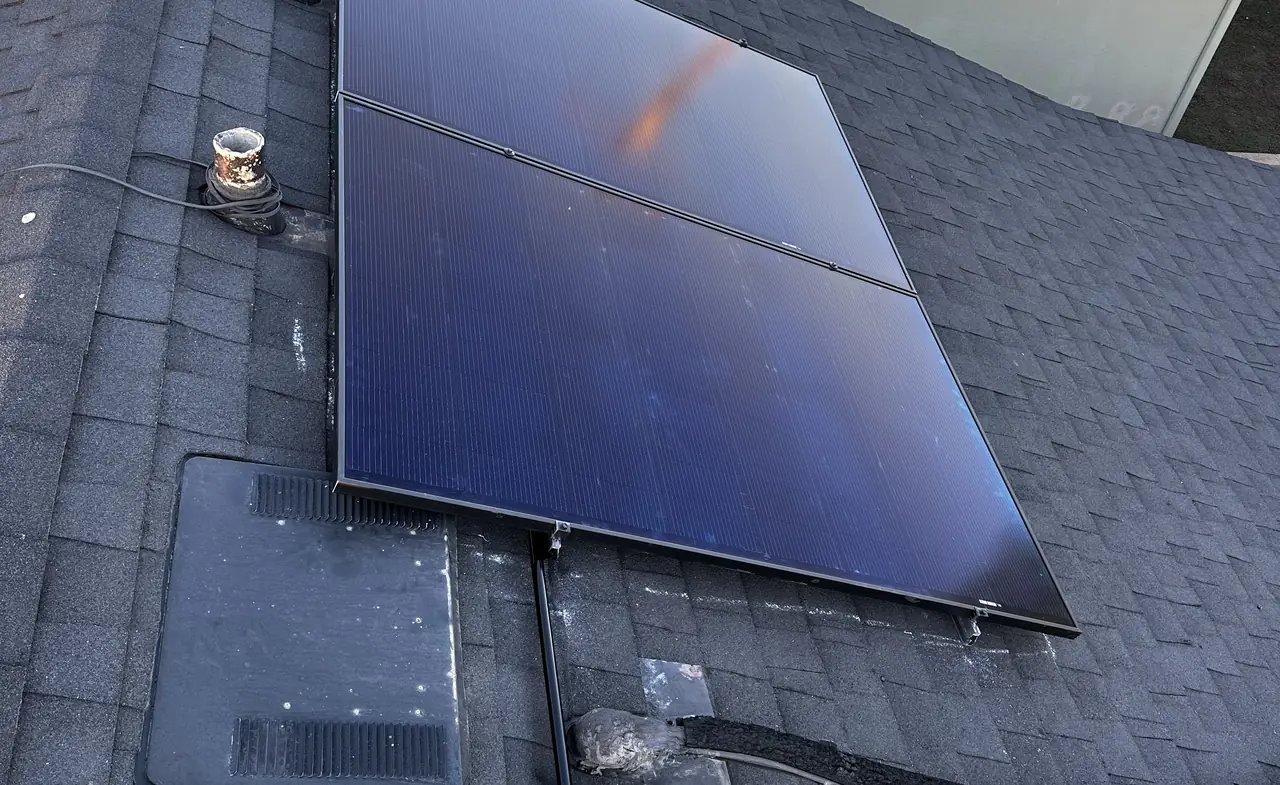
The roof here is the easy part and it looks it: a long shingle slope, a clean run of modules along it, a vent or two to work around. What makes the project interesting is the wall underneath, and the arithmetic behind it.
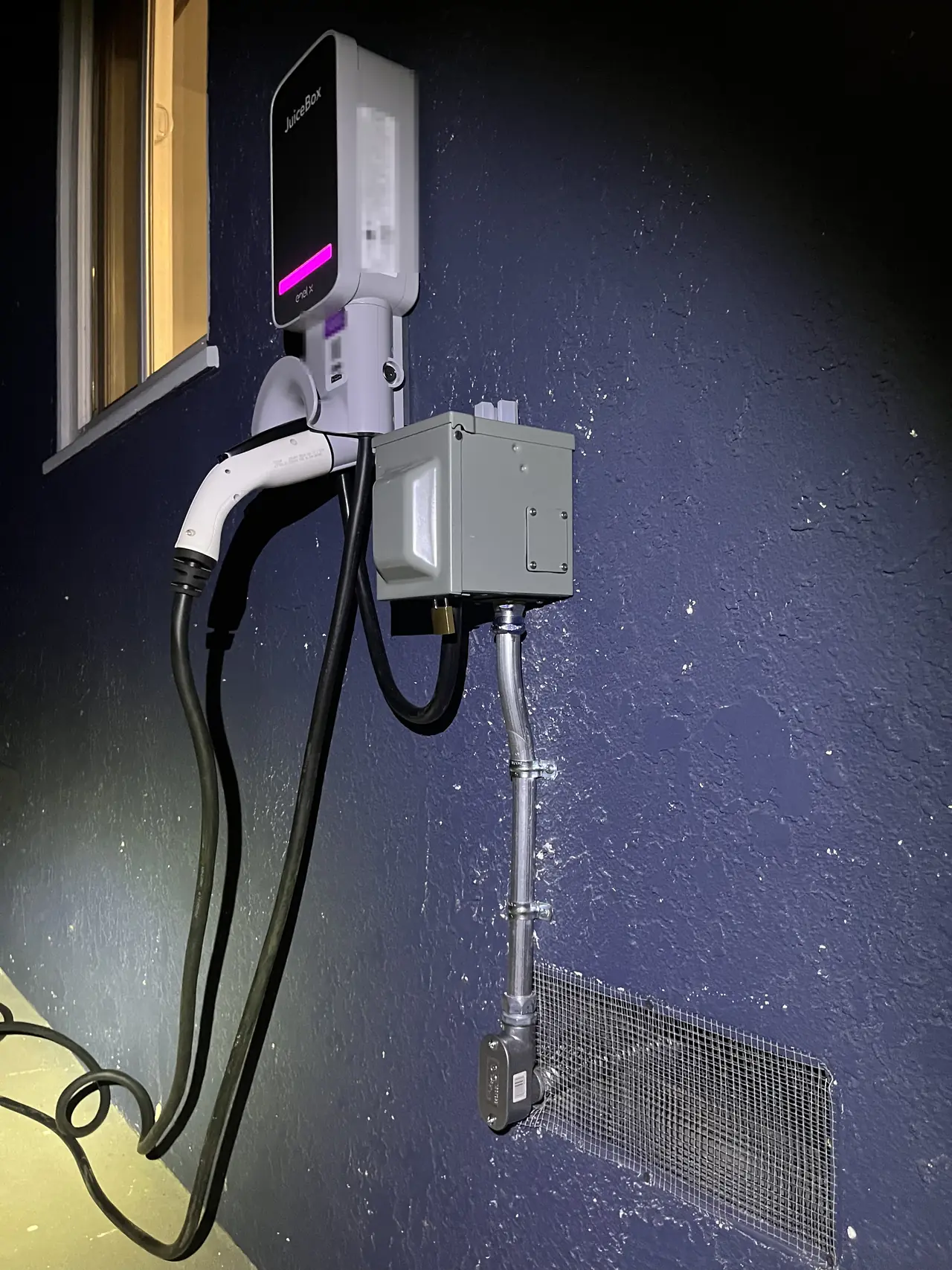
The first thing on the wall is the solar. The second is a car charger mounted beside the door and fed from a fifty-amp outlet next to it, so the charger plugs in rather than being wired in permanently. That is a common arrangement and it has one practical advantage: the plug is also the way the charger comes off the wall if it is ever replaced, and the circuit stays where it is.
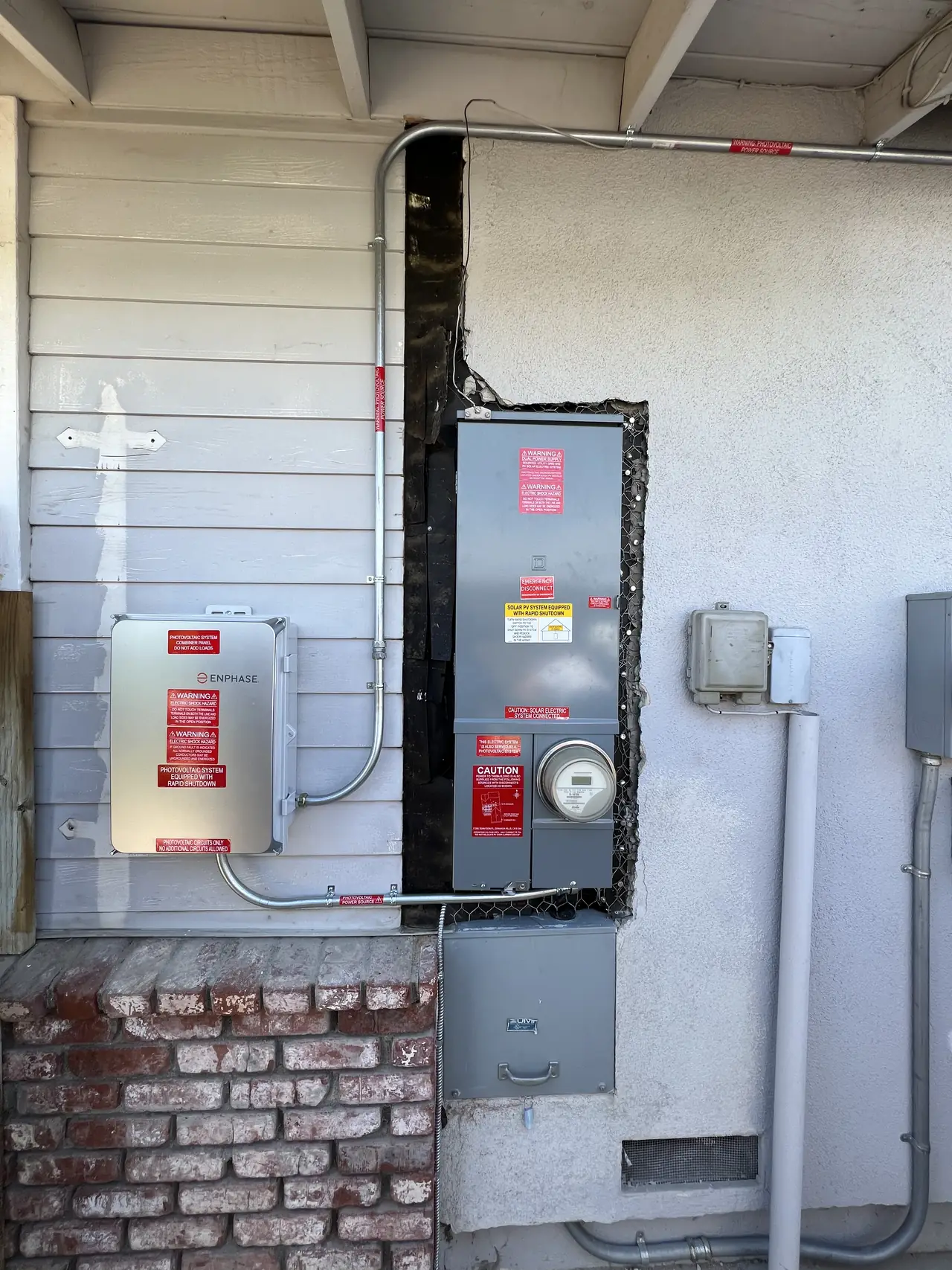
Putting both on one service is a sizing question before it is an installation question. Solar feeds power into the panel; a charger takes it out, and takes a great deal of it for hours at a time. What the panel can carry, what the busbar allows with a solar breaker already on it, and whether a fifty-amp circuit leaves room for everything else all get settled on paper before anybody drills a hole in the stucco.
Then it becomes a layout problem. Two circuits and the solar equipment all arrive at roughly the same place, and the wall has to end up something a person can work on: everything reachable, every label readable, nothing buried behind anything else. It is worth the extra thought at the time, because the alternative is a wall nobody wants to touch in five years.
The final was passed at the end of August. Both pieces went in around the same period, which is the cheapest way to do it: one set of permits, one round of inspection, one crew on site rather than two visits months apart.
If you are thinking about a car charger and solar is already in the plan, say so at the start. What it changes is not the roof — it is the panel, the busbar and the wall, and those are much easier to get right once than to revisit later.
How it ran
| Before the wall | Array and charger sized against the existing service together |
|---|---|
| August 2022 | Array installed along the main shingle slope |
| Same period | Fifty-amp outlet installed and the charger hung on it |
| Same period | Conduit runs brought together and the wall laid out |
| 31 August 2022 | Final inspection passed |
One service, one round of inspection — rather than two visits months apart and a load calculation done twice.
What we did
- Installed the array along the main shingle slope with the vents left clear.
- Installed a fifty-amp outlet and hung the car charger on it.
- Sized the array and the charger against the existing service before any of it went on the wall.
- Laid the wall out so every disconnect can be reached and every label read.
- Passed the final inspection on 31 August 2022.
System specifications
| Array | Composition shingle, one long slope |
|---|---|
| Car charger | Wall mounted, plugged into a fifty-amp outlet |
| Outlet | Fifty amp, on its own circuit |
| Loads | Sized together against the existing service |
| Wall layout | Each disconnect reachable, each label readable |
| Final inspection | Passed 31 August 2022 |
| Utility / AHJ | Southern California Edison / City of Long Beach |
Is your project like this one?
- You want solar and a car charger and have been quoted them separately.
- You want the charger on a plug rather than wired in.
- Your panel already has a solar breaker and you want to add a load.
- You do not want three trades visiting over three different months.
- You want the equipment wall to still be workable in five years.
Cali Energy in Long Beach
Long Beach is its own city, not a Los Angeles neighborhood: permits run through the City of Long Beach Building & Safety Bureau, interconnection through Southern California Edison.
Once a house has solar, the same service tends to collect everything else that needs power outdoors — a car charger, an outlet for a motorhome on the drive. Each of those is its own circuit and its own load, and the wall they share has to be laid out so that all of them can be reached and switched.
This installation is on the Long Beach projects page alongside the others, and what the work covers is set out on the Long Beach service area page.
- License and classifications: CSLB #1032379
- Official reference for this process: California Energy Commission — solar equipment lists
- Official reference for this process: City of Long Beach — Building & Safety Bureau
Frequently asked questions
Can a car charger and solar share one service?
Usually yes, but it is a sizing question first. Solar adds a breaker to the busbar and a charger adds a continuous load to it, so what matters is what the panel is rated at and how much of it is already spoken for. That gets settled on paper before anything is mounted. Where the service cannot carry both, the fix is the panel, not the charger.
Should a car charger be plugged in or wired in?
Either works, and a plug has practical advantages. A charger on a fifty-amp outlet can be unplugged by hand, taken off the wall and replaced without an electrician touching the circuit. Hard-wiring suits a permanent installation or a higher current. On this house the charger plugs in, so the outlet is the piece that stays.
Is it cheaper to do solar and a charger together?
Almost always. One set of permits, one round of inspection and one crew on site beats two visits months apart, and the load calculation is done once against the finished picture rather than revisited when something is added. The saving is in the calendar and the paperwork as much as in the labor.
Does Cali Energy do EV chargers in Long Beach?
Yes, on their own or alongside a solar installation. Cali Energy sizes the added load against the existing service, installs the circuit and the outlet or hard-wired connection, and takes the work through the City of Long Beach final inspection. License CSLB #1032379.
What this would look like on your roof
Planning solar in Long Beach? Tell us your utility, your roof and what your bill looks like now, and we will model what a system like this would do on your house before you commit to anything.
Or call +1 (323) 844-7777 · Cali Energy, Northridge · CSLB #1032379 (B, C-10, C-39) — design, permits, install and electrical under one licensed contractor.
Related
This timeline reflects this property and this permitting path. Updated September 2026.