

Long Beach, CA · April – August 2023 · Southern California Edison / City of Long Beach
No single face was big enough, so the array took them one by one
The design started with a request that had nothing to do with panels: get on the roof, measure what each face actually holds once the setbacks come off it, and say what this house does and does not need.
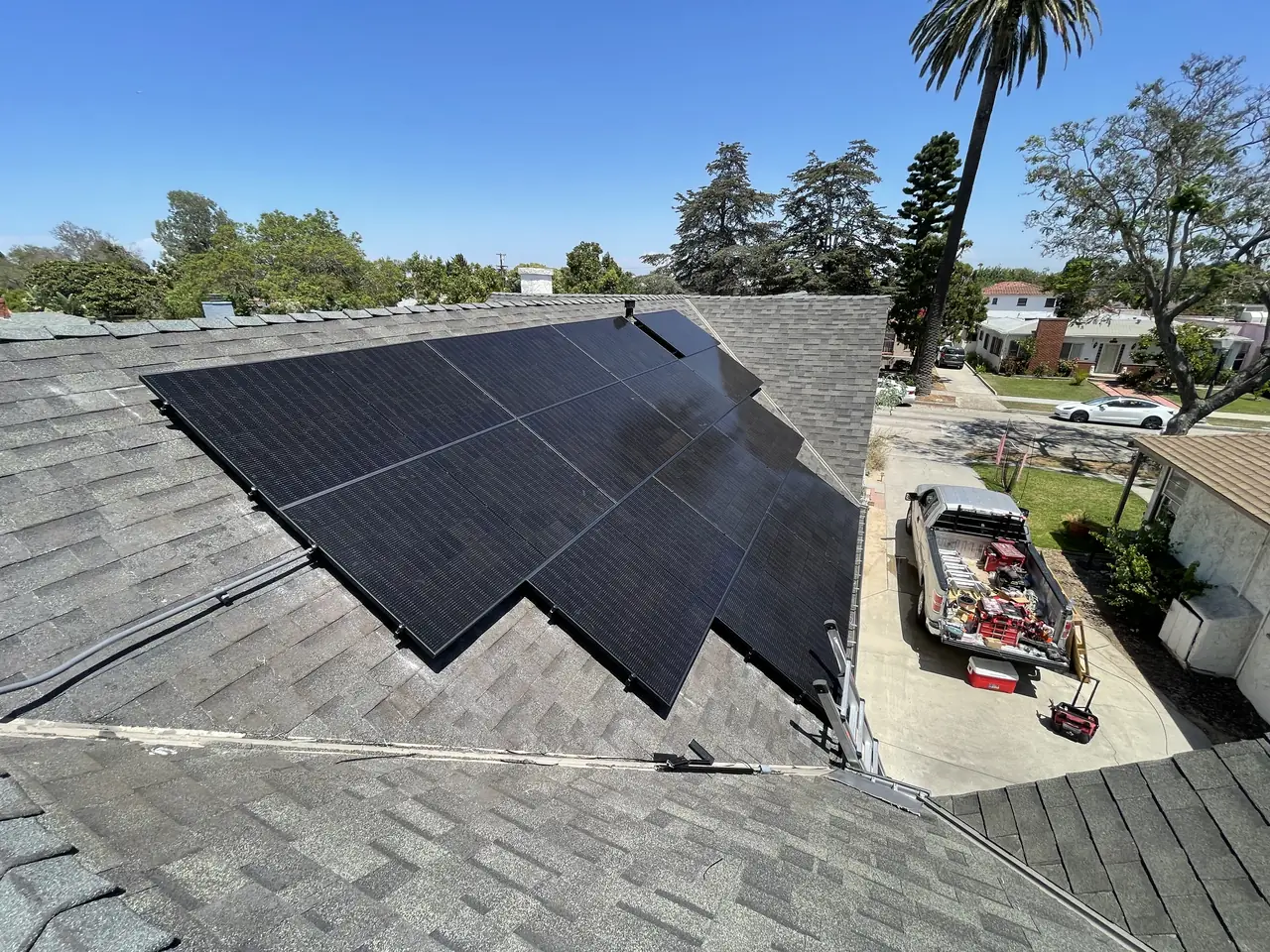
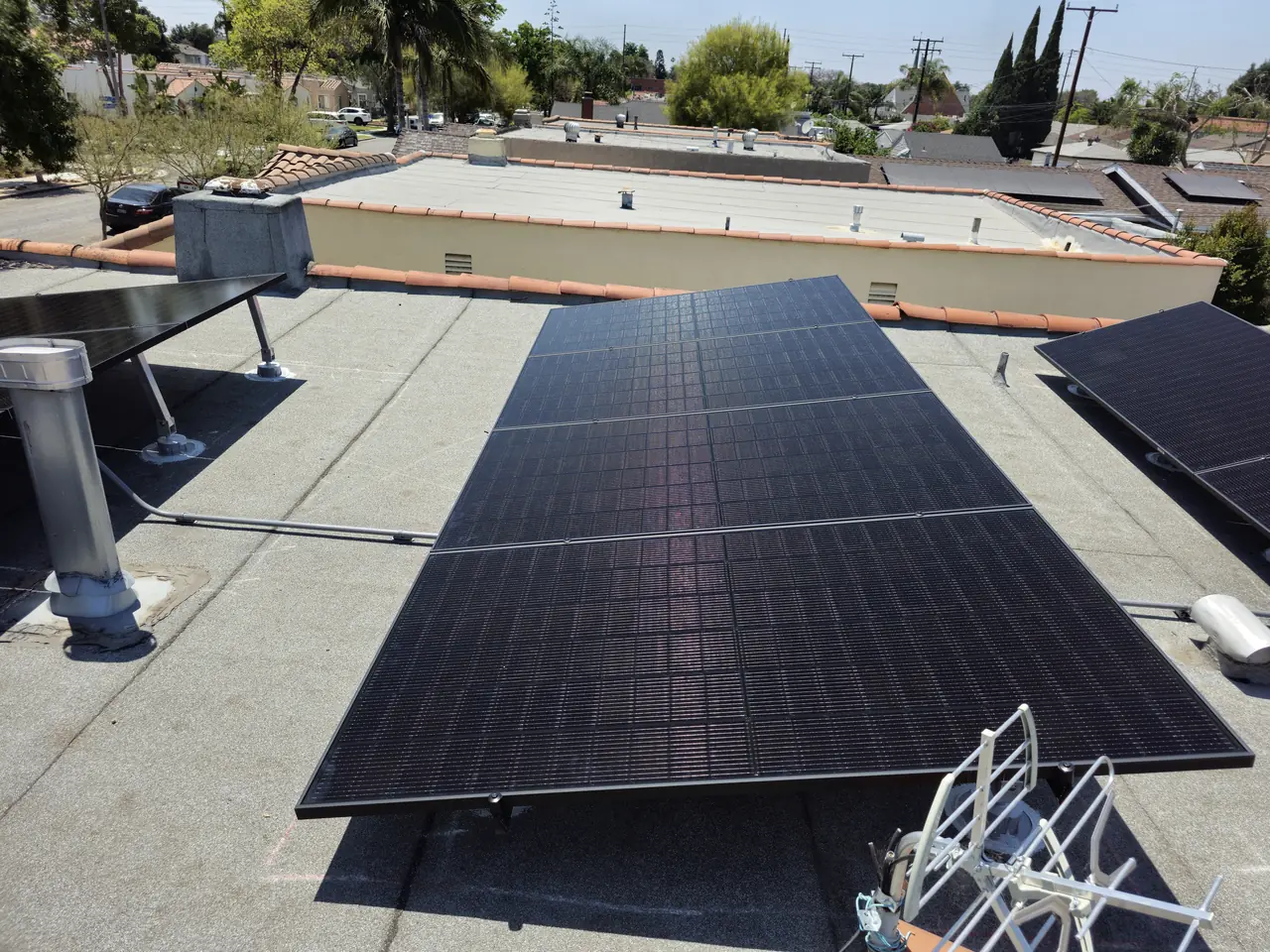
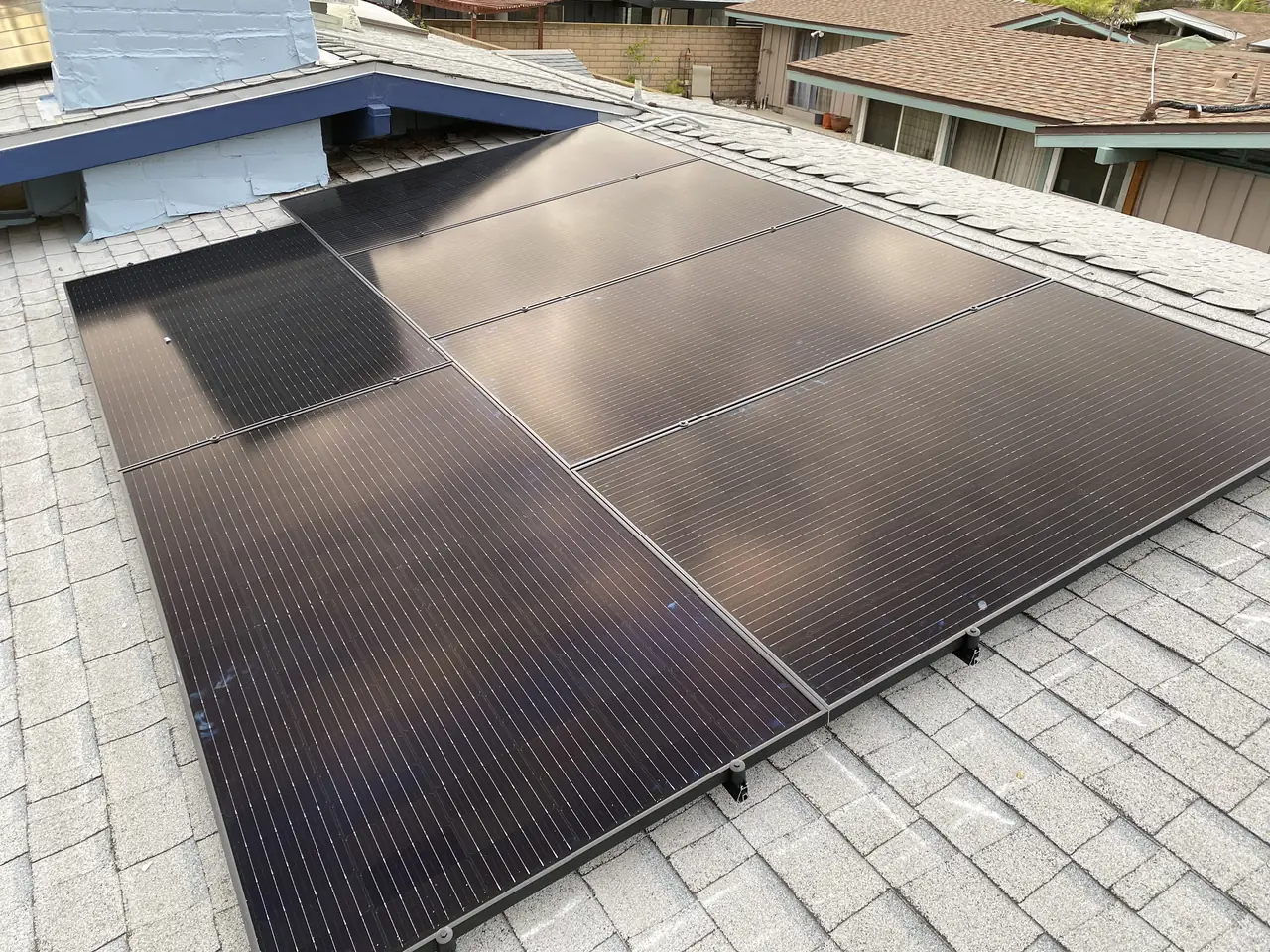
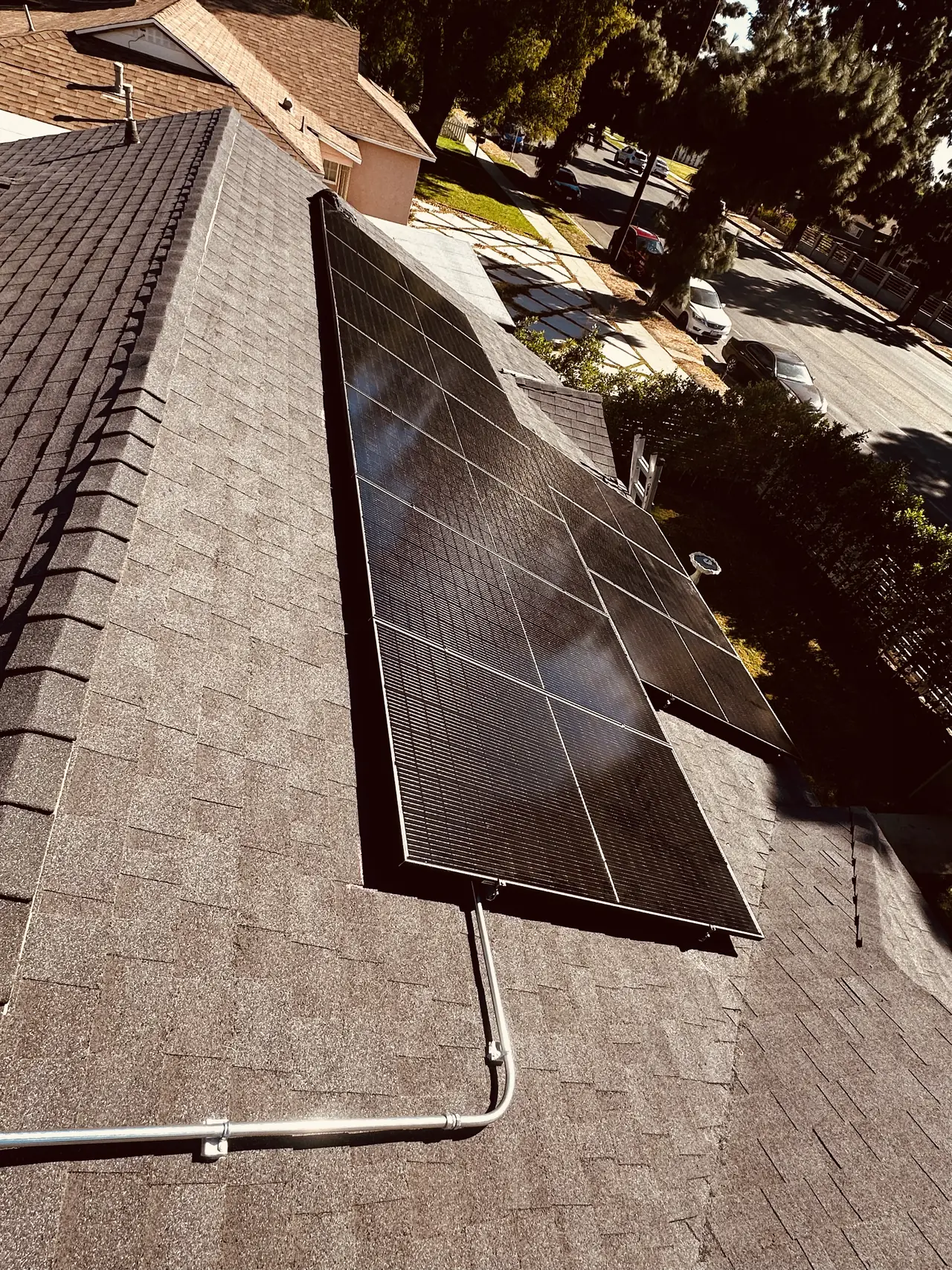
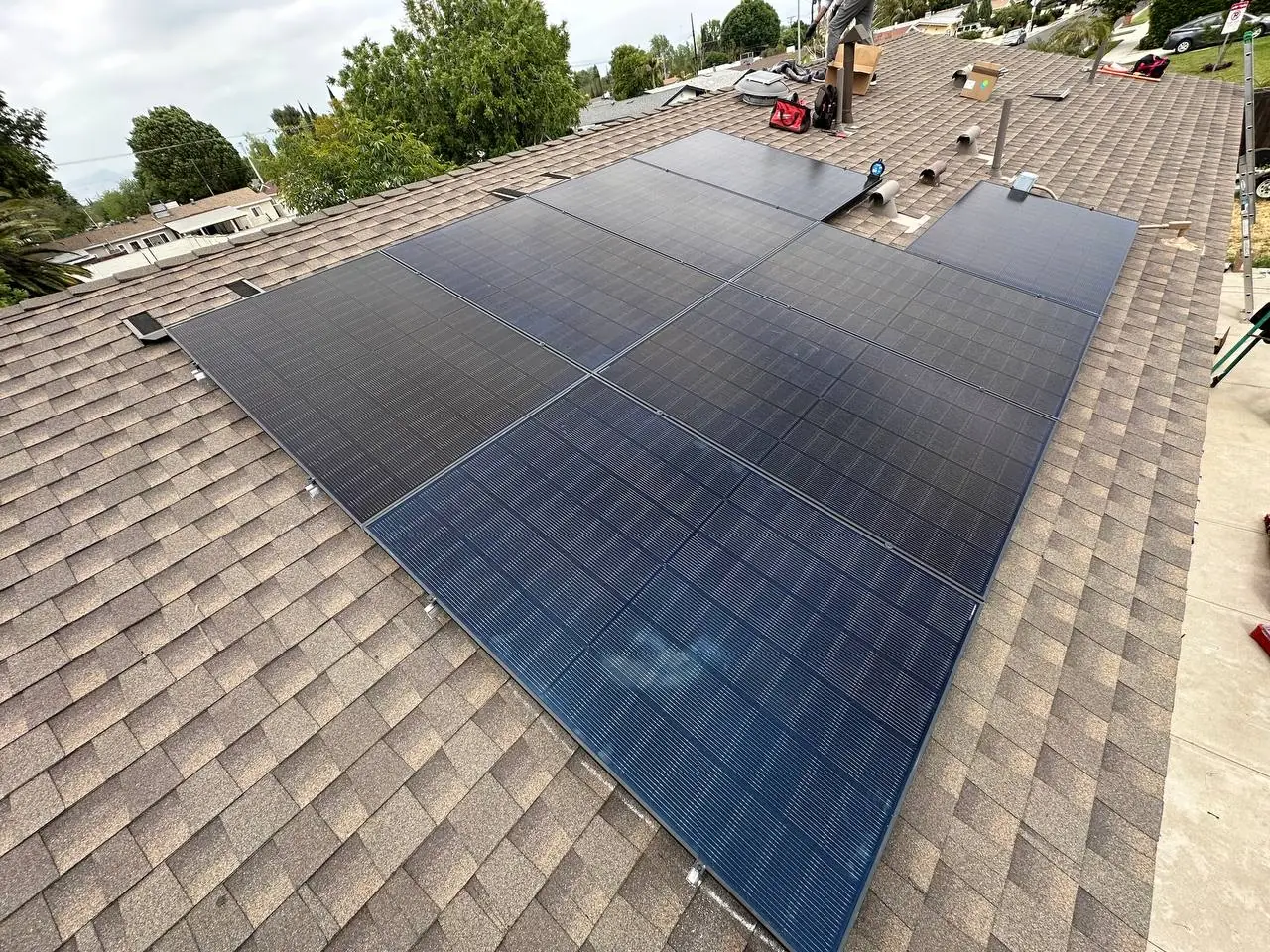
This Long Beach house has a steep hip roof that changes direction every few feet, with no single plane large enough for the whole array. Cali Energy surveyed the roof in person, measured the clearances face by face — eighteen inches from the valleys, twenty-four from the ridge, three feet at the edges — and reported that the existing 200 A main panel would carry the 40 A breaker this system needs, so no panel upgrade was required. Twenty Q CELLS 400 W modules went on in separate groups with an Enphase IQ8+ microinverter under each, and the final passed on 22 August 2023.
At a glance
- Array
- 20 modules, Q CELLS 400 W
- Inverters
- 20 Enphase IQ8+ microinverters, one per module
- Layout
- Separate groups following the usable faces
- Roof
- Composition shingle, steep hip with several changes of direction
- Measured on the roof
- 18 in from valleys, 24 in from the ridge, 3 ft at the edges
- Main panel
- 200 A existing — no upgrade needed
- Final inspection
- Passed 22 August 2023
- Utility / AHJ
- Southern California Edison / City of Long Beach
The story
The first thing done on this project was not a quote and not a drawing. It was a site visit with a tape and a camera: the roof, the meter, the overhead service and the main service panel. That is what the plan set gets drawn from, and it is the first step to get skipped when a system is sold from an aerial image and a utility bill.
The reason it matters is visible the moment you get onto a roof like this one. From the street it reads as a single long house with plenty of roof. From above it is a hip steep enough to need anchors and harnesses, changing direction every few feet: a face toward the street, two short faces where the roof turns, a longer one over the back, and a couple of triangles that look usable until you measure them.
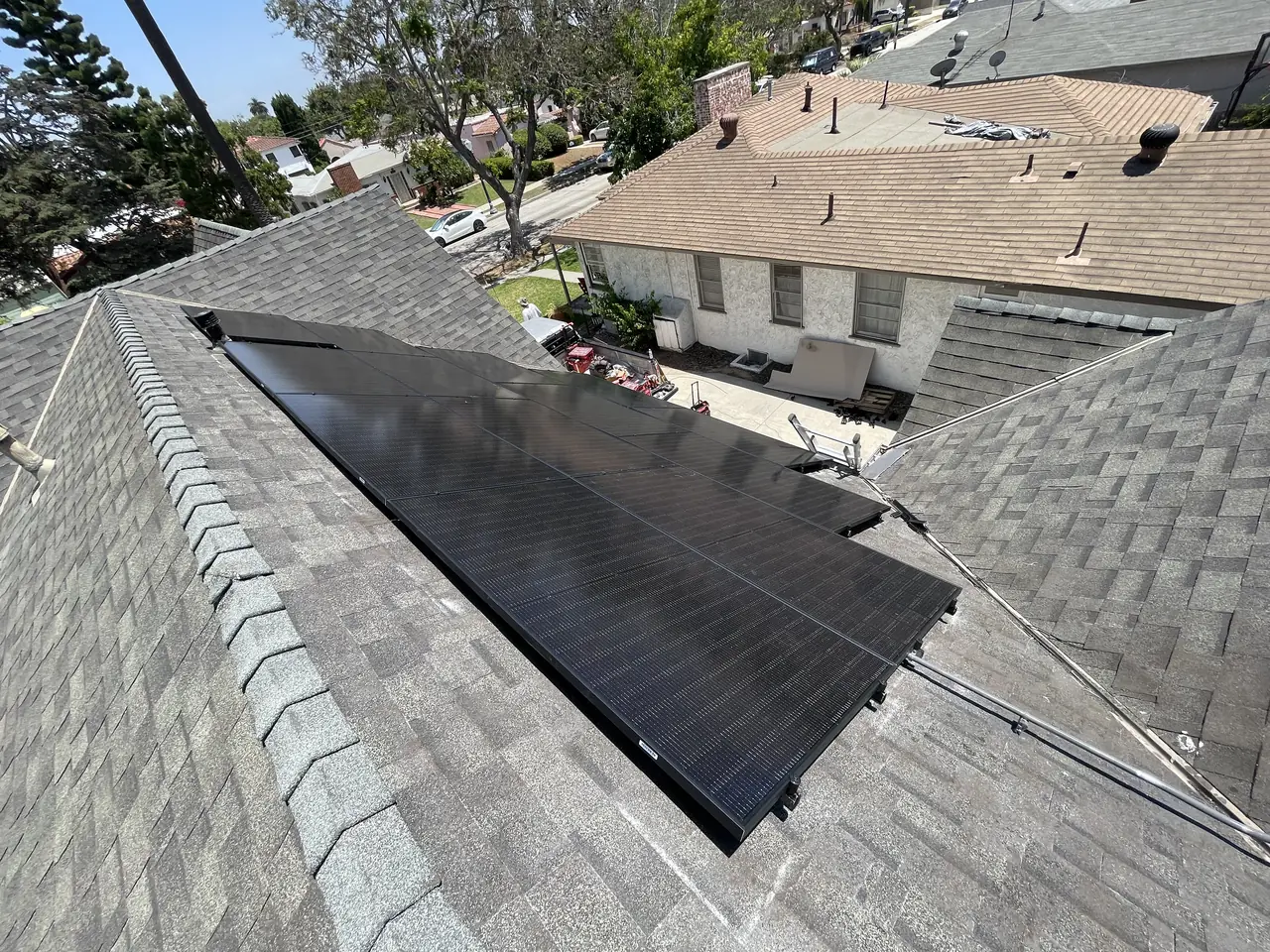
So they were measured, and the numbers went back with the survey rather than being assumed later: eighteen inches from the valley to the array on both sides of the first group and twenty-four inches down from the ridge; three feet in from each side of the second; eighteen inches from the top of the third, with a note that a three-foot clearance was possible there only if the group came down to the edge of the roof. An attic run was recommended at the same time, because on a roof that turns this often the alternative is conduit crossing every face.
The same survey settled two things that had nothing to do with the layout, and they are the reason a survey is worth paying for. The first was the service. The house already had a 200 A main panel, and twenty modules on microinverters land as a single 40 A breaker, which that panel carries — so no main panel upgrade was needed, and it came off the job before anybody quoted it. The second was the roof itself. It was old and burned off by the sun, and a roof that will not outlast the array is a problem you pay for twice. A partial re-roof under the first array was recommended before the modules went anywhere near it.
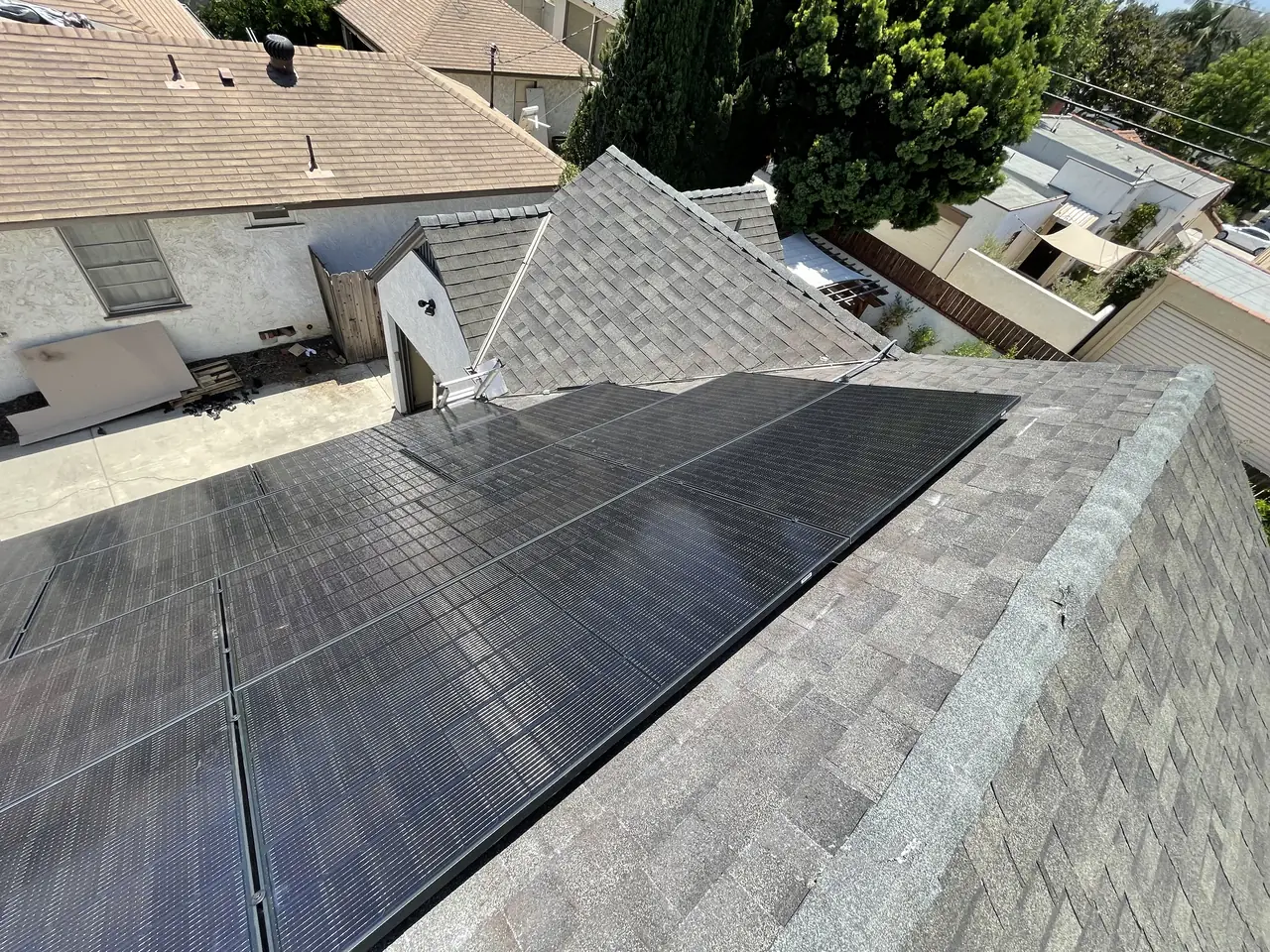
The answer was twenty modules of four hundred watts, laid out as separate groups that step down the faces as the roof turns rather than as one block. That is a lot of separate runs for a system this size, and it is the reason each module carries its own microinverter. Wired in series, a roof like this would hold the whole array to whichever group was worst off at any given hour. Converting at each module, the groups simply produce at different times of day and add up.
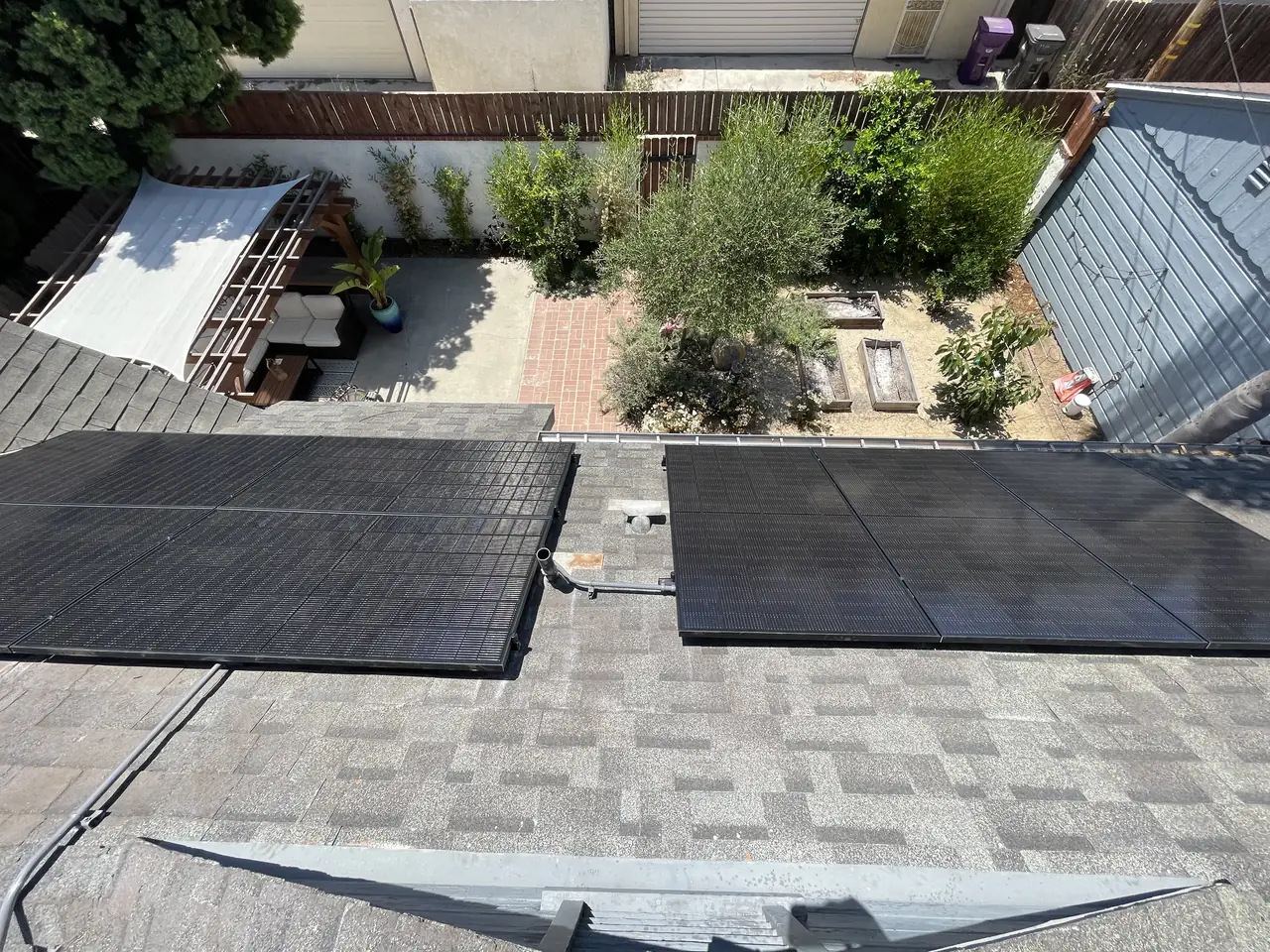
The install ran on a Monday at the end of July. Even with the faces measured, one group did not sit where the drawing put it, and the crew worked out the arrangement that fitted and sent it for confirmation the same afternoon rather than deciding it alone on the roof. It came back confirmed within the hour. The final inspection was passed on 22 August.
If you have a roof like this and a quote that arrived without anybody visiting, there are three questions worth asking. Which face is each group on, and how big was that face measured to be. Whether your existing panel actually needs replacing, or whether that is on the quote because nobody checked. And how much life the roof under the array has left — because the array will be up there for twenty-five years, and taking it off again to re-roof underneath it is the most expensive way to find out.
How it ran
| Late March 2023 | Site survey requested: roof, meter, overhead service and main panel |
|---|---|
| 1 April 2023 | Survey carried out on the roof |
| 6 April 2023 | Clearances measured face by face and returned with the survey |
| Same report | 200 A panel found sufficient — no upgrade; partial re-roof under the first array recommended |
| 24 July 2023 | Array installed; one group re-arranged on the roof and confirmed in writing the same afternoon |
| 22 August 2023 | Final inspection passed |
Nearly four months from the survey to the install — and the survey is what took a panel upgrade out of the job.
What we did
- Carried out the site survey on the roof and photographed the meter, overhead service and main panel for the design.
- Measured the usable area on each face and returned the clearances face by face.
- Checked the existing 200 A panel against the 40 A breaker the system needed and took the panel upgrade out of the job.
- Reported the roof as sun-worn and recommended a partial re-roof under the first array before the modules went on.
- Recommended an attic run rather than conduit crossing every face.
- Installed twenty Q CELLS 400 W modules in separate groups with an Enphase IQ8+ microinverter under each, and passed the final on 22 August 2023.
System specifications
| Modules | 20 × Q CELLS 400 W |
|---|---|
| Inverters | 20 × Enphase IQ8+, one per module |
| Groups | Separate, one per usable roof face |
| Roof | Composition shingle, steep hip; sun-worn, partial re-roof advised |
| Orientation | Several directions across the faces |
| Main panel | 200 A existing, 40 A solar breaker — no upgrade |
| Cable route | Into the attic through a flashed penetration |
| Final inspection | Passed 22 August 2023 |
Is your project like this one?
- Your roof turns every few feet and no single face looks big enough.
- You were quoted from an aerial image and nobody has been on the roof.
- You have been told your roof is unsuitable because of its shape or its pitch.
- Part of your roof is shaded or faces the wrong way for part of the day.
- Your quote includes a main panel upgrade and nobody has explained why.
Cali Energy in Long Beach
Long Beach is its own city, not a Los Angeles neighborhood: permits run through the City of Long Beach Building & Safety Bureau, interconnection through Southern California Edison.
The post-war streets of Long Beach are full of hip roofs that turn every few feet. From the street they look like plenty of roof. From above they are a set of small triangles and trapezoids, none of them big enough on its own, and the only way to know what will fit is to go up and measure.
This installation is on the Long Beach projects page alongside the others, and what the work covers is set out on the Long Beach service area page.
- License and classifications: CSLB #1032379
- Official reference for this process: California Energy Commission — solar equipment lists
- Official reference for this process: City of Long Beach — Permit Center
Frequently asked questions
Can solar go on a hip roof with several small faces?
Usually yes. The array is laid out as groups that follow the faces rather than as one block, with each group sized to what its face allows once ridge and edge setbacks are taken off. This house took twenty four-hundred-watt modules that way. It looks less tidy than one rectangle and it produces across a longer part of the day, because the faces come into sun at different hours.
Why does every module need its own inverter on a roof like this?
Because the groups face four different directions and come into sun at different times. Modules wired in series are limited by whichever one is worst off, so a split array on a single string would spend most of the day held back by its weakest face. A microinverter under each module lets every module convert on its own and the groups simply add up.
Do twenty modules on microinverters need a main panel upgrade?
Not on their own. Twenty microinverters come back to the panel as one circuit, and on this house that was a 40 amp breaker — well inside what the existing 200 amp service carries. The survey said so before anything was ordered, so the panel upgrade came off the job. If your quote has one on it, ask what breaker the system actually needs and what your panel is rated at.
Should the roof be replaced before solar goes on it?
If it will not outlast the array, yes — and that is a question the survey has to answer, not the homeowner. This roof was old and burned off by the sun, so a partial re-roof under the first array was recommended before the modules went anywhere near it. Taking a finished array down to re-cover the roof under it is the most expensive version of the same work.
Does Cali Energy install solar in Long Beach?
Yes, including on the steep hip roofs that are common in the older parts of the city and take more layout work than a simple gable. Cali Energy surveys the roof in person and measures the clearances before the layout is drawn, installs, and closes the system out. Permits here come from the city's own Building & Safety Bureau and interconnection from Southern California Edison. License CSLB #1032379.
What this would look like on your roof
Planning solar in Long Beach? Tell us your utility, your roof and what your bill looks like now, and we will model what a system like this would do on your house before you commit to anything.
Or call +1 (323) 844-7777 · Cali Energy, Northridge · CSLB #1032379 (B, C-10, C-39) — design, permits, install and electrical under one licensed contractor.
Related
This timeline reflects this property and this permitting path. Updated September 2026.