

Granada Hills, CA · 2025 · LADWP / LADBS
No face was big enough, so it became several arrays.
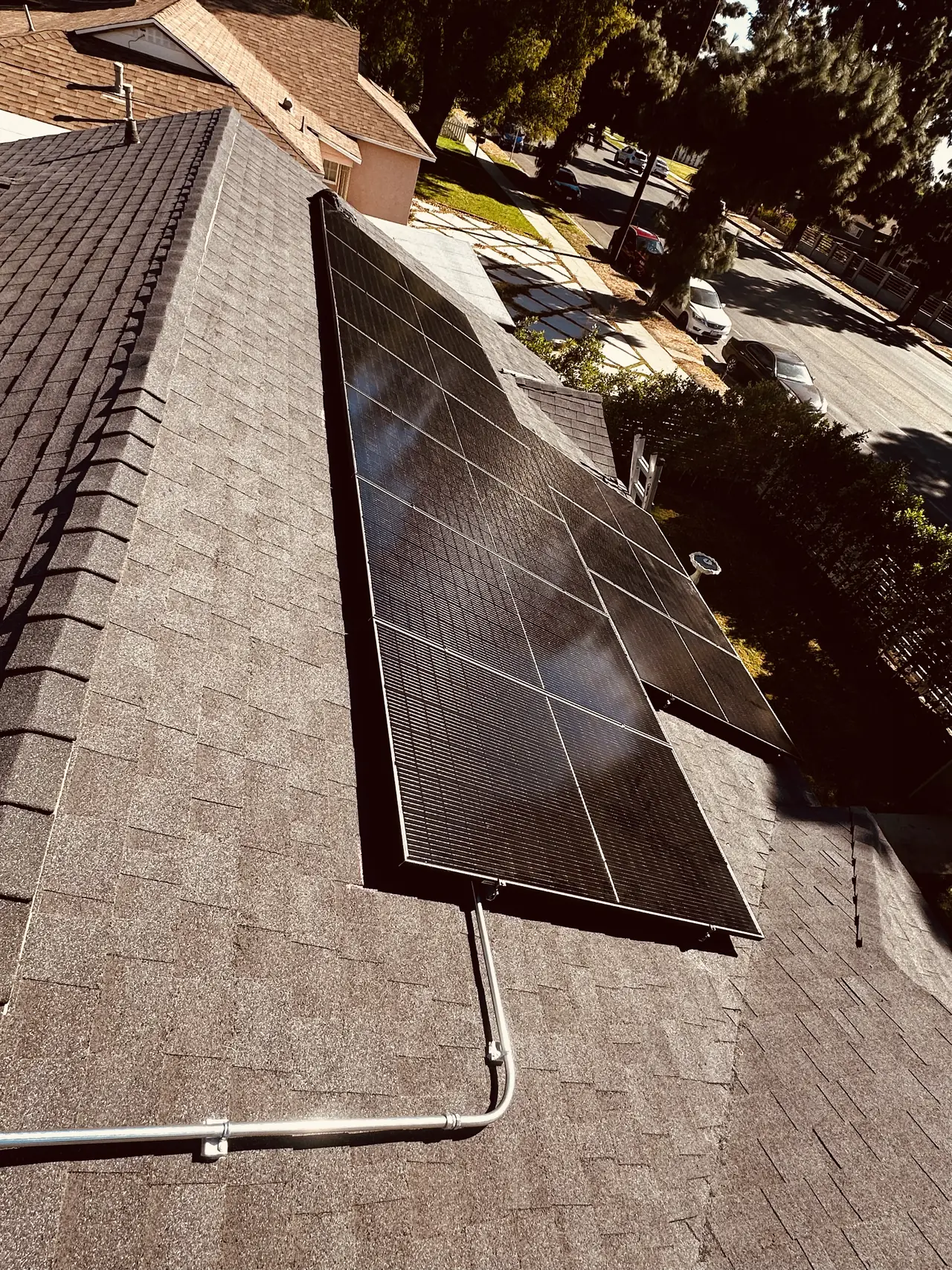
A hipped roof looks like the easiest thing in the world from the driveway. From above it is four or five small triangles, and an array has to be broken up to live on them.
A hip roof has no large rectangle on it. Where a gable gives one broad face, a hip gives several smaller ones meeting at angles, and an array sized for the house has to be split across them. Each additional plane means its own rails, its own set of attachments and a conduit run crossing a hip or a ridge to reach the next group. The modules cost the same; everything around them does not.
At a glance
- Roof
- Hipped, composition shingle
- Array
- Split across several faces
- Per plane
- Its own rails and its own attachments
- Between planes
- Conduit crossing hips and ridges
- Also on the lot
- Pool
- Utility / AHJ
- LADWP / LADBS
The story
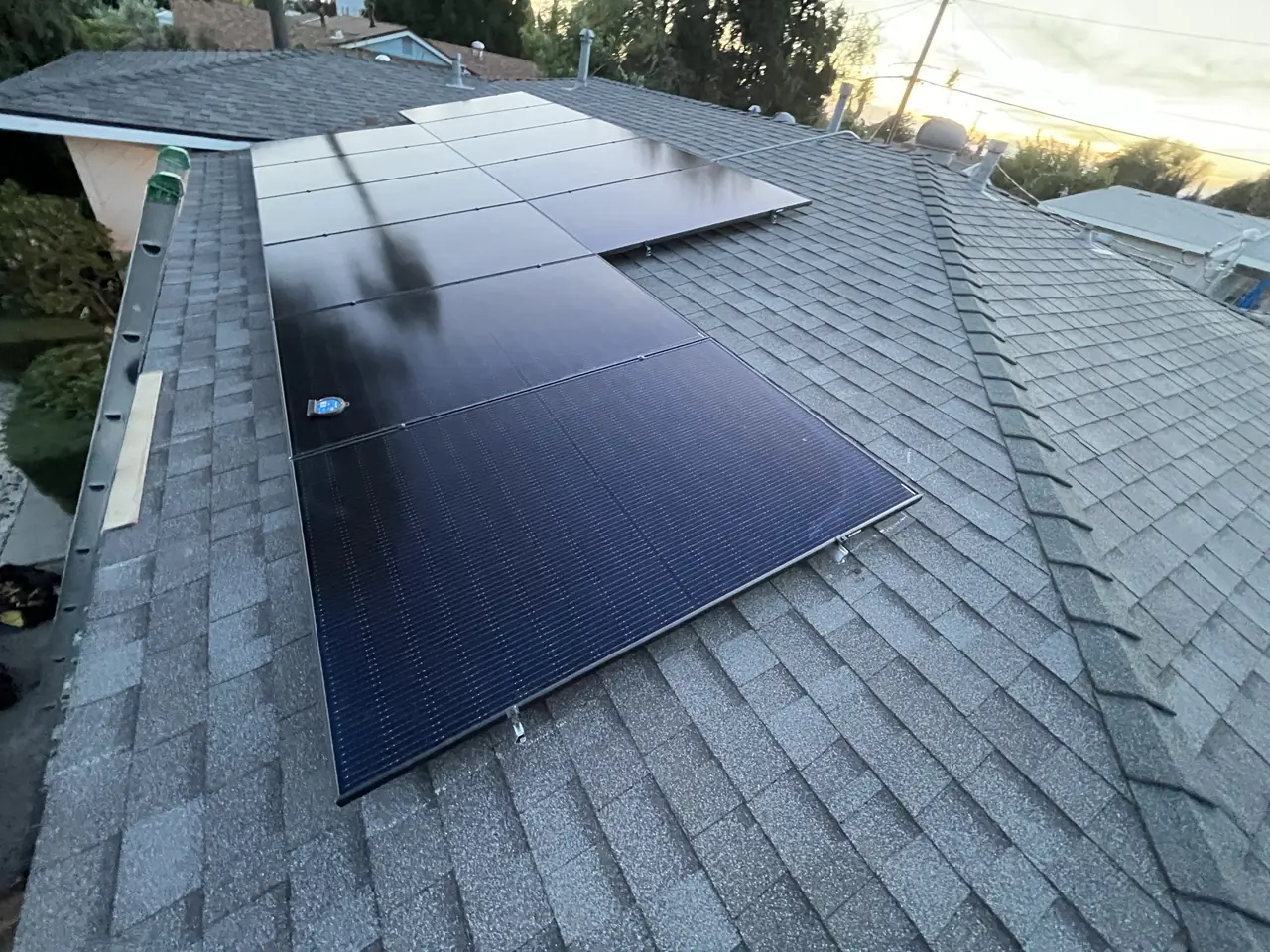
From the street this is the simplest roof in the neighborhood: a low hipped roof on a single-story house, no dormers, nothing unusual. From above it is four or five triangles meeting at angles, and not one of them is big enough to hold the array.
That is the defining feature of a hip roof and it is worth understanding before you are quoted. A gable gives you one broad rectangle facing one direction — you lay rails across it and you are finished. A hip gives you several smaller faces, each pointing somewhere slightly different, each with its own usable area once you take off the setbacks the fire access rules require at the ridges and edges.
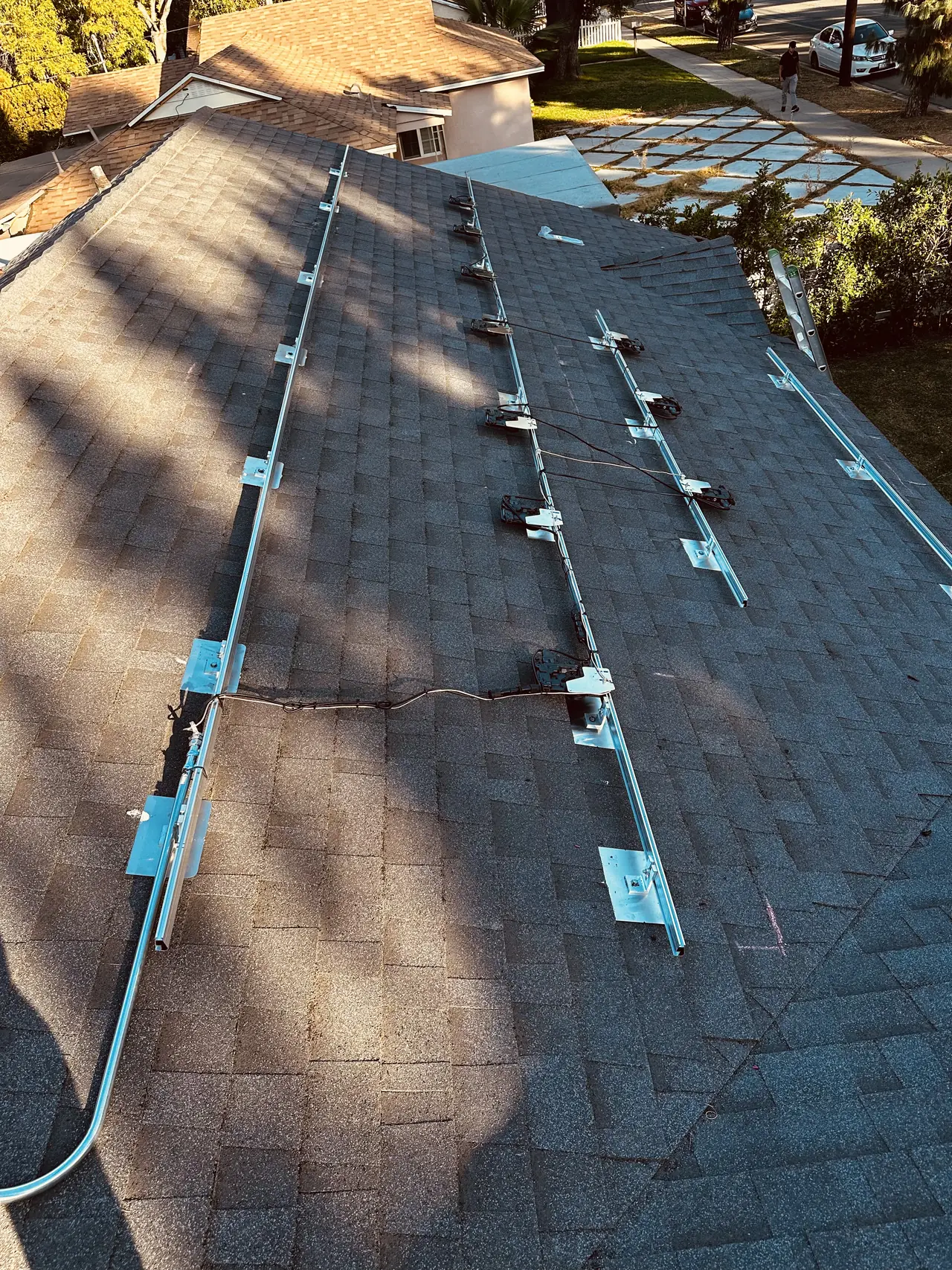
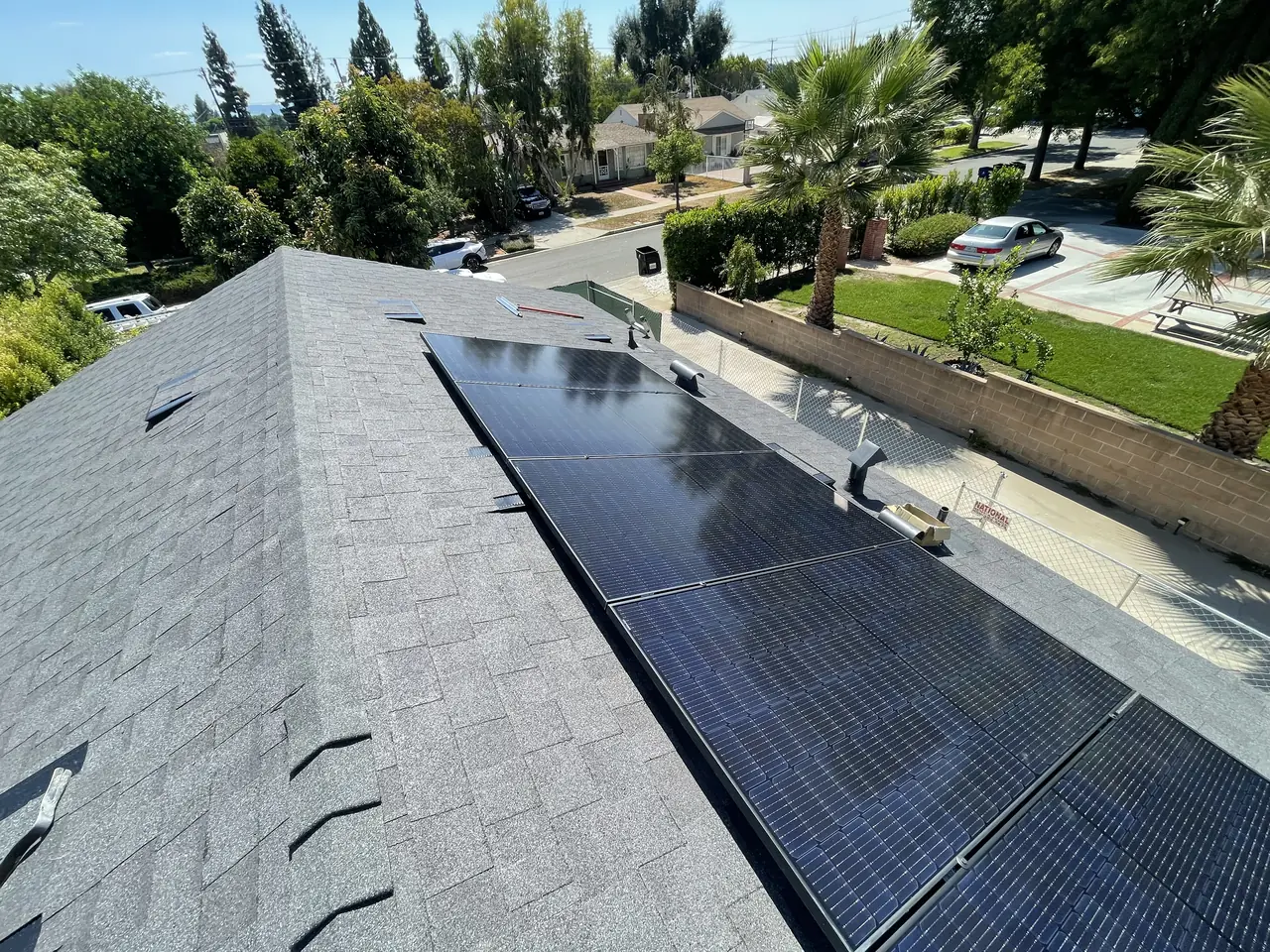
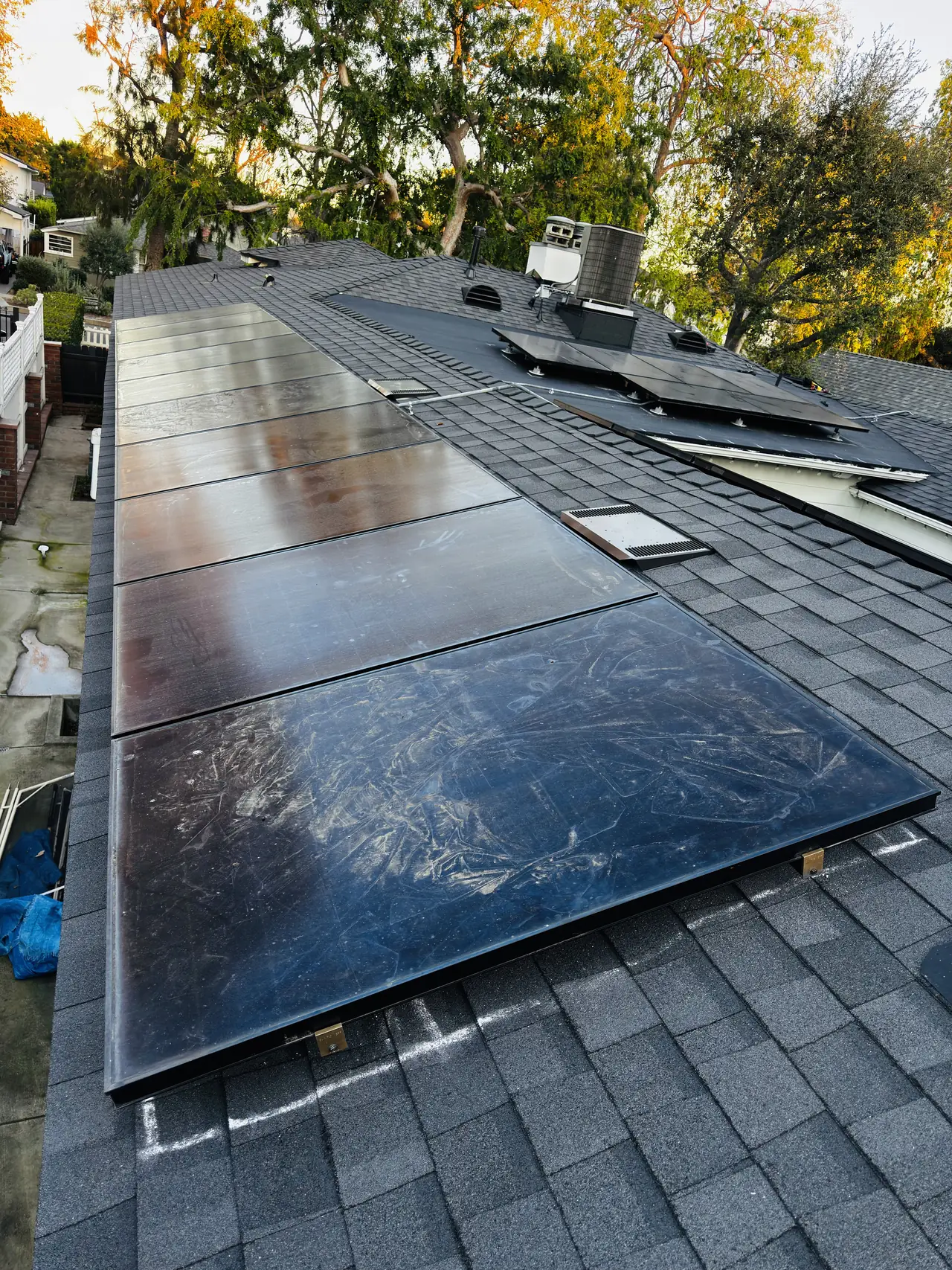
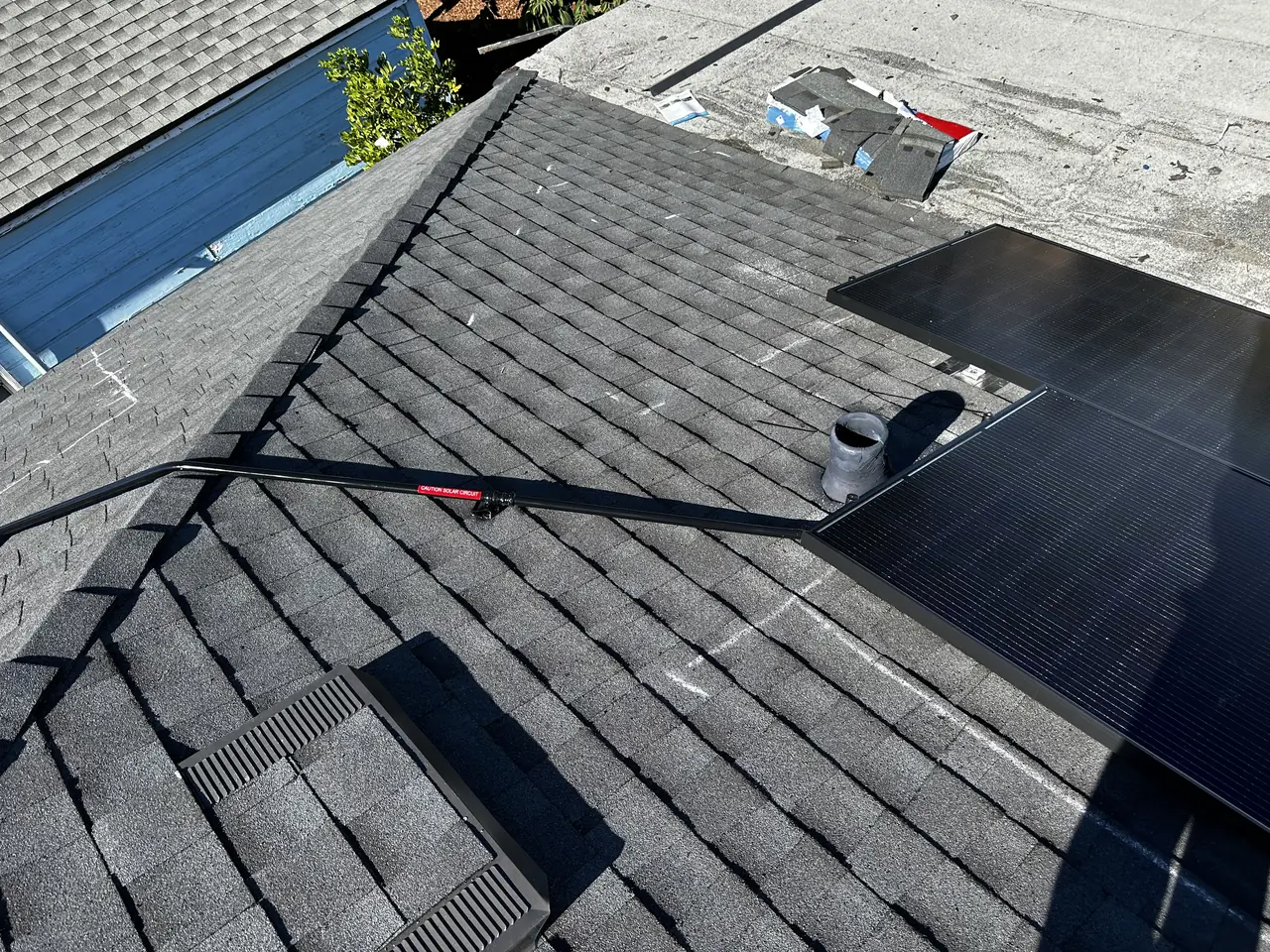
So the array gets broken up. Two rows here, three there, a single row on the small face at the back. And the cost of that is not in the modules — a module is a module wherever it sits. It is in everything else. Each group needs its own rails and its own attachments, because rails cannot cross a hip. Each group needs a conduit run to reach the next one, and those runs go over ridges and around hips.
None of that is a problem. It is a quantity, and quantities belong in a quote. What goes wrong is when an array is priced as though it were going on one face and then installed across five, because the person quoting looked at an aerial image and counted square feet rather than faces.
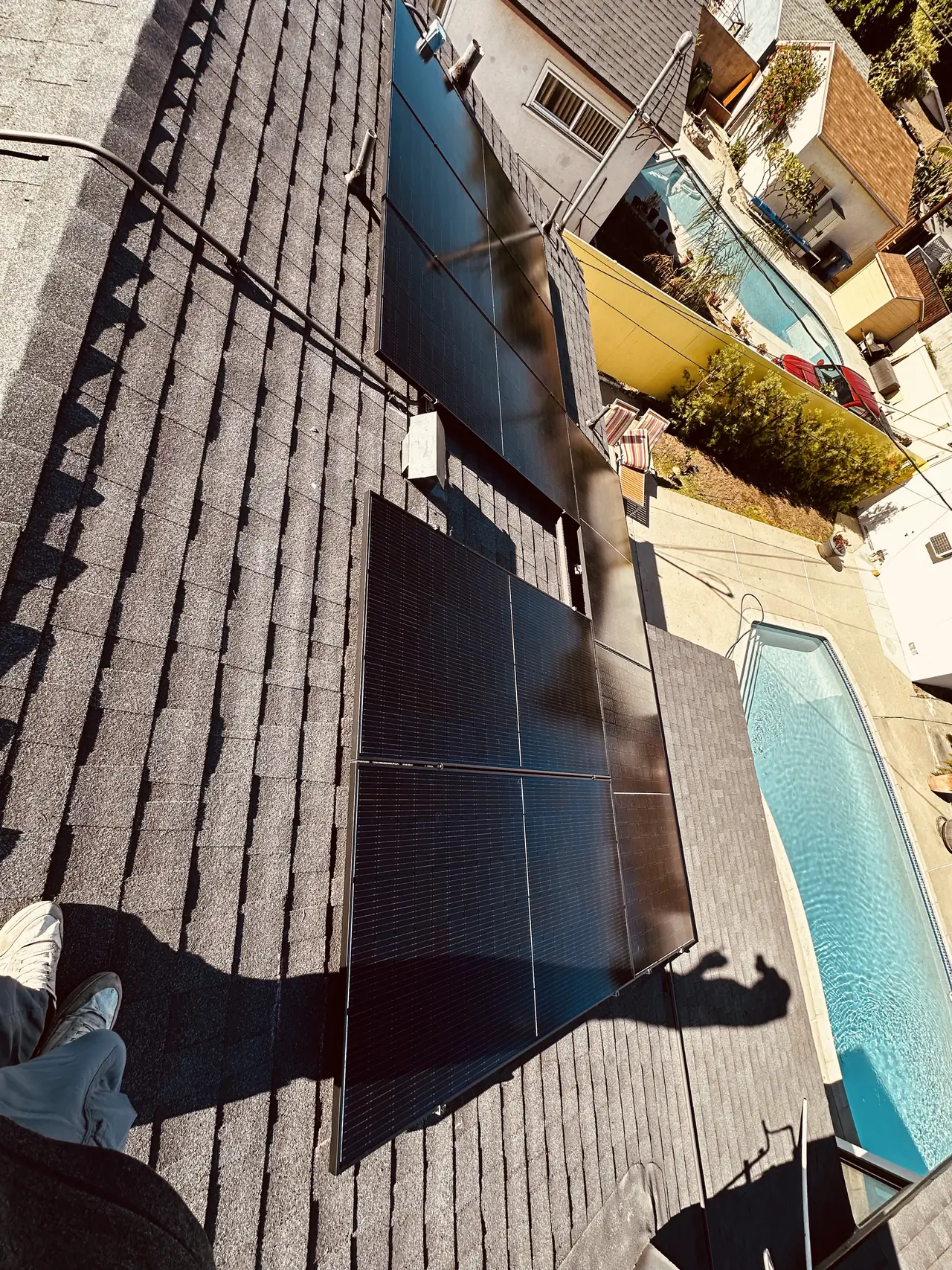
There is an upside and it is real. Modules on faces pointing different directions produce at different times of day. A single south-facing array peaks hard at midday and falls away either side; the same modules spread over south, west and east faces give a flatter curve — less at noon, more in the morning and the late afternoon. On a time-of-use rate plan, where the expensive hours are late in the day, that flatter curve can be worth more than the raw annual number implies.
That is a calculation, not a slogan, and it depends on the rate plan and on when the household actually uses power. But it is the reason not to treat a hip roof as simply a worse gable.
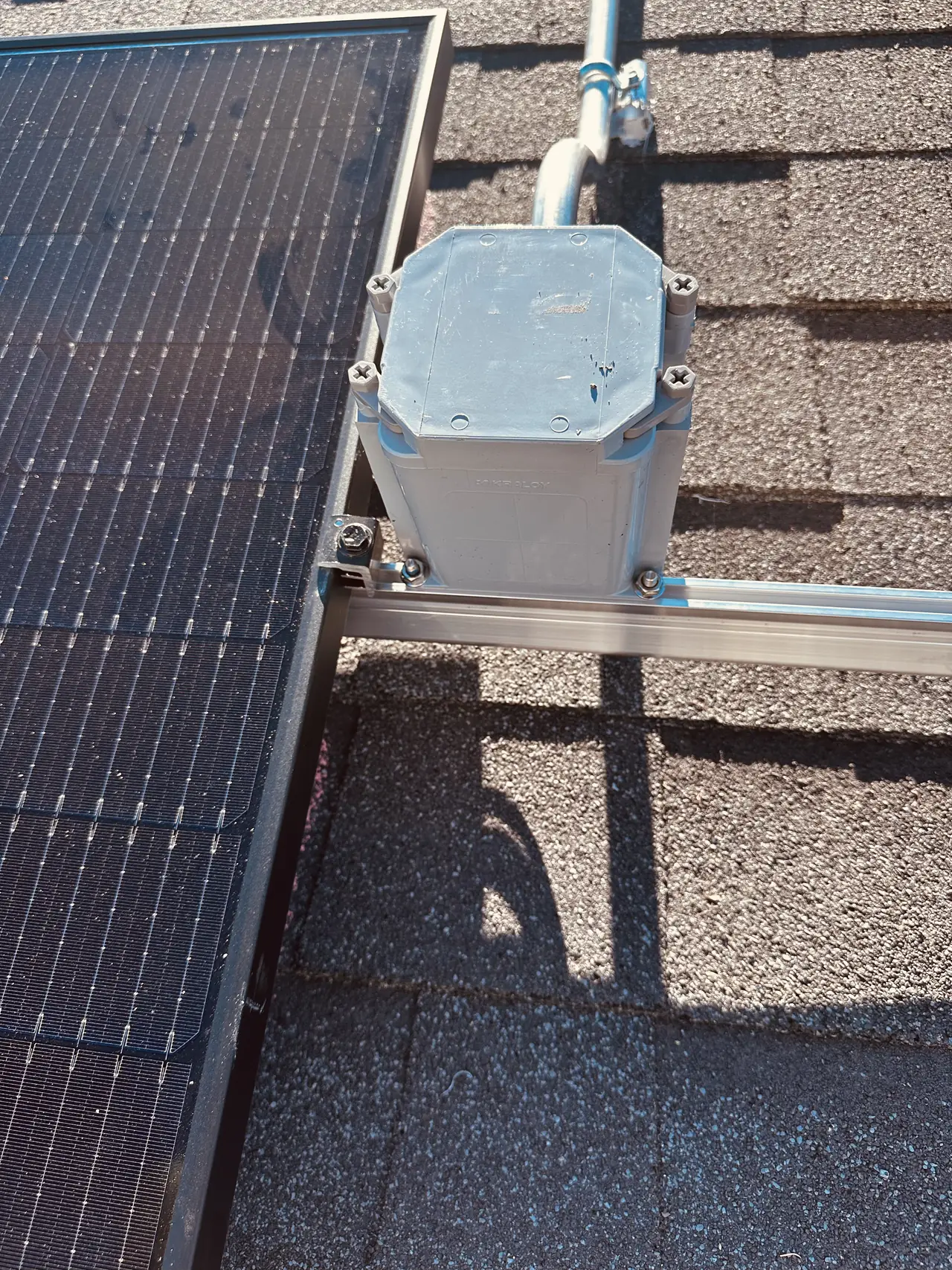
Two questions to ask about a hipped roof. How many separate groups is the array broken into, and which faces are they on? An installer who has worked out the layout can answer both in a sentence. One who has not will talk about total square footage, which on this shape of roof is the number that tells you least.
The groups were wired back together, the system passed its inspection and the house has been running on it since. Cali Energy laid this Granada Hills array out face by face rather than from a roof total.
How it ran
| 2025 | Layout set out across the usable faces |
|---|---|
| 2025 | Rails and attachments set, one set per plane |
| 2025 | Conduit run between groups over the hips |
| 2025 | Modules set and the system finished |
One roof, several arrays, one system.
What we did
- Set the layout out against the usable area of each face rather than the roof total.
- Gave every plane its own rails and its own flashed attachments.
- Ran the conduit between groups over the hips rather than around the eaves.
- Kept the fire access setbacks at every ridge and edge the layout touched.
System specifications
| Roof | Hipped, composition shingle, single story |
|---|---|
| Array | Split across several faces of the same roof |
| Racking | Separate rails per plane — rails cannot cross a hip |
| Interconnection between groups | Conduit over hips and ridges |
| Orientation | Several, by necessity rather than by choice |
| Also on the lot | Pool |
| Utility / AHJ | LADWP / LADBS |
Is your project like this one?
- Your roof is hipped and somebody has quoted you from an aerial image.
- You have been told your roof area is large and the array still looks small.
- You want to know why a hip roof costs more to rack than a gable.
- You are on a time-of-use rate plan and wondering whether west-facing modules help.
- Your quote gives a total and does not say how the array is broken up.
Cali Energy in Granada Hills
Granada Hills sits inside City of Los Angeles boundaries, so every project here is permitted through LADBS and interconnected through LADWP. Our work in Granada Hills runs from single-row arrays on accessory dwelling units to systems on underground services, on composition shingle and on concrete tile.
A lot of the post-war housing here is hipped rather than gabled, which looks simple from the street and gives an array four or five small faces instead of one large one.
This installation is on the Granada Hills projects page alongside the others, and what the work covers is set out on the Granada Hills service area page.
- License and classifications: CSLB #1032379
- Official reference for this process: LAFD Fire Prevention Bureau Requirement 96 — Solar Photovoltaic Systems
Frequently asked questions
Why does a hip roof cost more to install on?
Not because of the modules, but because of everything around them. Rails cannot run across a hip, so each face needs its own set with its own attachments, and conduit has to cross between groups. The same number of modules on one broad gable needs far fewer of all three.
Is total roof area a useful number on a hipped roof?
It is the least useful number available. What matters is the usable area of each individual face after the fire access setbacks at the ridges and edges, and the sum of those is always smaller than the roof. An installer quoting from total square footage has not looked at the layout.
Does splitting an array across directions hurt production?
It lowers the annual total compared with everything facing south, and it flattens the daily curve — less at midday, more in the morning and late afternoon. On a time-of-use plan the flatter curve can be worth more than the raw number implies. It depends on the rate plan and on when the house uses power.
What should I ask an installer about a hip roof?
How many separate groups the array is broken into and which faces they sit on. Somebody who has done the layout answers in one sentence. Somebody who has not will answer with a total, which on this shape of roof tells you almost nothing.
Does Cali Energy install on hip roofs in Granada Hills?
Frequently — a great deal of the post-war housing here is hipped rather than gabled. The difference is that an array has to be broken into several groups, each with its own rails and attachments and a conduit run to reach the next. Cali Energy lays a Granada Hills hip roof out face by face against the usable area of each one, rather than quoting from the roof total.
What this would look like on your roof
Planning solar in Granada Hills? Tell us your utility, your roof and what your bill looks like now, and we will model what a system like this would do on your house before you commit to anything.
Or call +1 (323) 844-7777 · Cali Energy, Northridge · CSLB #1032379 (B, C-10, C-39) — design, permits, install and electrical under one licensed contractor.
Related
This timeline reflects this property and this permitting path. Updated September 2026.