

Long Beach, CA · June – July 2023 · Southern California Edison / City of Long Beach
Nothing to follow: tilting an array off a flat Long Beach roof
Twelve modules of four hundred watts, lifted off the roof on standoffs and set at an angle the roof does not have. The work that decides whether it lasts is not on top — it is at the base of each leg.
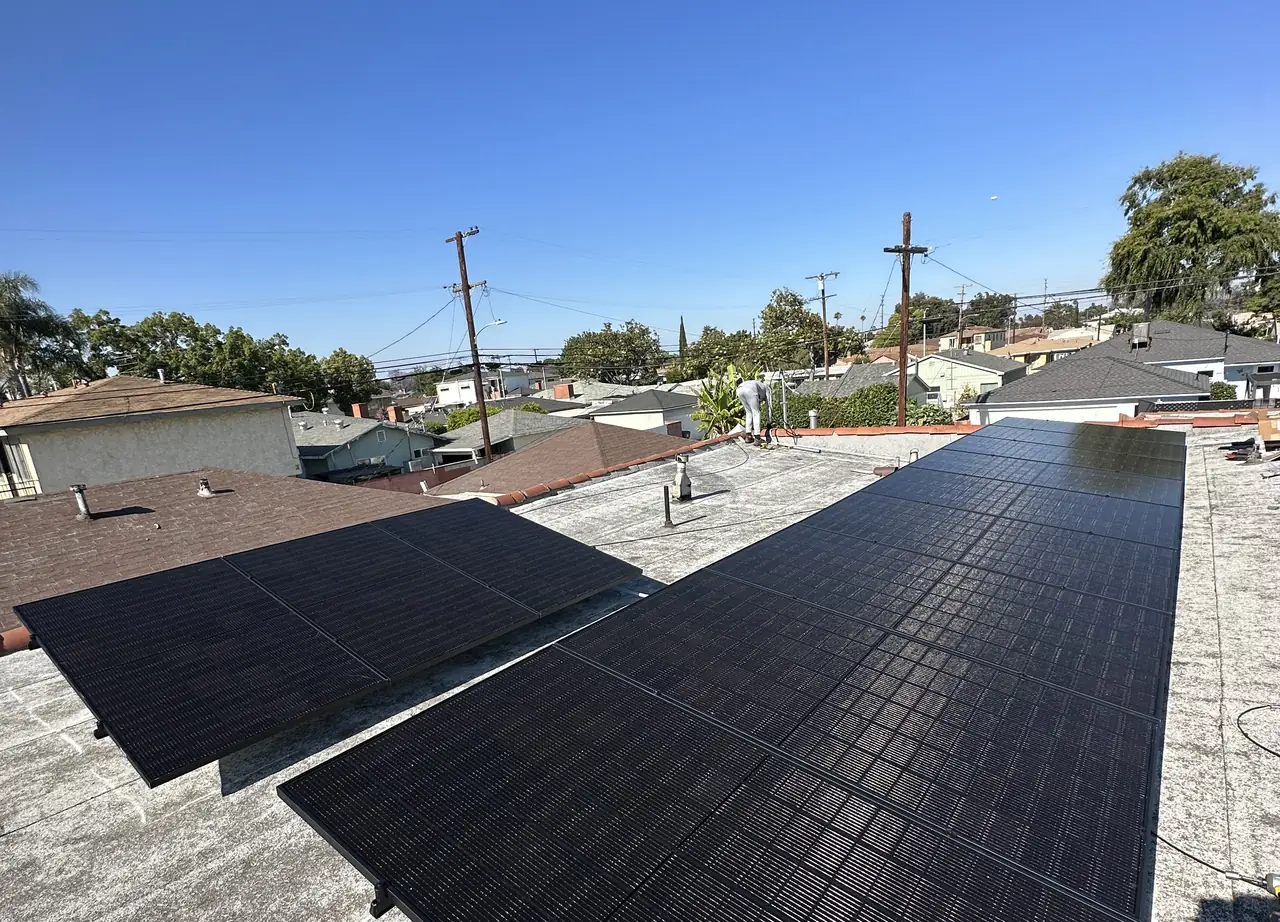
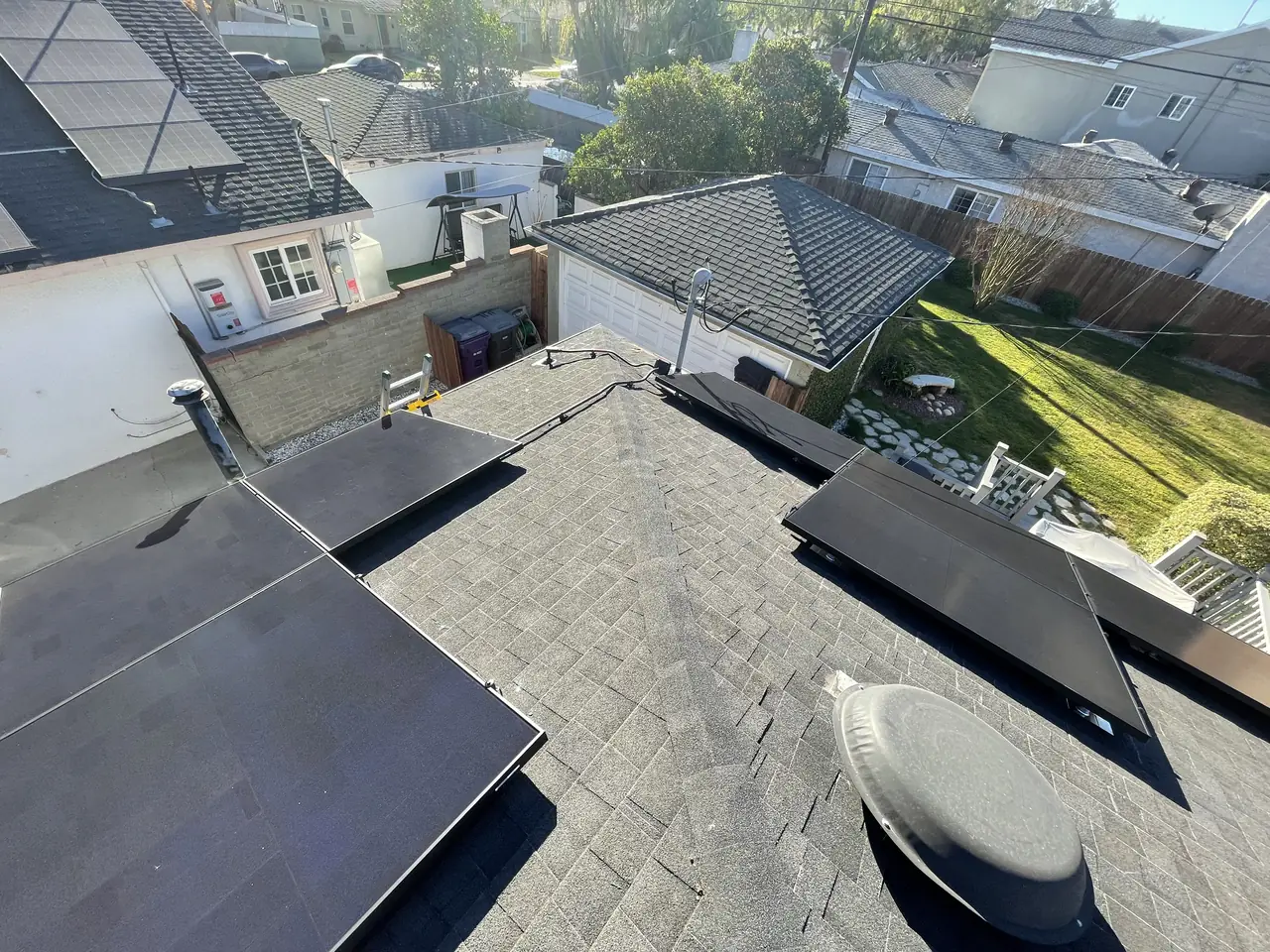
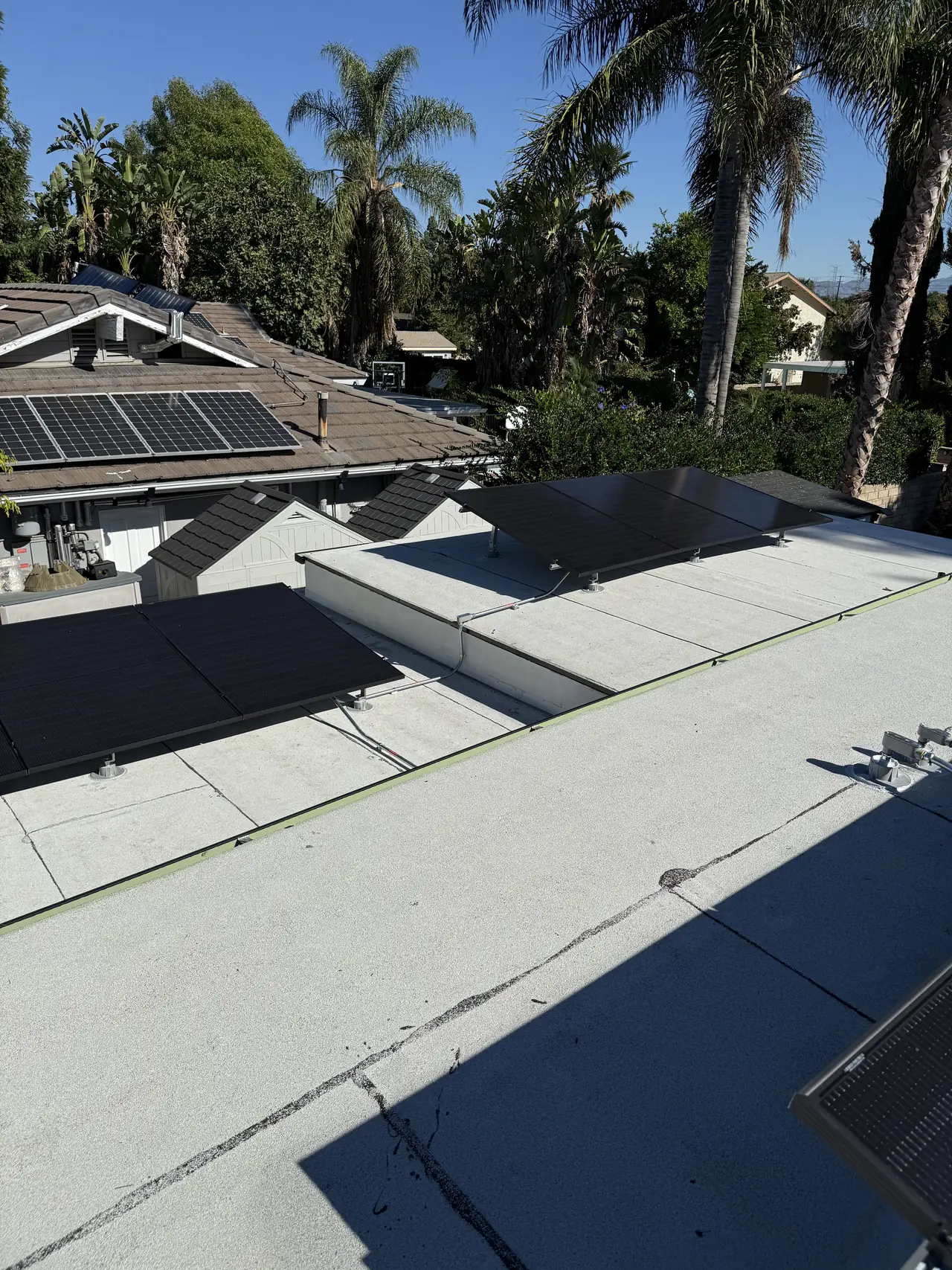
A flat roof gives an array no angle and no slope to follow, so on this Long Beach house the twelve Q CELLS 400 W modules were raised on standoffs and tilted to face the sun — 4.8 kW DC with an Enphase microinverter under each. Cali Energy set each standoff into the structure below, sealed every penetration through the cap sheet and replaced the main panel in its existing position. The final inspection passed on 11 July 2023.
At a glance
- Array
- 12 modules, Q CELLS 400 W — 4.8 kW DC
- Inverters
- 12 Enphase microinverters, one per module
- Mounting
- Standoffs and tilt legs above a flat roof
- Roof
- Flat, cap sheet
- Service
- Main panel replaced in its existing position
- Installed
- 6 July 2023
- Final inspection
- Passed 11 July 2023
- Utility / AHJ
- Southern California Edison / City of Long Beach
The story
On a pitched roof the array copies the roof. The plane is already tilted and already pointed somewhere, the rafters tell you where the attachments go, and the modules lie flat against it. A flat roof offers none of that. It has no angle, no direction and no line to follow, so all of it has to be built.
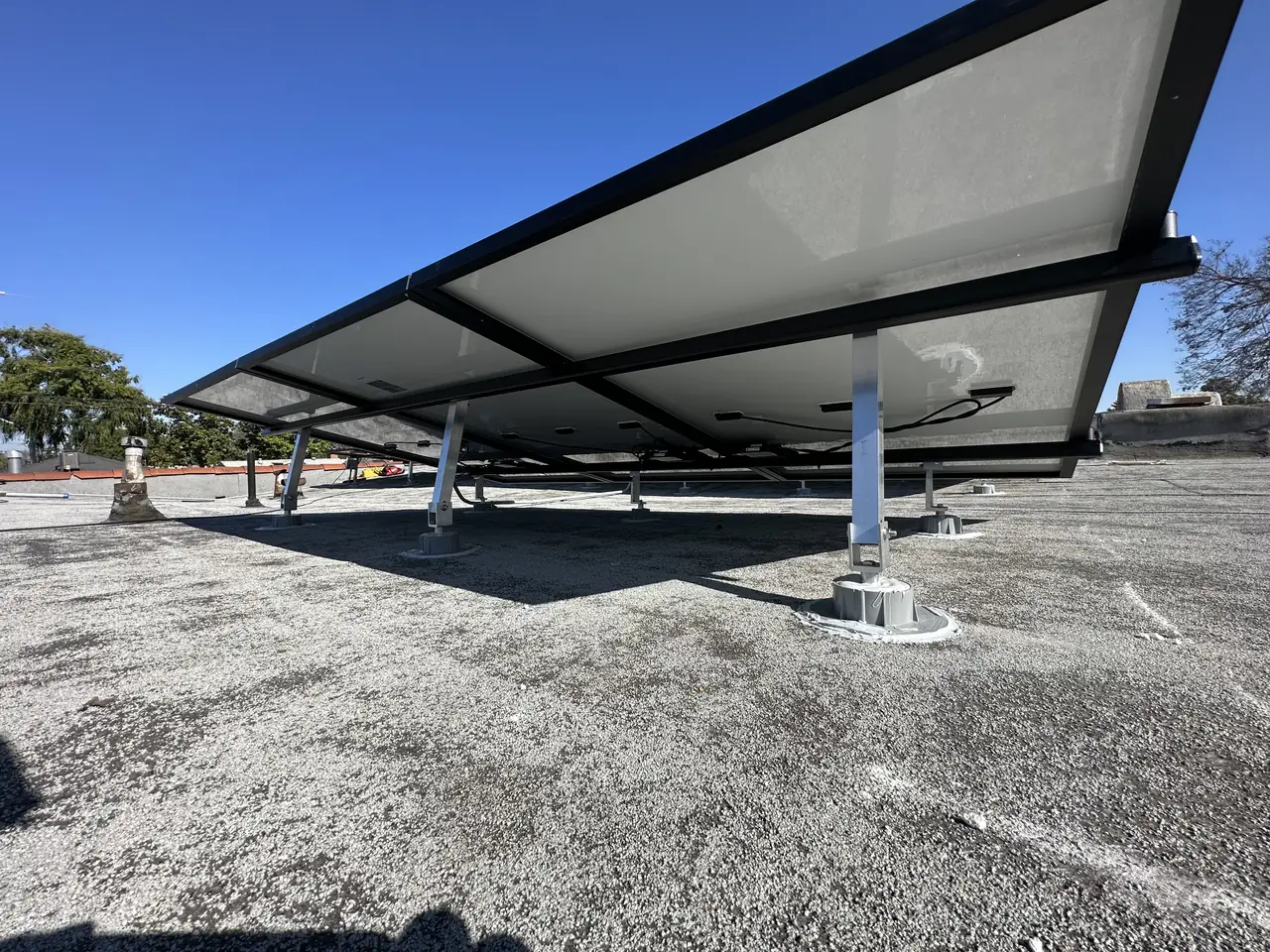
The array is raised on standoffs and tilted to an angle the roof does not have. That buys three things at once. The modules face the sun instead of the sky. Rain runs off them instead of sitting on them, which on a flat roof is the difference between a self-cleaning array and a dust trap. And the gap underneath lets air move, which keeps the modules cooler and the roof beneath them accessible.
Everything that decides whether this lasts happens at the bottom of each leg. A standoff goes through the cap sheet and into the structure below, and that hole is then closed — flashed and sealed so that water running across a roof with nowhere to drain quickly still cannot find a way in. On a pitched shingle roof gravity helps you; on a flat roof nothing does.

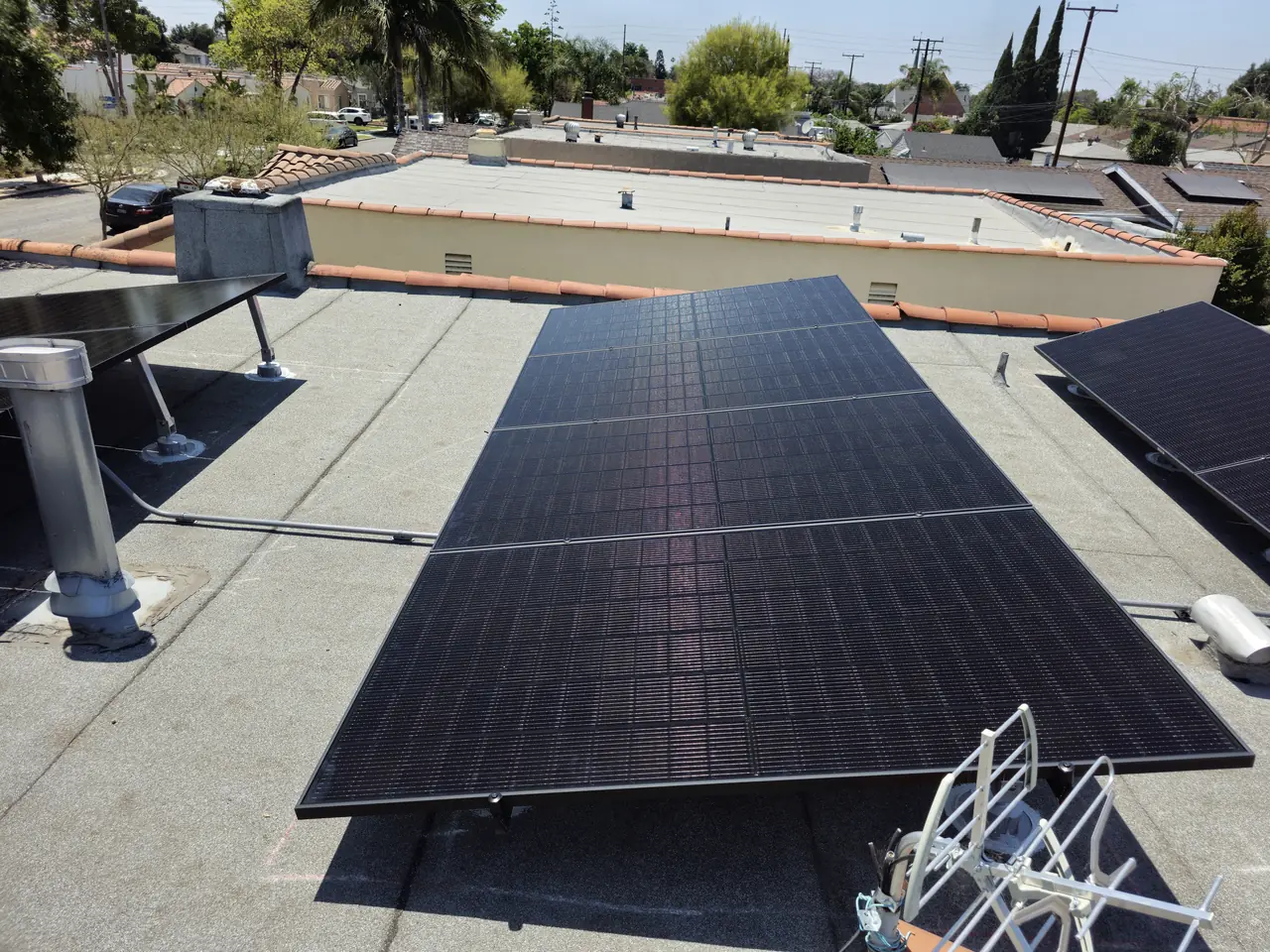
There is a trade-off worth being straight about. A tilted array on a flat roof takes more room than a flush one: rows have to be spaced so that the front row does not shade the one behind it in winter, and that spacing costs roof area. On a roof this size it decided the module count.
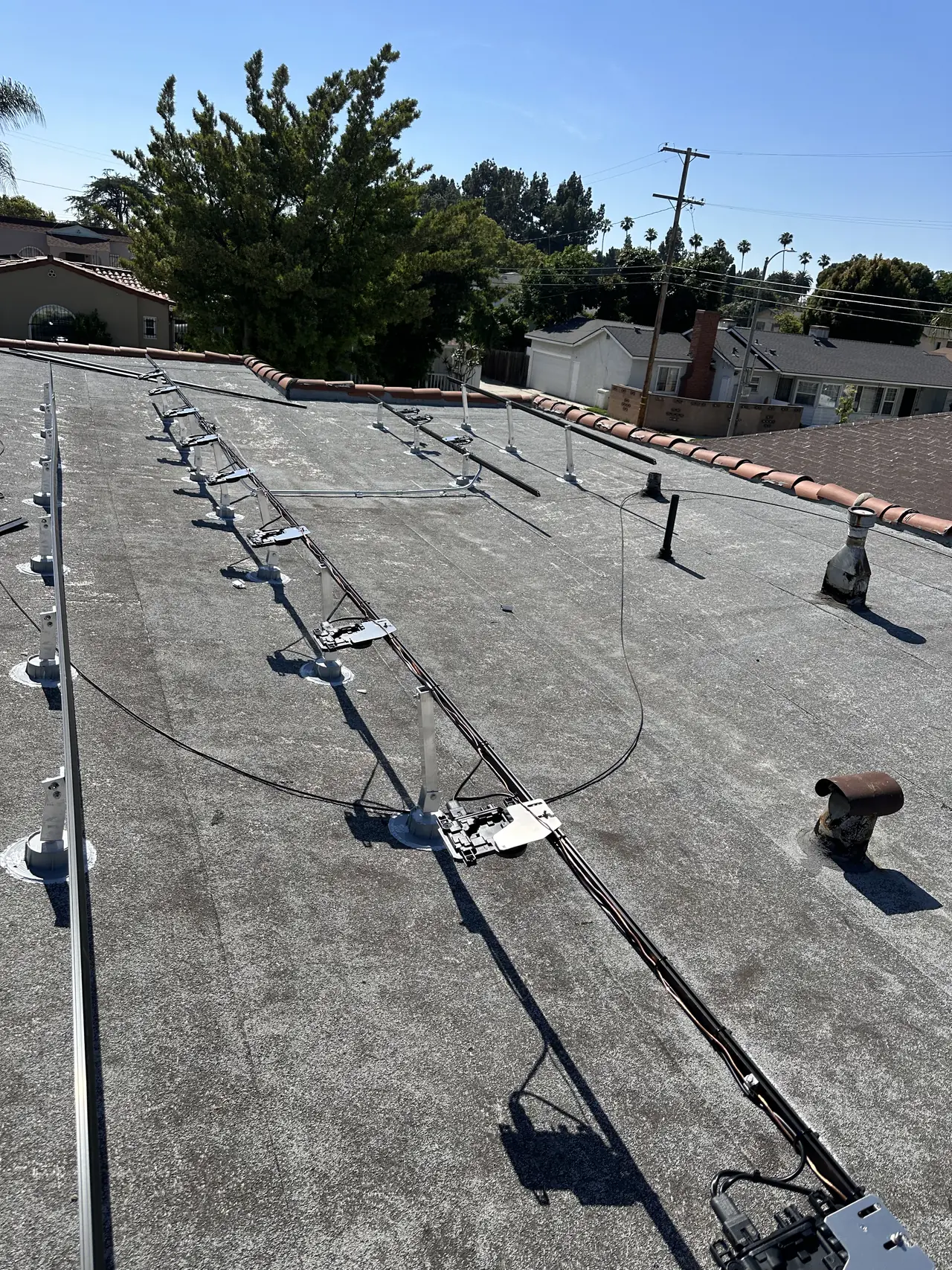
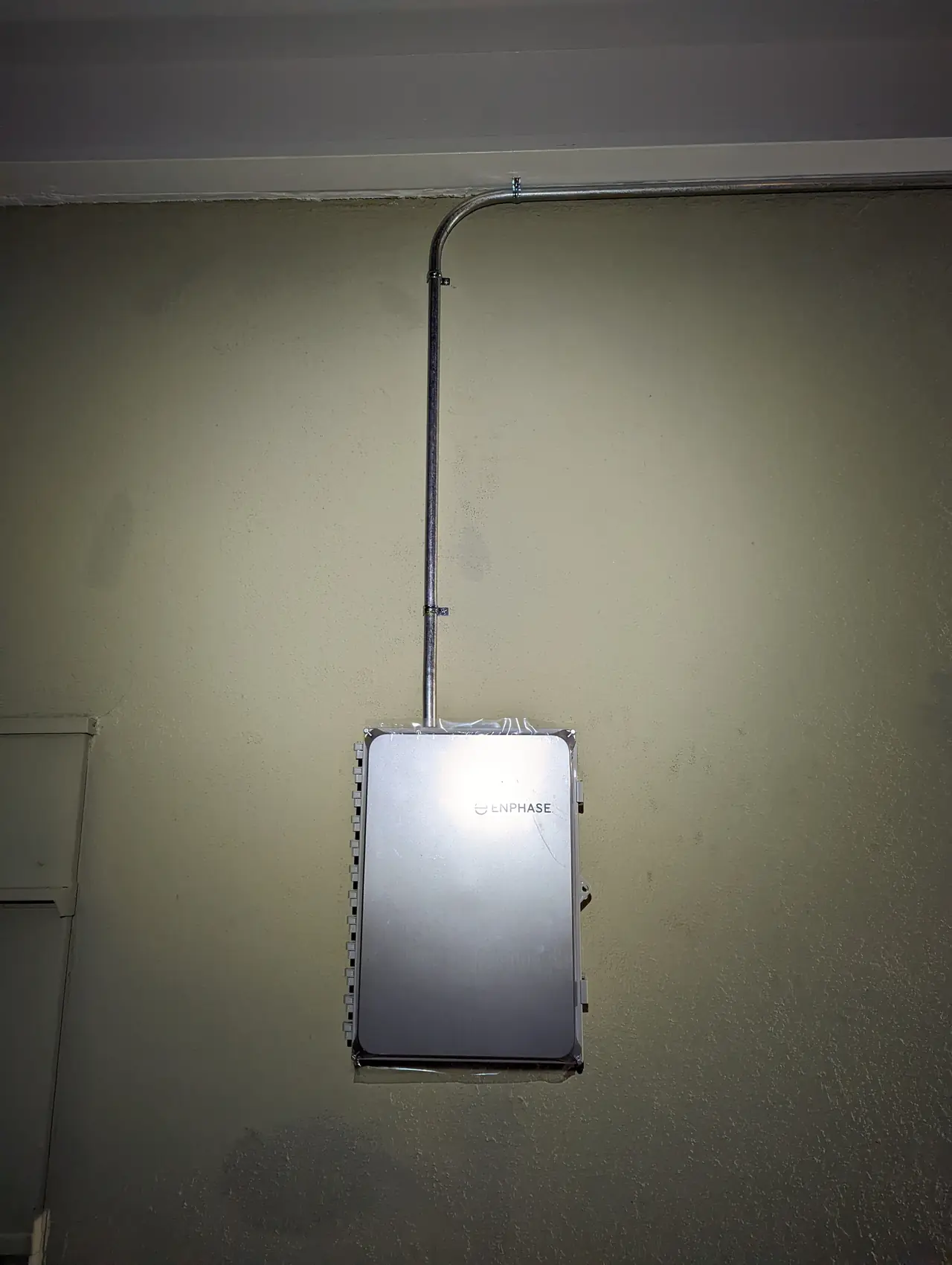
Twelve modules of four hundred watts went on — 4.8 kilowatts DC — each with a microinverter underneath it, and the main panel was replaced in the position it already occupied. The install took a day at the start of July and the final inspection passed five days later. Nothing exotic. But on a flat roof the unremarkable result is entirely a function of how the first hole was closed.
How it ran
| 28 June 2023 | Project handed over with the site survey |
|---|---|
| 6 July 2023 | Standoffs set and every penetration sealed |
| Same visit | Rails laid out, tilt legs fitted and twelve modules installed |
| Same visit | Main panel replaced in its existing position |
| 11 July 2023 | Final inspection passed |
| 12 July 2023 | Closing documents and photographs issued |
On a flat roof the array is built rather than followed, and it starts at the base of each leg.
What we did
- Set the standoffs into the structure below the cap sheet rather than into the covering.
- Sealed every penetration so a roof with no fall still sheds water around it.
- Laid the rails and fitted tilt legs to give the array the angle the roof lacks.
- Spaced the rows so the front row does not shade the one behind it in winter.
- Installed twelve Q CELLS 400 W modules with an Enphase microinverter under each.
- Replaced the main panel in its existing position and passed the final on 11 July 2023.
System specifications
| Modules | 12 × Q CELLS 400 W — 4.8 kW DC |
|---|---|
| Inverters | 12 Enphase microinverters |
| Mounting | Standoffs into the structure, tilt legs above |
| Sealing | Every penetration flashed and sealed into the cap sheet |
| Row spacing | Set so the front row does not shade the row behind |
| Roof | Flat, cap sheet |
| Final inspection | Passed 11 July 2023 |
| Utility / AHJ | Southern California Edison / City of Long Beach |
Is your project like this one?
- Your roof is flat and you have been told solar needs a pitch.
- You are worried about holes in a flat roof.
- You want to know why a tilted array takes more room than a flush one.
- Your flat roof gets dusty and nothing washes it off.
- You want the roof under the array to stay reachable.
Cali Energy in Long Beach
Long Beach is its own city, not a Los Angeles neighborhood: permits run through the City of Long Beach Building & Safety Bureau, interconnection through Southern California Edison.
Flat roofs are everywhere in Long Beach, and they change the whole conversation. There is no slope to follow and no rafter line to fix to blindly, the covering is a cap sheet rather than shingle, and every hole made through it has to be closed in a way that will still be closed in twenty years.
This installation is on the Long Beach projects page alongside the others, and what the work covers is set out on the Long Beach service area page.
- License and classifications: CSLB #1032379
- Official reference for this process: California Energy Commission — solar equipment lists
- Official reference for this process: City of Long Beach — Permit Center
Frequently asked questions
Can you put solar on a completely flat roof?
Yes. The array is raised on standoffs and tilted to an angle the roof does not have, so the modules face the sun rather than straight up. That also means rain runs off them instead of sitting on them, and air can move underneath. The work that matters is not the racking, it is how each penetration through the covering is closed.
How are the holes in a flat roof sealed?
Each standoff goes through the covering and into the structure below, and the penetration is then flashed and sealed so that water crossing a roof with nowhere to drain quickly cannot find a way in. On a pitched shingle roof gravity carries water away from a fixing; on a flat roof nothing does, so the seal is the whole defense.
Does a tilted array fit less on the roof than a flush one?
Yes, and it is worth knowing before you compare two quotes. Tilted rows have to be spaced so the front row does not shade the one behind it when the sun is low in winter, and that spacing takes roof area. A flush layout fits more modules and produces less per module. On a small flat roof the choice decides the system size.
Does Cali Energy install solar on flat roofs in Long Beach?
Yes. Flat and low-slope roofs are common across Long Beach and they are a different job from shingle: standoffs into the structure, every penetration sealed into the cap sheet, tilt legs to give the array an angle, and row spacing worked out for the winter sun. Cali Energy does this work and the service upgrades that usually come with it. License CSLB #1032379.
What this would look like on your roof
Planning solar in Long Beach? Tell us your utility, your roof and what your bill looks like now, and we will model what a system like this would do on your house before you commit to anything.
Or call +1 (323) 844-7777 · Cali Energy, Northridge · CSLB #1032379 (B, C-10, C-39) — design, permits, install and electrical under one licensed contractor.
Related
This timeline reflects this property and this permitting path. Updated September 2026.