

Lincoln Heights, CA · September 2021 – October 2022 · LADWP / LADBS
Lincoln Heights: a year to decide, forty days to build.
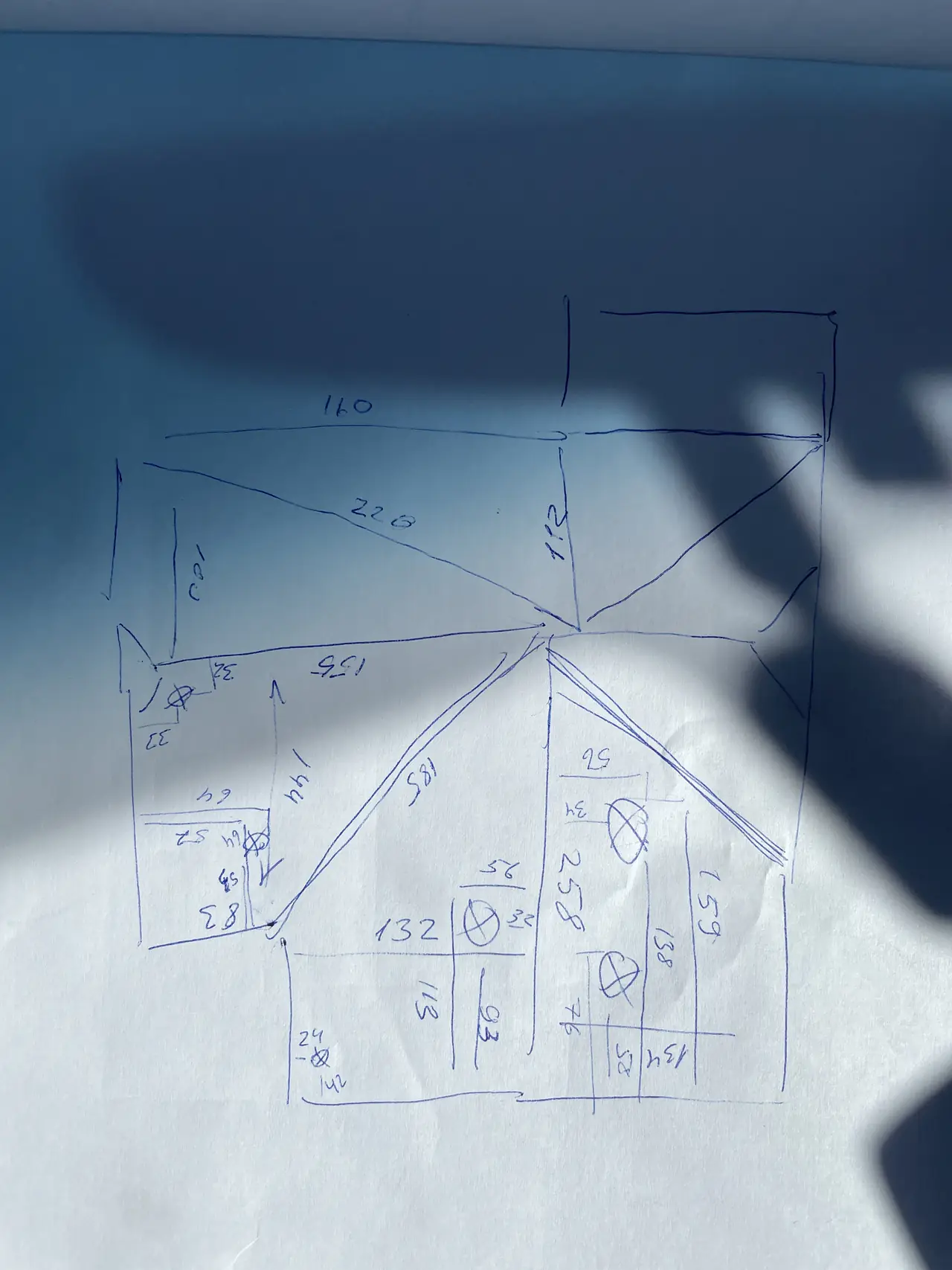
The layout was drawn in September 2021. The contract was signed the following August. Everything after that took six weeks.
A solar project has two clocks running on it and they belong to different people. One is the homeowner's: deciding whether to do it, at what size, and when. The other is the process: filing, review, inspection, meter, permission to operate. On this Lincoln Heights project the first clock ran eleven months and the second ran forty days, and only the second one is what people mean when they ask how long solar takes. Cali Energy drew the layout and carried the 7.2 kW system in Lincoln Heights, Los Angeles to permission to operate inside those forty days.

At a glance
- System
- 7.2 kW AC-CEC
- Layout drawn
- September 2021
- Contract signed
- August 2022
- Filing to permission to operate
- Forty days
- Utility milestones
- Three recorded on one day
- Utility / AHJ
- LADWP / LADBS
The story
The first conversation about this house was in the middle of September 2021, and the array layout was drawn within two weeks. Then nothing for eleven months.
In the second week of August 2022 the signing thread opened, and from that point the project reads like a different job entirely. The interconnection request was filed on the twenty-fourth of August with the payment the same day. The next day the utility recorded three milestones at once — acknowledgement, confirmation and a completed site evaluation. The installation was approved on the seventh of September and permission to operate came on the third of October.
Forty days from filing to a system that was allowed to run, on a project that had been sitting for a year.
The forty days are not the interesting number. The eleven months are, and what they are and are not.

They are not a delay. Nothing was stuck, nobody was waiting on a queue, no agency was holding anything. A quote and a layout existed and a decision had not been made, which is an entirely normal thing for a household to do with a large expenditure. What those months are, though, is the part of the calendar that gets forgotten when the project is described afterwards. Asked how long it took, the answer is thirteen months. Asked how long the work took, it is six weeks. Both are true and they describe different things.
It matters because the number people carry around about solar is usually the first one, collected from somebody who included their own deciding time in it. That number then becomes the reason somebody else does not start.
There is a practical note in here too. A layout drawn in September 2021 and signed in August 2022 is a year-old layout. Module models change, the CEC listing for a given piece of equipment changes, and a design that was correct when drawn can need revisiting before it is filed. On this project the filing went in two weeks after the signature, which is the right way round: confirm the design against what is actually available, then file.

The relationship with this house kept going long after the system was running — the owner was still in touch in December 2025, more than three years after permission to operate. A solar project does not end at switch-on; it turns into a relationship with the roof and the equipment on it.
Cali Energy drew the layout, carried the interconnection and closed this Lincoln Heights project in Los Angeles inside forty days of filing, and has been back to the house since.
How it ran
| 13 September 2021 | First contact |
|---|---|
| 23–27 September 2021 | Array layout drawn |
| — | Eleven months with the decision open |
| 9 August 2022 | Contract signing opens |
| 24 August 2022 | Interconnection request filed; utility payment cleared |
| 25 August 2022 | Acknowledgement, confirmation and site evaluation — all on one day |
| 7 September 2022 | Installation approved |
| 3 October 2022 | Permission to operate |
| to December 2025 | Continued contact with the house |
Thirteen months from first contact, forty days from filing. The difference is a decision, not a queue.
What we did
- Drew the layout within two weeks of the first visit.
- Left the decision with the household without chasing it.
- Confirmed the design against current equipment before filing, not before signing.
- Filed two weeks after the signature and closed in forty days.
System specifications
| System | 7.2 kW AC-CEC recorded by the utility |
|---|---|
| Array | Residential rooftop, composition shingle |
| Layout | Drawn September 2021, confirmed before the 2022 filing |
| Storage | None |
| Interconnection | Filed and granted inside forty days |
| After switch-on | Contact continues into 2025 |
| Utility / AHJ | LADWP / LADBS |
Is your project like this one?
- You were quoted for solar a while ago and never decided.
- You have been told solar takes a year and want to know what that number includes.
- Your layout is a year old and you are ready to go ahead.
- You want to know what happens to the relationship after the system is running.
Cali Energy in Lincoln Heights
Lincoln Heights is one of the oldest neighborhoods in Los Angeles, north-east of downtown, permitted through LADBS and interconnected through LADWP. The housing is small, old and close together, and the services behind it are frequently the original ones.
This installation is on the Los Angeles projects page alongside the others, and what the work covers is set out on the Los Angeles service area page.
- License and classifications: CSLB #1032379
- Official reference for this process: LADBS — plan review and permitting
- Official reference for this process: California Energy Commission — equipment lists and AC ratings
Frequently asked questions
How long does a residential solar project actually take?
Separate the two clocks. The process — filing, review, inspection, meter, permission to operate — ran forty days on this Lincoln Heights project. The whole story from first contact ran thirteen months, and the difference was a household deciding. Most of the long timelines people quote include their own deciding time without saying so.
Is an old quote still valid?
The price usually needs revisiting and so does the design. Module models and their CEC listings change, and a layout that was correct when drawn can need confirming against what is actually available before it is filed. The right order is to confirm the design after the decision and before the application, which is what happened here.
Does anything happen after permission to operate?
Usually, eventually. On this house the owner was still in touch more than three years after switch-on. A solar project turns into a relationship with the roof and the equipment — monitoring questions, a service call, a re-roof, an addition. The switch-on is the middle of the story rather than the end.
Does Cali Energy install solar in Lincoln Heights, Los Angeles?
Yes. Lincoln Heights is one of the oldest parts of Los Angeles, permitted through LADBS and interconnected through LADWP like the rest of the city. The housing is small and old and the services behind it are often original, so the service panel is part of the conversation more often than not.
What this would look like on your roof
Planning solar in Lincoln Heights? Tell us your utility, your roof and what your bill looks like now, and we will model what a system like this would do on your house before you commit to anything.
Or call +1 (323) 844-7777 · Cali Energy, Northridge · CSLB #1032379 (B, C-10, C-39) — design, permits, install and electrical under one licensed contractor.
Related


This timeline reflects this property and this permitting path. Updated September 2026.