

Hollywood Hills, CA · March – April 2023 · LADWP / LADBS
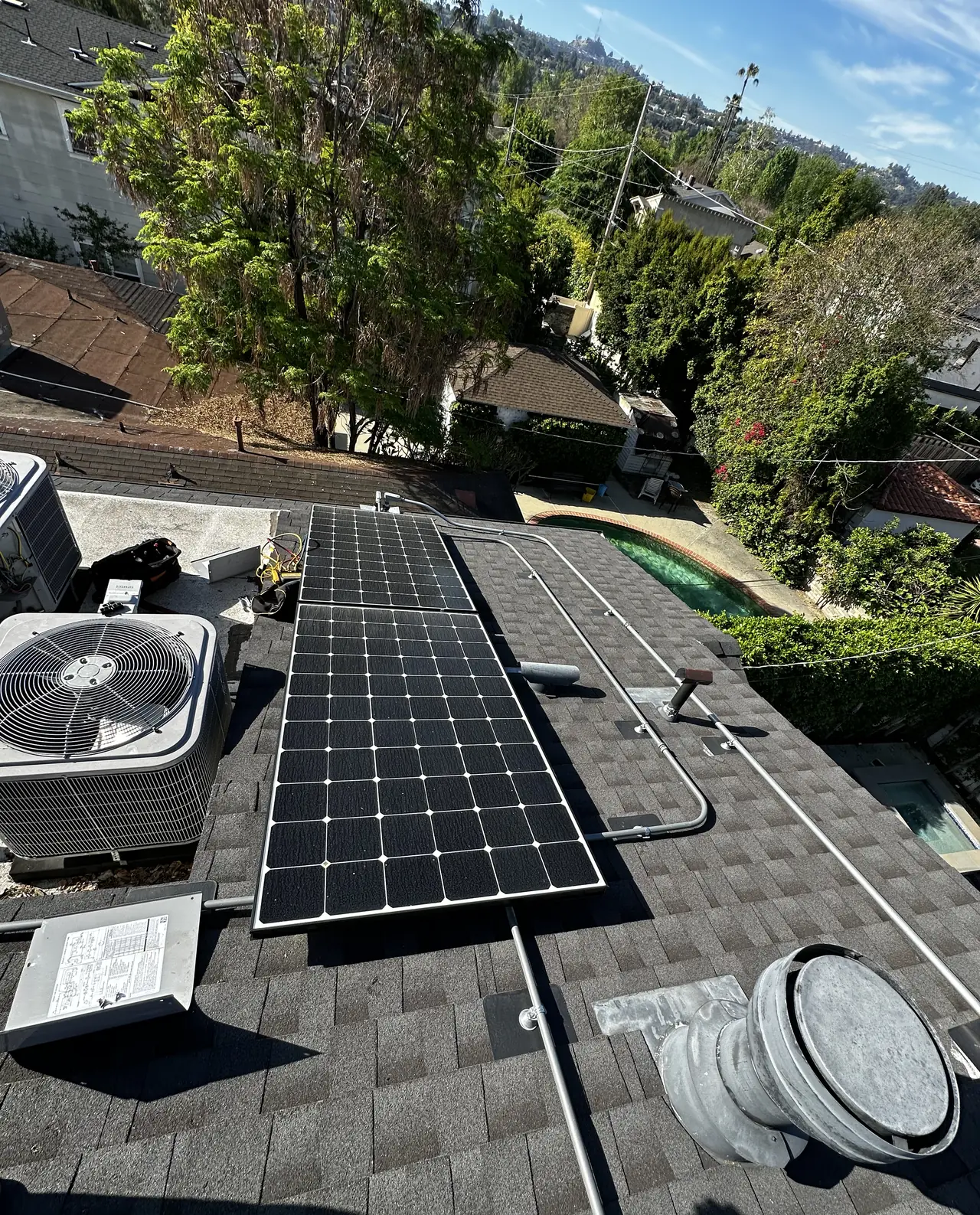
There was already a conduit on the roof.
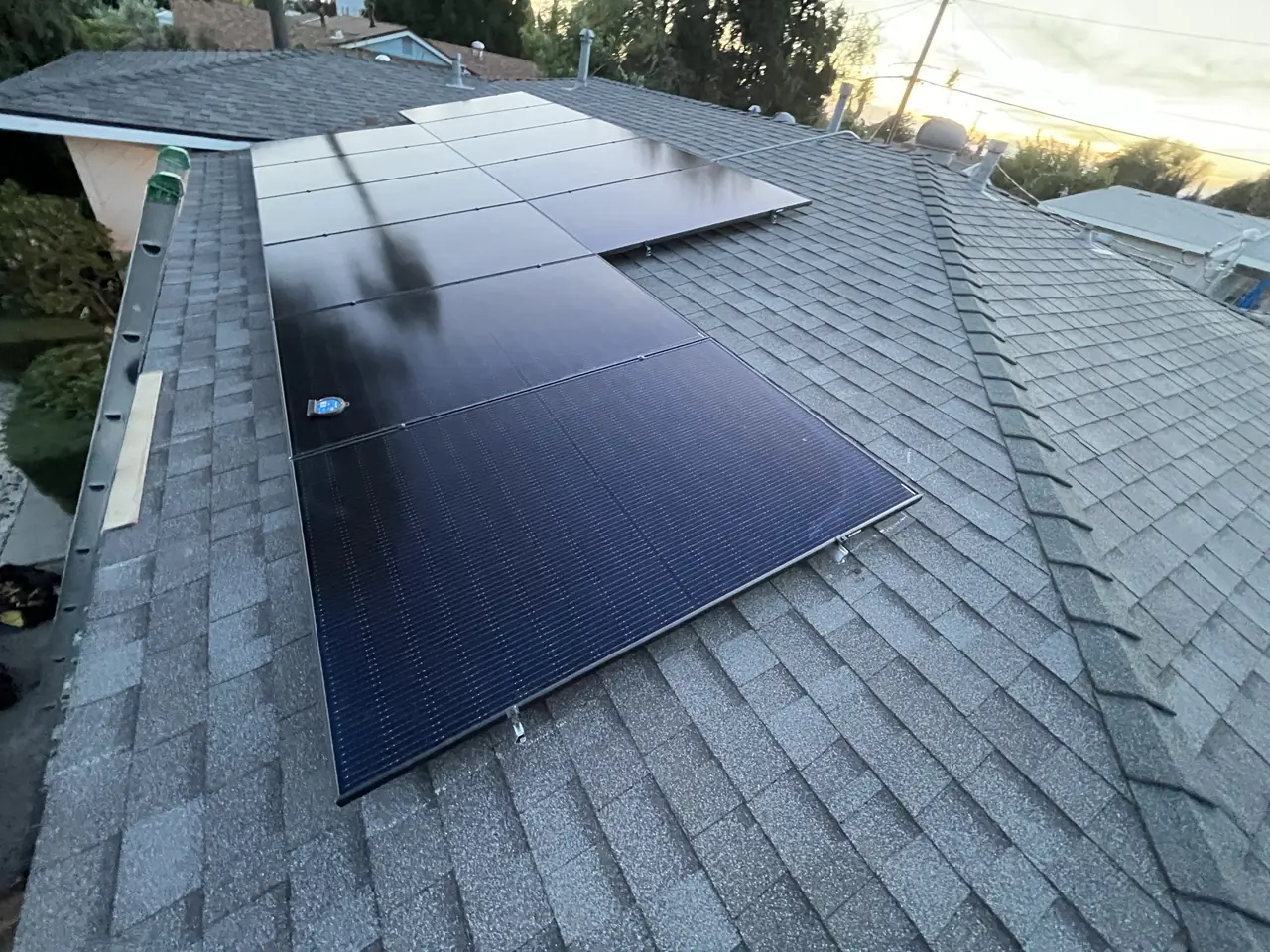
Thirteen modules on a hillside house, and a run of flexible conduit left over from earlier work. The right answer was to use it.
Existing conduit on a roof is worth reusing when it is sound, correctly supported and sized for the circuit going into it — it means fewer new penetrations through the covering, and penetrations are where roofs leak. What it frequently is not is long enough, because it was run for whatever was there before. Extending it is straightforward; assuming it reaches is not. Cali Energy reused and extended the conduit on this 5.07 kW installation in the Hollywood Hills, Los Angeles rather than adding new penetrations.
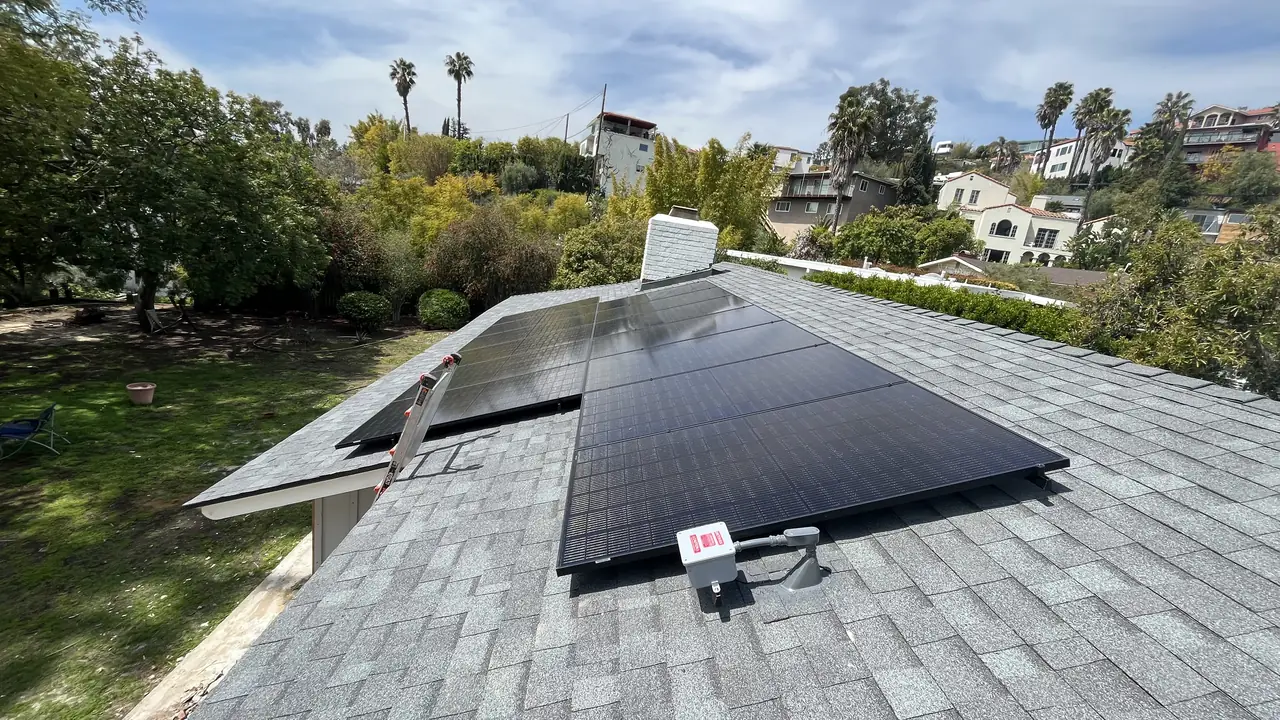
At a glance
- System
- 5.07 kW DC
- Array
- 13 modules, 13 module-level inverters
- On the roof already
- Flexible conduit from earlier work
- Decision
- Reuse and extend rather than run new
- Utility / AHJ
- LADWP / LADBS
The story
Thirteen 390-watt modules, thirteen module-level inverters, a gateway and a hillside roof — 5.07 kW, and a job that should take a day. The complication was a length of flexible conduit that was on the roof before anyone arrived.
Houses in the hills have usually been worked on more than once. Something was up there before: an earlier array, a pool heater, a run to an outbuilding. When that work came out, the conduit often stayed, because removing it means opening the penetrations it passes through and that is its own job.
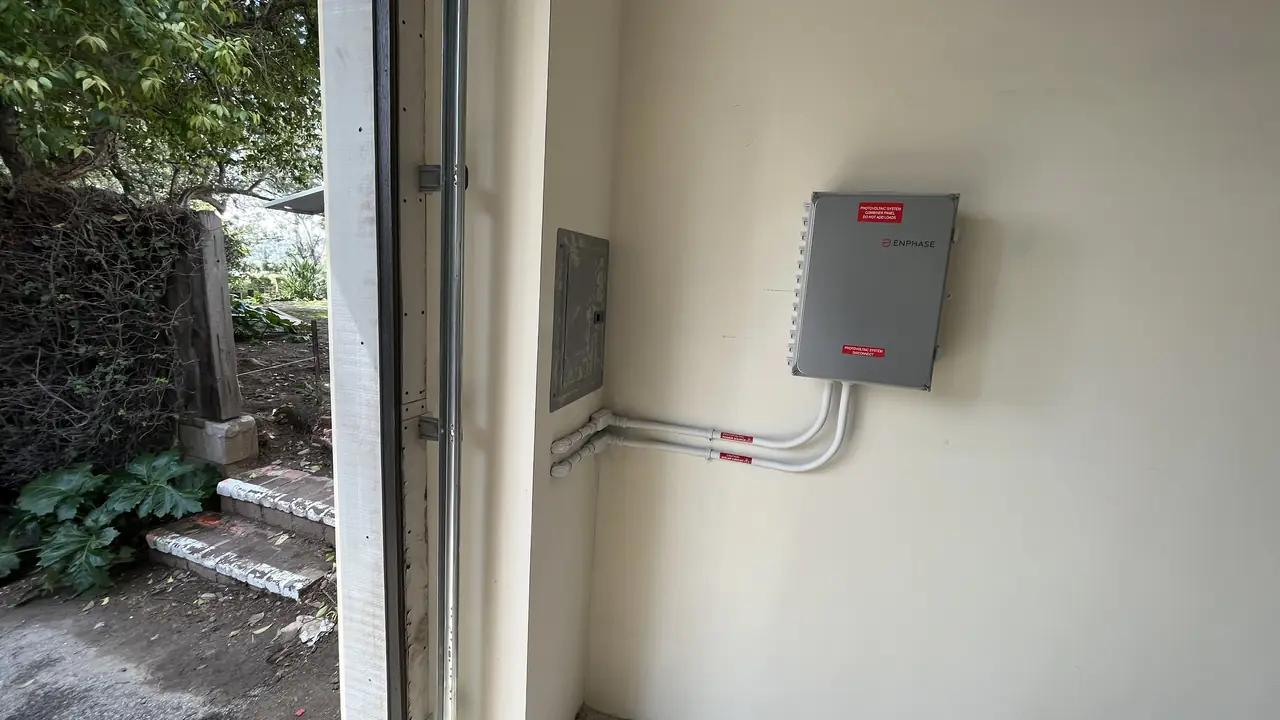
The first question on a roof like that is whether to use what is there or run new. Reusing is usually right, and for one reason above the others: every new run means new penetrations through the covering, and penetrations are where roofs leak. A sound existing conduit that is properly supported and large enough for the circuit going into it is a penetration that has already proved itself through a few winters.
The conditions are not optional, though. Sound means no cracking or crushing along its length and no corrosion at the fittings. Supported means at the spacing the code requires, not wherever the last crew happened to clip it. Large enough means the conductors for this array, not for whatever it carried before. If any of the three fails, it comes out and a new run goes in, and the argument about penetrations loses.
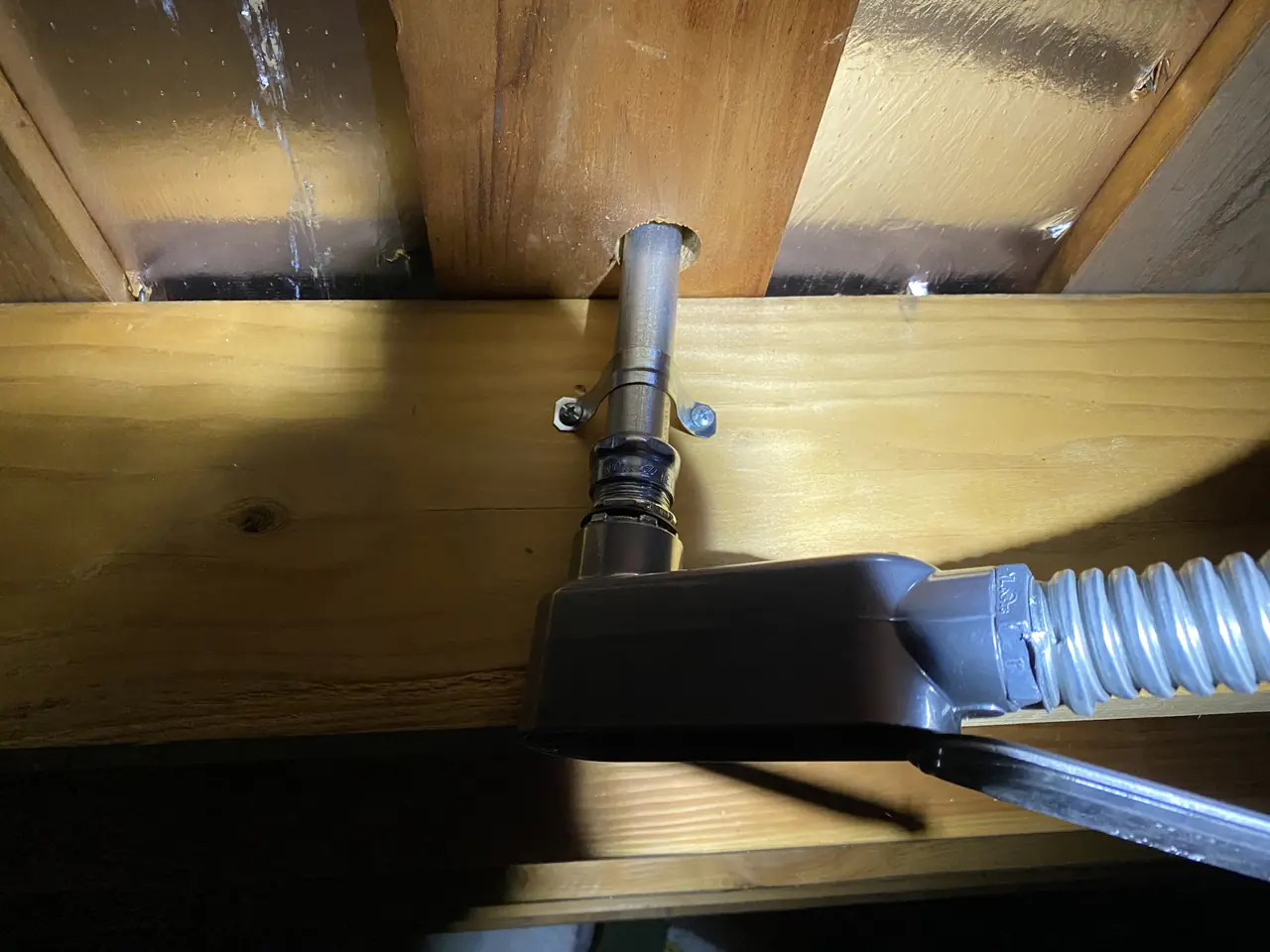
Here all three held, and the conduit was reused. What it was not was long enough. It had been run to reach something that is no longer there, and the new array sits somewhere else on the roof. So more was bought and the run extended to reach the modules — an hour's work and an entirely ordinary outcome.
The alternative is the reason to measure. A crew that assumes the existing conduit reaches, and discovers at the end of the day that it does not, either leaves the job unfinished or improvises a run to close the gap. Improvised runs are how conduit ends up unsupported, or crossing a valley, or entering a penetration at the wrong angle. Measuring first costs nothing.
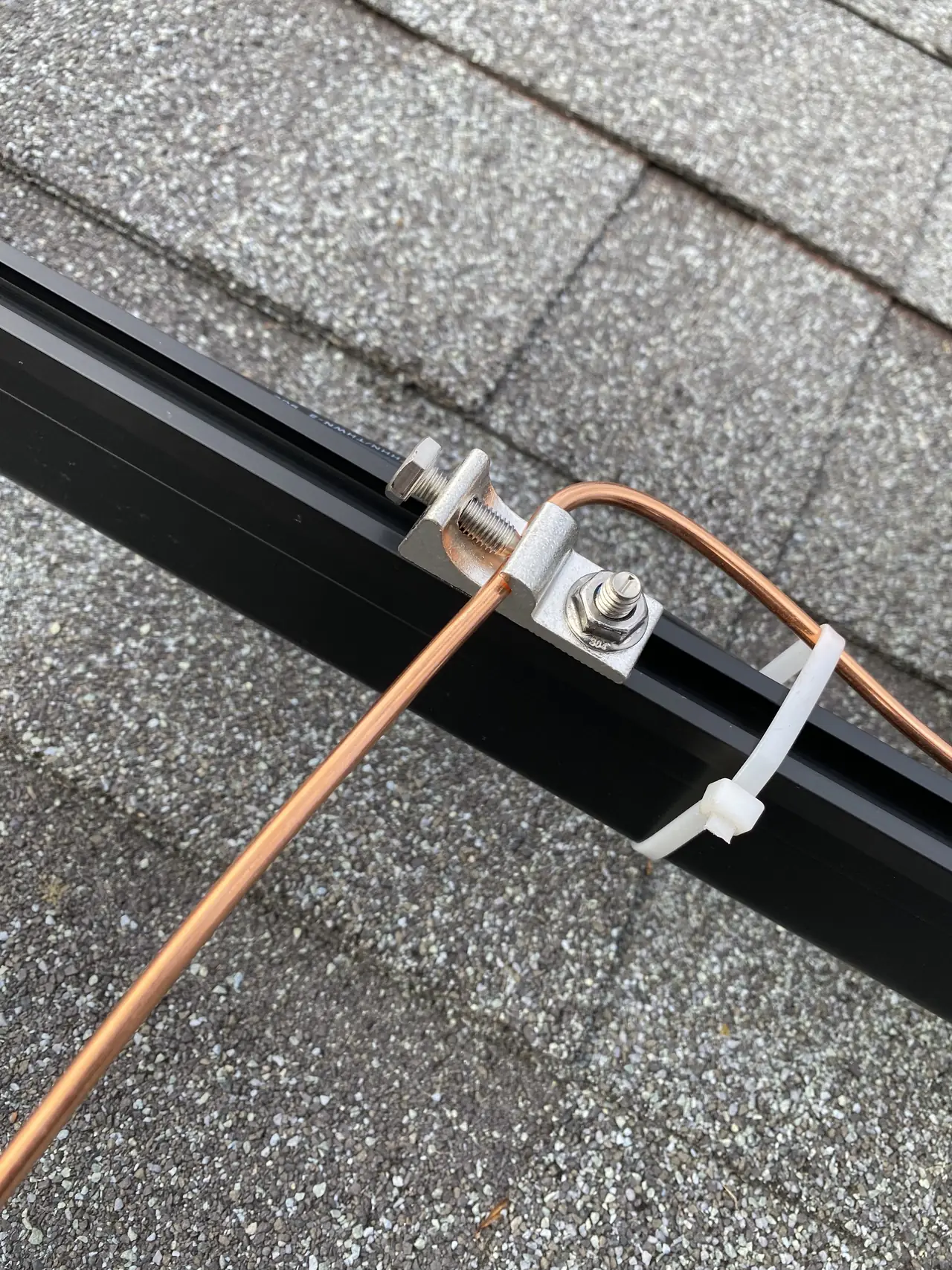
One more thing worth saying plainly, because it applies to any work on a roof you live under. If you know there is something up there from earlier work — a conduit, an old mount, a capped penetration — say so before the crew arrives. Not because it changes the price, but because it changes what gets looked at, and the things nobody mentions are the things nobody checks.
Cali Energy set this Hollywood Hills array in Los Angeles in a single day on the roof, reused the conduit that was already there and extended it to reach the modules. The system was commissioned and handed over the same month.
How it ran
| 1 March 2023 | Install scheduled; materials ordered |
|---|---|
| 8 March 2023 | Module delivery tracked to the site |
| 9 March 2023 | Modules on site; array set in one day |
| 9 March 2023 | Existing roof conduit assessed, reused and extended to reach the array |
| April 2023 | System commissioned and handed over |
One day on the roof. The conduit question was settled on the same day it came up.
What we did
- Assessed the existing conduit for condition, support and size before reusing it.
- Reused it rather than adding new penetrations to the covering.
- Extended the run to reach the array instead of relocating the array to the conduit.
- Set thirteen modules and their inverters in a single day.
System specifications
| System | 5.07 kW DC as signed |
|---|---|
| Modules | 13 × 390 W |
| Inverters | 13, module-level, one per module |
| Roof | Hillside, existing flexible conduit in place |
| Conduit | Reused after assessment, then extended |
| Utility / AHJ | LADWP / LADBS |
Is your project like this one?
- There is conduit on your roof from work somebody did years ago.
- You want fewer new holes in a covering that is not new.
- You have been quoted for a new conduit run and wonder why the existing one will not do.
- Your roof has had more than one thing on it over the years.
Cali Energy in Hollywood Hills
The Hollywood Hills are City of Los Angeles — permitted through LADBS, interconnected through LADWP. Houses here have usually been worked on more than once, and what is already on the roof from the last time is worth looking at before anything new goes up.
This installation is on the Los Angeles projects page alongside the others, and what the work covers is set out on the Los Angeles service area page.
- License and classifications: CSLB #1032379
- Official reference for this process: LADBS — plan review and permitting
- Official reference for this process: LADBS — inspections
Frequently asked questions
Can existing conduit on a roof be reused for a new array?
Often, and it is usually the better answer. Every new run means new penetrations through the covering, and penetrations are where roofs leak. Existing conduit that is sound, properly supported and large enough for the new circuit is a penetration that has already been through several winters without failing.
When should existing conduit be replaced instead?
When any of three things fails. Sound — no cracking, crushing or corrosion at the fittings along its length. Supported — clipped at the spacing the code requires rather than wherever the last crew put it. Sized — large enough for the conductors this array needs, not for whatever it carried before. If one of those fails, it comes out.
What if the existing conduit does not reach the new array?
It gets extended, which is an hour's work when it is planned and a problem when it is discovered at the end of the day. The failure mode to avoid is an improvised run to close the gap — that is how conduit ends up unsupported, crossing a valley, or entering a penetration at the wrong angle.
Does Cali Energy install solar in the Hollywood Hills, Los Angeles?
Yes. Hollywood Hills houses have usually been worked on more than once, so what is already on the roof is part of the survey rather than a surprise on the day. Cali Energy looks at existing conduit, old mounts and capped penetrations before designing the run, because reusing what is sound means fewer new holes in a covering that is rarely new.
What this would look like on your roof
Planning solar in Hollywood Hills? Tell us your utility, your roof and what your bill looks like now, and we will model what a system like this would do on your house before you commit to anything.
Or call +1 (323) 844-7777 · Cali Energy, Northridge · CSLB #1032379 (B, C-10, C-39) — design, permits, install and electrical under one licensed contractor.
Related


This timeline reflects this property and this permitting path. Updated September 2026.