

Hollywood Hills, CA · June – July 2024 · LADWP / LADBS
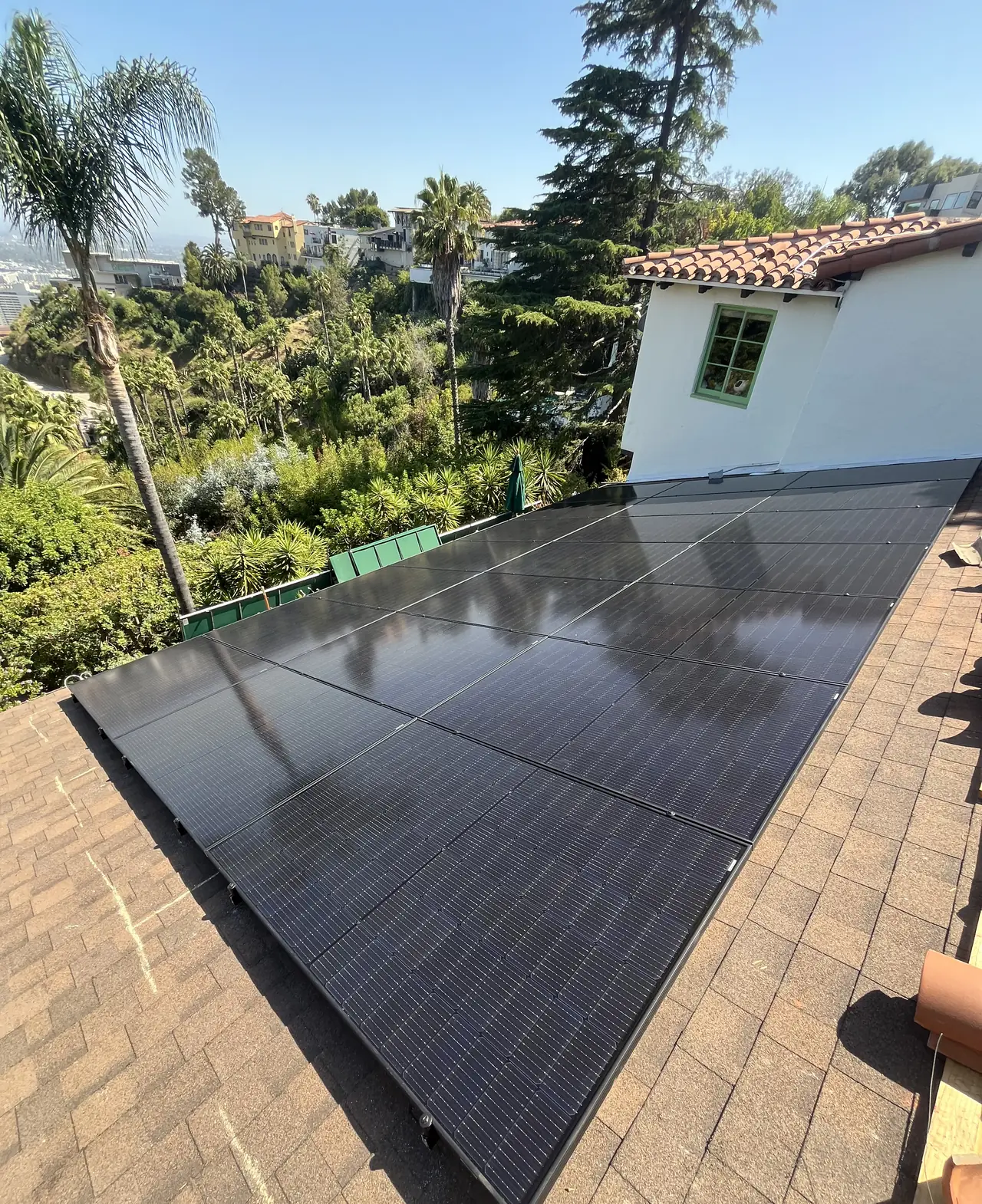
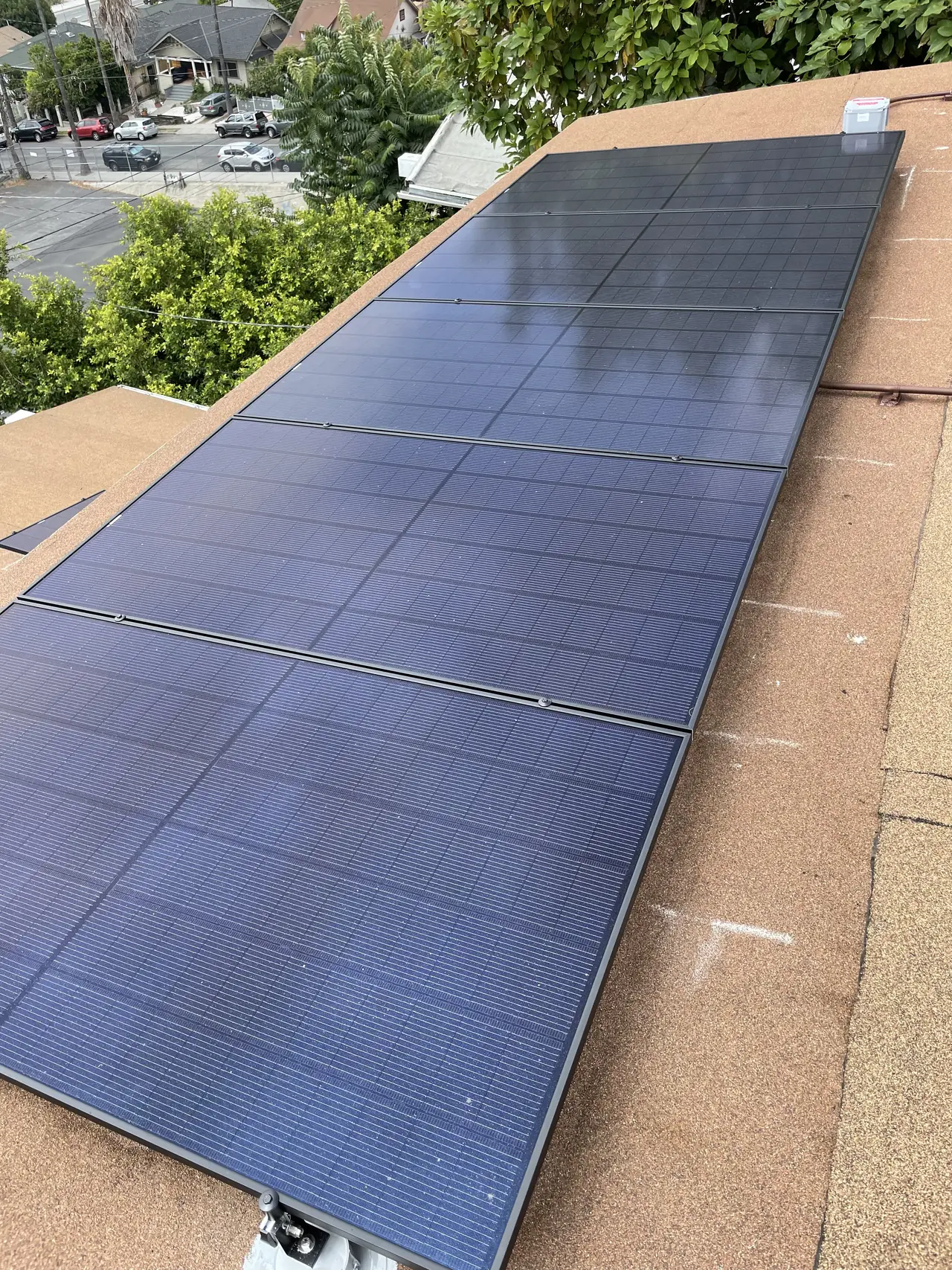
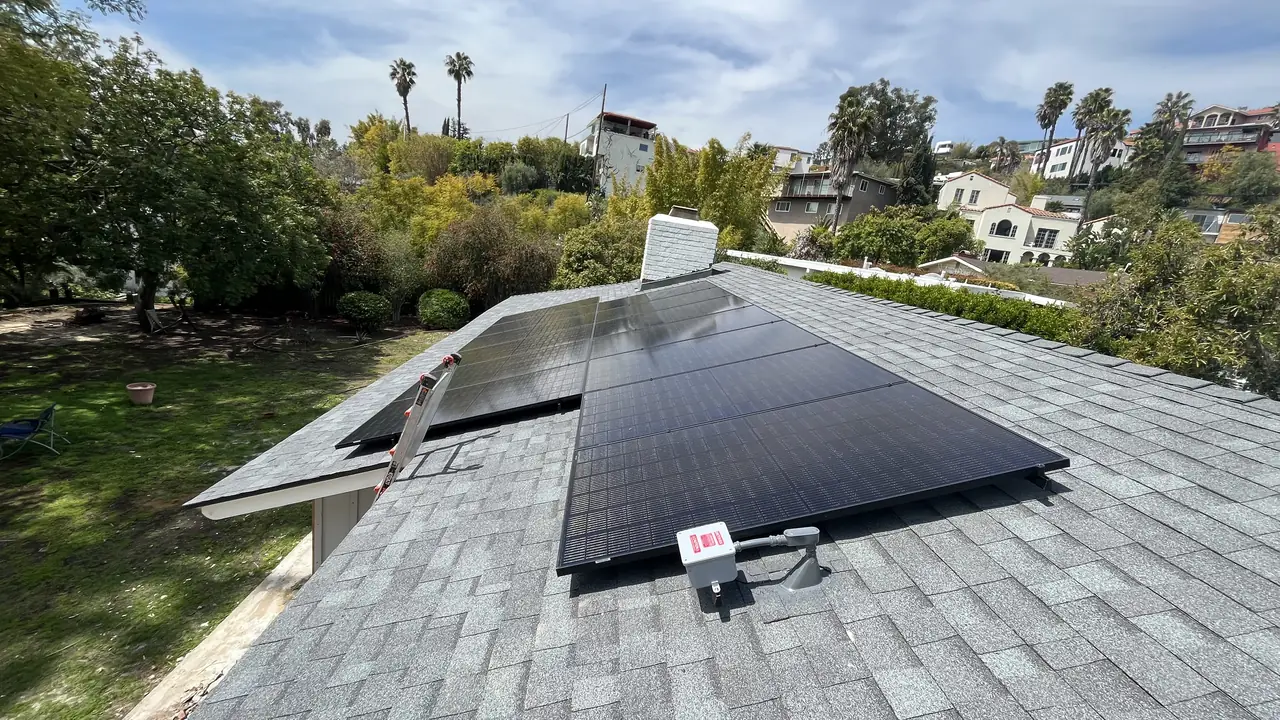
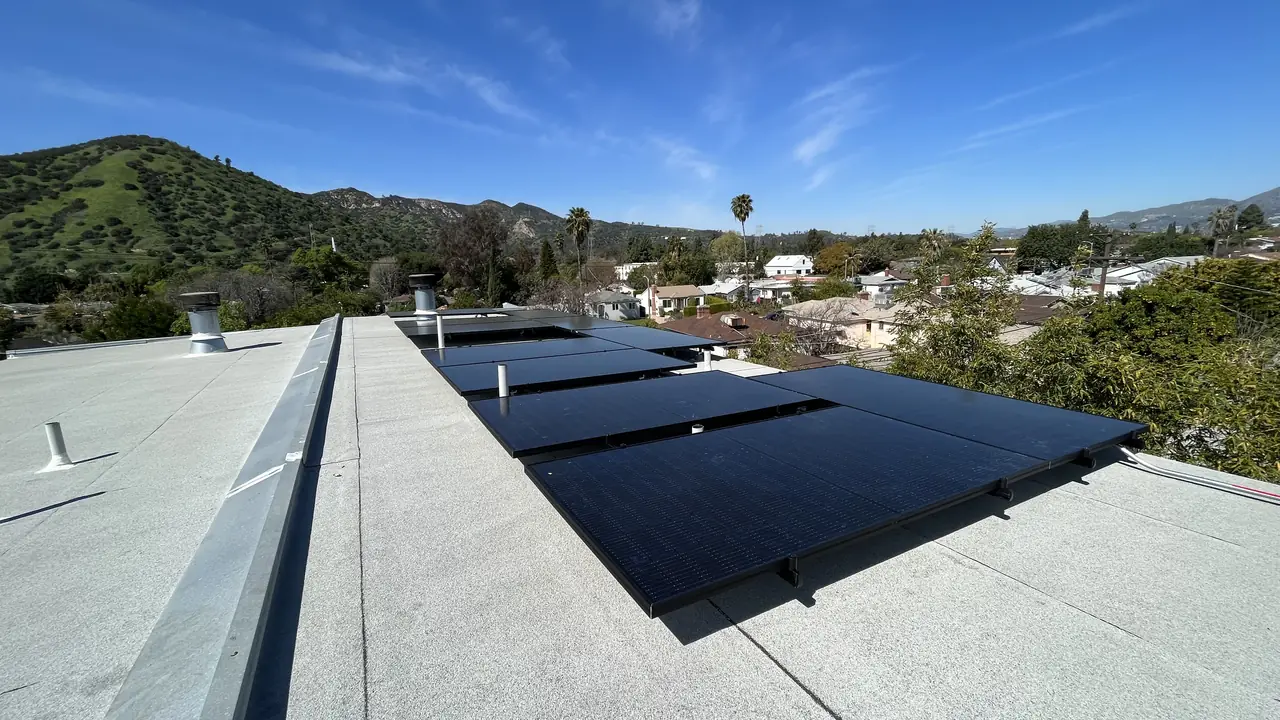
Hollywood Hills: forty modules on a tile roof in three levels.
The tile came off before the crew arrived — in the array zones, and along the routes they were going to walk.
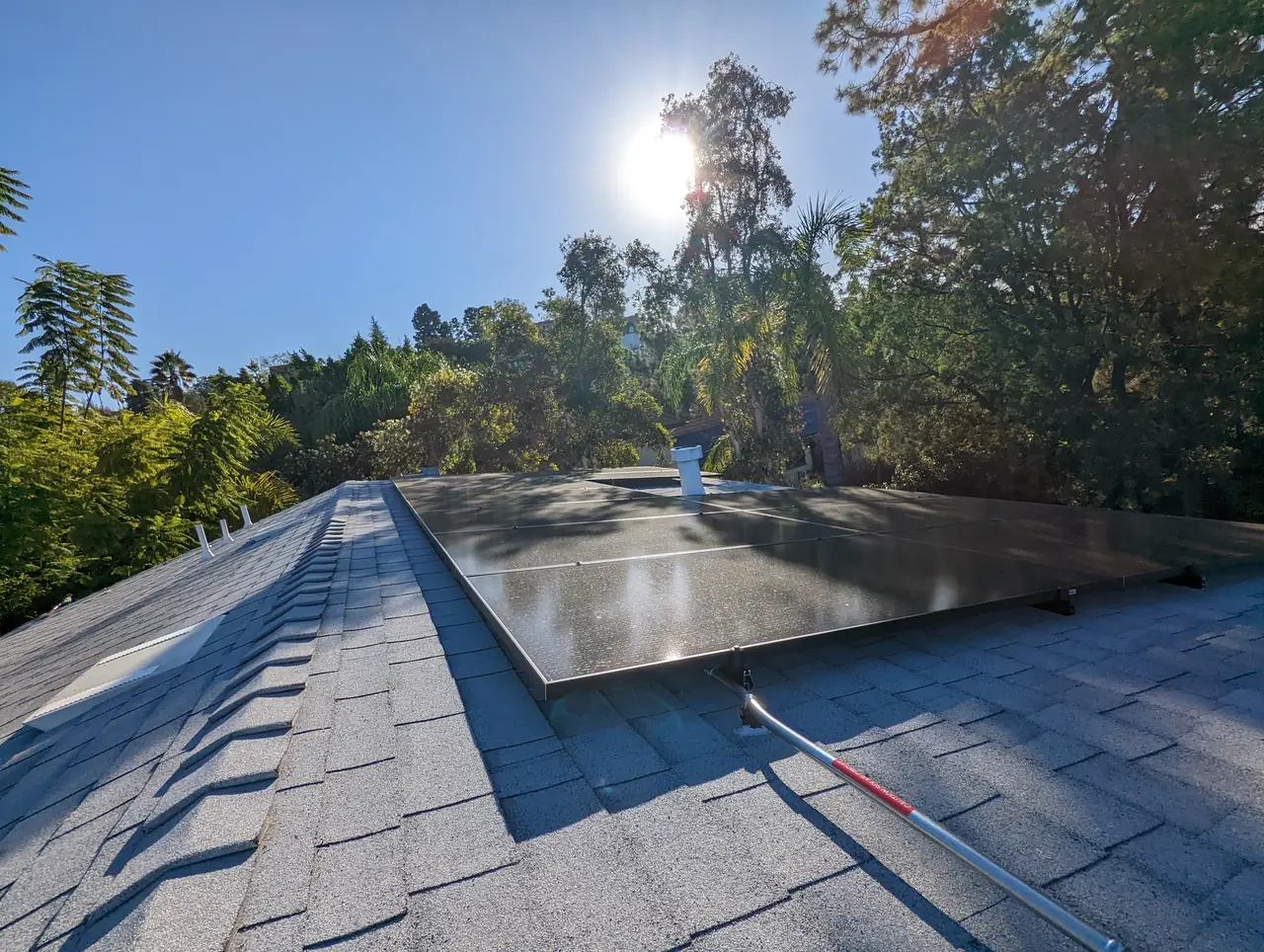
Tile is not a surface you mount on top of. In the array zones the tile comes off so the mounts land in the deck, and it comes off a second time along the routes the crew will walk, because tile breaks under foot and a broken tile is a leak next winter. On this Hollywood Hills roof — single-story, three separate levels, forty 400 W Ureco modules with an Enphase IQ8 behind each — that preparation was done before anyone climbed up, and Cali Energy dropped the home runs into the garage for a battery that had not been bought yet.
At a glance
- System
- About 16 kW
- Array
- 40 Ureco modules, 400 W each
- Inverters
- One Enphase IQ8 per module
- Roof
- Tile, single-story, three separate levels
- Left for later
- Home runs dropped for a battery not yet bought
- Utility / AHJ
- LADWP / LADBS
The story
The job arrived described in one paragraph, and almost every sentence in it was a decision somebody had already made correctly.
The tile had been removed on the slopes where the array would go. That is the part people outside the trade find surprising: modules do not sit on tile. In the array zone the tile comes off, the mounts are fixed into the deck where the structure actually is, and the flashing is built into that opening. Setting a mount on top of a tile transfers load to something that was never meant to carry it and makes a watertight detail impossible.
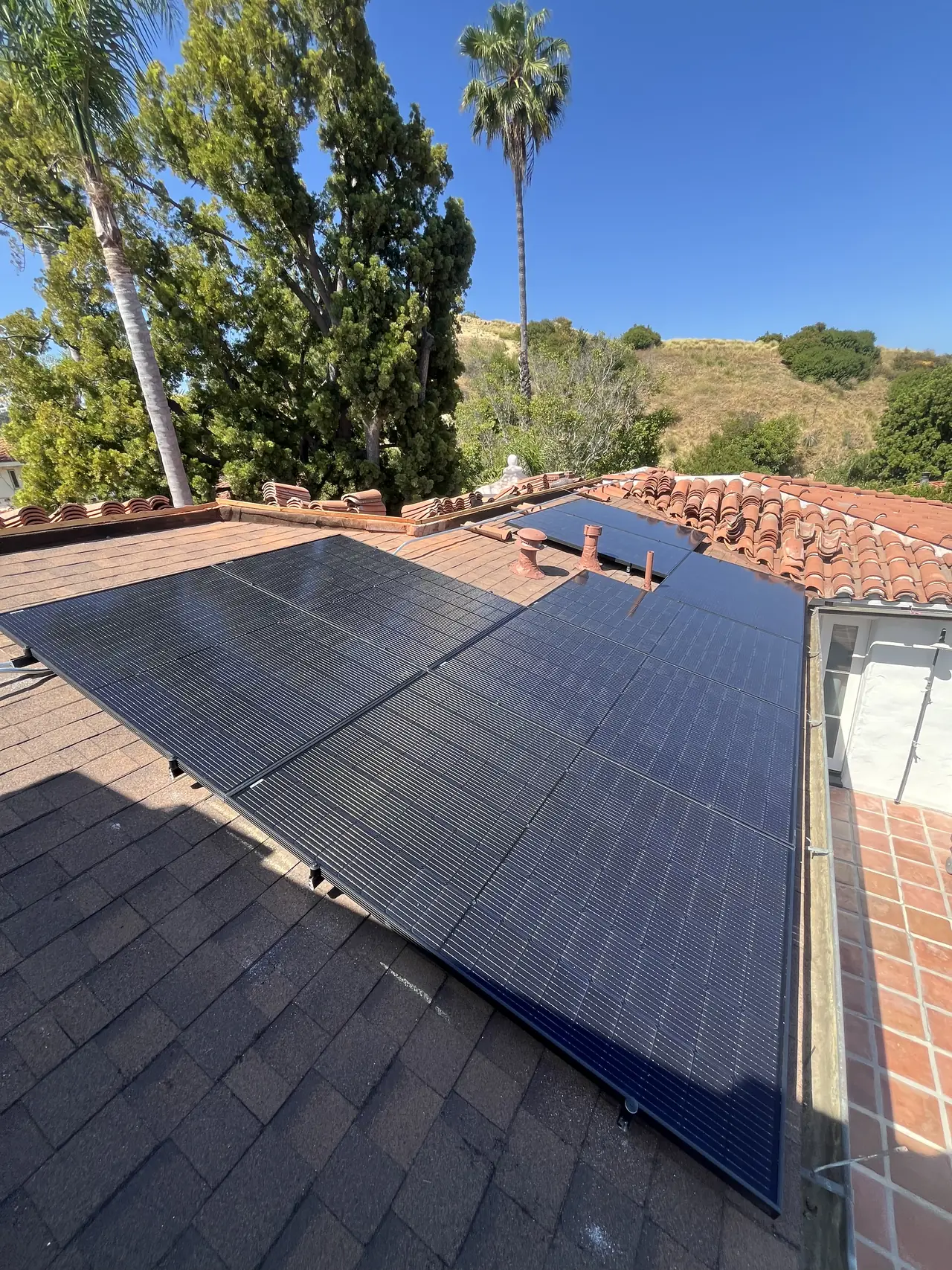
The tile had also been removed along two paths from the street side, and this is the detail that separates a roofer who has done solar before from one who has not. Tile breaks under foot. A crew carrying forty modules across a tile field will crack some of it, and cracked tile is not a cosmetic problem — it is next winter's leak, found in January and blamed on the array. Clearing the walking routes in advance is cheaper than replacing tile afterwards and far cheaper than arguing about a stain on a ceiling.
Then the roof itself: single-story, but in three separate levels.
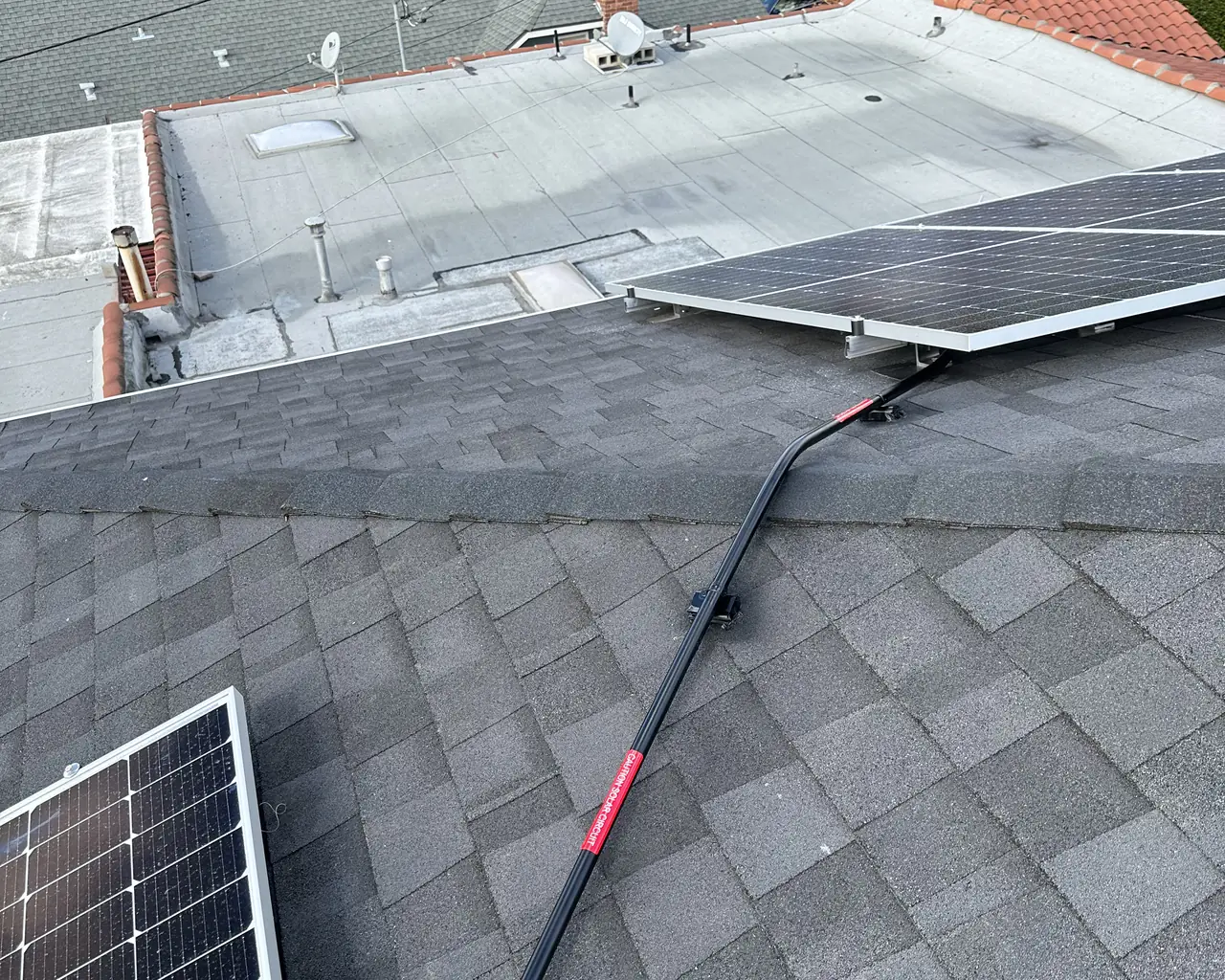
Three levels means the array is really three arrays, and everything that connects them has to get from one plane to another. Conduit has to step down, be supported, and stay inside the fire clearances on each plane it crosses. Penetrations multiply. The run from the furthest module to the point of connection stops being a straight line and becomes a route somebody has to design. On a job like this the pipe work is a larger share of the day than the modules are.
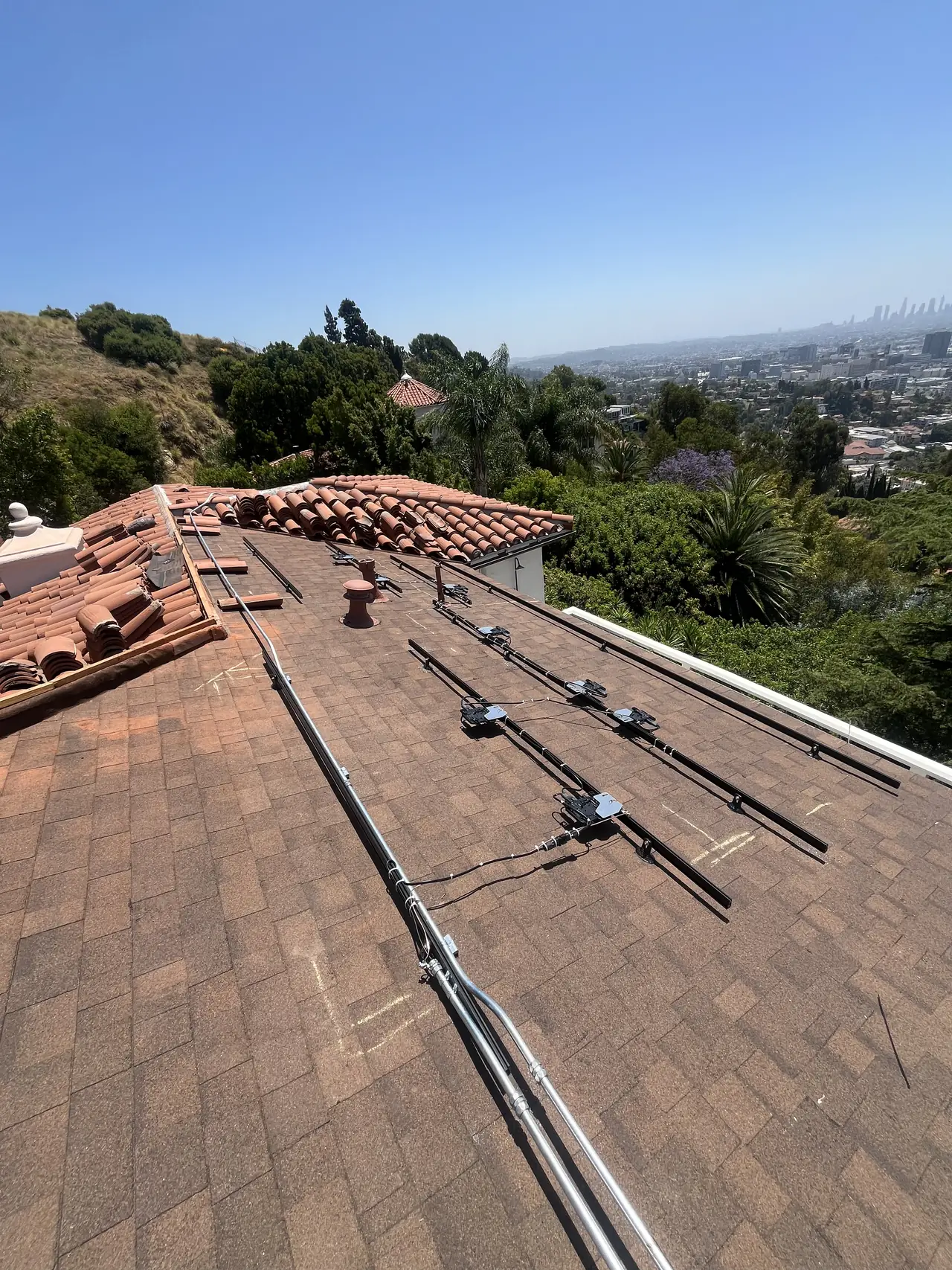
Forty modules with a microinverter behind each is forty devices on the roof rather than one box on a wall. That buys per-module behaviour and per-module reporting, and it costs forty places where a connection has to be right.
The last instruction in the paragraph was the most forward-looking one. The household intends to add batteries later, so nothing was to be connected for them now: just drop the home runs down into the garage under the left-hand array.
That is a small amount of work today and a large amount of work avoided later. Adding storage to a finished system usually means getting conductors from the roof or the service equipment to wherever the battery will live, and by then the walls are closed, the roof is finished and the array is in the way. Leaving a pair of runs terminated in the garage costs an hour now and saves opening the building in a year.
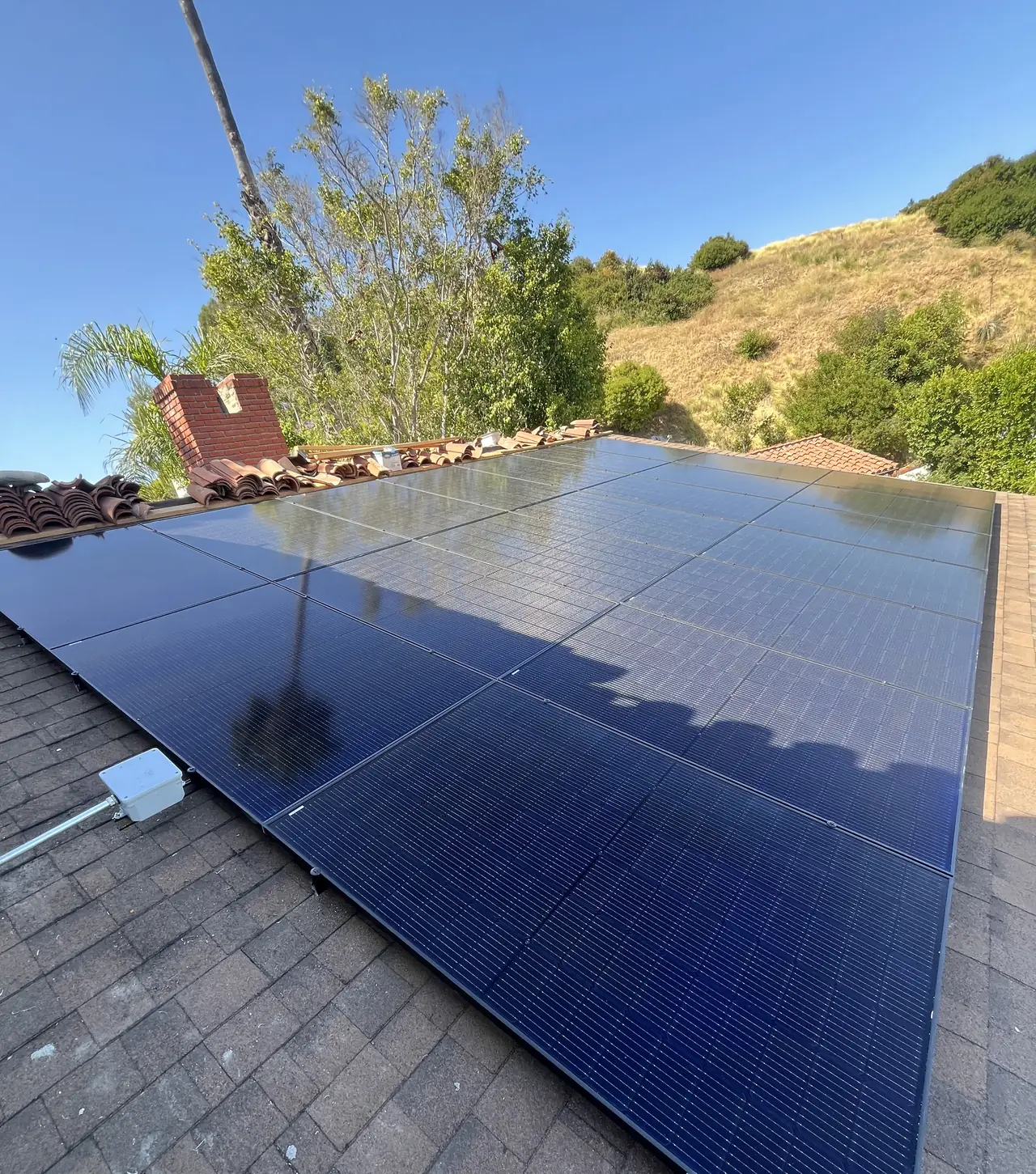
The crew went out on the Tuesday and the photograph set followed two weeks later.
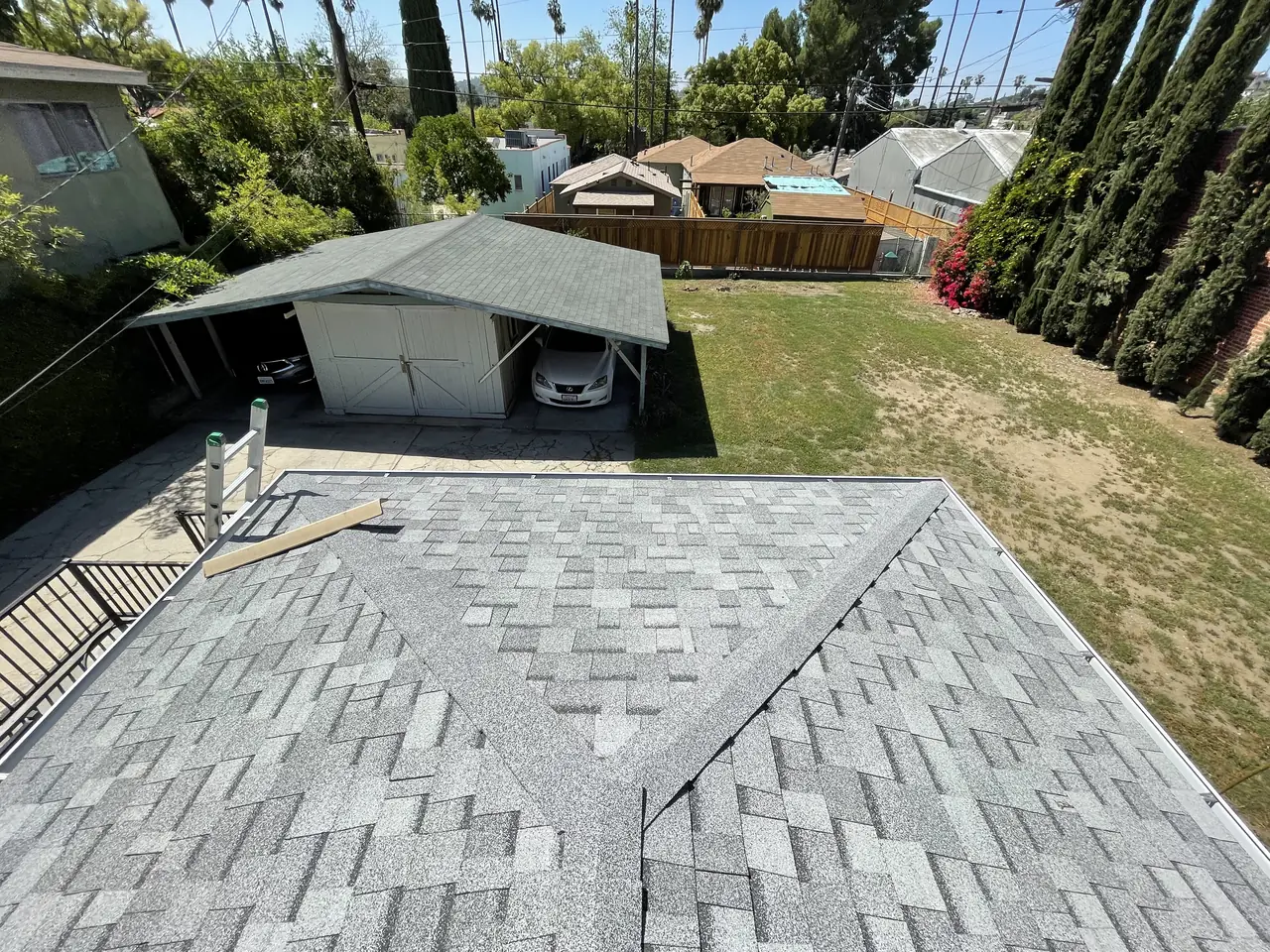
Cali Energy installed this 16 kW array in Hollywood Hills, Los Angeles.
How it ran
| 22 June 2024 | Scope set out: 40 modules at 400 W, one IQ8 each; tile already removed in the array zones and along two walking paths |
|---|---|
| 24 June 2024 | Materials confirmed for delivery to site |
| 25 June 2024 | Installation |
| 9 July 2024 | Photograph set issued |
Most of what made this roof straightforward was decided before anybody climbed it.
What we did
- Checked the roof preparation before the crew arrived rather than on the day.
- Routed conduit between three roof levels instead of around them.
- Dropped and terminated home runs in the garage for a battery that did not exist yet.
- Issued the photograph set two weeks after the installation.
System specifications
| System | About 16 kW |
|---|---|
| Modules | 40 × Ureco 400 W |
| Inverters | One Enphase IQ8 per module |
| Roof | Tile, single-story, three levels |
| Battery | Not installed; home runs dropped to the garage for it |
| Utility / AHJ | LADWP / LADBS |
Is your project like this one?
- Your roof is tile and somebody has told you the panels go on top of it.
- Your roof has more than one level and the quote does not mention conduit.
- You want a battery later and are not sure what to do about it now.
- You are weighing a microinverter system against a string design.
Cali Energy in Hollywood Hills
Hollywood Hills is City of Los Angeles above the basin, permitted through LADBS and interconnected through LADWP. Tile is common up here, and so are roofs that arrive in several separate planes at different heights.
This installation is on the Los Angeles projects page alongside the others, and what the work covers is set out on the Los Angeles service area page.
- License and classifications: CSLB #1032379
- Official reference for this process: NFPA — National Electrical Code (NFPA 70)
- Official reference for this process: California Energy Commission — solar equipment lists
Frequently asked questions
Can solar panels be installed on a tile roof?
Yes, but not on top of the tile. In the array zones the tile is removed so the mounts fix into the deck, where the structure is, and the flashing is built into that opening. A mount set on top of tile loads something never meant to carry it and cannot be made watertight.
Why is tile removed along walking paths?
Because tile breaks under foot, and a crew carrying forty modules across a tile field will crack some of it. Cracked tile is not cosmetic — it is a leak the following winter, usually blamed on the array. Clearing the routes first is the cheap version of that problem.
What changes when a roof has several levels?
The array becomes several arrays, and everything joining them has to cross from one plane to another. Conduit has to step down and stay supported and inside the fire clearances on each plane, penetrations multiply, and the pipe work can take more of the day than the modules do.
Should I run wiring now for a battery I have not bought?
Usually yes, if storage is genuinely planned. Adding it later means getting conductors to wherever the battery will live, by which time the walls are closed and the array is in the way. Dropping and terminating the runs during the install costs about an hour.
Does Cali Energy install solar on tile roofs in Hollywood Hills, Los Angeles?
Yes. Tile is common up here and so are roofs in several planes at different heights, permitted through LADBS and interconnected through LADWP. On those roofs the preparation and the conduit route are the parts that decide how the job goes, not the modules.
What this would look like on your roof
Planning solar in Hollywood Hills? Tell us your utility, your roof and what your bill looks like now, and we will model what a system like this would do on your house before you commit to anything.
Or call +1 (323) 844-7777 · Cali Energy, Northridge · CSLB #1032379 (B, C-10, C-39) — design, permits, install and electrical under one licensed contractor.
Related
This timeline reflects this property and this permitting path. Updated September 2026.