

Eagle Rock, CA · June – July 2022 · LADWP / LADBS
Eagle Rock: the tile hooks went back because this roof was shingle.
Rails travel between houses. The parts that fix into the roof are chosen for the roof they fix into.
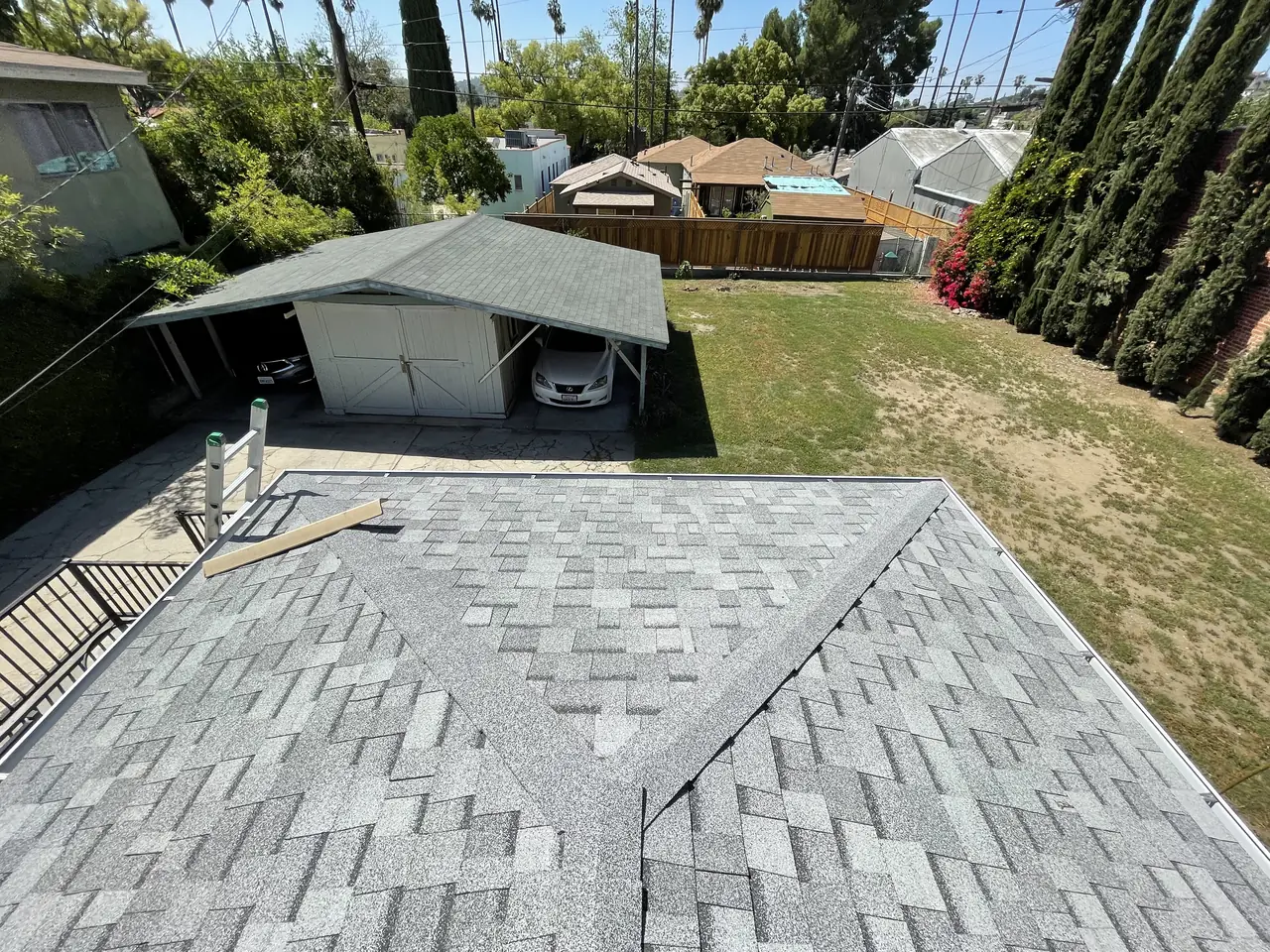
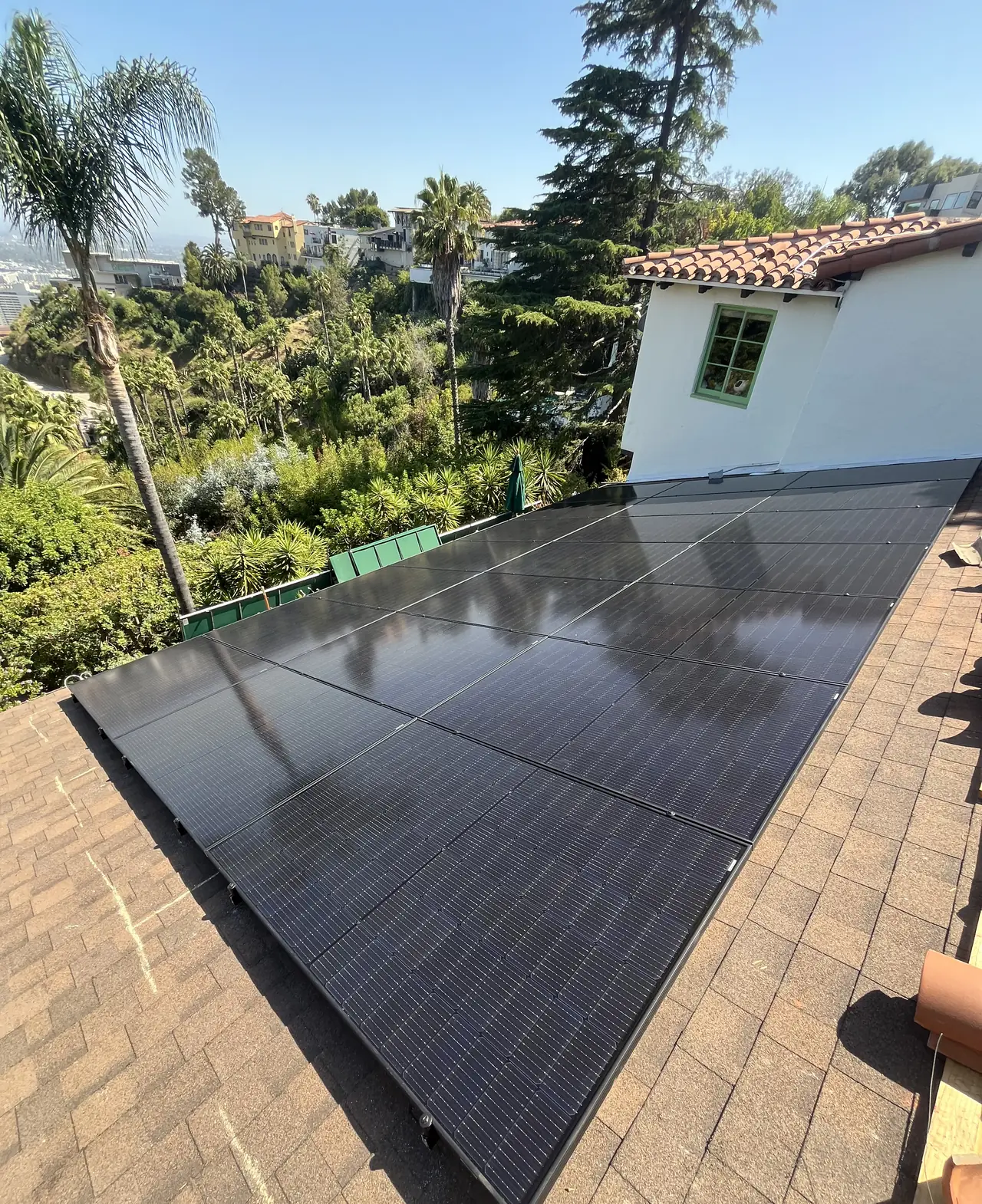
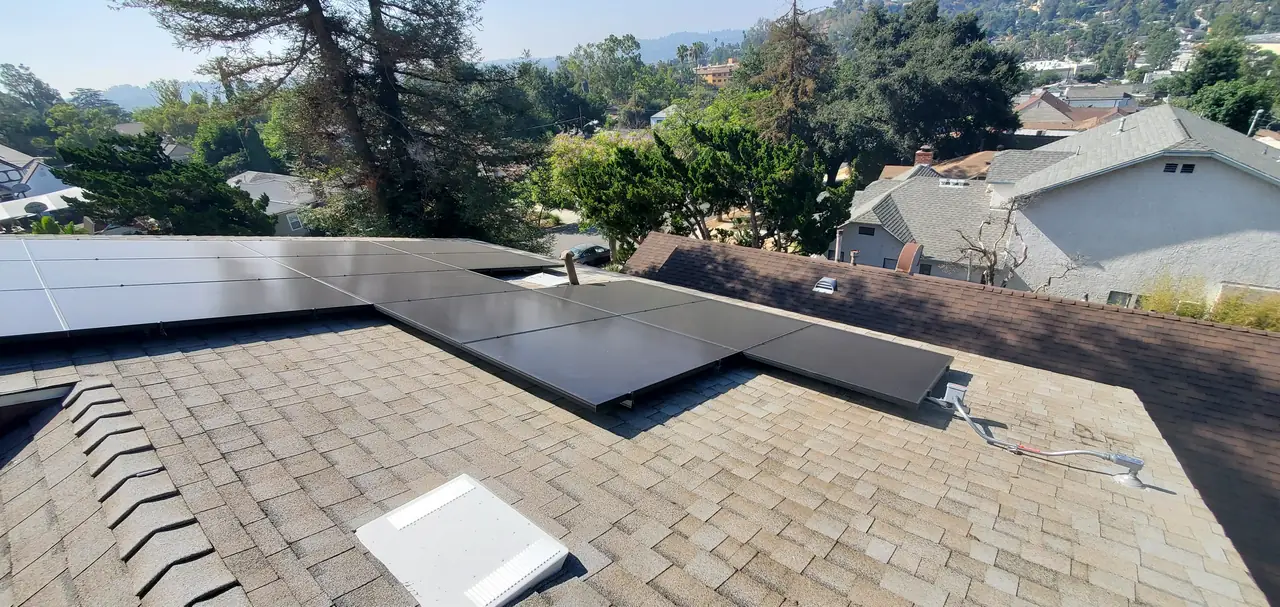
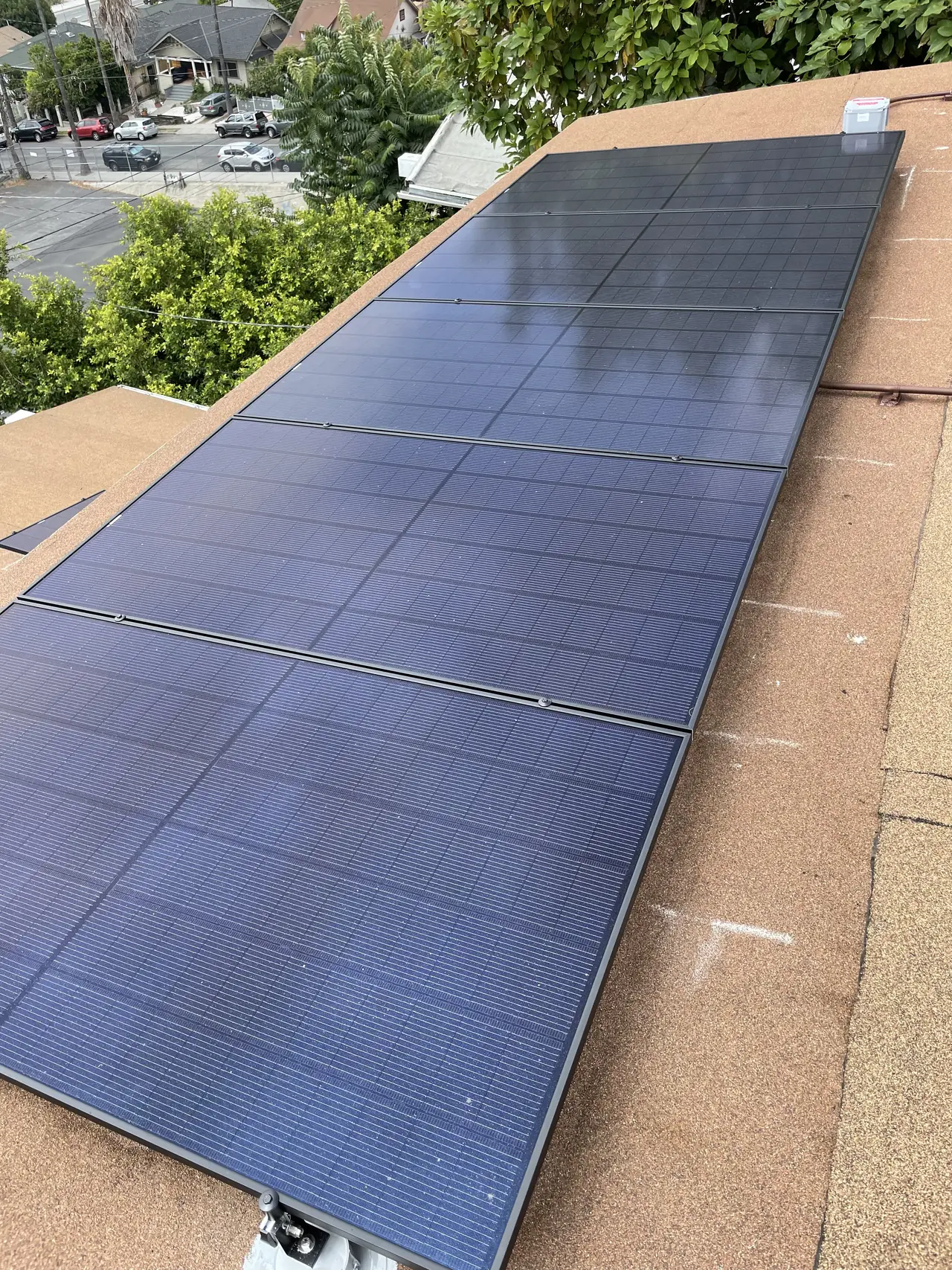
Mounting hardware is selected for the roof covering, not for whatever is left in the van. A tile roof takes a hook that reaches under the tile and fixes to the structure beneath it. A composition shingle roof takes a mount that lands on the deck, sits inside the shingle course and is flashed over. They solve the same problem in incompatible ways, and neither substitutes for the other. On this Eagle Rock roof the covering was shingle, so the tile hooks left over from a previous house went back and Cali Energy ordered the footings and attachments this roof actually called for.
At a glance
- Roof
- Composition shingle
- Ordered for this roof
- Footings and attachments
- Returned
- Tile hooks left from a previous house
- Carried over
- The rails
- Final inspection
- Requested in July
- Utility / AHJ
- LADWP / LADBS
The story
A week before the crew was due, the hardware list arrived: footings and attachments for this roof, ordered against this job. With it came a second instruction that is more interesting than it looks: the tile hooks bought for the previous house were not coming to this one.
To somebody outside the trade that reads like inventory housekeeping. It is a roofing decision, and it is the one that decides whether a roof leaks in five years.
The two coverings are attached in fundamentally different ways.
On tile, the fixing has to get past the tile without relying on it. A tile hook reaches under the course, fixes into the rafter or the deck, and comes back out between the tiles with enough lift that the tile above still seats flat. The tile carries nothing; it is lifted, worked under, and put back.
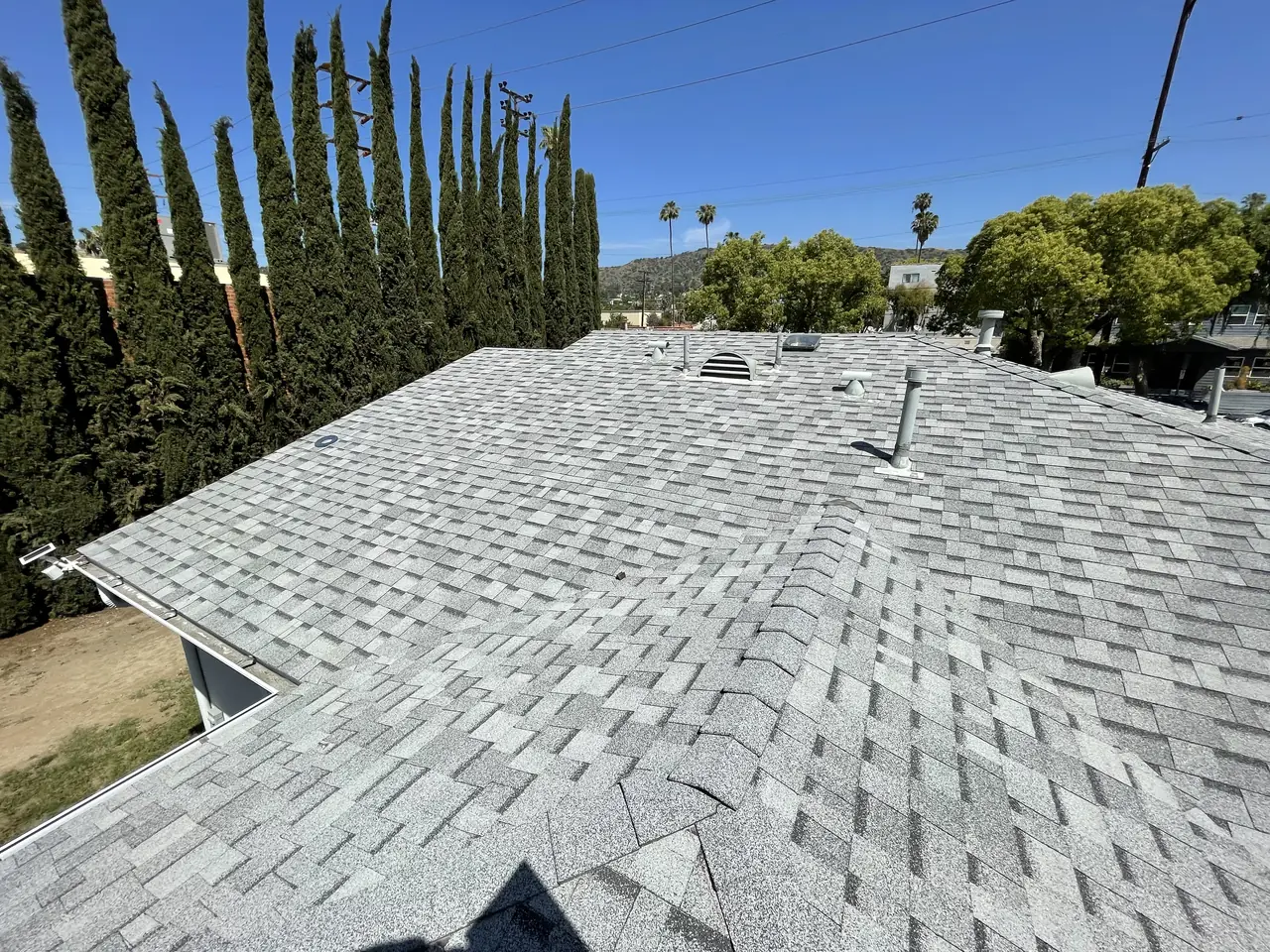
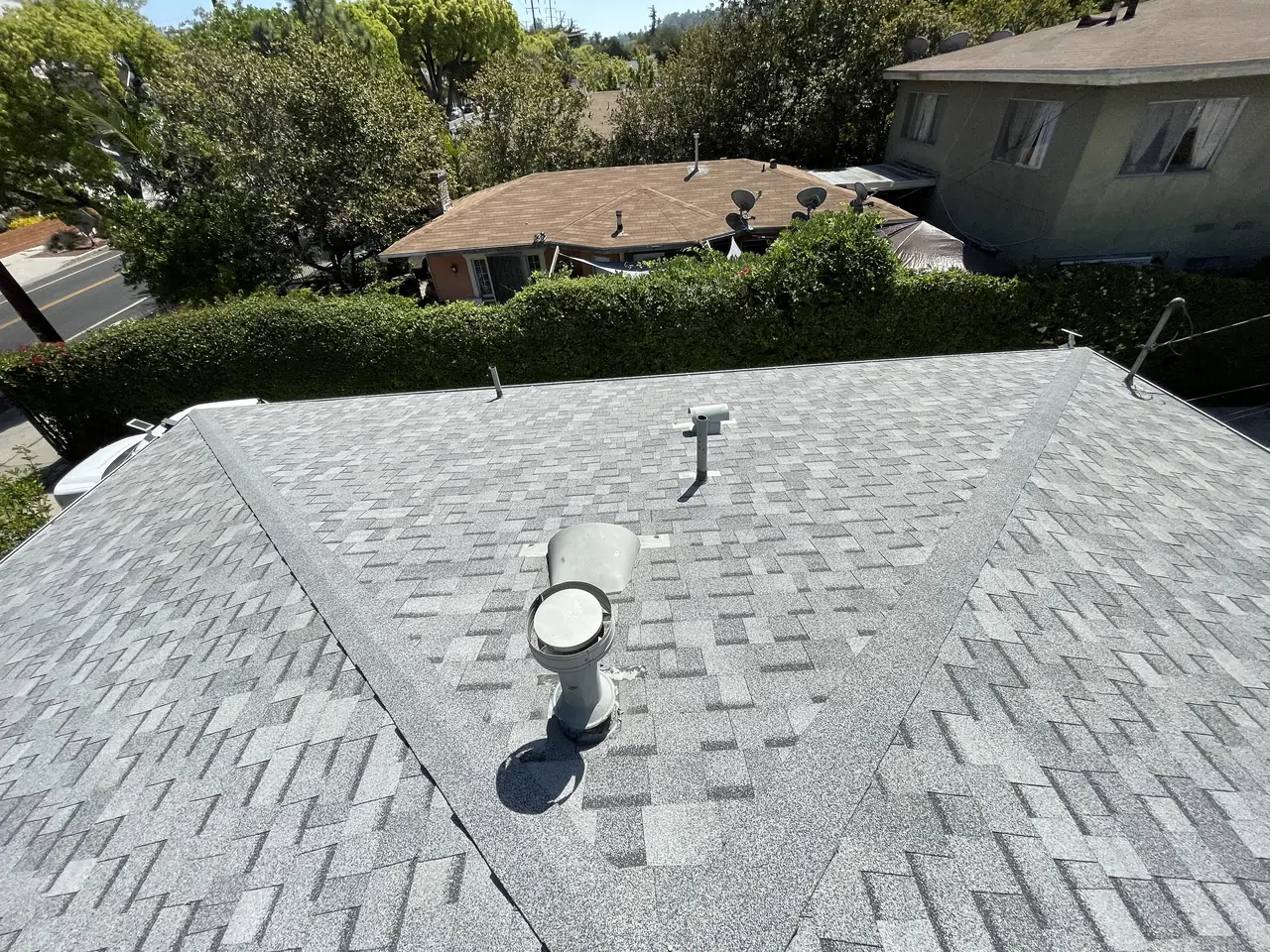
On composition shingle, there is nothing to reach under. The mount lands directly on the deck, inside the shingle course, and the weatherproofing is a flashing slipped up under the course above so that water running down the roof passes over the top of it. The shingle is not lifted out of the way — it is built around.
So a tile hook on a shingle roof is not a compromise, it is the wrong object. There is nothing for it to hook under, its geometry lifts the rail away from a surface that does not need clearing, and the detail it was designed to weatherproof does not exist here. Anybody who has tried to make one work has produced a penetration sealed with mastic and hope, which is the classic source of a leak found three winters later, under an array, and blamed on the array.
The rails are a different matter entirely. Rail is extruded aluminum in standard lengths and it does not care what is underneath it. Carrying rail from one job to the next is ordinary and sensible. It is the parts that touch the roof that have to be bought for the roof.
The attachments arrived ahead of the modules, the array went up at the end of June, and the final was requested in the first week of July — then moved by a few days, which is ordinary: an inspection request is a date, and dates move for both sides.
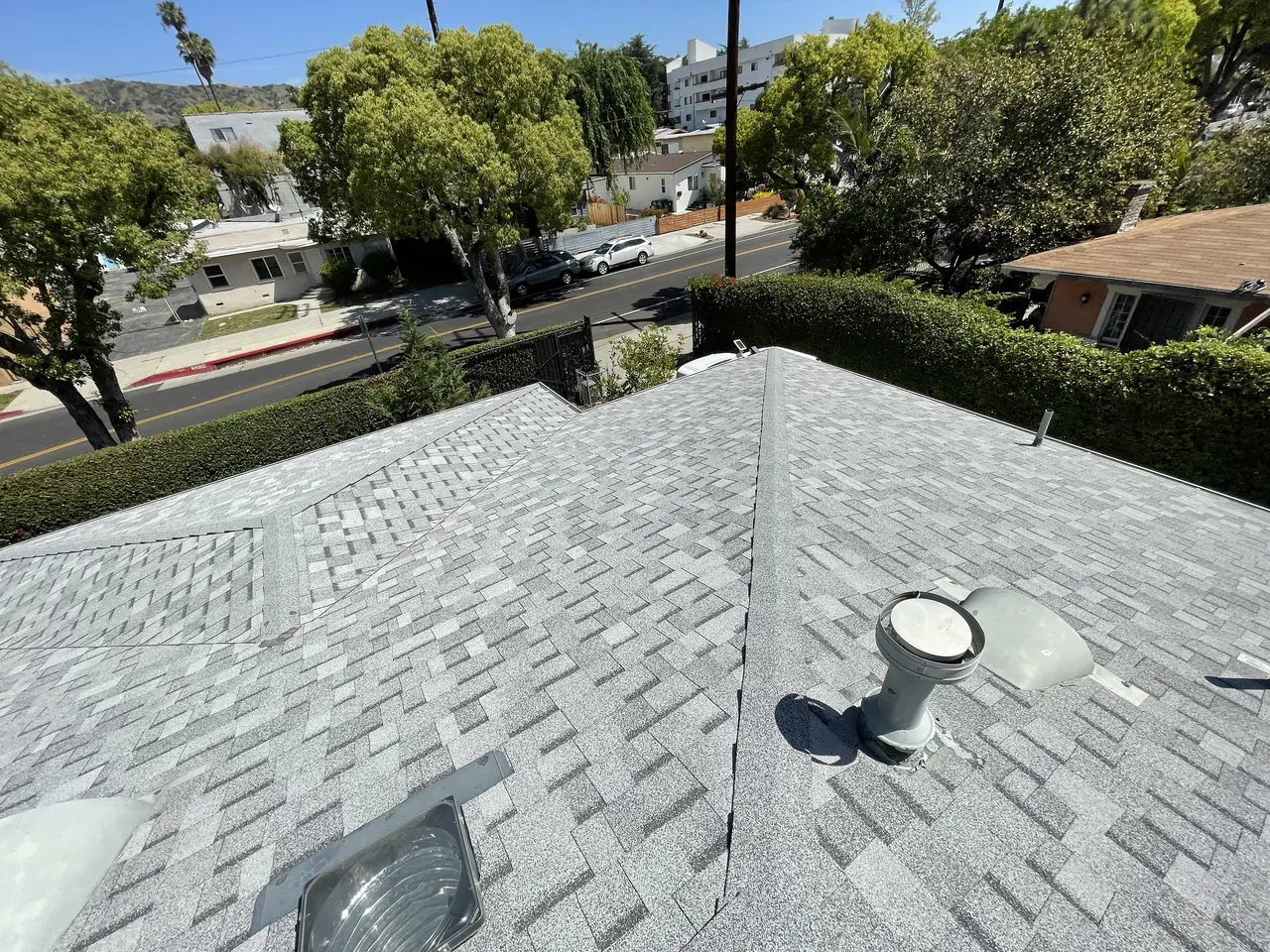
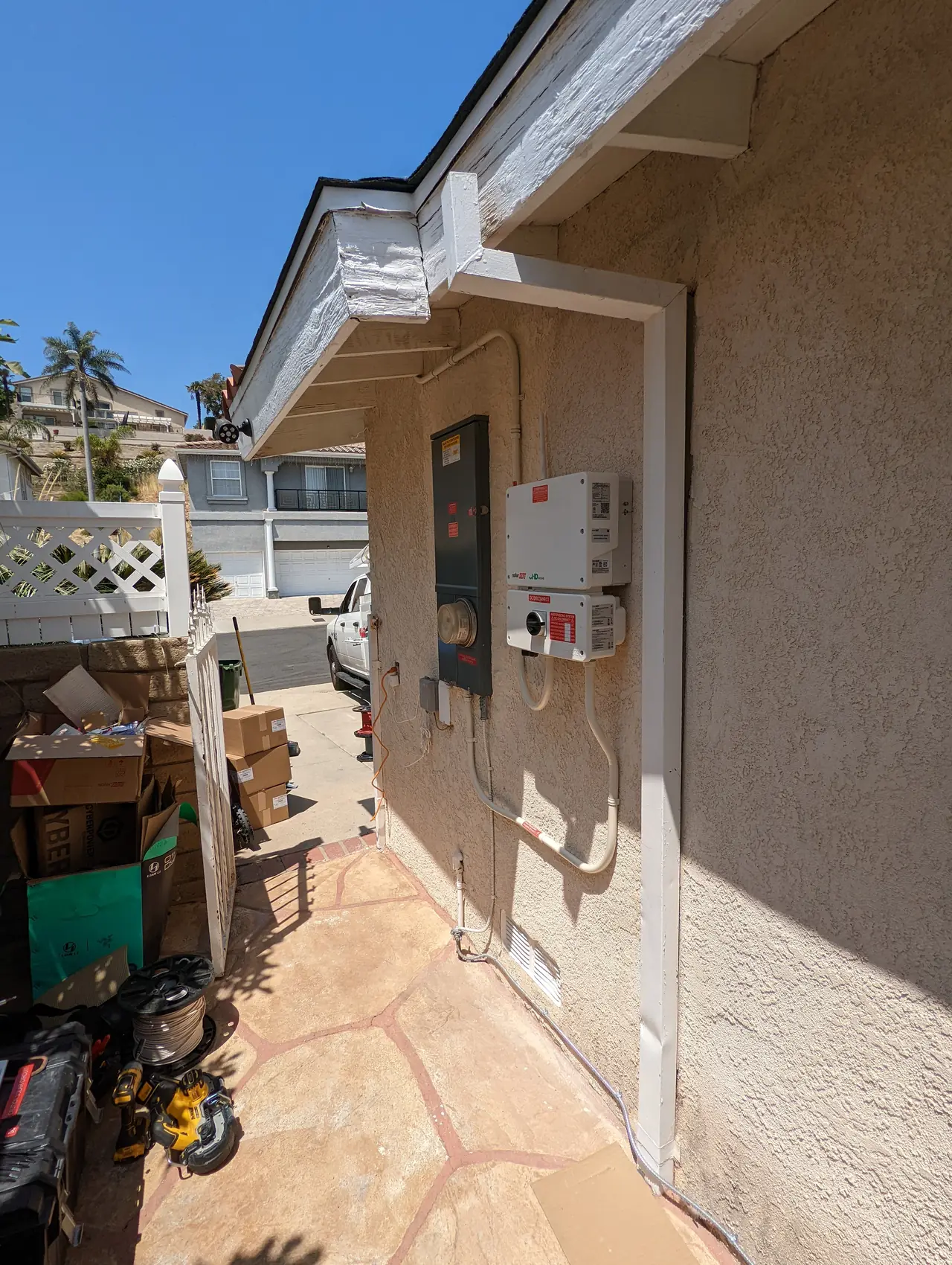
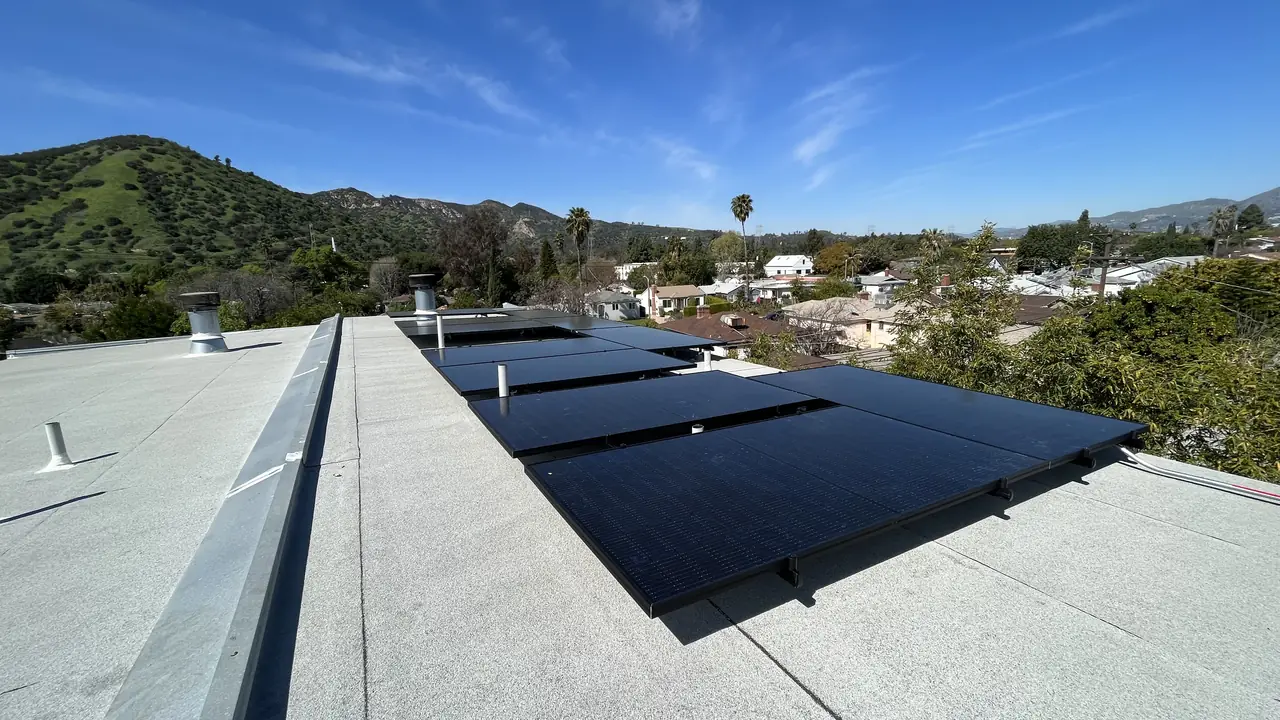
Cali Energy designed, permitted and installed this array in Eagle Rock, Los Angeles.
How it ran
| 17 June 2022 | Bill of materials issued for this roof — footings and attachments for composition shingle |
|---|---|
| 17 June 2022 | Tile hooks from a previous house sent back, not used here |
| 20 June 2022 | Attachments confirmed ahead of the modules |
| 29 June 2022 | Installation |
| 6 July 2022 | Final inspection requested for the 8th |
| 11 July 2022 | Request moved to the 12th |
| From there | The permit closes on that final, and permission to operate follows it |
Two weeks from a hardware list to an array, and one box of parts sent back rather than forced onto the wrong roof.
What we did
- Specified footings and attachments against this roof rather than against the warehouse.
- Sent back the tile hooks from the previous house rather than forcing them onto a shingle roof.
- Had the attachments on site before the modules rather than with them.
- Booked the final in the first week after the array was complete.
System specifications
| Array | Residential rooftop |
|---|---|
| Roof | Composition shingle |
| Attachments | Deck-mounted and flashed, specified for this roof |
| Previous hardware | Tile hooks, sent back — not used on this roof |
| Rails | Standard, carried over from stock |
| Utility / AHJ | LADWP / LADBS |
Is your project like this one?
- Your quote does not say which attachment it uses on your roof.
- You have been told the mounting hardware is the same on every roof.
- You have tile on one part of the house and shingle on another.
- You are comparing two quotes and only one lists the mounting parts.
Cali Energy in Eagle Rock
Eagle Rock is City of Los Angeles between the hills and the 134, permitted through LADBS and interconnected through LADWP. Older houses and mixed roofs — tile on one street, composition shingle on the next.
This installation is on the Los Angeles projects page alongside the others, and what the work covers is set out on the Los Angeles service area page.
- License and classifications: CSLB #1032379
- Official reference for this process: NFPA — National Electrical Code (NFPA 70)
- Official reference for this process: CSLB — Solar Smart
Frequently asked questions
Is solar mounting hardware the same on tile and shingle roofs?
No, and they are not interchangeable. A tile roof takes a hook that reaches under the course and fixes to the structure, lifting the rail clear so the tile seats back flat. A shingle roof takes a mount fixed to the deck inside the course, weatherproofed by a flashing rather than by clearance.
What keeps a shingle roof mount from leaking?
The flashing, not the sealant. A metal flashing is slipped up under the course above the penetration so that water running down the roof passes over the top of it. Sealant alone at a penetration is the classic cause of a leak found several winters later.
What happens if a tile hook is used on a shingle roof?
It has nothing to hook under and its geometry lifts the rail away from a surface that did not need clearing, so the detail it was designed to weatherproof is absent. What is left is a penetration relying on mastic, under an array, where nobody will look at it again.
Does Cali Energy install solar in Eagle Rock, Los Angeles?
Yes. Eagle Rock has mixed roofs — tile on one street and composition shingle on the next — permitted through LADBS and interconnected through LADWP. The attachment is specified per house, and the rails are the only part that travels between them.
What this would look like on your roof
Planning solar in Eagle Rock? Tell us your utility, your roof and what your bill looks like now, and we will model what a system like this would do on your house before you commit to anything.
Or call +1 (323) 844-7777 · Cali Energy, Northridge · CSLB #1032379 (B, C-10, C-39) — design, permits, install and electrical under one licensed contractor.
Related
This timeline reflects this property and this permitting path. Updated September 2026.