

Granada Hills, CA · November 2025 · LADWP / LADBS
Facing west on purpose.
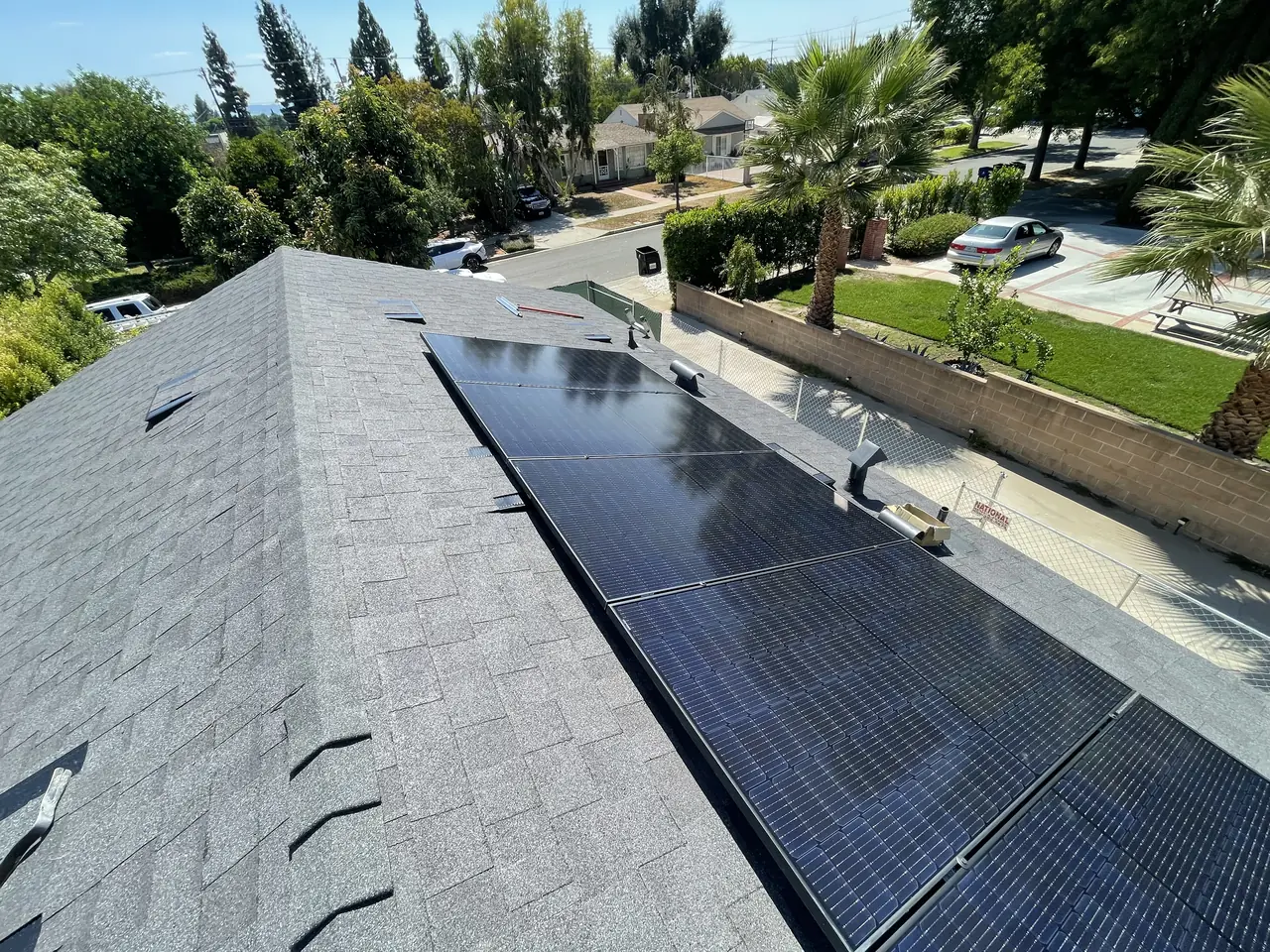
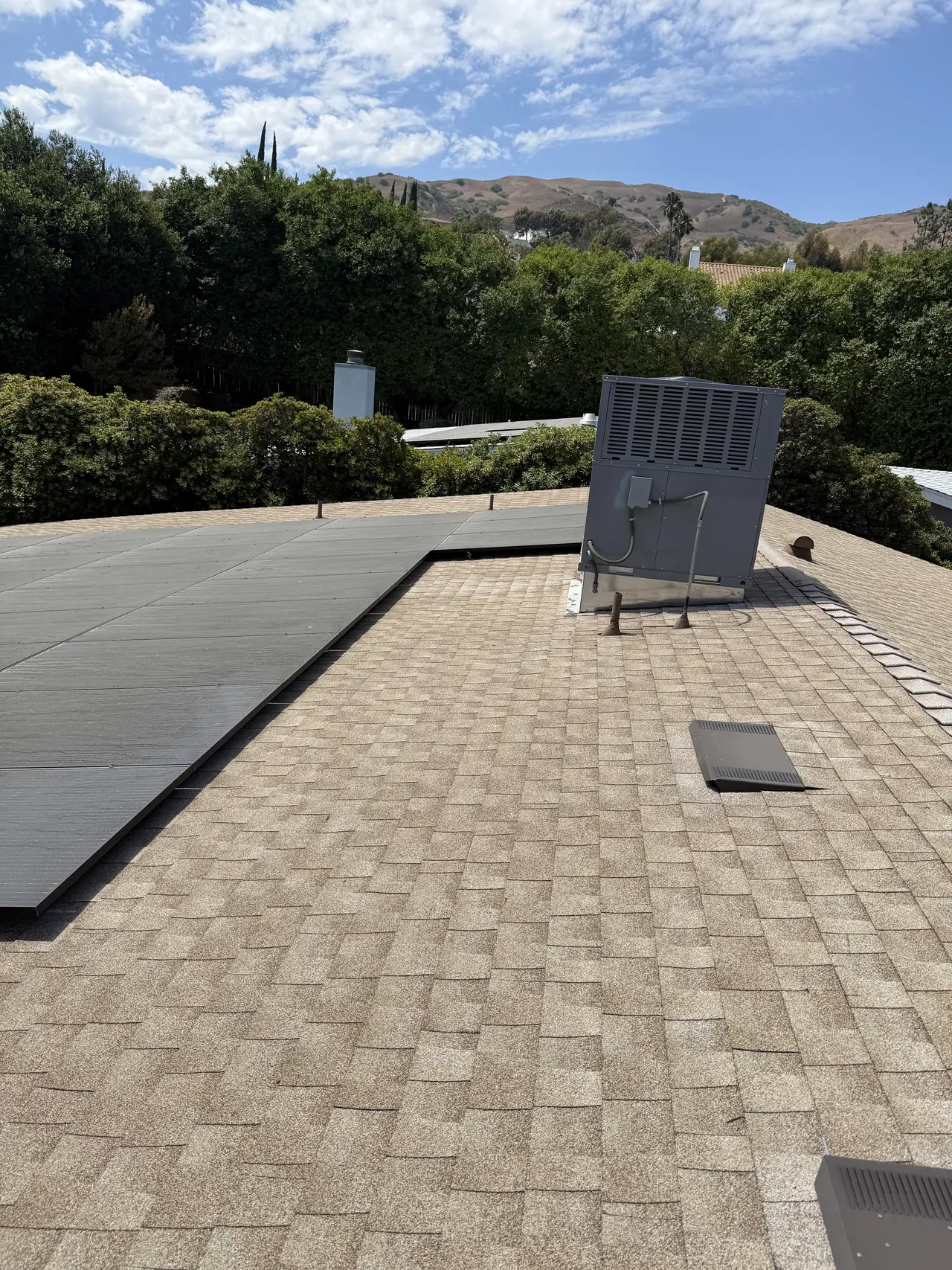
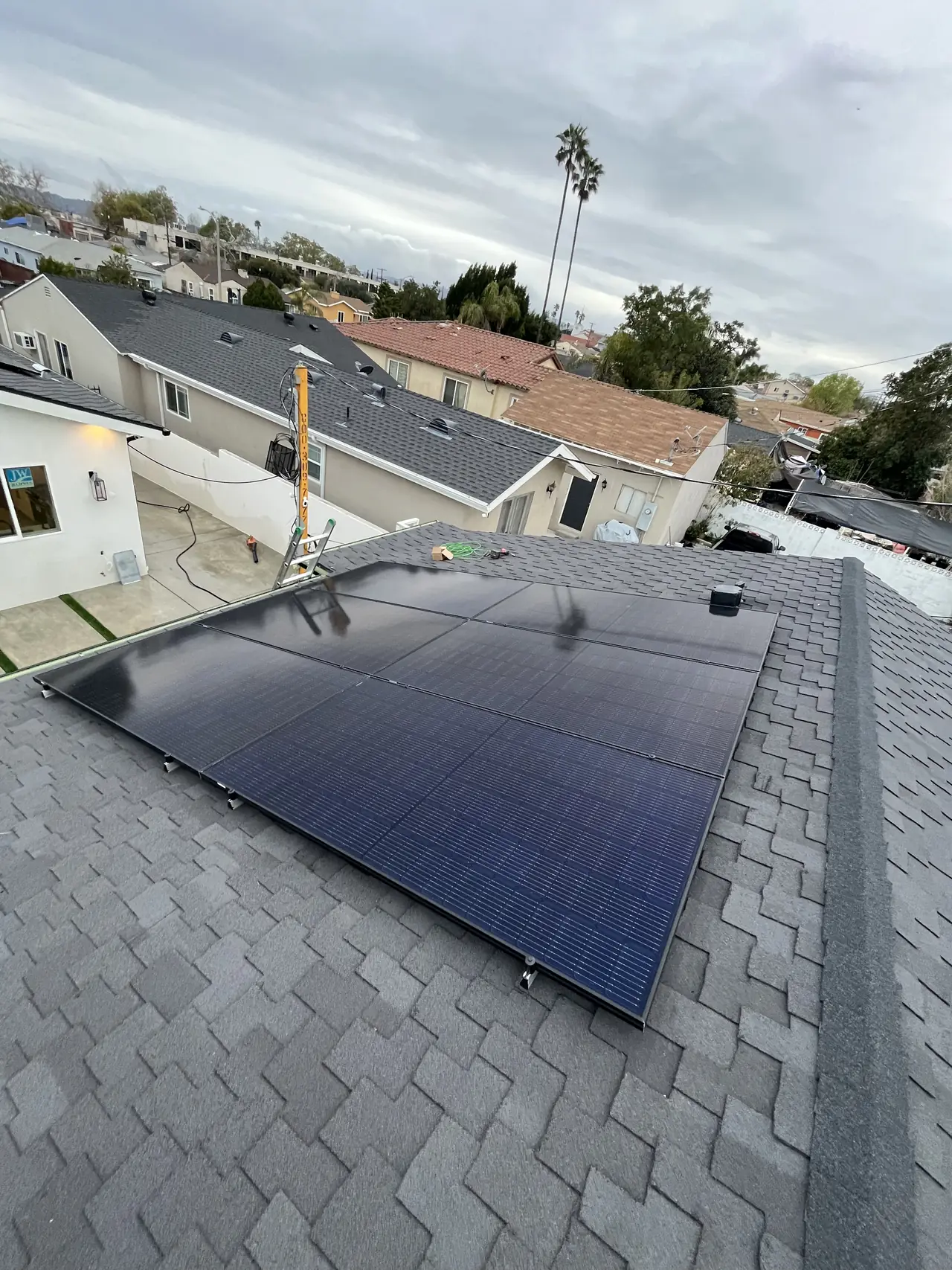
A 3.20 kW DC array on an accessory dwelling unit in Granada Hills, at 20 degrees, due west — with not a single length of conduit visible from the street.
A west-facing array shifts more of its output into the afternoon. Whether that improves the bill depends on the rate plan and on when the house uses power.
At a glance
- DC System
- 3.20 kW
- AC System
- 2.90 kW
- Modules
- 8 × 400 W
- Inverters
- 8 × Enphase IQ7A
- Tilt / Azimuth
- 20° / 270° W
- Service Panel
- Existing 200 A
- Roof
- Composition shingle
- Utility / AHJ
- LADWP / LADBS
The story
Eight panels on an accessory dwelling unit, facing due west. On paper that is the wrong direction. In practice it was the point.
South-facing arrays produce the most kilowatt-hours over a year. West-facing arrays produce fewer, and they produce them later in the day — when the house is occupied and the air conditioning is running. Whether that afternoon shift is worth money depends on the rate plan: on a time-of-use plan the afternoon is the expensive part of the day, on a tiered plan the hour does not change the price. It is worth knowing which one you are on before deciding a west roof is not worth using.
The ADU roof is narrow, so the array is a single row down its length. Eight Canadian Solar 400-watt modules on eight Enphase IQ7A microinverters — 3.20 kilowatts DC, 2.90 kilowatts AC. The existing 200-amp service panel was adequate and stayed where it was.
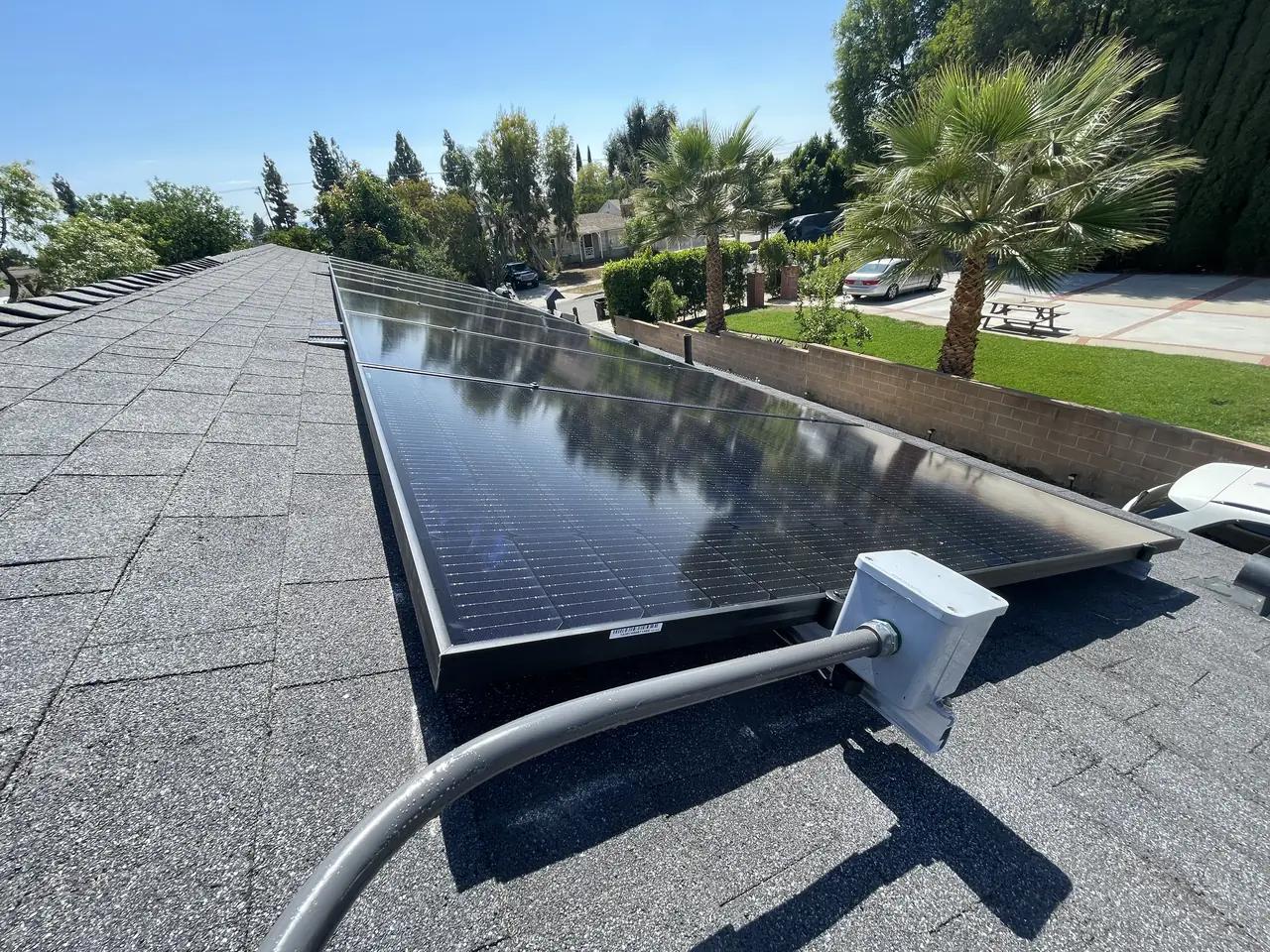
The detail that took the most thought is the one nobody sees. Instead of running the conduit across the roof surface — the fast way, and the way that leaves a pipe visible from the street for the next twenty-five years — it drops through and runs inside the attic, held clear of the decking. From outside there is an array and nothing else.
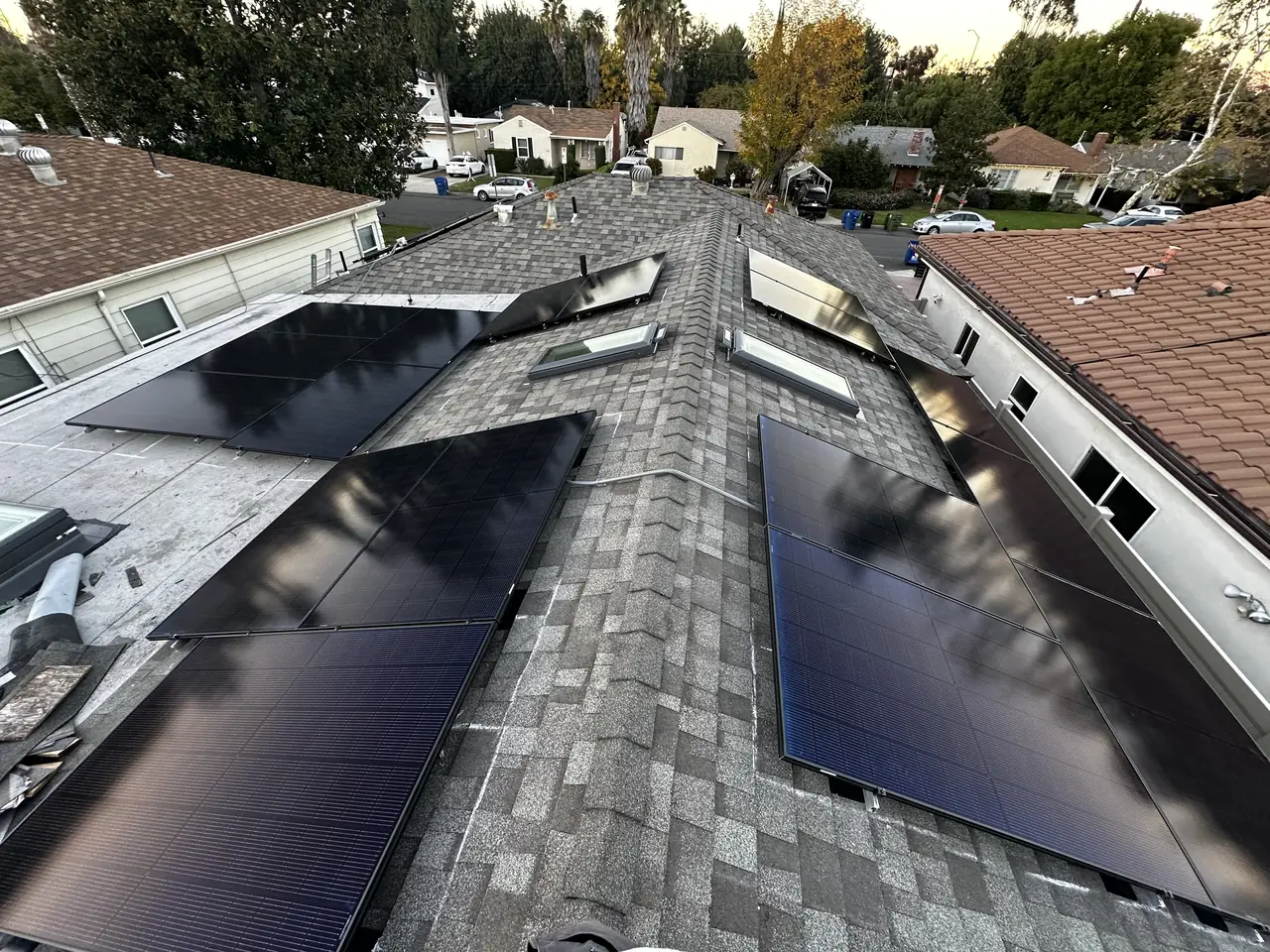
The array covers 176 square feet of a 1,060 square foot roof. The layout keeps the fire-access pathways and clearances shown in the approved plan set.
The array went on as drawn, the inspection passed, permission to operate followed and the accessory dwelling has been running on it since. Cali Energy handled the design, the permit and the interconnection for this Granada Hills accessory dwelling.
How it ran
| 11 November 2025 | Plan set issued |
|---|---|
| 12 November 2025 | Revised plan set issued |
What we did
- Designed the array for the ADU roof plane rather than forcing it onto the main house.
- Installed at a 20 degree tilt and a 270 degree azimuth — afternoon output rather than annual maximum.
- Routed the conduit through the attic so no pipe crosses the roof surface.
- Confirmed the existing 200-amp service panel was adequate — no upgrade sold.
- Kept the fire-access pathways and clearances shown in the approved plan set.
System specifications
| DC system | 3.20 kW |
|---|---|
| AC system | 2.90 kW |
| Modules | 8 × Canadian Solar CS3N-400MS, 400 W |
| Inverters | 8 × Enphase IQ7A-72-2-US |
| Racking | IronRidge |
| Tilt / Azimuth | 20° / 270°, due west |
| Roof | Composition shingle, rafters 2×6 at 24 in on center |
| Service panel | Existing 200 A, unchanged |
| Conduit | Routed inside the attic, at least 18 in off the decking |
| Roof coverage | 176 of 1,060 sq ft — 16.6% |
| Utility / AHJ | LADWP / LADBS |
Is your project like this one?
- You have an ADU, a garage or a workshop with usable roof and the main house does not.
- Your only good roof plane faces west or east.
- Somebody told you a west-facing roof is not worth doing.
- You do not want conduit running across your roof.
- Your panel is 200 amp and you have been told it needs upgrading anyway.
Cali Energy in Granada Hills
Granada Hills sits inside City of Los Angeles boundaries, so every project here is permitted through LADBS and interconnected through LADWP. Our work in Granada Hills runs from single-row arrays on accessory dwelling units to systems on underground services, on composition shingle and on concrete tile.
Not all of it is on main houses. Accessory dwelling units, garages and workshops carry arrays too, often small ones that need no change to the existing service panel.
This installation is on the Granada Hills projects page alongside the others, and what the work covers is set out on the Granada Hills service area page.
- License and classifications: CSLB #1032379
- Official reference for this process: LAFD Fire Prevention Bureau Requirement 96 — Solar Photovoltaic Systems
Frequently asked questions
Is a west-facing solar array worth installing?
Often, yes. A west-facing array generates less over a full year than a south-facing one, but it generates later in the day, when household demand is highest. Whether that is worth money depends on your rate plan — a time-of-use plan prices the afternoon higher, a tiered plan does not price by hour at all. If your only usable roof plane faces west, that on its own is not a reason to dismiss solar.
Can solar go on an ADU instead of the main house?
Yes. The array is designed for whichever roof plane suits it — an accessory dwelling unit, a garage or a workshop are all normal locations. The interconnection still goes to the property's service. On this project the array sits entirely on the ADU and the existing 200-amp panel needed no changes.
Does solar conduit have to run across the roof?
No. It can drop through the roof and run inside the attic, held clear of the decking by the required distance. It takes longer and it needs to be planned before anything is mounted, but the result is a roof with an array on it and nothing else visible.
Does Cali Energy install solar on ADUs in Granada Hills?
Yes. Granada Hills is inside City of Los Angeles boundaries, so permits run through LADBS and interconnection through LADWP. Accessory dwelling units, garages and workshops are normal locations for an array, and small systems on an existing service panel are a regular part of the work here.
What this would look like on your roof
Planning solar in Granada Hills? Tell us your utility, your roof and what your bill looks like now, and we will model what a system like this would do on your house before you commit to anything.
Or call +1 (323) 844-7777 · Cali Energy, Northridge · CSLB #1032379 (B, C-10, C-39) — design, permits, install and electrical under one licensed contractor.
Related
This timeline reflects this property and this permitting path. Updated September 2026.