

Granada Hills, CA · 2021 – 2026 · LADWP / LADBS
Five years in, the inverter came off the wall.
The modules are fine. The racking is fine. The box on the wall is the part with moving electronics in it, and it is the part that gets replaced first.
On a system with power optimizers the inverter is a single box on a wall, and replacing it is a morning's work plus a commissioning session: the new unit has to find and pair every optimizer on the roof before the system produces anything. On this one that meant twenty-seven of them. Nothing on the roof is touched, but nothing works until the pairing completes.
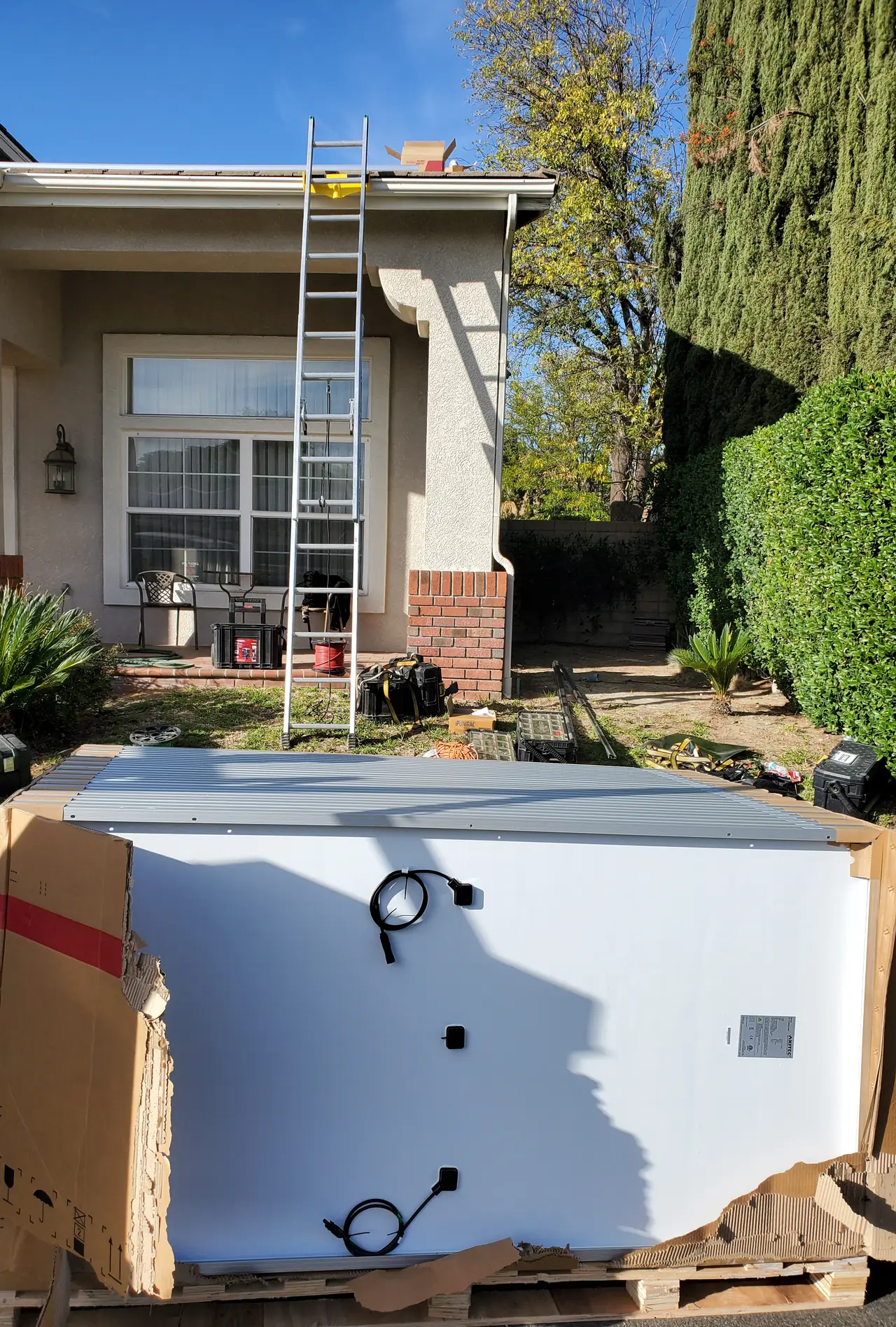
At a glance
- Installed
- 2021
- Modules
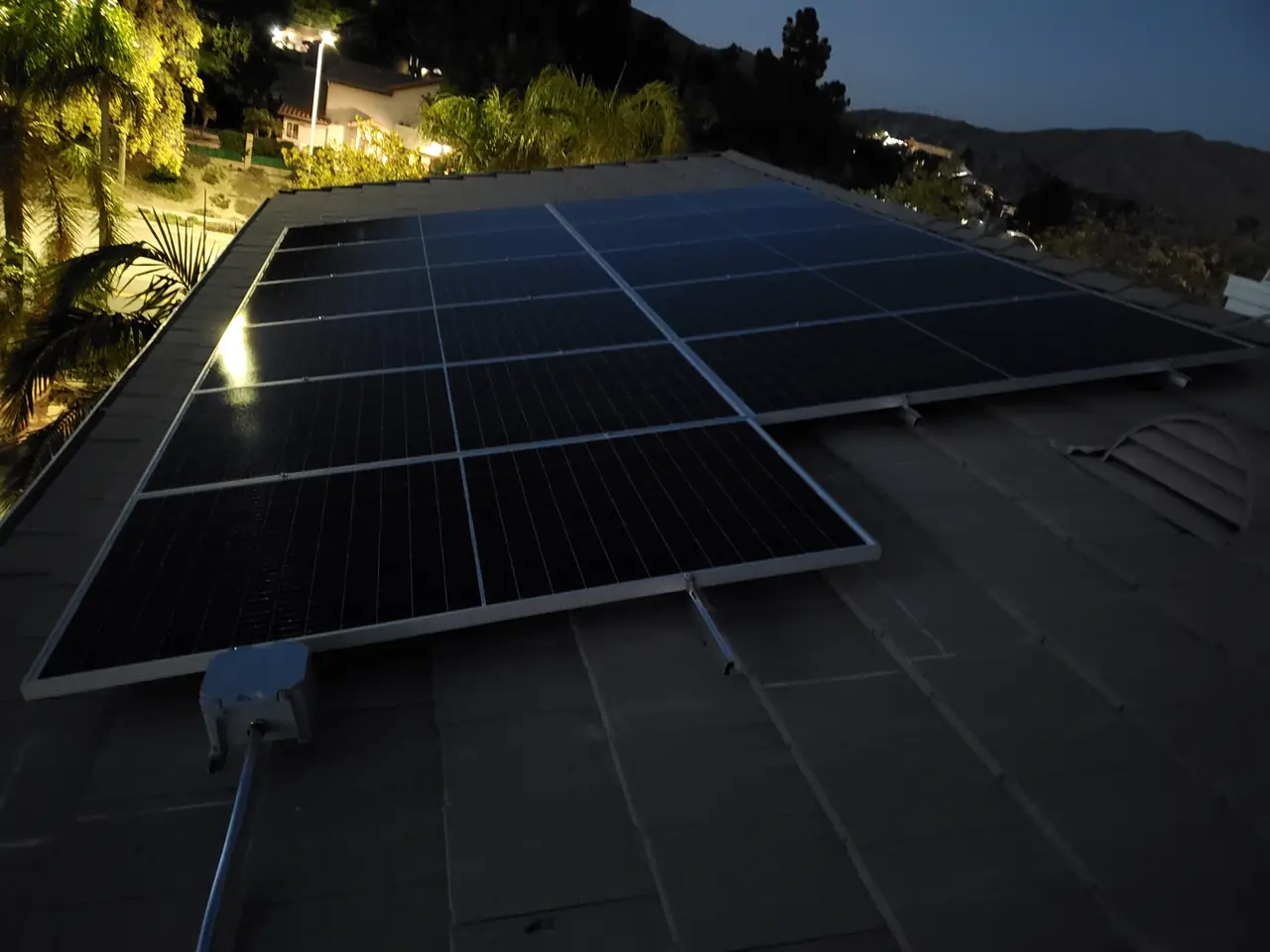
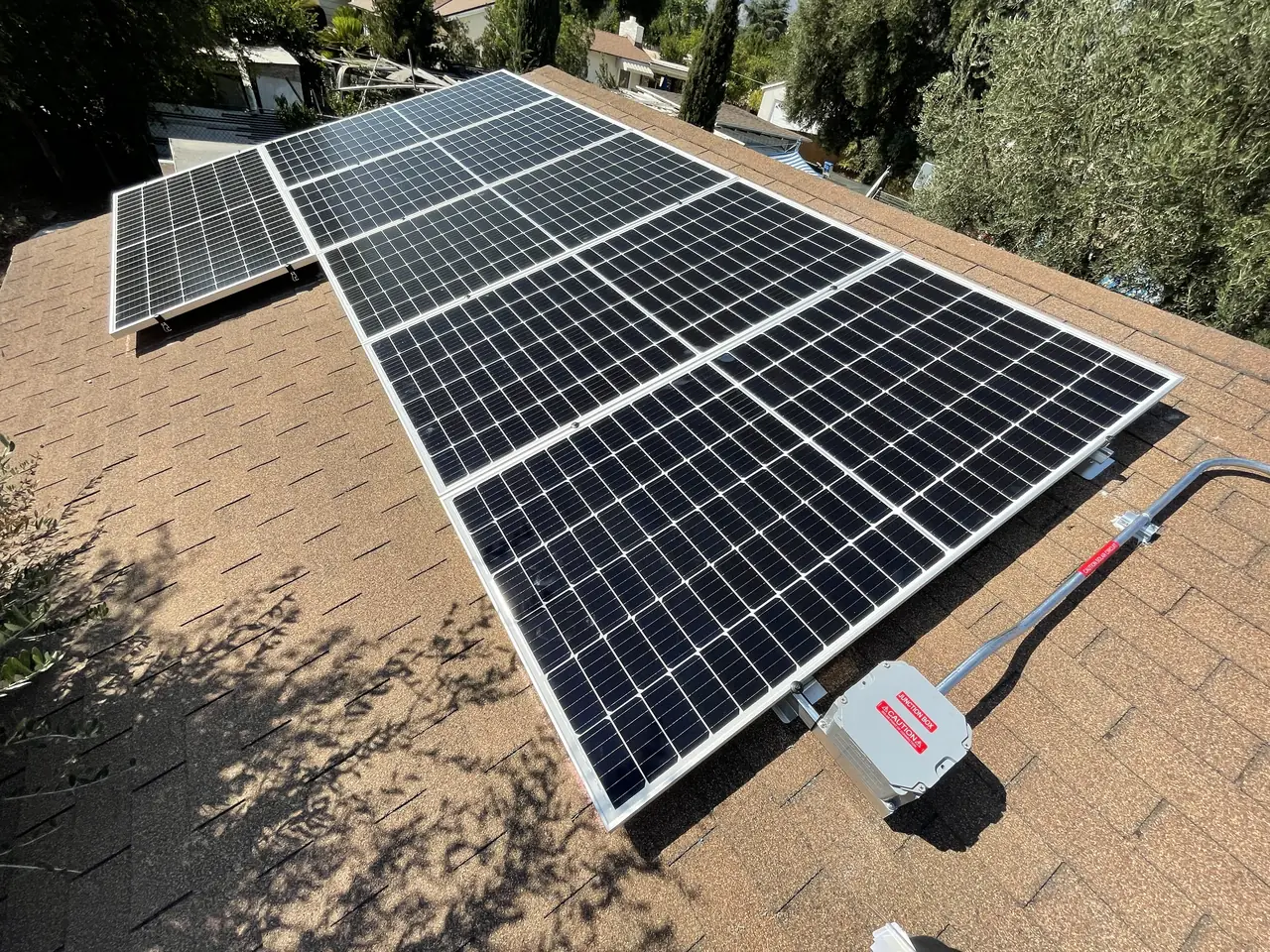
- 27 × Axitec 410 W
- Architecture
- Power optimizer under each module, one string inverter
- Roof
- Concrete tile
- Inverter replaced
- 2026
- Commissioning
- All 27 optimizers re-paired
- Also on the unit
- Integrated EV charger
- Utility / AHJ
- LADWP / LADBS
The story
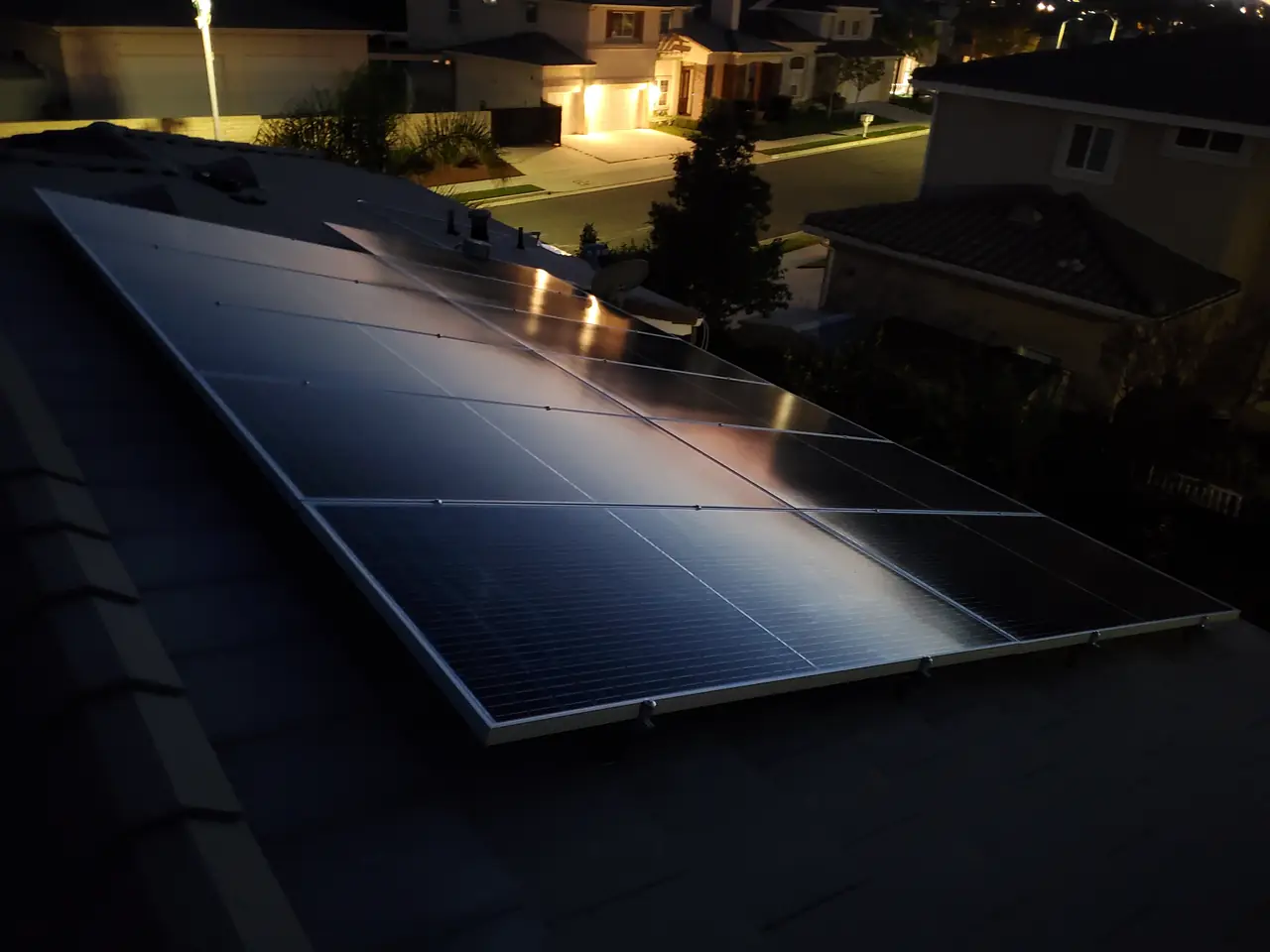
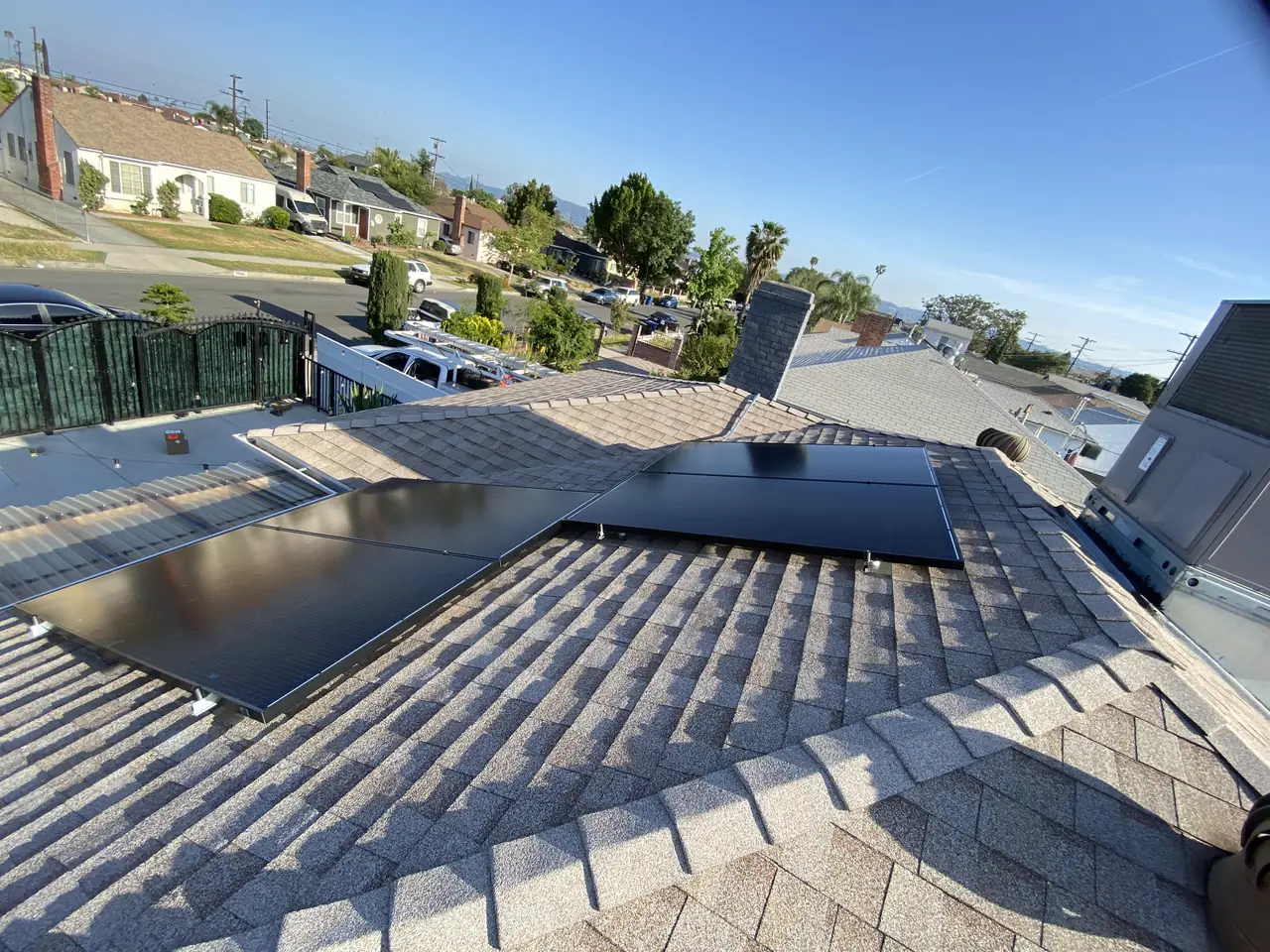
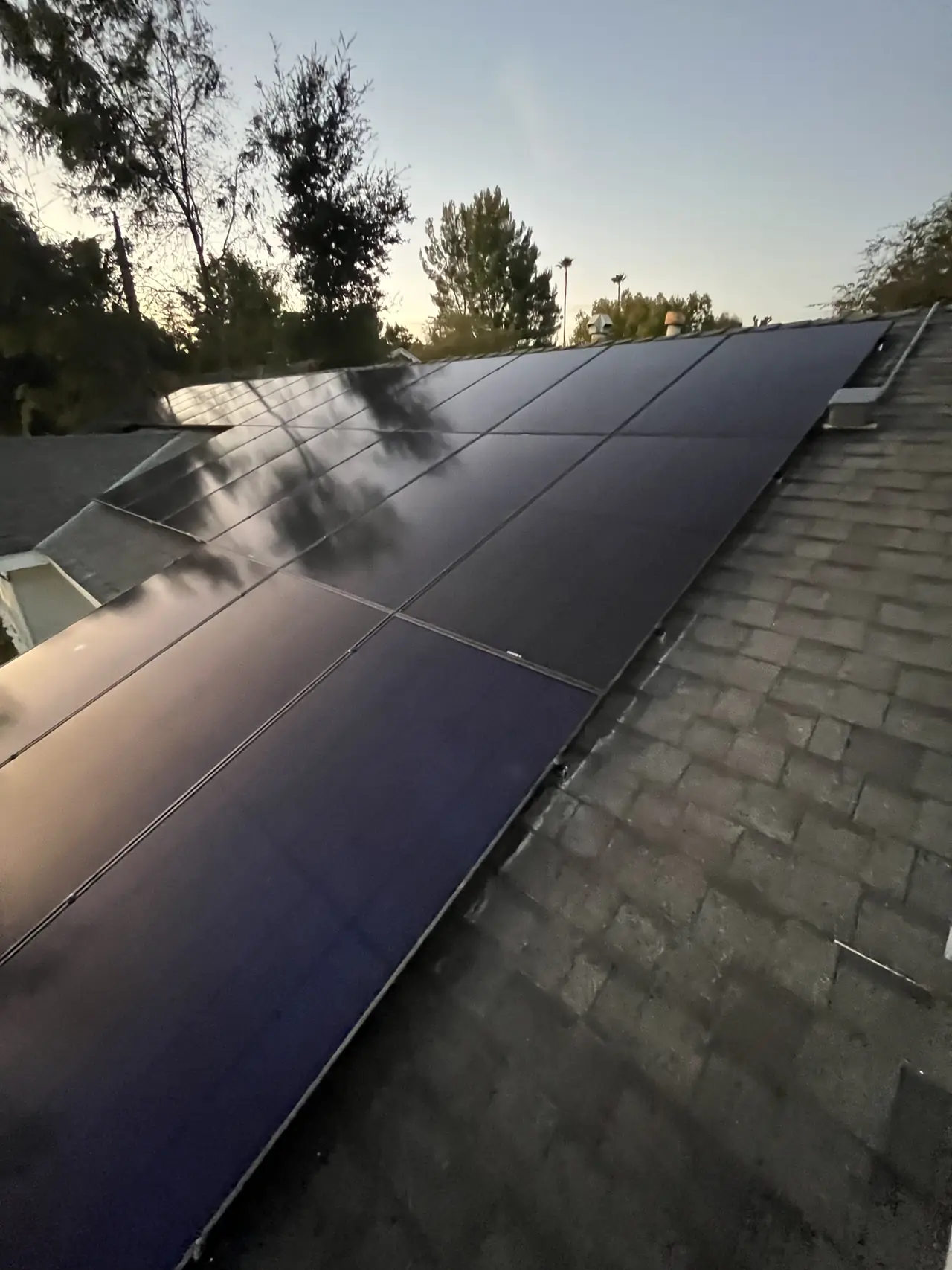
This array went up in 2021: twenty-seven modules on a concrete tile roof, a power optimizer under each one, and a single inverter on the wall by the side door. In 2026 the inverter was replaced.
If you are deciding what to buy, that is the ordinary shape of owning a system. The modules have no moving parts and a twenty-five-year output warranty. The racking is aluminum and stainless and outlives everybody. The optimizers sit under the modules and mostly stay there. The inverter is the box with the electronics, the fans and the firmware, and it is the component that gets replaced first. Budget for that rather than being surprised by it.
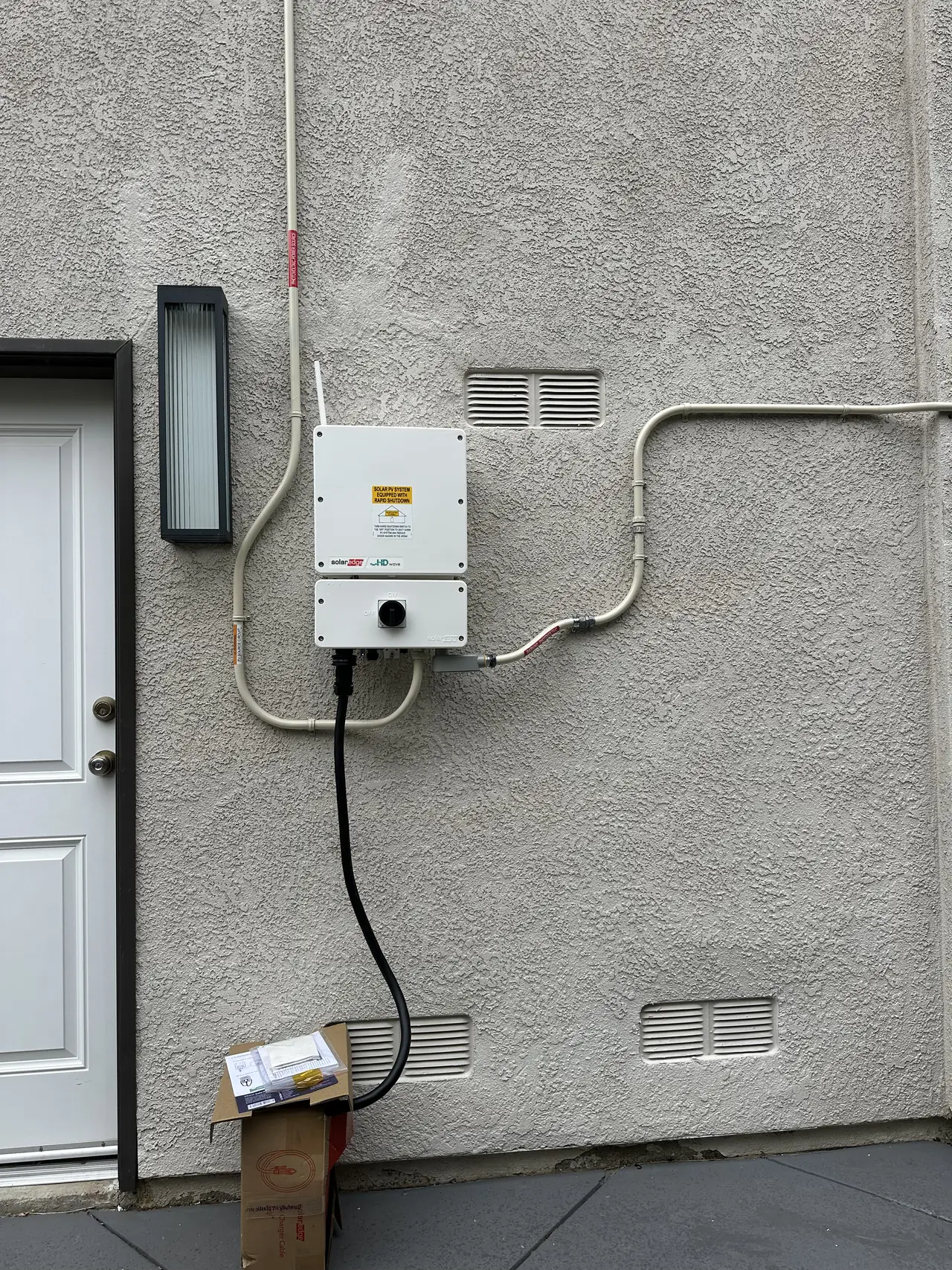
The physical swap is undramatic. The system is shut down, the old unit comes off its bracket, the new one goes on, the conductors land in the same places. Nothing on the roof is touched — no modules move, no attachments come out, no flashing is disturbed. For a homeowner that is the good news in all of it: a failed inverter is a wall-level problem, not a roof-level one.
What takes the time is afterwards. On an optimizer system the inverter has to discover every optimizer on the roof and pair with it before the array produces anything at all. Twenty-seven devices, each with its own identity, each of which has to answer. The commissioning screen counts them as it finds them, and until the count is complete the system is a roof full of modules doing nothing.
Usually they all answer. Sometimes one does not, and then somebody goes back on the roof to lift a module and look — which is the only part of an inverter replacement that can turn into roof work. It is worth asking, before the crew leaves, for the commissioning screen to be shown with the full count on it. Not a verbal assurance that it is fine. The number.
This unit also carries an integrated electric vehicle charger, which is a detail worth flagging for anyone with the same arrangement: when the inverter goes, the charger goes with it. Two functions, one box, one failure. Convenient while it works and worth knowing about when it does not.
Two questions for anyone choosing a system today. First, what is the inverter warranty and what does a replacement cost outside it — because that is the expenditure you should expect to meet. Second, if the inverter does more than invert — a charger, a battery interface, a backup transfer — ask what stops working when it is being replaced, and for how long.
The replacement went in, all twenty-seven optimizers paired and the Granada Hills system has been producing since. Cali Energy has been on this roof more than once — the earlier visit, about water, is on the leak was not the solar.
How it ran
| 2021 | System installed — 27 modules on tile, an optimizer under each, one inverter on the wall |
|---|---|
| October 2021 | Final inspection passed |
| 2026 | Inverter replaced |
| 2026 | System re-commissioned; all 27 optimizers found and paired |
Five years of production before the first component had to be replaced.
What we did
- Replaced the inverter without disturbing a single module or attachment.
- Re-commissioned the system and confirmed all twenty-seven optimizers paired.
- Returned to a system we installed five years earlier.
System specifications
| Modules | 27 × Axitec AC-410MH, 410 W |
|---|---|
| Architecture | One power optimizer per module, single string inverter |
| Roof | Concrete tile |
| Original installation | 2021, final passed in October |
| Replacement | Inverter, 2026 |
| Roof work required | None — no module or attachment disturbed |
| Commissioning | All 27 optimizers re-paired before production resumed |
| Utility / AHJ | LADWP / LADBS |
Is your project like this one?
- Your inverter has failed or is throwing faults.
- You are choosing between microinverters and an optimizer system and want to know what breaks.
- You want to know what owning a system costs after the installation.
- Your inverter also runs your EV charger or battery.
- You are buying a house with an array on it that is a few years old.
Cali Energy in Granada Hills
Granada Hills sits inside City of Los Angeles boundaries, so every project here is permitted through LADBS and interconnected through LADWP. Our work in Granada Hills runs from single-row arrays on accessory dwelling units to systems on underground services, on composition shingle and on concrete tile.
The earliest arrays in Granada Hills are now old enough to need parts rather than installation, and that is a different kind of visit with a different set of questions.
This installation is on the Granada Hills projects page alongside the others, and what the work covers is set out on the Granada Hills service area page.
- License and classifications: CSLB #1032379
- Official reference for this process: CSLB — check a contractor's license
Frequently asked questions
How long does a solar inverter last?
Shorter than the modules. Modules carry twenty-five-year output warranties and no moving parts; an inverter is electronics and firmware in a box on a wall, and it is normally the first component to be replaced. This one ran five years before it was changed.
Does replacing an inverter mean touching the roof?
On an optimizer or microinverter system, normally not. The inverter is on a wall and the swap is a wall-level job. The roof only comes into it if an optimizer fails to answer during commissioning and somebody has to lift a module to find out why.
What is commissioning after an inverter replacement?
The new inverter has to discover and pair with every optimizer on the roof before the array produces anything. Here that was twenty-seven devices. Ask to be shown the commissioning screen with the full count on it before the crew leaves — a number, not an assurance.
What happens if the inverter also runs an EV charger?
It stops too. Where a single unit inverts, charges a car, or manages a battery, everything in that box is out of service while it is replaced. Worth knowing before you choose an all-in-one, and worth asking how long the outage is when you do.
Does Cali Energy service existing solar systems in Granada Hills?
Yes, including systems we did not install. The earliest arrays in Granada Hills are now old enough to need parts rather than advice, and the inverter is the component that reaches the end of its life first. On this project Cali Energy replaced the inverter, re-commissioned the system and paired all twenty-seven optimizers back to it in one visit.
What this would look like on your roof
Planning solar in Granada Hills? Tell us your utility, your roof and what your bill looks like now, and we will model what a system like this would do on your house before you commit to anything.
Or call +1 (323) 844-7777 · Cali Energy, Northridge · CSLB #1032379 (B, C-10, C-39) — design, permits, install and electrical under one licensed contractor.
Related
This timeline reflects this property and this permitting path. Updated September 2026.