

Glendale, CA · March 2025 – December 2025 · Glendale Water & Power / City of Glendale
Two new units at the back, three meters on the wall.
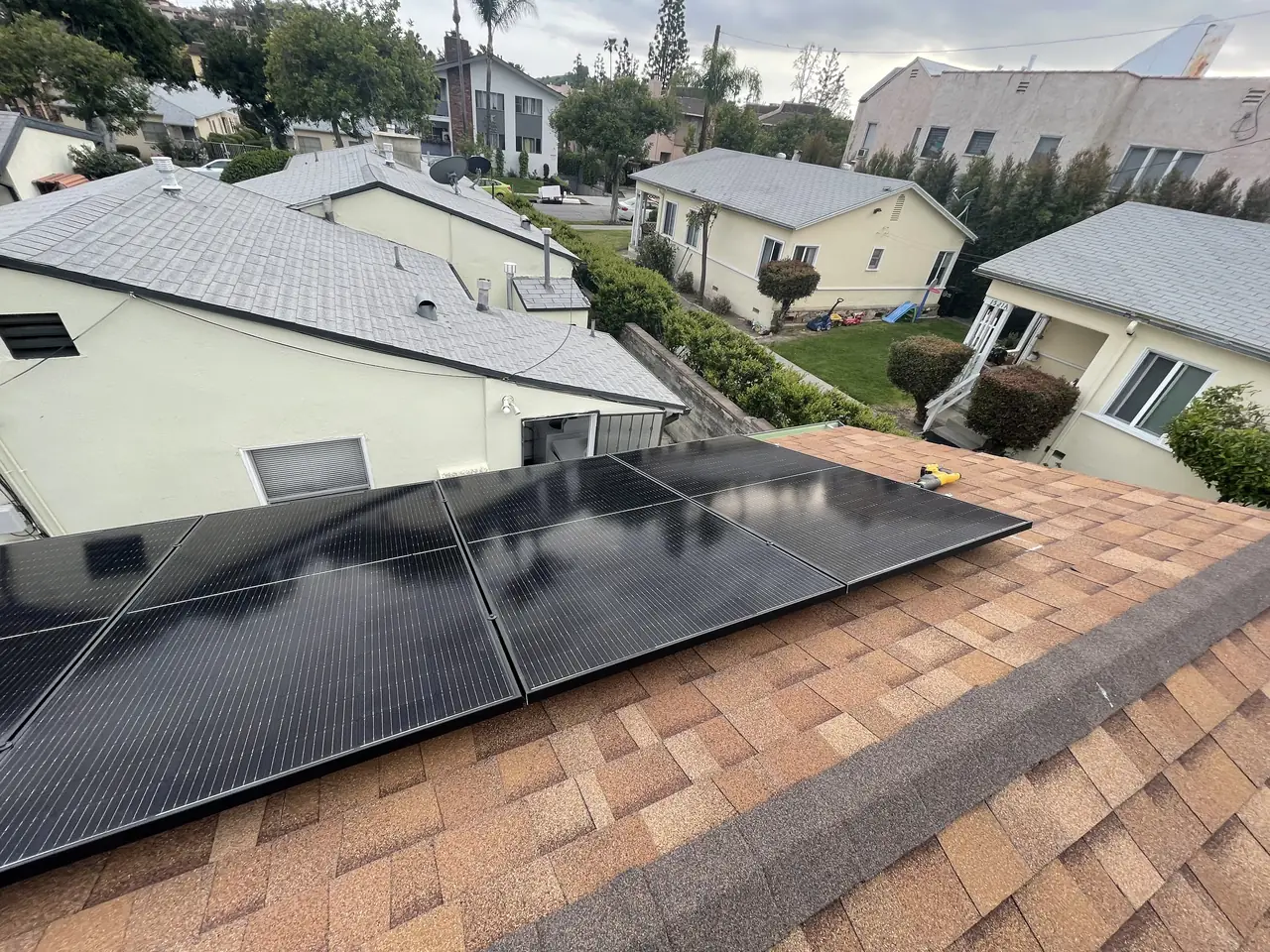
A Glendale lot with two newly built accessory dwelling units behind the house. Each unit got its own small array — five modules on one, eight on the other — and its own meter, so each was its own interconnection. The main house followed in the fall, and the third permission to operate came in at the end of December.
New accessory dwelling units in California are built with solar, and when each unit is separately metered the utility treats each as its own customer-generator. On this lot that meant two applications, two permits, two finals and two meter installations for two small arrays handed over as 5.2 kilowatts DC between them, and then a third set of everything for the main house. The roofs are simple; the count of meters sets the paperwork.
At a glance
- Lot
- Main house plus two new accessory dwelling units
- ADU arrays
- 5 modules and 8 modules — 5.2 kW DC across the two units
- ADU inverters
- Microinverters, one per module
- Main house
- String inverter with optimizers, added in the fall
- Meters
- Three, one per dwelling
- Interconnections
- Three, each with its own permission to operate
- Utility / AHJ
- Glendale Water & Power / City of Glendale
The story
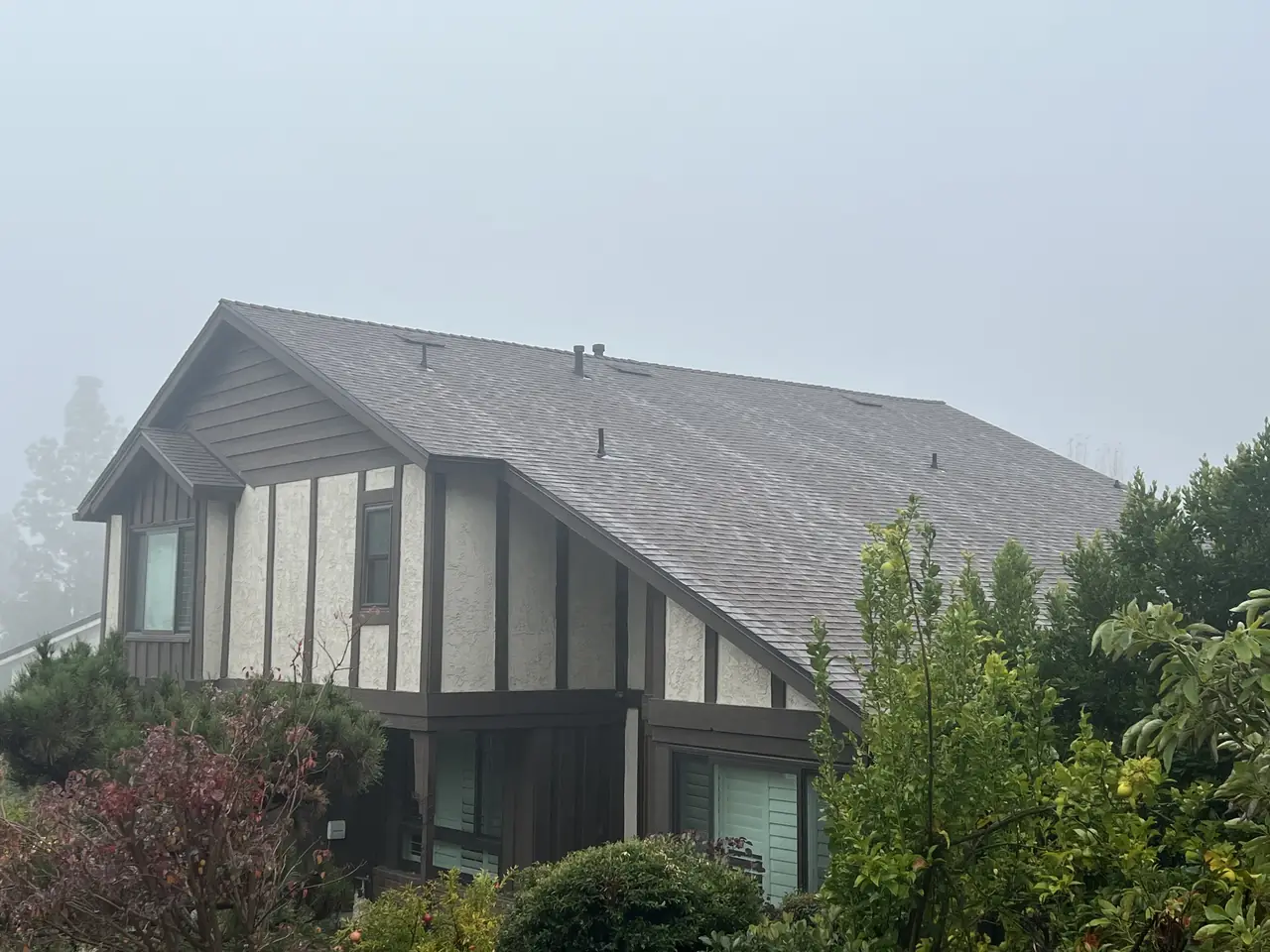
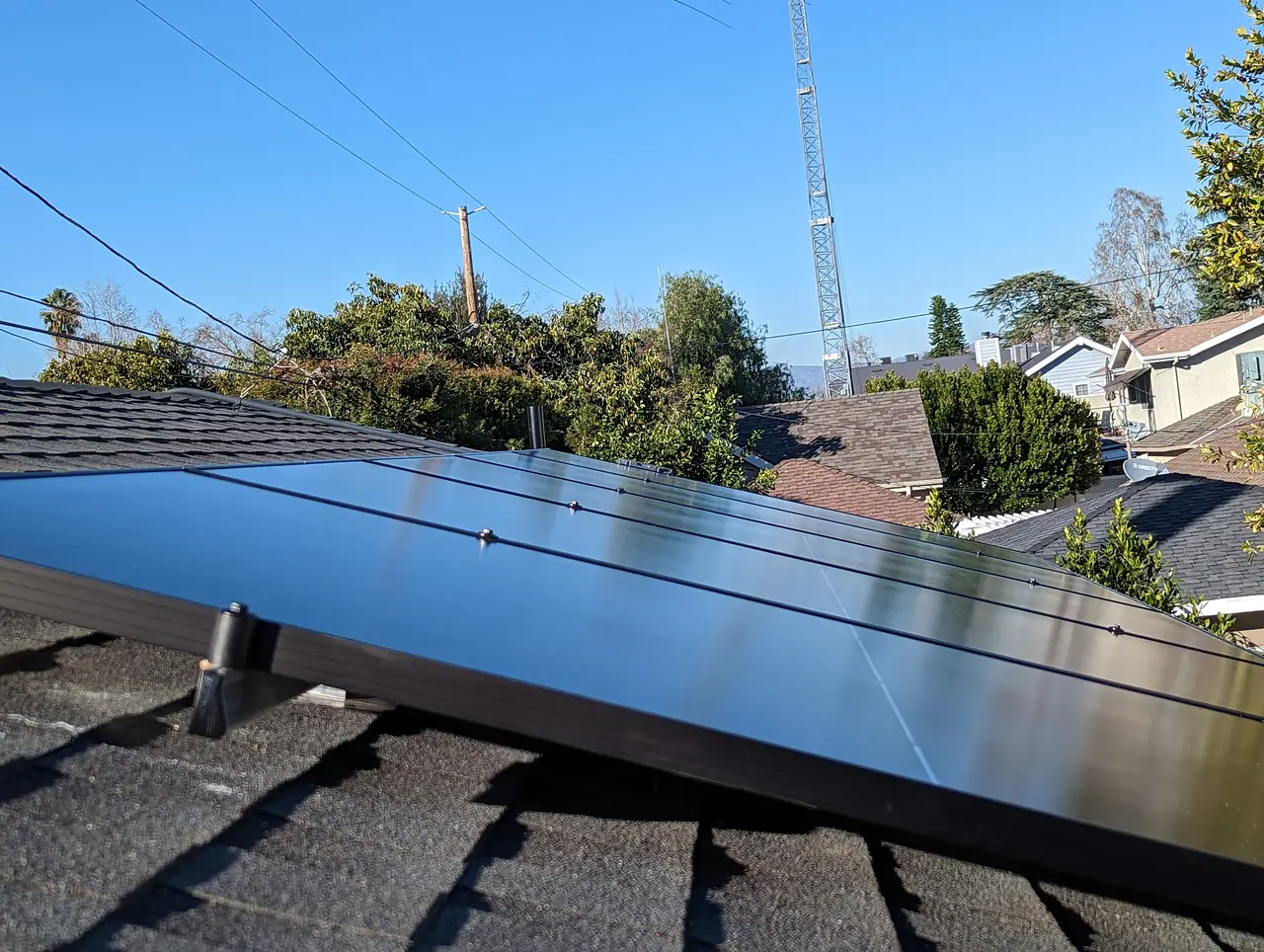
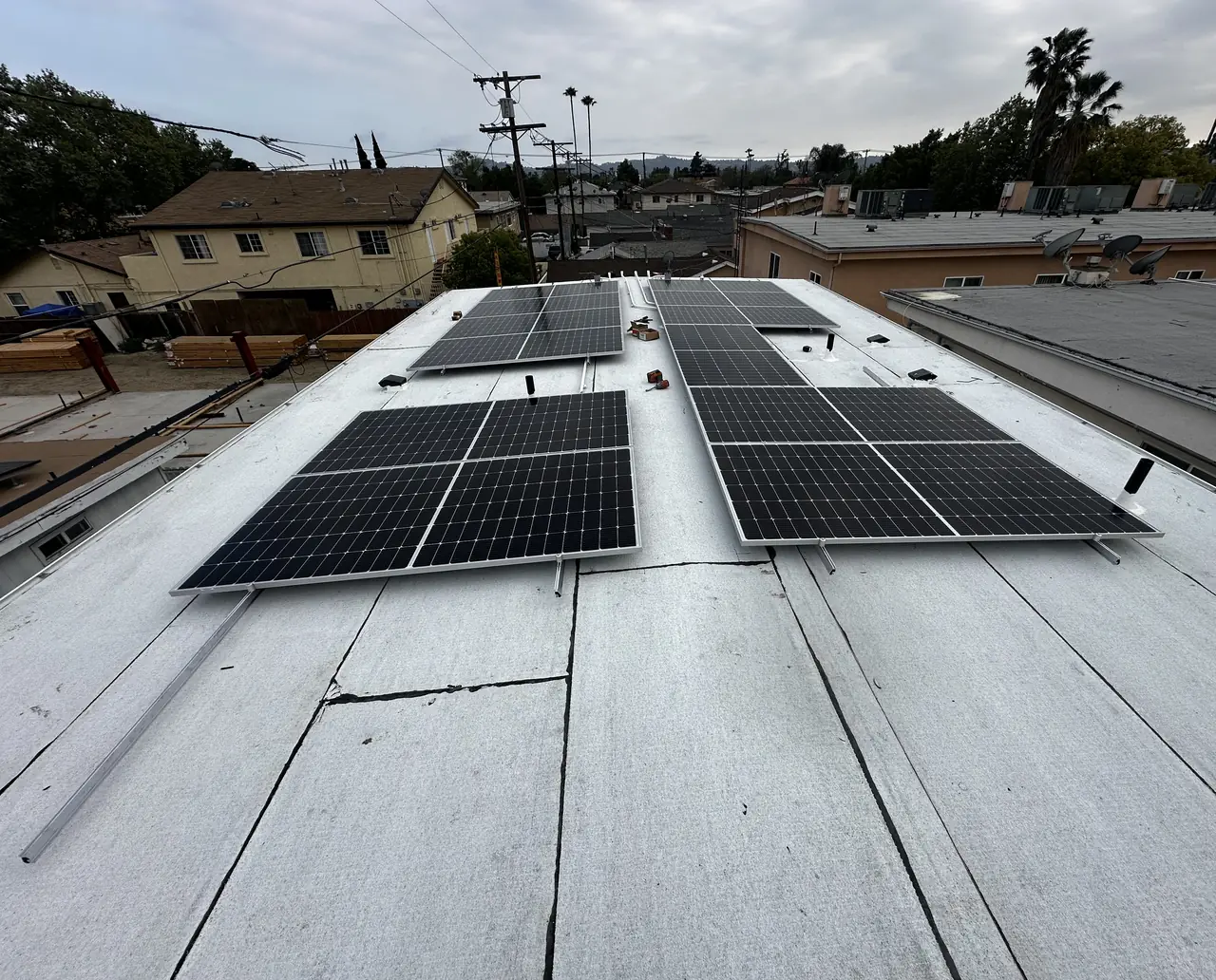
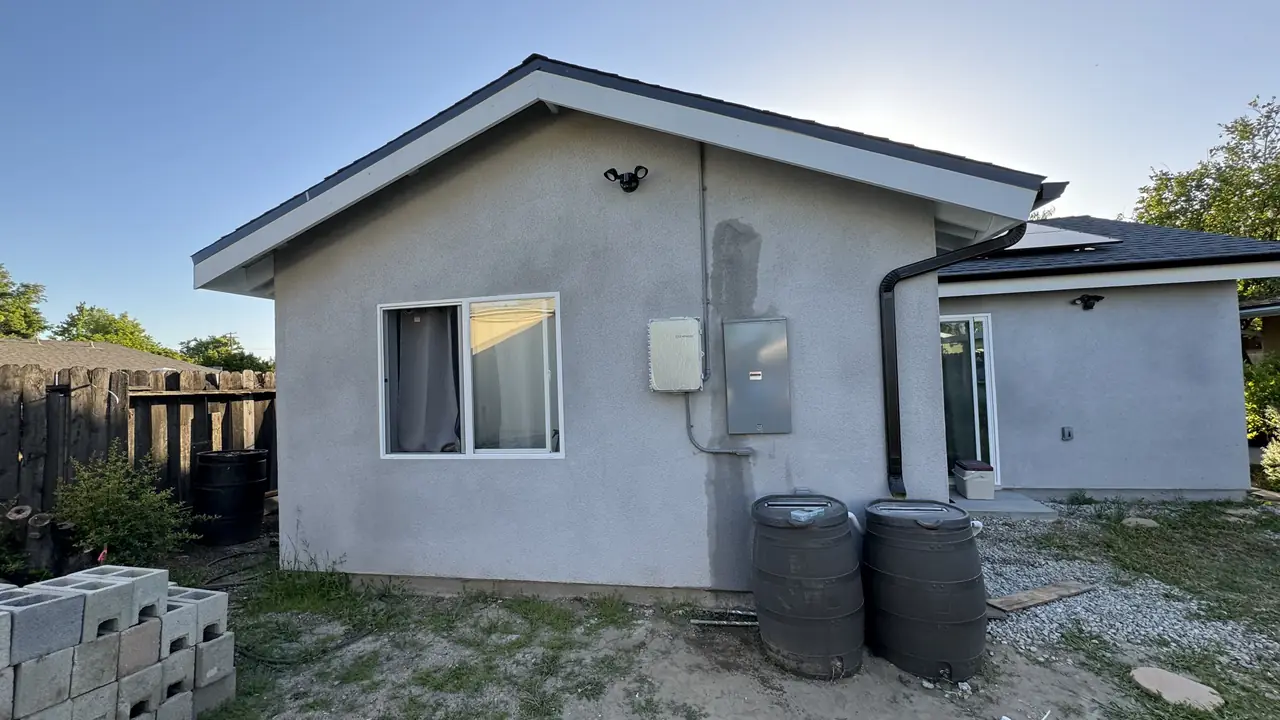
The two units were brand new — stucco still bright, doors not yet scuffed — and each had a plain composition shingle roof with a single clean slope. California's building energy code requires new dwellings of this kind to be built with solar, so the arrays were part of finishing the buildings rather than an upgrade to them: five modules on the smaller unit, eight on the larger, with a microinverter under each module.
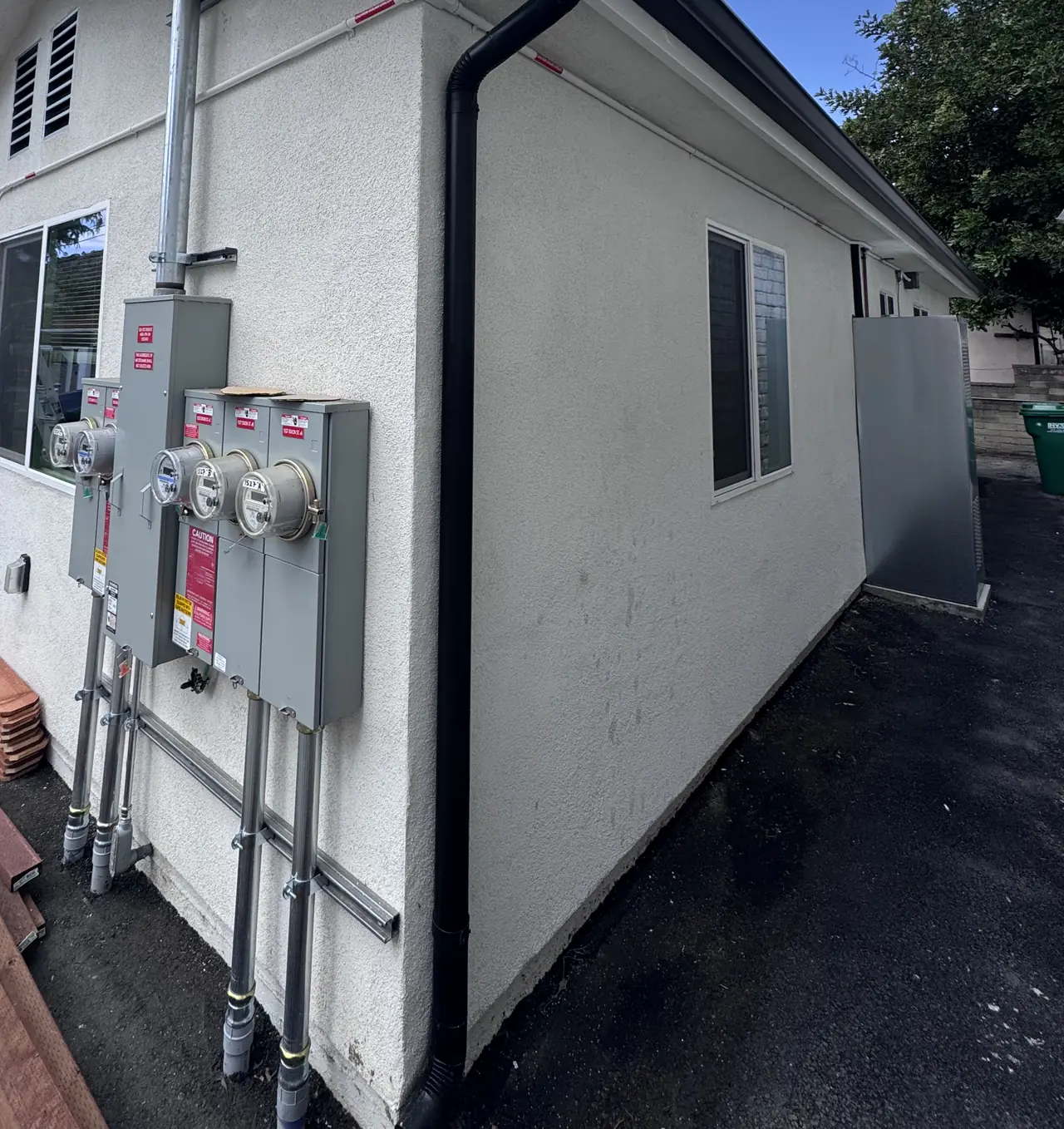
What made the job a Glendale job was the wall at the end of the building: a bank of meter sockets side by side, one for each dwelling on the lot. Where each unit has its own meter, Glendale Water & Power sees each one as a separate customer-generator, and a separate customer-generator means a separate interconnection application, a separate permit with the city, a separate final and a separate meter to be set. The arrays were small. The paperwork was not.
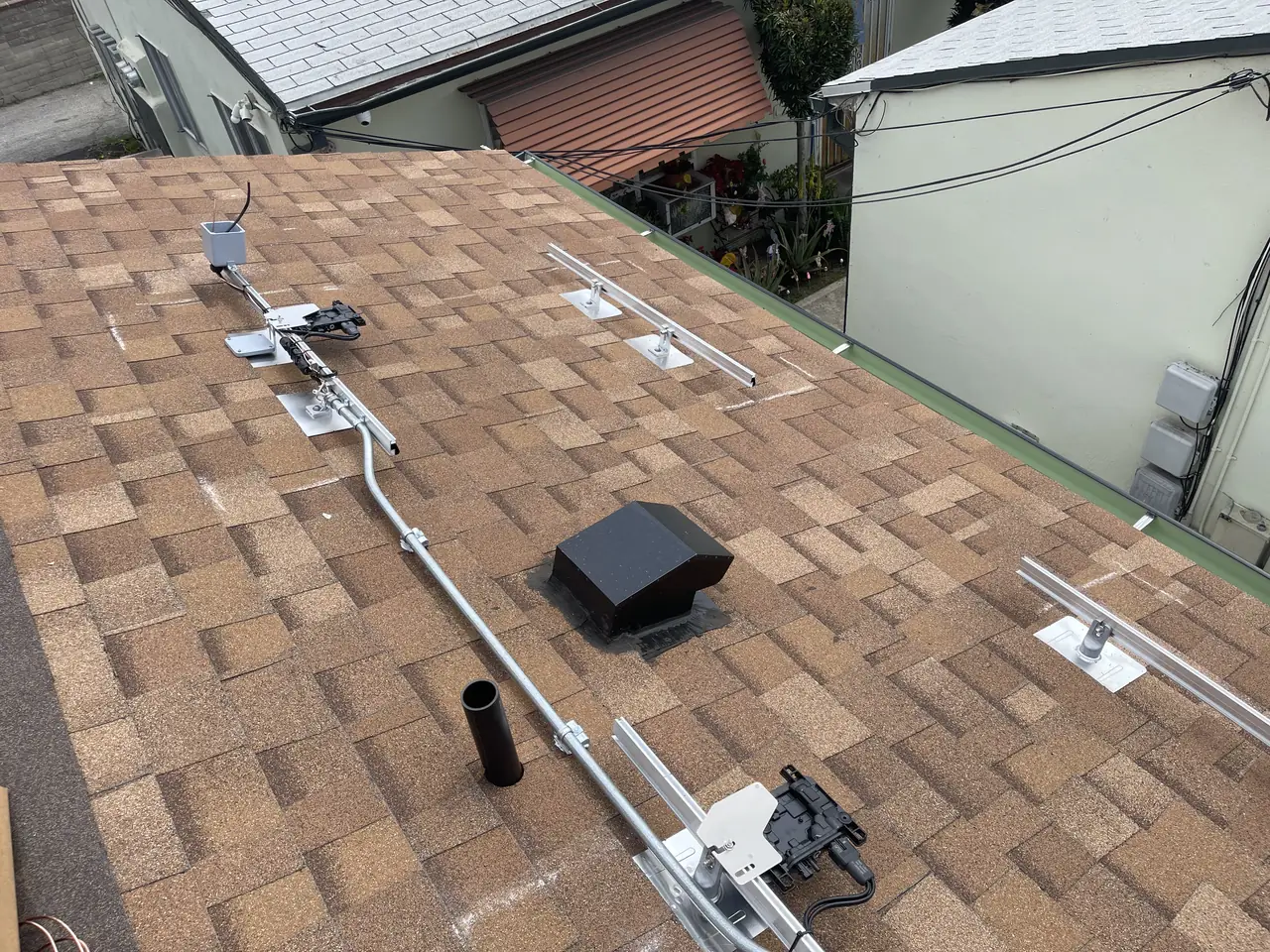
The installation was booked for a Friday in the middle of March and moved a week by rain: the week before had washed out a queue of roof days and everything behind them shifted. The material was delivered to the site the day before, and on the twenty-eighth of March the crew was there by eight and both arrays went up the same day, rails on flashed feet, microinverters on the rails, modules over them.
Both units were then inspected together. The city's finals passed on the same Tuesday in May, and a week later Glendale Water & Power installed both generation meters. Each unit runs on microinverters with the monitoring at the module rather than a gateway on the wall, so switching on was the solar breaker and the AC disconnect, done as soon as the meters were in.
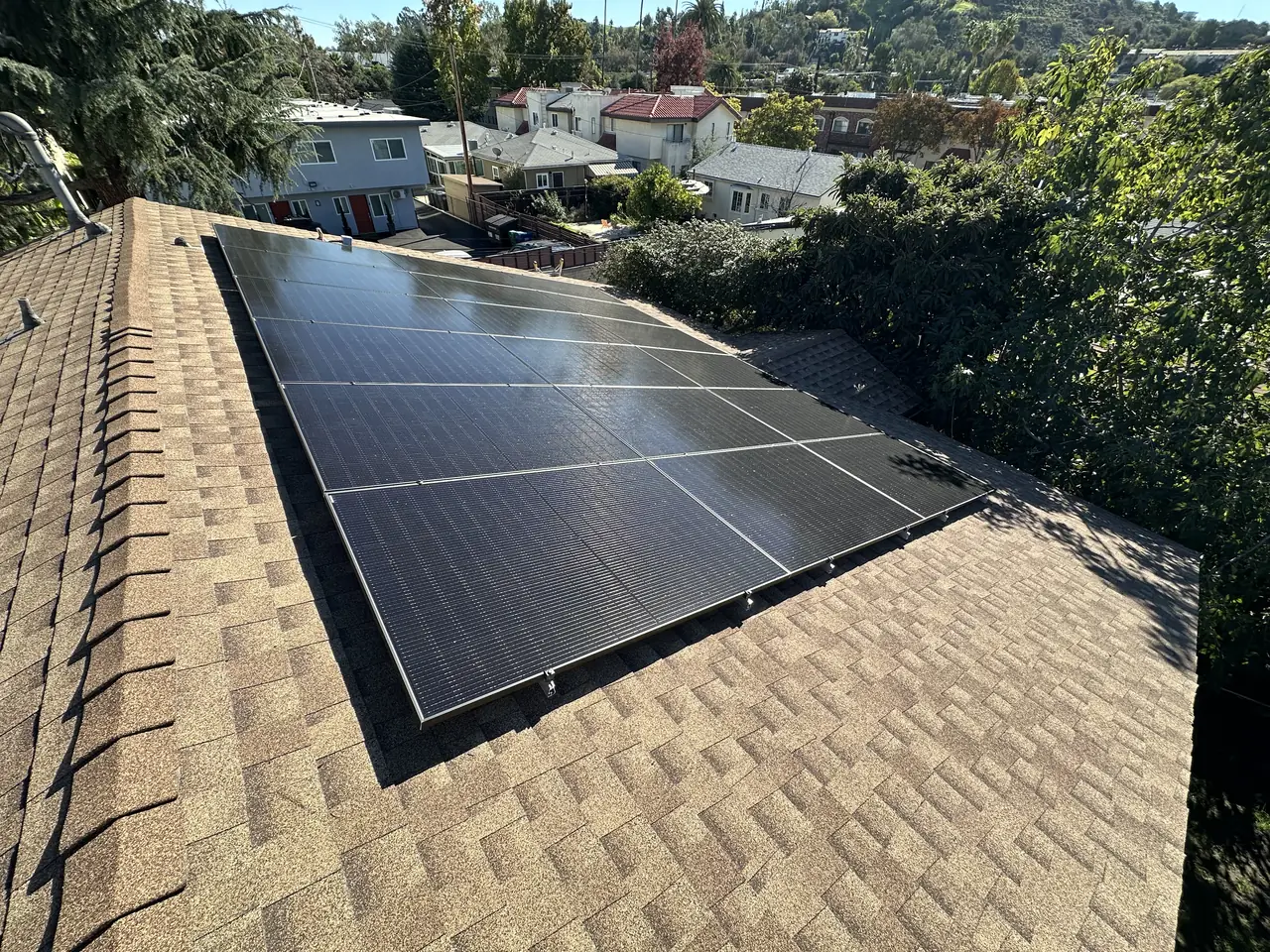
Then the main house. In November a third array went onto the original roof, this one on a string inverter with an optimizer under each module, and the same sequence ran a third time: plans and permit, installation, the city final at the end of November, and the utility's meter work. On the twenty-ninth of December the meter technician was at the property, the solar breaker was turned on with the homeowner present, and the third permission to operate was issued that day.
Three interconnections are three times the administrative work, and no contractor can compress that. Feeding the units from the main house on one meter would have made it one application — and would also have stopped them being separately metered dwellings, which is usually the whole point of building them. The meter count is settled when the units are designed, long before anybody talks about solar.
So if you are building accessory dwelling units in Glendale, ask two questions early: how many meters will the lot have, and who is filing the solar interconnection for each one.
How it ran
| 10 March 2025 | Plans and permits for both units in hand |
|---|---|
| 21 March 2025 | Installation date lost to rain; rebooked |
| 28 March 2025 | Both ADU arrays installed in one day |
| 13 May 2025 | City finals passed on both units |
| 20 May 2025 | Generation meters installed on both units |
| November 2025 | Main house array installed |
| 26 November 2025 | City final on the main house |
| 29 December 2025 | Main house meter work complete — permission to operate |
Two units from installation to meters in eight weeks; the main house followed on its own schedule.
What we did
- Installed both accessory-unit arrays in a single day: rails on flashed feet, microinverters, modules (C-10).
- Ran rooftop conduit to the disconnects and meter sockets on the end wall.
- Passed the city finals on both units on the same day.
- Switched both units on after the utility set the generation meters.
- Installed the main house array in the fall on a string inverter with optimizers.
- Met the utility's meter technician on site for the main house and had the system turned on the same day.
System specifications
| Dwellings | Main house and two new accessory dwelling units |
|---|---|
| ADU arrays | 5 modules and 8 modules — 5.2 kW DC across the two units |
| ADU inverters | Microinverters, one per module |
| Main house | String inverter with optimizers |
| Roofs | Composition shingle, single slope on each unit |
| Meters | Three, side by side on the end wall of the units |
| Utility / AHJ | Glendale Water & Power / City of Glendale |
Is your project like this one?
- You are building one or more accessory dwelling units and they will have their own meters.
- You want the units' solar done together, in one visit.
- You are on Glendale Water & Power and want to know what a second meter changes.
- You plan to add solar to the main house later, separately.
- You are scheduling roof work in a wet spring.
Cali Energy in Glendale
Glendale is its own city with its own municipal utility: permits run through City of Glendale Building & Safety, interconnection through Glendale Water & Power.
Glendale lots are sprouting accessory dwelling units, and a new ADU in California has to be built with solar. When each unit gets its own meter, each one is its own customer to Glendale Water & Power, with its own application and its own permission to operate.
This installation is on the Glendale projects page alongside the others, and what the work covers is set out on the Glendale service area page.
- License and classifications: CSLB #1032379
- Official reference for this process: Glendale Water & Power — PV interconnection and NEM guide for residential systems under 15 kW CEC-AC
- Official reference for this process: California Energy Commission — Building Energy Efficiency Standards
Frequently asked questions
Does each accessory dwelling unit need its own solar interconnection?
If it has its own meter, yes. Glendale Water & Power treats each separately metered dwelling as its own customer-generator, with its own application, its own permit and final with the city, and its own generation meter. On this lot that was three interconnections: two for the units and one for the house.
Why are the arrays so small?
Because the units are small and the code requirement is scaled to the dwelling. Five and eight modules cover what a one- or two-bedroom unit uses. The main house array, added later, is larger and sits on a different type of inverter.
How were the systems switched on?
On microinverters with the monitoring at the module, switching on is the solar breaker and the AC disconnect rather than anything on a screen, and that was done for both units as soon as the utility set their generation meters. For the main house, the utility's meter technician was on site and the breaker was closed with the homeowner present on the day permission was issued.
Does rain really move a solar installation?
It does. A wet week pushes every job in the queue, and this one moved from the twenty-first of March to the twenty-eighth. Roofing work is not done in the wet, and the crew that would have been here was finishing the jobs the rain had already delayed. Build a week of slack into a spring schedule.
What this would look like on your roof
Planning solar in Glendale? Tell us your utility, your roof and what your bill looks like now, and we will model what a system like this would do on your house before you commit to anything.
Or call +1 (323) 844-7777 · Cali Energy, Northridge · CSLB #1032379 (B, C-10, C-39) — design, permits, install and electrical under one licensed contractor.
Related
This timeline reflects this property and this permitting path. Updated September 2026.